
Politics
Babajide Sanwo-Olu invites Lagosians for a Progressive Social Contract For A better Lagos

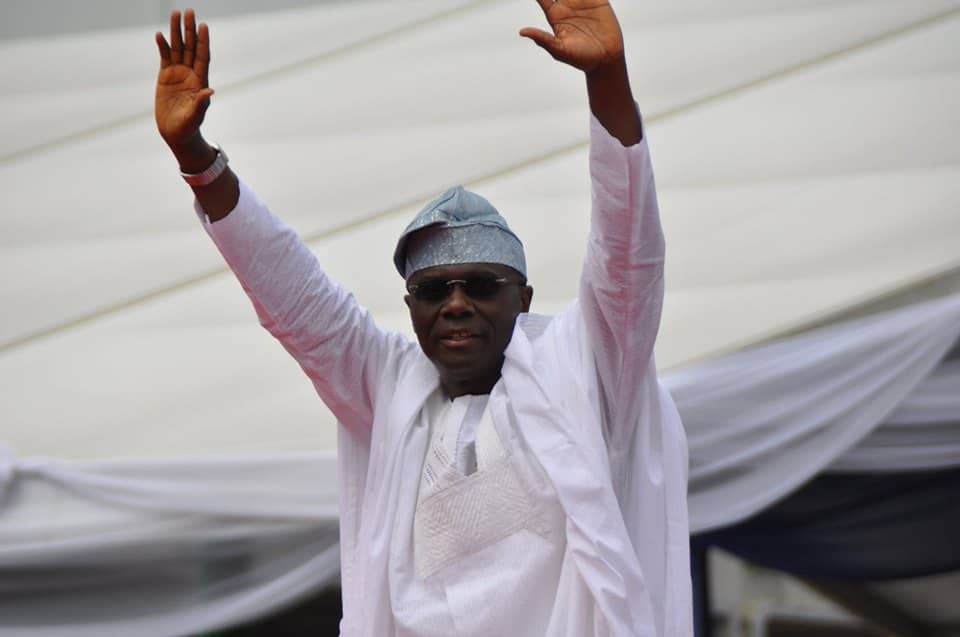
PROTOCOL
1. By the grace of Almighty God and Your votes, I stand before you today as your Governor. (Pause)
This day marks the beginning of a new chapter in our journey to greatness. Today, I ask you to join me on this journey to awaken a Greater Lagos.
When we speak of a Greater Lagos, we speak not empty words. It is a deep and profound assertion we mean.

2. We intend to make history by making for ourselves and our children a better future.
Therefore, on this day, on this precious land we call our home, let us stand together in the very face of history.
Let us vow to ourselves, and to posterity that we shall not just dream of a Greater Lagos. Let us agree this day that we shall collectively rise up to build the Lagos of our dreams.
We need not be discouraged by the challenges that may be apparent. Today is an opportunity for us to forge ahead in our quest for a Greater Lagos.
It is possible!

No one should ever underestimate the spirit of Lagos and the resilience of its people. Yes, hard problems may confront us, but we will also confront them. Every problem will lose its potency to our unity.
Therefore, Lagosians, in this new chapter of our lives, we need not cry or fret. We are united by our common purpose of a Greater Lagos and fulfilling future.

Posterity has given us this day to commence our journey to greatness. We need to envision the glorious end of working together, tirelessly and committedly, towards achieving a Lagos of our dreams. By our individual and collective efforts and the Grace of God, these dreams will become a reality.
In Lagos State, our story has been of successes and achievements. Since 1999, our tradition of progressive governance has set Lagos apart and strengthened people’s belief in our ideology.
And that is the very reason I stand before you on this historic day as your Governor. While we celebrate the victory of progressive governance and democracy, tomorrow we must be ready to stand on guard and be fully vigilant.
Democracy and progressive governance hold only to the extent that we protect and nurture them. While Lagos glimmers as a beacon of progressive and quality governance, our nation now undergoes a historic battle to establish progressive and just governance.
Lagos must again rise and help lead this nation to fuller progress and to a closer realization of the greatness that exists within all Nigerians.
This inauguration symbolizes such an awakening.
Today, I stand before you as your governor, but also as your friend, brother; neighbor and your servant. I stand here to ask that you join me to script and fashion this greater Lagos with the creativity of our minds.
Let the ingenuity of our hands, the sweat of our labor and the compassion that resides in our hearts be committed to this common goal.
We are but human beings. Our time on this earth is finite, and shall one day pass. At some point, we shall all enter the book of history. This is inevitable.
But we can choose how we walk into history. Shall we do so as masters of our fate, or as slaves to things that seek to suppress us?
When the history of our moment is written, let it not be told in tears of defeat, rather let it resound with the anthem of collective victory.
Let our time be proclaimed in golden celebration of a state, and of a people who stood in unity of purpose to make their home a Greater one.
In this, we simply adhere to the tradition of enlightened government set by those who came before us. We owe a large debt of gratitude to Asiwaju Bola Ahmed Tinubu and to Babatunde Raji Fashola SAN.
Asiwaju led the team that created the blueprint for development; both administrations faithfully executed that economic blueprint and established the structures and institutions of progressive governance in the process.
Governor Akinwunmi Ambode pushed forward in a special manner. His efforts and actions shall be duly remembered.
As your Governor, I know fully well who I am, because I know where I am from. More importantly, I know where I am headed.
I have been a part of this progressive journey since its very inception. I know first-hand the concerted efforts that went into planning so many of the innovations we now see and enjoy.
It will be my job to continue that process by refining and perfecting the foundation laid by the preceding administrations.
In this regard, I shall forever remain loyal to the aspirations of the people and to the developmental blueprint that has brought so much success to our dear state.
The Babajide Sanwo-Olu you see today shall not change and try to become something I am not. My prayer is only that I grow and improve as your Governor to implement good policies and bring the prosperity you deserve.
On this day, I speak to the young and old, Christian and Muslim, those who trace their earliest ancestry back to this land, and to those who came last week.
I speak to the poor and to the rich. I speak to the Danfo driver as much as to the millionaire, to the fruit vendor and much as to the real estate titan.
I speak to employer and employee, I speak to teacher and student, I speak to mother and father. The civil service as well as the private sector – We are all Lagosians.
I say to you all let us explore how we can best establish a harmony of interests and avoid the growing tendency to focus on those things that differentiate and divide one Lagosian from another.
By the dint of Providence, this small tract of land intersected and surrounded by waterways and lagoons has become home to roughly 22 million people, with their various dreams and aspirations.
Not only is Lagos home to so many people and their aspirations, it is also the catalyst of economic growth for much of Nigeria.
The world outside sees Lagos as Nigeria. We are Nigeria’s door to the global economy and the global economy’s door to Nigeria.
As long as Lagos flourishes, Nigeria has more than a fair chance to enjoy the development and growth needed for its deserving population. If Lagos falters, Nigeria also stumbles.
The reality of the integral role we play in Nigeria’s ascent to national greatness coupled with the untapped potentials we hold to produce even greater wealth to improve the living conditions of our people are the things that make Lagos a magnificent place.
These strategic aspects of our current reality, and of our immediate future, bestow on me and my administration a profound responsibility.
My goal is to advance the social and economic progress of this state and its people; regardless of your faith, social class, or your origin of birth.
As long as you adopt the spirit of Lagos, Lagos in turn shall adopt you.
As I said in my acceptance speech, I am too focused on moving Lagos forward to give a second thought to where a person may have come from. As long as you are animated by the spirit of achievement, cooperation and tolerance, then you are Lagosian. This is my motto.
This is how I see our home and this is how I shall run my government. I shall select the best and most qualified people to hold positions in our government.
My door shall remain open to all. I shall seek the advice of the learned, the wise and the ordinary Lagosian, for in the common man resides much wisdom and fairness of thought.
While one cannot help but hear the kind words of friends, I must pay even closer attention to the voice of my critics.
In constructive criticism lies the seeds of improvement. With these things in mind, let me quickly outline my goals for a Greater Lagos.
The Deputy Governor, Dr. Kadri Obafemi Hamzat and I are single-minded in our desire to bequeath to our successors a far Greater Lagos than the one we inherited today
And to do so, we have formulated a concise framework that encapsulates our collective vision for the state and ensures that our undertaking remains focused and our communication remains clear as we endeavour to build a Greater Lagos we can all be proud to call home.
The framework, as our six (6) Pillars of Development Agenda, is captured by the acronym, “T.H.E.M.E.S, which I will briefly talk about:
T – Traffic Management and Transportation
Here, we must act with urgency to execute a transport masterplan that will fully integrate road, rail and water transportation into a multi-modal transport system that makes commuting easy for Lagosians.
We must also ensure compliance with all traffic rules and regulations on our roads.
H – Health and Environment
Because we know the significance of a clean environment in preventive healthcare, we have a moral duty to provide basic health care for our people, especially those who cannot afford it. Under our comprehensive health program, we will place special emphasis on maternal healthcare, malaria and water borne diseases.
We will also focus on sanitation and waste management, by ensuring that our drainage systems are functional and kept clean.
E – Education and Technology
We will invest in the education of our children and young adults. By increasing the budgetary allocation to education, this government will empower teachers in every local government and strengthen their capacity to deliver quality education to our children.
New educational infrastructure will cultivate a learning environment that prepares our children for a new world that demands creativity, intuition and critical thinking.
We will ensure technology is integrated into our school curriculum and empower our youths with the much-needed skills for the jobs of tomorrow.
M – Making Lagos a 21st Century Economy
By investing in critical infrastructure, we will accelerate the growth of our economy and empower the private sector who are the real engines of growth.
We must break the deadlock that shackles our power distribution, provide sustainable urban settlements that addresses the current deficit; while at the same time building a smart city that achieves urban harmony and sets a new bar in our nation.
E – Entertainment and Tourism
We will nurture and showcase our cultural heritage and unique hospitality, support our entertainment, visual arts and sports sectors, and inspire the kind of creativity from our most talented individuals that will enhance our reputation at home – and abroad.
S – Security and Governance
The last of these pillars of development is Security and Governance.
It is important to ensure that we set the right tone for good governance and accountability at the top.
To this end, my administration will ensure that we walk the talk as far as transparency, the rule of law and fiscal discipline are concerned.
We will make sure that we create the right environment in which security and safety of lives and property are guaranteed.
Our ultimate goal would be to ensure that Lagos state
remains one of the top destinations on the African continent to live, work and invest in.
These six (6) Pillars of Development represent our response to the yearnings of the people. They constitute the foundations that must be restored for future generations.
And should we fulfil our promise and deliver on these pillars, we are most confident that we will have succeeded in setting Lagos on a new trajectory of economic growth and development that would be unprecedented in our entire history.
Let me also add that in doing all of these, the welfare and socio-economic well-being of our hardworking civil servants would equally be given the priority that it truly deserves.
Similarly, our youths and women would be well integrated into our governance structure to equally contribute their utmost to our developmental strides.
The mission upon which we embark today, shall happen. As we gather force and momentum, there will be no mortal power that can stop our movement towards greater prosperity, justice and hope.
I urge you all therefore to lend yourself to this excellent cause and join our march to victory over our social and economic challenges. Do not stand aside and let this good development pass you by.
The hearts and hands of the Deputy Governor, Dr. Kadri Obafemi Hamzat and myself are extended to each and every Lagosian.
Join us on this noble journey as we strive together to birth and nurture a Greater Lagos.
However, make no mistake, the success of our development agenda must be a shared and collective responsibility.
I implore us all as Lagosians to rededicate ourselves to contribute our individual quotas positively and responsibly in this new drive to reform our society and take it to a higher pedestal.
We must imbibe the spirit of being our brothers’ keeper in our daily lives at home, work, recreational places and worship centers, and most especially on our roads.
With these goals, we embark on a new social contract that will ultimately be beneficial to all; irrespective of age, religion, socio-economic status or ethnicity.
Every Lagosian has a role in this government and we will on our part, certainly walk the talk in all that we would do as your elected officials.
As I conclude, I agree that Lagos has many challenges before it, challenges that have the power to consume us.
We must therefore be prudent, yet not afraid to act, to ensure that this large population enjoys the economic prosperity and social security that our developmental agenda has to offer.
We have, without doubt, been placed here at a momentous time. Let us make the most of what God has given us. We cannot afford to do less than that.
On this day, I vow as your Governor that I will serve the public cause with my utmost ability and commitment. With your help, I know we can make Lagos Greater still.
Indeed, our best days lie ahead of us.
Thank you
God bless the Federal Republic of Nigeria,
God bless Lagos State
God bless you all.
H.E. Babajide Olusola Sanwo-Olu
Governor, Lagos State.




Politics
APC Group Endorses Fubara for 2027, Calls on Tinubu and APC to Prioritise Performance Over Politics in Backing Governor’s Second Term Ambition
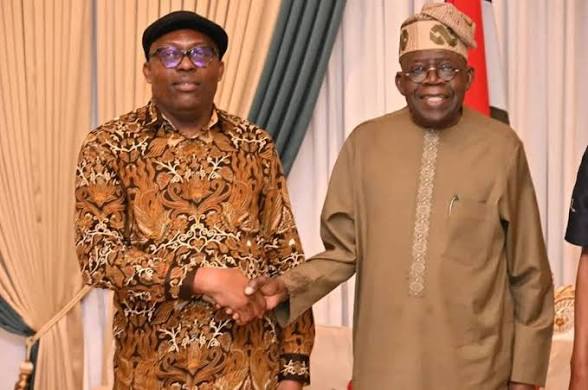
*APC Group Endorses Fubara for 2027, Calls on Tinubu and APC to Prioritise Performance Over Politics in Backing Governor’s Second Term Ambition*
The APC National Vanguard has appealed to President Bola Ahmed Tinubu and the leadership of the All Progressives Congress (APC) to support a second term in office for Siminalayi Fubara, citing what it described as “impressive and verifiable developmental strides” across Rivers State.
In a statement issued on Thursday by its National President, Dr Gbenga Salam (JP), the group said its position followed an extensive assessment tour of key infrastructure and public service projects executed under the Fubara administration.
The APC National Vanguard said the appeal was based strictly on performance, arguing that governance outcomes should outweigh partisan considerations, particularly in a state as economically significant as Rivers.
“We respectfully urge President Bola Ahmed Tinubu and the leadership of the All Progressives Congress to support the continuity of Governor Siminalayi Fubara beyond his current tenure, in recognition of his commitment to development, prudent resource management, and people-focused governance,” the statement read.
According to the group, its delegation visited multiple project sites across the state, observing ongoing and completed works spanning road construction, urban renewal, and public infrastructure upgrades.
It noted that the scale and distribution of these projects reflect a deliberate effort by the state government to extend development beyond traditional urban centres and into underserved communities.
“Our findings from the tour reveal a government that is not only active but intentional in its development agenda. The execution of capital projects across various parts of Rivers State demonstrates a clear understanding of the needs of the people and a commitment to addressing them,” Dr Salam said.
The group particularly commended what it described as prudent financial management by the administration, noting that the projects reviewed showed evidence of careful planning and efficient allocation of resources.
“At a time when economic pressures are evident across the country, it is commendable that the Rivers State government has managed its resources in a way that delivers visible and impactful development without signs of fiscal recklessness,” the statement added.
The APC National Vanguard further observed that despite political tensions in the state, the Fubara administration has maintained focus on governance, ensuring continuity in project execution and service delivery.
The group argued that such stability is critical for sustained development and should be encouraged rather than disrupted.
“Leadership must ultimately be judged by results. In Rivers State, there is clear evidence of progress—projects that are not only announced but executed, and policies that translate into real benefits for citizens,” Dr Salam noted.
The group warned that discontinuity in leadership could stall ongoing projects and reverse gains already recorded, stressing the importance of allowing a performing administration to consolidate its achievements.
“Rivers State is at a pivotal stage where continuity will allow for the completion of ongoing initiatives and the deepening of development gains. Supporting Governor Fubara for a second term is, therefore, a decision in the best interest of the people,” the statement said.
In addition to its call on the APC leadership, the group reaffirmed its support for President Tinubu, expressing confidence in his administration’s broader economic and governance reforms.
The APC group urged Nigerians to remain supportive of efforts aimed at stabilising the economy and strengthening public institutions.
“We reiterate our endorsement of President Bola Ahmed Tinubu for a second term in office, in recognition of his leadership and commitment to national development. With sustained support, the administration can consolidate its reform agenda for the benefit of all Nigerians,” Dr Salam added.
The APC National Vanguard concluded by calling on political actors to prioritise development and public interest over partisan divides, insisting that governance should always be guided by performance and accountability.
“Where leadership demonstrates prudence, delivers development, and remains focused on the welfare of the people, it deserves continuity. This is the position we have reached after a careful and independent assessment of Rivers State,” the statement added.
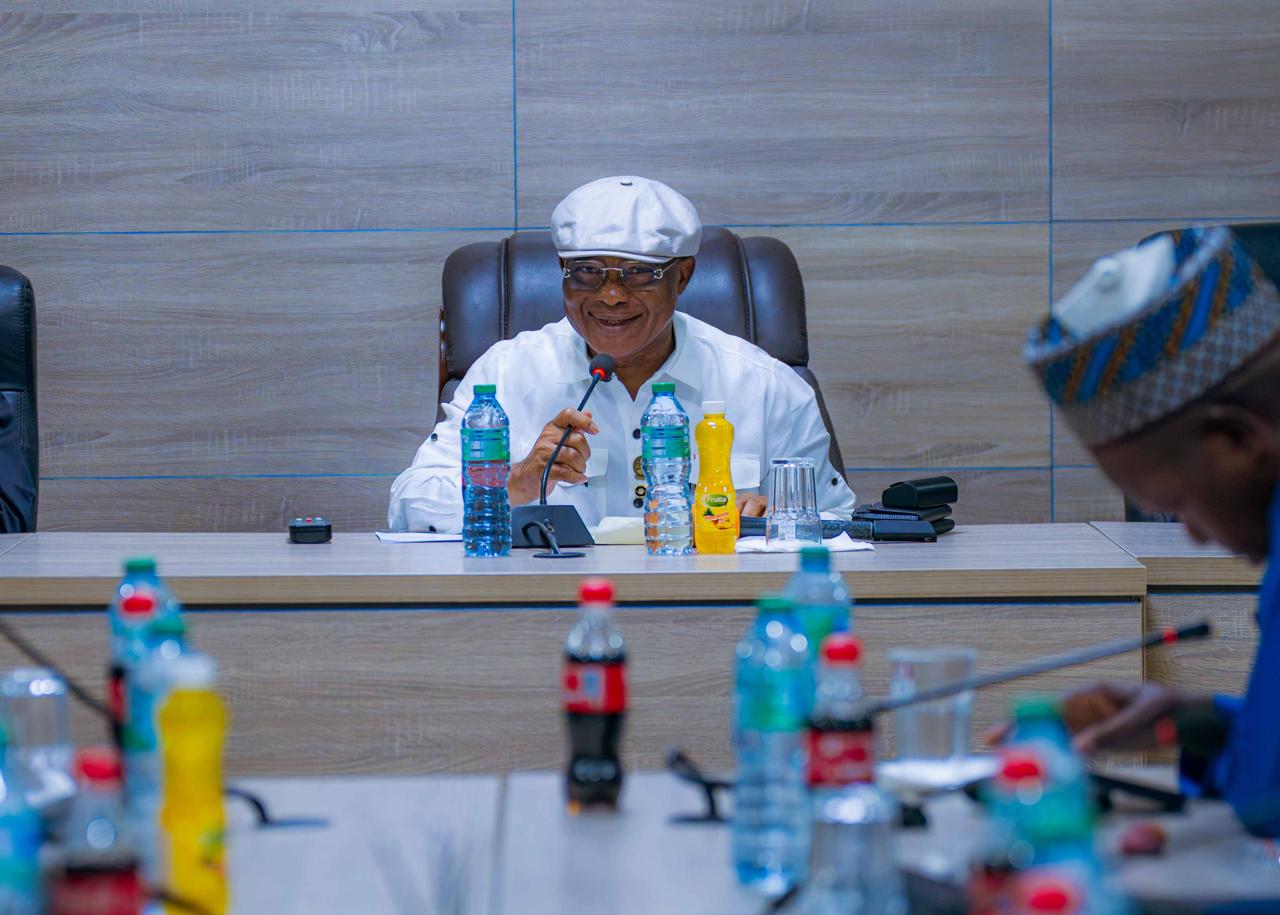
*Renewed Hope Ambassadors Step Into the Next Phase
Fresh from the successful APC 2026 National Convention, the Renewed Hope Ambassadors National, Zonal, and State leadership gathered in Abuja over the weekend, for its fourth strategic meeting, setting the tone for nationwide grassroots activation ahead of 2027.
Chaired by Governor Hope Uzodinma (Imo State) the Director General and National Coordinator of the Renewed Hope Ambassadors, alongside Deputy Director-General, Governor Uba Sani of Kaduna State, and Governor Inuwa Yahaya of Gombe State as Secretary, the session reinforced one clear direction: One Party. One Message. One Mobilization whilst also laying out a strategic roadmap for the activation of the network across all communities in Nigeria.
Backed by the strength of 31 APC-led states, the Renewed Hope Agenda is taking Bola Ahmed Tinubu’s message of progress and reform to every corner of Nigeria.
From bold economic restructuring to initiatives like NELFUND, the increase in the national minimum wage from ₦30,000 to ₦70,000, and strategic investments in critical sectors, including PNiCGI, the mission remains clear: helping Nigerians understand both the purpose and the progress of the Renewed Hope vision.
This is coordination at scale. This is grassroots engagement with purpose. This is the next phase of Renewed Hope with One Party, One Message, and One Mobilisation framework
#RenewedHopeAmbassadors #APC #WeAreAPC


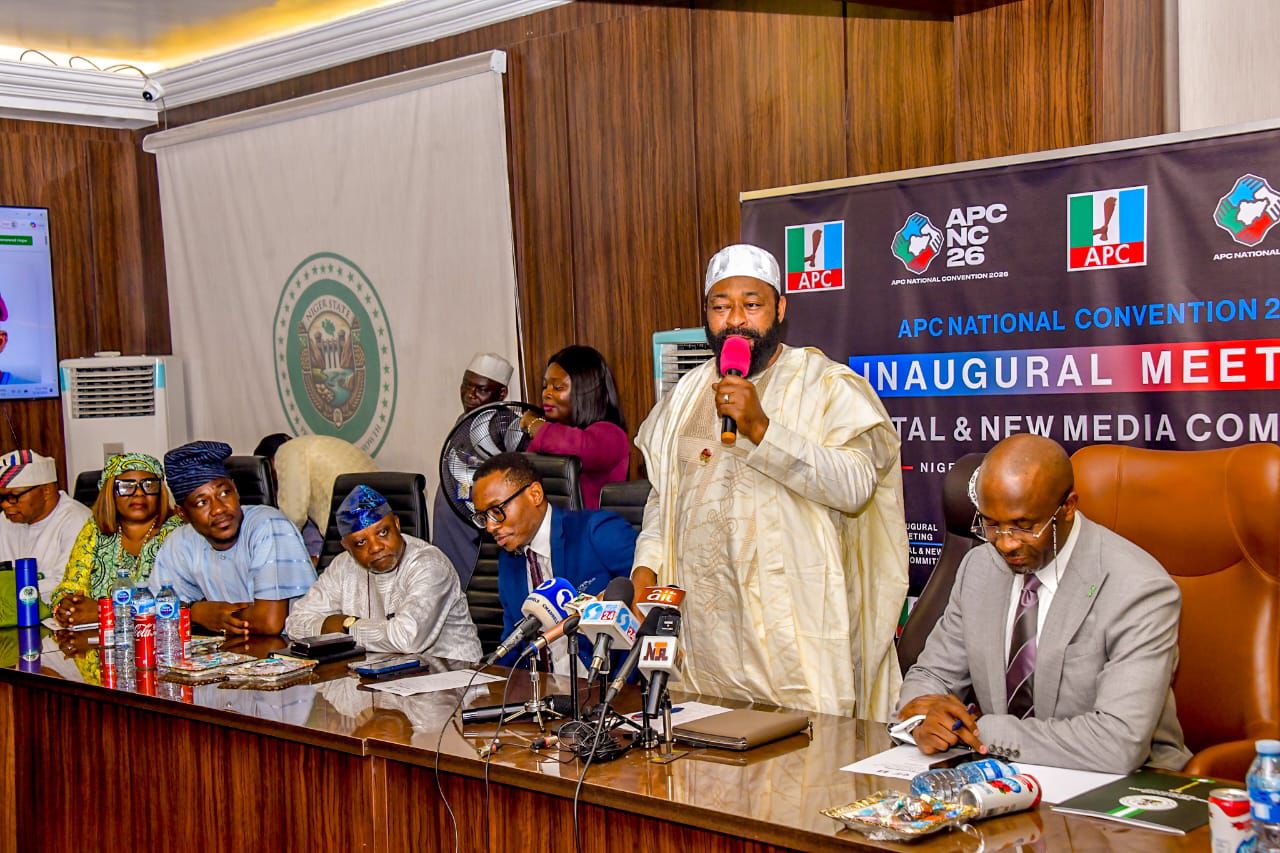
Governor Bago Inaugurates APC Digital Media Sub-Committee Ahead of National Convention.
Governor Umaru Bago has inaugurated the Digital Media Sub-Committee for the forthcoming National Convention of the All Progressives Congress (APC), scheduled to hold on March 27 and 28, 2026 in Abuja.
Chairing the sub-committee, Governor Bago tasked members with the responsibility of effectively communicating the party’s manifesto to the public.
He emphasized the need to leverage social media platforms to highlight the achievements and ongoing efforts of President Bola Ahmed Tinubu, noting that communication gaps have posed challenges that must now be decisively addressed.
The Co-Chair of the sub-committee, Hon. Benjamin Kalu, Deputy Speaker of the House of Representatives, echoed the Governor’s position, urging members to project the activities of both the party and the government to a broader audience.
He called for a deliberate and coordinated effort to showcase the party’s achievements and policy direction, stressing the importance of shaping a compelling and consistent narrative across all digital platforms.
Delivering a presentation to the committee, Otega Ogra, SSA to the President on New Media, who serves as Secretary of the sub-committee, outlined strategic focus areas to guide the team’s operations.
His presentation highlighted communication priorities and actionable steps to achieve the committee’s mandate and strengthen the party’s digital engagement.


-

 society6 months ago
Religion: Africa’s Oldest Weapon of Enslavement and the Forgotten Truth
-

 news4 months ago
WHO REALLY OWNS MONIEPOINT? The $290 Million Deal That Sold Nigeria’s Top Fintech to Foreign Interests
-

 society6 months ago
“You Are Never Without Help” – Pastor Gebhardt Berndt Inspires Hope Through Empower Church (Video)
-

 celebrity radar - gossips2 months ago
Dr. Chris Okafor Returns with Power and Fire of the Spirit -Mounts Grace Nation Altar with Fresh Anointing and Restoration Grace on February 1, 2026
You must be logged in to post a comment Login
You must log in to post a comment.