
society
BLOOD, OIL AND BETRAYAL: The Untold History of the Warri Crisis

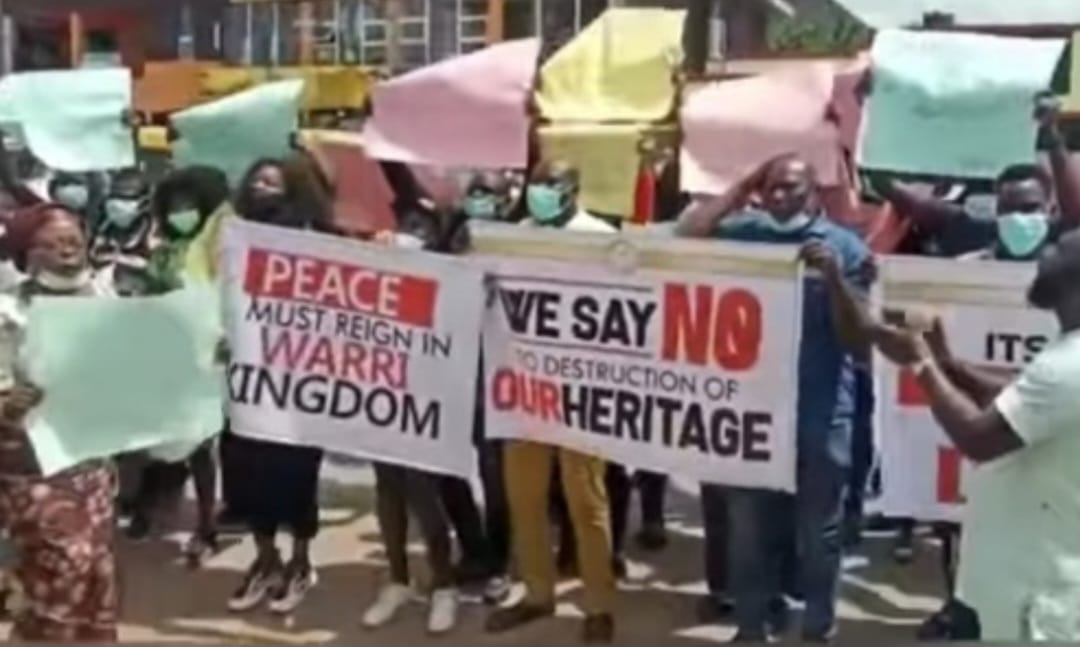
BLOOD, OIL AND BETRAYAL: The Untold History of the Warri Crisis.
By George Omagbemi Sylvester | Published by saharaweeklyng.com
“A deep dive into the political distortions, boundary disputes and violent power struggles that fuelled one of Nigeria’s most devastating oil-region conflicts.”
INTRODUCTION: WHEN OIL BECOMES A CURSE.
Warri was not designed to bleed. It was designed to thrive; a booming oil city, a melting pot of Itsekiri, Ijaw and Urhobo civilisation and one of the most economically strategic territories in the entire Niger Delta. Though the same abundance that should have made Warri Nigeria’s industrial crown jewel became the poison that fractured it.
The Warri crisis is a brutal testament to what happens when greed overwhelms governance, when political manipulation replaces justice, and when the oxygen of a people’s survival (land, identity and resource control) is weaponised. The city became a theatre of unending conflict because institutions failed, leaders betrayed trust and the federal structure amplified rather than resolved grievances. As the renowned political theorist John L. Esposito once wrote, “Where the state refuses fairness, society becomes a battleground of competing wounds.” Warri embodies that warning to the letter.

THE ROOT OF THE FIRE: A CITY BUILT ON COMPETING HISTORIES.
The foundation of Warri’s crisis lies in the overlapping historical claims of three ethnic groups: the ITSEKIRI, IJAW and URHOBO. Each group holds deep cultural and ancestral attachments to the land and its waterways. Colonial administrators worsened tensions by redrawing boundaries in ways that ignored indigenous histories. The British-era Native Authorities, provincial boundaries and later Local Government reforms all created structural imbalances. Communities who felt sidelined by these political designs carried those grievances into the post-colonial era. The embers were already hot and it only needed a spark.
Professor Eghosa Osaghae, a leading scholar of federalism, once warned:
“When administrative boundaries do not reflect social reality, conflict becomes a permanent resident.” WARRI is the NIGERIAN example of that truth.
THE FLASHPOINT OF 1997: WHEN A “PEN STROKE” IGNITED A WAR.
In March 1997, the Nigerian military government created new LGAs and relocated the Warri South-West Local Government Headquarters from the predominantly Ijaw community of Ogbe Ijoh to the Itsekiri community of Ogidigben.
That decision was not administrative; it was explosive. For the Ijaw, it meant political disenfranchisement, loss of control over revenue allocations and weakened access to land rights. For the Itsekiri, it was a long-overdue correction of historic marginalisation. For the Urhobo, it added another layer of complexity to already tense communal relations.

The consequence was war.
Militias formed overnight. Villages were razed. Lives ended brutally. Communities that had lived in uneasy peace for decades turned into bitter enemies. The conflict spread quickly across Warri, Escravos, Koko, Gbaramatu, Ugborodo and other key oil belts.
Human rights groups recorded hundreds of deaths, mass displacement and widespread destruction. Chevron, Shell and NNPC facilities became targets and Nigeria’s oil production nose-dived.
Warri (a city built to be a symbol of prosperity) was now synonymous with bloodshed.
OIL: THE FUEL THAT FED THE FLAMES.
To understand the Warri crisis, one must understand the politics of oil. The struggle was never merely about ethnicity. It was about control — of flow stations, pipelines, royalties, political access, oil company patronage and federal allocations. The late economist Claude Ake captured it perfectly:
“In Nigeria, oil is not a resource. It is the politics itself.”
In Warri, this reality was unmasked violently.
Oil companies often hid behind a façade of neutrality, yet their operational maps influenced who had power. Communities fought bitterly to be recognised as “HOST COMMUNITIES” because that meant contracts, employment, compensation and political access.
The 1997 LGA headquarters relocation was simply the match that lit decades of tinder.
THE DEEPER BETRAYAL: HOW GOVERNMENT FAILED WARRI.
The Warri crisis persisted because the state repeatedly failed in three major ways:
1. Failure of Fair Governance.
Decisions were made without consultation. Communities were treated as afterthoughts. Leaders played ethnic politics to secure FEDERAL ATTENTION and OIL COMPANY FAVOUR.
2. Failure of Security and Justice.
Instead of impartial conflict resolution, authorities often responded with force. Allegations of arbitrary raids, mass arrests and selective protection became common. As the conflict analyst Dr. Cyril Obi wrote, “When security forces become perceived as ethnic tools, the state’s legitimacy collapses.”
3. Failure of Development.
Despite producing billions in oil wealth, Warri’s communities remained underdeveloped. Roads collapsed. Schools shut. Health centres decayed. Youth unemployment worsened. A generation grew up seeing violence as the only language the government understands.
Warri became a paradox: an oil giant with the LIVING CONDITIONS of an ABANDONED VILLAGE.
THE RISE OF MILITIAS: WHEN YOUTH BECAME THE ARBITERS OF POWER.
With no jobs, no justice system to trust and no political empowerment, young people turned to the only available economy, which is the militant economy.
Pipeline vandalism, oil theft and territorial control became alternative livelihoods.
This era birthed the militant networks that later evolved into groups connected to the Movement for the Emancipation of the Niger Delta (MEND).
These groups defended their ethnic interests but also tapped into the lucrative black economy of illegal oil bunkering. As the Niger Delta historian Ibaba I. Samuel puts it:
“A neglected youth is a weapon waiting for the highest bidder.”
Warri’s youth became exactly that; weapons in the hands of political actors, warlords and economic saboteurs.
THE HUMAN COST: WHEN A CITY’S HEART STOPPED BEATING.
The Warri crisis unleashed human suffering on a massive scale:
Entire communities were erased.
Children dropped out of school.
Women became widows in hours.
Markets and businesses collapsed.
Inter-marriages dissolved as families fled.
Thousands were internally displaced.
Traditional institutions lost authority.
Fear became the city’s official language.
Warri moved from being a city of industry to a city of trauma.
THE ECONOMIC RUIN: WHEN AN OIL CAPITAL BECAME A WARZONE.
The Warri crisis dealt Nigeria one of its largest economic blows in the Fourth Republic:
Oil companies shut down operations.
Production dropped significantly during peak violence.
Billions of dollars were lost in output.
Critical infrastructure was vandalised continuously.
Investors fled.
Port activity declined.
The ONCE-BUSTLING Warri refinery became symbolic of national decay.
Nigeria (a nation addicted to oil revenue) bled alongside Warri.
PATH TO REDEMPTION: WHAT MUST BE DONE.
Warri can rise again, but not through EMPTY POLITICAL speeches. It needs STRUCTURAL REFORM anchored on fairness.
1. Clear, just, community-backed boundary demarcation.
No more ambiguous maps drawn by bureaucrats who have never visited the creeks.
2. Power-sharing and political inclusion for all ethnic groups.
No group must feel like a tenant in its own land.
3. Transparent oil revenue allocation.
Host communities must feel the impact and not through crumbs but genuine development.
4. Community-based peace mechanisms.
DIALOGUE, not FORCE, creates permanent peace.
5. Youth empowerment and economic diversification.
A city that leaves its youth jobless manufactures its own destroyers.
6. Oil companies must be held accountable.
CSR must become law-backed obligation, not public relations charity.
FINAL NOTE: REBUILDING A CITY BETRAYED BY ITS GUARDIANS.
Warri’s crisis is not just a story of conflict, but a story of betrayal.
Betrayal by leaders who weaponised ethnicity.
Betrayal by governments that ignored early warnings.
Betrayal by oil companies that benefited from division.
Betrayal by a system that treated human lives as expendable.
YET WARRI HAS NOT DIED.
Its people remain RESILIENT, PROUD and EAGER for PEACE.
Its creeks still carry the ECHOES of a FUTURE WAITING to be REBUILT.
Its youth still POSSESS BRILLIANCE WAITING to be UNLOCKED.
Though only TRUTH, JUSTICE and INCLUSIVE GOVERNANCE can restore what was lost.
As Chinua Achebe warned:
“A man who does not know where the rain began to beat him cannot say where he dried his body.”
Warri must confront where the rain began. Only then can the Big Heart State (Delta) beat strongly again.





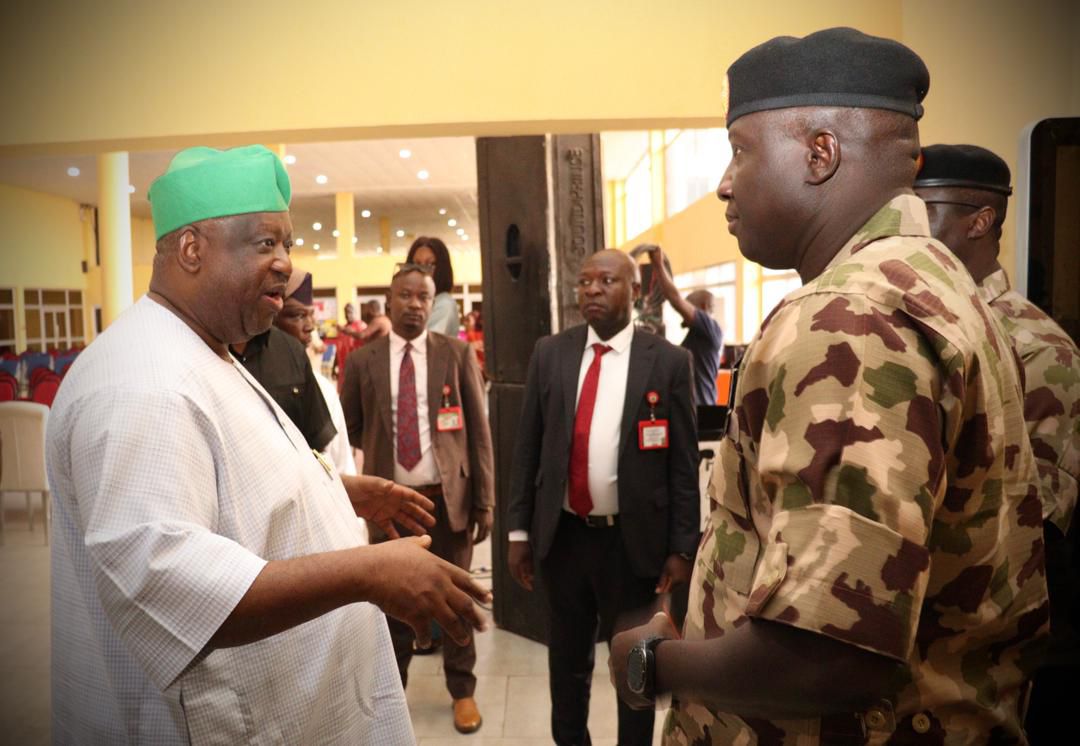
COAS Launches Nationwide Security Renewal Mission in Plateau
The Chief of Army Staff, Lieutenant General Waidi Shaibu, on Thursday led a high-level delegation of security chiefs to Plateau State, flagging off a nationwide security renewal mission aimed at strengthening civil-military cooperation and restoring lasting peace across the country.
The visit to Jos, the Plateau State capital, marks the first phase of a coordinated national effort to address persistent security challenges through joint operations, community engagement, and proactive intelligence gathering.

Governor Caleb Muftwang received the delegation, describing the initiative as a critical step toward stabilizing affected communities and reinforcing public confidence in security institutions.
Civil-Military Synergy Takes Centre Stage
At the heart of the mission is a renewed emphasis on collaboration between the military, civil authorities, and local communities. Speaking during the visit, Lt. Gen. Shaibu stressed that national security must be treated as a collective responsibility.
He urged citizens to support security agencies by remaining vigilant, sharing credible information, and complying with lawful directives, noting that effective security cannot be achieved in isolation.
Community Engagement as Confidence-Building Tool
In a departure from purely operational engagements, the Army Chief held direct consultations with community leaders and residents in Jos, reinforcing the importance of trust and dialogue in conflict resolution.
Lawmakers, including Dachung Bagos and Ladi Dangyok, commended the initiative, stating that visible engagement by top military leadership helps rebuild confidence among citizens and fosters cooperation.

Proactive Security Operations Underway
Operational updates were provided by Major General Folusho Oyinlola, who disclosed that troops under Operation Enduring Peace have intensified surveillance, intelligence-led patrols, and coordinated actions with other security agencies.
According to the Army, the approach is designed to prevent escalation of threats, safeguard lives and property, and stabilize vulnerable communities before crises emerge.
A Shift Toward Sustainable Peace
Military authorities emphasized that the Plateau visit is part of a broader, long-term strategy to transition from reactive responses to sustainable peacebuilding nationwide. The framework includes strengthening local resilience, ensuring justice, and maintaining continuous engagement with stakeholders.
Analysts view the initiative as a significant policy shift, reflecting a more inclusive security architecture that integrates community participation with military operations.
Call for National Unity
The Army leadership concluded with an appeal to Nigerians to reject divisive narratives and support ongoing efforts to promote unity and peace.
“The success of this mission depends not only on the armed forces but on the cooperation of every citizen,” the COAS stated.
The nationwide security renewal campaign is expected to extend to other regions in the coming weeks as authorities seek to consolidate gains and build a safer, more unified Nigeria.


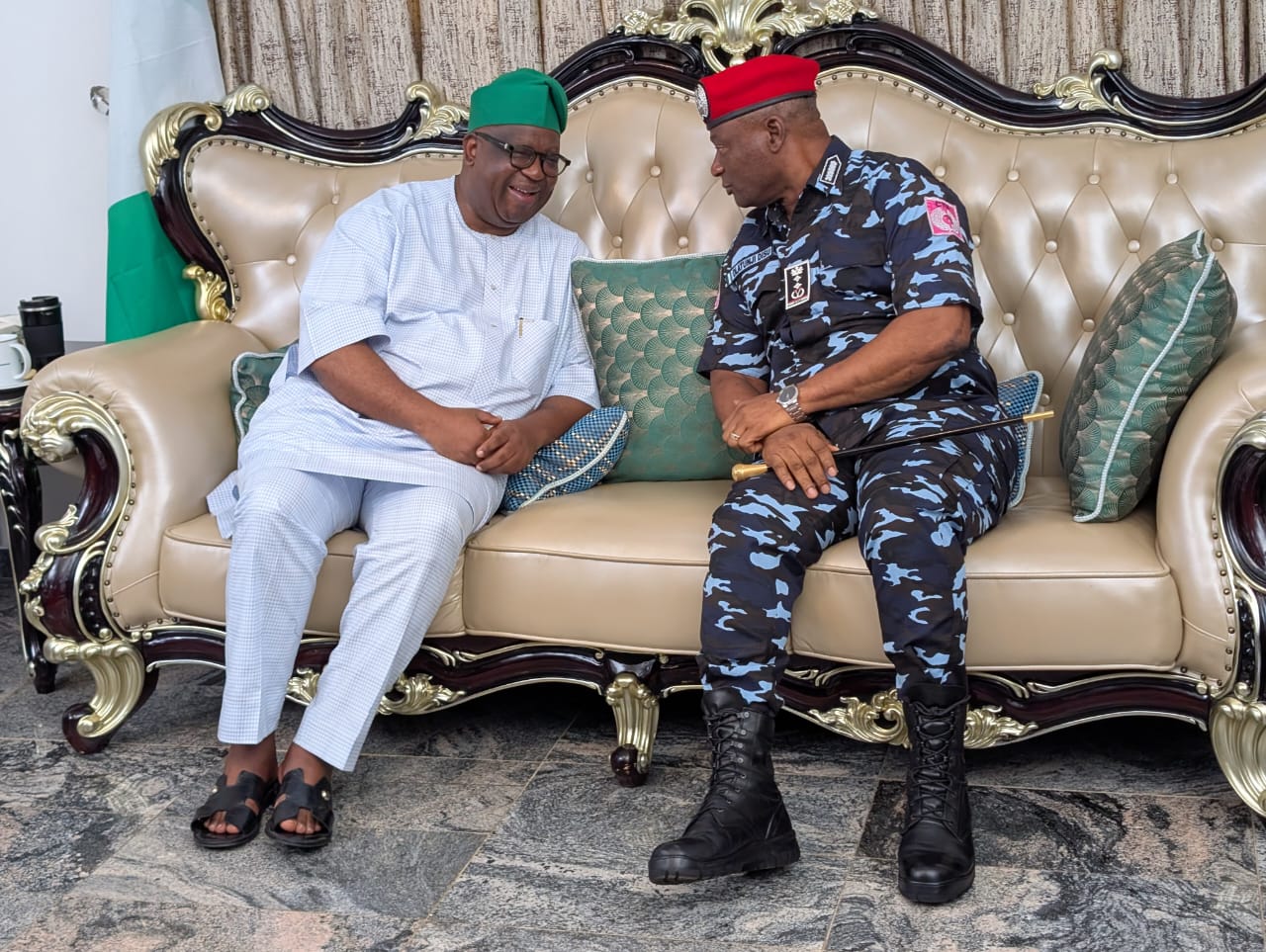
IGP Disu Visits Plateau, Orders Tactical Deployment To Reinforce Security
The Inspector General of Police, Olatunji Disu, on Thursday paid a working visit to Plateau State following recent unrest, holding strategic talks with Governor Caleb Muftwang on measures to strengthen security and prevent further disturbances.
As part of immediate steps to stabilise the situation, the police chief authorised the deployment of specialised tactical units to support officers already on ground across affected areas.
Governor Muftwang commended the swift intervention of the police leadership, praising the dedication and professionalism of security personnel working to restore calm. He also acknowledged the efforts of mobile police officers and lauded the leadership of the state’s Commissioner of Police, Bassey Ewah.
Both the Nigeria Police Force and the Plateau State Government reaffirmed their commitment to safeguarding lives and property, stressing that enhanced collaboration remains key to restoring lasting peace in Plateau State, popularly known as the Home of Peace and Tourism.


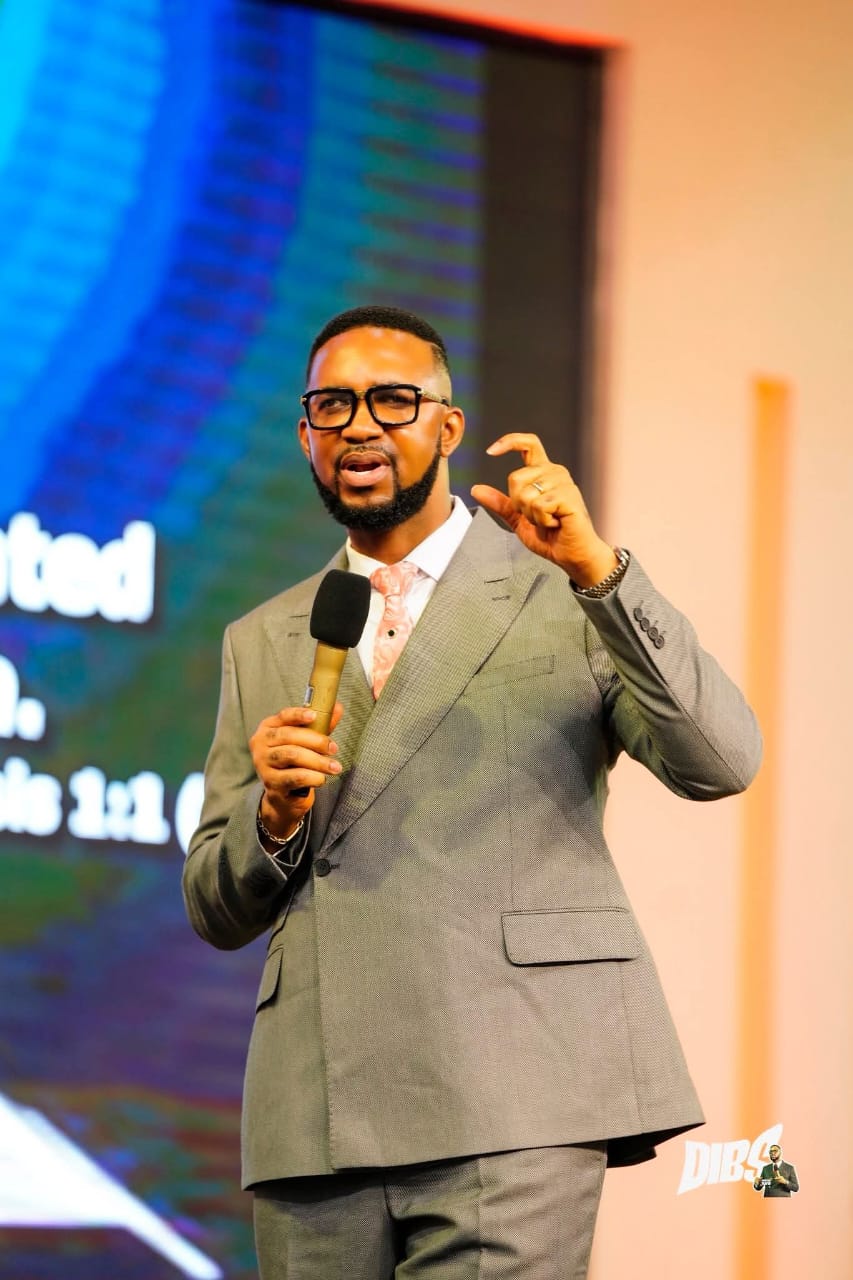
Grace Nation Worldwide: A Living Reality – Dr. Chris Okafor
……“Miracles, Healing, and Deliverance Overflow at Grace Nation Services”
The Grace Nation midweek Prophetic Healing, Deliverance, and Solutions (PHDS) Service on 2nd April 2026 at the international headquarters in Ojodu Berger, Lagos, was a spectacular display of God’s power, marked by miracles, healing, and deliverance.
The God of Grace Nation continues to demonstrate His authority, breaking strongholds, healing the sick, restoring lost glory, and providing solutions to every problem presented at His altar.
Testimonies of God’s Power
One woman, previously diagnosed with a terminal condition and slated for a ₦4.5 million surgery due to inability to excrete, was prayed for by the Generational Prophet, Christopher Okafor, just a week after visiting the church. Declaring healing within 24 hours, she returned to testify to God’s miraculous intervention.
Another pregnant woman, whose baby was bridged and at risk, was located and prayed for. She returned to service with confirmation that her child is now well-positioned for delivery. Similarly, a woman booked for a C-section due to an overdue and poorly positioned pregnancy testified during the service that her baby is now properly positioned, ready for birth.
These testimonies underscore the truth: what God cannot do does not exist. Grace Nation has entered a new level of spiritual authority, and with faith, believers are witnessing the impossible become reality.
God Works by Principle, Not Gossip
In his sermon, Dr. Okafor emphasized that God does not operate on superstition, gossip, or social media pressures. His work is grounded in His Word, and it is through adherence to His principles that Grace Nation continues to flourish.
The Generational Prophet stressed that to enjoy divine blessings and fruitfulness, believers must remain connected to God’s Word, faithfully serve Him, and ignore distractions or side-talks. Focused commitment to God’s service guarantees alignment with His miraculous power.
Join the Movement
Grace Nation Worldwide is open for all who desire a life transformed by divine intervention. Weekly services include:
Sunday Service: 7:00 AM
Grace Nation Island Service (Ogombo): Wednesday, 5:00 PM
Midweek PHDS Service: Thursday, 7:00 AM
Attending these services under the ministry of the Generational Prophet ensures encounters with God’s supernatural power, life-changing miracles, and lasting breakthroughs.
Grace Nation Worldwide is not just a church—it is a reality where faith meets the supernatural.
By Sunday Adeyemi


-

 society6 months ago
Religion: Africa’s Oldest Weapon of Enslavement and the Forgotten Truth
-

 news4 months ago
WHO REALLY OWNS MONIEPOINT? The $290 Million Deal That Sold Nigeria’s Top Fintech to Foreign Interests
-

 society6 months ago
“You Are Never Without Help” – Pastor Gebhardt Berndt Inspires Hope Through Empower Church (Video)
-

 celebrity radar - gossips2 months ago
Dr. Chris Okafor Returns with Power and Fire of the Spirit -Mounts Grace Nation Altar with Fresh Anointing and Restoration Grace on February 1, 2026