
society
Borrowed Into Bankruptcy: How Nigeria’s Debt Spiral Under the APC Is Scaring Away Investors


Borrowed Into Bankruptcy: How Nigeria’s Debt Spiral Under the APC Is Scaring Away Investors.
George Omagbemi Sylvester | SaharaWeeklyNG.com
Debt-shackled Nigeria now pays in fear, while investors flee the drowning ship.
Nigeria stands today not as a rising economy but as a nation drowning in debt and the warning lights flashing are not faint. The eminent legal icon, Afe Babalola SAN, pulled no punches when he declared that the country’s worsening debt profile is undermining investor confidence and that our banks are complaining that the Central Bank of Nigeria (CBN) can no longer honour government promissory notes.
In blunt terms: we borrowed, we did little that shows value and now we are paying dearly. This is not mere theory, but the harsh reality confronting Nigeria as borrowing has become a substitute for sound economic policy and productive investment. The result, investors are watching, waiting and many are leaving. The so-called “PROGRESS” under the ruling All Progressives Congress (APC) has turned into a spectacle of empty coffers, ballooning liabilities and vanishing credibility.
1. A growing mountain of debt:
According to the very same Babalola, Nigeria’s total public debt currently stands at around ₦152.4 trillion (US $99.7 billion) a figure he described as testimony to our status today as a “BIG DEBTOR COUNTRY.”
Independent data reinforce this staggering trend and as of March 31 2025, Nigeria’s public debt was roughly ₦149.39 trillion (≈US$97.24 billion) with domestic debt accounting for about 52.72% and external debt around 47.28%.
Other analysts forecast the total debt could surge to ₦187.79 trillion by the end of 2025 according to the BUDGIT FOUNDATION. This is not static debt at a comfortable level, but an explosive borrowing, with debt-to-GDP ratios rising, debt-service burdens growing and the capacity for repayment shrinking.
2. Investor confidence in retreat:
Why do investors care? Because enormous sovereign borrowing sends chilling signals. The government is diverting capital away from GROWTH-ENHANCING investment into debt servicing.
Risk premiums rise. Lenders demand higher rates. Firms face crowding out.
The banking sector is bearing the strain, when the sovereign borrows from banks, those banks may lack the ability to lend to the private sector. In fact, the International Monetary Fund (IMF) cautioned that Nigeria’s reliance on domestic debt and oil are exposing it to financial stability risks. It warned that “interest payments in Nigeria have risen to above 30 % of government revenues, crowding out the private sector and limiting fiscal flexibility.”
Kristalina Georgieva, IMF Managing Director, put it plainly: “very high levels of debt suffocate economies.”
And Babalola’s observation is telling “most business companies from other countries do not want to invest in this debtor country.” By borrowing recklessly, Nigeria has sent a loud message to investors “We may not be able to fulfil our obligations.”
3. The looting & LACK-OF-DELIVERY narrative:
Borrowing in itself is not a sin; if it is used productively. But here’s the rub, what is on display to show for the massive borrowings under the APC government? The litany is familiar, oil-price dependency, subsidy burdens, recurrent expenditures rather than capital projects, STATE-GOVERNMENT borrowings to pay salaries.
An open letter to the Guardian warned:
“Many governors have borrowed massively to fund recurrent expenditures such as salaries. This culture of reckless borrowing without a clear repayment strategy has further worsened Nigeria’s economic vulnerabilities.”
That is the message; debt without transformation. Yielding little in terms of infrastructure for growth, jobs or sustainable revenue. And when the standard of living falls while debt rises, the population knows, the money was not used well or was not used at all. The APC-era borrowing spree now looks less like investment and more like a mortgaging of Nigeria’s future with nothing obvious to show.
4. Banking sector under pressure:
It is no coincidence that Babalola mentioned complaints from banks that the CBN is unable to honour government promissory notes. This reflects the “BANK-SOVEREIGN NEXUS” risk flagged by the IMF, where governments lean heavily on domestic banking systems to finance deficits, increasing systemic risk. When banks balance sheets are laden with sovereign debt instead of lending to entrepreneurs, small businesses shrink, job creation falters and the economy slows. Nigeria is already showing signs of this CROWDING-OUT effect, yet the borrowing continues.
5. Structural weaknesses amplified by debt:
Debt is not just a fiscal issue, it is STRUCTURAL. Nigeria remains overly dependent on oil revenues, which are volatile by nature. The IMF warns that this dependence combined with rising domestic debt poses a major threat to stability.
When revenues fluctuate and debt obligations remain fixed (or grow), liquidity crises loom. The loss of investor trust is amplified when MACRO-FUNDAMENTALS. are weak. In short, when you borrow because your economy cannot raise revenue, you dig the pit deeper.
6. Clear quotes to underscore the danger:
Afe Babalola “Our banks are complaining that the Central Bank is not honouring PROMISSORY NOTES, the federal government is in debt and cannot pay the Central Bank.”
IMF Director Abebe Aemro Selassie “We are now sitting in a situation where there are significant vulnerabilities, particularly in those countries where public debt is high and interest rates are high.” IMF Managing Director Kristalina Georgieva; “Very high levels of debt suffocate economies.”
These authoritative voices ring loud alarms and none are optimistic about Nigeria’s trajectory without urgent correction.
7. The hypocrisy of “progress” under APC:
Let us not mince words, the APC government promised prosperity. Instead, it has delivered indebtedness. Massive borrowing but little transparency. Fiscal responsibility but rampant deficit. Infrastructure promises but recurring expenditures. And now, the cost is being borne by ordinary Nigerians through inflation, declining public services, higher taxes, fewer jobs and the risk of being sold out in debt reschedules or bail-outs.
If the loans were honest, productive and accountable, perhaps the story would differ. But when you borrow and the harvest does not show up, you leave future generations to carry the burden.
8. What must be done—NO MORE ILLUSIONS:
a. Immediate debt-management discipline: Nigeria must stop borrowing for recurrent expenditures and ensure that any new loans are for growth-yielding investment.
b. Transparency & oversight: The National Assembly, Debt Management Office (DMO) and civil society must demand full account of how every borrowed naira was used. As analysts write: “over 80 % of government revenue is now allocated to servicing debts, leaving minimal funds for essential services.”
c. Economic diversification and revenue generation: Nigeria cannot continue chasing oil spikes. Non-oil sectors must be mobilised, tax bases broadened, and waste eliminated.
d. Protect the banking sector, free the private sector: Avoid feedback loops where sovereign borrowing starves the bank-loan channel to private business.
e. Investor-friendly reforms not just borrowed rhetoric: Restore confidence by honouring obligations (promissory notes, matured bonds), stabilising macro-economics and giving visible returns on borrowed capital.
9. Reality Check: A warning we cannot ignore:
The message from Afe Babalola is unambiguous, Nigeria is a debtor nation first, an investment destination second. The fact that “business companies from other countries do not want to invest in this debtor country” is a condemnation, not a prediction.
When a country borrows without visible returns, it mortgaging its sovereignty, weakening its CREDIT-STANDING and resigning its youth to unfulfilled promise. The APC may have the majority, but even the majority cannot hide the mounting liabilities. This is not partisanship (it is accountability. This is not panic) it is reality.
If nothing changes, we will not borrow our way to greatness. Instead, we will borrow ourselves into irrelevance.
The time to act was yesterday. If Nigeria fails to reform its debt habits now, the reckoning will come tomorrow, with far greater cost. And investors already see the warning signs. It is the government’s turn to act.
Published by SaharaWeeklyNG.com
Author: George Omagbemi Sylvester





celebrity radar - gossips
Accolades to Empress Genevieve Wining as she Celebrate birthday in Grand style

Accolades to Empress Genevieve Wining as she Celebrate birthday in Grand style
Emmanuel Clement
Vilnius, Lithuania – The Grand Hotel Vilnius will host a grand birthday celebration in honor of Her Majesty The Empress Genevieve Wining of the United Kingdom of Atlantis (UKA) on April 4th, 2026.
The four-day event promises to be an extravagant affair, marking the special birthday of Empress Genevieve Wining. The celebration will take place at the prestigious Grand Hotel Vilnius, Lithuania, renowned for its luxurious ambiance and exceptional service.

According to the event flyer, the birthday celebration will be a spectacular occasion, fitting for an empress. Guests can expect an elegant setting adorned with golden accents, sparkling champagne, and festive decorations, creating a regal atmosphere befitting the occasion.
The Empress Genevieve Wining of UKA is expected to grace the event, which will include various festivities and celebrations in her honor. The occasion aims to bring together dignitaries, followers, and guests to commemorate the empress’s birthday with grandeur and joy.
For media inquiries, accreditation, or further information about the birthday celebration of The Empress Genevieve Wining of UKA, please contact the event organizers.
Courtesy of His Excellency Emperor Prof. Solomon Wining. UKA
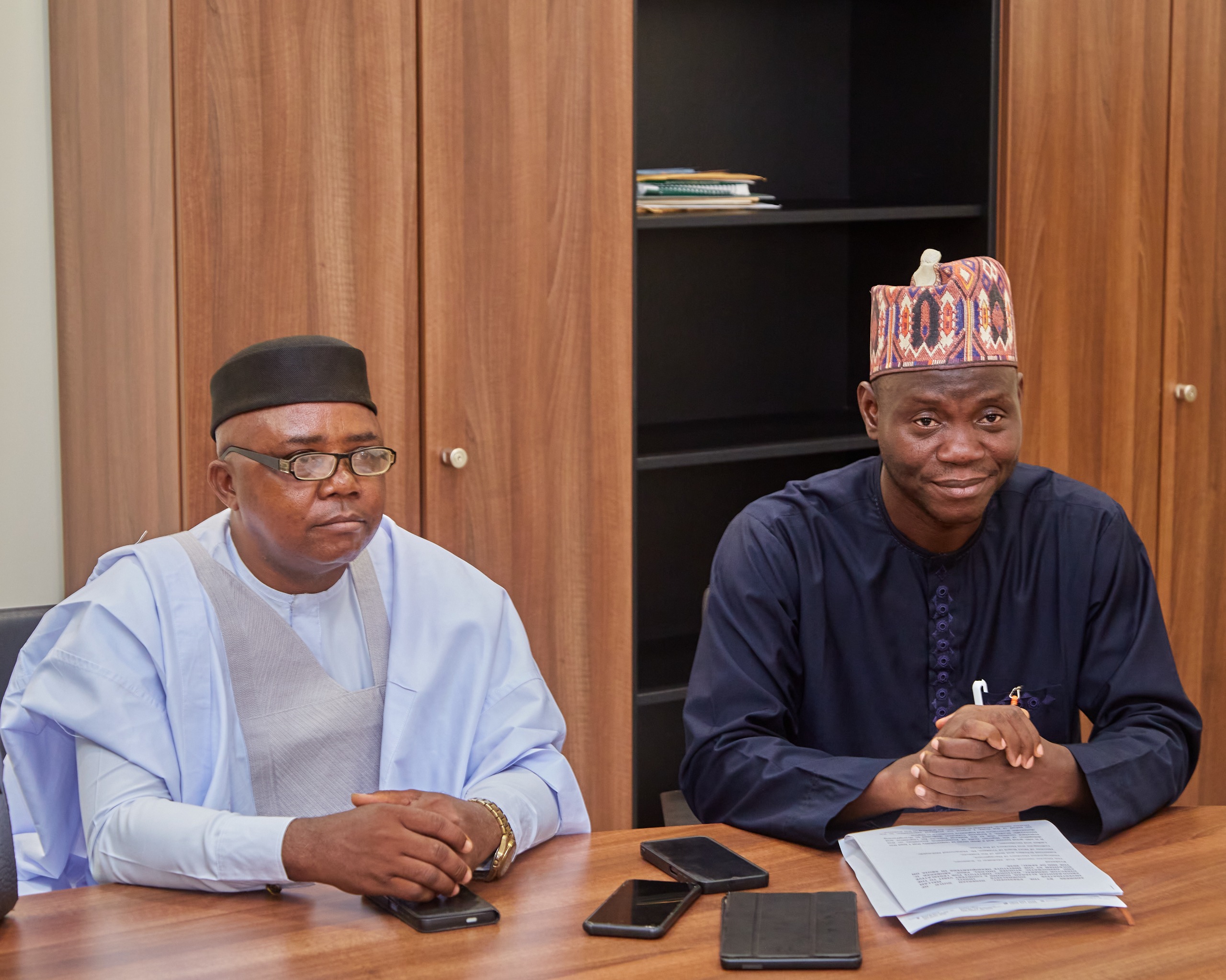
Democratic Accountability in Focus as NGIJ Courts NILDS for Strategic Collaboration
The Nigerian Guild of Investigative Journalists (NGIJ) has sought a strategic partnership with the National Institute for Legislative and Democratic Studies (NILDS) to enhance legislative reporting, strengthen democratic accountability, and promote evidence-based journalism in Nigeria.
The proposal was made during a courtesy visit by the NGIJ delegation, led by its President, Mallam Abdulrahman Aliagan, to the Institute’s headquarters in Abuja.
The Director-General of NILDS, Professor Abubakar O. Suleiman, was represented at the meeting by the Director of Legal Services, Professor Ibrahim Danwanka. Also in attendance were the Special Adviser to the DG on Media, Mr. Muhammad Abdulkadir and the Director of Information, Mr. Emmanuel Atakpo.
Speaking during the visit, Aliagan described the engagement as a strategic step toward building synergy between investigative journalism and legislative research institutions. He commended the leadership of Professor Suleiman for transforming NILDS into a leading centre for legislative studies and democratic governance in Africa.
“This visit is not merely ceremonial—it is deeply strategic. NGIJ and NILDS share a common vision of strengthening democracy, promoting accountability, and deepening good governance in Nigeria,” Aliagan said.
He explained that while NILDS advances democratic governance through research and legislative capacity development, NGIJ complements these efforts through investigative journalism and public-interest reporting.
Aliagan highlighted the Guild’s activities across the country, particularly its Governance Assessment Visits conducted in Kogi, Bayelsa, Ondo, Kwara, Osun, and Kaduna states, noting that such engagements have improved public discourse and strengthened accountability at the subnational level.
“Our mission is to promote ethical investigative journalism, strengthen transparency in governance, and build capacity for data-driven reporting that connects citizens with democratic institutions,” he said.
The NGIJ President also proposed collaboration in areas such as training on legislative processes, joint research and publications, policy dialogues, data sharing, and fellowship programmes for journalists and researchers.
He further informed the Institute of the Guild’s plan to host the Dele Giwa Memorial Annual Lecture on Investigative Journalism in June as part of activities marking Democracy Day. The Guild requested that Professor Suleiman serve as keynote speaker and sought approval to use NILDS’ auditorium for the event.
“We are confident that your presence and intellectual contribution will greatly enrich the discourse and lend national significance to the event,” Aliagan added.
Responding on behalf of the Director-General, Professor Danwanka welcomed the proposal and described the initiative as timely and beneficial to national development. He commended NGIJ for its commitment to accountability journalism and its recognition of the Institute’s growing impact.
“If there is any institution journalists need to collaborate with, it is NILDS.
Legislative reporting requires specialised knowledge that many journalists currently lack,” Danwanka said.
He explained that NILDS was established by an Act of Parliament in 2011 and later expanded in 2017 to include broader responsibilities covering democratic institutions and civil society organisations.
According to him, the Institute has grown significantly under Professor Suleiman’s leadership, expanding from four departments to eleven, with increased staff strength and wider national, regional, and continental visibility.
Danwanka noted that NILDS currently provides research and capacity-building support not only to Nigeria’s legislature but also to parliaments across West Africa and other parts of the continent, including Kenya, Zimbabwe, Malawi, Ghana, and Togo.
“Legislature is a specialised field. Even experts from other disciplines must acquire knowledge of its processes to report it accurately. That is where NILDS comes in,” he said.
He assured the NGIJ delegation that all requests presented during the visit, including collaboration proposals, the use of the Institute’s facilities, and the invitation to the DG would be communicated for necessary action.
Danwanka also acknowledged NGIJ’s commendation of the appointment of Mr. Abdulkadir as Special Adviser on Media, describing the recognition as thoughtful and well-deserved.
The meeting ended with both parties expressing optimism about establishing a formal framework for collaboration, with a shared commitment to strengthening democratic institutions and improving governance through knowledge-driven journalism.
“This engagement marks the beginning of a sustainable partnership that will advance legislative excellence and investigative journalism in Nigeria,” Danwanka said.


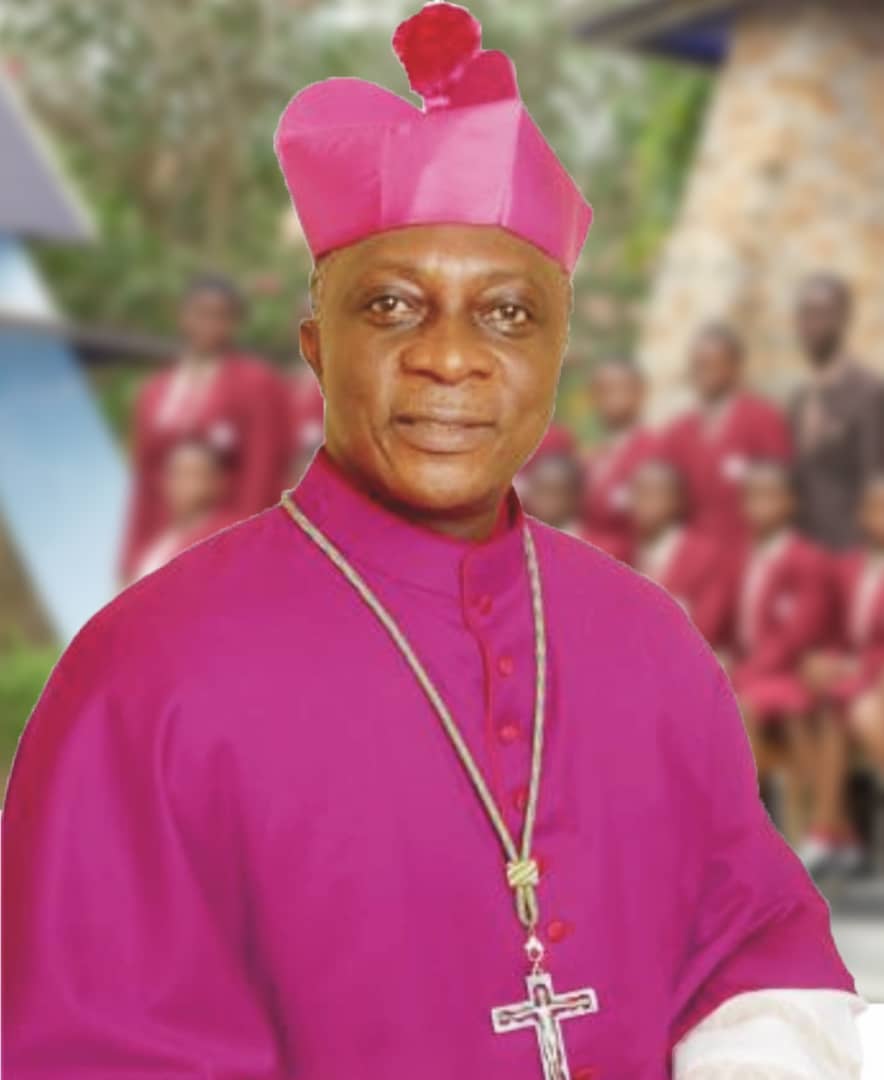
GOVERNMENT MUST TACKLE NATION’S PRESSING CHALLENGES — BISHOP MARTINS URGES AT CHRISM MASS
By Ifeoma Ikem
The Holy Cross Cathedral, Lagos, was filled with joy, reverence, and renewed commitment on Holy Thursday as Catholic faithful across the metropolis gathered for the annual Chrism Mass — a solemn celebration marking the institution of the priesthood, the Holy Eucharist, and the blessing of sacred oils used throughout the liturgical year.

During the ceremony, the Catholic Archbishop of Lagos, Most Rev. Adewale Martins, described the Chrism Mass as a profound moment in the life of the Church.
He noted that it offers priests an opportunity to renew their vows and reflect on the centrality of the Eucharist, which he emphasized remains the heartbeat of the Catholic faith.
Addressing national issues, Bishop Martins acknowledged the government’s ongoing efforts to tackle Nigeria’s current challenges.
However, he stressed the need for more decisive and accelerated interventions, particularly in securing lives and easing the economic burdens confronting citizens.
He congratulated priests on their feast day and reflected on the rising influence of digital evangelization. While recognizing that many people now “inhabit online spaces,” he warned clergymen to handle social media with caution, discipline, and fidelity to Church teachings. According to him, digital influence must never overshadow spiritual integrity.
“The oils blessed today are not simply symbols; they speak of being set apart by a mark not earned, not crafted, but given,” he said. “As we renew our promises, we do not recreate ordination; we awaken memory. We were not ordained to build profiles but to bear Christ.”
He further noted that the digital world has become a place where people “gather, argue, celebrate, confess, misunderstand, and sometimes encounter truth.” For this reason, he said the Church recognizes the need to take the Gospel into that space without compromising its authenticity.
In his homily, Rev. Fr. Paul Akin-Otiko, Chaplain of St. Thomas More Catholic Chaplaincy, University of Lagos, emphasized the enduring significance of the Chrism Mass as an ancient tradition where sacred oils are consecrated.
He urged priests to pray fervently for the sick using the blessed oils, reminding them that true healing comes from God.
Fr. Akin-Otiko encouraged clergy to remain selfless, warning them never to turn the Church into a source of personal gain.
He stressed that their primary duty is the salvation of souls and the welfare of the people entrusted to them.
Monsignor John Aniagwu took a moment to appreciate Anthony Cardinal Olubunmi Okogie for his fatherly guidance and exemplary leadership. He prayed for God’s continued blessings, asking that all present be granted good health to witness many more Chrism Masses.
The highlight of the ceremony was the renewal of vows by hundreds of priests, who reaffirmed their commitment to lives of dedication, chastity, and obedience to the Church and their bishop — an act that drew heartfelt applause from the congregation.
The celebration concluded with songs of thanksgiving, joy, and renewed devotion.


-

 society7 months ago
Religion: Africa’s Oldest Weapon of Enslavement and the Forgotten Truth
-

 news4 months ago
WHO REALLY OWNS MONIEPOINT? The $290 Million Deal That Sold Nigeria’s Top Fintech to Foreign Interests
-

 society6 months ago
“You Are Never Without Help” – Pastor Gebhardt Berndt Inspires Hope Through Empower Church (Video)
-

 celebrity radar - gossips2 months ago
Dr. Chris Okafor Returns with Power and Fire of the Spirit -Mounts Grace Nation Altar with Fresh Anointing and Restoration Grace on February 1, 2026