Connect with us

Uncategorized

Breaking Free from Curses: A Prophetic Exposé by Prophet Joshua Iginla in South Africa

Published

on

Breaking Free from Curses: A Prophetic Exposé by Prophet Joshua Iginla in South Africa
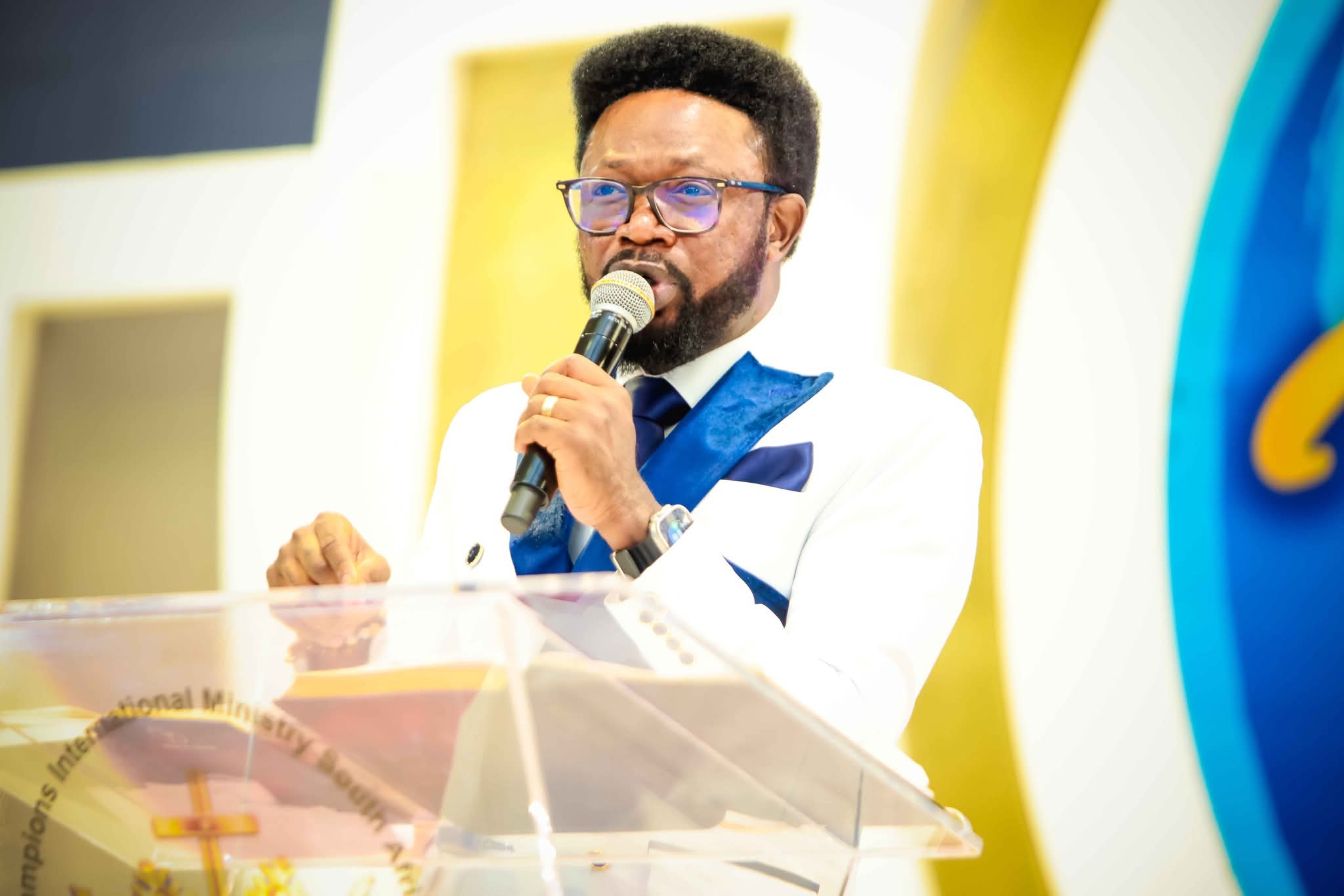
At the heart of the Harvest of Miracle Conference (Day 3) held in South Africa, Prophet Joshua Iginla delivered a stirring and spiritually electrifying sermon titled “How to Break Out of Curses.” The prophetic encounter was not just a sermon—it was a divine unveiling of keys to personal liberation from long-standing ancestral, parental, and self-inflicted curses. With biblical precision and revelatory depth, Prophet Iginla laid out spiritual principles to break the chains of bondage and restore destinies.
Below is a deep dive into the central truths he delivered:
1. Apply the Hammer of the Word of God
Key Scripture: Hebrews 4:12; John 1:1-4
Prophet Iginla began by emphasizing the irreplaceable role of God’s Word as a weapon of liberation. Quoting Hebrews 4:12, he described the Word as a living and powerful sword—a divine hammer capable of smashing generational curses into irrelevance. According to him, the Word is not passive; it actively pierces, dissects, and reconstructs destinies.
“The Word of God is God Himself translated into language. You can’t carry the life of God and be subdued by curses,” he declared.
He challenged believers to incubate themselves in the Word until the Word becomes flesh in their lives (John 1:1–4). Whether the curse was deserved or unjust, the Word—if engaged properly—will hammer it into pieces.
Takeaway: To break out of curses, soak your life daily in the Scriptures. Recite it, meditate on it, declare it—let the Word do spiritual surgery.
 2. Engage the Force of Prayer
Key Scripture: Luke 18:1
Prophet Iginla likened prayer to spiritual artillery that disarms curses operating in secrecy or in public. Curses thrive in silence; prayer destroys their breeding ground.
“You can’t pray and remain cursed. A man of prayer is a man of power,” he said.
He reminded the audience of Jesus’ parable on the necessity of continual prayer (Luke 18:1), underscoring that persistent, violent, faith-driven prayer dismantles spiritual verdicts issued against a person’s lineage.
Takeaway: Don’t just pray occasionally—make prayer a lifestyle. Curses retreat when a person dwells in the atmosphere of divine communication.
Breaking Free from Curses: A Prophetic Exposé by Prophet Joshua Iginla in South Africa
 3. Walk in Forgiveness
Key Scripture: Matthew 6:14–15
One of the most heartfelt moments in the message came as Prophet Iginla addressed the poison of unforgiveness. Whether you are seeking forgiveness or granting it, bitterness is a spiritual magnet for curses.
“Forgiveness is not just for them; it’s your jailbreak,” he warned.
He explained that unforgiveness delays divine intervention. When you forgive, you align with God’s mercy—activating divine pardon and freedom from curse-based consequences.
Takeaway: Forgive swiftly. Harboring offense is like nurturing your own prison. Mercy flows where forgiveness is present.
4. Understand and Undo Parental Curses
Key Scripture: Ephesians 6:2–4
Moving into deeper waters, Prophet Iginla highlighted that parental curses—especially those spoken by biological or spiritual parents—are some of the most potent and dangerous forms of curses.
“A prophet can pray for you, but if your parent cursed you, go back and make peace,” he admonished.
He addressed children who have turned against their parents due to offenses, urging them to seek reconciliation. According to him, honor unlocks destiny, and dishonor invites spiritual blockage. Even imperfect parents deserve respect—not necessarily because of their actions, but because of their divine position.
Takeaway: Don’t trade your future for the satisfaction of revenge. Reconcile with your parents. That act alone may cancel years of spiritual delay.
Avoid Being a Curse to Yourself
Not all curses come from external forces—some are self-inflicted, Prophet Iginla revealed. People who engage in destructive behaviors, dishonor their spiritual lineage, or handle their lives carelessly often curse themselves unknowingly.
 “When you disconnect from those assigned to help your destiny, you plug into frustration,” he stated.
He warned spiritual sons and daughters to never dishonor their spiritual covering, as doing so cuts them off from prophetic blessings. Likewise, believers who self-sabotage through sin, fear, and laziness must repent and align themselves with divine purpose.
Takeaway: Examine yourself. Are you living in a way that invites curses? Shift today.
As he concluded, Prophet Joshua Iginla released a thunderous prayer:
 “I break to pieces every chain of curses released to tie and frustrate your destiny. Any blanket of curses covering your future is removed. In Jesus’ mighty name!”
The atmosphere was charged, and many in the auditorium experienced instant breakthroughs, with testimonies of curses being broken and destinies realigned.
Final Thoughts
Curses are real, but they are not permanent. In this powerful session, Prophet Joshua Iginla made it clear: You don’t break curses through emotion or logic—you break them through divine strategy. Engage the Word, persist in prayer, walk in forgiveness, honor your roots, and live wisely.
The chains will break. The curse will be reversed. And your life will reflect the blessing of the Lord that makes rich and adds no sorrow.

Uncategorized

The Enemies Within:  Jonahs Are Not Manageable — Dr. Chris Okafor

Published

on

The Enemies Within: 

Jonahs Are Not Manageable — Dr. Chris Okafor

…….“To remove Jonah, you must bring Jesus into the matter.”


When a “Jonah” enters a person’s life, confusion, gossip, blackmail, betrayal, and the pull-him-down syndrome often follow. But the moment Jesus Christ is invited into the situation, the storm subsides and stability is restored.


This was the central message delivered by the Generational Prophet of God and Senior Pastor of Grace Nation Global, Dr. Chris Okafor, during the midweek non-denominational Prophetic Healing, Deliverance and Solutions Service (PHDS) held at the international headquarters of Grace Nation Worldwide in Ojodu Berger, Lagos, Nigeria.


The Clergyman also declared that Nothing Happens Without Spiritual Influence


In his sermon titled “The Enemies Within,” Dr. Okafor declared that nothing happens without spiritual involvement. According to him, every visible battle has an invisible root.


Referencing the biblical story of Jonah, the Man of God explained that Jonah’s presence on the ship gave access to a contrary spirit that tormented everyone onboard.


Despite the losses suffered by innocent traders and sailors, the storm persisted because of one man’s disobedience.

However, he noted that when Jesus speaks into a situation, every storm must obey. Just as Christ rebuked the storm and it ceased, so too will the storms in believers’ lives subside when He is invited into their “boat.”


*The Impact of a Jonah*


Dr. Okafor further emphasized that “Jonahs” are difficult to manage. When such individuals are present in one’s circle, progress becomes delayed.


What should ordinarily manifest quickly may be prolonged or frustrated because someone close—someone who understands you deeply—may be operating as a spiritual adversary.


He explained that negative narratives, unnecessary battles, and unexplained setbacks often begin when a “Jonah” gains access to a person’s inner circle.


*The Solution*


“To remove Jonah from the boat of your life,” the Generational Prophet declared, “you must invite Jesus Christ into the matter.”


According to him, when Jesus takes control of the boat, the plans of the enemy are overturned.


What was designed for downfall becomes a testimony. No storm or battle can succeed where Christ reigns, and the enemy is ultimately put to shame.


The midweek service witnessed a strong prophetic atmosphere, with the power of God evident through deliverance, restoration, and divine revelations.


The Generational Prophet ministered deeply in the prophetic, calling out names, villages, and addressing alleged spiritual strongholds, as many lives were reportedly restored—all to the glory of God.


By Sunday Adeyemi


The Enemies Within: 
Jonahs Are Not Manageable — Dr. Chris Okafor

Continue Reading

Uncategorized

FROM BORDER TO MARKETS: HOW NIGERIA’S REFORMS ARE REWRITING AND MODERNISING TRADE FACILITATION By O’tega Ogra

Published

on

FROM BORDER TO MARKETS: HOW NIGERIA’S REFORMS ARE REWRITING AND MODERNISING TRADE FACILITATION

By O’tega Ogra

On the surface, the 2026 World Customs Organization (WCO) Technology Conference in Abu Dhabi, held in the last week of January, followed a familiar script: flags, formal sessions, carefully worded speeches. But beneath the choreography, something more consequential was unfolding. As customs chiefs and trade officials compared notes on the future of borders, Nigeria arrived not with theory, but with a working proposition.


The Nigeria Customs Service (NCS) Modernisation Project, being implemented through Trade Modernisation Project (TMP) Limited, unveiled to a global audience of customs administrators and policy leaders a window into how Africa’s largest economy is confronting one of the most complex challenges in public administration: reforming the machinery of trade while it is still running.


For decades, customs reform was treated largely as a technical exercise—frequent patches here, shoddy fixes there; new software in one corner, revised procedures in another. Nigeria’s presence in Abu Dhabi signalled something different. TMP Limited, working in partnership with the NCS, advanced the argument that trade is a cornerstone of economic development and must be supported by organic, sustainable partner ecosystems. Such ecosystems deliver speed and trust, revenue and credibility, and secure borders without stifling commerce.


That argument resonated in a room increasingly aware that global trade is no longer defined solely by tariffs and treaties, but by data, interoperability, and the quiet efficiency of systems that simply work.


The annual WCO Technology Conference has, in recent years, become a barometer for the direction of global trade governance. This year’s discussions reflected a shared anxiety: supply chains are more fragile, compliance risks are rising, and governments face mounting pressure to collect revenue without discouraging investment. Customs administrations now sit at the intersection of all three.


Nigeria’s response has been to attempt a full reset.

At the heart of this effort is the NCS Modernisation Project, implemented through a Public-Private Partnership (PPP) arrangement with TMP Limited as the concessionaire. The project seeks to replace fragmented technology deployments and manual processes within the Nigeria Customs Service with a single, integrated framework. This is anchored on B’Odogwu, a Unified Customs Management System (UCMS) that brings together cargo clearance, risk management, payments, and inter-agency collaboration. The ambition is sweeping—and so are the stakes.

Alhaji Saleh Ahmadu, OON, Chairman of TMP, framed the initiative as nothing less than an institutional reconstruction, designed to position the NCS at the forefront of global customs administration technology, aligned with international standards and assurance frameworks.

“Digital trade modernisation is not just about upgrading systems,” he told participants in Abu Dhabi. “It is about upgrading trust, predictability, and confidence in how trade flows through our borders.”

That choice of words matters. Nigeria’s economy has long struggled with the perception gap between its size and the ease of doing business. Investors cite delays. Traders complain of opacity. Government points to revenue leakages. In this context, customs reform becomes as much a credibility project as a technical one.

Saleh’s message was timely and direct: modern trade demands modern customs. Data-driven processes, automation, and risk-based controls are no longer luxuries; they are prerequisites for competitiveness in a world where capital moves faster than policy.

The institutional face of this digital transformation is the Comptroller-General of Customs, Bashir Adewale Adeniyi, who led Nigeria’s delegation to Abu Dhabi. His message reflected a subtle but important shift in how customs leadership now understands its role.

“Customs administrations today must evolve from gatekeepers to facilitators of legitimate trade,” Adeniyi said. “Nigeria’s customs modernisation project reflects our determination to place the Nigeria Customs Service at the centre of national economic transformation.”

It is a familiar refrain globally, but one that carries particular weight in Nigeria, where customs revenue remains a critical pillar of public finance. Automation, Adeniyi argued, is not about weakening control; it is about strengthening it through intelligence rather than discretion.

Risk management systems reduce unnecessary physical inspections. Integrated platforms limit human contact. Data analytics improve compliance targeting. When executed well, the result is faster clearance for compliant traders and tighter scrutiny for high-risk consignments.

In Abu Dhabi, peers from Asia, Europe, and Latin America listened closely to Nigeria’s presentation. Reforming customs in a small, open economy is one thing. Doing so in a market of over 200 million people, home to some of Africa’s busiest ports and its largest economy, is quite another.

Nigeria’s engagement emphasised that customs modernisation is embedded within a broader economic reform agenda under President Bola Ahmed Tinubu, GCFR. Simplifying trade procedures, strengthening revenue assurance, and aligning with international standards form part of a wider effort to reposition the economy for investment-led growth.

What makes the project particularly noteworthy is its insistence on end-to-end coherence. Rather than digitising isolated functions, the reform aims to connect agencies, harmonise data, and reduce duplication across government—an all-of-government approach that acknowledges an uncomfortable truth: trade friction is often created not at the border, but between institutions.

The WCO 2026 Technology Conference offered Nigeria more than a platform; it provided a stress test. Questions from peers were pointed. How will change be sustained across political cycles? How will capacity be built? How will entrenched institutional behaviours be unlearned?

The responses were pragmatic. Reform is being phased. Training programmes are ongoing. International benchmarks are being adopted not as slogans, but as operating standards. There were no claims of perfection—only a clear statement of intent.

“Our engagement here underscores Nigeria’s commitment to international cooperation,” Adeniyi noted. “We are learning, sharing, and contributing to global conversations on the future of customs administration.”

you want, I can:

Make it shorter for a newspaper op-ed

Adapt it for government or investor audiences

Create headline options for different platforms (print, web, LinkedIn)

Just say the word.

That contribution matters. As Africa moves to deepen regional trade under continental frameworks, customs efficiency will determine whether integration succeeds in practice or remains aspirational on paper. Nigeria’s experience, if successful, could offer a valuable template for other developing economies navigating similar constraints.

In Abu Dhabi, the mood was cautious but curious. Reform fatigue is real in many countries. Yet there was a growing sense that Nigeria’s effort—precisely because of its scale and difficulty—deserves attention.

Borders are rarely glamorous. But they are decisive. In choosing to modernise its borders in public, under global scrutiny, Nigeria is signalling something beyond technical competence. It is signalling seriousness.

And in global trade, seriousness still counts.

O’tega Ogra is Senior Special Assistant to President Bola Ahmed Tinubu, GCFR, responsible for the Office of Digital Engagement, Communications and Strategy in the Presidency.

you want, I can:

Make it shorter for a newspaper op-ed

Adapt it for government or investor audiences

Create headline options for different platforms (print, web, LinkedIn)

Just say the word.

Continue Reading

Uncategorized

Makinde Lashes Out at Wike: “A Vagabond Unfit for PDP” — Reckoning Within Nigeria’s Oldest Opposition Party

Published

on

Makinde Lashes Out at Wike: “A Vagabond Unfit for PDP” — Reckoning Within Nigeria’s Oldest Opposition Party

By George Omagbemi Sylvester | SaharaWeeklyNG.com


“Governor Seyi Makinde’s explosive rebuke of Nyesom Wike exposes deep fractures within the PDP and signals a defining moment for the future of Nigeria’s opposition politics.”


In the sun-baked political theatre of Ibadan, Oyo State, a seismic rupture has opened within the Peoples Democratic Party (PDP), Nigeria’s once-dominant opposition force. Oyo State Governor Seyi Makinde delivered a blistering public indictment of Federal Capital Territory Minister Nyesom Wike; one that goes far beyond intra-party friction, piercing into the soul of Nigerian party politics itself. Makinde unapologetically branded Wike a “vagabond,” openly regretted his past alignment with him during the tumultuous 2023 general elections, and rejected any lingering influence that Wike and his faction might attempt to wield within the PDP’s structure.

Addressing a gathering at the commissioning of the PDP Secretariat in Oke-Ado, Makinde’s remarks cut across polite political disagreement and veered into stark moral condemnation. He spoke not as a factional leader but as a self-declared reformer seeking to reclaim the party from forces he believes have undermined its principles and prospects.


This confrontation is not trivial. It reflects a broader and enduring crisis within the PDP, a party still grappling with the aftershocks of losing federal power over a decade ago and struggling to define its identity ahead of future elections.


The Anatomy of a Rift.

Makinde’s core accusation was two-fold. First, he asserted that elements within the PDP (whom he repeatedly labeled vagabonds) used internal party mechanisms not to strengthen the PDP but to serve interests outside the party’s mandate. Second, Makinde publicly distanced himself from those figures, including Wike, whose conduct he says betrayed the party during the 2023 elections.


Makinde’s account is unambiguous: “When I came into government in 2019, and even up to 2023, I found myself aligned with some of these forces. But I have reflected, repented and resolved never to allow that again.”


His choice of words carries biblical weight (repentance) suggesting not mere political disagreement, but moral recalibration.


For context, many analysts point to the 2015 loss of federal power by the PDP as the genesis of deep internal fractures. That defeat created a leadership vacuum, which subsequent factions sought to fill, sometimes through means that rankled party loyalists. Makinde invoked a traditional Yoruba proverb to illustrate his point: where there is peace in a household, it is not because all is well, but because the disorderly elements have not yet grown up. He applied this proverb directly to PDP’s internal disruption, asserting that those elements had, at one time, “practised their vagabondry” within the party until formally expelled in late 2025.


This “expulsion” refers to actions taken during the PDP’s controversial national convention in Ibadan in late 2025, where several leading figures (including Wike) were voted out of key leadership roles amid factional legal battles. That convention itself was mired in legal challenges and internal strife, reflecting a party deeply fragmented.


Makinde’s words were deliberately provocative. To brand a senior party member and cabinet minister as a vagabond in political parlance is to label him unreliable, unprincipled, and opportunistic, traits that go to the heart of public trust.

Makinde Lashes Out at Wike: “A Vagabond Unfit for PDP” — Reckoning Within Nigeria’s Oldest Opposition Party

By George Omagbemi Sylvester | SaharaWeeklyNG.com

Wike: A Political Trajectory Under Scrutiny.

Nyesom Wike is no ordinary foot soldier in Nigerian politics. A seasoned operative and former governor of Rivers State, Wike has cultivated a reputation for bold, sometimes abrasive, political maneuvers. His intervention in party affairs, especially beyond his home state, has drawn admiration from some quarters and ire from others. Yet what Makinde’s critique suggests is that Wike’s conduct has become a flashpoint for deeper questions about loyalty, ideology and the purpose of party politics itself.


Wike’s defenders argue that he has consistently asserted that his actions, including positions taken during the 2023 elections, were guided by principles of fairness and justice which though not without controversy. Earlier reports show that in 2024 he claimed he had “no apologies” for his role in opposing the PDP’s presidential bid, insisting he acted not out of disloyalty but conviction.


To them, Wike represents a school of Nigerian politics that privileges tactical calculations over consensus building, a style that resonates in Nigeria’s often fractious political environment but also deepens fault lines within parties like the PDP.


Expert Analysis: What This Means for Nigerian Politics.

To understand the implications of this confrontation, we must consider scholarly perspectives on party fragmentation and political behavior in Nigeria.


Political analyst Dr. Habeeb Lawal, Lecturer in African Political Studies at the University of Lagos, argues that “the PDP’s identity crisis stems from a broader crisis of political institutionalisation in Nigeria. When politicians prioritise personal ambition over party principles, it weakens not only party cohesion but democratic governance itself.”


Lawal’s analysis underscores a pattern endemic to Nigerian politics: parties often serve as platforms for personal advancement rather than vehicles for ideological consistency or policy advocacy. In that sense, Makinde’s denunciation of Wike is not merely personal, but symptomatic of a larger systemic tension.


Similarly, Professor Modupe Akinola, an expert in political ethics at Ibadan University, suggests that public leaders must be held to standards that transcend mere tactical disagreements. “A party cannot rebuild itself on the foundation of individual power struggles,” she said. “If you cannot articulate a vision for the common good beyond your own political survival, you risk hollowing out the very institution you claim to defend.”


Her insight points to a central dilemma: the PDP’s relevance depends on its ability to project unity without quashing legitimate disagreement, and to tolerate diversity of thought without descending into factional warfare.


Beyond the Words: What Comes Next?

Makinde’s remarks did more than shock; they reframed the conversation around party culture and accountability. He reaffirmed confidence in the Nigerian judiciary as a neutral arbiter, a notable stance considering the party’s history of litigating internal disputes. “Truth will always prevail,” Makinde said, asserting that legal remedies remain central to resolving the PDP’s internal conflicts.

Makinde Lashes Out at Wike: “A Vagabond Unfit for PDP” — Reckoning Within Nigeria’s Oldest Opposition Party

By George Omagbemi Sylvester | SaharaWeeklyNG.com

Yet the deeper impact of his declarations will be measured in the weeks and months to come. Will the PDP rally behind a renewed emphasis on discipline and unity? Or will this rupture deepen, inviting further splintering and loss of coherence?


International observers, particularly those who monitor democratic transitions in multi-ethnic societies, will watch closely. Political cohesion in major parties is often a bellwether for democratic resilience. Nigeria’s fragile democracy, still navigating its third decade of uninterrupted civilian rule, cannot afford weakened opposition at a time when accountability and political alternatives are essential.


Parting Thoughts: A Reckoning That Cannot Be Ignored.

What Governor Makinde articulated in Ibadan is more than intra-party quarrel; it is a clarion call for introspection within Nigerian opposition politics. By calling out what he describes as vagabondry, he has invited the PDP (and the broader political class) to confront uncomfortable truths about ambition, loyalty, principle and reform.


Whether this confrontation leads to renewal or further fracture remains to be seen. But one thing is clear: Nigeria’s political story in this era will not be written by those who refuse to address the deep contradictions within their own ranks.

Makinde Lashes Out at Wike: “A Vagabond Unfit for PDP” — Reckoning Within Nigeria’s Oldest Opposition Party

By George Omagbemi Sylvester | SaharaWeeklyNG.com

Makinde Lashes Out at Wike: “A Vagabond Unfit for PDP” — Reckoning Within Nigeria’s Oldest Opposition Party

By George Omagbemi Sylvester | SaharaWeeklyNG.com

Continue Reading

Cover Of The Week

Trending