
celebrity radar - gossips
BRF: DESERVES A BRIGHTER REWARDING FUTURE?


“THE PIG STY”
Babatunde Raji Fashola is not your average “joe”. The gangly fifty-two year old Lawyer with a steely mien was Governor of Lagos State for 8 years and received critical acclaim for his performance while in office. However, recently that acclaim has begun to unravel in a most profound way.
Fashola did not become Governor strictly on the merit of any performance in the public sector, because he only served for a few years as Chief of Staff to former Governor Bola Ahmed Tinubu. He was thereafter practically installed as Governor of Lagos State by his boss who blew away a crowded field of aspirants on his behalf. So deep was the angst of the other aspirants like Hakeem Gbajabiamila, Aro Lambo etc. that many were sure that the PDP would cash in and the destroy the Action Congress (AC) in Lagos. That did not happen and the AC in Lagos under the leadership of Tinubu went from strength to strength until it morphed into APC and the rest is history.
Fashola’s reputation continued to grow under the cover of Tinubu’s protection and political statecraft but the strain of an errant protégé was beginning to unravel culminating in the “True face of Lagos” saga that tested Fashola’s real ambition to supplant his mentor. Eventually Fashola got a second term ticket and won convincingly crushing the PDP in what remains one of its most humiliating defeats in history.
In his second term BRF as he popularly called felt it was time for him to make a clear stake for his mentor’s political empire. Egged on by some young turks and sheer hubris, he began his onslaught against the Jagaban Borgu’s political structure. With the weight of his office as Governor he began to chip away at Tinubu’s political structure in a most insidious way. In the process of this assault he began to alienate the AC/APC political base and wittingly/unwittingly created an inroad for a resurgent PDP under the leadership of the deadly trio of Bode George, Musliu Obanikoro and Akin Ogunlewe.
During the APC’s first convention in Abuja it was rumoured that Fashola with the help of some Southwest renegades attempted to supplant Tinubu’s choices for the National Party positions. However he apparently lost out in that naive maneuver cementing his reputation as a “baby” politician without the deft political touch of his mentor.
“THE PIG & THE PORK”
Fashola has the gift of the garb and used it to cement his reputation as a performer in Lagos and Nigeria. He speaks ex tempore in Yoruba and English in such a manner that you are usually swayed by his logic and message. He deployed the gift effectively for his party the APC during the recent 2015 elections. He was a serious thorn in the flesh of the PDP and President Jonathan as people listened and believed when he spoke. He was thus seen as one of the promoters of Akinwunmi Ambode for Governor of Lagos State.
However the truth is that BRF did not get there willingly.
First his body language suggested that he did not support his Party’s choice to give the Governorship slot to a Christian from the Lagos east senatorial zone.
He was reported to prefer Obafemi Hamzat his Commissioner for Works who is the son of Olatunji Hamzat a powerful APC Chieftain and Ogun State traditional ruler. He was in fact seen as one of the frontrunners for the Governor slot until he committed political hara-kiri by granting an interview to the Nigerian Tribune newspaper where he stated that Tinubu only had “one vote”.
BRF however repeatedly denied supporting any aspirant instead he was heard to say that he supported a healthy contest, as it would strengthen the Party and democracy while generating excitement and activity for the electorate.
However one thing was clear that Akinwunmi Ambode was not his favoured candidate and some say he was entitled to that choice against the apparent preference of Asiwaju. After all he was a Governor for 8 years who was entitled to anoint his successor just like his predecessor had done. He refused to be cowed by the various entreaties of his mentor to adopt the Ambode project, instead he chose to deploy his considerable financial arsenal behind his “real candidate” Supo Shasore his former Attorney General and friend whom he had propped up with juicy appointments. The line was drawn for an epic battle that was to take place at the battlefield venue of the primaries called Onikan Stadium.
Arrayed on one side was Asiwaju, and his vast network of loyal field soldiers and captains and the other side was his political son BRF and some young turks and an imaginary army bent on confronting and defeating Asiwaju.
The result was predictable. BRF was crushed in most heinous way by a political machine that had been honed and tested over time. Ambode scored 3,735 votes and Supo Shasore scored 121 votes. Long before the final counting had started Supo Shasore slunk out of the stadium with an air of defeat swirling around him.
BRF sensing that the game was up reluctantly signed up and began to deploy his support for Akinwunmi Ambode’s quest to be Governor. However there were still unfounded rumours of him hobnobbing with the enemies to snooker his mentor. It was rumoured that he was even plotting an unholy alliance with the PDP to give a last minute checkmate to Asiwaju’s machine. This was however dismissed by political watchers as unlikely given that Lagos PDP was too desperate and would likely renege on any sinister plot no matter how profitable.
On April 11 2015 history was made and Akinwunmi Ambode a civil servant with 27 years experience in the Local and State Government Administration was elected Governor of Lagos State.
“LETS GET PIGGY”
People love the underdog or should I say the “underpig”? The recent attacks against BRF by various groups have elicited both sympathy and scorn from Nigerians. Some have said that the attacks were baseless and only designed to disenfranchise him from consideration as a top aide of President Buhari. Others have insisted that the attacks had merit as BRF had skeletons in his closet and had questions to answer.
BRF was clearly irritated by these attacks and issued his now infamous press statement castigating the “dirty wrestling pigs” and “mud merchants”. Rather than silence the attacks it invigorated a legion of enemies who opened up a fully volley of attacks on him. The mud began to fly and the APC faithful even chose to stay away from his recent book launch to avoid being stained.
Governor Akinwunmi Ambode apparently chose to ignore the unfounded whispers that he and Asiwaju were behind the attacks against BRF. Instead he appeared to concentrate on fulfilling the promises he made to Lagosians but apparently did BRF a favour by yanking the revealing procurement website that he himself had created before he left office in his avowed quest for transparency.
Asiwaju followed suit with a terse statement condemning the attacks on BRF and warned the mud merchants to leave his political son alone. He blamed the opposition PDP for being behind the attacks.
The Lagos APC also followed with a tacit support statement for the former Governor.
That timely statement from Asiwaju appeared to have doused the raging attacks and also served to check serial mud merchants like Femi Fani-Kayode and Gani Adams who were cashing in on the controversy.
It would appear BRF himself has learnt his lesson and steered clear from making any controversial statements recently. Hopefully unfolding events will show that old animosities have now been forgiven and possibly forgotten.
I think its time to bury the “dirty pig” and wash our “muddy hands” so that BRF can begin to enjoy a brighter rewarding future. Time will tell whether he truly deserves that rewarding future.
Obafemi Atobatele




celebrity radar - gossips
Adron Homes Celebrates Visionary Chairman, Aare Adetola Emmanuel King, at 51
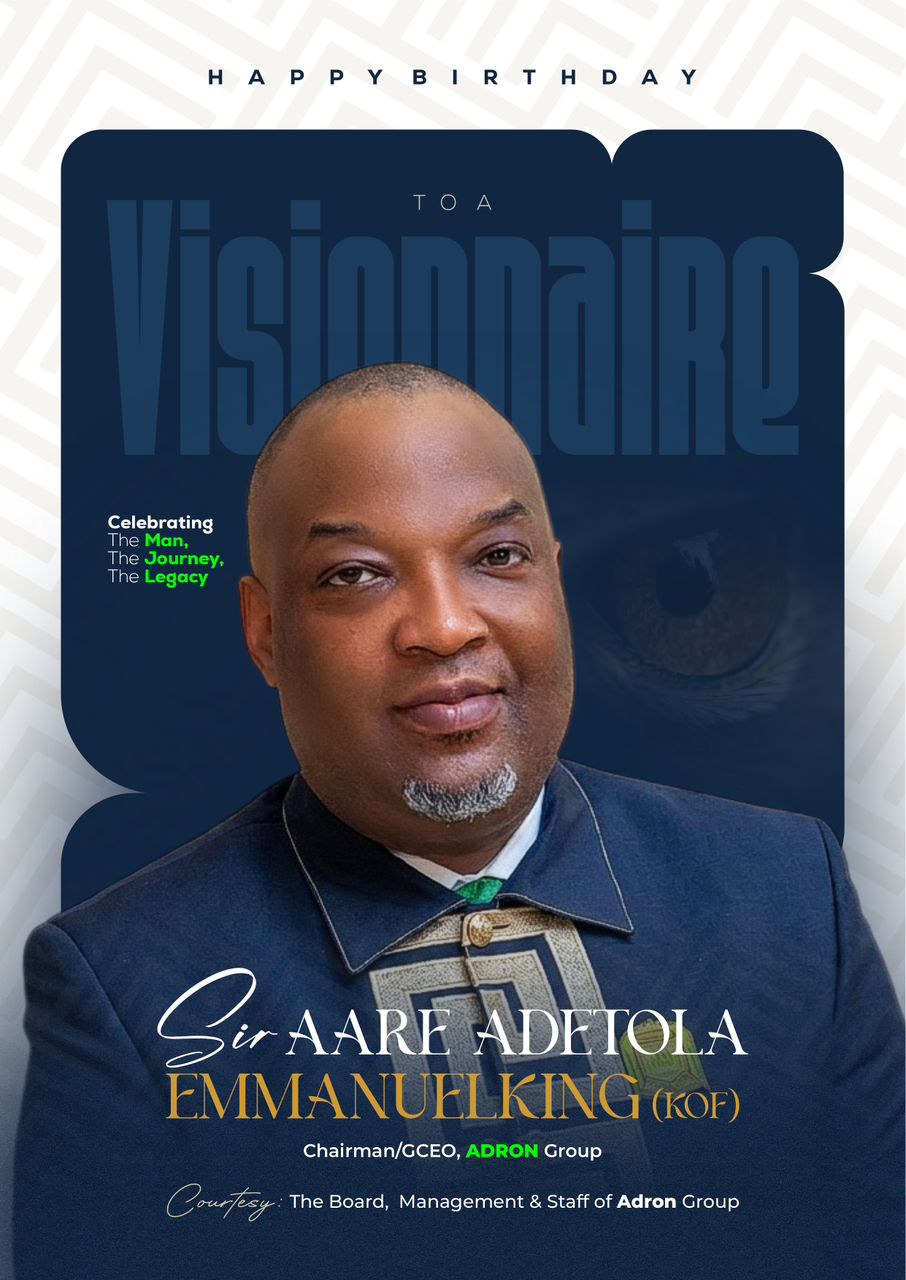
Adron Homes Celebrates Visionary Chairman, Aare Adetola Emmanuel King, at 51
The management and staff of Adron Homes and Properties Limited have joined family, friends, associates, and well-wishers across the globe to celebrate their Chairman and Chief Executive Officer, Aare Adetola EmmanuelKing, as he marks his 51st birthday.

In a statement released by the company, the milestone was described as a celebration of an exceptional leader whose vision, resilience, and entrepreneurial brilliance have not only transformed Adron Homes into a household name in Nigeria’s real estate sector but have also redefined affordable housing across the country.
Under his dynamic leadership, Adron Homes has continued to expand its footprint, delivering value-driven residential solutions while empowering thousands of Nigerians with opportunities for home ownership. His commitment to excellence, innovation, and customer satisfaction has remained the driving force behind the company’s sustained growth and industry leadership.
The statement further highlighted Aare EmmanuelKing’s passion for nation-building and community development, noting his significant contributions to job creation, youth empowerment, and the promotion of socio-economic development through real estate investments.
“As a leader, mentor, and visionary, Aare Adetola EmmanuelKing has consistently inspired a culture of excellence, integrity, and dedication within the organization. His ability to turn bold ideas into reality continues to position Adron Homes as a trailblazer in the industry,” the statement read.
The company expressed profound gratitude for his steadfast leadership and prayed for continued wisdom, strength, and sound health as he embarks on another year of impactful achievements.
As he celebrates his 51st birthday, the entire Adron Homes family proudly honours a man whose legacy continues to shape the future of real estate in Nigeria.
Happy 51st Birthday, Aare Adetola EmmanuelKing!
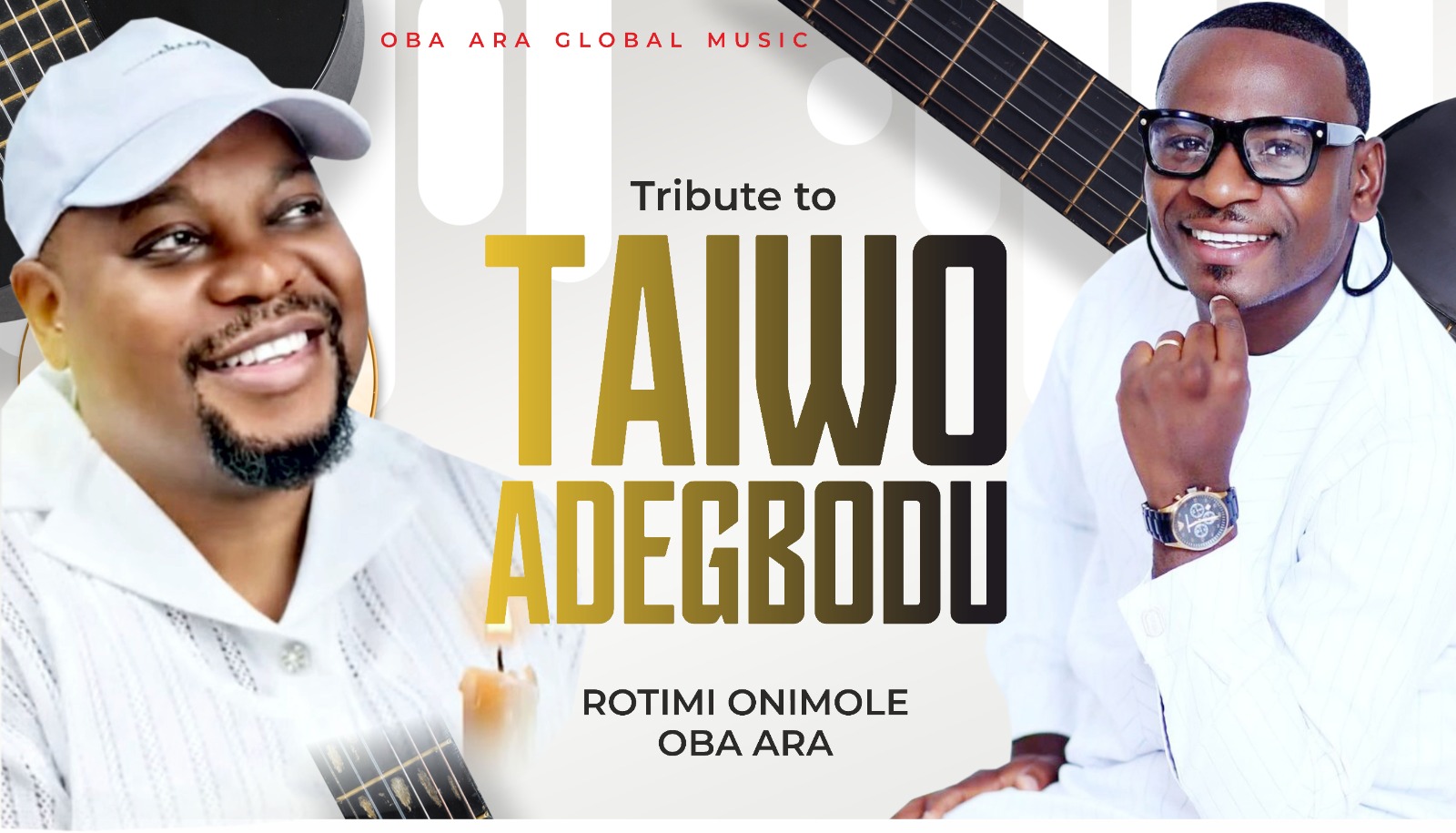
Oba Ara Releases Emotional Tribute to Late Taiwo Adegbodu
Taofik Afolabi
The gospel music community continues to grieve the painful loss of Taiwo Adegbodu, a beloved figure whose sudden departure left a deep void among fans, colleagues, and loved ones. In response to this loss, renowned gospel minister Rotimi Onimole, popularly known as Oba Ara, has released a moving tribute song that captures both the sorrow of the moment and the enduring legacy of the late singer.
Oba Ara, a proud son of Isale Eko, channels raw emotion throughout the song, using heartfelt lyrics and soul-stirring melodies to reflect on his personal connection with Taiwo Adegbodu. In the tribute, he openly expresses how deeply the news of Adegbodu’s passing shook him, describing it as a painful and unexpected loss that is difficult to come to terms with.
The song goes beyond mourning, it celebrates the life, ministry, and impact of Taiwo Adegbodu. Oba Ara highlights the late artist’s dedication to spreading the gospel through music, his inspiring voice, and the spiritual influence he had on many within and beyond Nigeria. Through powerful verses, he paints a picture of a man who lived for God and touched countless lives through his ministry.
Listeners have described the tribute as both comforting and deeply emotional, as it resonates with the collective grief of the gospel music community. It serves as a reminder that although Taiwo Adegbodu is no longer physically present, his music, message, and legacy will continue to live on.
In honoring his late colleague, Oba Ara not only pays his respects but also offers a source of healing for fans and fellow ministers, using music as a tool to process grief and celebrate a life well lived.
celebrity radar - gossips
Buratai, Fagbemi , Shagaya, Olofa, Others Eulogise Olowu Kuta’s Olori On 60th Birthday, Foundation Launch
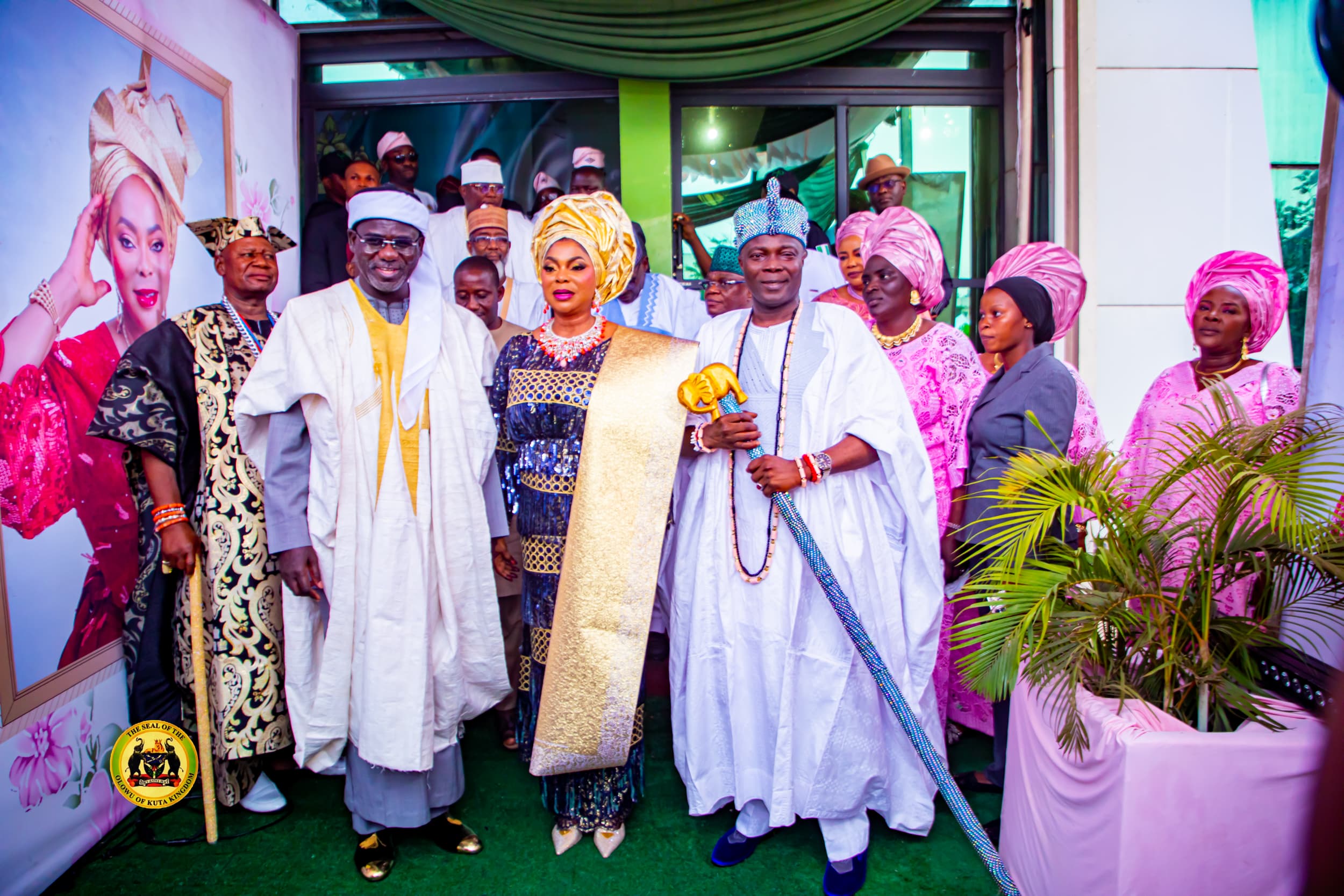
Buratai, Fagbemi , Shagaya, Olofa, Others Eulogise Olowu Kuta’s Olori On 60th Birthday, Foundation Launch
Eminent personalities across the Nigeria stormed the TFK Event Centre, Bala Mohammed Way, Guzape, Abuja, to celebrate the 60th birthday of Olowu Kuta’s Olori, Queen Jumai Amoke and her Foundation Launch on Saturday 28, March 2026.

From former Chief of Army Staff, Lt Gen TY Buratai rtd, to the Minister of Justice and Attorney-General of the Federation, Prince Lateef Fagbemi; Olofa of Offa, HRM Oba Mufutau Gbadamosi. Even top businesswoman and socialite, Chief (Mrs) Bola Shagaya, was in attendance.


Other dignitaries were newly promoted Deputy Inspector-General of Police and former AIG Zone 2 , Lagos , Adegoke Fayoade, Major General Abdumalik, Major General Samuel Adebayo rtd (Fmr CDI);
Major General Anthony Omozoje rtd (Fmr Copp);
Alhaji Tajudeen Owoyemi (Asiwaju of Offa and CEO Radisson Hotel Nigeria;
Dr Waheed Olagunju, former managing director of Bank of Industry, Oniba of Iba, Lagos State, HRM Oba Dr Suleiman Raji ;
Justice Falola, Olu of Ile-Ogbo , Oba Adetoyese amongst many traditional rulers and captains of industry too numerous to mention.
Speaking at the occasion, the Chief Host, Olowu of Kuta, HRM Oba Dr Adekunle Oyelude Makama, CON , Tegbosun iii, who is also the husband of the celebrant commended Queen Jumai for ‘ her slender arms full of kindness’ to establish such humanitarian Foundation, ‘Amoke Children and mother in Need Foundation’ at a time Nigerians are going through economic crisis occassioned by the global meltdown.
Olowu also commended her steadfastness and love for the less privileged and downtrodden.
The monarch refrenced the task before his wife’s humanitarian gesture said her best is yet to come.
” Olori Amoke Jumai, I celebrate you. You will celebrate 70, 80, 90 and continue to shine as you continue to put a smile on people’s faces. I love you, “Olowu Kuta added.
To Lt Gen Buratai, a former army chief and former Nigerian Ambassador to Benin Republic, the reward of hard work is more work.
Buratai, who also doubles as Balogun Agba of Owu Kuta, a chieftaincy title reserved for a generalismo congratulated Queen Jumai for attaining the age of 60 in good health.
The retired army General said he’s not surprised by the turn out of eminent personalities across the country to celebrate the Olowu Kuta’s Olori because she merited it through her hospitality to all, adding that Allah the most merciful, most beneficial would accept all her act of ibadah.
The minister of Justice, Prince Fagbemi, was full of praises for Queen Jumai for deeming it fit to have a place in her heart to accommodate the needy and less privileged in ‘our society.’
Prince Fagbemi urged the guests to contribute generously to support the Foundation in order to continue to alleviate poverty and put a smile on the faces of the people.
” I congratulate you on your 60th birthday and Foundation Launch. I wish you many happy returns of the day and many more fruitful services to the country and motherland”, Prince Fagbemi added.
The celebrant, Queen Jumai who was grining from ear to ear thankfully said she was excited by the turn out and the response of the people to her foundation.
Queen Jumai, however, promised to continue to use her resources and donations received for the good of the needy and less privileged in the society.
” I want to appreciate my own Kabiesi Olofa of Offa , for his presence and im I’m using him as a point of contact to all other Kabiesis present here, the minister of justice and Attorney-General, you’re welcome, sir; Mrs Bola Shagaya, I salute your enterprise, Lt Gen Buratai, I’m grateful, sir; DIG Fayoade, Justice Falola and other dignitaries too numerous to mention, I thank you, all. To my darling husband, Kabiesi Olowu , I thank you immensely for your support. And to my family and friends, I thank you , all. E se pupo!”, she said.


-

 society7 months ago
Religion: Africa’s Oldest Weapon of Enslavement and the Forgotten Truth
-

 news4 months ago
WHO REALLY OWNS MONIEPOINT? The $290 Million Deal That Sold Nigeria’s Top Fintech to Foreign Interests
-

 society6 months ago
“You Are Never Without Help” – Pastor Gebhardt Berndt Inspires Hope Through Empower Church (Video)
-

 celebrity radar - gossips2 months ago
Dr. Chris Okafor Returns with Power and Fire of the Spirit -Mounts Grace Nation Altar with Fresh Anointing and Restoration Grace on February 1, 2026
You must be logged in to post a comment Login
You must log in to post a comment.