
society
BRIDGING DIVIDES, BUILDING UNITY: NIGERIAN ARMY’S INDIGENOUS LANGUAGE COURSE AS A PILLAR OF NATIONAL INTEGRATION

BRIDGING DIVIDES, BUILDING UNITY: NIGERIAN ARMY’S INDIGENOUS LANGUAGE COURSE AS A PILLAR OF NATIONAL INTEGRATION
BY
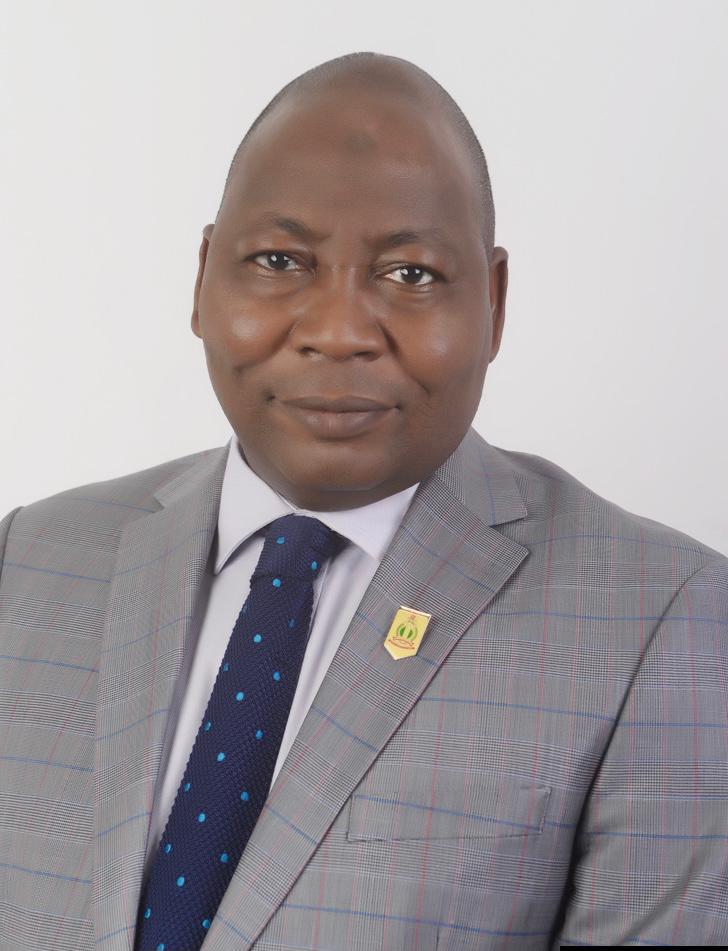
BRIGADIER GENERAL SANI KUKASHEKA USMAN (RTD) mni fnipr
“To have another language is to possess a second soul.”-Charlemagne
In a country as diverse and complex as Nigeria, language is more than just a medium of communication, it is a gateway to understanding, empathy and effective leadership. At a time when many are lamenting the widening ethnic, religious and cultural divides across the nation, the Nigerian Army has chosen a different path, one of unity through language and cultural integration.

The Nigerian Army Resource Centre (NARC), Abuja, marked yet another significant milestone on Friday, 9th May 2025, with the graduation of 150 officers and soldiers from across its various formations and units. These graduates of the Indigenous Languages Course 18/2025 represent the 18th group of personnel to complete this flagship initiative, which, since 2018, has equipped over 2,410 personnel that become proficient in two other languages other than their mother tongues in any of the 3 major Nigerian languages. Thus equipping them to serve not only as protectors of the nation, but also as bridges across its many divides and agents of national unity.

The course is the practical expression of the Nigerian Army Language Policy, which mandates that all personnel must learn at least two indigenous languages apart from their mother tongue. This is not a cosmetic requirement, but a strategic initiative of the Nigerian Army. In the multi-ethnic theatres of Nigeria Army’s counterinsurgency and internal security operations, whether in the Northeast, Northwest, South-South or other geo-political regions, managing community relations has compelled a proficiency in local languages as an important tool in operational effectiveness and mission success of the troops.

The programme is a brainchild of the forward-looking leadership of the Nigerian Army and the management of NARC, in partnership with Laclic Services Limited. It bears eloquent testimony to the evolving role of the military in ensuring law and order in the country. All thanks to this wonderful initiative, today’s soldier is not just a fighter, but also a negotiator, peacebuilder and communicator. Special commendation must go to Laclic Services Limited, the indigenous company that supplies well-trained instructors and high-quality teaching aids. The organisation’s dedication to linguistic excellence and cultural preservation has been central to the programme’s success.
Participants of the programme are immersed in both theoretical and practical learning. Classes include local culture, grammar, vocabulary, phonetics and conversational skills. The course curriculum also integrates photo stories, group work, presentations and rigorous written and oral assessments. One of the most impactful components is the practical field immersion, where trainees visit the nearby Mammy Market at Mambilla Barracks, interact with civilians in their chosen languages, and test their communication skills and proficiency in real-time. On graduation day, participants stage playlets, which are performed entirely in the new languages they’ve acquired. These dramatisations are more than ceremonial; they are symbolic of the bridge-building spirit the programme seeks to instil.

Across the world and here in Nigeria, there are countless examples of how language proficiency has changed the trajectory of military and humanitarian operations. In 2002–2003, during the United Nations Mission in Sierra Leone (UNAMSIL), Nigerian troops earned the admiration of local communities largely because some had taken time to learn Krio, the lingua franca. This linguistic empathy smoothed community engagements and de-escalated tensions. Similarly, in Liberia and Sudan, Nigerian peacekeepers’ knowledge of local languages often made the difference between suspicion and cooperation.
Contrast this with situations where language gaps exacerbate mistrust. During the early stages of the insurgency in Northeast Nigeria, numerous misunderstandings between troops and local communities were linked to poor communication. Civilians misinterpreted military movements and intentions, while troops, unable to decode local dialects or cultural nuances, struggled to build rapport. In several cases, critical intelligence from locals was lost in translation, if not missed altogether.

Outside the military, language differences have triggered or prolonged conflicts, particularly in multi-ethnic settings. A notable example is the 1994 Rwandan Genocide, where the inability to mediate between ethnic groups, compounded by poor communication, allowed propaganda and hate speech to go unchallenged. Even in advanced democracies, language barriers within immigrant or multi-ethnic communities continue to affect law enforcement, healthcare delivery and justice administration.
The Indigenous Languages Course demonstrates that language can be a powerful peacebuilding tool. It allows soldiers to interact with their colleagues, neighbours and host communities in their tongue, breaking down barriers, winning hearts and minds, and enabling more effective civil-military cooperation. It also enhances internal cohesion within the military, fostering mutual respect and unity across Nigeria’s ethnocultural spectrum.
This initiative is as much about national integration as it is about professional development. It empowers personnel to function better, not just on the battlefield, but in their everyday engagements with the very citizens they swore to defend. It reinforces the belief that to secure a nation, you must first understand it, and to understand it, you must speak its many tongues.
This programme undoubtedly stands as a model for other government agencies, institutions, and even private organisations, which can benefit from improved interethnic communication, stronger community engagement, and enhanced operational cohesion through indigenous language proficiency. If the military, an institution often associated with rigid hierarchy and combat discipline, can embrace linguistic diversity as a strength, then so can the rest of the country. We must move from mere tolerance to active appreciation of our differences. Language is where that journey begins.
As Nigeria continues to search for a unifying national identity, initiatives like the Indigenous Languages Course of the Nigerian Army offer a compelling blueprint. It reminds us that nation-building is not only the duty of politicians and intellectuals, but of every institution and indeed every citizen willing to take one more step towards understanding the other.
To further encourage participation, the Nigerian Army supports officers and soldiers who successfully graduate from the course with a monthly stipend. Additionally, to ensure continued proficiency and commitment, such personnel are tested annually, reinforcing both the seriousness of the initiative and its long-term impact. It is also important to highlight the annual online recertification examinations, which serve as a mechanism to ensure that participants continue to practice and retain the languages they have learned at the NARC. In addition, facilitators occasionally reach out to selected graduates at random, offering informal check-ins and gentle reminders to keep their linguistic skills active and relevant.
As the latest graduates take the stage at NARC, let us salute them, not just for their newfound language skills, but for becoming living symbols of Nigeria’s promise: that despite our differences, we can speak as one.
It is now time for all Nigerians, individuals, institutions, and governments at every level, to recognise, commend and emulate this remarkable initiative. Language should not divide us; it should connect us. Just as the Nigerian Army has shown leadership in bridging ethnic and cultural gaps through structured language education, so too should our schools, civil service, institutions and communities embrace multilingualism as a tool for national integration. Let this be a national movement that values every Nigerian tongue, culture, and effort to understand the other. By learning one another’s language, we take the first step toward learning one another’s pain, dreams, fears, and hopes.
Only then can we move beyond mere coexistence to truly live as one, bound not just by geography but by a shared commitment to peace, harmony, and mutual respect. Let us rise above our divisions and embrace the strength in our diversity, building a united Nigeria under God where every voice is heard, every culture is honoured, and every citizen belongs and is respected.
The writer, Brigadier General Sani Kukasheka Usman (rtd), mni fnipr, is a respected public affairs analyst and a specialist in security and strategic communication. He can be reached via his social media platforms using the handle @skusman.





society
Grace Nation: Harvest of Babies 2026 Records Miracle Birth and Dedication of Twins as Conference Concludes
“Guard your fruitfulness—identify and avoid distractions.”
The 2026 edition of Harvest of Babies, the flagship family liberation conference of Grace Nation Global, concluded with remarkable testimonies, including the reported safe delivery of a baby boy during the programme and the dedication of multiple “miracle babies.”
Miracle Delivery and Baby Dedications
One of the standout testimonies involved a woman whose pregnancy had gone beyond term and was reportedly scheduled for surgery. According to accounts shared during the conference, she was prayed for after being identified during one of the sessions. She later delivered a healthy baby boy without complications during the course of the event.
The conference also witnessed the dedication of several children described as long-awaited blessings, including twins after 15 years, a baby boy after 9 years, and a baby girl after 7 years. The dedications formed a major highlight of the closing moments of the programme, reinforcing the conference’s focus on fruitfulness and restoration.
Teaching on Fruitfulness
Continuing his teaching series on “Fruitfulness,” the Generational Prophet of God and Senior Pastor of Grace Nation Worldwide, Dr Chris Okafor, emphasized the importance of addressing the root causes of life’s challenges.
“If the cause of a battle is not confronted, the cycle may continue,” he said, adding that spiritual discipline—particularly prayer—remains a key tool in overcoming limitations such as barrenness, whether physical, financial, or generational.
He described prayer as a necessary channel for divine intervention, stressing that understanding one’s spiritual foundation is essential to overcoming recurring challenges.
Guarding Your Fruitfulness
Dr. Okafor also warned about distractions that may hinder progress, urging believers to remain focused on principles that sustain growth and fulfillment.
“Every kingdom operates by principles,” he noted. “If you allow distractions around you to take your focus away from those principles, you may delay your manifestation.”
He encouraged participants to be intentional about their environment, relationships, and spiritual discipline in order to maintain their breakthroughs.
What Hinders Fruitfulness?
The cleric identified curses and ignorance as major obstacles to fruitfulness. According to him, some challenges may stem from longstanding family patterns, but these can be broken through spiritual understanding and alignment.
He reiterated that blessings—particularly those pronounced through spiritual authority—have the capacity to reverse negative cycles and establish fruitfulness.
“Ignorance allows problems to persist,” he said. “But when you gain understanding and follow divine instruction, transformation begins.”
Looking Ahead
Although the 2026 Harvest of Babies conference has ended, organizers say the testimonies and experiences from the event will have a lasting impact. Many participants expressed faith that by this time next year, they will return with their own testimonies of fruitfulness.
The conference closed on a note of expectation, with attendees looking forward to future editions and continued manifestations of what they described as divine intervention. By Sunday Adeyemi [email protected]


society
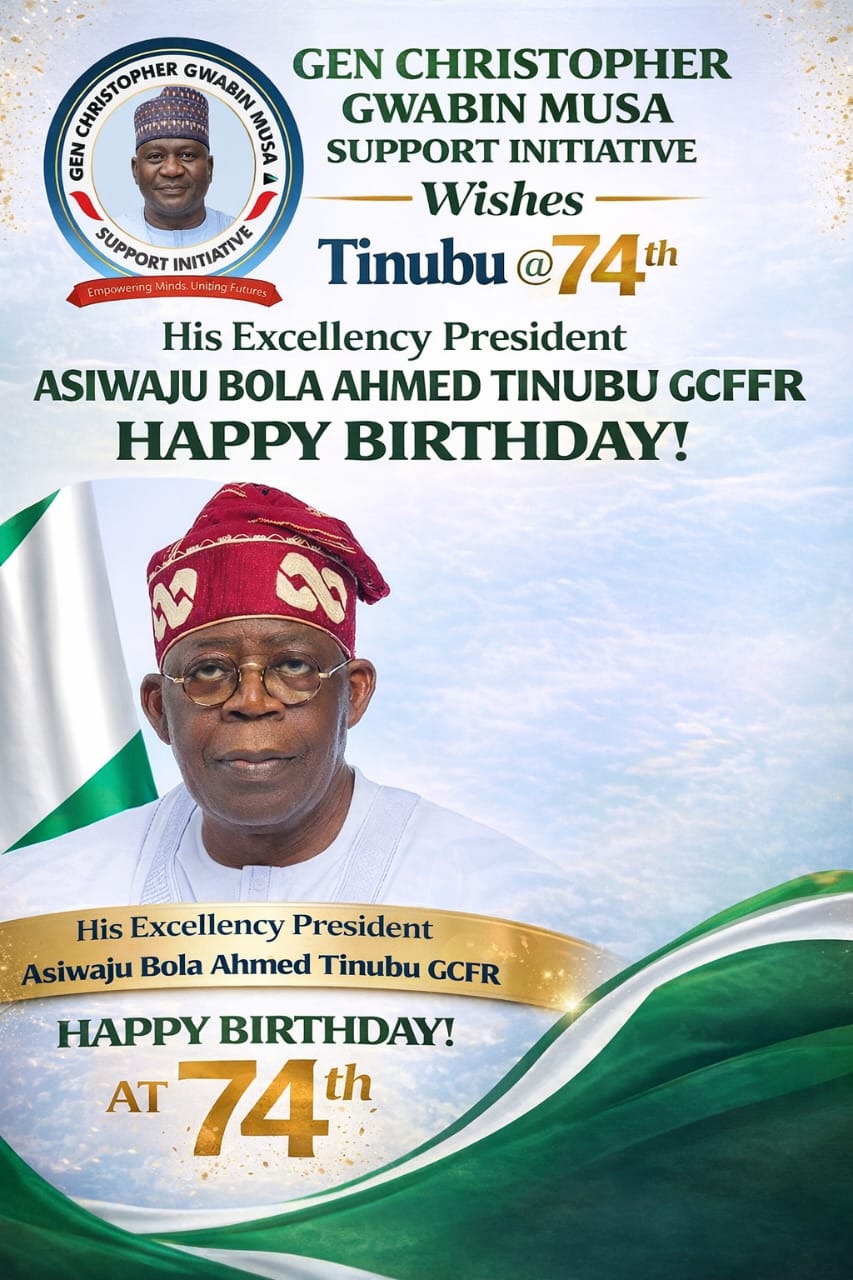
GEN CHRISTOPHER GWABIN MUSA SUPPORT INITIATIVE EXTENDS WARM BIRTHDAY FELICITATIONS TO PRESIDENT TINUBU ON 74TH BIRTHDAY
GEN CHRISTOPHER GWABIN MUSA SUPPORT INITIATIVE EXTENDS WARM BIRTHDAY FELICITATIONS TO PRESIDENT TINUBU ON 74TH BIRTHDAY
The Gen Christopher Gwabin Musa Support Initiative has extended heartfelt congratulations to His Excellency President Asiwaju Bola Ahmed Tinubu, GCFR, on the occasion of his 74th birthday.
In a statement released to the press, the Initiative conveyed warm wishes for the President’s personal well-being and for his continued leadership of the nation. The statement, signed by the Convener, Ibrahim Dahiru Danfulani, Sadaukin Garkuwan Keffi/Betara Biu, expressed hope that the coming year would bring the President “renewed strength and more wisdom in guiding the nation.”
The statement further noted that the Grand Patron of the Initiative, His Excellency Gen Christopher Gwabin Musa, OFR, Minister of Defence of the Federal Republic of Nigeria, joined in celebrating the milestone. It added, “Wishing Your Excellency continued good health, vitality, and determination as you lead the country towards greater unity and progress.”
The message underscores support for President Tinubu’s administration and its national objectives, marking the birthday as an occasion to reaffirm commitment to the nation’s unity and advancement under his stewardship.
society
Dominion City to Host Global Camp Meeting, “2 Nights of Glory” 2026 in Lagos, Enugu …Calls for Moral Renewal
*Dominion City to Host Global Camp Meeting, “2 Nights of Glory” 2026 in Lagos, Enugu
…Calls for Moral Renewal
Lagos – Dominion City has announced plans to host its annual Global Camp Meeting alongside a special “2 Nights of Glory” gathering in April 2026, with events scheduled to be held simultaneously in Lagos and Enugu.
The week-long programme is expected to draw tens of thousands of participants onsite and millions of virtual attendees from across the globe.
The Global Camp Meeting will run from Wednesday, April 1 to Monday, April 6, featuring daily sessions at 8:00 a.m. and 5:00 p.m. The “2 Nights of Glory” is slated for Friday, April 3 and Saturday, April 4 at the Golden Heart Place, Km 22 Lekki-Epe Expressway, beside Lagos Business School, Ajah, Lagos.
Organised by Dominion City, a global church focused on raising transformational leaders, the conference will centre on revival, spiritual renewal, and practical teachings. This year’s theme, “Redigging the Wells of Our Fathers,” underscores a call to return to foundational values and principles.
Speaking ahead of the event, Nobbert Onaga, President, Golden Heart Foundation and Senior Pastor, DC Lagos & Europe, emphasised the need for moral reawakening as a pathway to national transformation. He described the Church as “the pillar and foundation of truth,” noting that the conference aims to confront moral decline and restore core values within society.
“We are going back to foundational truths that established the Church. These truths will help repair societal damage and reposition the Church as a source of hope and light,” Onaga said.
Also speaking, Shola Olapade, Senior Pastor of Dominion City Headquarters, highlighted the Church’s role in addressing ethical and cultural challenges, particularly among young people. He added that the programme would go beyond spiritual teachings to include sessions on artificial intelligence, innovation, business, media, arts, and career development.
“We are equipping people not just spiritually, but with relevant 21st-century skills to thrive in today’s world,” Olapade noted.
The conference will feature teachings and ministrations from a lineup of international ministers, including Dr. David Ogbueli, Dr. Charles Ndifon, Andres Bisonni, Pastor Randy Mitchell, Apostle Ikechukwu Peter Nnajiofor, Dr. Ferdinand Nweke, Apostle Ben Hanyani Ndobe, Evangelist Dan Scott, and Dr. Chiefo Ejiofobiri.
Music ministrations will also be led by notable gospel artists such as Grace Idowu, Rhema Onuoha, Once More Six, David Nkennor, Anthony Kani, and GUC.
Organisers disclosed that over 30,000 participants are expected to attend in person, with free transportation provided from designated locations across Lagos to ease access. In addition, free medical services will be offered daily, building on previous outreaches that benefited over 1,700 people.
To ensure safety and order, more than 200 traffic marshals will be deployed in collaboration with relevant authorities.
Beyond its spiritual impact, organisers project that the event will stimulate local economic activity across hospitality, transportation, and retail sectors.
The Global Camp Meeting remains a key platform for spiritual impartation, leadership development, and societal transformation, aligning with Dominion City’s mission to equip believers to influence their communities positively.
Participation is open to the public, with registration available online for both physical and virtual attendance. //END.//
*PHOTO CAPTIONS:*
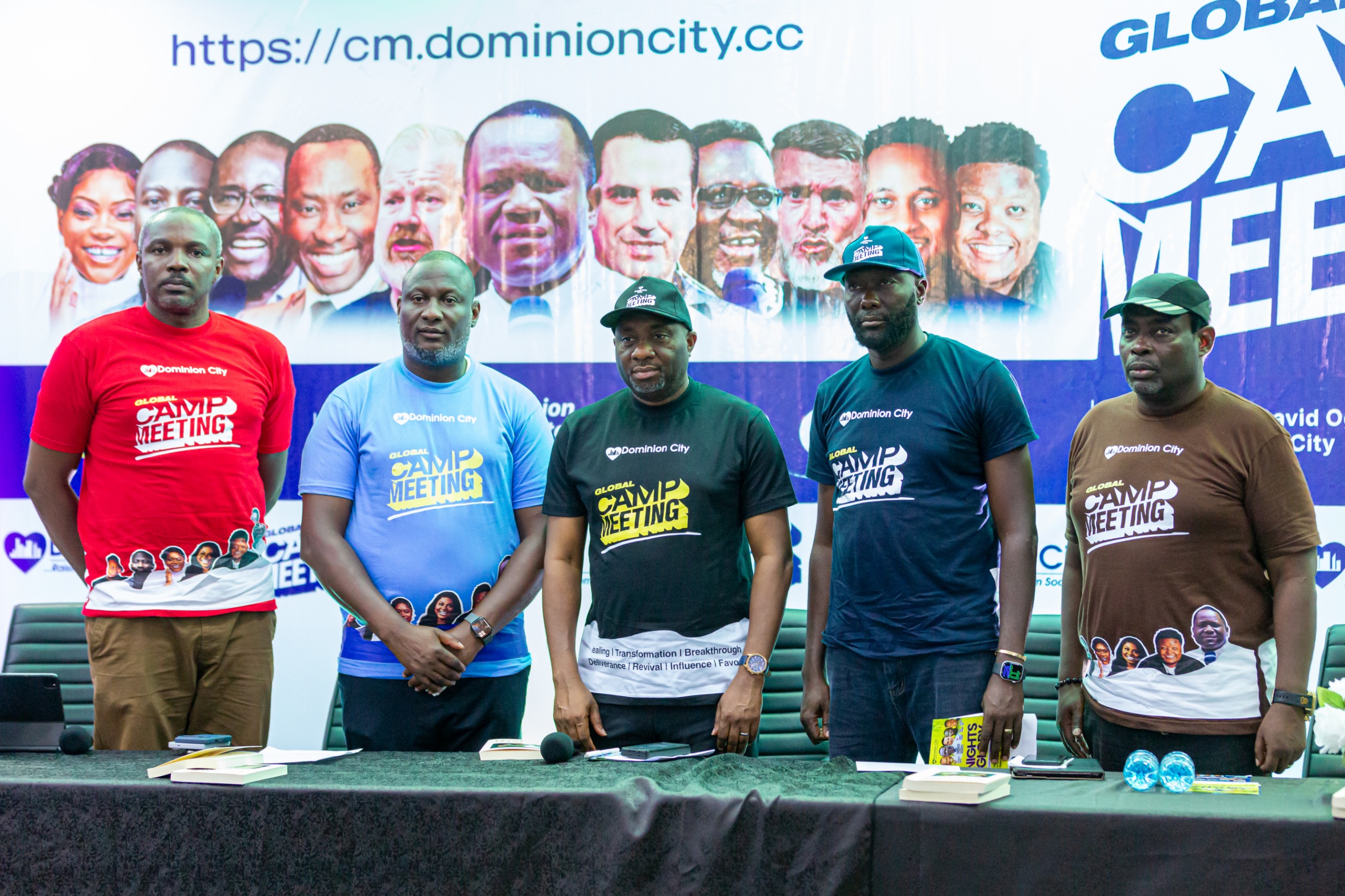
L-R: Dr. Godwin Efobi, Head, Medical Team, Dominion City Headquarters (DCHQ); Pastor Shola Olapade, Senior Pastor, DCHQ; Pastor Nobbert Onaga, President, Golden Heart Foundation and Senior Pastor, DC Lagos & Europe; Pastor Chuks Anochie, Head of Security and Traffic Control, Dominion City Headquarters (DCHQ), Camp Meeting 2026; Pastor Josh Tim Vaduchi, Head of Event & Programmes, DCHQ, during the press briefing of the forthcoming Global Camp Meeting, held the weekend of 2026 at the Dominion City Headquarters (DCHQ), Lagos.
L-R: Pastor Chuks Anochie, Head of Security and Traffic Control, Dominion City Headquarters (DCHQ), Camp Meeting 2026; Pastor Shola Olapade, Senior Pastor, DCHQ; Pastor Nobbert Onaga, President, Golden Heart Foundation and Senior Pastor, DC Lagos & Europe; Dr. Godwin Efobi, Head, Medical Team, DCHQ; and Pastor Josh Tim Vaduchi, Head of Event & Programmes, during the press briefing of the forthcoming Global Camp Meeting, held over the weekend in 2026 at the Dominion City Headquarters (DCHQ), Lagos.


-

 society6 months ago
Religion: Africa’s Oldest Weapon of Enslavement and the Forgotten Truth
-

 news4 months ago
WHO REALLY OWNS MONIEPOINT? The $290 Million Deal That Sold Nigeria’s Top Fintech to Foreign Interests
-

 society6 months ago
“You Are Never Without Help” – Pastor Gebhardt Berndt Inspires Hope Through Empower Church (Video)
-

 celebrity radar - gossips2 months ago
Dr. Chris Okafor Returns with Power and Fire of the Spirit -Mounts Grace Nation Altar with Fresh Anointing and Restoration Grace on February 1, 2026