
society
Broken Promises and Broken Backs: The ₦70,000 Minimum Wage Law and the Betrayal of Nigerian Workers


“Broken Promises and Broken Backs: The ₦70,000 Minimum Wage Law and the Betrayal of Nigerian Workers”
By George Omagbemi Sylvester
In a nation where the cost of living rises faster than hope, Nigeria’s workers remain the punching bag of economic mismanagement, political indifference, and institutional hypocrisy. It is nothing short of a national disgrace that almost a year after the Federal Government passed the ₦70,000 minimum wage into law in June 2024, only 16 out of 36 states have bothered to implement it. That leaves 20 states—more than half the federation—brazenly violating a law meant to protect the most vulnerable: local government workers, primary school teachers, cleaners, and support staff who keep the wheels of governance turning.

A Law Betrayed
The passage of the ₦70,000 minimum wage law was hailed as a necessary step to cushion the blow of the floating naira, spiraling inflation, and the withdrawal of fuel subsidies. President Bola Ahmed Tinubu signed the bill into law amidst fanfare and political grandstanding, declaring that “no worker in Nigeria should earn below a livable wage.”

Yet, in reality, those words have rung hollow. In states like Kogi, Bauchi, Zamfara, and even oil-rich Delta, the new minimum wage remains a cruel illusion. Workers still earn the outdated ₦30,000 or, in some cases, even less. Local government employees and primary school teachers in these states have become beggars in a country they serve diligently.
Economic Injustice in Broad Daylight
What exactly does ₦70,000 buy today? In 2025, ₦70,000 is barely enough to cover rent in most urban centers, let alone feed a family, pay for transportation, school fees, or basic healthcare. According to data from the National Bureau of Statistics (NBS), the average monthly cost of living for a Nigerian family of four is now over ₦180,000. So even the ₦70,000 wage—far from generous—is the barest minimum needed to scrape by.
Yet many state governments are dragging their feet, citing “inadequate funds” and “bureaucratic delays.” These are tired excuses from administrations that continue to waste public resources on bloated convoys, foreign trips, and frivolous allowances. Economist Dr. Bismarck Rewane, CEO of Financial Derivatives Company, remarked in a recent interview, “State governments crying about affordability should look inward. There is enough waste and duplication in their budgets to fund this minimum wage if fiscal priorities are restructured.”
Where is the Accountability?
It is important to ask: why are these states not being held accountable? The Nigerian Labour Congress (NLC) has issued threats, organized protests, and released statements, but what has changed? Why has the federal government, which passed the law, not enforced it with the same zeal it uses to collect taxes or chase debtors?
It is yet another example of Nigeria’s selective enforcement of laws—one for the elites, another for the poor. If a citizen fails to pay taxes or utility bills, the system comes down hard. But when governments fail to obey a law passed by their own legislature, silence and complicity reign supreme.
Voices from the Ground
Workers across the 20 defaulting states are speaking up—but who’s listening? Mr. Musa, a local government clerk in Gombe State, says, “I have not been able to pay my children’s school fees since last term. They keep telling us they are ‘working on it.’ Since June last year? My salary is ₦28,000. What can I do with that today?”
Mrs. Onome, a primary school teacher in Edo State, adds, “They want us to teach with passion, but they don’t pay us enough to eat. The government talks about education reform while starving the educators.”
The Hypocrisy of Governance
This situation reveals a deeper malaise—Nigeria’s chronic hypocrisy when it comes to governance. Governors are quick to increase their own allowances, fund their re-election campaigns with public money, and host lavish state dinners, but suddenly become frugal when it concerns paying the minimum wage.
As respected economist Prof. Pat Utomi rightly put it, “A nation that fails to prioritize the welfare of its workers is a nation preparing for social implosion. Wage justice is not a luxury—it is a foundation for peace, productivity, and patriotism.”
Political Will or Political Wickedness?
Some states like Lagos, Rivers, Akwa Ibom, and Enugu have implemented the new wage and are adjusting their budgets accordingly. This proves that implementation is not about resources—it’s about political will. The states that have refused to comply are not necessarily the poorest; they are the most irresponsible.
The Revenue Mobilization Allocation and Fiscal Commission (RMAFC) reports that all 36 states received an average of ₦60 billion each in federal allocations between July 2024 and March 2025. If even 10% of that allocation were directed toward wages, most states would easily meet the minimum wage threshold.
The Role of Civil Society and Media
Civil society organizations, labor unions, and the media must do more than issue statements. There must be coordinated action, legal battles, and naming-and-shaming campaigns. Let every Nigerian know which governors are breaking the law. Let them be exposed in every forum, from town halls to social media.
In the words of Femi Falana (SAN), “Workers must rise to defend their rights. When government disobeys the law, civil disobedience becomes duty.” Falana further suggested that workers should sue non-compliant states and seek judicial enforcement of the wage law.
A Call to Action
Enough is enough. This is not the time for diplomacy or patience. The Nigerian worker has endured decades of deception, delay, and disdain. We must demand a national audit of state compliance with the minimum wage law, backed by sanctions for erring states.
Let the governors who refuse to pay their workers feel the pressure. Let every non-compliant state be exposed. Let labor unions organize strategic strikes. Let civil society file class-action lawsuits. And let the international community take note that Nigeria cannot claim to be democratic while treating its workforce like slaves.
Conclusion: Justice Delayed is Justice Denied
The refusal of 20 states to implement the ₦70,000 minimum wage is not just an administrative failure—it is a betrayal of trust, a violation of human dignity, and a ticking time bomb. The poor cannot continue to subsidize the waste and luxury of the rich.
We cannot claim to build a prosperous future on the backs of underpaid, disrespected workers. If the government is serious about peace, progress, and productivity, it must start by paying its debts—starting with the most basic one: a fair wage.
And to those governors still playing politics with the lives of workers, remember this: history never forgets. Nigerians are watching, and justice may be slow, but it always arrives.




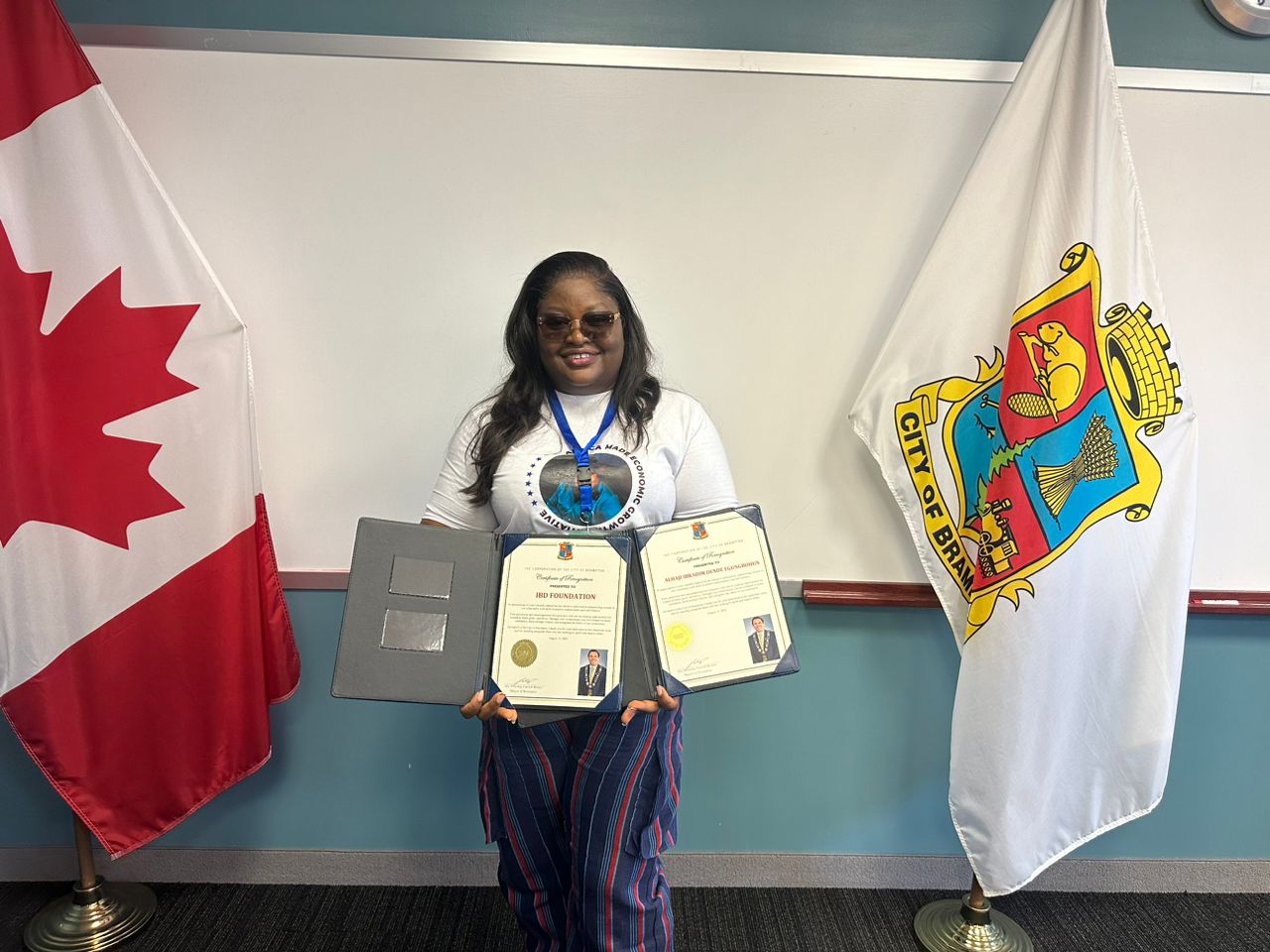
Mayor of Brampton Honours IBD Foundation
The City of Brampton has recognised Alhaji Ibrahim Dende Egungbohun for his remarkable contributions to a transformative initiative designed to empower women through essential skill-building for independence and self-reliance. This formal acknowledgment took place on August 15, 2025, in Mayor Patrick Brown’s office during a visit from the Africa Made Economic Growth Initiative (AMEGI) team. Represented by his wife, Mrs. Omolara Egungbohun, Alhaji Dende received the certification amidst an atmosphere of gratitude and celebration. Mayor Brown presented the certificate personally and extended his commendations to the IBD Foundation for their relentless pursuit of women’s empowerment, development, and their philanthropic efforts.

The Certificate of Recognition underscored Egungbohun’s unwavering dedication and tireless efforts to create diverse opportunities for women to enhance their skills, develop their potential, and ultimately prosper in their personal and professional lives. As a philanthropist, esteemed businessman, and influential social figure, his impact in Nigeria and beyond is both profound and far-reaching.

Egungbohun’s generosity and steadfast commitment have significantly bolstered the confidence of program participants, facilitating their ability to envision and construct brighter futures while strengthening community ties. In his acknowledgment, Mayor Brown stated, “Your dedication uplifts those working to inspire others,” highlighting the deep and lasting influence of Egungbohun’s work in empowering women.

This initiative is not just a standalone effort; it harmonizes perfectly with Brampton’s broader mission to advocate for and uplift marginalized groups within the community. Egungbohun’s contributions serve as a vital catalyst for transformative change, offering practical skills that enhance employability while reshaping the economic and social framework for women. Through an assortment of workshops, mentorship programs, and robust support networks, he has fostered an encouraging environment where women can fully explore and realize their potential.
As Brampton steadfastly commits itself to promoting inclusivity and equity, leaders like Egungbohun exemplify how collaboration, vision, and genuine enthusiastic engagement can effectively turn hopes and aspirations into tangible realities. The public acknowledgment from the city not only honors individual efforts but also sends a resounding message, inspiring other community leaders and stakeholders to step up and invest in grassroots empowerment initiatives that uplift and serve those in need. This recognition is a clarion call for collective action toward a more equitable and inclusive society.
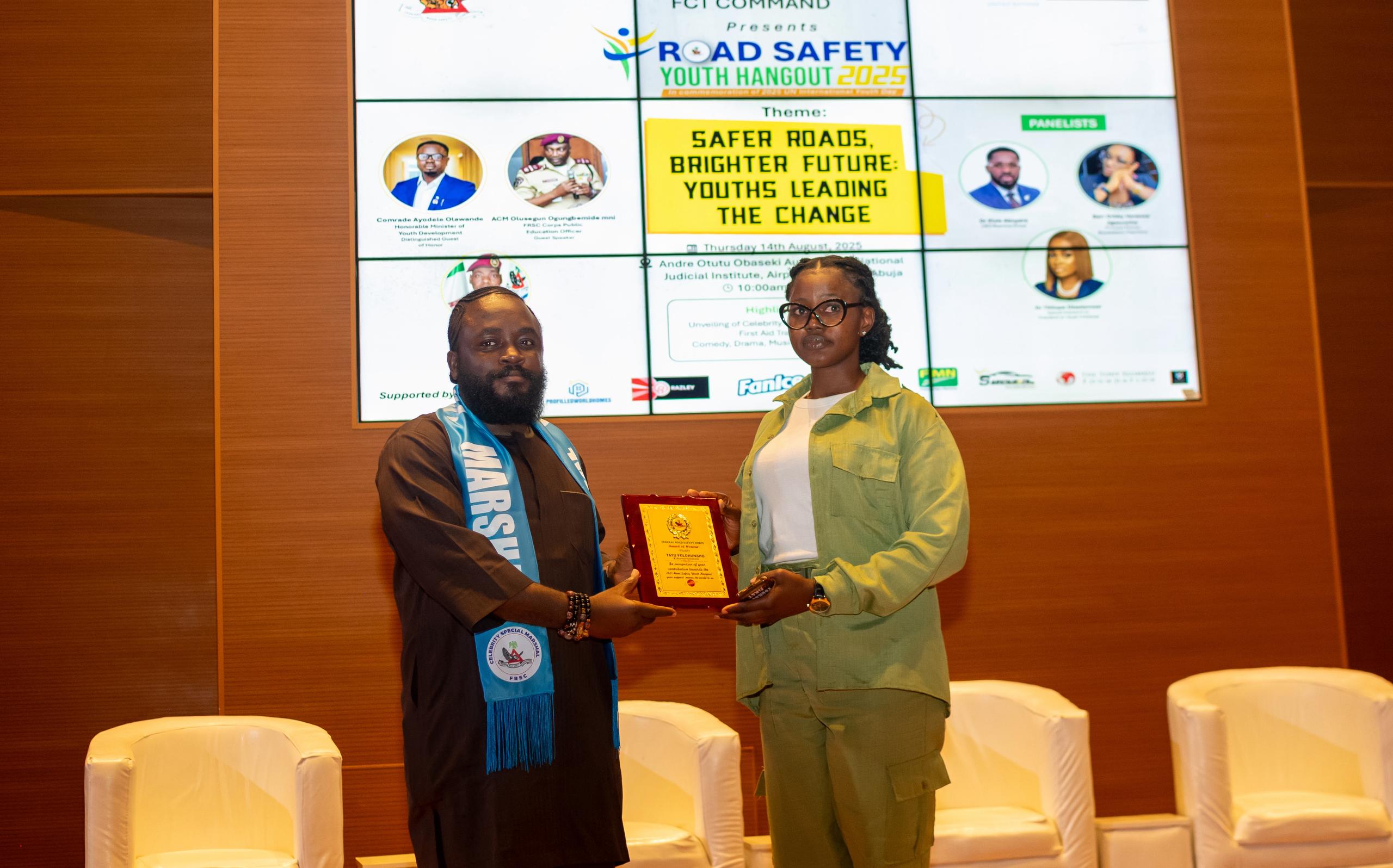
Tayo Folorunsho Nominated as Celebrity Special Marshal of the Federal Road Safety Corps
Tayo Folorunsho, renowned youth ambassador and edutainment advocate, has been officially nominated to be decorated as a Celebrity Special Marshal (CSM) of the Federal Road Safety Corps (FRSC).

The unveiling took place at the recently concluded FRSC Youth Hangout, held in celebration of the United Nations International Youth Day at the National Judicial Institute, Abuja.
Over the years, Tayo Folorunsho has distinguished himself as a passionate youth leader, consistently driving initiatives that inspire and empower young people. His recognition as a Celebrity Special Marshal is not only a mark of honor but also a call to responsibility—championing road safety, responsibility, and positive change within society.

Speaking on the recognition, Tayo Folorunsho emphasized:
“This is more than an honor; it is a responsibility to use my voice and influence to promote safety, responsibility, and positive change on our roads.”
This milestone reinforces his commitment to youth empowerment, social responsibility, and nation-building through edutainment and advocacy.
society
FRSC Partners with Edutainment First International to Drive Road Safety Awareness in Nigeria
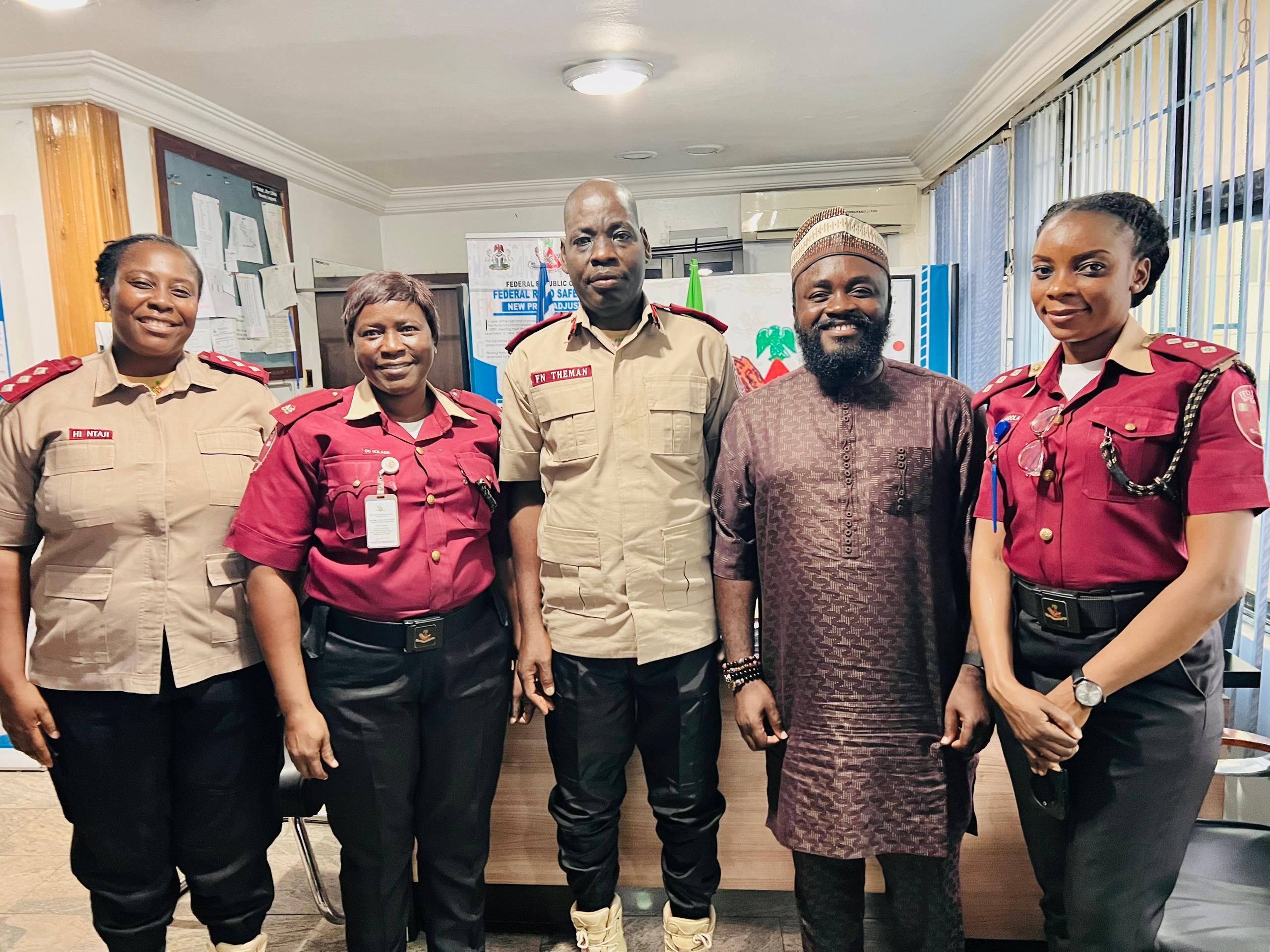
FRSC Partners with Edutainment First International to Drive Road Safety Awareness in Nigeria
In a country where road accidents claim thousands of lives each year—most of them young people—the Federal Road Safety Corps (FRSC) and Edutainment First International have launched a bold new initiative to change the narrative. On Thursday, August 14, both organizations hosted the maiden Road Safety Youth Hangout at the National Judicial Institute, Abuja.

The event, held to mark United Nations International Youth Day 2025, brought together more than 300 participants, including members of the National Youth Service Corps (NYSC), students, youth leaders, and community representatives. Unlike traditional road safety campaigns, the hangout was designed as an interactive forum blending education and entertainment, where young Nigerians could learn, innovate, and commit to safer road practices.
According to FRSC data, young people remain the most vulnerable demographic in road traffic crashes across Nigeria—an urgent concern this initiative aims to tackle. Through storytelling, innovation, and collaborative problem-solving, the Road Safety Youth Hangout sought to transform young Nigerians into advocates for safety within their communities.
“This is not just about rules and regulations,” said one of the organizers. “It’s about equipping young people with the tools and the voice to change Nigeria’s road culture.”
Aligned with the UN’s 2025 theme, “Local Youth Actions for the SDGs and Beyond,” the program underscored the critical role of young Nigerians in advancing the Sustainable Development Goals (SDGs), particularly those connected to health, safety, and responsible citizenship.
By focusing on empowerment rather than enforcement, FRSC and Edutainment First International signaled a fresh approach to road safety: investing in the next generation as the real drivers of change. The belief is simple yet powerful—an informed and empowered youth population is key to reducing accidents and saving lives.
For many participants, the hangout was more than just an event; it was a wake-up call. With interactive sessions infused with music, drama, and dialogue, young Nigerians were challenged to reflect on their daily habits as road users and to embrace leadership as advocates for safer communities.
As one youth participant reflected:
“Road safety isn’t just the job of the FRSC. It’s our responsibility too—because we are the ones most at risk.”
The maiden edition of the Road Safety Youth Hangout may have ended, but the movement it launched has only just begun. Its message was unmistakable: Nigeria’s fight for safer roads must be youth-led, collaborative, and relentless.


-

 society5 months ago
Ramadan Relief: Matawalle Distributes Over ₦1 Billion to Support 2.5 Million Zamfara Residents
-

 Politics2 months ago
Nigeria Is Not His Estate: Wike’s 2,000‑Hectare Scandal Must Shake Us Awake
-

 society3 months ago
OGUN INVESTS OVER ₦2.25 BILLION TO BOOST AQUACULTURE
-

 celebrity radar - gossips6 months ago
Divorce Showdown: Yul and May Edochie’s Legal Battle Intensifies as Court Orders Further Talks