
society
Buhari Scores Another ‘F9’ At Ramadan

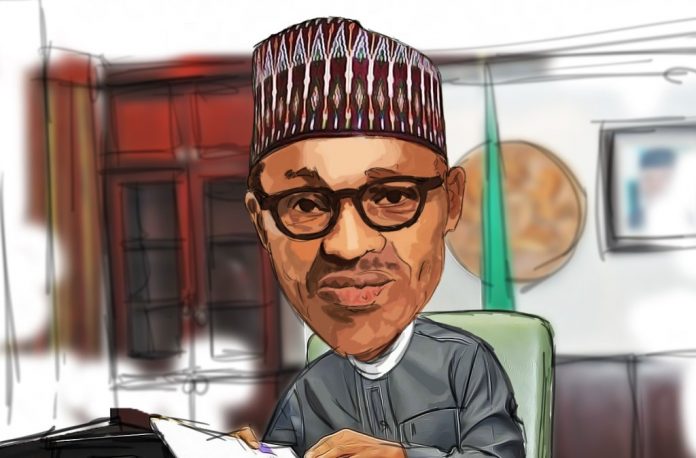
Buhari Scores Another ‘F9’ At Ramadan
Subhanallah, alhamdulillah, astaghfirullah, la ilaha illa Allah! This is my most favourite Islamic chant. I love its rhythm, rhyme and reason. It means, “God is perfect, praise be to Allah, I seek forgiveness from Allah, there’s no other god, except Allah!”
Of the 12 Islamic months in the Hijri calendar, Ramadan, the ninth month, is the holiest. It’s the month when Muslims worldwide embark on a 30-day fasting period. It’s the month when Allah, the most benevolent, the most merciful, rains down mercy from high above on mankind.
For the religious, Ramadan is the month when lips break in dry cracks and stony face grimaces in hungry piety.
For the spiritual, Ramadan goes beyond sunset and sunrise. Its essence is neither in the early morning ‘Chris meal nor the breaking of fast in the evening at ‘iftar’. Ramadan is a spiritual journey in obedience to Allah’s laws.
eye
For his advanced age and health, Nigeria’s President, General Muhammadu Buhari (retd.), is excused by the Holy Quran from participating in the act of worship which Ramadan fasting symbolises.
Apart from the aged and the sick, however, travellers, pregnant, breastfeeding and menstruating women, and those unable to understand the purpose of Ramadan fasting, are also exempted.
For me, the intriguing thing in the uniqueness of Ramadan is the decline in crime rate during the month, presupposing that the coinage, ‘there’s honour among thieves, is true among criminals.
But if criminals remember Ramadan and keep it holy, it’s not out of place to assume that the Minister of Information and Culture, Alhaji Lai Mohammed, a leader and devout Muslim, who has gone on hajj and umrah a jillion times, will put the lid on his barrel of lies, in respect of Ramadan.
With a big lie, Alhaji Lai woke up the sleepy lying dog on the third day of Ramadan when he said Nigerians’ harsh criticism of the Buhari administration was responsible for the citing of Twitter headquarters in next-door Ghana.
Were he alive, the funniest Yoruba stand-up comedian ever, Gbenga Adeboye, would’ve shouted, “Oluwa mi, eyi o wa poju!?” at Lai’s lie, meaning, “My lord, is this lie not too much!?”
Alhaji Lai’s lie is the falling tree in the forest that kills the family head sleeping in bed at home. It’s the windstorm that spills the water inside the coconut.
It’s the holy month of Ramadan, I’ll not lie to President Buhari. I’ll tell him the truth and hope that like the true Muslim he is, he would consider my truths.
Mr President, sir, three of your loudspeakers, Alhaji Lai, Minister of Labour and Productivity, Dr Chris Ngige; and Madam Lauretta Onochie, have torn.
Alhaji Lai, Dokita Ngige and Aunty Onochie aren’t your friends, they’re your frenemies. But I shall come to that later.
Your Excellency, the heart of man is continuously evil, says the scriptures. I’m not omniscient, and, therefore, cannot claim to know what’s going on in your heart, Mr President.
But going by the speeches issuing from the abundance of your heart, Your Excellency, it’s easy to tell that something is wrong between the mind and body, between the heart and soul.
Sir, on your arrival from London three days ago, you granted a quickie interview. I trust your aides would’ve tipped you off on the playground questions you were asked, yet you made a mess of the interview, again.
Sir, the latest interview exposed the doubts about your health, just like your 2019 shocking public display at a rally in Delta State when you gave the All Progressives Congress flag to the wrong person, instead of the governorship candidate, and said, “I am handing over this flag of honour to our presidential candidate,” forgetting you’re the President.
Mr President, when you were corrected on the podium by a party chieftain, who loudly said ‘gubernatorial’ to you, you probably were lost in the island of incomprehensibility as you thundered ‘senatorial candidate’ into the microphone!
The party chieftain, who didn’t show his embarrassment, again, corrected you by saying ‘gubernatorial’, and you killed all doubts when you said ‘gubernatorial candidate’. Your Excellency, is ‘governotorial’ a new Fulani word?
General Buhari, that wasn’t the first or the second or the third or fourth time when your worrisome answers to questions during interviews have left tongues wagging about the state of your health, prompting patriotic calls on you to step aside while your healthy deputy takes over the Nigerian ship drifting to the precipice. But you never listened because you would rather cling on to power with your last breath even if the country rolls off the world map.
Mr President, in the spirit of Ramadan, I won’t recall other instances of your disturbing public utterances that show the divorce between you and reality. I’ll limit myself to the interview you granted at the airport upon arrival from your medical tourism in London.
The interviewer asked three patronising questions. First off, he said, “After your well deserved rest in London, what would Nigerians expect from your administration, going forward?
Shockingly, Mr President, you answered, “Continuity.”
I ask, “Continuity of what?” Insecurity, hopelessness, poverty, starvation, joblessness and grief? You blew the chance to highlight the policies of your administration in that empty response. Well, your response was the best your ability could carry, I understand.
The interviewer asked his second question: “While in London, you appointed a new Inspector General of Police, what do you expect from him?”
Buhari: Well, we went through the system, there was a committee by the minister of police affairs, and they gave me some names, and he happens to be the ones (sic) chosen. And he knows his job, he has been in it for a long time, he went to all the training (sic), he has the necessary experience, so we have high expectation from him.
Alhaji Buhari, if neither your family nor your aides have the guts to tell you that you’re too far gone, I will – in the spirit of Ramadan that forbids lying and pretension.
Your Excellency, your answer to the question was a tale full of sound and incoherence, signifying nothing because your answer, yet again, missed the question.
The interviewer asked his third question, “What about the performance of the new service chiefs, Your Excellency?
Buhari: Oh, yes. They’ve been in the system all the way, they know what is wrong, they know what is right. And I think they’re doing their best. I hope their best would be good enough for Nigeria.
I just imagine President Joe Biden, who is older than you, being asked such a question and you would hear an insight into the country’s war against insecurity and the achievements of each service chief, so far.
Back to Alhaji Lai and Twitter, and Dokita Ngige and aunty Onochie.
Alhaji Lai’s delusion is lineal and probably worse than Buhari’s if he (Lai) cannot see the reasons why Twitter chose Ghana over Nigeria in the loss of no fewer than 20 Nigerian lives to insecurity daily and the Buhari administration’s intolerance to free speech.
Is Nigerians’ criticism of Buhari to blame for the kidnap of the Ekiti monarch three days ago or the public renouncement of the Minister of Communications and Digital Economy, Isa Pantami, of religious extremism?
Before his appointment, security checks must’ve revealed Pantami as a religious extremist, but Buhari chose to keep him for curious reasons.
Both Ngige and Onochie defended Buhari’s spending Nigeria’s taxpayers’ money on medical treatment in London for more than 40 years now. They argued that Buhari has the right to seek a second opinion on his health.
But both torn loudspeakers failed to point out that the Constitution didn’t specify that the ‘second opinion’ must be done abroad.
It’s a shame that Ngige and Onochie couldn’t see the shame in Mr Integrity scurrying abroad at the drop of a hat when Nigerian hospitals, for which billions are budgeted yearly, remain comatose.
It’s a shame.
Tunde Odesola




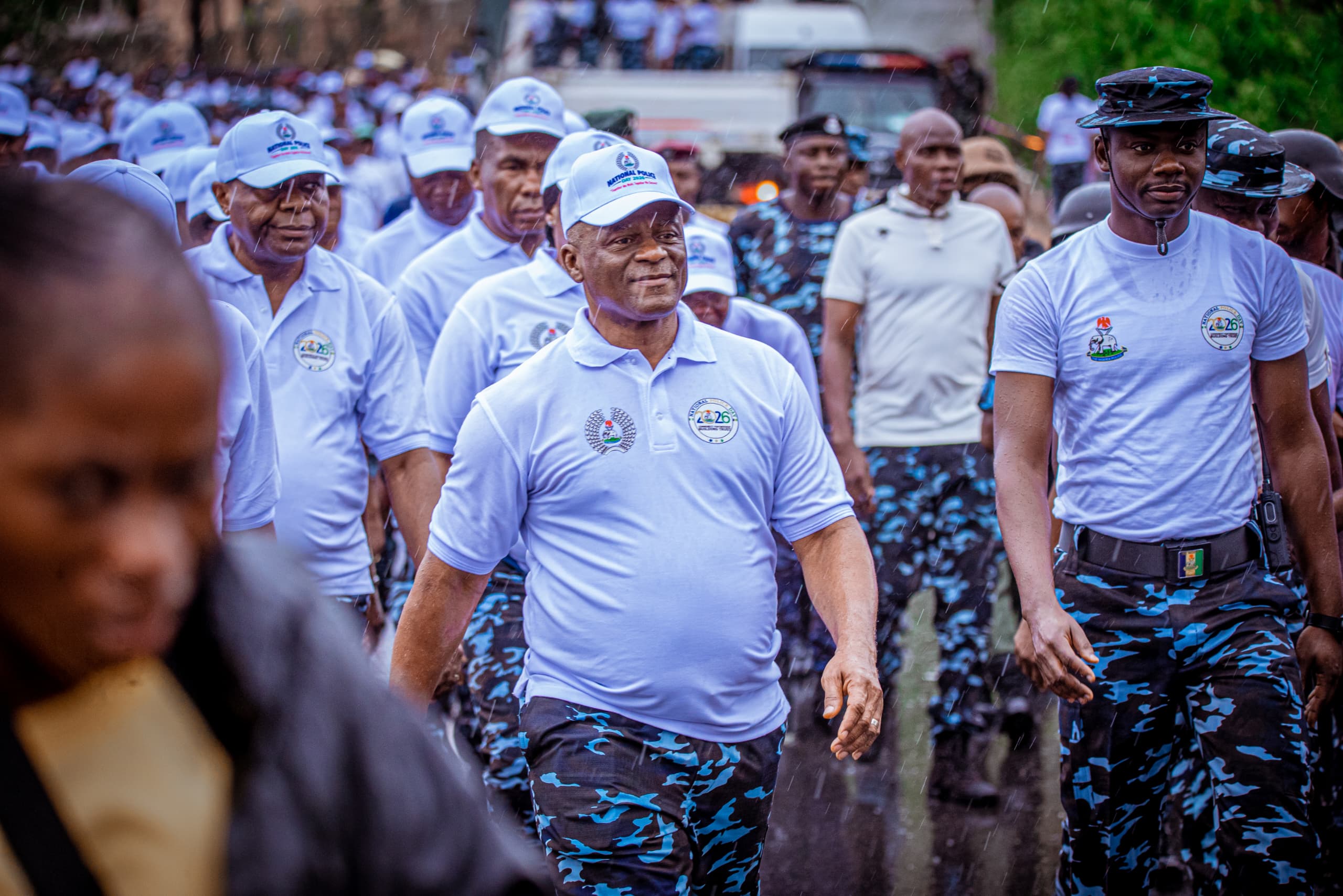
Police Day 2026: IGP Disu Leads Nationwide Walkathon To Strengthen Community Trust
The Inspector-General of Police, Olatunji Disu, on Tuesday led the management team, alongside officers and personnel of the Nigeria Police Force, in a nationwide walkathon to commemorate the 2026 National Police Day.
The event, held across state capitals and the Federal Capital Territory, formed part of activities marking Day Two of the annual celebration, themed “Community Partnership: Building Trust.”
The symbolic exercise, which drew participation from both police personnel and members of the public, was aimed at showcasing unity, discipline, and a renewed commitment to community policing and public safety.
According to the Force leadership, the walkathon underscores the Nigeria Police Force’s resolve to strengthen public trust, deepen engagement with citizens, and enhance collaboration in tackling security challenges across the country.
Participants described the initiative as a practical step toward bridging the gap between law enforcement and the communities they serve, while also promoting physical fitness and mental well-being among officers and civilians alike.
With the theme reflecting a shared responsibility for safety, the Police reiterated that sustainable security can only be achieved through active partnership with the public.
The event concluded with a renewed call for collective action under the banner: “Together We Walk, Together We Secure,” emphasizing unity of purpose in building a safer and more secure society for all Nigerians.


society
Dr. Chris Okafor invokes divine retribution upon individuals blackmailing the Grace Nation church
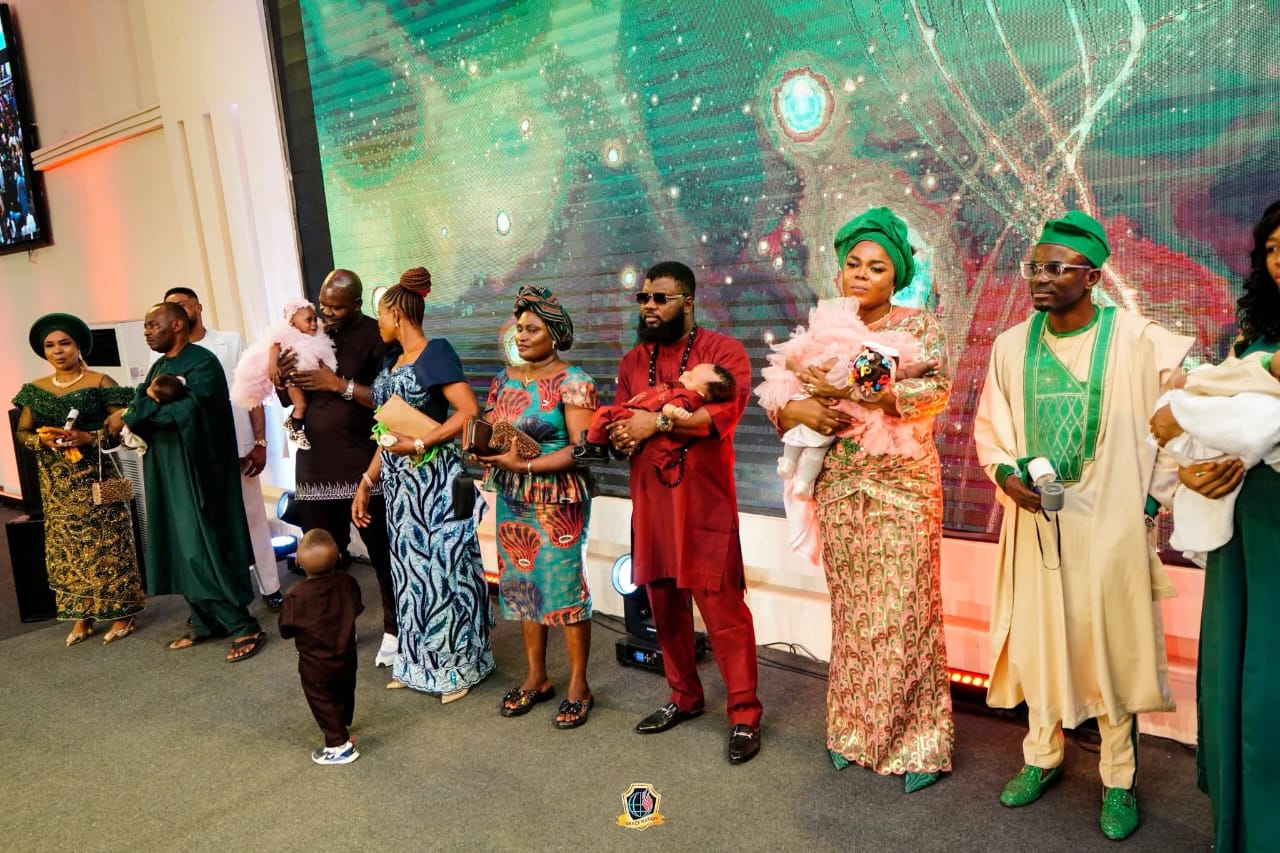
Dr. Chris Okafor invokes divine retribution upon individuals blackmailing the Grace Nation church
… Affirming God’s omnipotence to unveil malicious schemes.
To be frank, the ability of Doris Ogala and her associates to withstand the arduous challenges set by Senior Pastor Dr. Chris Okafor of Grace Nation Global at the culmination of the Harvest of Babies 2026 conference, the church’s flagship event, continues to elude me.
It’s advisable not to offend a powerful spiritual leader like Prophet Chris Okafor to avoid potential consequences, as seen in the situation with Doris Ogala, who was rebuked by the prophet; can she rectify the situation through confession?
Insiders close to the man of God claim that despite relentless online bullying and blackmailing, the Generational Prophet remains resolute, stating that God’s power has been evident throughout the commission’s existence. The reason for this wonderful statement is found in the scriptures, “Upon this rock I shall build my Church, and the gates of hell shall not prevail.” The more falsehoods are spread about the church and its leader, the more God elevates the church and propels him to greater heights, he asserted. He emphasized that blessings and fruitfulness are antidotes to curses, noting that God continues to bestow blessings upon the church, including miracles and the gift of children, which is one reason for the grand finale of the annual family liberation program, The Harvest of Babies.
However, the man of God issued a curse on each person speaking ill of the church, blackmailing, and uttering all sorts of falsehoods against the church, declaring that if they refused to repent within a few days, the earth would swallow them and their family members, stating that they would be of no use to themselves, their families, or society at large.
The spiritual leader cautions his followers to beware of such individuals including Doris Ogala who may taint their faith, and urges them to treat these persons as emissaries of the devil, avoiding them altogether.
Recall that the 2026 harvest of babies concluded with a remarkable birth of a miracle baby boy to a woman on the third day of the conference, accompanied by the dedication of several other miracle babies, all to the glory of God.
Christopher Sunday David writes from
Austria
“Together We Walk, Together We Secure”: Police Launch 2026 Walkathon In Abuja
The Nigeria Police Force has announced plans to host a walkathon in commemoration of the 2026 National Police Day, aimed at promoting unity, peace, and stronger community partnership.
The event is scheduled to take place on Tuesday, March 31, 2026, with participants expected to converge at the Force Headquarters Abuja by 6:00 a.m., where the walk will commence.
According to the organisers, the walkathon is designed to bring together members of the public, stakeholders, and security personnel in a show of solidarity and shared commitment to national security.
With the theme, “Together we walk, together we secure,” the initiative underscores the importance of collaboration between the police and citizens in maintaining peace and safety across the country.
Members of the public have been encouraged to participate in the exercise, which forms part of activities lined up to mark this year’s National Police Day celebration.
It is believed that the walkathon would not only foster closer ties between the police and the communities but also serve as a platform to promote awareness on collective responsibility in ensuring a safer society.


-

 society6 months ago
Religion: Africa’s Oldest Weapon of Enslavement and the Forgotten Truth
-

 news4 months ago
WHO REALLY OWNS MONIEPOINT? The $290 Million Deal That Sold Nigeria’s Top Fintech to Foreign Interests
-

 society6 months ago
“You Are Never Without Help” – Pastor Gebhardt Berndt Inspires Hope Through Empower Church (Video)
-

 celebrity radar - gossips2 months ago
Dr. Chris Okafor Returns with Power and Fire of the Spirit -Mounts Grace Nation Altar with Fresh Anointing and Restoration Grace on February 1, 2026