
celebrity radar - gossips
Buratai Canvass support for Tinubu As Forum Of Ex-Councillors Presents Him Leadership Philanthropist Per Excellence Award

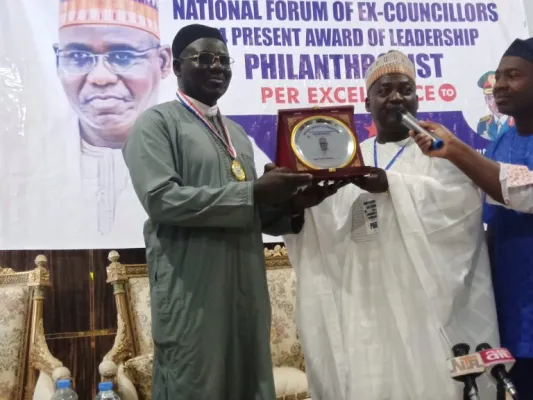
Buratai Canvass support for Tinubu As Forum Of Ex-Councillors Awards Him Leadership Philanthropist Per Excellence
Internationally acclaimed legend and former Chief of Army Staff, Amb. Lt Gen. Tukur Yusufu Buratai (CFR) has urged support for his great party, All Progressives Congress, and their Presidential Candidate, Ashiwaju Ahmed Bola Tinubu.
Buratai made the call on Thursday, November 24th, 2022 while receiving a prestigious Award of ‘Philanthropy per Excellence’ from the National Forum of Ex- Councilors of Nigeria in Gora, Keffi Local Government Area of Nasarawa.

He said the call was premised on the achievements of President Muhammadu Buhari’s administration in different fronts, adding that there was need for continuity to make Nigeria great.
Buratai said the recent discovery and commitment of drilling of oil in the North East and redesigning of the Naira notes were some of the commendable achievements of the administration.
He said there was need to have the right leadership that would continue with the transformational legacy of Buhari’s administration, adding that the administration had also done well in the area of infrastructure and security.
“This is a political season. The time for nominations and other pre-election activities have been conducted and now is time for campaign and I know you come from different political parties, not a single party.
“But you know where the country is heading to, you know what President Buhari has done for this country, especially the successes we have achieved from 2015 to date.
“The President has been instrumental to the strong leadership and his commitment and the will to see that the country is secured, free from corruption and also develop and progress in terms of its economic development.”
According to him, the political terrain is still very much dynamic and as such, we ensure that we have the right people in leadership to be able to come into power and get our country the better footing as we grow.
“Well, you know my standing. President Buhari who has been a great mentor, who has brought me to limelight, belongs to a particular party, the APC.
“So, I will not shy away from saying that that is the party to go and I believe things will be better for the foundation that Buhari has laid and will be sustained.
“We have received assurances from Tinubu. So by and large, I believe Nigeria has a great future and will do a lot to ensure that we continue to support the present government and the next government that will be coming.
“For now, we have a course as we move to the 2023 general elections to get the right party, the right candidates for them to be in power, that will be a continuation of what the President has left,” he said.
The former army chief and former ambassador thanked the forum for recognising his efforts while in service and pledged to continue to support the vulnerable and the less privileged in the society which he has been doing even before he became the Chief of Army Staff.
He said that a lot had been done to uplift the living conditions of people at the grassroots and still continuing, saying the award was a true reflection of what Buratai is and what he stood for.
According to him, It is a great honor to him and his family and to the military in general, including the defence correspondents that were with him in the fields as army chief.
The President of the forum, Mr Awwal Hassan said it was the first time they would be giving out such award to a former service chief, adding that Buratai earned the award because of his achievements in office, leading the counter-insurgency war from the front.
Hassan said the former COAS also stood out among his contemporaries in the area of philanthropy for helping a lot of vulnerable people in the society in the area of empowerment and education support.
The Vice President of the forum, Mr Ismaila Mumin said the forum of ex-councilors is a non-governmental organisation floated and organised by some concerned youth activists to foster unity in diversity and cordial understanding among the teaming youth in the country.
He said the organisation has vibrant and functional structures in the 774 local government areas of Nigeria to sensitise and mobilise the youth to promote peace and peaceful co- existence in their respective areas among others.
He said the governing body of the forum decided to give the prestigious award of Excellence as philanthropist per excellence for 2022 to Butatai on the basis of his many records of achievements.
“Our decision in this respect is in line with the teaching in our national anthem that the efforts of our heroes should not be allowed to go in vain,” he said.
He urged Buratai to be ready to vie for political office in future, saying the nation was in need of his experience and patriotism.





Beauty Meets Glamour as Olaide Ogunyemi Opens New Studio in Mushin
Popular Nollywood actress and professional makeup artiste, Olaide Ogunyemi Oluwayemisi aka Damilola, has expanded her footprint in the beauty industry with the grand opening of her new makeup studio in Lagos.
The talented thespian, who is also the Chief Executive Officer of @Dobc_makeovers_andmore, officially unveiled the ultra-modern beauty space last Thursday, April 2, 2026, in a colourful ceremony filled with glamour, fashion, and pageantry.
Strategically located at 101 Palm Avenue, right beside FitPlus and Sparklight Hospital in Mushin area of Lagos, the new studio is designed to offer top-notch beauty services, reflecting Ogunyemi’s commitment to excellence and professionalism in the ever-growing makeup industry.
The opening ceremony attracted friends, colleagues from the Nollywood industry, beauty enthusiasts, and well-wishers who came out in large numbers to celebrate the entrepreneur’s latest milestone. Guests were treated to a vibrant atmosphere that showcased creativity, style, and the evolving standards of the beauty business in Lagos.
Speaking at the event, Ogunyemi expressed her excitement and gratitude, noting that the new studio represents years of hard work, dedication, and passion for her craft. She reaffirmed her commitment to delivering premium beauty services while empowering aspiring makeup artistes.
The launch of the studio further cements her reputation as a dynamic force, successfully blending her career in Nollywood with a thriving beauty brand.
With this latest development, Olaide Damilola Ogunyemi continues to inspire many young entrepreneurs, proving that talent, consistency, and vision remain key drivers of success in Nigeria’s creative and business landscape.


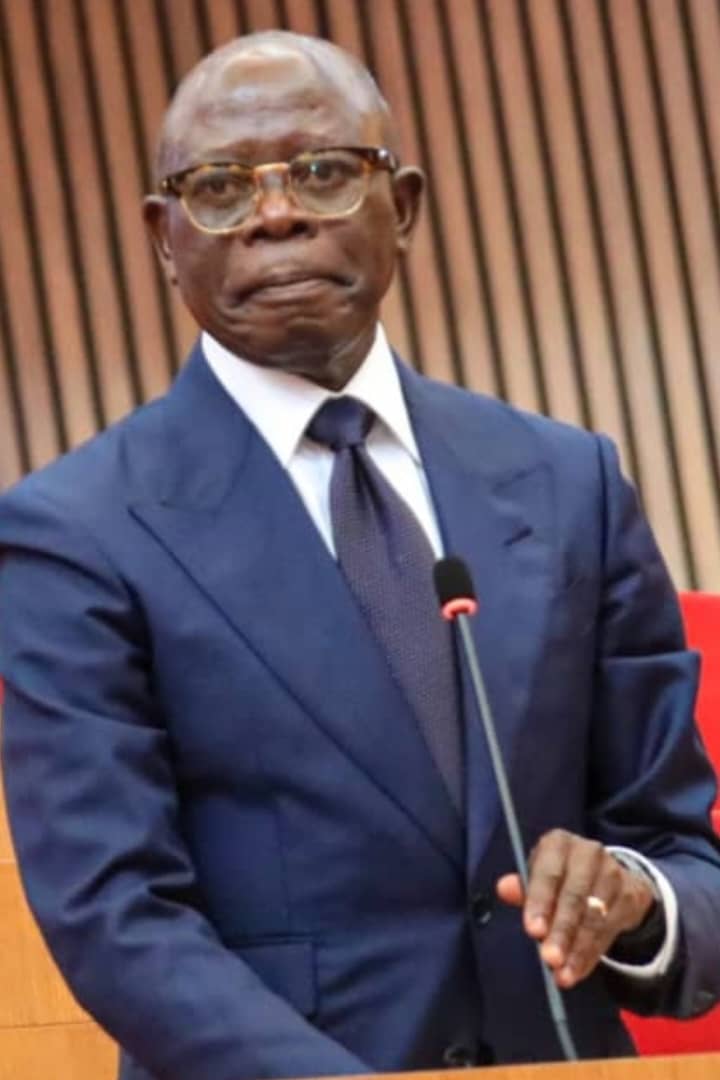
Daniel Eromosele Eulogize Adams Oshiomole as he turns 74 years
Today, I celebrate an exceptional leader, a fearless voice for the people, and a man whose life has remained a symbol of courage, sacrifice, and unwavering commitment to justice—Distinguished Comrade Senator Adams Aliu Oshiomhole.

Your journey has been nothing short of inspiring. From your days as a vibrant labour leader to your impactful tenure as the Executive Governor of Edo State, and now as a respected Senator of the Federal Republic, you have consistently demonstrated what it means to serve with integrity, strength, and purpose. Your contributions to the growth of our nation and the development of Edo State remain indelible and deeply appreciated.
You have not only built structures and institutions but have also built people. I am personally a beneficiary of your leadership, your guidance, and your belief in empowering others. Your influence in my life has been profound, and I remain grateful for the opportunities and inspiration you have given me.
On this special day, I celebrate not just your achievements, but the man you are—resilient, principled, and ever committed to the progress of Nigeria and her people.

May this new year bring you renewed strength, greater wisdom, good health, and more remarkable accomplishments. May your legacy continue to shine brighter with each passing year.
Happy Birthday, sir. Wishing you many more fruitful and impactful years ahead.
celebrity radar - gossips
Accolades to Empress Genevieve Wining as she Celebrate birthday in Grand style

Accolades to Empress Genevieve Wining as she Celebrate birthday in Grand style
Emmanuel Clement
Vilnius, Lithuania – The Grand Hotel Vilnius will host a grand birthday celebration in honor of Her Majesty The Empress Genevieve Wining of the United Kingdom of Atlantis (UKA) on April 4th, 2026.
The four-day event promises to be an extravagant affair, marking the special birthday of Empress Genevieve Wining. The celebration will take place at the prestigious Grand Hotel Vilnius, Lithuania, renowned for its luxurious ambiance and exceptional service.

According to the event flyer, the birthday celebration will be a spectacular occasion, fitting for an empress. Guests can expect an elegant setting adorned with golden accents, sparkling champagne, and festive decorations, creating a regal atmosphere befitting the occasion.
The Empress Genevieve Wining of UKA is expected to grace the event, which will include various festivities and celebrations in her honor. The occasion aims to bring together dignitaries, followers, and guests to commemorate the empress’s birthday with grandeur and joy.
For media inquiries, accreditation, or further information about the birthday celebration of The Empress Genevieve Wining of UKA, please contact the event organizers.
Courtesy of His Excellency Emperor Prof. Solomon Wining. UKA


- ABB’s Application Configurator brings speed and precision to grid-feeding protection system design April 7, 2026
- Can Equatorial Guinea Reposition as West Africa’s Gas Hub? April 7, 2026
- Afreximbank Partners with African Energy Week 2026 to Drive Africa-Led Energy Deals April 7, 2026
- Merck Foundation Marks ‘World Health Day’ 2026 – Transforming Patient Care in Africa and Beyond through 2600+ Scholarships for Healthcare Providers From 52 Countries April 7, 2026
- Morocco Gas Plan Reset Could Open Door to New Investment Models April 7, 2026
- African Petroleum Producers Organization (APPO) Secretary General Joins Angola Oil & Gas (AOG) 2026 as African Energy Bank Eyes June 2026 Debut April 7, 2026
- Ghanaian Biomedical Specialist Receives International Award April 7, 2026
- Grey Connects the Africa-Canada Money Corridor With Instant Transfers via Interac April 7, 2026
- Nigeria’s Oil Revival in Focus as Petroleum Minister Lokpobiri Joins Paris Energy Forum April 7, 2026
- CLG Expands into Libya and Central Africa, Named Official Legal Partner for African Energy Week (AEW) 2026 April 7, 2026
- ABB’s Application Configurator brings speed and precision to grid-feeding protection system design April 7, 2026
- Can Equatorial Guinea Reposition as West Africa’s Gas Hub? April 7, 2026
- Afreximbank Partners with African Energy Week 2026 to Drive Africa-Led Energy Deals April 7, 2026
- Merck Foundation Marks ‘World Health Day’ 2026 – Transforming Patient Care in Africa and Beyond through 2600+ Scholarships for Healthcare Providers From 52 Countries April 7, 2026
- Morocco Gas Plan Reset Could Open Door to New Investment Models April 7, 2026
- African Petroleum Producers Organization (APPO) Secretary General Joins Angola Oil & Gas (AOG) 2026 as African Energy Bank Eyes June 2026 Debut April 7, 2026
- Ghanaian Biomedical Specialist Receives International Award April 7, 2026
-

 society7 months ago
Religion: Africa’s Oldest Weapon of Enslavement and the Forgotten Truth
-

 news4 months ago
WHO REALLY OWNS MONIEPOINT? The $290 Million Deal That Sold Nigeria’s Top Fintech to Foreign Interests
-

 society7 months ago
“You Are Never Without Help” – Pastor Gebhardt Berndt Inspires Hope Through Empower Church (Video)
-

 celebrity radar - gossips2 months ago
Dr. Chris Okafor Returns with Power and Fire of the Spirit -Mounts Grace Nation Altar with Fresh Anointing and Restoration Grace on February 1, 2026