society
Buratai, Gambari, Bajowa, others to discuss national security at Lagos conference
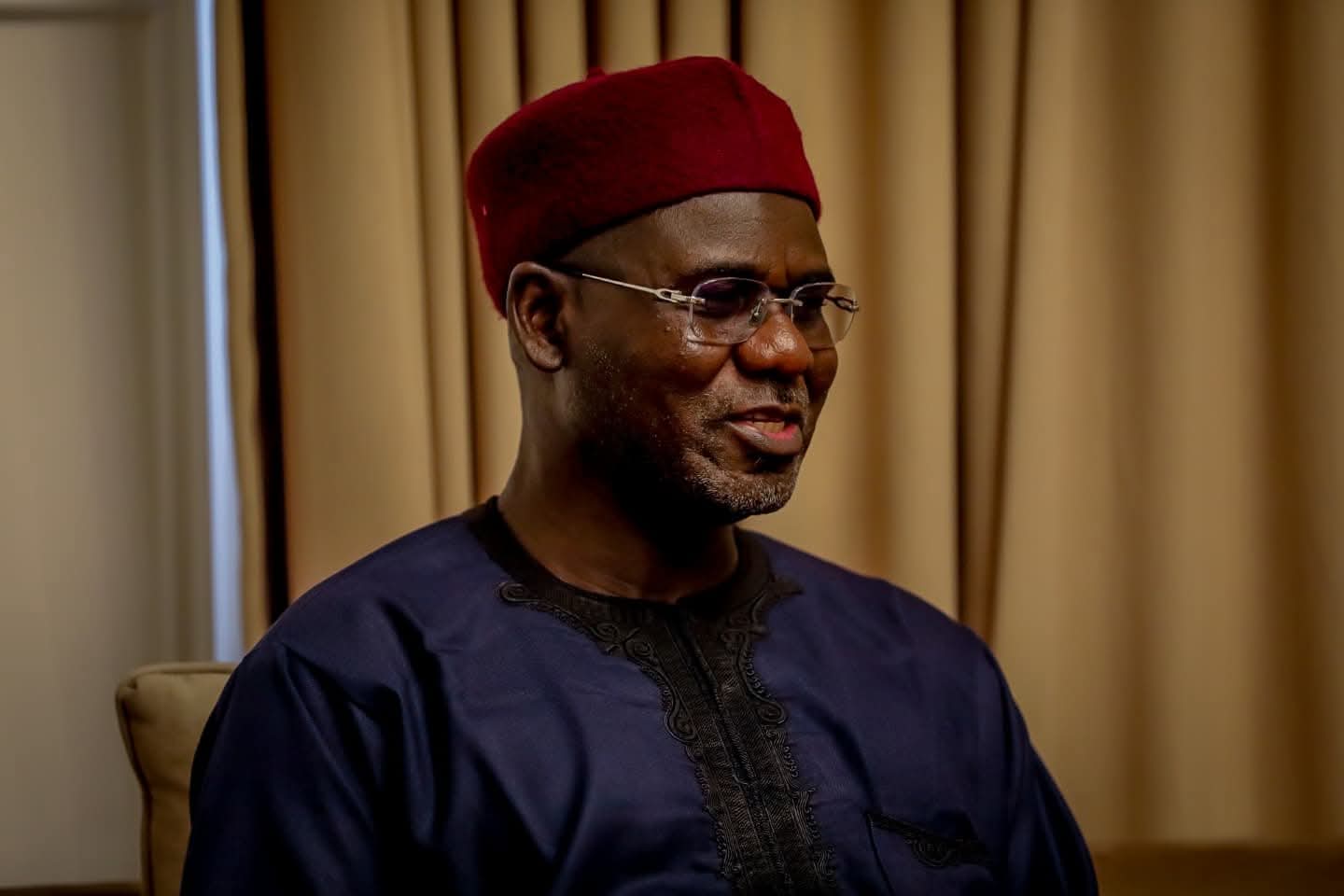
Amidst escalating issues within the nation’s security architecture, the Institute of Security Nigeria (ISN) will host its 18th international conference in Lagos on Saturday, 29 November 2025, with top political office holders, security chieftains, diplomats, traditional rulers, academia and media practitioners in attendance.
The conference, with the theme ‘Expanding the Frontiers of Innovations in Security Enhancement and Nation Building in Nigeria’ will be attended by a former Chief of Army Staff, Lt. General Tukur Yusuf Buratai (rtd.), who will deliver the keynote address.
Other personalities are a former Permanent Secretary in the Ministry of Defence, Major General Olu Bajowa (rtd.); Nigeria’s former Permanent Representative in the United Nations, Prof. Ibrahim Gambari; and the Vice Chancellor of the University of Lagos, Prof. Folasade Ogunsola, among others.
ISN’s Deputy President/Chief Executive Officer, Mr. Adebayo Akinade explained that the conference would illuminate practical innovations for the strengthening of national security, while safeguarding rights and democratic governance; share evidence-based policies and operational best practices across the security ecosystem; forge actionable public-private-civic partnerships for prevention, protection, response and recovery; and identity legislative, institutional and technological reforms for sustainable impact.
According to him, ‘Nigeria’s security renewal hinges on innovation, anchored in law, oversight ethics and human security.
‘Technology without governance is insufficient. Governance without capacity is ineffective. Collaboration between federal, states, local governments, communities and the private sector must be systematic and not episodic. With sustained political will and professional leadership, reforms are achievable within a relatively short period and will deliver measurable improvements in safety, confidence and national development’.
The conference is expected to attract thousands of physical and virtual participants, including senior officers from the Armed Forces, the Police, the Department of State Services, the academia, civil servants, corporate security directors, the media and student groups, among others.
society
T-Donny: Rivers-Born Music Star Shares His Journey and Upcoming Plans
Nigerian singer and songwriter David Bright Manancy, popularly known as T-Donny, has opened up about his rise in the music industry, reflecting on his early beginnings, challenges, and future projects.
Born on February 14, 1992, in Rivers State, T-Donny’s love for music started in his childhood while accompanying his elder sister to choir practice. The constant exposure to choir performances sparked a passion that later grew into a career.
He credits artistes such as Psquare, 2Baba, Duncan Mighty, Mr Raw, and the newer generation — Wizkid, Burna Boy, and Davido — as major influences that shaped his sound and ambition.
T-Donny describes his music-making process as personal and flexible, built around active listening, technical preparation, and gathering inspiration. But the journey hasn’t been without obstacles. He recalls facing challenges like low streaming revenue, financial limitations, and even being taken advantage of by a manager. Despite these setbacks, he says time management and persistence helped him stay focused.
Collaboration has been another key part of his growth. He recently worked with artistes Bovikizz and Chapta, an experience he describes as “awesome” and one that strengthened his confidence in adapting to different musical styles.
T-Donny is currently working on a 10-track album expected to drop in February 2026, though he prefers to keep the title under wraps for now.
He expresses deep appreciation to his supporters, promising to remain consistent and urging fans to continue streaming and promoting his songs.
Listeners can connect with him via:
Instagram: @tdonny_001
Facebook: T-Donny David
Twitter: @T-donnyofficial
TikTok: @t_donny
society
Nigeria’s Kidnap Crisis Returns: 145 People Abducted in Four Days as 2027 Politics Looms
Nigeria is once again sliding into a season of fear. In the last four days alone, at least 145 Nigerians have been abducted across Kebbi, Niger, and Zamfara states, signalling a dangerous resurgence of mass kidnappings eerily reminiscent of previous election cycles.
What is emerging is not a series of isolated attacks—it is a pattern. A rhythm Nigeria knows too well. A spike in coordinated abductions that often precedes heightened political activity and national elections.
A Troubling Return to Pre-Election Violence
During the buildup to the 2023 general elections, the country witnessed a sharp increase in kidnappings. Thousands of Nigerians, especially in the North, fell victim to bandits, extremist cells, and criminal networks who capitalised on vulnerable communities and overstretched security forces.
Now, as political structures warm up for the 2027 polls, the numbers are climbing again, and communities are growing anxious.
Kebbi: Schoolgirls Targeted Again
In the early hours of Monday, armed men stormed the Government Girls Comprehensive Secondary School, Maga, in the Danko/Wasagu area of Kebbi State.
25 female students were abducted.
A staff member, Hassan Makuku, was killed. A school guard sustained serious injuries.
The Nigeria Police Force confirmed the incident, stating that tactical units stationed around the school engaged the attackers in a gunfight. But the attackers had already breached the perimeter fence, rounded up the girls, and vanished into forest routes long exploited by bandit groups.
Despite the deployment of additional police units, military personnel, and local vigilantes, the students remain in captivity.
Niger State: Vigilantes Slaughtered, Dozens Taken
The Kebbi tragedy came barely 48 hours after another devastating attack—this time in Mashegu, Niger State.
Armed groups ambushed local vigilantes, killing at least 16 of them.
In the same wave of attacks, 42 residents were kidnapped from surrounding communities.
The scale and boldness of the operations suggest a consolidation of terror networks that have long entrenched themselves in forest corridors connecting Niger, Kaduna, Zamfara, and Sokoto.
Zamfara: Entire Communities Under Siege
Zamfara—once the nucleus of Nigeria’s banditry crisis—was not spared.
Saturday:
Attackers stormed Fegin Baza village, killing three residents and abducting 64 others.
Sunday:
The criminal gangs returned—this time to Tsohuwar Tasha, Ruwan Doruwa Ward, Maru LGA—kidnapping 14 villagers, including 11 women and 3 children.
Reports from local sources indicate that many communities in Zurmi, Shinkafi, Maradun, Tsafe, and Bungudu LGAs have been repeatedly attacked in recent months. Some villages have been forced to pay levies, ransoms, or “access fees” simply to be allowed to farm or move freely.
The Expanding Footprint of Bandit Cartels
Security analysts warn that the attacks demonstrate increased coordination among bandit factions. Many operate like military units—using scouts, GPS trackers, and motorbike convoys capable of covering vast terrain before security reinforcements arrive.
In the North-West’s ungoverned spaces, criminal networks have built fortified camps, developed arms-smuggling routes, and established informal taxation systems that rival official state authority.
For many rural communities, bandit rule has superseded government presence.
Federal Government Reacts
Reacting to the Kebbi school abductions, the Minister of Information and National Orientation, Mohammed Idris, condemned the killings and reaffirmed President Bola Tinubu’s stance that protecting citizens—especially schoolchildren—is a non-negotiable obligation of the Nigerian state.
The government said security and intelligence agencies have been directed to locate, rescue, and safely return the students while ensuring the perpetrators face justice.
The minister also disclosed that Nigeria is intensifying coordination with ECOWAS, the African Union, and the Multinational Joint Task Force to secure borders and disrupt terrorist networks responsible for trafficking weapons and hostages.
Search-and-Rescue Underway
The Nigeria Police Force and the military have launched a large-scale search-and-rescue operation, combing forests and suspected routes used by the attackers. Drones, ground units, and local vigilantes are participating, though past operations have shown that terrain, logistics, and information gaps often slow down the pace of rescue missions.
A Nation Haunted by a Familiar Cycle
What is emerging feels like a replay of 2019. And 2023.
Each election year, insecurity spikes.
Political uncertainty deepens.
Violence festers.
And ordinary Nigerians pay the price.
With 2027 on the horizon, security experts fear the recent wave of abductions could be just the beginning of a darker, more coordinated escalation—unless the government disrupts these networks quickly and decisively.
society
When God and Politics Become Weapons: How Religion and Partisanship Are Tearing Nigeria Apart
By George Omagbemi Sylvester | Published by SaharaWeeklyNG.com
“Instead of joining hands against poverty, insecurity and corruption, we sharpen knives on each other and the country pays the price.”
Nigeria is a nation of staggering possibilities and stubborn contradictions. We boast a youthful population, vast natural resources and a diaspora that outshines our reputation abroad. Yet at home we fritter away those assets on what should be the least important of all contests, who prays where and who sits on which party stool. Religion and partisan politics (two forces that could bind a plural society) have instead been weaponised, turning colleagues into enemies, constituencies into battlefields and public life into a theatre of suspicion. The result is predictable: a state weaker, a society poorer and citizens dead or displaced in numbers that shame our claim to civilisation.
Religion in Nigeria is not a neutral private comfort; it is a civic force with mass reach. Roughly half the population identifies as Muslim and half as Christian, a demography that should encourage humility, compromise and inclusive institutions. Instead, the balance has been treated as a truncheon to be wielded in elections, appointments and policy fights. When political actors make faith a litmus test for office or weaponise clergy prophecies to mobilise followers, they tear at the fragile fabric of citizenship and convert theological difference into permanent political danger. Pew’s recent work shows how religion remains central to identity in Nigeria and that fact matters for how power is contested.
The violence that follows is not theoretical. Over the past decade the country has witnessed waves of communal and sectarian brutality whose proximate causes range from climate-driven land pressures to criminal banditry, yet their lines are often drawn in religious or ethnic ink. Farmer–herder clashes, concentrated in the Middle Belt, have killed thousands and spread fear across farming communities. By 2021, more than 15,000 deaths had been linked to these clashes; local outbreaks since then, including mass attacks in Benue and other states, have shown the crisis is escalating. When disputes over grazing corridors and farmland are narrated as religious persecution, innocent farmers and herders alike are pushed into cycles of revenge.
Terrorist insurgency adds a gnawing dimension. Boko Haram and ISWAP not only killed tens of thousands and displaced millions in the northeast – they also turned religion into a cover for brutal politics. The consequences are not confined to the northeast; they ripple into national politics, inform security policy and feed identity-based suspicion across the federation. Civilians pay the heaviest price: thousands dead, millions uprooted and whole local economies hollowed out. The humanitarian cost is matched by an economic toll: insecurity destroys farms, distracts investment and raises the fiscal burden for a government already addicted to borrowing.
Politics has itself become a theatre of religious signalling. The 2023 presidential campaign, for example, exposed how fragile the country’s equilibrium is when parties abandon long-standing practices of balance for short-term electoral gain. The Muslim–Muslim ticket controversy (whether you call it tactical realpolitik or cynical disregard for plural representation) sharpened sectarian anxieties and showed how quickly trust can dissipate if inclusiveness is not defended as a principle. When political entrepreneurs calculate that religion will win them votes, they sell the nation out for partisan advantage.
This is not mere moralising: it is practical. When citizens see appointments, licences, policing, or access to relief routed through faith-based networks, trust in state institutions collapses. Governance then survives on patronage, not performance. Public resources are diverted to cronies and co-religionists; laws meant to protect the vulnerable are mangled by selective enforcement; and civic identity (the idea that every Nigerian is first a citizen) is subordinated to narrower loyalties. The consequence is political fragmentation at a time the state most requires unity to confront existential threats: poverty, inflation, climate shocks and violent non-state actors.
We can (and must) do better. The remedy begins with a hard embrace of secular citizenship: not anti-religion, but neutral public institutions that treat faith as a private domain while guaranteeing equal protection for all. This means transparent appointments, rigorous anti-corruption enforcement and the depoliticisation of security agencies. It means enforcing anti-violence laws impartially and prosecuting those who inflame religious passions for personal gain. It also means strengthening local conflict-resolution mechanisms: where grazing corridors or land rights cause friction, the state must mediate fairly and invest in alternatives (ranching, irrigation and effective land registration) instead of amplifying blame. Research from scholars like Jibrin Ibrahim has repeatedly shown that high religiosity in Nigeria coexists with weak civic practices and that addressing the structural drivers of conflict is essential for reconciliation.
Religious leaders, too, have a duty. This is not a call to silencing the pulpit; it is an appeal for courage. Wole Soyinka’s insistence that human liberty must come before sectarian barricades (and his famous rebuke that religion must not be allowed to prevent rational national thinking) is not literary flourish; it is ethical strategy. Clerics and imams must preach restraint and publicly rebuke those who weaponise faith. Where religious leaders use congregations to amplify division, they forfeit moral authority and become accomplices to national decay.
Finally, ordinary citizens must reclaim civic courage. Unity is not uniformity. It is the will to disagree without dehumanising. It is the daily practice of treating a neighbour who prays differently as deserving of decency, equal opportunity and security. Civil society, universities, the media and the private sector must amplify narratives of shared destiny over slogans of exclusion. International partners can help, but the solution must be homegrown: layered, patient and relentless.
Nigeria’s enemies are not each other; they are hunger, poor governance, climate shocks and violent actors who exploit our divisions. To fight them effectively we must stop seeing religion and party membership as identity armour and start seeing them as private commitments that do not disqualify one from the public good. If we do not, the nation will continue to fracture, not along neat ideological lines, but in human terms: widows, orphans, ruined farms and shuttered schools. That is an indictment we cannot afford.
We owe future generations a country where difference does not mean danger. The work is ugly and difficult (reforming institutions, enforcing law and recalibrating moral leadership) but it is the only honest path forward. As Soyinka warned, the moral imagination of a people determines the life they will lead. Let us choose a Nigeria that puts humanity first, and religion and politics in their proper, constructive place.
-
Politics5 months agoNigeria Is Not His Estate: Wike’s 2,000‑Hectare Scandal Must Shake Us Awake
-
society6 months agoOGUN INVESTS OVER ₦2.25 BILLION TO BOOST AQUACULTURE
-
celebrity radar - gossips6 months agoFrom ₦200 to ₦2 Million: Davido’s Barber Reveals Jaw-Dropping Haircut Fee
-
society5 months agoJUSTICE DENIED: HOW JESAM MICHAEL’S KINDNESS WAS TURNED AGAINST HIM