
celebrity radar - gossips
Buratai’s footprints and the task ahead of COAS Attahiru

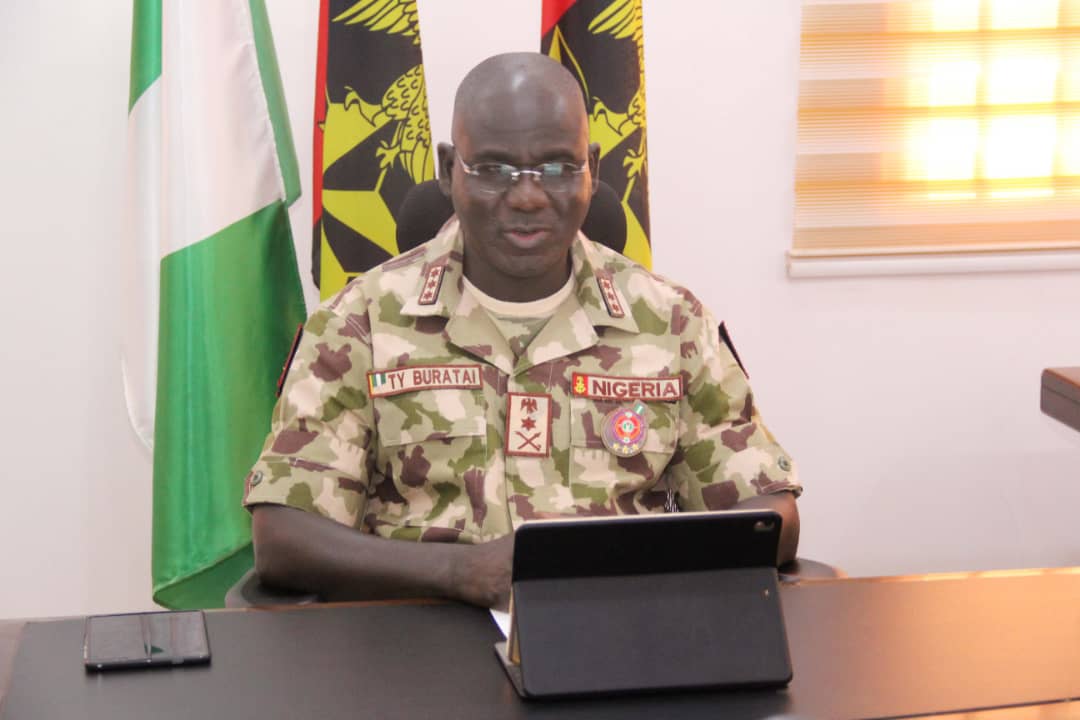
Buratai’s footprints and the task ahead of COAS Attahiru
The ex-Chief of Army Staff (COAS) and leader of the counter-insurgency operations in Nigeria, retired Lt. Gen. Tukur Yusuf Buratai, remonstrated these rare qualities abundantly when he scored the shots on the podium of terrorism combats in the country.
But a very honest verdict on the ex-COAS, as the honcho of anti-insurgency operations in the country from May 2015 to January 2021 can only be gleaned from the enduring whirlwind of his exploits, long after he quitted active service.
Even unpatriotic misanthropes can sight the legacies of Buratai which have refused to be fogged by the thickness of billowing smokes; whether of partisan and ethnoreligious flavors, as peculiarly Nigerian.
Buratai’s successor, the incumbent COAS and ombudsman of the counter-insurgency operations, Lt. Gen. Ibrahim Attahiru might not be caught unawares by the new assignment. But it’sits certain, his predecessor, Buratai left a big-sized shoe, quite uneasy to wear effectively.
An introspection of what constituted the defining principles and convictions, Gen. Buratai weaponized to wilt the storm of insurgencies and insurrections in the country for six long years would certainly prop up the image of a strong leadership character in his persona.
Even dispassionate outsiders attested loudly to Buratai’s palpable, unshaken and unfractured patriotism and loyalty to Nigeria. He could be jovial with his subordinates to a fault; but upheld the sacred military doctrines of professionalism, loyalty, and discipline.
He dispensed himself to soldiers generally as a father, blood brother, welfarist, amiable boss, compassionate leader, trustworthy compatriot, and courageous warrior in the trenches. Boko Haram factional leaders, both Abubakar Shekau and the ISIS-backed Musab Al Barnewi, in alliance with Sheik Ibrahim El-Zakzaky of the IMN or Shiites in Nigeria, another terrorist’s sect, wished Buratai dead for his uncompromising stand.
Leaders of these sects operating in Nigeria vigorously pursued the agenda of eliminating Buratai through terrorists’ ambushes of his convoy in the Northeast and the assassination plot hatched against him in Zaria by IMN. Though he faced death multiple times in the trenches but remained resolute and undeterred.
Buratai’s NDA course mate and friend, who retired much earlier, Major Daniel Banjo (rtd), recalled when he requested for a thanksgiving service in his home state for the ex-COAS; “I remember, about three times, he (Buratai) called me in the middle of the night. He was at the war front. He would call and say things are happening here and Nigerians are not appreciative of what we are doing…He wouldn’t sleep for weeks. He was ambushed three times and he jumped into the bush with his men, with Kalashnikov (AK-47 rifles) and they would be able to kill some and arrest some.”
Hate or love him, but it never escaped the sight that Buratai was relentless and untiring. His troops often chortled among themselves whether this boss ever slept or thought of a beloved family which also needed his attention.
He sprung surprises of a talisman with his presence everywhere in the war front, day and night, from North to South. He constantly visited troops and supervised Army units and formations to ensure planned Internal Security (IS) operations or projects progress smoothly and unencumbered. He tolerated no excuses for failure from troops on any assignment.
And to bolster performance and unalloyed loyalty, Buratai also, religiously fulfilled his own part of the bargain by ensuring troops legitimate entitlements and allowances were promptly delivered to them, even in the frontlines. It was one of the many things Buratai got right and it really worked for the Nigerian Army, especially for the troops in the frontlines on terrorism combating expeditions.
He treated the families of troops like his cherished assets and personal family. Buratai paid frequent visits to Army barracks, interacted with wives of soldiers, listened to their problems, and remedied them immediately. Nigerian Army Officers Wives Association (NAOWA) explored new frontiers in the economic empowerment of wives of soldiers through various multi-purpose cooperative investments initiatives.
The ex-army chief further boosted the morale of his troops with packages such as the COAS special allowances and incentives, like special recognitions’ and instant or accelerated promotion of troops who demonstrated proven gallantry, courage, and exceptional excellence in the frontlines.
The expansion and re-equipping of the Nigerian Army were another was a focal policy of retired Buratai’s leadership. He relaunched the Nigerian Army on the path of manufacturing its own small and light weapons in the combat of terrorism, innovatively using home-grown technology and human resources.
Under his reign, the Nigerian Army established two new Army Divisions 6 and 8, in Borno and Rivers states; a dozen Forward Operations Bases (FOBs) and Special Task Force units across the country in strict compliance with the new Order of Battle (ORBAT). The initiative brought security closer to Nigerians, boosted troops’ rapid responses to distress calls from entrapped Nigerians, and the operational effectiveness of soldiers in operations.
Nigerian soldiers were endeared to Gen. Buratai and performed their official assignments with glee because he prioritized the building of infrastructures for soldiers and officers of the Nigerian Army. He had the stringent focus or absolute belief in the welfare of troops in multiple ways and he knew, soldiers deserve at least minimum comforts to function splendidly. So, he erected new offices and residential accommodations for soldiers.
Therefore, Buratai aggressively relaunched the Nigerian Army on the path of its lost glory in a revolutionary style. The former army chief embarked on ambitious projects such as the massive construction of new army barracks, renovations of dilapidated barracks and army formations, their upgrade and re-equipment with state-of-the-art facilities resuscitation of moribund Army training institutions, and the building of new ones, namely, the Army War College, the Army Aviation School, and the Nigerian Army University, Biu.
Buratai garnished it with the generous renovations/upgrades of existing, but outdated army hospitals and the building of new Army Referral hospitals to carter for the Medicare of soldiers, their families, and members of Army host communities. These were legacy projects, signposts of focused leadership, the pillars, and inerasable footprints of his leadership that publicized a reformed Nigerian Army in conduct and performance.
The former army chief understood clearly that the success of Nigeria’s anti-insurgency combats basically depended on the assistance of foreign nations in weaponry and technical support. He was conscious of the prohibitions on human rights abuses by soldiers as enshrined in the Leahy Act amendment law. Besides, as a humane and compassionate leader, Buratai was conscious of the human dignity of all Nigerians. He never shirked from punishing erring soldiers.
Consequently, records of his observance of human rights were unequaled in the history of the Nigerian Army. He established the novel Human Rights Desk in the Nigerian Army, manned by a desk officer, and structured in an accessible manner to all Nigerians by its replication in all major Army formations throughout the country. The Army human rights desk handled, redressed, and dispensed hundreds of cases between soldiers and civilians.
The Nigerian Army was under the plague of meager budgets for its operations, even in the age of consuming insurgency. Therefore, Buratai imbibed the spirit of transparency, accountability, and judicious application of Army resources for maximum effect. Lack of transparency in the administration of Army resources’ engendered distrust, dissension, and rebellion among officers and soldiers.
Foremostly, Buratai resolved the problem by switching over to e-governance in consonance with the policy of the federal government. He established the Army Procurement Department; migrated the Nigerian Army into the IPPIS payment system, and halted the culture of table payment of allowances/entitlements to troops in the war front, which often led to avoidable complaints of diversion.
The former leader of counter-insurgency operations in Nigeria was a famed Military strategist, tactician, and foresighted leader. Therefore, his clairvoyance pricked him of the looming threat of Cyberspace terrorism in combating insurgency in Nigeria. In order to clip the wings of cyberspace terrorists, who were largely Boko Haram sympathizers and agents, Buratai built and launched the Nigerian Army Cyberspace Warfare Command. Its mandate mainly is to secure Army’s classified information from leakage to enemies and certify the preservation of sensitive documents.
Added to it, Buratai upgraded and re-equipped the Department of Army Public Relations (DAPR)) to handle fake news and propaganda syndrome on the counter-insurgency operations in the country. The DAPR operated 24hours a day and proactively deflected terrorists’ propaganda which previously caused unnecessary public anxiety and panic.
To this end, good leadership examples are worthy of emulation. The onus falls on Gen. Attahiru, who is also an old horse in the game to sustain and improve on these legacies of Buratai by moving a notch higher to turn the table against Boko Haram. It is the necessary antidote the incumbent Army leadership has to adapt if it wants to really succeed to finally cripple insurgents.
It’s no longer news that Nigerians are unwittingly beginning to celebrate the Buratai days. But Nigerians want to celebrate the Army at all times and the only alternative is to kick harder, harder than Buratai ever did. Attahiru should be mindful of news of Boko Haram’s dreadful presence in Niger state and predictively, Abuja is now donated to the mercy of terrorists.
But fundamentally, all the incumbent Service Chiefs have already clocked 100 days since their appointment on January 26, 2021. Quite unimpressively, media reports are awash with news that 741 Nigerians have been killed by Boko Haram/ISWAP terrorists, armed bandits, herdsmen, and arsonists across the country. Neither is it exciting that the southern part of the country is also contending with lethal kidnapping syndicates and killer herdsmen conundrum. Nigerians are no longer singing joyful songs which heralded the new service chiefs and there is a need to redouble the efforts.
Agbese writes from the United Kingdom.




celebrity radar - gossips
Adron Homes Celebrates Visionary Chairman, Aare Adetola Emmanuel King, at 51
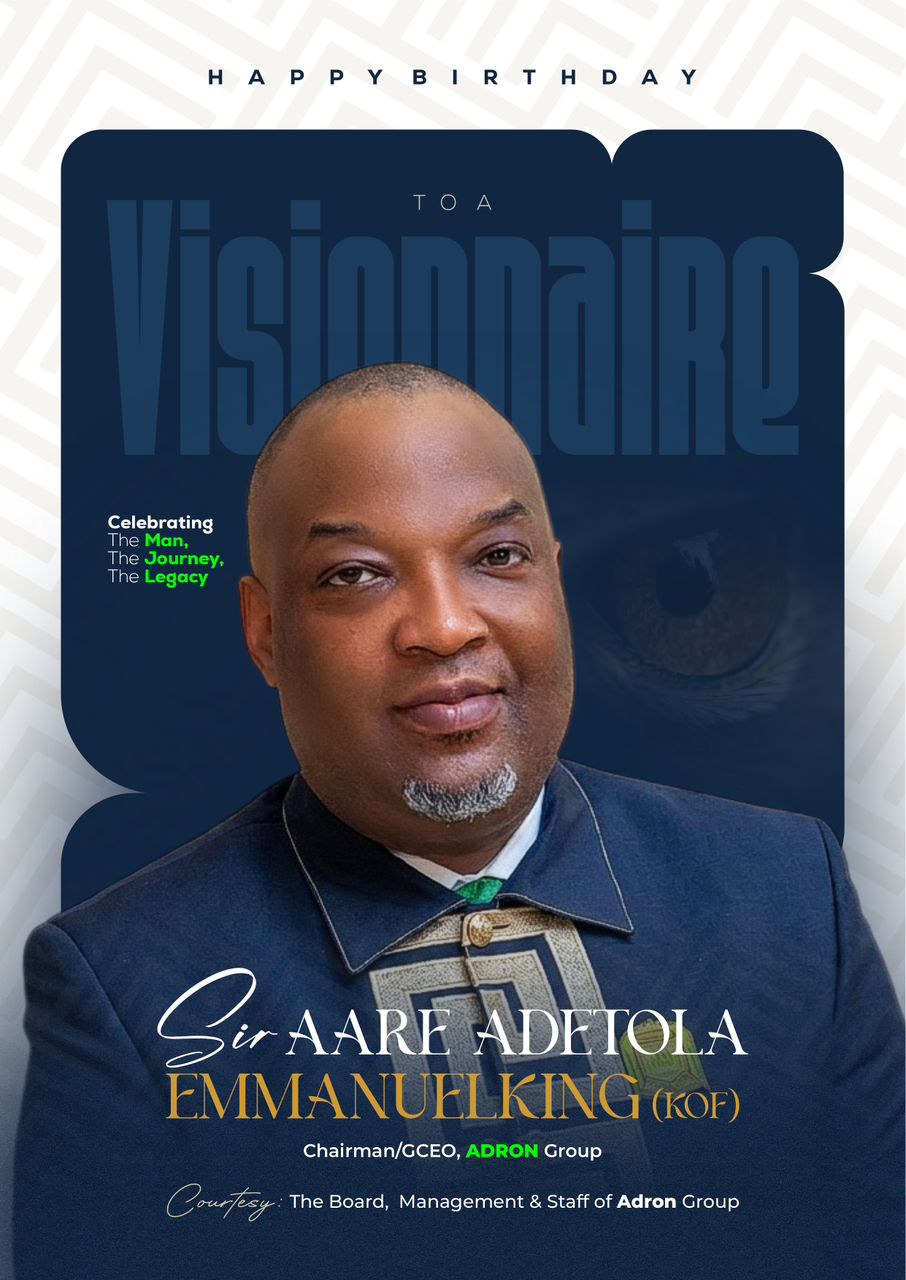
Adron Homes Celebrates Visionary Chairman, Aare Adetola Emmanuel King, at 51
The management and staff of Adron Homes and Properties Limited have joined family, friends, associates, and well-wishers across the globe to celebrate their Chairman and Chief Executive Officer, Aare Adetola EmmanuelKing, as he marks his 51st birthday.

In a statement released by the company, the milestone was described as a celebration of an exceptional leader whose vision, resilience, and entrepreneurial brilliance have not only transformed Adron Homes into a household name in Nigeria’s real estate sector but have also redefined affordable housing across the country.
Under his dynamic leadership, Adron Homes has continued to expand its footprint, delivering value-driven residential solutions while empowering thousands of Nigerians with opportunities for home ownership. His commitment to excellence, innovation, and customer satisfaction has remained the driving force behind the company’s sustained growth and industry leadership.
The statement further highlighted Aare EmmanuelKing’s passion for nation-building and community development, noting his significant contributions to job creation, youth empowerment, and the promotion of socio-economic development through real estate investments.
“As a leader, mentor, and visionary, Aare Adetola EmmanuelKing has consistently inspired a culture of excellence, integrity, and dedication within the organization. His ability to turn bold ideas into reality continues to position Adron Homes as a trailblazer in the industry,” the statement read.
The company expressed profound gratitude for his steadfast leadership and prayed for continued wisdom, strength, and sound health as he embarks on another year of impactful achievements.
As he celebrates his 51st birthday, the entire Adron Homes family proudly honours a man whose legacy continues to shape the future of real estate in Nigeria.
Happy 51st Birthday, Aare Adetola EmmanuelKing!
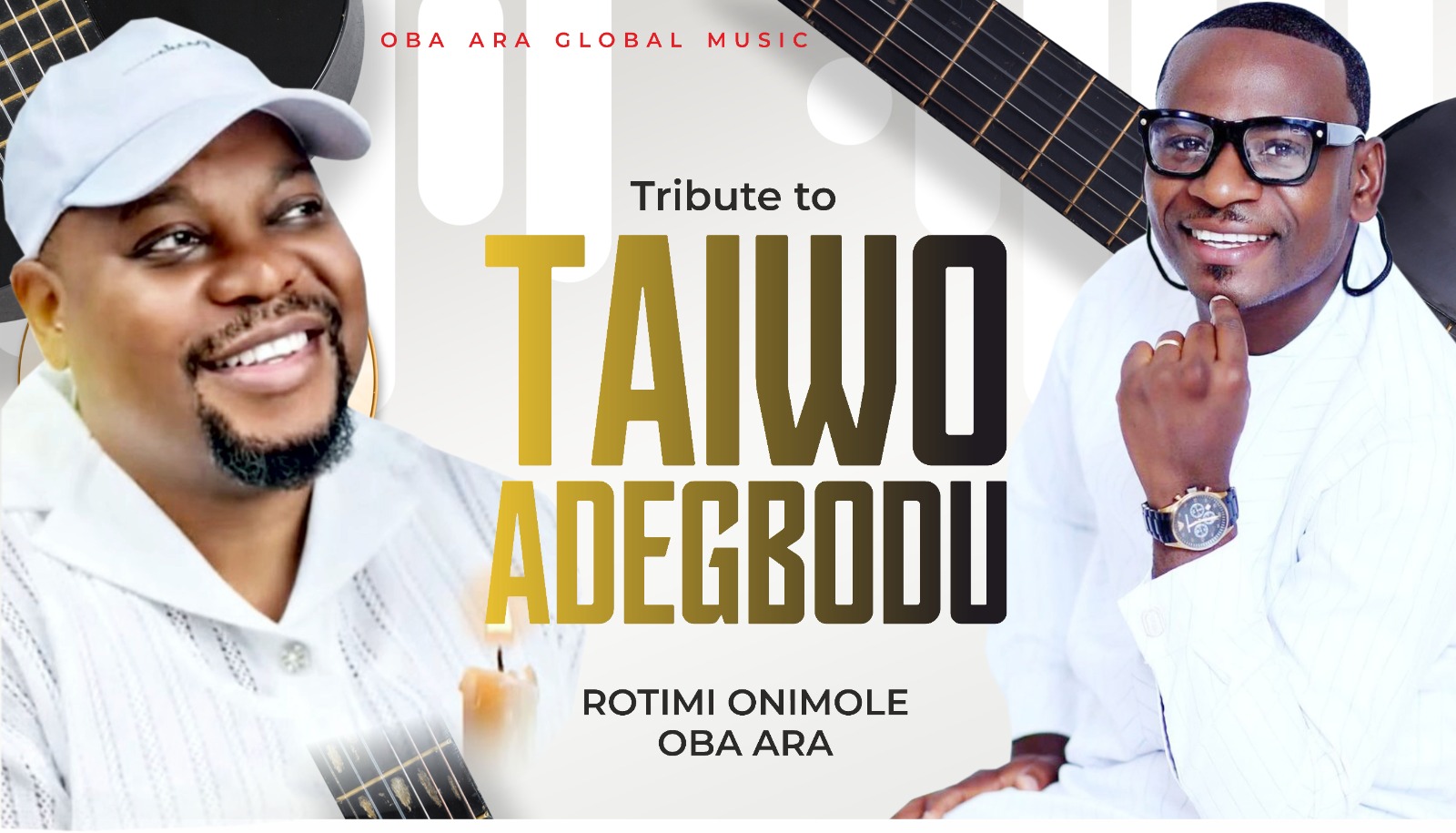
Oba Ara Releases Emotional Tribute to Late Taiwo Adegbodu
Taofik Afolabi
The gospel music community continues to grieve the painful loss of Taiwo Adegbodu, a beloved figure whose sudden departure left a deep void among fans, colleagues, and loved ones. In response to this loss, renowned gospel minister Rotimi Onimole, popularly known as Oba Ara, has released a moving tribute song that captures both the sorrow of the moment and the enduring legacy of the late singer.
Oba Ara, a proud son of Isale Eko, channels raw emotion throughout the song, using heartfelt lyrics and soul-stirring melodies to reflect on his personal connection with Taiwo Adegbodu. In the tribute, he openly expresses how deeply the news of Adegbodu’s passing shook him, describing it as a painful and unexpected loss that is difficult to come to terms with.
The song goes beyond mourning, it celebrates the life, ministry, and impact of Taiwo Adegbodu. Oba Ara highlights the late artist’s dedication to spreading the gospel through music, his inspiring voice, and the spiritual influence he had on many within and beyond Nigeria. Through powerful verses, he paints a picture of a man who lived for God and touched countless lives through his ministry.
Listeners have described the tribute as both comforting and deeply emotional, as it resonates with the collective grief of the gospel music community. It serves as a reminder that although Taiwo Adegbodu is no longer physically present, his music, message, and legacy will continue to live on.
In honoring his late colleague, Oba Ara not only pays his respects but also offers a source of healing for fans and fellow ministers, using music as a tool to process grief and celebrate a life well lived.
celebrity radar - gossips
Buratai, Fagbemi , Shagaya, Olofa, Others Eulogise Olowu Kuta’s Olori On 60th Birthday, Foundation Launch
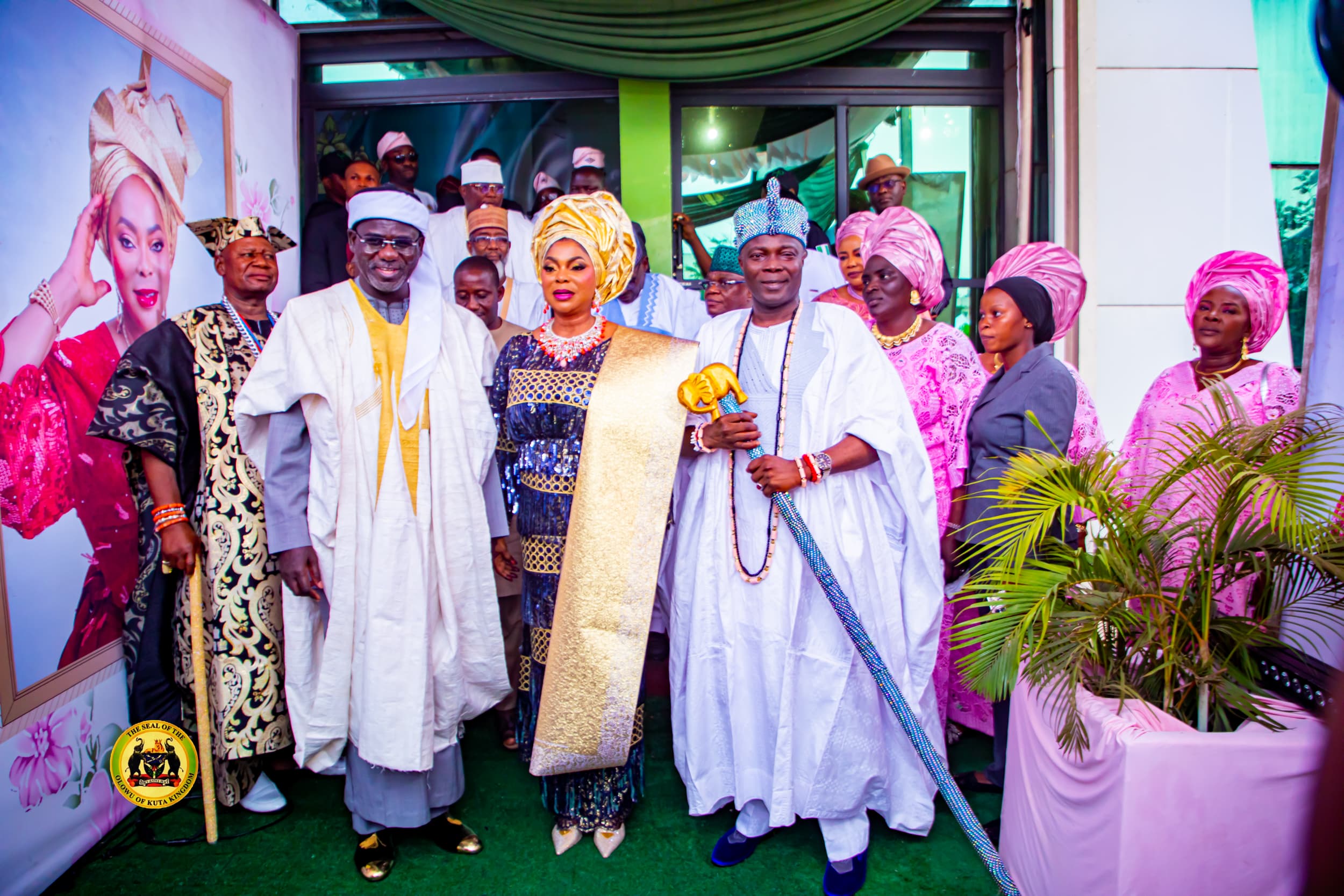
Buratai, Fagbemi , Shagaya, Olofa, Others Eulogise Olowu Kuta’s Olori On 60th Birthday, Foundation Launch
Eminent personalities across the Nigeria stormed the TFK Event Centre, Bala Mohammed Way, Guzape, Abuja, to celebrate the 60th birthday of Olowu Kuta’s Olori, Queen Jumai Amoke and her Foundation Launch on Saturday 28, March 2026.

From former Chief of Army Staff, Lt Gen TY Buratai rtd, to the Minister of Justice and Attorney-General of the Federation, Prince Lateef Fagbemi; Olofa of Offa, HRM Oba Mufutau Gbadamosi. Even top businesswoman and socialite, Chief (Mrs) Bola Shagaya, was in attendance.


Other dignitaries were newly promoted Deputy Inspector-General of Police and former AIG Zone 2 , Lagos , Adegoke Fayoade, Major General Abdumalik, Major General Samuel Adebayo rtd (Fmr CDI);
Major General Anthony Omozoje rtd (Fmr Copp);
Alhaji Tajudeen Owoyemi (Asiwaju of Offa and CEO Radisson Hotel Nigeria;
Dr Waheed Olagunju, former managing director of Bank of Industry, Oniba of Iba, Lagos State, HRM Oba Dr Suleiman Raji ;
Justice Falola, Olu of Ile-Ogbo , Oba Adetoyese amongst many traditional rulers and captains of industry too numerous to mention.
Speaking at the occasion, the Chief Host, Olowu of Kuta, HRM Oba Dr Adekunle Oyelude Makama, CON , Tegbosun iii, who is also the husband of the celebrant commended Queen Jumai for ‘ her slender arms full of kindness’ to establish such humanitarian Foundation, ‘Amoke Children and mother in Need Foundation’ at a time Nigerians are going through economic crisis occassioned by the global meltdown.
Olowu also commended her steadfastness and love for the less privileged and downtrodden.
The monarch refrenced the task before his wife’s humanitarian gesture said her best is yet to come.
” Olori Amoke Jumai, I celebrate you. You will celebrate 70, 80, 90 and continue to shine as you continue to put a smile on people’s faces. I love you, “Olowu Kuta added.
To Lt Gen Buratai, a former army chief and former Nigerian Ambassador to Benin Republic, the reward of hard work is more work.
Buratai, who also doubles as Balogun Agba of Owu Kuta, a chieftaincy title reserved for a generalismo congratulated Queen Jumai for attaining the age of 60 in good health.
The retired army General said he’s not surprised by the turn out of eminent personalities across the country to celebrate the Olowu Kuta’s Olori because she merited it through her hospitality to all, adding that Allah the most merciful, most beneficial would accept all her act of ibadah.
The minister of Justice, Prince Fagbemi, was full of praises for Queen Jumai for deeming it fit to have a place in her heart to accommodate the needy and less privileged in ‘our society.’
Prince Fagbemi urged the guests to contribute generously to support the Foundation in order to continue to alleviate poverty and put a smile on the faces of the people.
” I congratulate you on your 60th birthday and Foundation Launch. I wish you many happy returns of the day and many more fruitful services to the country and motherland”, Prince Fagbemi added.
The celebrant, Queen Jumai who was grining from ear to ear thankfully said she was excited by the turn out and the response of the people to her foundation.
Queen Jumai, however, promised to continue to use her resources and donations received for the good of the needy and less privileged in the society.
” I want to appreciate my own Kabiesi Olofa of Offa , for his presence and im I’m using him as a point of contact to all other Kabiesis present here, the minister of justice and Attorney-General, you’re welcome, sir; Mrs Bola Shagaya, I salute your enterprise, Lt Gen Buratai, I’m grateful, sir; DIG Fayoade, Justice Falola and other dignitaries too numerous to mention, I thank you, all. To my darling husband, Kabiesi Olowu , I thank you immensely for your support. And to my family and friends, I thank you , all. E se pupo!”, she said.


-

 society7 months ago
Religion: Africa’s Oldest Weapon of Enslavement and the Forgotten Truth
-

 news4 months ago
WHO REALLY OWNS MONIEPOINT? The $290 Million Deal That Sold Nigeria’s Top Fintech to Foreign Interests
-

 society6 months ago
“You Are Never Without Help” – Pastor Gebhardt Berndt Inspires Hope Through Empower Church (Video)
-

 celebrity radar - gossips2 months ago
Dr. Chris Okafor Returns with Power and Fire of the Spirit -Mounts Grace Nation Altar with Fresh Anointing and Restoration Grace on February 1, 2026