
society
CDHR Renews Commitment To The Defence Of Rights And Fundamental Freedoms Of Nigerians

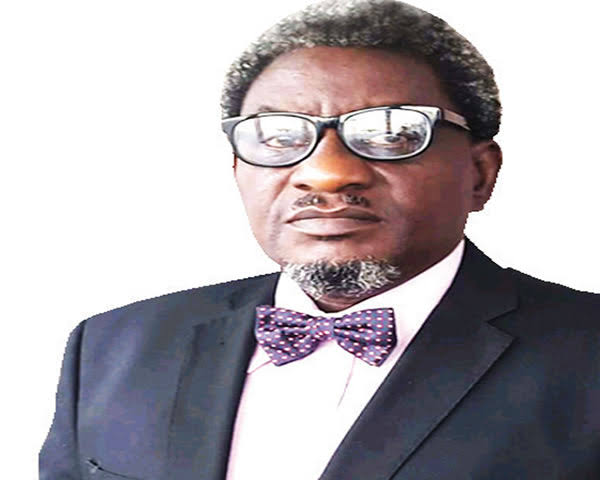
CDHR Renews Commitment To The Defence Of Rights And Fundamental Freedoms Of Nigerians At 33rd Annual General Conference
The National Association of Online Security Reporters, NAOSRE that was at the 33rd Annual General Conference of the Committee for the Defence of Human Rights, CDHR, presents some of the far-reaching decisions adopted at the conference for a better and secured Nigeria

The pre-event notices across media channels were the first signals that the Committee for the Defence of Human Rights, CDHR, a leading civil society, would address topical national issues at its 33rd Annual General Conference, AGC.
The conference, themed “A Call to Service in a Troubled Nigeria,” which drew participants from the 36 States of Nigeria and beyond, held on Saturday, October 23, 2023 at the Rights House, Adeniji Jones, Ikeja, Lagos.

Expectedly, the Board of Trustees, the National Executive Committee and distinguished Delegates from the State branches observed, among other things, that the rights of Nigerians across the country, including the right to life, have become most threatened and abused, with the rising incidences of insurgency, banditry, militancy, extortion, abductions, kidnappings, extrajudicial murders and double standards by state actors.
The civil society frowned at the constraints encountered by Nigerians who have been denied of their rights, particularly economic, social and cultural rights, due to anti-people capitalist policies of privatization of public enterprises, commercialization of public roads through the reintroduction of the toll system, commercialization of public health and COVID-19 testing and vaccination, commercialization of public health insurance, commercialisation of education, the challenge of unemployment, rising level of hardship, dwindling economy and falling value of the naira.
The Guest Speaker, Professor Tunde Babawale and other eminent resource persons also harped on the worsened insecurity in the country and called for immediate actions to avoid total collapse of the entire system.
As a remedy, the organization vowed to continue the struggle for the defence of the rights and fundamental freedoms of Nigerians as well as advance the consolidation of democracy.
They also vehemently rejected the oppressive tendencies by Lagos and other governments in commercializing public health services, education and housing, payment for COVID-19 testing and over-taxing of citizens.
To strengthen its operational fabrics, the organization recognized that it was imperative to expand branches and units and uphold its integrity by ensuring disciplinary measures against errant members.
To that effect, CDHR, at the AGC, ratified various disciplinary reports including decision of the National Council and accordingly adopted the expulsion of Kehinde Taiga, James Chubuzor, Gerald Katchy and Jonathan Giama as well as suspension of Ekwumankama Violet and Ayuba Musa for their roles in precipitating crises that had done incalculable damage to the prestige of the CDHR.
It also directed the National Executive Committee to petition those impersonating CDHR to security agencies for proper arrest, investigation and prosecution.
The Resolution of the National Council, NC, meeting held on Friday October 22, 2021 on renewal of the tenure of Femi Falana, SAN, Professor Lucky Akaruese, Dr. Osagie Obayuwana, Gbenga Awosede, and Debo Adeniran and Malachy Ugwummadu, was adopted.
The inauguration of Nasarawa, Katsina, Bauchi States branches was accepted in line with the recommendation of the National Council.
Comrade (Dr) OsagieObayuwana returned unopposed as the National President to lead CDHR for the next two years in the newly elected NEC.
Others who were elected to support Comrade Obayuwana in the running of the organization were Comrade Ade Ikuesan, Vice President; Comrade Yinka Folarin, General Secretary; Comrade Kabir Ibrahim, Assistant General Secretary; Comrade Sola Kolawole, Treasurer; Comrade (Barr) Henry Peter Ekine, Legal Adviser; Comrade Idris AfeesOlayinka, Publicity Secretary and Comrade Helen Akomolafe, Internal Auditor.




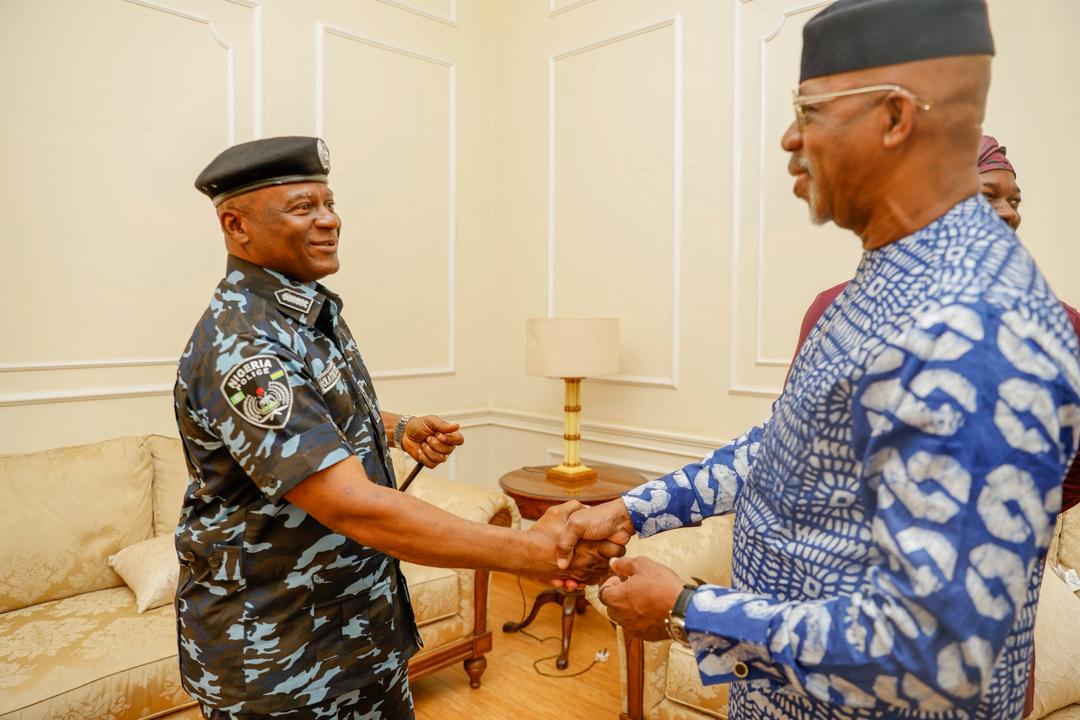
IGP Disu Unveils New Security Vehicles, Bikes In Ogun,
The Inspector-General of Police, Olatunji Rilwan Disu, on Saturday took centre stage at the commissioning of landmark projects in Ogun State, reaffirming the Nigeria Police Force’s commitment to strengthening national security and deepening collaboration with state authorities.
The high-profile event, attended by top government officials and security stakeholders, highlighted the strategic importance of security in driving development. Disu’s presence underscored ongoing efforts by the Police leadership to align operational priorities with infrastructural growth across the country.
A key highlight of the ceremony was the commissioning of new security vehicles and electric motorbikes aimed at boosting the operational capacity of security agencies in the state. The IGP commended the Ogun State Government for what he described as a proactive and forward-thinking approach to security, noting that the newly deployed assets would significantly enhance rapid response and patrol efficiency.
He stressed that effective policing remains central to maintaining peace and order, assuring residents that the Force would continue to evolve strategies to tackle emerging threats. According to him, the Nigeria Police Force is committed to working closely with both the Federal Government and sub-national authorities to ensure the safety of lives and property.
Disu further called on members of the public to support security agencies by providing timely and credible information, describing community cooperation as vital in combating crime and sustaining a secure environment.
The Police leadership also expressed appreciation to the Ogun State Government and other dignitaries for their continued partnership, noting that such collaboration is essential to advancing security initiatives and fostering national development.



*PDP Stalwart, Fagbemi, Resigns From Party in Ogbomoso South*
A former Secretary of Ogbomoso South Local Government, Temidayo Fagbemi, has formally resigned his membership of the Peoples Democratic Party.
Fagbemi, a major financier of the PDP in the area, tendered his resignation in a letter addressed to the Ward Chairman of the party in Ijeru II, Ogbomoso South.
In his letter, Fagbemi stated that leaving the party he had diligently supported, contributing to PDP’s victories at both the state and local government levels for two consecutive terms, was a difficult but necessary decision.
He wrote: “I, Temidayo Fagbemi, hereby submit my resignation as a member of the PDP.”
“My decision to leave the party, which I worked hard to support and helped secure victory at both the state and local levels for two consecutive terms, is not an easy one. However, it has become necessary.”
He thanked party leaders for the years of shared political engagement and wished them success in their forthcoming primaries.
His resignation marks a significant development within the Ogbomoso South PDP, given his influence, contributions, and long-standing role in strengthening the party’s structure.

Land grabbers invade FGC Kano…. Old Students
The Federal Government College Kano Old Students Association (FGCKOSA)
wishes to formally draw the attention of the President of the Federal Republic of
Nigeria, His Excellency, President Bola Ahmed Tinubu, to a deeply troubling
development involving the proposed concession of approximately 30 hectares of
land within Federal Government College Kano under a Public-Private Partnership
arrangement.
We state, with utmost concern, that this initiative represents a destruction of a
national educational legacy carefully built and handed over to the current
generation of leaders. Unity Schools were established as symbols of excellence,
integration, and nation-building. Any action that diminishes their integrity reflects
a troubling disregard for the power of education as a driver of national progress.
At a time when nations across the world are investing more in education
infrastructure and expanding capacity, it is deeply alarming that we are instead
dismantling and commercializing existing assets meant for learning. This
proposed development signals a shift away from long-term educational value
toward short-term commercial interests.
It is also important to note that the alumni community has, over the years,
collectively invested billions of naira in the development of the College—
consistently funding infrastructure, supporting academic programs, and
strengthening the institution without taking any portion of school land or
seeking anything in return. This record reflects a deep, selfless commitment to
the school’s growth and sustainability.
Furthermore, the alumni has formally established a dedicated foundation focused
on the perpetuation of the College and the advancement of academic
excellence, with plans to raise ₦5 billion at its official launch in June 2026. This
demonstrates that credible, mission-aligned funding alternatives already exist without compromising the intergrity of the school
Our objections are as follows:
1. Misuse of Educational Land for Commercial Gain:
The proposed project is fundamentally a residential and commercial real
estate venture. This constitutes a clear diversion of federally designated
educational land into private hands, undermining the original purpose for
which the land was acquired.
2. Threat to Student Safety and Academic Environment:
The introduction of a mixed-use estate sharing boundaries with the school
exposes students to avoidable risks and erodes the controlled, secure
environment required for effective learning.
3. Irreversible Damage to School Capacity and Future Growth:
The land identified for this project includes critical open spaces necessary
for recreation, expansion, and future development. Any project that
reduces the capacity of the school to grow, expand, and improve its
facilities cannot, in any form, be considered beneficial to the institution.
4. Fundamental Question of Necessity:
Why Federal Government College Kano land? Kano State is one of the
largest states in the country, with abundant land available for real estate
development. There is no justification for appropriating land from an
existing educational institution when alternatives clearly exist.
5. No Tangible Benefit to the School:
There is no scenario under which this land-swap PPP arrangement
benefits the school. On the contrary, all available evidence suggests that
the project is structured primarily for private commercial gain. We are
compelled to state that this raises serious concerns that the promoters
intend to rip off the government and the Nigerian people under the guise
of a PPP arrangement.
Your Excellency, this matter goes beyond a single institution. It raises a
fundamental question about our national priorities: whether we will protect and
strengthen our educational institutions, or allow them to be gradually eroded.
We therefore respectfully call on the President to:
• Immediately cancel the proposed PPP land concession;
• Protect the sanctity and integrity of Unity Schools nationwide
*Ensure that no action is taken that compromises the future of education
in Nigeria.
We also strongly advise members of the public to refrain from purchasing or
investing in any land or property associated with this scheme, as it is under
serious dispute and may be overturned, exposing buyers to financial loss.
FGCKOSA wishes to make it clear that we will not relent in pursuing all lawful and
legal avenues to overturn this illegal arrangement. We remain committed to
safeguarding the legacy of our institution and ensuring that it continues to serve
future generations.
Signed,
Shoyinka Shodunke
President
Federal Government College Kano Old Students Association (FGCKOSA)


-

 society7 months ago
Religion: Africa’s Oldest Weapon of Enslavement and the Forgotten Truth
-

 news4 months ago
WHO REALLY OWNS MONIEPOINT? The $290 Million Deal That Sold Nigeria’s Top Fintech to Foreign Interests
-

 society6 months ago
“You Are Never Without Help” – Pastor Gebhardt Berndt Inspires Hope Through Empower Church (Video)
-

 celebrity radar - gossips2 months ago
Dr. Chris Okafor Returns with Power and Fire of the Spirit -Mounts Grace Nation Altar with Fresh Anointing and Restoration Grace on February 1, 2026