
celebrity radar - gossips
CHANGEMAKERS- Segun Agbaje ‘Award-Winning CEO Building A Great African Institution Through Digital Transformation’

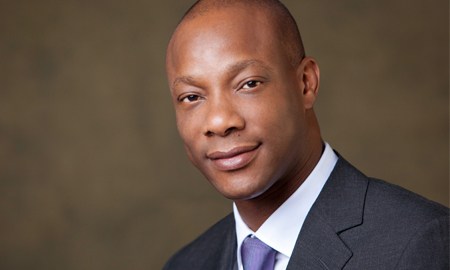
When is a bank not a bank? That is a question Segun Agbaje, the multiple award-winning CEO and Managing Director of Nigeria’s Guaranty Trust Bank (GTBank) has been getting to grips with as he forges a new path for banking in Africa.
Agbaje was always destined to become a banker, it seems, although he took a circuitous route. Initially, he qualified as an accountant and practised in the US before tiring of auditing and returning to Nigeria to follow his father’s footsteps into banking. There, in 1991, he joined an exciting new venture, the Guaranty Trust Bank, founded by a group of young Nigerians the previous year.
As he worked his way up through positions of increasing responsibility, several events in which Agbaje played a leading role shaped his thinking about GTBank’s future: the initial public offering in 2004, listing on the Lagos stock exchange; entering the international capital markets with a Eurobond issue and listing on the London Stock Exchange in 2007.
“Those transactions exposed me to the international financial markets and the people who worked in them – merchant banks, investment bankers, lawyers, investors,” he says. “It gave me a better understanding of what people wanted from a first-class bank and best-in-class practices. It also encouraged me to think about the bank as an international institution, rather than just a Nigerian institution, and what it took to compete in the global economy.”
Agbaje became CEO of GTBank in 2011 and won the coveted African Banker of the Year award the next year. The award recognises financial industry leaders throughout Africa who have exercised “good vision and leadership” in guiding their organisation to strong financial performance, as well as having contributed to the impact of Africa’s financial services industry internationally.
During his tenure as CEO, the bank and Agbaje have won numerous awards. What is particularly interesting is the trend in types of award since GTBank has been under Agbaje’s leadership. Awards for financial performance have been joined by Innovative Bank awards, Best Mobile Banking and Mobile Money awards, Best Digital Bank awards and, most recently, Digital Wallet of the Year award.
‘I’m not sure that, if we removed the word “bank” in five years, we would be losing anything. We might actually even be gaining something’
This trend reflects Agbaje’s pioneering attitude towards digital transformation and the role of banking. Traditional bankers might think his view of the bank’s future a radical departure from mainstream banking, but for Agbaje it is change that has to happen: “Banks are going to become platforms, so we will become a trusted single, integrated platform,” he says. “Because the competition for banks has changed, where it was once other banks, now it is fintechs, telcos, Apple Pay, PayPal, payday-loan companies, salary-advance companies, even coffee shops. Any bank that stays with the traditional banking model is going to get smaller and smaller. All these other companies will be taking part of your share of business.”
If some of the digital giants, like Google and Apple, start to develop banking services, the word ‘bank’ could soon be associated with inefficiency and a lack of innovation, he adds. “I’m not sure that, if we removed the word ‘bank’ in five years, we would be losing anything. We might actually even be gaining something.”
While there may be a lot of disruption in the banking sector, Agbaje has a head start on many traditional banks. For example, the bank launched its Habari mobile platform in November 2018: “What we’re trying to create is something where, when you come to the bank, however you do that, you are not just coming to pay and receive,” he says. “You can come into our ecosystem and do just about everything – pay for tickets, book holidays, stream music, buy online, watch videos, and then, because we are a bank, we can provide the payment engine.”
The reputation of bankers and banking took a knock following the global financial crisis and Agbaje is well aware of the challenge banks face in terms of their relationship with the societies they serve. “A banking licence is a privilege, given to you by the regulator. Banks owe a social responsibility to the communities within which they operate,” he says. “Just as we monitor profits, costs and return on equity, we must also monitor how much we give back in terms of social responsibility.”
This is not just talk. The bank interacts with the community in many ways, from football education programmes and tournaments to its internationally renowned annual conference on autism (now in its ninth year); from its You Read Initiative aimed at promoting a culture of reading to the Social Impact Challenge designed to unearth ideas that can enrich the lives of local communities.
Many of the bank’s CSR initiatives are aimed at community development, promoting entrepreneurs and small businesses. For example, there is the GTCrea8 Convention aimed at helping undergraduates “build successful businesses out of their passion”. The bank is also building shared service facilities for businesses in the food and fashion sectors, so that these small businesses can benefit from the economies of scale enjoyed by large companies without the overheads.
The initiatives reflect Agbaje’s passionate belief in Africa’s economic potential: “It is a continent that I am completely bullish about, because I don’t think there are many places in the world that have both the natural resources, the human population, the distribution of millennial; who are just incredible people. If you are able to tap into and unleash that human capital potential it is a continent that has a huge growth upside,” he says.
“What we have in Africa is a leadership problem. There are pockets, organisations, where the leadership is good. Those organisations function the way you would in a developed economy. If you start to get people with a track record of achievement running things – whether that is in countries, governments, parastatals – they will bring that excellence and achievement to government and Africa will start to change.”
He is just the leadership role model that the younger generation needs. “My values are simple ones. I believe in hard work, humility, integrity, and discipline. Those are the things that drive me,” he says. “If you have those values, show them, inculcate them into all the decisions that you make and you will be fine.”
He has naturally given some thought to what he might do after his time at GTBank: “Maybe I will get another platform to do something in the private sector. It could be in a completely different sector to banking. My first choice would be an Africa-focused organisation. A second option would be something, if not solely focused on Africa, with an emerging market emphasis.”
He would also be interested, he says, in mentoring young people with small businesses; helping them to think about organisational structure and governance, for example.
But for now, with two-and-a-half years left on his contract, he is fully focused on the transformation underway at GTBank. “I’m not finished,” he says. “We are trying to build a great African institution; putting the bank in the position I think it should be in – not just financially, but socially, being a well-run enterprise.”
Agbaje is not someone to trumpet his achievements, but if his vision for the future of one of Africa’s largest and most important banks comes to fruition, more plaudits are likely to be heading his way.
Agbaje on leadership:
“My role is first to set the tone, to talk
the talk. When we set a vision, goals,
objectives, values, I have to be seen to
live and walk those.”
“I like to be involved in a lot of the key
decision-making. So it is a balance: being
really handson, so that I know what is
going on, while also giving people a large
degree of autonomy, because the number
of people reporting to me means that I
cannot micro-manage them – I rely on
their abilities.”
“I believe in a flat organisational structure.
I don’t believe in creating silos. I would
rather have a squad as opposed to a team,
which means I probably have more direct
reports than most CEOs.”





Oba Ara Releases Emotional Tribute to Late Taiwo Adegbodu
Taofik Afolabi
The gospel music community continues to grieve the painful loss of Taiwo Adegbodu, a beloved figure whose sudden departure left a deep void among fans, colleagues, and loved ones. In response to this loss, renowned gospel minister Rotimi Onimole, popularly known as Oba Ara, has released a moving tribute song that captures both the sorrow of the moment and the enduring legacy of the late singer.
Oba Ara, a proud son of Isale Eko, channels raw emotion throughout the song, using heartfelt lyrics and soul-stirring melodies to reflect on his personal connection with Taiwo Adegbodu. In the tribute, he openly expresses how deeply the news of Adegbodu’s passing shook him, describing it as a painful and unexpected loss that is difficult to come to terms with.
The song goes beyond mourning, it celebrates the life, ministry, and impact of Taiwo Adegbodu. Oba Ara highlights the late artist’s dedication to spreading the gospel through music, his inspiring voice, and the spiritual influence he had on many within and beyond Nigeria. Through powerful verses, he paints a picture of a man who lived for God and touched countless lives through his ministry.
Listeners have described the tribute as both comforting and deeply emotional, as it resonates with the collective grief of the gospel music community. It serves as a reminder that although Taiwo Adegbodu is no longer physically present, his music, message, and legacy will continue to live on.
In honoring his late colleague, Oba Ara not only pays his respects but also offers a source of healing for fans and fellow ministers, using music as a tool to process grief and celebrate a life well lived.
celebrity radar - gossips
Buratai, Fagbemi , Shagaya, Olofa, Others Eulogise Olowu Kuta’s Olori On 60th Birthday, Foundation Launch

Buratai, Fagbemi , Shagaya, Olofa, Others Eulogise Olowu Kuta’s Olori On 60th Birthday, Foundation Launch
Eminent personalities across the Nigeria stormed the TFK Event Centre, Bala Mohammed Way, Guzape, Abuja, to celebrate the 60th birthday of Olowu Kuta’s Olori, Queen Jumai Amoke and her Foundation Launch on Saturday 28, March 2026.

From former Chief of Army Staff, Lt Gen TY Buratai rtd, to the Minister of Justice and Attorney-General of the Federation, Prince Lateef Fagbemi; Olofa of Offa, HRM Oba Mufutau Gbadamosi. Even top businesswoman and socialite, Chief (Mrs) Bola Shagaya, was in attendance.


Other dignitaries were newly promoted Deputy Inspector-General of Police and former AIG Zone 2 , Lagos , Adegoke Fayoade, Major General Abdumalik, Major General Samuel Adebayo rtd (Fmr CDI);
Major General Anthony Omozoje rtd (Fmr Copp);
Alhaji Tajudeen Owoyemi (Asiwaju of Offa and CEO Radisson Hotel Nigeria;
Dr Waheed Olagunju, former managing director of Bank of Industry, Oniba of Iba, Lagos State, HRM Oba Dr Suleiman Raji ;
Justice Falola, Olu of Ile-Ogbo , Oba Adetoyese amongst many traditional rulers and captains of industry too numerous to mention.
Speaking at the occasion, the Chief Host, Olowu of Kuta, HRM Oba Dr Adekunle Oyelude Makama, CON , Tegbosun iii, who is also the husband of the celebrant commended Queen Jumai for ‘ her slender arms full of kindness’ to establish such humanitarian Foundation, ‘Amoke Children and mother in Need Foundation’ at a time Nigerians are going through economic crisis occassioned by the global meltdown.
Olowu also commended her steadfastness and love for the less privileged and downtrodden.
The monarch refrenced the task before his wife’s humanitarian gesture said her best is yet to come.
” Olori Amoke Jumai, I celebrate you. You will celebrate 70, 80, 90 and continue to shine as you continue to put a smile on people’s faces. I love you, “Olowu Kuta added.
To Lt Gen Buratai, a former army chief and former Nigerian Ambassador to Benin Republic, the reward of hard work is more work.
Buratai, who also doubles as Balogun Agba of Owu Kuta, a chieftaincy title reserved for a generalismo congratulated Queen Jumai for attaining the age of 60 in good health.
The retired army General said he’s not surprised by the turn out of eminent personalities across the country to celebrate the Olowu Kuta’s Olori because she merited it through her hospitality to all, adding that Allah the most merciful, most beneficial would accept all her act of ibadah.
The minister of Justice, Prince Fagbemi, was full of praises for Queen Jumai for deeming it fit to have a place in her heart to accommodate the needy and less privileged in ‘our society.’
Prince Fagbemi urged the guests to contribute generously to support the Foundation in order to continue to alleviate poverty and put a smile on the faces of the people.
” I congratulate you on your 60th birthday and Foundation Launch. I wish you many happy returns of the day and many more fruitful services to the country and motherland”, Prince Fagbemi added.
The celebrant, Queen Jumai who was grining from ear to ear thankfully said she was excited by the turn out and the response of the people to her foundation.
Queen Jumai, however, promised to continue to use her resources and donations received for the good of the needy and less privileged in the society.
” I want to appreciate my own Kabiesi Olofa of Offa , for his presence and im I’m using him as a point of contact to all other Kabiesis present here, the minister of justice and Attorney-General, you’re welcome, sir; Mrs Bola Shagaya, I salute your enterprise, Lt Gen Buratai, I’m grateful, sir; DIG Fayoade, Justice Falola and other dignitaries too numerous to mention, I thank you, all. To my darling husband, Kabiesi Olowu , I thank you immensely for your support. And to my family and friends, I thank you , all. E se pupo!”, she said.
celebrity radar - gossips
Adron Homes Elevates Cultural Pride as Dignitaries Grace 39th Lisabi Festival in Abeokuta
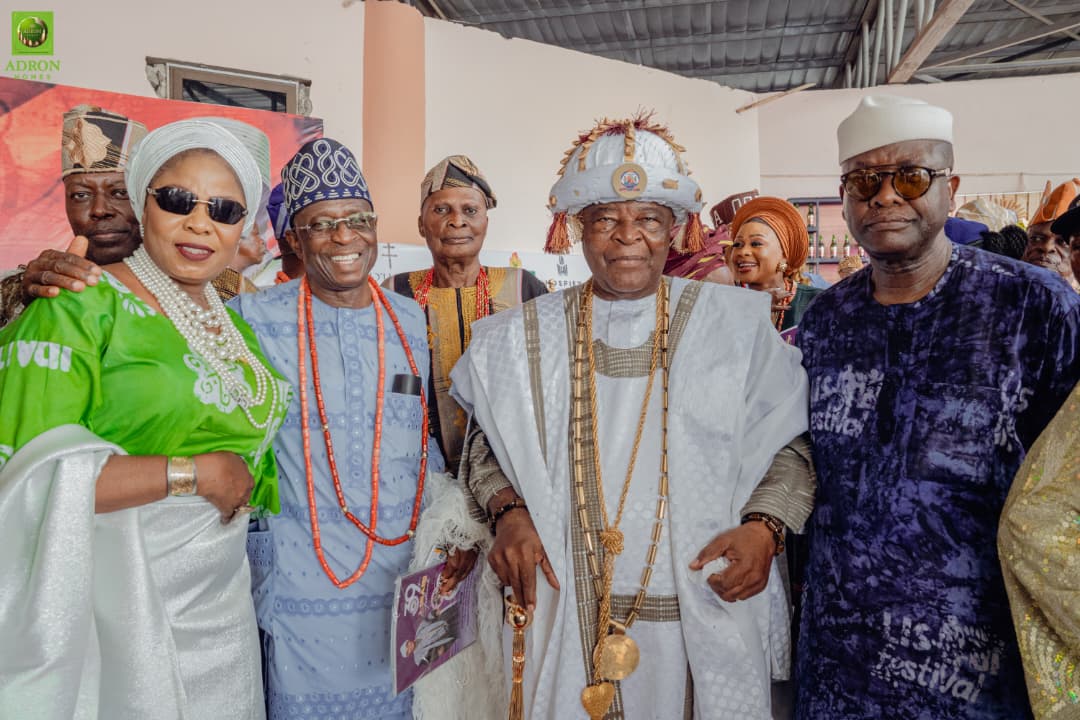
Adron Homes Elevates Cultural Pride as Dignitaries Grace 39th Lisabi Festival in Abeokuta
The ancient city of Abeokuta came alive in a grand display of culture, history, and unity as dignitaries from across Nigeria converged at the iconic Ake Palace Ground for the 39th edition of the Lisabi Festival, an annual celebration deeply rooted in the Egba people’s heritage.
The event, proudly supported by Adron Homes and Properties Limited, witnessed an impressive parade of distinguished personalities, traditional rulers, government officials, business leaders, and cultural enthusiasts, all captured in vibrant pictures that tell the story of a people united by history and pride.
From richly adorned monarchs in regal attire to elegantly dressed guests reflecting the depth of Yoruba tradition, the images from the festival encapsulate moments of honour, reverence, and celebration. Each photograph portrays not just faces, but influence, leaders, and stakeholders who continue to shape cultural preservation and community development.
At the heart of the celebration was the revered Oba Adedotun Aremu Gbadebo, whose presence underscored the festival’s significance as a symbol of Egba resilience and identity. Surrounding him were eminent dignitaries whose attendance further amplified the prestige of the event.
Adron Homes and Properties Limited stood out prominently, not only as a sponsor but as a key driver of cultural sustainability. Through its strategic support, the company reinforced its commitment to preserving indigenous heritage while fostering community engagement. The brand’s visibility across the venue and within the pictorial highlights reflects a deliberate alignment with culture, tradition, and people-centered development.
Beyond real estate, Adron Homes has continued to position itself as a cultural partner, investing in platforms that celebrate history and strengthen communal bonds. Its involvement in the Lisabi Festival is a testament to its broader vision of building not just homes, but legacies rooted in identity and pride.
The 39th Lisabi Festival, as captured through the lens of dignitaries in attendance, is more than an event, it is a narrative of continuity. And through its unwavering support, Adron Homes has once again set the pace, demonstrating that corporate institutions can play a vital role in sustaining the cultural heartbeat of a people.
As the echoes of drums fade and the colours of the festival linger in memory, one thing remains clear: the story told through these images is one of unity, heritage, and the enduring partnership between tradition and progress.


-

 society6 months ago
Religion: Africa’s Oldest Weapon of Enslavement and the Forgotten Truth
-

 news4 months ago
WHO REALLY OWNS MONIEPOINT? The $290 Million Deal That Sold Nigeria’s Top Fintech to Foreign Interests
-

 society6 months ago
“You Are Never Without Help” – Pastor Gebhardt Berndt Inspires Hope Through Empower Church (Video)
-

 celebrity radar - gossips2 months ago
Dr. Chris Okafor Returns with Power and Fire of the Spirit -Mounts Grace Nation Altar with Fresh Anointing and Restoration Grace on February 1, 2026
You must be logged in to post a comment Login
You must log in to post a comment.