
society
CHRISTIAN GENOCIDE AND THE DANGERS OF MISCHARACTERISATION

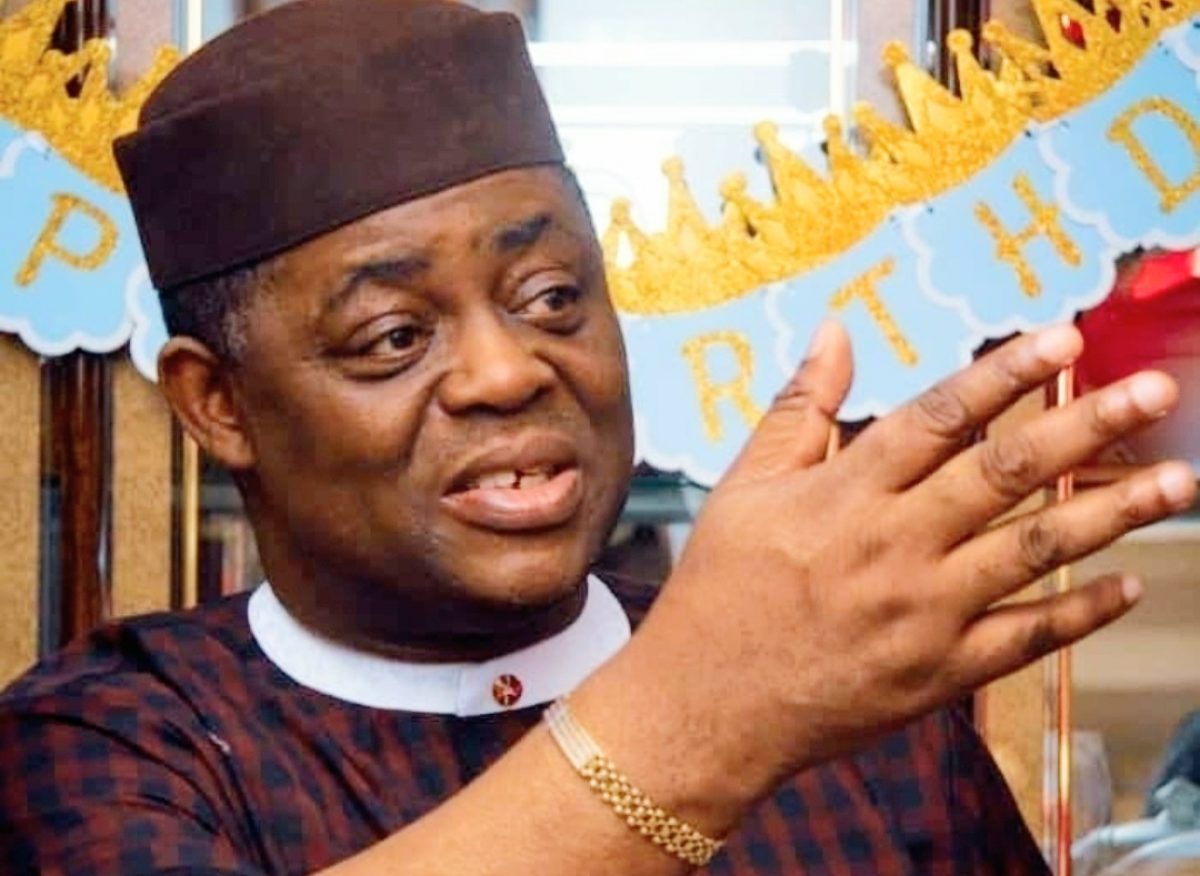
CHRISTIAN GENOCIDE AND THE DANGERS OF MISCHARACTERISATION
There is no-one in Nigeria that has spoken up for the rights of Christians, spoken out against Christian marginalisation and persecution and warned about the reality and dangers of Islamic fundamentalism and Islamist terror more than yours truly over the last 30 years.
Whether it be the sharia debates, the debate on the secularity of the Nigerian state, the debate on the plight of Christians in Northern Nigeria or the debate on ethnic and religious hegemony and domination, I have been deeply involved and invested in these matters right from the beginning.
In each of these prolonged and often acrimonious and volatile debates I have played a leading role and held my corner.
For those that doubt this the records are clear and I suggest that they go back and read all I have written and said about these vexing issues over the last three decades.
I have also made it perfectly clear over the years that it would be an honour for me to sacrifice all, including my life, in defence of my faith and that will never change. That was my position then and that is my position today.
My knowledge about the experiences of Christians in Nigeria is extensive and my insight and understanding of the history of our country is next to none.
This places me in a unique position and gives me the ability to speak with authority about the ongoing debate on whether or not what we are witnessing in Nigeria today is indeed “Christian genocide”.
In the last three weeks I have written two widely published essays on this matter.
The first is titled ‘The Fiction Of Christian Genocide and the Conspiracy Against Nigeria’ and the second is titled ‘A Warning To Senator Ted Cruz’.
For those that have not read them already I recommend them both in order to get a clearer and deeper perspective on the matter.
This contribution is my third to this increasingly contentious and volatile debate and I sincerely hope that it brings more insight and understanding to the issues under consideration.
Permit me to get to the meat of the matter.
There is no doubt that Christians are being targetted and slaughtered in massive numbers in Nigeria.
No-one can deny that. It is a reality that we as Christians have lived with for many years.
What needs to be understood however is that in the last 15 years as many Muslims have been targetted and slaughtered by the same group of heartless terrorists as well.
To mischaracterise what is going on in our nation as “Christian genocide” is a knee jerk and emotional reaction to a very complex and profound problem.
It is an eloquent testimony to the sordid and divisive disinformation, misinformation and falsehood that those that insist on describing it in such terms have resorted to.
It is a gross, perfidious and unforgivable mischaracterisation of the facts on the ground, a Goebellian misrepresentation of reality and a perverse inversion of the truth.
It is also a specious, simplistic, shallow and flawed perspective which is deeply rooted in ignorance, mischief, malevolence, malice, deceit and intellectual dishonesty, which does not in any way define the very real problems or provide a lasting solution to the monuemental challenges that Nigerian Christians are facing and which is designed to divide us and pave the way for a well-orchestrated and carefully scripted attempt to destabilise our nation, thrust us into a volatile season and cycle of mutual suspicion, sectarian violence and calmuny and set us up for an unconstitutional regime change before or by 2027.
To insist on perpetuating and propagating this mischaracterisation and falsehood is an extreemly dangerous path to tread which, if care is not taken, will ultimately make matters far worse.
For example the frantic public call by Mr. Eric Prince (the notorious founder of the discredited American private security company of murderous and savage western mercenaries that wreaked havoc in Iraq after the American invasion known as Blackwater) to the Vatican, the Pope, prominent Christian leaders from all over the world and President Donald Trump to “fund and support” a private Christian army which he will gladly put together and lead to come to Nigeria to “protect the Christian community and kill Muslims” is not only irresponsible and unhelpful but is also fraught with many dangers.
Again the call by U.S. Congressman Chris Smith to Trump to “arm Christians in Nigeria with American weapons” and to use the American Airforce to “bomb Muslim communities in our country” will lead to a further escalation of violence and open armed conflict between hitherto law- abiding Christians and Muslims who are not only fully integrated but who have also lived peacefully together in harmony over the years. Sending arms to aide one community and U.S. war planes to bomb the other cannot possibly augur well for us.
To send arms to the Nigerian Government to assist in our fight against the terrorists is one thing and would of course be a welcome and laudable initiative and development but to send arms and private mercenary armies from the West to fight for Christians in our country and kill our Muslim brothers or for Christian communites to receive arms directly from the Americans whilst the Muslims are bombed out of existence by western jets is madness and an open invitation to chaos and fratricidal butchery in Nigeria.
It would indeed mark the end of our country as we know it and the beginning of a civil war which will last for the next 50 years and which will have cataclysmic consequences for the Nigerian people, the west African sub region, the African continent and indeed much of the world.
Such insane and provocative rhetoric from the likes of Prince and Smith must cease forthwith. They do not love our country more than we do and we must not allow them to light a fire or ignite a bomb that will consume us all.
Outside of this the mischaracteristion of our situation has an additional three obvious and immediate consequences.
Firstly it negates the idea that Muslims are being targetted by the same terrorists that are killing Christians.
Secondly it belittles and underplays the massive loss of Muslims lives and suggests that those lives count for nothing.
Finally it runs the risk of further dividing our people on religious lines by casting all Muslims as the perpetrators and only Christians as the victims.
This cannot augur well for the unity of our country and for our collective fight against terror.
The American and western leaders that are propagating and spouting it, with the help of the CIA and their local assets, obviously have an insidious hidden agenda and a sinister ulterior motive for doing so.
You do not have to be a bright bulb or a Professor of world history to appreciate that.
All you need to do is to have a little common sense, a good memory, an understanding of the times we are living in and observe what the Americans and their western allies have been doing in the Middle East, North Africa and indeed much of the world ever since 9/11.
The sad reality of Nigeria is not “Christian genocide” but the genocide of BOTH Christians and Muslims by the hands of a handful of savage and barbaric terrorist militias that falsely claim to be Muslims but that do not in actual fact represent any faith.
They represent only satan, their insatiable bloodlust and their sadistic, depraved, delusional, psychotic and psycopathic disposition.
Some of them, like Boko Haram, ISWAP, Al Qaeda and Ansaru operate mainly in the North, murdering and displacing both Christians and Muslims with impunity and no remorse whilst others, like ESN, who claim to be championing the cause of Christians and Jews, operate mainly in the South East again murdering and displacing both Christians and Muslims.
They, like the Haramites and their genocidal partners in crime, do not represent any faith other than that of the devil who has sent them.
Our duty as Christians is to foster national, religious and ethnic unity by closing ranks with our Muslim brothers and fighting our common enemy which these terrorist groups represent.
Anything less than that will only divide us further and take us down the brutal and bloody road to Kigali and, God forbid, a Rwandan-style and horrific showdown and a genocidal storm of cataclysmic carnage.
Our security agencies have worked extreemly hard over the last two years in containing the scourge of terror that has afflicted us.
This is proved by the fact that a record number of terrorists have been killed and many of their most dangerous and wanted commanders and leaders have been captured and detained.
We must commend and encourage them in their endeavours. However much more needs to be done.
We are a nation at war and the Federal Government must do far more by breaking the ranks of the terrorists with an iron fist, ripping out their hearts, killing them in even larger numbers than they are already doing and by effectively, courageously and vigorously countering the American and Zionist-sponsored “Christian genocide in Nigeria” propaganda and disinformation campaign that is spreading like wild-fire throughout the world.
This can best be done not just by continuously issuing press statements and conducting television interviews in our local media but by engaging the services of seasoned and experienced American lobbyists in Washington DC itself and more importantly by giving our very able Foreign Minister, Ambassador Yusuf Tuggar, the full support that he needs and allow him to take up and lead the initiative fully without hinderance.
He is an exceptionally brilliant and incisive diplomat who is highly experienced, who knows the history of world politics inside out, who was educated in the west from an early age and therefore cannot be intimidated by them, who is a skilled negotiator, who is a diehard patriot that will never betray our national interest and cause and who has nerves of steel.
I know this because I have known him for well over 40 years!
Outside of that our Government must refuse to allow themselves to be hoodwinked by the words of middle-ranking American Governnent officials who are not members of the MAGA inner circle and who do not truly represent the very hardline and extreeme views of the right-wing Christian fundamentalist and anti-Muslim forces that Trump holds dear.
If they really want to know what Trump is thinking but has so far refused to voice about Nigeria it would be wise for our Government to consider the words of Senator Marco Rubio, Senator Ted Cruz, Congressman Riley Moore and Congressman Chris Smith far more than the soothing and encouraging words and expressions of support from “friendly faces” in the Trump administration who have deep ties with and a soft spot for Nigeria but who are not at the heart of the MAGA power configuration like Trump’s Lebanese brother in-law and Special Advisor on African Affairs, Massad Boulos.
American doublespeak and subterfuge is an art and we must never take them for their word or drink from their poisoned chalice.
As the Bible says “their speech is as smooth as butter but war is in their heart”.
A word is enough for the wise.
In an additional step to protect ourselves and secure our future we must also build stronger ties with China and Russia and enter into a defence pact with either one or both.
We should also become a full-fledged member of BRICS and join the rest of the Global South in attempting to regain our self-respect and dignity.
This would be a step in the right direction which will enable us to have a fighting chance to resist the very real threat that America and her Western allies have presented to us.
The die is cast and, as Shakespeare observed in his play titled Julius Caesar, ‘Caesar has crossed to Rubicorn’.
We need the manifestation of strength and courage as we face these complex and formidable challenges to our essence and being and not weakness and cowardice.
Rather than always going on our knees, constantly grovelling, playing the fool and attempting to secure their validation regardless of the gratuitous insults and indignities that they have regularly subjected us to it is time for us to recognise the fact that they have never wished us well and that they have NO intention of allowing us to fulfill our full potentials or achieve our manifest and God-given destiny.
This is the bitter truth that few care to admit.
Permit me to end this contribution with the following questions.
How would the Christians of Nigeria react if the leaders of Saudi Arabia, Pakistan, Turkey, Egypt, Indonesia, the UAE and the OIC described what is going on in Nigeria as “Muslim genocide” and not only downplay but ignore with contempt the fact that Christians are being killed in equal, if not more, numbers?
Would such a mischaracterisation not be regarded as being rooted in ignorance and mischief and would it not be rightly deemed as being inaccurate and unacceptable?
If the answer is ‘yes’ then it would be equally inappropriate to refer to the terrible and collective plight that we, as Christians and Muslims, are jointly facing as “Christian genocide”.
What is good for the goose is surely good for the gander.
We are all victims of the terrorists, both Christian and Muslim, and we must all join our hands and collectively resist them.
That is the way forward.
Anything less will lead to catastrophy for us all and will represent a massive victory for the terrorists and the foreign hegemons that sent them and that seek to divide and destroy us.
On a final note I challenge my readers to consider the following.
When we collectively opposed the genocide in and total destruction and decimation of Gaza over the last two years no-one in the world referred to what was going on there as “Muslim genocide”.
This is because thousands of innocent and defenceless Palestinian Christians were also subjected to genocide, mass murder, ethnic cleansing, displacement and crimes against humanity and had their Churches, homes, farms and hospitals bombed into rubble and burnt to the ground by the Zionist terrorists of the Israeli Defence Force.
In the same vein when we oppose the barbarism and genocide that we are witnessing in Nigeria we must not refer to it as “Christian genocide” because hundreds of thousands of innocent and defenceless Muslims are also being subjected to mass murder, ethnic cleansing, crimes against humanity and displacement and have had their homes, farms, Mosques and hospitals bombed into rubble and burnt to the ground by the terrorists of Boko Haram, ISWAP, Al Qaeda and Ansaru.
We cannot make reference to or condemn the genocide that is being unleashed on our Christian population without making reference to and condemning that which is also being unleashed on our Muslims.
What is good for the goose is good for the gander and we must not inflamme people’s passions with reckless and nonsensical rhetoric that seeks to place one set of victims on a higher pedestal and the other on a lower one.
The monuemental challenges that we face when it comes to this matter are grave: we must not make matters worse and allow ourselves to be plunged into an avoidable and unnecessary full scale religious war as a consequence of the reckless and unrestrained expression of uncontrollable and pent up passions, loose talk and an indulgence in extravagant and costly semantics.
The bottom line is as follows.
Do we have a terrorist problem in Nigeria? “Yes!”
Are Christians being killed by the terrorists? “Yes!”
Are Muslims being killed by the terrorists as well? “Yes!”
If that is the case let us call it what it is: the genocide of BOTH Christians and Muslims by a group of heartless beasts from hell who seek to wipe us all out and impose their barbaric ways and values on those of us that they conquer, enslave and leave alive.
The solution to the problem is for us to come together and eliminate every single one of them and to expose and target their foreign and local sponsors and supporters.
The solution is NOT to sit in the comfort of our homes, fuelling further division and joining a bunch of excitable, bellicose, intellectually challenged and low-intelligence qouta reprobates in screaming the worne-out and increasingly irritating battle-cry and mantra of “Christian genocide” at the top of their voices whilst fantasising about some far-fetched, infantile and puerile “crusade” in Nigeria to be led by a group of illusionary Christian Knights and Knight Templars galloping in on white horses from Trump’s America who, whilst singing “Onward Christian Soldiers”, will storm our shores and attempt to deliver our Christian community from evil.
Such vainglorious and delusional fantasies and masturbatory dreams are indeed profound symptoms and glaring evidence of some form of mental illness on the part of those who share them and provide a veritable source of comic relief for the rest of us.
May God heal their broken minds and grant them good health.
(Chief Femi Fani-Kayode is the Sadaukin Shinkafi, the Wakilin Doka Potiskum, the Otunba Joga Orile, the Ajagunle Otun Ekiti, a former Minister of Culture and Tourism, a former Miinister of Aviation, a former Senior Special Assistant and spokesman to President Olusegun Obasanjo and a lawyer




society
Liberian Leaders, Citizens Bear Witness as Apostle Suleman Hosts Two-Day Power-Packed Crusade
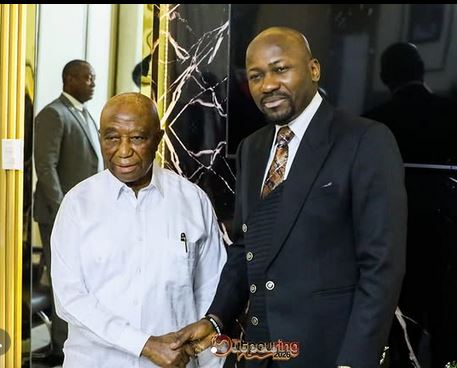
Liberian Leaders, Citizens Bear Witness as Apostle Suleman Hosts Two-Day Power-Packed Crusade
It was testimonies galore on Tuesday, March 31, the first day of the famous servant of God and founder of the Omega Fire Ministries (OFM) worldwide, Apostle Johnson Suleman’s power-packed two-day crusade. The event documented impactful moments with the Gospel and miracles, emphasizing the power of faith and the tangible confirmation of God’s Word through signs and wonders. It was equally an atmosphere of miraculous healing, restoration of lives, and the strengthening of faith.
At the crusade, which was held at the SKD Sports Stadium in Paynesville City, and themed, “Liberia Outpouring Crusade” witnessed testimonies of impact and miracles with participants experiencing instant healing of various kinds of challenges.
Apostle Suleman’s first port of call was Paynesville, the office of Liberian government’s president, Mr. Joseph Nyuma Boakai, who received him in an audience with his junior ministers. Apostle Suleman, who also met with the vice-president, Mr. Jeremiah Kpan Koung, was welcomed by the Liberian leader’s office as part of the president’s ongoing engagements with religious leaders aimed at fostering spiritual support for national development.
The president expressed profound appreciation to Apostle Suleman for the visit and continued prayers and intercessions by men and women of God on behalf of Liberia, emphasizing his firm belief that sustained spiritual guidance and prayer remain vital to the transformation and progress of the nation.
During the visit, Apostle Suleman offered prayers for President Boakai, his cabinet and the Liberian nation, invoking divine alignment, wisdom, and insight in Liberia’s path toward growth and stability. He prayed that the Almighty God would position Liberia for relevance and fulfillment of its national destiny.
Apostle Johnson Suleman, an evangelist who knows no bounds of where preaching the gospel comes to a stop, visited Liberia prepared with the message, compelling power of the Gospel and the work of the Holy Spirit, and bringing people to a point of decision where they surrendered their lives to Christ.
Aside from being prophetic and timely, OFM sources disclosed that the servant of God’s visit underscores the importance of faith-based partnerships in supporting governance and national renewal efforts.
society
Middle Belt Forum Hails Tinubu’s Jos Visit, Calls for United Civil-Military Effort to Restore Lasting Peace
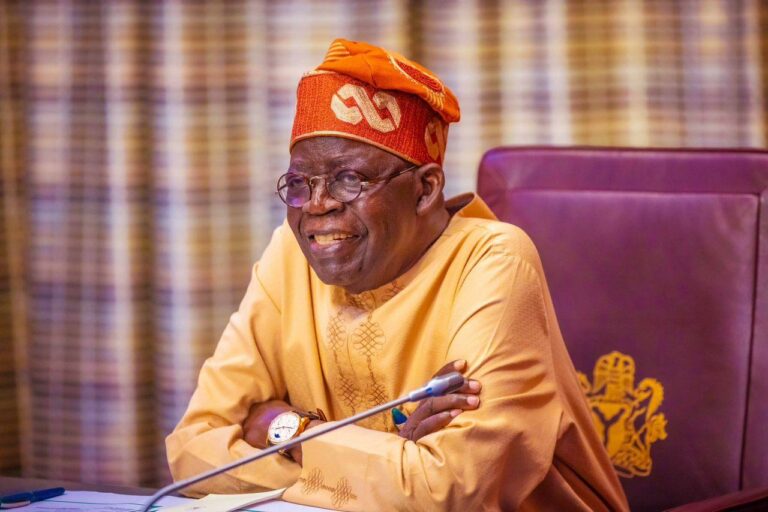
*Middle Belt Forum Hails Tinubu’s Jos Visit, Calls for United Civil-Military Effort to Restore Lasting Peace
The Middle Belt Peace Forum (MBPF) has commended President Bola Ahmed Tinubu for his profound demonstration of empathy and responsive leadership following his decision to postpone an official engagement in Iperu in order to visit victims of the recent attacks in Jos.
In a statement signed by its National Coordinator, Pastor Bulus Garba, in Jos on Friday, the Forum said the President’s decision to personally identify with grieving communities sends a powerful message of solidarity and reinforces public confidence in the commitment of the Federal Government to the protection of lives and property.
“The Middle Belt Peace Forum warmly commends President Bola Ahmed Tinubu for prioritising compassion over ceremony. At a time of deep sorrow for the people of Plateau State, his decision to visit Jos stands as a mark of true leadership—one that listens, responds, and stands with the people in their moment of pain,” the statement read.
The Forum described the perpetrators of the recent attacks as “cowards who prey on innocent and defenceless citizens,” stressing that such acts of violence are not only inhumane but also a direct assault on the unity and peace of the nation.
“We condemn in the strongest terms the actions of these cowardly attackers whose only aim is to instil fear and destabilise peaceful communities. Their actions must be met with firm and decisive resistance from all arms of the state,” Pastor Garba said.
The MBPF further used the opportunity to salute the courage, gallantry, and sacrifices of the Armed Forces of Nigeria under the leadership of the Chief of Defence Staff, General Olufemi Oluyede, noting that their continued efforts remain central to restoring stability across troubled parts of the country.
According to the Forum, the Armed Forces have demonstrated resilience and professionalism in the face of complex security challenges, often operating under difficult conditions to safeguard communities and defend Nigeria’s territorial integrity.
“We salute the Armed Forces of Nigeria for their unwavering commitment and sacrifices. Their gallantry in confronting criminal elements and reclaiming territories is a testament to their dedication to national service. We recognise that the path to peace is demanding, and we honour those who stand daily in defence of our nation,” the statement added.
The Forum pledged its full support to ongoing military operations and called for strengthened collaboration between security agencies and local communities as a critical factor in achieving lasting peace.
It also urged citizens across the Middle Belt to cooperate with security forces by providing timely information and fostering unity within their communities.
The MBPF, however, expressed concern over the need for greater synergy among security agencies, particularly the role of the Nigeria Police in consolidating gains made by the military.
“We call on the Nigeria Police Force to rise fully to its constitutional responsibility by effectively supporting the Armed Forces in stabilising and securing areas that have been cleared of criminal elements. Holding and policing such territories is essential to preventing a resurgence of violence,” Pastor Garba stated.
The Forum emphasised that sustainable peace requires a coordinated approach in which the military clears and secures areas, while the police maintain law and order to enable displaced communities to return and rebuild their lives.
The MBPF concluded by reiterating its commitment to peacebuilding efforts across the Middle Belt and expressed optimism that with sustained leadership, coordinated security efforts, and active citizen participation, lasting peace can be achieved.
“Together, through unity, vigilance, and collective resolve, we can overcome these challenges and build a safer and more peaceful Middle Belt,” the statement added.
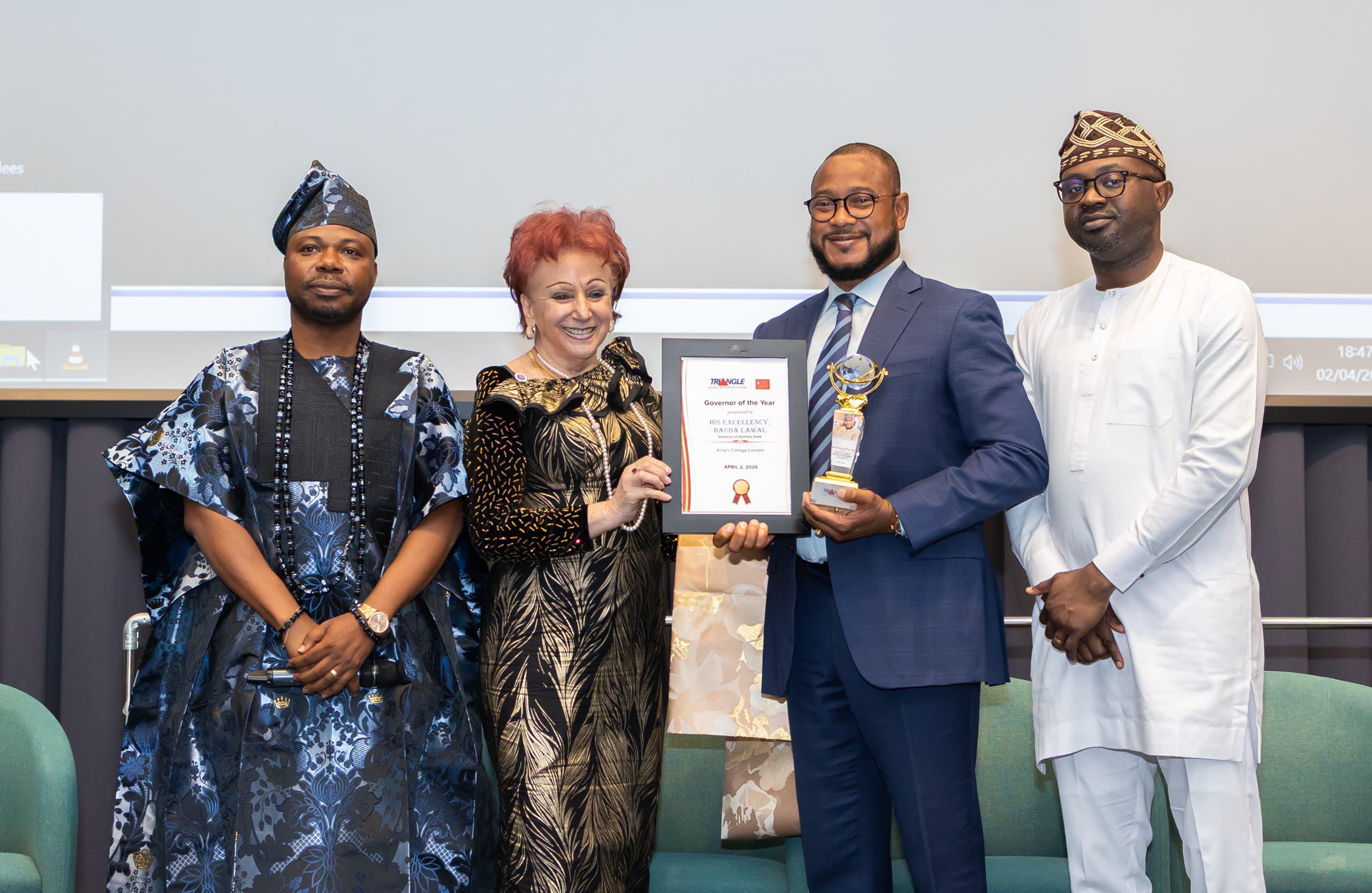
Governor Dauda Lawal Wins Face of Africa Governor of the Year Award in London
Governor Dauda Lawal has been honored with the Outstanding Governor of the Year award by Triangle Media International Magazine.
The award was presented during the magazine’s 10th annual lecture and award ceremony, held on Thursday at the Grand Hall of King’s College, London, United Kingdom.
According to a statement by the governor’s spokesperson, Sulaiman Bala Idris, the awards recognize public and private sector leaders whose leadership positively impacts governance and service delivery.
He added that the lecture, themed “Harnessing the Roles of Nigerians in Diaspora for National Development,” brought together stakeholders from both the public and private sectors.
The statement read in part: “Yesterday, in London, Governor Dauda Lawal received the 2026 Face of Africa Leadership Award for Outstanding Governor of the Year.
“The 2026 edition coincides with the 10th anniversary of Triangle International Magazine, which has over the years celebrated notable Africans across diverse fields.
“The award recognizes the Zamfara State Government under Governor Lawal’s leadership for achieving remarkable milestones in service delivery since his inauguration on 29 May 2023.
“The board of Triangle International noted that, despite inheriting an empty treasury, Governor Dauda Lawal has remained true to the Rescue Agenda’s campaign promise: to rescue and rebuild Zamfara.
“The award also reflects the state government’s innovative approach to indirectly curbing insecurity through educational advancement, demonstrated by the declaration of a state of emergency in the education sector.
“This includes the state government’s swift payment of the outstanding N3.4 billion for WAEC and NECO examinations, as well as the reconstruction and rehabilitation of schools across all 14 Local Government Areas of Zamfara State.
“The international magazine finds these initiatives to be strategic interventions toward long-term efforts to make Zamfara State better.”
The colourful event was attended by the Minister of Interior, Olubunmi Tunji-Ojo, and Sahara Group’s Group Managing Director, Kola Adesina, among others.


-

 society7 months ago
Religion: Africa’s Oldest Weapon of Enslavement and the Forgotten Truth
-

 news4 months ago
WHO REALLY OWNS MONIEPOINT? The $290 Million Deal That Sold Nigeria’s Top Fintech to Foreign Interests
-

 society6 months ago
“You Are Never Without Help” – Pastor Gebhardt Berndt Inspires Hope Through Empower Church (Video)
-

 celebrity radar - gossips2 months ago
Dr. Chris Okafor Returns with Power and Fire of the Spirit -Mounts Grace Nation Altar with Fresh Anointing and Restoration Grace on February 1, 2026