
society
Corruption allegations: Like Magu, Bawa must quit now, face probe panel – Over 150 CSOs tell FG

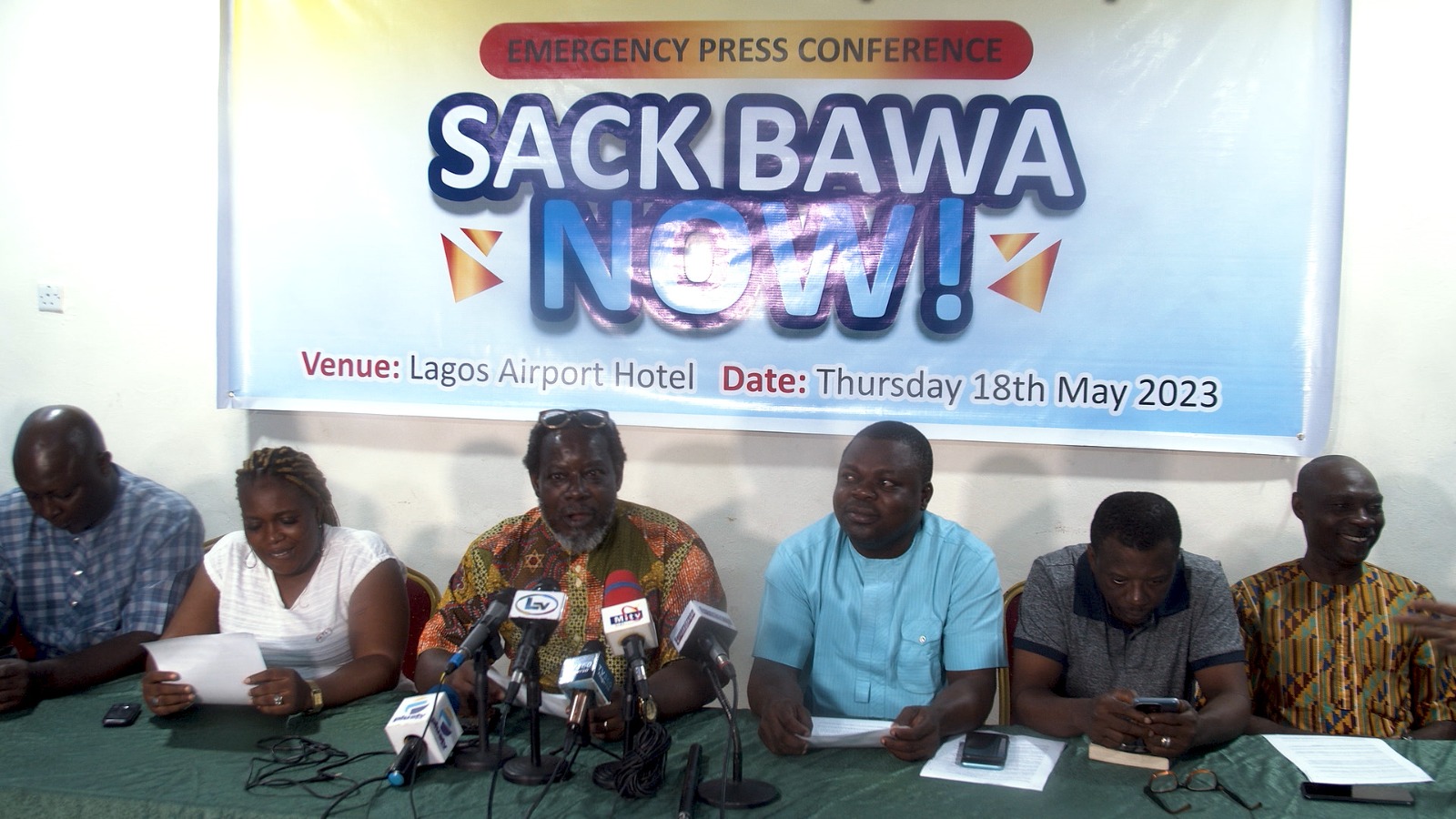
Corruption allegations: Like Magu, Bawa must quit now, face probe panel – Over 150 CSOs tell FG
. Say EFCC not conceived as agency for settling political scores
Following Governor Bello Matawalle of Zamfara State’s bombshell, on Wednesday, that he and some other prominent Nigerians have evidence of corrupt practices against the Chairman of the Economic and Financial Crimes Commission, Abdulrasheed Bawa, notable Anti-Corruption crusaders in Nigeria, numbering over 150, have said he can no longer continue to stay in office.

The leaders of the organisations who said they had refused to be cowed into shelving their agitation for a genuine fight against corruption in Nigeria, said inasmuch as elected officials must account for their actions in office, they shared Matawalle’s view that the investigations must not be selective but all-embracing.
According to the activists, the EFCC is an important agency in Nigeria, established to rid the society of corruption with impunity, it was not conceived as an agency meant for settling scores for political godfathers.
Led by the Chairman of the Centre for Anti-Corruption and Open Leadership, CACOL, Debo Adeniran, the activists said, at a press conference in Lagos, that it was the standard practice all over the world for officials who have been accused of gross misconduct to step aside while investigations are conducted to ascertain the veracity of the allegations.
They, therefore, called for a full probe into the activities of the EFCC under Bawa, saying, “His predecessor, Ibrahim Magu, was not only told to step aside when Bawa’s godfather wanted him out at all costs, he was humiliated out of office and up till tomorrow, no one knows the exact outcome of the probe against him.”
According to them, from the interraction of Journalists and CSOs with ordinary Nigerians who had been invited for one reason or the other at the Commission, “there have been several allegations to the effect that about 80 per cent of cases under EFCC investigation are not taken to court. EFCC offices now literally serve as court rooms.”
“There are damning allegations that some of the Commission’s officials simply negotiate with suspects, get assets and cash retrieved and do plea bargains. This opens limitless opportunities for corrupt bargaining and self-enrichment by the operatives of EFCC under Mr. Bawa’s watch,” the anti-corruption activists alleged.
“This needs to be thoroughly investigated by a technical Commission of Inquiry to dig into the modus operandi of EFCC investigations in the last three years by thoroughly analysing records of arrests, investigations, outcomes and final closure of each incident and individual suspects and how the matters were eventually dispensed with,” they demanded.
In a speech delivered on behalf of the CSOs, their spokesperson, Olufemi Lawson, stated, “Allegations of sharp practices with confiscated assets by the Commission have refused to go away. To this end, all seized assets need to be forensically audited with a view to recovering all assets re-looted or auctioned in suspicious circumstances.
“The Chairman of the Economic and Financial Crimes Commission (EFCC), Abdulrasheed Bawa, has been convicted for contempt over his failure to comply with an earlier order of the court. As we speak, the Inspector-General of Police has not complied with a court order to commit Bawa to Kuje prison while Bawa has not deemed it fit to purge himself of contempt.”
The activists said claims by Bawa that the EFCC had secured 98.93 per cent convictions in 2022, losing only 1.07 per cent, were spurious, noting that a large chunk of the convictions were online fraudsters, while favoured political office holders were left untouched.
Lawson said, “We are also aware that in December 2022, the Bawa-led EFCC had announced its plan to sell forfeited properties. It also announced later in January that about 12 bids were made for those properties and, later, that six of those bids were successful. No details of this were made public, either to know successful bids or rejected ones. This was a ploy, in our opinion, to make the processes less transparent and, therefore, facilitate corrupt mismanagement of the proceeds or ensure that only their corrupt allies got the opportunity to purchase the assets at giveaway prices. The processes were rendered opaque and that’s very suspicious.
“The EFCC has done a selective invitation to outgoing Governors in Nigeria, reportedly exempting other government officials who have loads of petitions against them, even by Governors.”
“If a government agency expected to fight crime is found going about its business in a manner that mimics witch-hunt and selective justice while also being unable to deal with corruption going on within its own workforce, the Coalition of Anti-Corruption Organizations, COACOs, is afraid that the Nation may slide into some real crisis of confidence in our systems, which is bound to provoke a defunding of the EFCC by local and international donor organizations,” the activists stressed.
Full text
BAWA CANNOT REMAIN IN OFFICE WITH DIRECT CORRUPTION ALLEGATIONS AGAINST HIM. HE MUST STEP ASIDE TO BE INVESTIGATED
Civil Society leaders here present, fellow Nigerians, ladies and gentlemen of the Press.
As it has been already established months ago, the Coalition of Anti-Corruption Organizations is an amalgam of organizations that are focused on ensuring that public office holders are accountable, law-abiding and verifiably trustworthy, especially those charged with the responsibility of keeping watch over our collective commonwealth to ensure its protection from the roving fingers of corrupt elements in public service.
In the struggle to clean up the Economic and Financial Crimes Commission and render its leadership accountable, we do not need any introductions because Nigerians are living witnesses to our patriotic advocacy for a non-corrupt, effective, impartial and transparent EFCC leadership, which we make bold to say Mr. Abdulrasheed Bawa has largely messed up.
The recent direct allegations of corrupt practices in the EFCC, mismanagement of seized assets and acts of impunity without regard to the laws of the land, leveled directly against Mr Abdulrasheed Bawa by a sitting governor is a futher confirmation of all that we have been saying about the ignoble conduct of the EFCC under Bawa.
Governor Matawalle of Zamfara State was unequivocal in his direct allegations against Mr Bawa, demanding a probe into his leadership and asking him to step aside immediately. For a sitting Governor to make such far-reaching allegations publicly and saying he and others have evidence to back those allegations is not something to be overlooked by Nigerians and the Presidency especially, which has the power to appoint and fire the EFCC chairman.
Anyone given the responsibility of fighting corruption cannot be consistently floating in the waters of corruption allegations every now and then.
To this end, we in COACOs are consistently monitoring all government processes and engagements as represented by the conduct of government institutions and those put in charge of running them.
It is on the basis of our core values as a group that we have consistently advocated for ensuring that whoever would lead the EFCC must not be trustworthy but also, like Caesar’s wife, be without blemish or reproach upon which we have been demanding the removal of Mr. Bawa because he does not fit the bill of EFCC leadership. In fact, the thought of even retaining or reappointing him is natural repugnant to the sensibilities of enlightened and patriotic Nigerians.
We are aware of several anomalies that have transpired since Mr. Bawa became Chairman of the Commission and to that fact we do not think such an individual should have been made the head of a Commission that is saddled with the responsibility of keeping public and private office holders accountable.
We also wish to remind Nigerians that the Coalition of Anti-Corruption Organizations had on the 15th March, 2023 petitioned Mr President on this same issue and we wonder why no step has been taken in this regard nor an investigation carried out on the issues raised to the best of our knowledge till date.
The raison d’être of our current advocacy is informed by the following ;
1. There have been several allegations to the effect that about 80% of cases under EFCC investigation are not taken to court. EFCC offices now literally serve as court rooms. There are damning allegations that some of the Commission’s officials simply negotiate with suspects, get assets and cash retrieved and do plea bargains. This opens limitless opportunities for corrupt bargaining and self-enrichment by the operatives of EFCC under Mr. Bawa’s watch.
This needs to be thoroughly investigated by a technical Commission of Inquiry to dig into the modus operandi of EFCC investigations in the last three years by thoroughly analyzing records of arrests, investigations, outcomes and final closure of each incident and individual suspects and how the matters were eventually dispensed with.
2. Allegations of sharp practices with confiscated assets by the Commission have refused to go away. To this end, all seized assets need to be forensically audited with a view to recovering all assets re-looted or auctioned in suspicious circumstances.
3. The Chairman of the Economic and Financial Crimes Commission (EFCC), Abdulrasheed Bawa, has been convicted for contempt over his failure to comply with an earlier order of the court. As we speak, the Inspector-General of Police has not complied with a court order to commit Bawa to Kuje prison while Bawa has not deemed it fit to purge himself of contempt.
4. In the character of the EFCC Chairman, Bawa led the commission to ignore orders of courts of competent jurisdiction.
5. We are aware that upon his nomination for the position of the Commission’s chairman, in the year 2021, several groups of Nigerians had opposed the appointment of Bawa based on what was described as his not-so-good antecedents.
6. For instance, the Centre for Anti-Corruption and Open Leadership,CACOL, in a letter dated 18th February 2021, asked the National Assembly to reject the nomination of Mr Bawa as the EFCC, based on several controversies that characterized his tenure in previous positions in the EFCC, given the grave implications of such on the exalted position of the EFCC Chairman.
6A. We are aware of how the EFCC, under Mr. Bawa, is also quickly becoming a cesspool of internal corruption with several reports of corrupt practices going on within the commission as alluded to by Governor Matawalle yesterday.
6B. There are allegations of age falsification to remain in office beyond the statutory limit of civil service regulations, involving very senior officers of the Commission who are said to be cronies of Mr. Abdulrasheed Bawa and enjoy his protection.
7. The Bawa-led EFCC claimed that it secured 98.93% convictions in 2022, losing only 1.07%, a claim that is so spurious, considering the fact that a large chunk of the convictions are online fraudsters, leaving out favoured political office holders as if it is not a part of its core duties to investigate politically exposed persons except those its officials are hands-in-gloves with.
8. We are also aware that in December 2022, the Bawa-led EFCC had announced its plan to sell forfeited properties. It also announced later in January that about 12 bids were made for those properties and later that 6 of those bids were successful. No details of this were made public, either to know successful bids or rejected ones. This was a ploy, in our opinion, to make the processes less transparent and, therefore, facilitate corrupt mismanagement of the proceeds or ensure that only their corrupt allies got the opportunity to purchase the assets at giveaway prices. The processes were rendered opaque and that’s very suspicious.
9. The EFCC has done a selective invitation to outgoing Governors in Nigeria, reportedly exempting other government officials who have loads of petitions against them, even by Governors.
If a government agency expected to fight crime is found going about its business in a manner that mimics witch-hunt and selective justice while also being unable to deal with corruption going on within its own workforce, the Coalition of Anti-Corruption Organizations, COACOs, is afraid that the Nation may slide into some real crisis of confidence in our systems which is bound to provoke a defunding of the EFCC by local and international donor organizations.
We agree with the position taken by Governor Matawalle that
“Bawa should explain, for instance, how he has assumed the role of the plaintiff, prosecutor and jury and how he has executed his brand of plea bargaining with suspected criminals and saboteurs of the Nigerian economy and agenda who instead of being put on trial, are walking freely all over Nigeria”.
OUR DEMANDS
1. The Presidency to commission an Enquiry into the activities of the EFCC, its present engagements and happenings within the Commission throughout Mr Bawa’s stay in office.
2. Order an immediate overhaul of the Commission and, where necessary, lobby the National Assembly to amend the EFCC Act to make the structure less prone to highhandedness and make the Chairmen answerable to the laws of the land.
3. Since there are already direct allegations against him, Bawa must step aside for investigation. This is the standard practice all over the world. His predecessor, Ibrahim Magu, was not only told to step aside when Bawa’s godfather wanted him out at all costs, he was humiliated out of office and up till tomorrow, no one knows the exact outcome of the probe against him.
Sgd :
Comrade Debo Adeniran
Comrade Olufemi Lawson





Land grabbers invade FGC Kano…. Old Students
The Federal Government College Kano Old Students Association (FGCKOSA)
wishes to formally draw the attention of the President of the Federal Republic of
Nigeria, His Excellency, President Bola Ahmed Tinubu, to a deeply troubling
development involving the proposed concession of approximately 30 hectares of
land within Federal Government College Kano under a Public-Private Partnership
arrangement.
We state, with utmost concern, that this initiative represents a destruction of a
national educational legacy carefully built and handed over to the current
generation of leaders. Unity Schools were established as symbols of excellence,
integration, and nation-building. Any action that diminishes their integrity reflects
a troubling disregard for the power of education as a driver of national progress.
At a time when nations across the world are investing more in education
infrastructure and expanding capacity, it is deeply alarming that we are instead
dismantling and commercializing existing assets meant for learning. This
proposed development signals a shift away from long-term educational value
toward short-term commercial interests.
It is also important to note that the alumni community has, over the years,
collectively invested billions of naira in the development of the College—
consistently funding infrastructure, supporting academic programs, and
strengthening the institution without taking any portion of school land or
seeking anything in return. This record reflects a deep, selfless commitment to
the school’s growth and sustainability.
Furthermore, the alumni has formally established a dedicated foundation focused
on the perpetuation of the College and the advancement of academic
excellence, with plans to raise ₦5 billion at its official launch in June 2026. This
demonstrates that credible, mission-aligned funding alternatives already exist without compromising the intergrity of the school
Our objections are as follows:
1. Misuse of Educational Land for Commercial Gain:
The proposed project is fundamentally a residential and commercial real
estate venture. This constitutes a clear diversion of federally designated
educational land into private hands, undermining the original purpose for
which the land was acquired.
2. Threat to Student Safety and Academic Environment:
The introduction of a mixed-use estate sharing boundaries with the school
exposes students to avoidable risks and erodes the controlled, secure
environment required for effective learning.
3. Irreversible Damage to School Capacity and Future Growth:
The land identified for this project includes critical open spaces necessary
for recreation, expansion, and future development. Any project that
reduces the capacity of the school to grow, expand, and improve its
facilities cannot, in any form, be considered beneficial to the institution.
4. Fundamental Question of Necessity:
Why Federal Government College Kano land? Kano State is one of the
largest states in the country, with abundant land available for real estate
development. There is no justification for appropriating land from an
existing educational institution when alternatives clearly exist.
5. No Tangible Benefit to the School:
There is no scenario under which this land-swap PPP arrangement
benefits the school. On the contrary, all available evidence suggests that
the project is structured primarily for private commercial gain. We are
compelled to state that this raises serious concerns that the promoters
intend to rip off the government and the Nigerian people under the guise
of a PPP arrangement.
Your Excellency, this matter goes beyond a single institution. It raises a
fundamental question about our national priorities: whether we will protect and
strengthen our educational institutions, or allow them to be gradually eroded.
We therefore respectfully call on the President to:
• Immediately cancel the proposed PPP land concession;
• Protect the sanctity and integrity of Unity Schools nationwide
*Ensure that no action is taken that compromises the future of education
in Nigeria.
We also strongly advise members of the public to refrain from purchasing or
investing in any land or property associated with this scheme, as it is under
serious dispute and may be overturned, exposing buyers to financial loss.
FGCKOSA wishes to make it clear that we will not relent in pursuing all lawful and
legal avenues to overturn this illegal arrangement. We remain committed to
safeguarding the legacy of our institution and ensuring that it continues to serve
future generations.
Signed,
Shoyinka Shodunke
President
Federal Government College Kano Old Students Association (FGCKOSA)
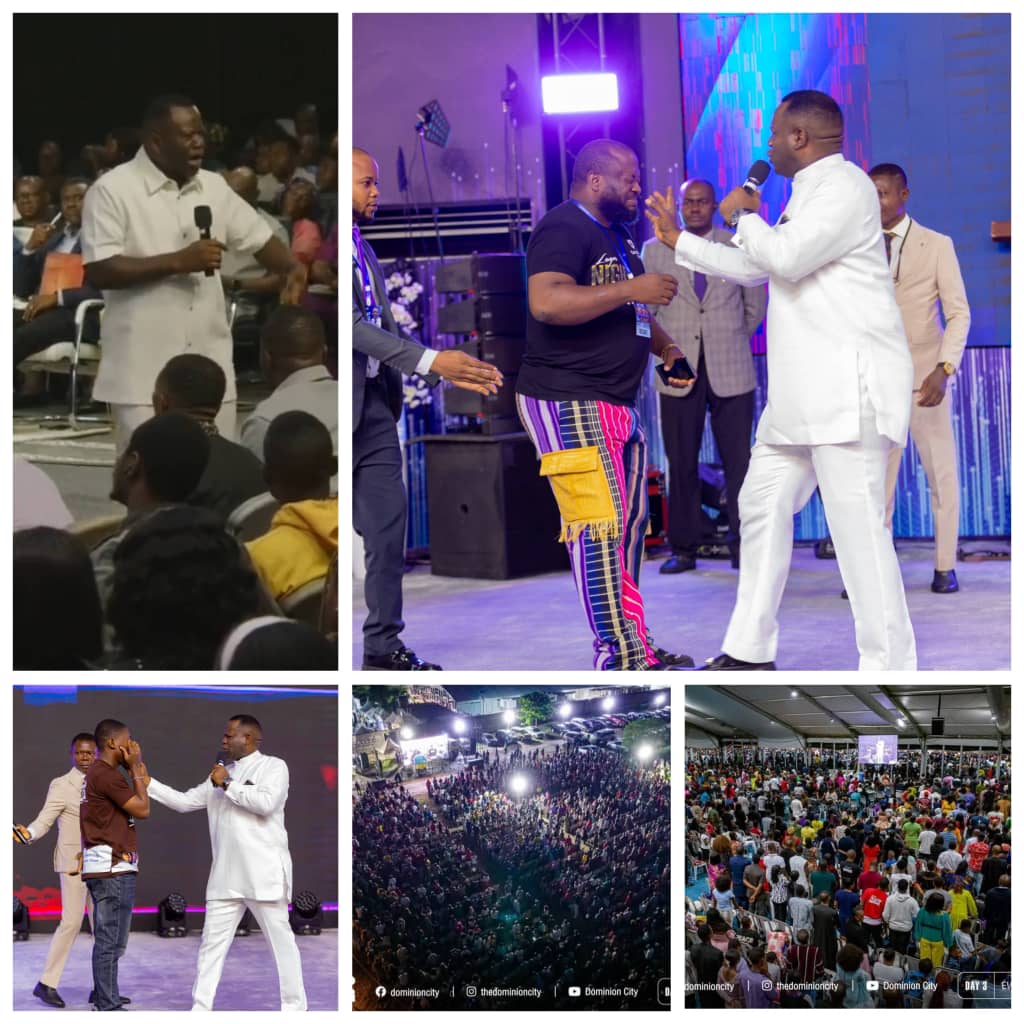
Revival Atmosphere as Dominion City Launches Night of Glory 2026.
Lagos – The atmosphere was charged with faith, worship, and expectancy as Dominion City’s Global Camp Meeting 2026 entered its peak with the first day of the “Night of Glory,” drawing thousands of worshippers to Lagos and Enugu in a powerful display of spiritual revival.
Held at the Golden Heart Place, Ajah, Lagos, the Friday evening gathering marked a significant moment in the ongoing six-day conference themed “Redigging the Wells of Our Fathers.” Participants from across Nigeria and beyond converged both physically and online, united by a shared hunger for divine encounter and transformation.
From the outset, the meeting was characterised by intense worship sessions led by gospel ministers, creating an atmosphere many attendees described as “tangible with God’s presence.” The night quickly transitioned into sessions of fervent prayers, prophetic ministrations, and teachings centred on restoration, healing, and spiritual awakening.
Presiding over the meeting, Dr. David Ogbueli, founder of Dominion City, charged participants to reconnect with foundational truths and spiritual disciplines necessary for personal and societal transformation. He emphasised that the “Night of Glory” was designed as a moment of divine visitation where destinies could be reshaped.
“As we redig the wells of our fathers, we are reconnecting with ancient graces and covenant realities that produce undeniable results,” he declared.
As the night unfolded, several remarkable testimonies were shared, reinforcing the theme of supernatural intervention. Among them was the case of a 14-year-old girl who was reportedly delivered from a seven-year struggle with pornography addiction, an experience that drew emotional reactions from the congregation.
Other testimonies included reported healing from cancer, recovery from a severe skin infection attributed to spiritual affliction, the healing of a heart-related condition, and three years of a non-menstrual period. Attendees also recounted instances of restored hearing and sight, with individuals testifying to improvements from partial deafness and blindness, among others.
Fathers of faith present were Barrister Emeka Nwankpa, Pastor Yemi Ayodele, Rev. Pade Tokun, Apostle Gbenga Adegbenro, Rev. Mike Adegbile, and others. Other Ministers present, including Pastor Dr. Charles Ndifon, Pastor Randy Mitchell, Apostle Ikechukwu Nnajiofor, and others, reinforced messages of faith and the power of God to intervene in human situations. They encouraged worshippers to remain steadfast and receptive, noting that miracles often spring from an atmosphere of unwavering belief.
Beyond the miraculous, the gathering also underscored a broader call to moral and spiritual renewal. Church leaders reiterated the need for believers to embody values that can positively influence society, especially in a time of perceived moral decline.
The “Night of Glory” is part of the larger Global Camp Meeting, which began on April 1 and will run through April 6, featuring daily teachings, leadership sessions, and specialized programmes for youths and families.
Organisers say expectations remain high for the second night, with many believing that the wave of miracles and transformation witnessed on the first night is only the beginning.
For many attendees, however, the message was clear beyond the signs and wonders; the true essence of the gathering lies in a renewed commitment to live transformed lives and impact society. //END.//
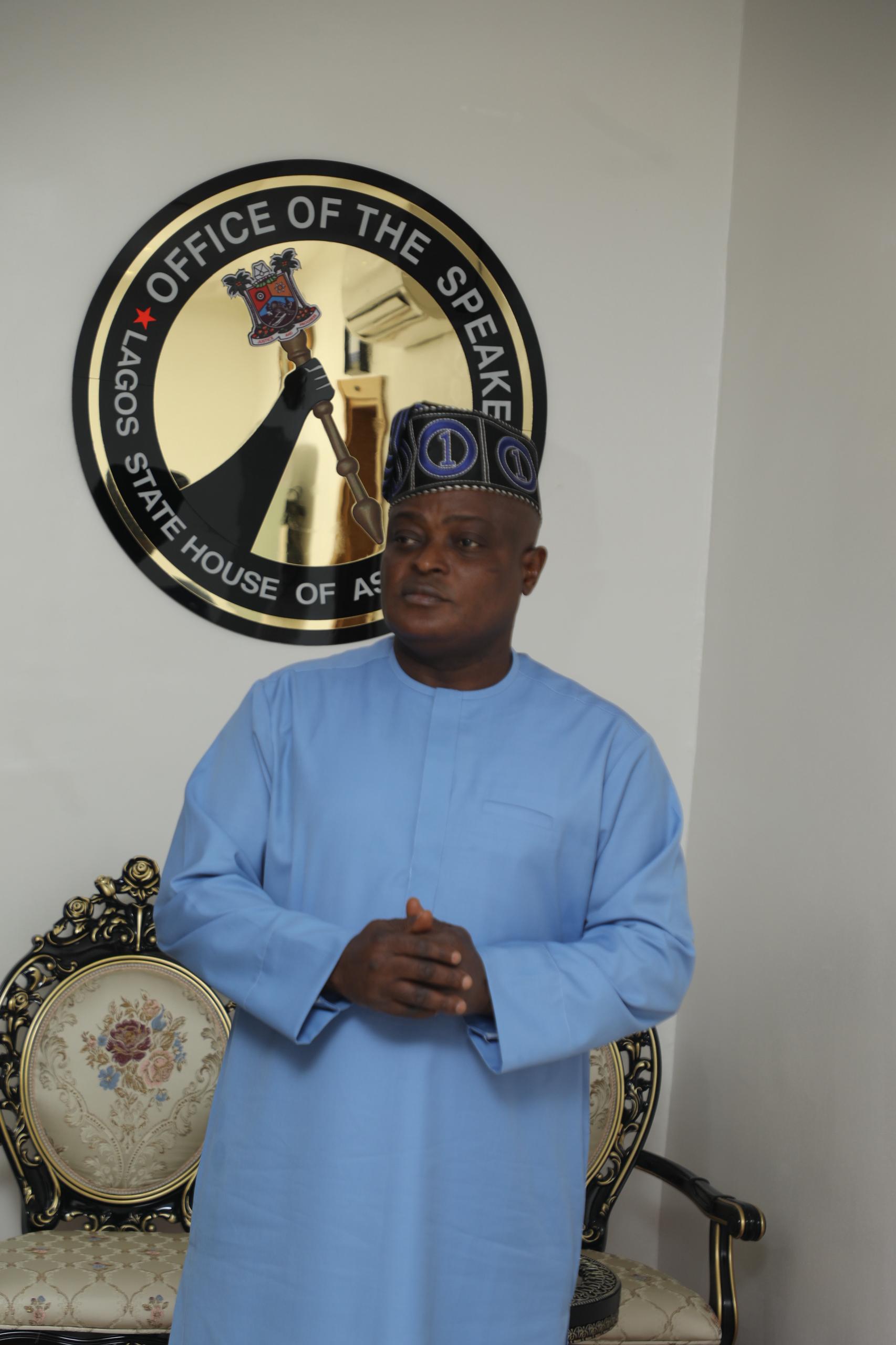
Easter: Obasa Urges Christians To Embrace Hope, Unity, Renewal
The Speaker of the Lagos State House of Assembly, Rt. Hon. Mudashiru Obasa, has congratulated Christian faithful in Lagos and across Nigeria on the celebration of Easter, urging them to draw strength from the lessons of Christ’s resurrection.
In his Easter message, released by his Chief Press Secretary, Mr. Dave Agboola, Obasa described the season as a reminder of victory over despair, renewal after trials, and the triumph of light over darkness. He noted that just as Christ overcame death, Nigeria can overcome its current challenges if citizens remain steadfast, prayerful, and committed to unity.
“Easter is a season of hope and renewal. As a nation, we face economic pressures and security concerns, but the resurrection teaches us that no situation is beyond redemption. Let us roll away the stones of division and despair, and work together for peace, justice, and prosperity,” the Speaker said.
He called on Lagosians to continue to show love and compassion to one another, stressing that collective effort is key to building a stronger Lagos and a better Nigeria.
Obasa prayed that the joy of Easter would fill homes with renewed faith and guide both leaders and citizens toward a brighter future.


-

 society7 months ago
Religion: Africa’s Oldest Weapon of Enslavement and the Forgotten Truth
-

 news4 months ago
WHO REALLY OWNS MONIEPOINT? The $290 Million Deal That Sold Nigeria’s Top Fintech to Foreign Interests
-

 society6 months ago
“You Are Never Without Help” – Pastor Gebhardt Berndt Inspires Hope Through Empower Church (Video)
-

 celebrity radar - gossips2 months ago
Dr. Chris Okafor Returns with Power and Fire of the Spirit -Mounts Grace Nation Altar with Fresh Anointing and Restoration Grace on February 1, 2026