
society
Corruption’s Cost: How Nigeria’s Low CPI Score Is Eating the Country Alive

Corruption’s Cost: How Nigeria’s Low CPI Score Is Eating the Country Alive.
By George Omagbemi Sylvester | SaharaWeeklyNG.com
“Score 26. Rank 140. The theft of trust that steals development.”
Nigeria’s corruption problem is no longer a bureaucratic scandal confined to courtrooms and press headlines but a national emergency undermining development, cleaving public trust and cavitating the very institutions meant to deliver health, education and climate resilience. Transparency International’s 2024. Corruption Perceptions Index (CPI) places Nigeria squarely among the world’s most challenged countries on corruption, a score of 26 and a global rank of 140 out of 180. Those numbers are not abstract; they are the mirror of policy failure and moral collapse.
The CPI’s global findings are stark, more than two-thirds of countries scored below 50 on a 0 (100 scale and the global average has stagnated at 43) a signal that the world’s anti-corruption effort is stalling at a perilous moment. Transparency International warns that corruption is now playing a “DEVASTATING ROLE” in the climate crisis and in eroding democratic accountability. This means stolen climate funds, hollowed-out public procurement and projects that never reach the people they were meant to protect.
What Nigeria’s CPI Score Really Means.
A score of 26 is not a statistical quirk, it is a diagnosis. It signals pervasive bribery, opaque contracts, weak oversight, politicized law enforcement and a public sector that too often functions for insiders rather than citizens. Corruption imposes costs that compound over time, foreign investors hesitate, domestic entrepreneurs pay bribes instead of hiring staff and poor communities watch roads and clinics rot while funds evaporate. Transparency International’s regional analysis shows Sub-Saharan Africa registering the lowest regional average, a sobering context for Nigeria’s slide.
While anti-graft agencies trumpet recoveries (Nigeria’s EFCC reported nearly $500 million recovered in the past year and thousands of convictions) these victories are tactical, not structural. Recoveries matter, but they do not substitute for transparent contracting systems, public asset registries and the political will to prosecute high-level abuse without selectivity. In other words, seizures do not equal reform.
The Human Toll: Corruption as a Development Kill-Switch.
Corruption is not a victimless crime. It steals from schools, hospitals and climate adaptation projects; it starves farmers of extension services and traps pensioners in unpaid entitlements. Transparency International’s CPI highlights a chilling linkage, countries most vulnerable to climate shocks often have the lowest CPI scores, which means climate funds and adaptation projects are especially at risk of diversion or mismanagement. This translates into lost crops, drowned communities and diminished resilience. When public contracts are awarded to cronies instead of competent providers, project costs balloon and quality collapses.
When licences and permits are sold rather than vetted, environmental and safety standards are ignored. The net result is a country whose public infrastructure (roads, power plants, water systems) is both underbuilt and overcharged.
Institutional Failure, Not Cultural Fate.
To be clear, CORRUPTION in Nigeria is not an inevitability or a CULTURAL TRUISM. It is the predictable outcome of weak institutions, perverse incentives and political tolerance for impunity. Countries that have broken the cycle did so by hardening institutions, independent judiciaries, transparent procurement platforms, beneficial ownership registries, open budget processes and empowered civil society and media. The CPI points to winners and losers, it is a map of policy choices not fate.
Nor is the remedy purely technocratic. It requires political courage. Leaders must stop treating anti-corruption as episodic theatre and start treating it as governance infrastructure. That means firing complicit officials, protecting whistleblowers and backing the rule of law even when it bites powerful interests.
What Must Be Done: A Roadmap for Real Reform.
Public procurement transparency, now. Every major contract (from road works to energy deals) should be published in machine-readable form with project milestones, beneficiaries and independent audits. Open contracting reduces discretion and makes corruption harder to hide.
Beneficial-ownership registries. Companies that win public contracts must reveal real owners. Shell companies and anonymous partners are corruption accelerants; removing their cover is non-negotiable.
Digitize revenues and payments. E-payments, digital tax collection and biometric cash transfers reduce leakages and create audit trails that are difficult for middlemen to manipulate.
Protect and fund anti-corruption institutions. Agencies that investigate and prosecute must be independent, well-resourced and insulated from political interference. Recoveries are hollow if investigations stop short of nets for the powerful.
Empower watchdogs. An independent press, active civil society and access to information laws turn sunlight into accountability. Citizens must be able to demand answers and see project outcomes.
Link climate finance to anti-corruption safeguards. Given Transparency International’s warning that climate finance is vulnerable, every adaptation and mitigation fund must incorporate anti-fraud safeguards, community oversight and transparent disbursement.
Voices That Matter.
Transparency International’s leadership left no ambiguity; François Valérian, Chair, warned that corruption “is a key cause of declining democracy, instability and human rights violations,” while Maíra Martini, CEO, urged urgent action to safeguard climate finance and rebuild trust. Their message is unambiguous and corruption is not a side issue, but a strategic threat to national survival.
Globally respected development economists echo the diagnosis: inclusive, accountable institutions are a prerequisite for sustainable growth. And from within Nigeria, citizens know the score, they see their taxes vanish, their courts stall and their future mortgaged to cronies.
The Takeaway.
Corruption is not an economic footnote; it is an ASSAULT on the social contract. Transparency International’s CPI 2024 is a blistering wake-up call, Nigeria’s score of 26 ought to be intolerable to every citizen and a political emergency to every leader. The country cannot borrow its way out of rotten governance; nor can it tinker at the margins while elites privatize public goods.
Reform is hard. It will be resisted by those who PROFIT from OPACITY. Though the alternative (continued decay of institutions, stolen climate funds, faltering public services and a citizenry losing faith in the state) is worse. Nigeria needs structural change, transparency baked into procurement, ownership revealed, institutions empowered and civic oversight strengthened.
As this CPI makes plain, the cost of inaction is not measured only in lost naira; it is measured in failed hospitals, empty classrooms, drowned farmlands and the slow erosion of democratic rule. That is a price Nigeria can no longer afford.





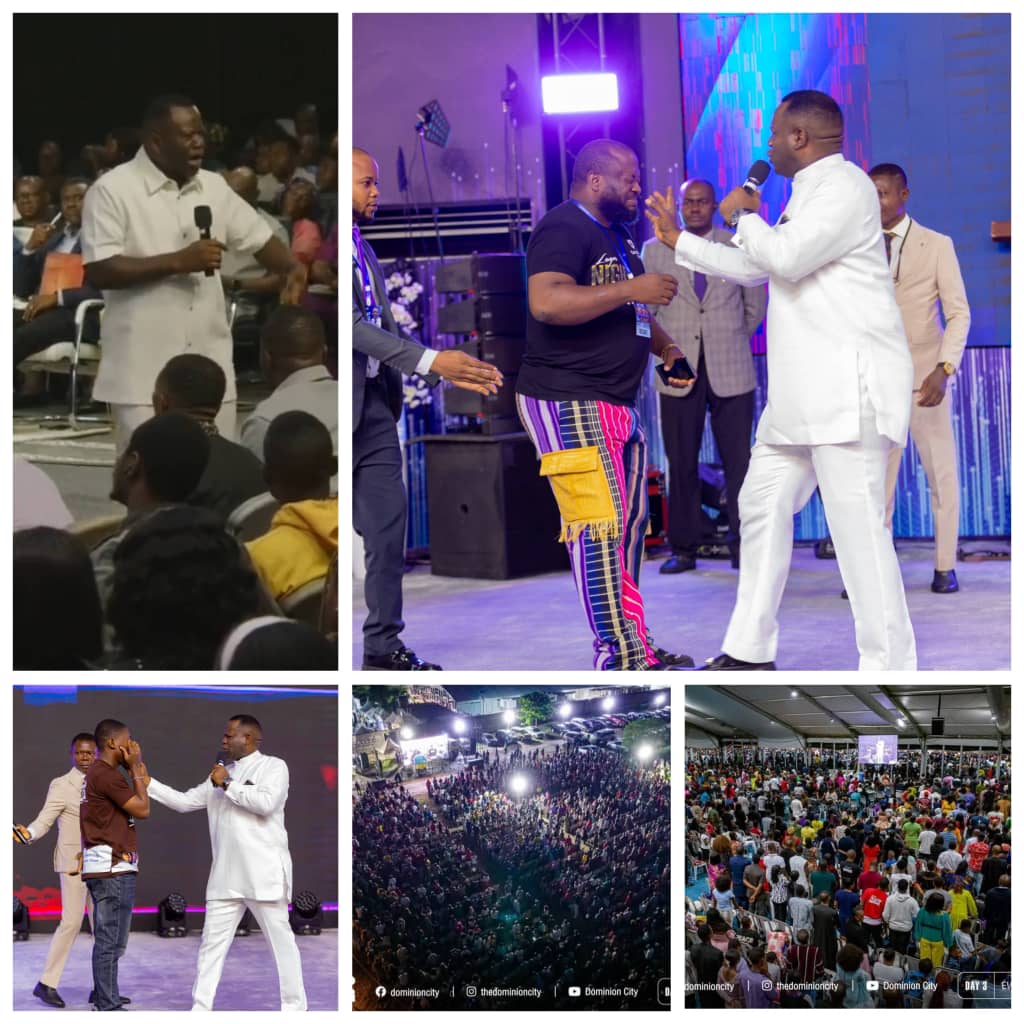
Miracles, Revival Mark Opening of Dominion City’s Night of Glory 2026
Lagos – The atmosphere was charged with faith, worship, and expectancy as Dominion City’s Global Camp Meeting 2026 entered its peak with the first day of the “Night of Glory,” drawing thousands of worshippers to Lagos and Enugu in a powerful display of spiritual revival.
Held at the Golden Heart Place, Ajah, Lagos, the Friday evening gathering marked a significant moment in the ongoing six-day conference themed “Redigging the Wells of Our Fathers.” Participants from across Nigeria and beyond converged both physically and online, united by a shared hunger for divine encounter and transformation.
From the outset, the meeting was characterised by intense worship sessions led by gospel ministers, creating an atmosphere many attendees described as “tangible with God’s presence.” The night quickly transitioned into sessions of fervent prayers, prophetic ministrations, and teachings centred on restoration, healing, and spiritual awakening.
Presiding over the meeting, Dr. David Ogbueli, founder of Dominion City, charged participants to reconnect with foundational truths and spiritual disciplines necessary for personal and societal transformation. He emphasised that the “Night of Glory” was designed as a moment of divine visitation where destinies could be reshaped.
“As we redig the wells of our fathers, we are reconnecting with ancient graces and covenant realities that produce undeniable results,” he declared.
As the night unfolded, several remarkable testimonies were shared, reinforcing the theme of supernatural intervention. Among them was the case of a 14-year-old girl who was reportedly delivered from a seven-year struggle with pornography addiction, an experience that drew emotional reactions from the congregation.
Other testimonies included reported healing from cancer, recovery from a severe skin infection attributed to spiritual affliction, the healing of a heart-related condition, and three years of a non-menstrual period. Attendees also recounted instances of restored hearing and sight, with individuals testifying to improvements from partial deafness and blindness, among others.
Fathers of faith present were Barrister Emeka Nwankpa, Pastor Yemi Ayodele, Rev. Pade Tokun, Apostle Gbenga Adegbenro, Rev. Mike Adegbile, and others. Other Ministers present, including Pastor Dr. Charles Ndifon, Pastor Randy Mitchell, Apostle Ikechukwu Nnajiofor, and others, reinforced messages of faith and the power of God to intervene in human situations. They encouraged worshippers to remain steadfast and receptive, noting that miracles often spring from an atmosphere of unwavering belief.
Beyond the miraculous, the gathering also underscored a broader call to moral and spiritual renewal. Church leaders reiterated the need for believers to embody values that can positively influence society, especially in a time of perceived moral decline.
The “Night of Glory” is part of the larger Global Camp Meeting, which began on April 1 and will run through April 6, featuring daily teachings, leadership sessions, and specialized programmes for youths and families.
Organisers say expectations remain high for the second night, with many believing that the wave of miracles and transformation witnessed on the first night is only the beginning.
For many attendees, however, the message was clear beyond the signs and wonders; the true essence of the gathering lies in a renewed commitment to live transformed lives and impact society. //END.//
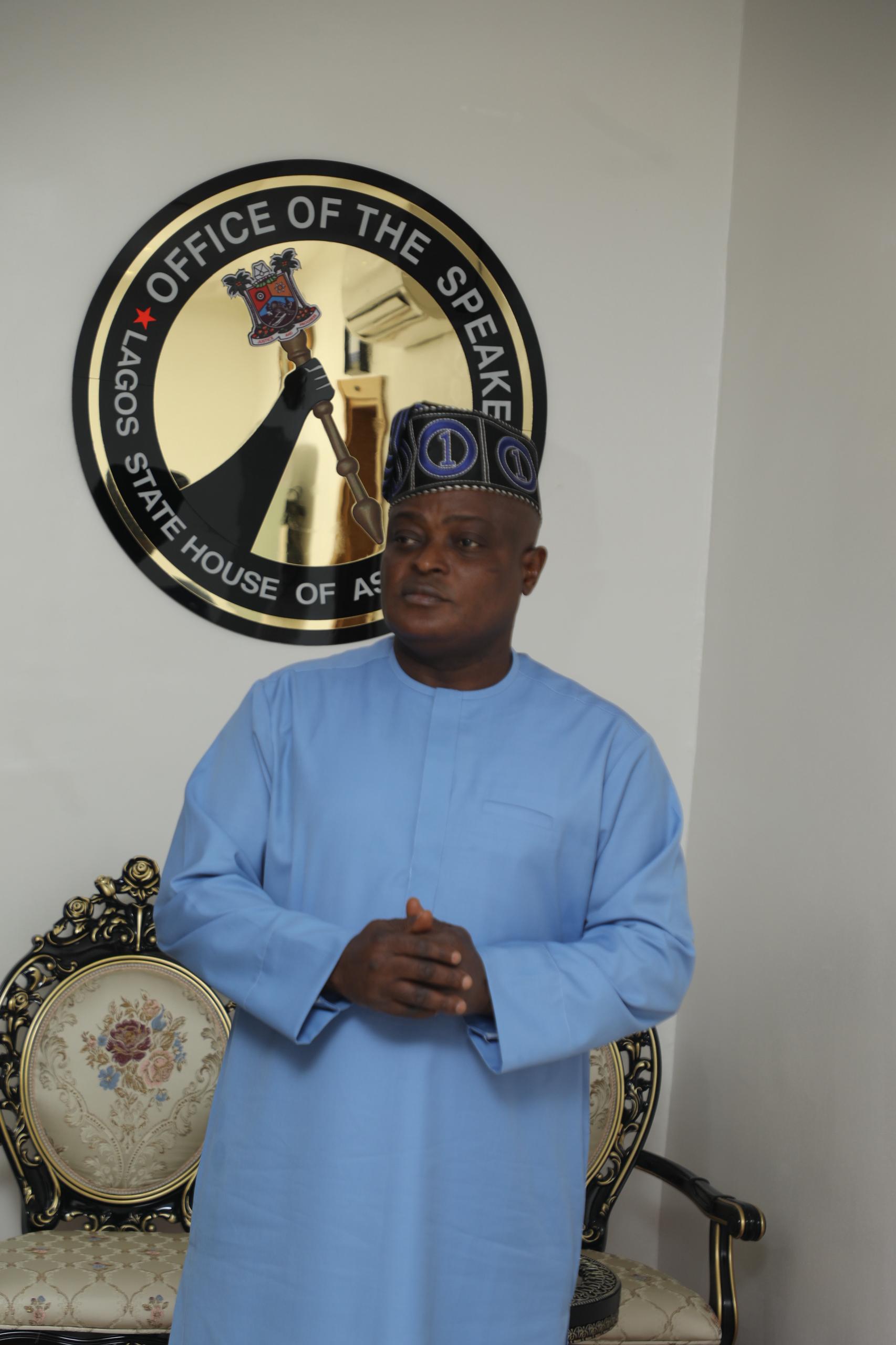
Easter: Obasa Urges Christians To Embrace Hope, Unity, Renewal
The Speaker of the Lagos State House of Assembly, Rt. Hon. Mudashiru Obasa, has congratulated Christian faithful in Lagos and across Nigeria on the celebration of Easter, urging them to draw strength from the lessons of Christ’s resurrection.
In his Easter message, released by his Chief Press Secretary, Mr. Dave Agboola, Obasa described the season as a reminder of victory over despair, renewal after trials, and the triumph of light over darkness. He noted that just as Christ overcame death, Nigeria can overcome its current challenges if citizens remain steadfast, prayerful, and committed to unity.
“Easter is a season of hope and renewal. As a nation, we face economic pressures and security concerns, but the resurrection teaches us that no situation is beyond redemption. Let us roll away the stones of division and despair, and work together for peace, justice, and prosperity,” the Speaker said.
He called on Lagosians to continue to show love and compassion to one another, stressing that collective effort is key to building a stronger Lagos and a better Nigeria.
Obasa prayed that the joy of Easter would fill homes with renewed faith and guide both leaders and citizens toward a brighter future.

*PDP CHIEFTAIN, ONIRETI RESIGNS FROM PARTY, CITES PERSONAL REFLECTION
A former House of Representatives candidate, Olufemi Onireti, has formally resigned his membership of the Peoples Democratic Party (PDP) in Oyo State.
His resignation was conveyed in a letter addressed to the Chairman of PDP Osupa Ward 9, Ogbomoso North Local Government, on Thursday.
Onireti described the decision as a difficult but necessary step after what he termed a period of “deep personal reflection.”
“I hereby formally resign my membership of the Peoples Democratic Party (PDP), effective immediately,” he wrote.
He acknowledged his years of active involvement in the party, including contesting for the House of Representatives in the last general election, noting that the PDP had offered him a platform for political participation, service, and growth.
Despite his exit, Onireti expressed appreciation to party leaders and members for the support he enjoyed over the years.
“I remain grateful for the opportunity to serve and for the relationships and experiences I gained during my time in the party.
I wish the party well in its future endeavours,” he added.
The development is expected to generate discussions within the Ogbomoso North political circle, as observers await his next political move.


-

 society7 months ago
Religion: Africa’s Oldest Weapon of Enslavement and the Forgotten Truth
-

 news4 months ago
WHO REALLY OWNS MONIEPOINT? The $290 Million Deal That Sold Nigeria’s Top Fintech to Foreign Interests
-

 society6 months ago
“You Are Never Without Help” – Pastor Gebhardt Berndt Inspires Hope Through Empower Church (Video)
-

 celebrity radar - gossips2 months ago
Dr. Chris Okafor Returns with Power and Fire of the Spirit -Mounts Grace Nation Altar with Fresh Anointing and Restoration Grace on February 1, 2026