
Business
Couple torture, chain 11-Year old girl for playing with Neighbours in Ogun



The police in Ogun State have arrested a couple, Chioma and Innocent Anozie, for allegedly torturing an 11-year-old girl, Oluchi, in Ebute, in the Ibafo area of Ogun State.
The couple allegedly flogged the victim with ropes, starved her of food, and locked her up in a toilet for two days for wanting to play with other children in the neighbourhood.
Some residents, who found her crying in the toilet, reportedly called the attention of some soldiers in the community.
But reprieve did not come Oluchi’s way until the intervention of our correspondent who alerted the Ogun State Police Command Headquarters.
Some policemen from the Ibafo division, led by the Divisional Crime Officer, later arrived at the scene and rescued the victim.
PUNCH Metro gathered that the primary four pupil started living with the couple about four years ago when she was brought from her hometown in Owerri, Imo State.
However, she was said to have been subjected to different forms of inhuman treatment by the couple who had yet to have a child.
Most residents of Ebute Road, Ibafo, who spoke with our correspondent on Friday, said Chioma, in particular, always tortured the victim for every offence.
The landlady of their house, Mrs. Florence Sanusi, noted that cries of the victim always filled the compound each time Chioma assaulted her.
She said, “They have been living in my house since December 2014. I, however, observed that she (Chioma) always flogged the girl. There was a day it rained heavily and I was hearing the girl’s cry. When I queried her husband, he said nothing was happening.
“But when I saw the girl the next day, her body was full of torture marks. Her eye was also swollen. She told me her guardian flogged her with cables.
“Recently, I heard her crying again and when I could not bear it, I warned them to stop the abuse or I would evict them from my house. Because of my reaction, they instructed the girl that whenever they flogged her, she must not cry. So, I started to hear muffled groans.
“I was fed up with their action and was planning to issue them a notice to quit this morning (Friday) when I was informed that they had locked the girl in the toilet without food for the past two days. When I talked to the girl, she said her madam said she would be in the toilet for 21 days and that was why I raised the alarm.”
PUNCH Metro learnt that some soldiers, who got the information, visited the house and interviewed the victim.
After getting her details, the soldiers reportedly called a relative who brought her from the village, asking if she was aware of the maltreatment.
The relative in turn called the couple to query them on the incident.
A resident, who did not want to be identified, said the soldiers reported at the Ibafo Police Station and returned with two policemen.
He said, “When the policemen came, they called the woman’s husband on the telephone and he warned them not to break his door. The policemen did not stay long before leaving the girl in the toilet.”
The residents contacted PUNCH Metro shortly afterwards and our correspondent arrived at the scene around 6pm. Oluchi was still in the toilet.
Our correspondent spoke with the Ogun State Police Public Relations Officer, Abimbola Oyeyemi, who assured that the policemen would return to the scene.
While waiting for the policemen, Oluchi appealed to our correspondent for help, saying she wanted to return to her parents.
She said, “My parents have seven children and I am their fifth child. All my siblings are living with other distant relatives. My madam (Chioma) is the daughter of my father’s sister .
“When I was brought from the village four years ago, she said I would be cleaning the house and washing clothes and dishes. I am supposed to be in Junior Secondary School 2, but she put me in primary 4.
“Before we came to Ibafo, her husband used to allow me to play freely. But since we relocated here, she stopped me from going out. She said all the people in this house are criminals and they can use me for money ritual. She always beats me with ropes and cables.
“I have been inside the toilet since yesterday morning (Thursday). She locked me up because I went to take a story book in her room. She said I was lying and that I actually went to look for keys to open the door and go out.
“She used celotape to seal my mouth and chained my legs. She flogged me with ropes and a stick. She said I would serve 21 punishments. I only took garri on Thursday morning.”
PUNCH Metro observed that the victim had a Nokia phone with which the relative earlier called by the soldiers was communicating with her.
She was reportedly instructed to break the toilet door open and get spare keys to access another exit door from the three-bedroomed flat.
While our correspondent and other residents awaited the arrival of the police, a resident observed that the victim had disappeared from the toilet’s window which faced the passageway.
She was spotted tiptoeing out through the exit door at the backyard and was held.
Just then, the relative called the telephone line again to know if she had left the vicinity.
Our correspondent intercepted the phone and put the call on speaker.
“Don’t talk to anybody. Did you hear me? Oya move fast,” the woman, later identified as Victoria, said.
At that point, policemen from the Ibafo division arrived and took the frightened girl into custody.
A cleric, who stayed in the house, Segun Oshoffa, said he had foreseen the situation getting to a crisis level, adding that the couple didn’t heed his advice.
He said, “I observed that the couple needed a child badly. I told them that if they wanted God to answer their prayers, they should stop assaulting the girl.
“Both husband and wife changed for about three days. But afterwards, they continued with the assault.
“I called them the second time and urged them to return the girl to her parents if they could not take care of her. But they didn’t listen to me.”
The Ogun State Police Public Relations Officer, Oyeyemi, confirmed the arrest of the suspects to our correspondent on Sunday.
He promised to issue a statement on the incident detailing the suspects’ statements to the police.





Fidelity Bank grows gross earnings by 38% to N434.95b in Q1
Fidelity Bank Plc recorded 37.9 per cent growth in gross earnings to N434.95 billion in first quarter 2026 as the international commercial bank continued to expand its core banking market share.
Interim report and accounts of Fidelity Bank for the three months ended March 31, 2026 released at the Nigerian Exchange (NGX) showed that gross earnings rose from N315.42 billion in first quarter 20025 to N434.95 billion in first quarter 2026, representing an increase of 37.9 per cent.
The top-line performance was driven by impressive growth in the bank’s core business operations with interest incomes rising by 22.8 per cent to N314.48 billion in first quarter 2026 as against N256.10 billion in first quarter 2025.
With net interest income at N180.97 billion, the bank closed the period with profit before tax of N92.48 billion. After taxes, net profit stood at N74.47 billion for the three-month period. Earnings per share remained high at N5.69, underlining the capacity of the bank to reward its shareholders.
The balance sheet of the bank also emerged stronger. Total assets crossed the N11 trillion mark to N11.35 trillion by March 2026 compared with N10.46 trillion recorded in December 2025. Customers’ deposits increased from N6.89 trillion to N7.38 trillion. Total equity rode on the back of earnings growth to a 27.5 per cent increase from N1.09 trillion in December 2025 to N1.39 trillion by March 2026.
The first quarter 2026 results further consolidated the strong earnings outlook of the bank, which had successfully completed its recapitalisation amidst impressive earnings performance in 2025.
Fidelity Bank had recorded double-digit growths in interest and non-interest incomes as well as key balance sheet items during the year ended December 31, 2025.
The audited report showed that gross earnings rose from N1.04 trillion in 2024 to N1.52 trillion in 2025, an increase of 45.6 per cent. Interest and similar incomes had grown by 38.7 per cent from N803.1 billion in 2024 to N1.11 trillion in 2025. Fees and commission incomes also rose by 44.7 per cent from N78.4 billion to N113.4 billion. The bank recorded net profit after tax of N242.4 billion in 2025.
The bank’s balance sheet emerged stronger with total assets rising by 18.6 per cent to N10.46 trillion in 2025 as against N8.82 trillion in 2024. Customer deposits increased by 16.1 per cent from N5.94 trillion to N6.89 trillion, reflecting continued franchise strength and an improved funding profile. Net loans and advances meanwhile declined by 2.4 per cent to N4.28 trillion in 2025 as against N4.39 trillion in 2024, attributable to customers paying down on their mature obligations.
The bank had in 2025 strengthened its capital position, with eligible capital rising to N561 billion, above the regulatory minimum of N500 billion for banks with international authorisation. In addition, capital adequacy had remained robust, with Capital Adequacy Ratio of 30.94 per cent by December 2025 as against 23.47 per cent by December 2024.
Managing Director, Fidelity Bank Plc, Dr. Nneka Onyeali-Ikpe, said the first quarter 2026 results reinforced the bank’s strong and resilient business model.
She noted that with the remarkable success of its recapitalisation programme and continuing expansion, Fidelity Bank has entered a new era of growth and impressive returns.
“We are on a stronger footing and confident that we will set new growth records that are reflective of our legacy and the future we are working on,” Onyeali-Ikpe said.
Business
Dangote Refinery Ends Nigeria’s Era of Fuel Import Dependence, Boosts GDP, FX Earnings — EIU
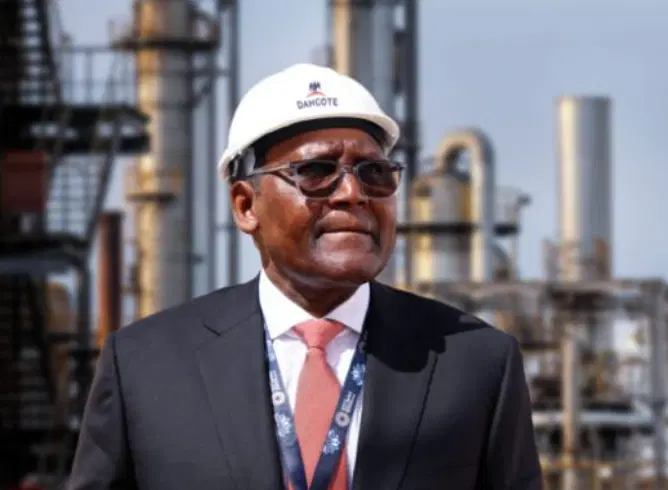
Dangote Refinery Ends Nigeria’s Era of Fuel Import Dependence, Boosts GDP, FX Earnings — EIU
The operational ramp up of the 650,000 barrels per day Dangote Petroleum Refinery & Petrochemicals is fundamentally reshaping Nigeria’s downstream oil sector, significantly reducing the country’s dependence on imported refined petroleum products and strengthening its external position, according to the Economist Intelligence Unit (EIU).
In its latest assessment on Nigeria’s fuel market and regulatory environment, the EIU said the refinery has already transformed a sector that was previously characterised by heavy reliance on imported fuel despite Nigeria being Africa’s largest crude oil producer. The report noted that the refinery met nearly 80 per cent of domestic petrol demand in April and produced enough volumes to satisfy local consumption requirements as operations approached full capacity.
The EIU described Nigeria’s downstream petroleum sector before the refinery as “long dysfunctional”, noting that the country had remained almost entirely dependent on costly imported fuel while producing nearly 1.5 million barrels of crude oil daily.
According to the report, the emergence of the refinery has reduced import dependence, improved domestic fuel availability and strengthened Nigeria’s balance of payments position through lower import demand and rising exports of refined petroleum products.
“The gradual ramp up of the 650,000 barrel/day Dangote refinery since May 2023 has transformed Nigeria’s long dysfunctional downstream sector,” the report stated. “The country’s main refineries, all state owned, had been inoperative for years and Nigeria was almost entirely reliant on costly imported fuel.”
The research and analysis division of The Economist Group, London added that the refinery’s attainment of full operational capacity and its planned expansion would further support Nigeria’s economic growth and foreign exchange earnings over the medium term.
“Meanwhile, the attainment of full capacity at, and an increase in exports from, the Dangote refinery will support real GDP growth and foreign exchange earnings in 2026 and 2027 and beyond, as a planned doubling of the plant’s output comes on stream around the end of the decade,” it added.
Industry analysts said the refinery is increasingly positioning Nigeria as an emerging refining and export hub, altering energy trade flows across Africa and reducing the vulnerability associated with fuel import dependence.
The EIU noted that the refinery’s expansion has coincided with major reforms in Nigeria’s downstream sector, including the removal of fuel subsidies and the introduction of market driven pricing mechanisms.
The report, however, said the transition from a state dominated fuel import structure to large scale domestic refining has triggered resistance from interests linked to the old import regime.
The latest tensions emerged following the decision by the Nigerian Midstream and Downstream Petroleum Regulatory Authority to relax restrictions on petrol imports despite the refinery’s growing capacity to meet domestic demand.
Dangote Industries subsequently initiated legal action, arguing that continued import approvals undermine domestic refining investments and conflict with the objectives of the Petroleum Industry Act, which seeks to encourage local refining capacity and reduce import dependence.
Analysts noted that the availability of large-scale domestic refining capacity has improved Nigeria’s energy security and reduced exposure to external supply shocks and foreign exchange volatility.
The Centre for the Promotion of Private Enterprise also cautioned against unrestrained importation of petroleum products, warning that such a policy could weaken Nigeria’s industrialisation drive and discourage investments in domestic refining.
Chief Executive Officer of CPPE, Muda Yusuf, said continued dependence on imported fuel had historically contributed to pressure on foreign reserves, exchange rate instability and fiscal leakages.
The refinery’s growing impact is also being reflected in Nigeria’s broader macroeconomic indicators. Earlier this month, S&P Global Ratings cited increased domestic refining capacity and rising hydrocarbon exports among the major factors supporting Nigeria’s sovereign credit rating upgrade – the first in 14 years.
Beyond Nigeria, analysts said the refinery is increasingly being viewed as a strategic industrial asset for Africa, where many countries remain heavily dependent on imported fuel despite rising demand for transportation, manufacturing, and power generation.
Business
BREAKING: Court Dismisses $19.6 Million Claim Against NNPCL — Rules Contract Scope Cannot Be Changed Orally
BREAKING: Court Dismisses $19.6 Million Claim Against NNPCL — Rules Contract Scope Cannot Be Changed Orally
In a landmark ruling on Friday, May 22, 2026, the Federal Capital Territory High Court in Abuja threw out a $19.6 million lawsuit filed by Alternate Dimensions Ventures Ltd against the Nigerian National Petroleum Company Limited (NNPCL), affirming a key legal principle: a written contract cannot be expanded through oral agreements or conduct.
Alternate Dimensions had sought $19,600,000 in professional fees, claiming the scope of its Direct Sale, Direct Purchase (DSDP e-pro) contract with NNPCL was orally expanded. Represented by counsel Patrick Peter, the firm argued it was entitled to the revised sum for services rendered under the alleged new terms.
But NNPCL, through its lawyer Ituah Imhanze of KENNA LP, pushed back sharply, arguing that parties are bound exclusively by the clear terms of their written agreement. Imhanze contended that without any written amendment, the claim was legally unsound, and the court agreed.
Delivering judgment, Justice Hamza Mu’azu upheld NNPCL’s defense, stating that the contract was unambiguous and that no evidence was adduced during the trial, which supported the alleged scope expansion. The court further found that NNPCL fully complied with all contractual terms and committed no breach.
Dismissing the suit as meritless, Justice Mu’azu reinforced the doctrine of sanctity of contract: any amendment to a written agreement must be express, unequivocal, and documented, not implied or verbal.
The ruling spares NNPCL from the S19.6 million claim and also a floodgate of similar potential liabilities.


- African Development Bank 2026 Annual Meetings: Governors Endorse the Four Cardinal Points and Call for Accelerated Reform of Africa’s Financial Architecture May 31, 2026
- Annual Meetings (AM) 2026: The African Development Bank Group’s Rome Process/Mattei Plan Financing Facility announces Clean Cooking Program at 2026 Annual Meetings May 31, 2026
- Economic Community of West African States (ECOWAS) has Deployed a Technical Mission to Observe the Legislative and Local Elections of May 31, 2026 in Guinea May 31, 2026
- President Herminie Attends Seychelles Football Federation (SFF) Cup Final and Presents Trophy to Bazar Brothers FC May 31, 2026
- ‘You are not alone’: World Health Organization (WHO) chief vows to stand with Democratic Republic of the Congo (DR Congo) through Ebola outbreak May 31, 2026
- United Arab Emirates (UAE) Expresses Solidarity with Kenya and Conveys Condolences over Victims of Girls’ School Dormitory Fire May 31, 2026
- Pitcher Awards Announces 2026 Winners, Marking a Landmark Year for Pan‑African Creativity May 30, 2026
- Ghana Commemorates 78th International Day of United Nations Peacekeepers May 30, 2026
- South Africa: President Ramaphosa receives second interim report of Madlanga Commission May 30, 2026
- Asmara Marathon 2026 to be held May 30, 2026
- African Development Bank 2026 Annual Meetings: Governors Endorse the Four Cardinal Points and Call for Accelerated Reform of Africa’s Financial Architecture May 31, 2026
- Annual Meetings (AM) 2026: The African Development Bank Group’s Rome Process/Mattei Plan Financing Facility announces Clean Cooking Program at 2026 Annual Meetings May 31, 2026
- Economic Community of West African States (ECOWAS) has Deployed a Technical Mission to Observe the Legislative and Local Elections of May 31, 2026 in Guinea May 31, 2026
- President Herminie Attends Seychelles Football Federation (SFF) Cup Final and Presents Trophy to Bazar Brothers FC May 31, 2026
- ‘You are not alone’: World Health Organization (WHO) chief vows to stand with Democratic Republic of the Congo (DR Congo) through Ebola outbreak May 31, 2026
- United Arab Emirates (UAE) Expresses Solidarity with Kenya and Conveys Condolences over Victims of Girls’ School Dormitory Fire May 31, 2026
- Pitcher Awards Announces 2026 Winners, Marking a Landmark Year for Pan‑African Creativity May 30, 2026
-

 news6 months ago
WHO REALLY OWNS MONIEPOINT? The $290 Million Deal That Sold Nigeria’s Top Fintech to Foreign Interests
-

 society4 weeks ago
SOCIAL MEDIA IS NOT A BATTLEFIELD COMMAND – WHY THE NIGERIAN ARMY’S ACTION AGAINST JUSTICE CRACK IS A NATIONAL SECURITY IMPERATIVE
-

 celebrity radar - gossips4 months ago
Dr. Chris Okafor Returns with Power and Fire of the Spirit -Mounts Grace Nation Altar with Fresh Anointing and Restoration Grace on February 1, 2026
-

 celebrity radar - gossips6 months ago
Prophet Kingsley Aitafo Releases 2026 Prophecy: ‘Nigeria Will Rise, but the World Must Prepare for Turbulence’
You must be logged in to post a comment Login
You must log in to post a comment.