
society
Crushed by Corruption: Nigeria’s Journey from Wealth to Worthlessness.” (A Nation that eats its own currency/future)

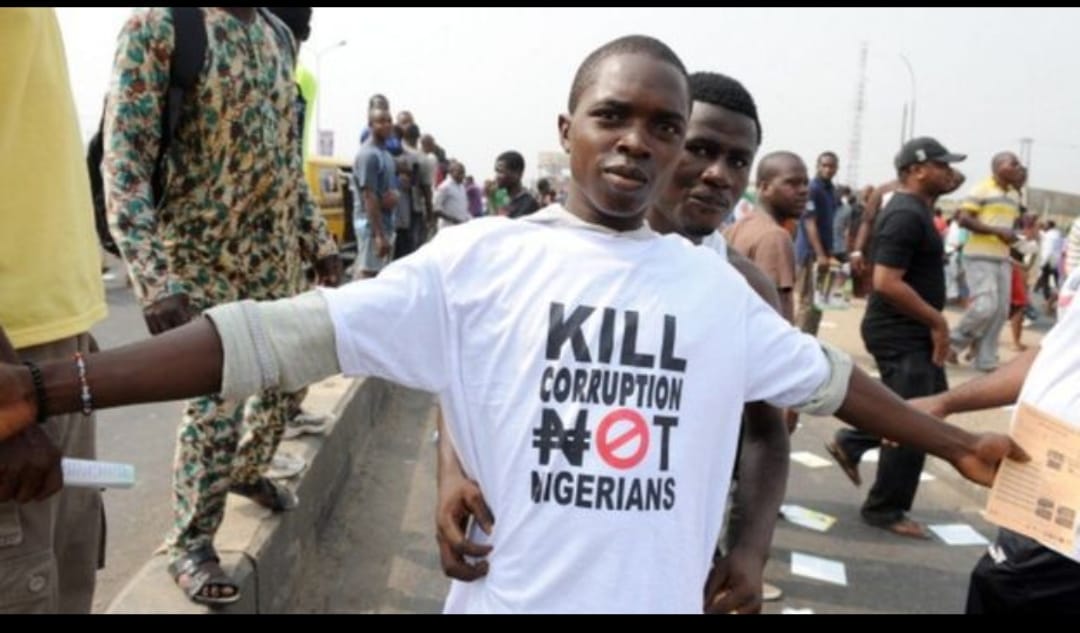
Crushed by Corruption: Nigeria’s Journey from Wealth to Worthlessness.” (A Nation that eats its own currency/future)
By George Omagbemi Sylvester | Published by SaharaWeeklyNG.com
Not too long ago, the Nigerian Naira was stronger than the American Dollar and British Pound. In 1973, one Naira was equivalent to $1.52, and by 1980, Nigeria was not just Africa’s largest oil producer but one of the world’s most promising developing economies. Fast-forward to 2025, one Dollar is now nearly ₦1,700, while the Pound hovers around ₦2,200; this is not just a currency collapse, it’s NATIONAL Disgrace. The question on everyone’s lips is: How did we fall so TRAGICALLY and so IRREPARABLY? The answer lies in decades of economic mismanagement, political irresponsibility, unbridled corruption and systemic illiteracy masquerading as leadership. Nigeria’s fall did not happen overnight; it was a slow-motion car crash and we were all passengers in a bus driven by blindfolded leaders who ignored every warning sign on the ROAD to RUIN.
The Beginning of the Fall: 1980’s Structural Adjustment Betrayal. Nigeria’s economic nosedive began with the Structural Adjustment Programme (SAP) introduced by General Ibrahim Babangida in 1986 under the advice of the International Monetary Fund (IMF) and the World Bank. SAP was packaged as a reform to diversify the economy and reduce Nigeria’s reliance on oil. Instead, it devalued the Naira, dismantled local industries and opened the floodgates for imported goods, killing our textile, automobile and manufacturing sectors. Economist Dr. Reuben Ifeanyi noted in a 2023 interview: “SAP was the poison that killed Nigeria’s economy slowly, but made Nigeria addicted to imports, destroyed its productive base and left the Naira to bleed.” That was the beginning of the economic coup against the Naira. A policy meant to save the economy instead became the scaffold for its execution.
The Curse of Oil and the Culture of Looting. While oil should have been our blessing, it became our biggest curse; rather than use oil revenue to invest in infrastructure, education and industry like Norway or the UAE, Nigerian leaders looted the wealth. Between 1999 and 2023, Nigeria reportedly earned over $1.2 trillion from crude oil exports, yet over 133 million Nigerians live in multidimensional poverty. Where did the money go? Into private pockets. STOLEN. Hidden in offshore accounts. Lavishly spent on frivolities and elections. Now, we have a debt profile of over ₦97 trillion, with debt servicing consuming more than 90% of federal revenue in some years. A Nigerian development economist Kingsley Moghalu said: “The problem is not that Nigeria lacks resources; the problem is that Nigeria lacks resourceful leadership.”
The Politicization of the Economy. Every four years, elections are turned into a bazaar, politicians exchange RICE, SALT, plus LIES for votes. Power is rarely attained through merit but through ETHNIC-ALLIANCES and GODFATHERISM. No one asks about economic plans; no one debates foreign policy. All that matters is “NA OUR TURN.” This political recklessness has resulted in nearly 70% of the federal budget being recurrent expenditure (salaries, overheads and allowances) while capital expenditure continues to shrink. We wonder why our roads are death traps and our schools look like poultry farms. Political commentator Aisha Yesufu put it plainly: “You cannot keep electing criminals and expect saints to govern you. Nigeria’s problem is the normalization of nonsense.”
The Currency of Shame: Why the Naira Crashed?Beyond SAP and bad leadership, the collapse of the Naira stems from a deadly combination:
DOLLARIZATION of the ECONOMY. Everyone wants to save in dollars, trade in dollars, rent houses in dollars; the Naira has been demoted even within its own borders.
OVER-RELIANCE on IMPORTS. From toothpicks to fuel, Nigeria imports everything. Our import bill exceeds $70 billion annually, while exports (outside oil) are negligible.
CORRUPTION in FOREX-ALLOCATION. Under Buhari and Tinubu, powerful cronies accessed dollars at official rates and resold at black market prices; a criminal enterprise masquerading as policy.
NO PRODUCTION-BASE. You cannot defend a currency you don’t produce anything with; the Central Bank has become a prayer camp, hoping divine intervention will fix a secular mess.
According to Bloomberg’s African Economic Review 2024, “Nigeria has the weakest performing currency in Africa, despite being one of the continent’s largest economies. The cause is not global economic trends but domestic dysfunction.”

Africa No Longer Sees Us As The Giant. The phrase “Giant of Africa” used to command respect. Today, it elicits sarcasm and laughter; even smaller countries like Rwanda and Botswana outperform Nigeria in governance, healthcare, education and per capita income. South Africa used to look up to Nigeria politically; now, they deport our citizens like flies and Ghana, once a recipient of Nigerian aid, now closes its borders to our goods. To make it worse, we are now the world capital of youth migration, with over 2 million Nigerians fleeing through “JAPA” routes in just the last 5 years. As Chimamanda Ngozi Adichie stated in a recent lecture: “A country that treats its young people as disposable should not expect loyalty, it should expect flight.” Nigeria is no longer the pride of Africa, but a cautionary tale. We are mocked for our electricity failures, laughed at for our elections and pitied for our economic tragedy.
The Tinubu Administration: From Hope to Horror. The 2023 elections offered a flicker of hope; that light has dimmed into darkness. President Bola Ahmed Tinubu, with his so-called “RENEWED HOPE AGENDA,” has worsened the pain. Removing fuel subsidies without building refineries, floating the naira without stabilizing reserves and appointing political loyalists into economic roles has backfired. Today, Nigeria faces:
A. 50% FOOD-INFLATION.
B. Over 45% YOUTH-UNEMPLOYMENT.
C. INSECURITY from ALL-DIRECTIONS.
D. Highest OUT-OF-SCHOOL CHILDREN in the WORLD. (over 20 million)

We are a nation ADRIFT. A failed giant on LIFE-SUPPORT. The world has stopped waiting for us to catch up.
Final Thoughts: Where Do We Go From Here?
We cannot fix Nigeria without confronting the truth: Our failure is man-made. Our leaders are the architects of our downfall and until we prioritize COMPETENCE over CONNECTION, VISION over TRIBE and IDEAS over MONEY, we will keep digging our own grave. ILLITERACY, both INTELLECTUAL and MORAL, must be fought with everything we have. We need an economic war cabinet not RECYCLED ministers. We need to invest in agro-processing, ICT and manufacturing. We must cut the cost of governance, fix our education system and restore trust in public institutions. David Hundeyin, investigative journalist and public policy analyst said: “Nigeria is a failed state not because it lacks potential, but because it is actively structured to prevent progress.” Unless we change that leadership culture (not just who is in power, but how they govern) the Naira will fall further, Africa will move on without us and the “GIANT of AFRICA” will be nothing more than a dusty relic in old history books.

Written by George Omagbemi Sylvester
Published by SaharaWeeklyNG.com




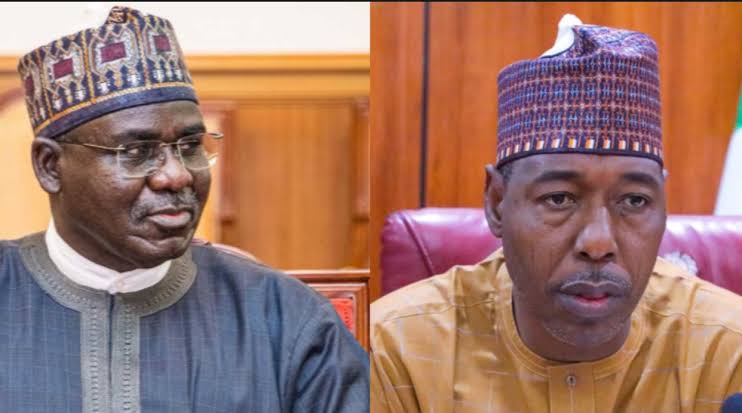
TY BURATAI HUMANITY CARE FOUNDATION COMMENDS GOVERNOR ZULUM FOR HELPING MILITARY FAMILIES
The TY Buratai Humanity Care Foundation has commended Borno State Governor Babagana Umara Zulum for his generous donation of ₦150 million to the families of three military officers who were tragically killed in recent attacks. Each family received ₦50 million as part of the state’s continued commitment to supporting fallen heroes and wounded personnel involved in counter-insurgency operations.
The commendation was contained in a statement signed by the foundation’s chairman, Ibrahim Dahiru Danfulani Sadaukin Garkuwan Keffi/Betara Biu, and made available to the press.
The foundation expressed gratitude for the governor’s compassionate gesture, which included personal visits to the families of the late Lieutenant Colonels Umar Farouq, Salihu Iliyasu, and Aliyu Saidu Paiko in Abuja, Niger, and Kano States. During the visits, Governor Zulum offered his condolences and praised the service, sacrifice, and patriotism of the fallen officers.
The foundation’s Grand Patron, His Excellency, Lieutenant General Tukur Yusufu Buratai, CFR (Rtd), personally commended the governor’s dedication to improving the lives of Borno State residents. He also extended his condolences to the families of the officers and soldiers who made the ultimate sacrifice in service to the nation.
During his visits, Governor Zulum reaffirmed his administration’s commitment to supporting bereaved families, which includes offering scholarships to the orphaned children of fallen personnel. He pledged to extend similar visits to other affected families, underscoring a compassionate approach to addressing the needs of those who have suffered in the line of duty.
society
Queen Amb Dr. Nwamaka Cordelia Anyatonwu Appointed Minister of Humanitarian, Culture, and Kingdom Affairs, United Kingdom of Atlantis
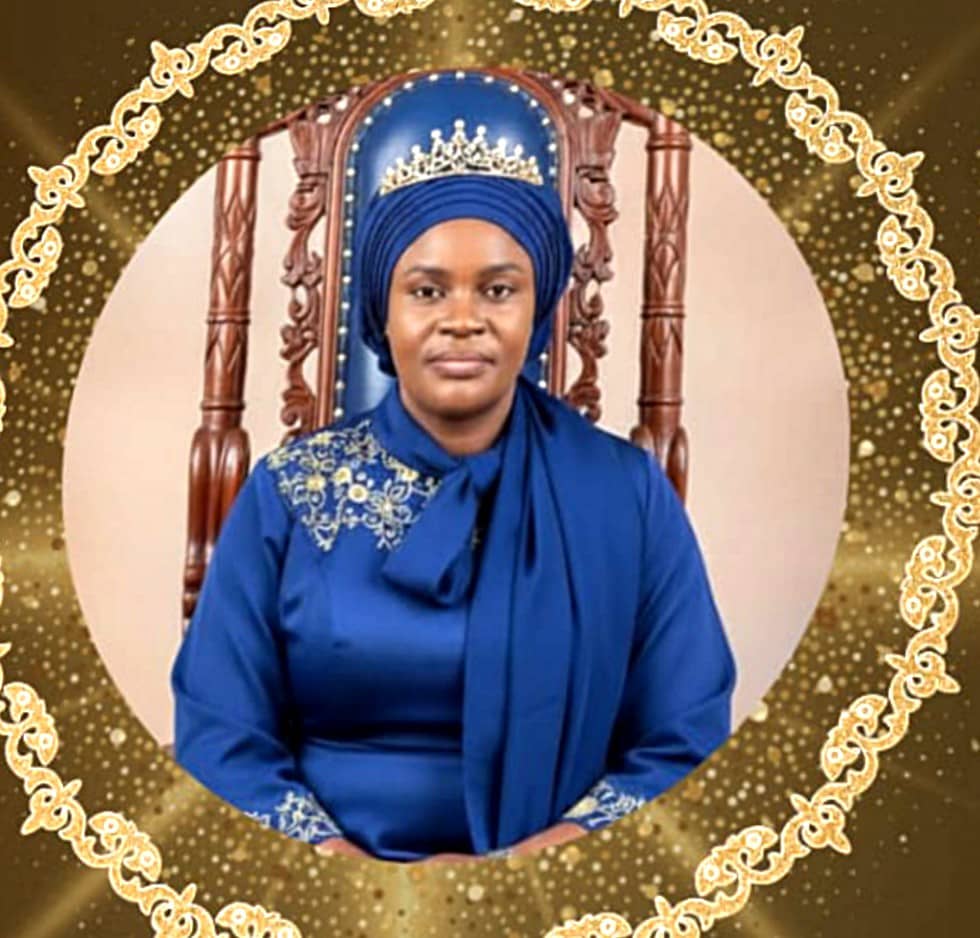
*Queen Amb Dr. Nwamaka Cordelia Anyatonwu Appointed Minister of Humanitarian, Culture, and Kingdom Affairs, United Kingdom of Atlantis
Her Majesty Queen Amb Dr. Nwamaka Cordelia Anyatonwu, Queen of the Aches Empire under the jurisdiction of the United Kingdom of Atlantis (UKA), has been appointed as the Minister of Humanitarian, Culture, and Kingdom Affairs, effective immediately.
This appointment comes as the UKA takes decisive steps to strengthen its humanitarian efforts and protect its citizens from unauthorized activities. In light of recent developments, the UKA has issued an official public disclaimer cautioning citizens, followers, and the general public about the activities of individuals promoting and operating a coin or platform not officially recognized by the Atlantian Gold Coin (ATC). This follows the hijacking of the 5 billion humanitarian project, a move that has been met with concern and condemnation from the international community.
As the newly appointed Minister, Queen Amb Dr. Anyatonwu has announced that all matters pertaining to the 5 billion humanitarian project in UKA should be directed to her office. This includes the newly captured NGOs, which are now required to report to the Office of Humanitarian Affairs, ensuring transparency and accountability in the management of humanitarian resources.
“We are committed to transparency and accountability in our humanitarian efforts,” said Queen Amb Dr. Anyatonwu. “We urge all stakeholders to work with us to ensure the success of our initiatives and protect our citizens from unauthorized activities. We will not tolerate any form of exploitation or mismanagement of humanitarian funds, and we will take all necessary measures to ensure that those responsible are held accountable.”
The UKA has assured its citizens and the international community that it is taking all necessary measures to recover the hijacked funds and bring the perpetrators to justice. The appointment of Queen Amb Dr. Anyatonwu is seen as a significant step towards achieving this goal and ensuring that humanitarian efforts are aligned with the UKA’s values and principles.
For more information. Please contact the Office of the Minister of Humanitarian, Culture and Kingdom Affairs.
*About the United Kingdom of Atlantis*
The United Kingdom of Atlantis is a sovereign nation committed to promoting peace, prosperity, and humanitarian values. The UKA is dedicated to working with international partners to address global challenges and improve the lives of its citizens and people around the world.
NASRE: Building A Safety Net For Nigeria’s Journalists
At a time when Nigeria’s media industry is strained by economic uncertainty, job instability, and shrinking newsroom resources, the Nigerian Association of Social and Resourceful Editors (NASRE) is redefining professional solidarity. More than a network of editors, it is emerging as a critical support system for journalists navigating an increasingly precarious landscape.
Founded on the principles of welfare, solidarity, and professional growth, NASRE has positioned itself as a responsive and forward-looking body within the media ecosystem. While many professional associations remain focused on advocacy and training, NASRE distinguishes itself by combining these roles with direct and practical support for journalists and their families.
At the core of its mission is a clear proposition that no journalist should be abandoned in times of need. Through financial assistance, targeted outreach, and sustained engagement, the association has supported members facing hardship, as well as widows and families of deceased practitioners. These largely understated interventions have steadily earned NASRE credibility and respect across the industry.
The organisation’s approach reflects a keen awareness of the pressures confronting media professionals, including irregular pay, job insecurity, and limited institutional backing. In such an environment, NASRE’s welfare initiatives are not merely charitable, they are essential.
Beyond welfare, the association is investing in professional resilience. Through collaboration, networking, and knowledge-sharing platforms, it is equipping editors and practitioners to remain competitive in a rapidly evolving digital media space, where adaptability is no longer optional.
Headquartered in Lagos, NASRE continues to broaden its reach, attracting a growing membership united by the need for a more responsive and supportive professional community. Its expansion signals a shift in expectations within the industry, away from symbolic affiliations towards institutions that deliver measurable value.
For many observers, NASRE represents a necessary evolution, a professional body anchored not just in ideals, but in impact. By combining empathy with structure, it offers a model of what media associations can become in challenging times.
As the industry continues to evolve, organisations like NASRE may prove indispensable. In a profession devoted to telling society’s stories, it is ensuring that the storytellers themselves are not left behind.


-

 society6 months ago
Religion: Africa’s Oldest Weapon of Enslavement and the Forgotten Truth
-

 news4 months ago
WHO REALLY OWNS MONIEPOINT? The $290 Million Deal That Sold Nigeria’s Top Fintech to Foreign Interests
-

 society6 months ago
“You Are Never Without Help” – Pastor Gebhardt Berndt Inspires Hope Through Empower Church (Video)
-

 celebrity radar - gossips2 months ago
Dr. Chris Okafor Returns with Power and Fire of the Spirit -Mounts Grace Nation Altar with Fresh Anointing and Restoration Grace on February 1, 2026