
society
Cyber-Armageddon at Our Fingertips: Apple & Google Rush Emergency Updates to Thwart Sophisticated Zero-Day Hacking Campaign

Cyber-Armageddon at Our Fingertips: Apple & Google Rush Emergency Updates to Thwart Sophisticated Zero-Day Hacking Campaign.
By George Omagbemi Sylvester | Published by SaharaWeeklyNG.com
“A Chilling Exposé of Unprecedented Cyber Threats, State-Linked Exploitation and the Battle for Digital Sovereignty.”
In a dramatic and sobering turn of events this December 2025, two of the world’s most revered technology giants (Apple and Google) have been forced to issue emergency cybersecurity updates in response to a sophisticated, actively exploited hacking campaign that has shaken the global digital ecosystem to its core. This episode not only reveals the raw power of advanced cyber adversaries but also lays bare the fragility of modern digital life, reminding every connected individual that no device is truly immune without vigilant defense.

At the heart of this crisis are zero-day vulnerabilities and security flaws unknown to software makers at the time of exploitation, leaving users defenseless until a fix arrives. These zero-day bugs are among the most dangerous security threats in existence precisely because they offer no warning; they represent blind spots in our digital armor that sophisticated attackers can and do exploit without limitation.
The Crisis Unfolds: Emergency Response from Silicon Valley. In mid-December 2025, Google released urgent patches for a series of critical security flaws in its Chrome browser—one of which was already being exploited in the wild by malicious actors before the patch could even be completed. The company’s initial decision to withhold details underscores the seriousness of the incident, a rare move reflecting an ongoing investigation into exploit activity.
Shortly thereafter, Google clarified that the vulnerability was discovered by Apple’s Security Engineering team working in collaboration with Google’s Threat Analysis Group (TAG)—a specialized unit renowned for tracking government-linked threat actors and mercenary spyware sellers. This collaboration alone signals the gravity of the threat, suggesting state-level resources or highly resourced private actors were involved.

Almost simultaneously, Apple unleashed a sweeping suite of emergency updates for devices across its ecosystem—iPhones, iPads, Macs, Apple Watches, Apple TV, Vision Pro headsets and Safari browsers. In formal advisories, Apple acknowledged that two zero-day vulnerabilities “may have been exploited in an extremely sophisticated attack against specific targeted individuals” on devices running older versions of iOS prior to iOS 26. This is the same phrasing Apple historically has used to signal confirmed real-world exploitation, often in espionage campaigns.
Understanding Zero-Day Vulnerabilities: The Invisible Threat. To grasp the magnitude of this crisis, one must understand what zero-day vulnerabilities represent in cybersecurity. A zero-day flaw is a software defect unknown to developers at the time hackers discover and exploit it, leaving developers with “zero days” to prepare a defense before exploitation begins. This creates a perfect storm for attackers: no signature exists in security tools, no patch is available, and unsuspecting users carry on with business as usual.
Security expert Bruce Schneier (renowned cryptographer and cybersecurity authority) has described zero-days as “the crown jewels of cyberattackers”, because they can be weaponized to bypass traditional cyber defenses, compromise sensitive data, and infiltrate personal and institutional devices without detection. His words resonate profoundly in the context of the present crisis.
The Engine Behind the Attacks: WebKit and Memory Corruption Flaws.
In Apple’s case, the two patched vulnerabilities (CVE-2025-43529 and CVE-2025-14174) both reside in WebKit, the web rendering engine that drives not just Safari but all iOS web content across apps. These flaws include a use-after-free condition and a memory corruption issue, both classic exploits that allow attackers to execute arbitrary code simply by tricking a device into processing malicious web content.

What makes these bugs particularly dangerous is that WebKit is central to web content across platforms, meaning that merely visiting a malicious website could be enough to trigger an exploit—without any explicit user action. This bears eerie resemblance to historical spyware campaigns such as Pegasus, a notorious Israeli-made spyware capable of remote infection via zero-click exploits and extensive privacy invasion.
Coordinated Industry Action: Google and Apple Unite. The fact that Google’s Threat Analysis Group and Apple’s security team independently discovered and jointly addressed these flaws is notable. TAG is known for its focus on sophisticated attackers, including state actors and commercial spyware firms. Its involvement strongly suggests the hacking campaign was no ordinary cybercrime operation, but part of a highly targeted exploitation effort.
One of the bugs patched in Google Chrome (tracked internally as bug 466192044) was believed to allow memory corruption and arbitrary code execution. Google advised users to update to the latest safe release immediately to mitigate these risks.
Who Was Targeted? The Fog of Attribution. Neither Apple nor Google disclosed the identities or numbers of affected users. This ambiguity is typical in zero-day remediation: until patches are deployed, revealing too much can empower attackers to adjust tactics and expand operations. However, the explicit language used by Apple (that the vulnerabilities may have been exploited against specific targeted individuals) strongly implies high-value targets were in the crosshairs.
Past incidents reinforce this narrative. In previous years, zero-day exploits have been linked to espionage campaigns targeting journalists, diplomats, political activists, and human rights defenders—often leveraging spyware tools marketed by commercial vendors but deployed with the backing or tacit approval of nation-state actors.
The Broader Implications: A World Under Digital Siege
This combined emergency response from Apple and Google serves as a stark reminder: our digital infrastructures remain vulnerable to determined adversaries. The increasing sophistication of these attacks underscores a broader global trend—cyber threat actors, whether state-sponsored or commercial, are continually refining their tools, exploiting undisclosed defects, and penetrating even the most “secure” platforms.
Cybersecurity researcher Bruce Schneier has observed that “security is a process, not a product,” emphasizing that no system is ever perfectly secure. This holds true even for systems held up as gold standards in security engineering. The present crisis confirms that vigilance, rapid response, and constant iteration of defenses are essential in a world where attackers innovate faster than we often realize.
What Individuals and Institutions Must Do Now
The immediate lesson from this cybersecurity drama is clear: update all affected devices without delay. Emergency patches, while disruptive, represent the frontline defense against exploitation. Users should ensure their Apple devices are updated to iOS 26.2 (or the latest versions for Macs, Watches, and Vision Pro), and all Chrome installations are updated to the versions containing the latest security fixes.
Beyond patching, cybersecurity professionals stress the importance of multi-layered defenses, including:
Regular software updates
Endpoint protection and threat detection tools
User education on social engineering and phishing avoidance
Network segmentation in enterprise environments

Closing Reflection: A Call to Digital Arms
The recent emergency updates from Apple and Google are more than just technical bulletins; they are a clarion call to the global community about the evolving nature of cyber threats. In an age where smartphones and broadband are extensions of our very identities, these vulnerabilities strike at the heart of personal and organizational security.
Cyber threats will continue to evolve as long as we innovate, but so too must our defenses. The strategy must be relentless preparation, robust response, and continuous improvement—transforming each crisis into a catalyst for stronger, more resilient digital ecosystems.
As the world watches and patches roll out, one lesson stands above all: cybersecurity is not merely an IT issue, it is a societal imperative.




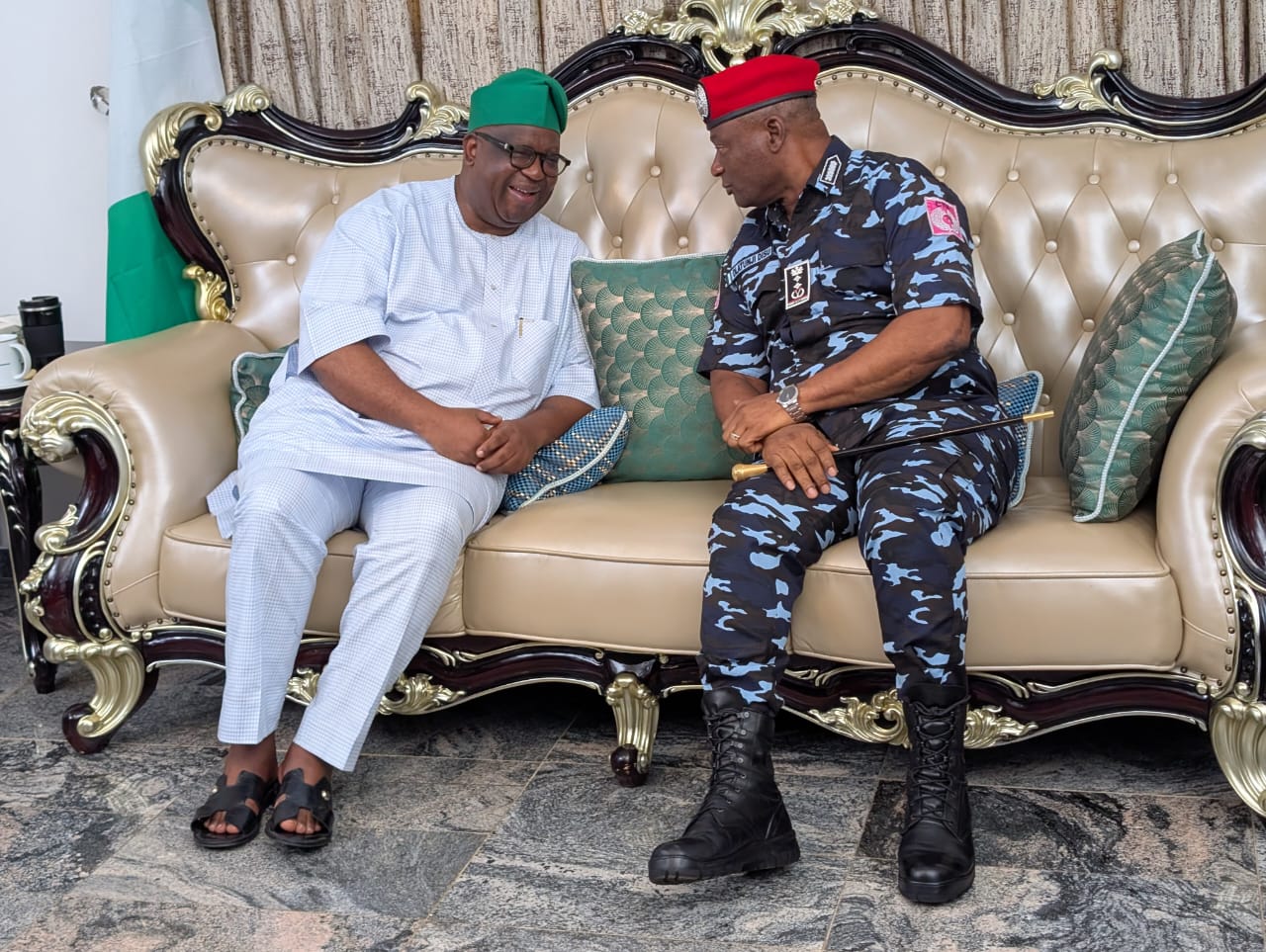
IGP Disu Visits Plateau, Orders Tactical Deployment To Reinforce Security
The Inspector General of Police, Olatunji Disu, on Thursday paid a working visit to Plateau State following recent unrest, holding strategic talks with Governor Caleb Muftwang on measures to strengthen security and prevent further disturbances.
As part of immediate steps to stabilise the situation, the police chief authorised the deployment of specialised tactical units to support officers already on ground across affected areas.
Governor Muftwang commended the swift intervention of the police leadership, praising the dedication and professionalism of security personnel working to restore calm. He also acknowledged the efforts of mobile police officers and lauded the leadership of the state’s Commissioner of Police, Bassey Ewah.
Both the Nigeria Police Force and the Plateau State Government reaffirmed their commitment to safeguarding lives and property, stressing that enhanced collaboration remains key to restoring lasting peace in Plateau State, popularly known as the Home of Peace and Tourism.


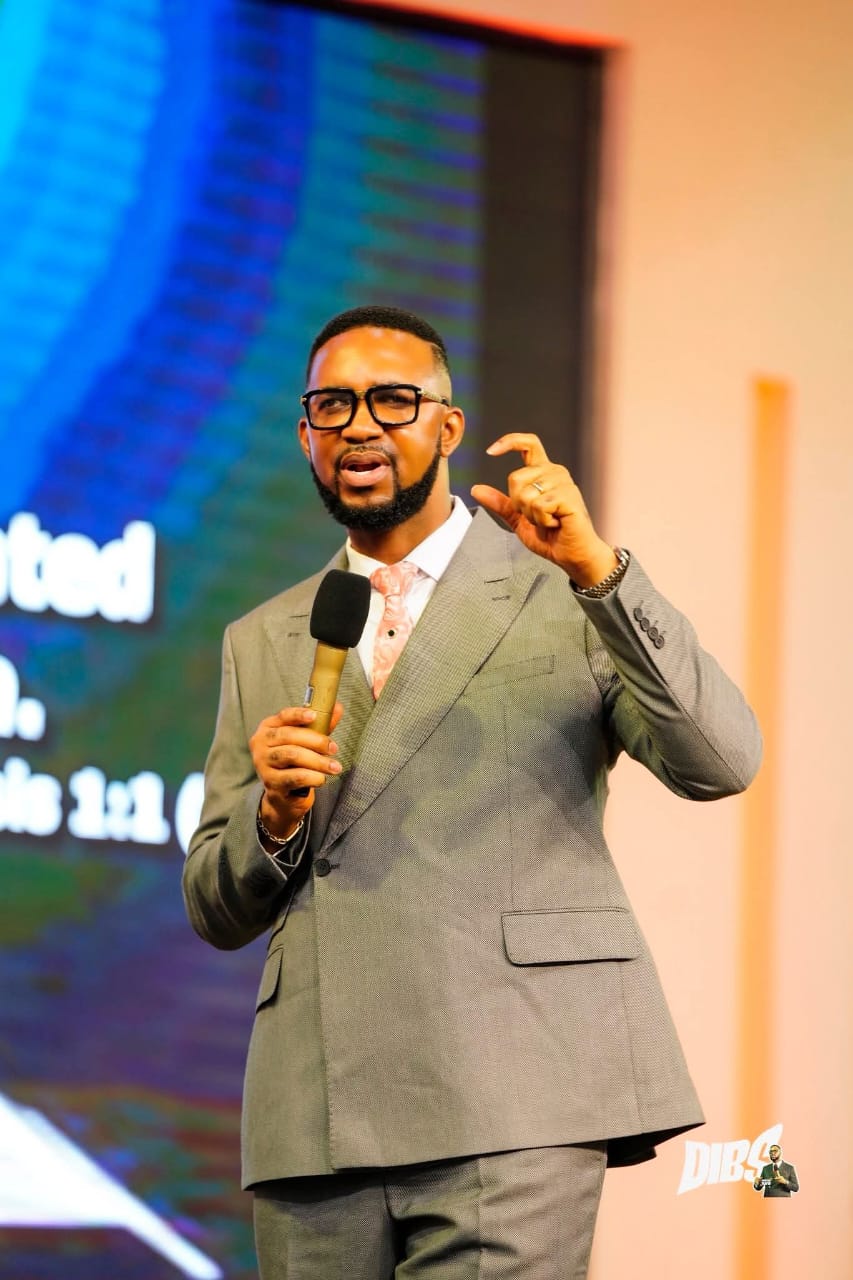
Grace Nation Worldwide: A Living Reality – Dr. Chris Okafor
……“Miracles, Healing, and Deliverance Overflow at Grace Nation Services”
The Grace Nation midweek Prophetic Healing, Deliverance, and Solutions (PHDS) Service on 2nd April 2026 at the international headquarters in Ojodu Berger, Lagos, was a spectacular display of God’s power, marked by miracles, healing, and deliverance.
The God of Grace Nation continues to demonstrate His authority, breaking strongholds, healing the sick, restoring lost glory, and providing solutions to every problem presented at His altar.
Testimonies of God’s Power
One woman, previously diagnosed with a terminal condition and slated for a ₦4.5 million surgery due to inability to excrete, was prayed for by the Generational Prophet, Christopher Okafor, just a week after visiting the church. Declaring healing within 24 hours, she returned to testify to God’s miraculous intervention.
Another pregnant woman, whose baby was bridged and at risk, was located and prayed for. She returned to service with confirmation that her child is now well-positioned for delivery. Similarly, a woman booked for a C-section due to an overdue and poorly positioned pregnancy testified during the service that her baby is now properly positioned, ready for birth.
These testimonies underscore the truth: what God cannot do does not exist. Grace Nation has entered a new level of spiritual authority, and with faith, believers are witnessing the impossible become reality.
God Works by Principle, Not Gossip
In his sermon, Dr. Okafor emphasized that God does not operate on superstition, gossip, or social media pressures. His work is grounded in His Word, and it is through adherence to His principles that Grace Nation continues to flourish.
The Generational Prophet stressed that to enjoy divine blessings and fruitfulness, believers must remain connected to God’s Word, faithfully serve Him, and ignore distractions or side-talks. Focused commitment to God’s service guarantees alignment with His miraculous power.
Join the Movement
Grace Nation Worldwide is open for all who desire a life transformed by divine intervention. Weekly services include:
Sunday Service: 7:00 AM
Grace Nation Island Service (Ogombo): Wednesday, 5:00 PM
Midweek PHDS Service: Thursday, 7:00 AM
Attending these services under the ministry of the Generational Prophet ensures encounters with God’s supernatural power, life-changing miracles, and lasting breakthroughs.
Grace Nation Worldwide is not just a church—it is a reality where faith meets the supernatural.
By Sunday Adeyemi


society
From Broadcast to Spiritual Renaissance: The Journey of Alọba A. Orisabimbola Ifatomi, Creator of ÒRÌṢÀTV

From Broadcast to Spiritual Renaissance:
The Journey of Alọba A. Orisabimbola Ifatomi, Creator of ÒRÌṢÀTV
In a time when African stories are often misrepresented or diluted, a seasoned voice in Nigeria’s media and creative industry is stepping forward with a bold vision to reclaim, preserve and project the depth of African spirituality through a new wave of cinematic storytelling powered by technology.
Alọba Adewunmi, a respected broadcaster, journalist and creative professional, is the mind behind ÒRÌṢÀTV a groundbreaking platform using Artificial Intelligence (AI) cinematic production to tell authentic Yoruba stories rooted in cosmology, spirituality and cultural heritage.
ÒRÌṢÀTV is not just a channel it is a destination to experience “The Beginning”, a Yoruba cosmology-based AI cinematic series that explores the origin of life and existence through an African lens.
A Career Built on Media Excellence
With years of experience across broadcast and print media, Alọba Adewunmi has established himself as a dynamic storyteller and cultural voice.
He has worked with several notable platforms including OSBC, Orisun FM, Yotomi Cable, Okin FM, Midland FM, Delta Cable, Akede Oodua Publications and Akede Africa.
His professional journey includes:
– Reporter at Alariya Oodua
– Editor at Gbajumo Online Magazine
– General Editor at Akede Africa ( a bilingual news magazine)
Through these roles, he has contributed significantly to journalism, cultural reporting, politics, crime and entertainment.
A Multifaceted Creative Force
Beyond journalism, Alọba Adewunmi’s creative footprint extends deeply into film and storytelling.
He is not just a performer, but a creative architect behind the scenes, serving as:
– A Continuity Director
– Continuity Director of the home video “Tobi (Forgiveness)”, produced by Kola Adeyemo
– A Story Writer and Dialogue Director
– A Scriptwriter
He has also contributed to several home video productions from the late 1990s through the early 2000s, reflecting a long-standing presence in Yoruba film storytelling.
A Spiritual Path and Cultural Mission
Beyond media and film, his journey is rooted in a deeper spiritual calling.
Alọba Adewunmi is a traditional priest, teacher and herbal medicine practitioner, dedicated to the preservation and practice of Yoruba spirituality.
His temple, Obàtálá Alábãlàse Temple of Purity, stands as a sacred center for purity, healing and spiritual guidance.
The Vision Behind ÒRÌṢÀTV
ÒRÌṢÀTV is more than a content platform, it is a cultural revival movement powered by AI-driven cinematic storytelling.
Through this innovative approach, the platform explores:
– The origin of existence
– The roles of divinities
– The structure of human destiny
– The spiritual laws governing life
The debut episode, “The Birth of Ilẹ̀ Àwọn Alààyè”,( Command of Creation ) marks the beginning of the series “The Beginning”.
Blending mythology, spirituality and AI-powered visuals, ÒRÌṢÀTV offers a unique experience that is both educational and deeply immersive.
A Mission Beyond Entertainment
For Alọba Adewunmi, this project goes far beyond entertainment.
It is a mission to preserve indigenous knowledge, educate future generations, correct misconceptions about African spirituality and restore pride in African identity.
The Man Behind the Vision
Despite his wide experience and creative influence, Alọba Adewunmi remains a naturally private and introverted individual.
He is known more for his work than for public appearances moving quietly between his professional responsibilities and personal space.
Rather than seeking the spotlight, he has consistently chosen to let his talent, creativity and impact speak for him.
Those who encounter his work or collaborate with him understand the depth he brings a reminder that true substance is not always loud and presence is not always public.
Looking Ahead
With Episode 1 now released, anticipation continues to build as “THE BEGINNING” prepares to explore deeper aspects of creation, human destiny and spiritual alignment.
This is not just a project it is a legacy unfolding through culture, spirituality, and innovation.
Watch Now
THE BEGINNING


Episode 1
The Birth of Ilẹ̀ Àwọn” Command of Creation)
Available on YouTube.
Media & Contact
For interviews, features and collaborations:
08125883088
© 2026 ÒRÌṢÀTV
All Rights Reserved


-

 society6 months ago
Religion: Africa’s Oldest Weapon of Enslavement and the Forgotten Truth
-

 news4 months ago
WHO REALLY OWNS MONIEPOINT? The $290 Million Deal That Sold Nigeria’s Top Fintech to Foreign Interests
-

 society6 months ago
“You Are Never Without Help” – Pastor Gebhardt Berndt Inspires Hope Through Empower Church (Video)
-

 celebrity radar - gossips2 months ago
Dr. Chris Okafor Returns with Power and Fire of the Spirit -Mounts Grace Nation Altar with Fresh Anointing and Restoration Grace on February 1, 2026