
society
Dangote Refinery: Economic Rights Activists Condemn NUPENG, NLC over Threats of Nationwide Strike to Cripple Economic Life


Dangote Refinery: Economic Rights Activists Condemn NUPENG, NLC over Threats of Nationwide Strike to Cripple Economic Life
The Economic Rights Activists (ERA) have strongly condemned the Nigeria Labour Congress (NLC), the Nigeria Union of Petroleum and Natural Gas Workers (NUPENG), the Petroleum Products Retail Outlets Owners Association of Nigeria (PETROAN), and other affiliated unions for their planned nationwide strike, which threatens to disrupt fuel distribution and cripple Nigeria’s economic life.
During a press conference in Abuja, ERA’s Executive Director, Dr. Josiah Inuwa, described the proposed industrial action as a “reckless and unpatriotic” assault on the Nigerian people, warning that it would inflict severe hardship on millions while potentially serving the interests of economic saboteurs.
The unions’ grievances stem from alleged anti-union practices at the Dangote Refinery and accusations of monopolistic control in the downstream petroleum sector.
Dr. Inuwa, however, argued that the strike would primarily harm ordinary citizens—small business owners, transport operators, and families—rather than corporate giants.
“The okada rider in Enugu, the pepper seller in Osun, the teacher in Kaduna, and the mechanic in Port Harcourt will bear the brunt,” he stated. “Transport fares will skyrocket, food prices will soar, hospitals will lose power, and small businesses will collapse. This is not a fight for justice—it is a direct attack on the Nigerian people.”
The ERA highlighted the devastating impact of past oil sector strikes, such as the 2012 fuel subsidy protests and the 2020 industrial actions, which cost the economy billions of naira daily and deepened recessionary pressures.
The group warned that the proposed strike could trigger similar losses, threatening Nigeria’s fragile economic recovery under President Bola Ahmed Tinubu’s reforms.
Dr. Inuwa raised concerns about the timing of the strike, noting its alignment with efforts by vested interests to undermine Nigeria’s push for energy self-sufficiency through the Dangote Refinery, a critical step toward ending decades of reliance on imported fuel.
“Whether knowingly or not, NLC, NUPENG, and PETROAN risk becoming pawns of cartels that profit from the status quo,” he said, accusing these groups of orchestrating sabotage to derail the refinery’s success.
The ERA also accused union leaders of hypocrisy, pointing to the disconnect between their public rhetoric and private privileges.
“Many of these leaders drive in convoys while the masses trek,” Dr. Inuwa remarked. “They negotiate secret deals behind closed doors while claiming to fight for justice in public squares.”
He criticized the unions for bypassing civilized dispute resolution mechanisms like arbitration and dialogue, instead resorting to “blackmail” that holds the nation’s fuel supply hostage. “Why choose to strangle a fragile economy at its jugular?” he questioned. “This approach is reckless and unacceptable.”

In response, the ERA demanded that NLC, NUPENG, PETROAN, and other unions immediately suspend the strike and return to the negotiation table to resolve grievances through dialogue.
They urged President Tinubu, the Ministry of Labour, and relevant agencies to stand firm against union pressure while facilitating constructive engagement.
The group also called on Dangote Refinery to transparently address worker concerns regarding unionization and labor conditions, balancing its role as a strategic national asset with fair labor practices.
Additionally, the ERA urged the National Industrial Court and the Department of State Services (DSS) to establish mechanisms to deter irresponsible strike threats that weaponize critical sectors like oil and gas.
They appealed to the National Assembly to summon all parties involved to ensure transparency and investigate potential sabotage by cartels profiting from Nigeria’s fuel import dependency.
Addressing Nigerians directly, Dr. Inuwa called for vigilance against manipulation by “empty rhetoric,” emphasizing that the strike threat is not a noble struggle but a calculated move for control and monopoly.
“This is not about workers’ rights—it is about sabotage,” he warned. Praising President Tinubu’s economic reforms as deliberate steps toward recovery, he cautioned that such progress is too fragile to withstand another disruption.




NASRE: Building A Safety Net For Nigeria’s Journalists
At a time when Nigeria’s media industry is strained by economic uncertainty, job instability, and shrinking newsroom resources, the Nigerian Association of Social and Resourceful Editors (NASRE) is redefining professional solidarity. More than a network of editors, it is emerging as a critical support system for journalists navigating an increasingly precarious landscape.
Founded on the principles of welfare, solidarity, and professional growth, NASRE has positioned itself as a responsive and forward-looking body within the media ecosystem. While many professional associations remain focused on advocacy and training, NASRE distinguishes itself by combining these roles with direct and practical support for journalists and their families.
At the core of its mission is a clear proposition that no journalist should be abandoned in times of need. Through financial assistance, targeted outreach, and sustained engagement, the association has supported members facing hardship, as well as widows and families of deceased practitioners. These largely understated interventions have steadily earned NASRE credibility and respect across the industry.
The organisation’s approach reflects a keen awareness of the pressures confronting media professionals, including irregular pay, job insecurity, and limited institutional backing. In such an environment, NASRE’s welfare initiatives are not merely charitable, they are essential.
Beyond welfare, the association is investing in professional resilience. Through collaboration, networking, and knowledge-sharing platforms, it is equipping editors and practitioners to remain competitive in a rapidly evolving digital media space, where adaptability is no longer optional.
Headquartered in Lagos, NASRE continues to broaden its reach, attracting a growing membership united by the need for a more responsive and supportive professional community. Its expansion signals a shift in expectations within the industry, away from symbolic affiliations towards institutions that deliver measurable value.
For many observers, NASRE represents a necessary evolution, a professional body anchored not just in ideals, but in impact. By combining empathy with structure, it offers a model of what media associations can become in challenging times.
As the industry continues to evolve, organisations like NASRE may prove indispensable. In a profession devoted to telling society’s stories, it is ensuring that the storytellers themselves are not left behind.
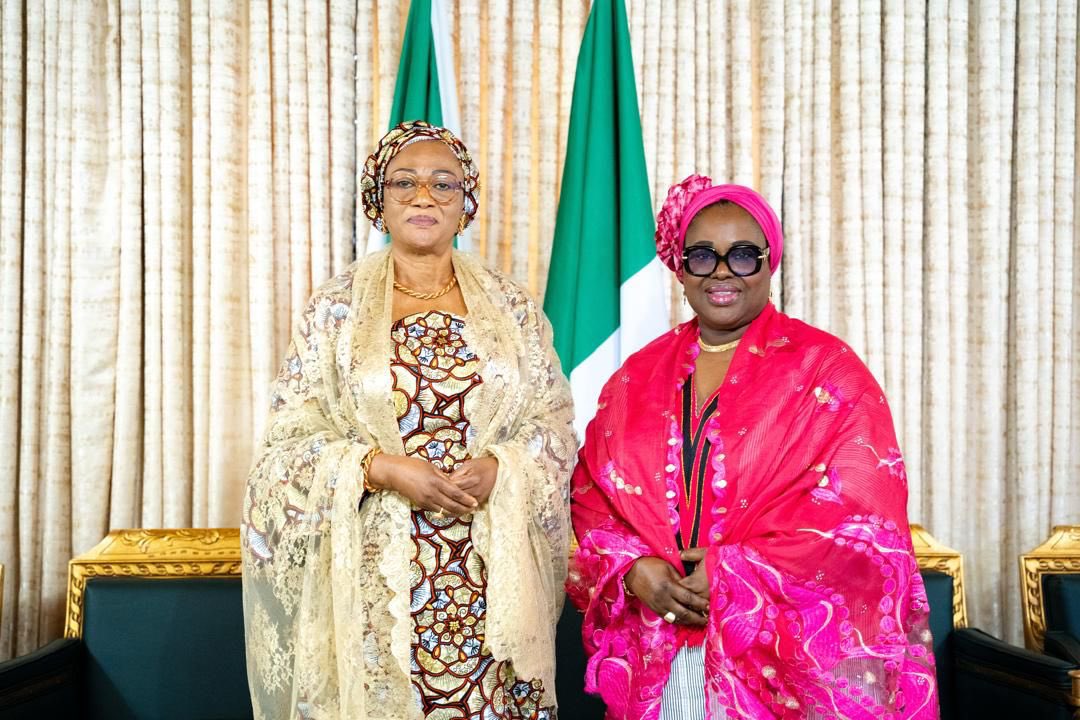
Oluremi Tinubu Hosts Wife of New IGP, Talks Welfare, Empowerment for Police Families
The First Lady of the Federal Republic of Nigeria, Senator Oluremi Tinubu, today welcomed Mrs. Mutiat Disu, wife of the Inspector General of Police, at the State House in Abuja.

During the meeting, the First Lady encouraged Mrs. Disu to continue championing the welfare and wellbeing of police officers’ families, especially through impactful support for their wives.
Speaking after the meeting, Mrs. Mutiat Disu shared her excitement about partnering with the First Lady’s Renewed Hope Initiative (RHI), noting that she is ready to leverage its programs to empower police officers’ wives across the country.
Mrs. Disu, who also serves as the National President of the Police Officers’ Wives Association (POWA), described the meeting as insightful and inspiring. She emphasized her commitment to using RHI platforms to improve healthcare, welfare, and economic empowerment for POWA members nationwide.
“The purpose of this visit is to tap into her wealth of experience and explore how POWA can benefit from her programs,” she said.
She added that her engagement with the First Lady has already provided valuable direction, especially in areas of social intervention and healthcare support for police families.
“I’m ready to work closely with Mama to ensure our women benefit fully, especially since RHI focuses on uplifting women, and POWA is largely made up of women.”
Mrs. Disu assumed leadership of POWA following the appointment of Tunji Disu as Inspector General of Police on February 24, 2026, succeeding Kayode Egbetokun.
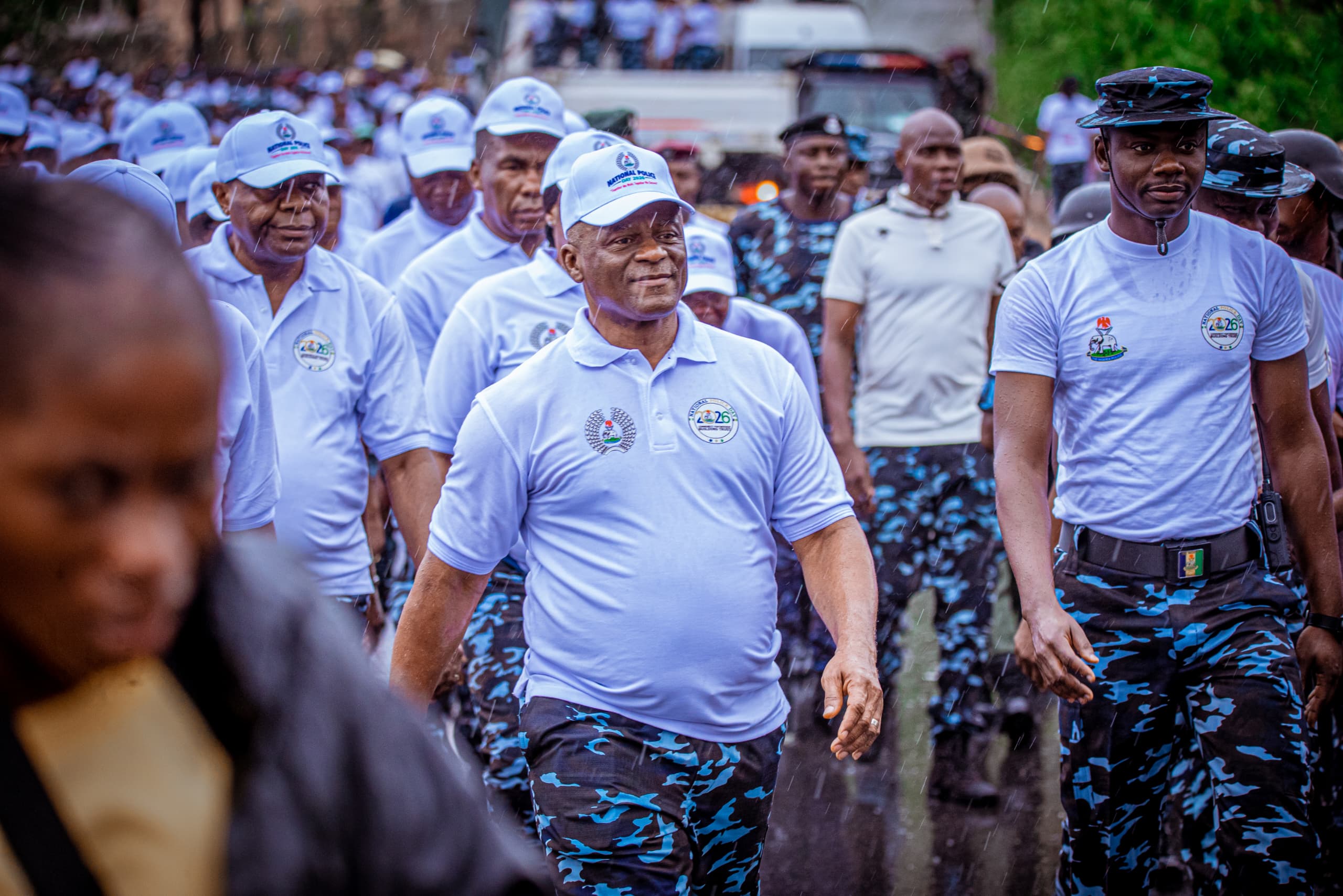
Police Day 2026: IGP Disu Leads Nationwide Walkathon To Strengthen Community Trust
The Inspector-General of Police, Olatunji Disu, on Tuesday led the management team, alongside officers and personnel of the Nigeria Police Force, in a nationwide walkathon to commemorate the 2026 National Police Day.
The event, held across state capitals and the Federal Capital Territory, formed part of activities marking Day Two of the annual celebration, themed “Community Partnership: Building Trust.”
The symbolic exercise, which drew participation from both police personnel and members of the public, was aimed at showcasing unity, discipline, and a renewed commitment to community policing and public safety.
According to the Force leadership, the walkathon underscores the Nigeria Police Force’s resolve to strengthen public trust, deepen engagement with citizens, and enhance collaboration in tackling security challenges across the country.
Participants described the initiative as a practical step toward bridging the gap between law enforcement and the communities they serve, while also promoting physical fitness and mental well-being among officers and civilians alike.
With the theme reflecting a shared responsibility for safety, the Police reiterated that sustainable security can only be achieved through active partnership with the public.
The event concluded with a renewed call for collective action under the banner: “Together We Walk, Together We Secure,” emphasizing unity of purpose in building a safer and more secure society for all Nigerians.


-

 society6 months ago
Religion: Africa’s Oldest Weapon of Enslavement and the Forgotten Truth
-

 news4 months ago
WHO REALLY OWNS MONIEPOINT? The $290 Million Deal That Sold Nigeria’s Top Fintech to Foreign Interests
-

 society6 months ago
“You Are Never Without Help” – Pastor Gebhardt Berndt Inspires Hope Through Empower Church (Video)
-

 celebrity radar - gossips2 months ago
Dr. Chris Okafor Returns with Power and Fire of the Spirit -Mounts Grace Nation Altar with Fresh Anointing and Restoration Grace on February 1, 2026