
Politics
Dauda Lawal: Between Leadership Award and Zamfara Reality By Silas Ajogwu


*Dauda Lawal: Between Leadership Award and Zamfara Reality
By Silas Ajogwu
There are moments when public honours become mirrors that doesn’t reflect virtue but to magnify dissonance. Governor Dauda Lawal’s recent acclamation as “Governor of the Year” by Leadership newspapers should, in a sane political economy, invite sober celebration only if the facts on the ground corroborate the plaudits. But in Zamfara, where villages are sacked, whole communities flee in fear, educational system keep declining in the wake of violence, and mass abductions have become grim headlines, the award reads less like recognition than a rhetorical conjuring trick. The editorial board that printed the accolade owes Nigerians an apology for easily being misled: how did the red ink miss the echoes of wailings and the river of bloods that flow through Zamfara today?
Let us begin with the unassailable facts. Over the past months, and indeed years, Zamfara has been one of the epicentres of Nigeria’s northwestern security catastrophe. Evidently, reports from reputable international media and rights groups have documented catastrophic violence like brutal mass killings in mining towns, the abduction of scores of villagers in single operations, and the sacking of hundreds of communities that have produced waves of internally displaced persons. Amnesty International and Reuters, among others, have catalogued attacks that leave behind corpses, razed homes, and scarred families. These are not the figments of partisan reportage; they are verifiable tragedies with names, dates, and grieving families.
If an award is to have any moral weight, it must answer this simple ledger: have lives been preserved under your watch, or have they been squandered? Has the governor provided a credible roadmap toward safety, or has he delivered platitudes and photo-opportunities while bandits seize towns and terrorize children? The empirical answer, as chronicled by independent observers is damning. Recent attacks in Zamfara have included mass abductions. One reported incident alone saw over 100 people taken, and repeated massacres in villages where citizens were slaughtered as they laboured. An outbreak of cholera in Bukkuyum and the deaths recorded there are not incidental; they are symptomatic of collapsed access to health, water, and security which are the very public goods that should mark competent stewardship of a state. Unfortunately, the massive federal allocation are only seen in the frivolous spending and luxurious purchase made by the governor and his cabinets, but not reflective in the lives of Zamfarans.
And yet, on glossy pages and curated websites, a different narrative is being sold: that a governor whose tenure coincides with such human carnage deserves a laurel. This is not merely a question of taste; it is an ethical indictment of how awards are dispensed and of what our public culture has become. When honour is decoupled from measurable public welfare and instead telescoped into ceremony, we impoverish language itself. Words like “leadership” and “transformational” warp into euphemisms for impunity. If an editorial board is prepared to bless a record marred by abandoned communities, the public is entitled to ask whether the accolade Is commensurate with performance or contaminated by other influences. Indeed, social scepticism is not cynicism; it is a civic alarm that sounds when lived reality diverges dramatically from celebratory headlines.
It Is tempting and rhetorically effective to leap to causation: Yes! awards are being bought; editorial independence is for sale; governors are laundering reputations with chequebooks. But responsible criticism requires discipline. In the absence of a smoking gun that proves pay-for-play in this specific case, the argument must rest on demonstrable incongruity and pattern. Across Nigeria, there have been recurring controversies where awards and honours were criticized for being influenced by patronage, and commentators have warned that some prizes have become transactional. What we can say with confidence is this: where public life is ravaged by banditry and humanitarian collapse, the optics of bestowing “Governor of the Year” warrants interrogation, not because the act of awarding is per se illegitimate, but because the moral calculus of governance demands that survival and dignity must come before plaudits.
The human cost of misgovernance is not an abstraction. Mothers in Zamfara and cradle children who have lost fathers to kidnappers; entire marketplaces lie empty because people fear to travel; mothers with infants cannot reach clinics because roads are controlled by armed men on motorcycles. These daily indignities corrode social trust and exact stealthy, intergenerational harm. When an editorial desk fails to look these mothers in the face and instead crowns their governor, the message sent is corrosive: that rhetoric can substitute for remedy, and that spectacle can displace sorrow. The moral outrage that follows is neither theatrical nor petty; it is a legitimate expression of popular grief and righteous indignation of personal experience.
However, it is important to consider the broader data of how human-rights organizations and investigative outlets have documented thousands killed, villages burnt down, and how hundreds of thousands were displaced across Zamfara State. These can only be a result of structural failures; failures of intelligence, of community protection, of preventive policing, and of governance allocation. If a governor’s tenure coincides with such systemic collapse, editorial boards should, at minimum, scrutinize if the state apparatus has been deployed, how it has been deployed to protect citizens. Obviously, Dauda Lawal’s administration has not strengthened local security architecture, ensured functioning clinics and safe water points, and has not exercised fiscal courage to fund durable counter-insurgency measures.
When the governor and his apologists insist on celebrating awards, they must be asked to explain, with documents and demonstrable outcomes, why the lives of their citizens were not the primary metric considered. What specific policies, funded projects, or security innovations justify a Governor of the Year title? Are there transparent records showing reductions in incidents, successful rescue operations, improved infrastructure, rehabilitated health centres, or secure corridors that allow commerce to resume? Or is the award a prophylactic meant to sanitize a political brand while the rot continues underneath? The difference between governance and marketing is precisely this: the former is accountable to the ledger of life; the latter is answerable only to visibility.
We must also confront the rhetorical posture that seeks to delegitimise popular critique by branding it as mere “political attacks.” When mothers cries for their missing children, when communities cannot till fields for fear of ambush, when clinics close because health workers cannot commute, the critiques that arise are not partisan truculence; they are the anguished responses of citizens demanding protection. To dismiss these legitimate cries as envy or opposition theatre is to perpetrate a moral inversion: those who ask for security are branded as troublemakers while those who preside over their vulnerability are lauded. If the editorial pages are to retain moral authority, they must resist becoming instruments for image laundering.
What, then, should be the civic response? First, Newspapers must demand transparency before publication. Newspapers that confer high honours must publish their criteria, and the evidentiary basis for their choices. If “Governor of the Year” is to mean anything beyond a headline, it must be backed by transparent metrics: measurable improvements in healthcare access, documented reductions in violence, convincingly audited security spending, and demonstrable community rehabilitation. Second, insist on investigative curiosity: it is important for civil society and independent media to probe the governance ledger, which are budgets, procurement processes, and security strategies. Third, let the people of Zamfara judge for themselves: community hearings, testimony from survivors, and on-the-ground reportage should be the sources that shape public memory, not paid-for adverts or celebratory galas.
Finally, there is a moral plea. Awards are supposed to confer encouragement on those who have alleviated suffering, not camouflage those who have presided over it. If Governors wish to be celebrated, let them first clear a simple threshold: make their states safer, make clinics work, make schools open, restore markets, and stop the nightly toll of abductions and killings. Let them invite independent monitors to verify progress. Let their citizens sleep without fear. Only then will a “Governor of the Year” title be more than a headline: it will be a justly earned tribute.
To the editorial board that printed the accolade, and to every Nigerian watching: do not let ceremony smother scrutiny. To the shameless governor who accepted it: Honor must be tethered to the dignity of life. In Zamfara today, that dignity is endangered; mothers weep while trumpets sound. If honour is to mean anything at all, let it begin by answering the children’s cries and the empty chairs at family tables. Let the paychecks of Civil servants bring smiles to their faces. Until then, a paper’s gold foil Is a poor balm for the blood and the silence.
Ajogwu is a security expert writing from Kaduna.




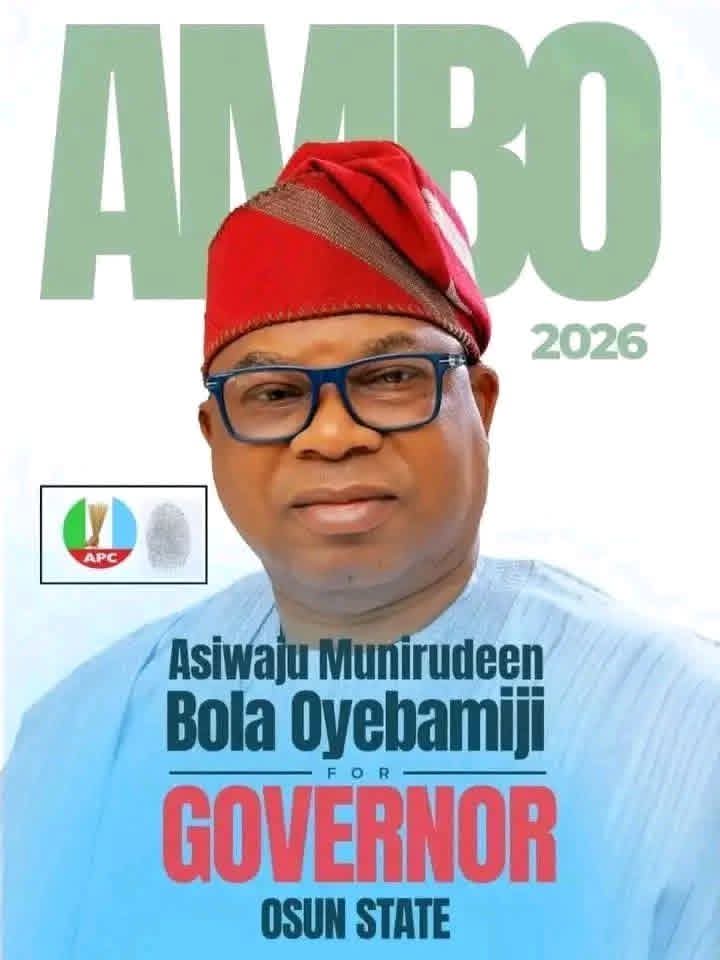
AMBO and the Osun Governorship Race: Assessing the Man, the Politics and the Vision
As political activities gather momentum ahead of the 2026 Osun State governorship election, a public affairs commentator, Oluseyi Olonade, has described the emergence of Asiwaju Munirudeen Bola Oyebamiji, popularly known as AMBO, as a significant development in the state’s political landscape.
In an article titled “Oyebamiji: The Man, The Politics and The Aspiration,” Olonade argued that the All Progressives Congress governorship hopeful possesses the character, experience and vision needed to reposition Osun State for sustainable growth.
According to the writer, Oyebamiji’s appeal stems from his extensive background in the banking sector, where he spent nearly three decades working with institutions including Wema Bank, Trans International Bank, Spring Bank and Enterprise Bank.
A native of Ikire in Irewole Local Government Area, Oyebamiji was described as a technocrat whose experience in corporate governance, finance and risk management has shaped his approach to public administration.
The article noted that his public service journey gained prominence in 2012 when he was appointed to oversee the then Osun State Investment Company Limited. Under his leadership, the organisation was reportedly restructured and transformed into Omoluabi Holdings Limited.
The writer further highlighted Oyebamiji’s tenure as Commissioner for Finance under successive APC administrations, where he was credited with managing the state’s finances during challenging economic periods.
Olonade also referenced Oyebamiji’s appointment as Managing Director of the National Inland Waterways Authority, describing it as further evidence of his administrative and leadership capabilities.
The article contrasted Oyebamiji’s governance philosophy with that of the current administration in Osun State, arguing that the APC aspirant favours institutional reforms, economic diversification and fiscal discipline.

According to the writer, Oyebamiji’s proposed agenda includes strengthening transparency in government spending, expanding internally generated revenue, attracting private-sector investments and promoting industrial and agricultural development.
The article also highlighted youth empowerment, entrepreneurship development and digital skills acquisition as key components of his vision for the state.
Olonade concluded that the forthcoming governorship election would present voters with a choice between different approaches to governance, expressing confidence that Oyebamiji’s experience and developmental agenda make him a strong contender in the race.
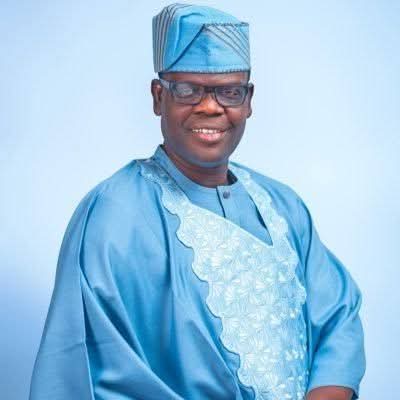
*Oselu Tiwa nTiwa Endorses Oriyomi Hamzat for Oyo Governorship*
A sociopolitical support group in Oyo State, Oselu Tiwa nTiwa, has declared its support for Alhaji Oriyomi Hamzat as the authentic governorship candidate of the Accord Party ahead of the forthcoming governorship election in the state.
The group made its position known in a statement jointly signed by its President, Mr. Adewale Oluwaseyi and Secretary, Alh. Adebayo Oyewole, on Thursday, describing Hamzat as a grassroots figure with strong connection to the people and a track record of humanitarian interventions across Oyo State.

According to the group, the endorsement followed what it described as careful observation of Hamzat’s leadership qualities, compassion and dedication to the welfare of ordinary citizens.
“Oriyomi Hamzat has consistently demonstrated empathy, courage and selfless commitment to humanity. Through his numerous interventions in the lives of ordinary citizens, he has become a symbol of hope to many families and communities,” the statement read.
Oselu Tiwa nTiwa also appealed to the national leadership of the Accord Party to prioritise the long-term future and electoral growth of the party in its decision-making process.
The group noted that Hamzat’s candidacy presents an opportunity for the party to strengthen its grassroots support base and expand its political relevance across Oyo State.
“We respectfully appeal to the National Leadership of the Accord Party to look beyond immediate political calculations and consider the bigger picture, the future growth, stability and electoral success of the party in Oyo State and beyond,” the statement added.
The group further expressed confidence in the leadership of the party, saying it believes the party’s national officers and stakeholders would take decisions that reflect fairness, inclusiveness and the collective interest of members.
While calling on party loyalists to remain calm and united, Oselu Tiwa nTiwa said continued consultations among stakeholders would help strengthen the Accord Party ahead of the election.
Signed:
Alh. Adebayo Oyewole,
Secretary.
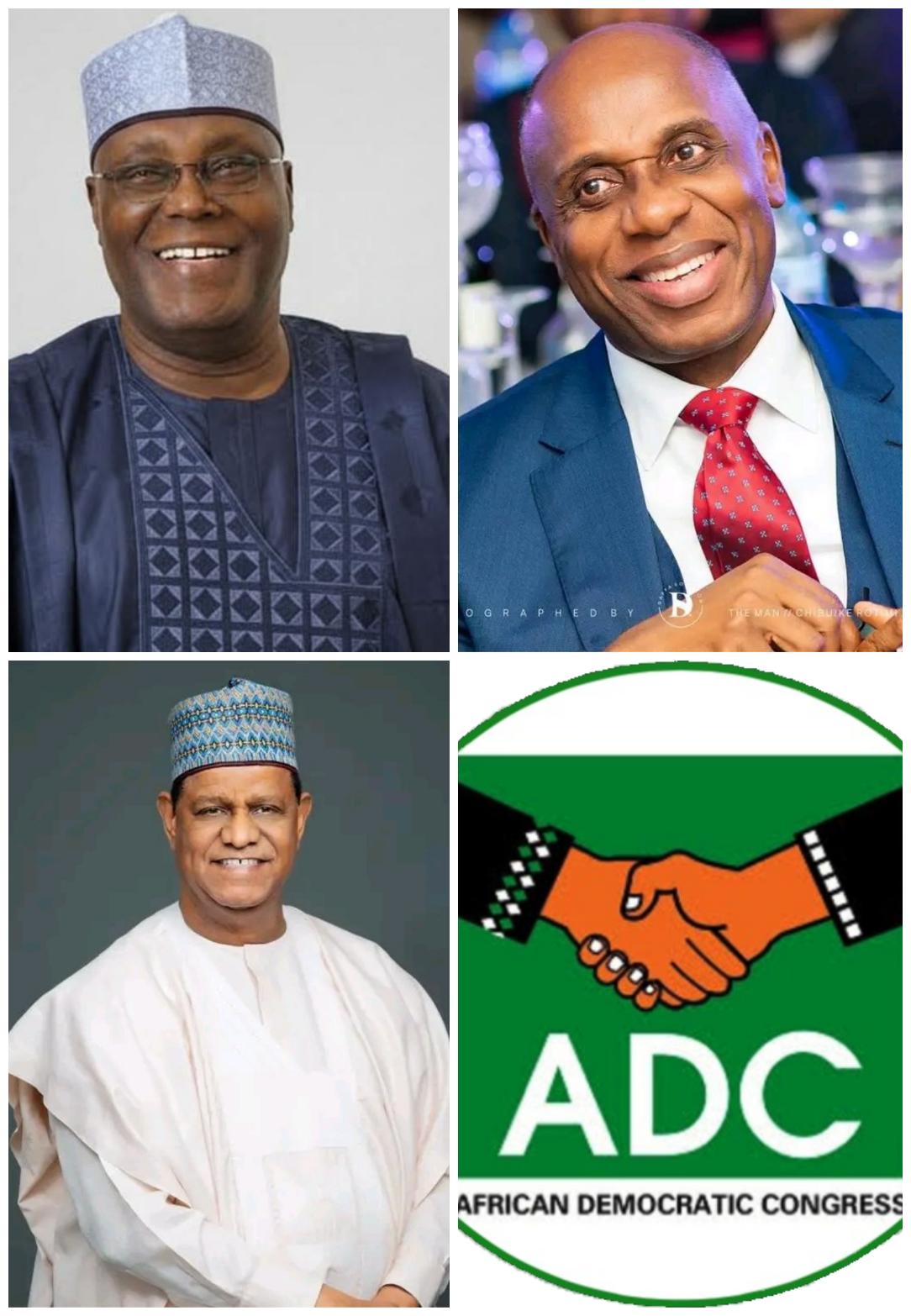
Atiku Set To Clinch ADC Presidential Ticket, Leads Amaechi, Hayatu-Deen In 34 States
Former Vice President of Nigeria and frontline presidential aspirant of the African Democratic Congress (ADC), Atiku Abubakar, is projected to emerge winner of the party’s presidential primaries, according to impeccable sources in Abuja.
The primaries, conducted across over 8,000 wards in the 36 states of the federation and the Federal Capital Territory, reportedly placed Atiku far ahead of his closest rivals — former Rivers State Governor, Rotimi Amaechi, and former Chairman of the Nigerian Economic Summit Group, Mohammed Hayatu-Deen.

Highly placed party insiders disclosed that Atiku is currently leading in 34 states, including the FCT, after securing dominance across the 19 Northern states, the five South-East states, and the six South-West states, while also maintaining a strong showing in at least three states in the South-South geopolitical zone.
The sources added that the outcome reflects what they described as “an overwhelming nationwide acceptance” of the former vice president within the opposition party ahead of the 2027 general election.
Meanwhile, the ADC leadership has invited members of the press to the official announcement of the final collated results scheduled for 11:00 a.m. on Tuesday, May 26, 2026, in Abuja.
The declaration of results is expected to be broadcast live on ARISE Television and two other major television stations, while also being livestreamed on the party’s official social media platforms on X and Facebook.
Speaking ahead of the announcement, the founding National Chairman of the ADC, Chief Ralph Nwosu, said the decision to televise the exercise live was aimed at promoting transparency and democratic accountability.
“We want millions of Nigerians at home and in the Diaspora to witness democracy in action,” Nwosu said.
He further revealed that the party leadership would encourage all three presidential aspirants to publicly embrace a peace accord and commit themselves to working together in unity for the party’s success.
According to him, the move is necessary to strengthen internal cohesion and position the ADC for victory in the presidential election scheduled for January 16, 2027.
Details later.


- Pitcher Awards Announces 2026 Winners, Marking a Landmark Year for Pan‑African Creativity May 30, 2026
- Ghana Commemorates 78th International Day of United Nations Peacekeepers May 30, 2026
- South Africa: President Ramaphosa receives second interim report of Madlanga Commission May 30, 2026
- Asmara Marathon 2026 to be held May 30, 2026
- Powerful call for dialogue and compromise to secure peace in South Sudan issued on International Peacekeepers Day May 30, 2026
- Over 1,000 Participants Join Rwenzori Marathon Activation Run in Mombasa May 30, 2026
- World Health Organization (WHO) actively participated in the 2nd Summit on Healthcare Integration in Portuguese-speaking countries May 30, 2026
- Annual Meetings (AM) 2026: “Africa has what It takes” - Experts call for stronger financial systems to help Africa mobilise capital at scale May 30, 2026
- Eritrea Participates at Organization of African, Caribbean and Pacific States Meetings May 30, 2026
- Annual Meetings 2026 (AM2026): African Development Bank Group’s 2025 Annual Report Highlights Strong Results and a New Chapter for Africa’s Transformation May 29, 2026
- Pitcher Awards Announces 2026 Winners, Marking a Landmark Year for Pan‑African Creativity May 30, 2026
- Ghana Commemorates 78th International Day of United Nations Peacekeepers May 30, 2026
- South Africa: President Ramaphosa receives second interim report of Madlanga Commission May 30, 2026
- Asmara Marathon 2026 to be held May 30, 2026
- Powerful call for dialogue and compromise to secure peace in South Sudan issued on International Peacekeepers Day May 30, 2026
- Over 1,000 Participants Join Rwenzori Marathon Activation Run in Mombasa May 30, 2026
- World Health Organization (WHO) actively participated in the 2nd Summit on Healthcare Integration in Portuguese-speaking countries May 30, 2026
-

 news6 months ago
WHO REALLY OWNS MONIEPOINT? The $290 Million Deal That Sold Nigeria’s Top Fintech to Foreign Interests
-

 society4 weeks ago
SOCIAL MEDIA IS NOT A BATTLEFIELD COMMAND – WHY THE NIGERIAN ARMY’S ACTION AGAINST JUSTICE CRACK IS A NATIONAL SECURITY IMPERATIVE
-

 celebrity radar - gossips4 months ago
Dr. Chris Okafor Returns with Power and Fire of the Spirit -Mounts Grace Nation Altar with Fresh Anointing and Restoration Grace on February 1, 2026
-

 celebrity radar - gossips6 months ago
Prophet Kingsley Aitafo Releases 2026 Prophecy: ‘Nigeria Will Rise, but the World Must Prepare for Turbulence’