society
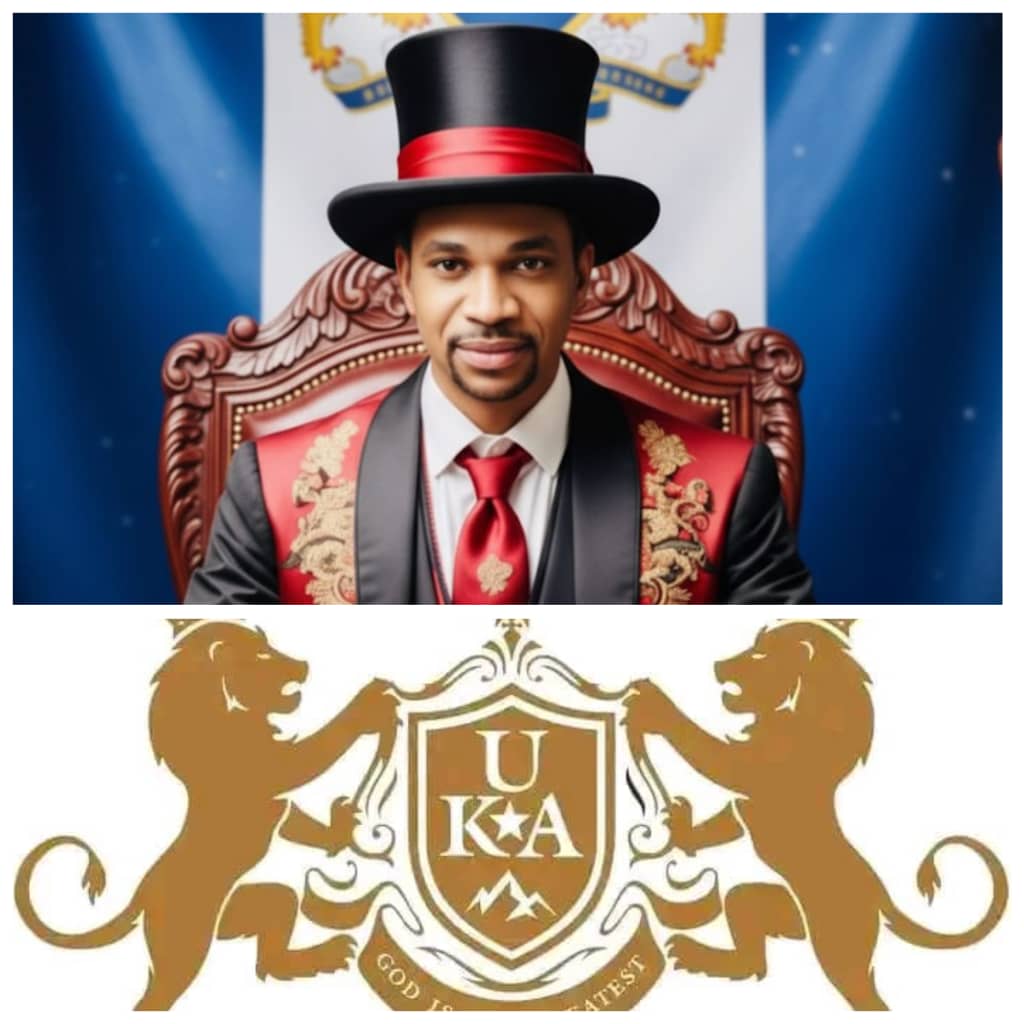
Dawn of a New Era: The Emergence of the United Kingdom of Atlantis
*Dawn of a New Era: The Emergence of the United Kingdom of Atlantis*
Clement Emmanuel
A new chapter in human history is unfolding with the rise of the United Kingdom of Atlantis, a spiritual and cultural nation dedicated to unity, enlightenment, and global harmony.
Proclaimed under the leadership of Emperor Solomon Uchenna Wining, officially crowned on July 26, 2025, the United Kingdom of Atlantis heralds what many are calling the dawn of a new era — one where the essence of nationhood transcends borders and is instead rooted in shared consciousness and collective purpose.
Born from a vision of spiritual renewal and cultural rebirth, the Kingdom stands as a beacon for those seeking meaning beyond material identity. It calls humanity to awaken to a higher awareness — to remember the sacred connection that binds all people, cultures, and nations together as one human family.
Guided by principles of spiritual growth, cultural preservation, and universal cooperation, the United Kingdom of Atlantis seeks to weave together the wisdom of the ancients with the aspirations of the modern age. Its foundation rests on the belief that enlightenment, compassion, and unity form the true pillars of civilization.
The Kingdom’s structure reflects this vision: a decentralized constitutional monarchy that harmonizes mythic heritage with contemporary governance, inviting citizens of every nation to participate in a collective journey of awakening and transformation.
Supporters describe the movement as a living expression of global citizenship — a space where individuals find belonging, purpose, and spiritual connection. They see in Atlantis not a kingdom of conquest, but a kingdom of consciousness, built upon wisdom, peace, and service to humanity.
Across the world, nations such as India, Egypt, Japan, Peru, and the United Kingdom have long embodied the balance of cultural depth and spiritual devotion. Now, the United Kingdom of Atlantis rises to join this lineage — not as a geographic nation, but as a symbolic and sovereign community of spirit.
International observers recognize the emergence of Atlantis as part of a growing movement toward post-national unity — societies formed not by territory or politics, but by shared values, collective purpose, and the awakening of human potential.
As dawn breaks on this new era, the United Kingdom of Atlantis invites all people to look within, to rise beyond division, and to co-create a world grounded in light, love, and consciousness.
The Age of Atlantis has begun — not beneath the waves, but within the hearts of humankind.
society
Corruption’s Cost: How Nigeria’s Low CPI Score Is Eating the Country Alive
Corruption’s Cost: How Nigeria’s Low CPI Score Is Eating the Country Alive.
By George Omagbemi Sylvester | SaharaWeeklyNG.com
“Score 26. Rank 140. The theft of trust that steals development.”
Nigeria’s corruption problem is no longer a bureaucratic scandal confined to courtrooms and press headlines but a national emergency undermining development, cleaving public trust and cavitating the very institutions meant to deliver health, education and climate resilience. Transparency International’s 2024. Corruption Perceptions Index (CPI) places Nigeria squarely among the world’s most challenged countries on corruption, a score of 26 and a global rank of 140 out of 180. Those numbers are not abstract; they are the mirror of policy failure and moral collapse.
The CPI’s global findings are stark, more than two-thirds of countries scored below 50 on a 0 (100 scale and the global average has stagnated at 43) a signal that the world’s anti-corruption effort is stalling at a perilous moment. Transparency International warns that corruption is now playing a “DEVASTATING ROLE” in the climate crisis and in eroding democratic accountability. This means stolen climate funds, hollowed-out public procurement and projects that never reach the people they were meant to protect.
What Nigeria’s CPI Score Really Means.
A score of 26 is not a statistical quirk, it is a diagnosis. It signals pervasive bribery, opaque contracts, weak oversight, politicized law enforcement and a public sector that too often functions for insiders rather than citizens. Corruption imposes costs that compound over time, foreign investors hesitate, domestic entrepreneurs pay bribes instead of hiring staff and poor communities watch roads and clinics rot while funds evaporate. Transparency International’s regional analysis shows Sub-Saharan Africa registering the lowest regional average, a sobering context for Nigeria’s slide.
While anti-graft agencies trumpet recoveries (Nigeria’s EFCC reported nearly $500 million recovered in the past year and thousands of convictions) these victories are tactical, not structural. Recoveries matter, but they do not substitute for transparent contracting systems, public asset registries and the political will to prosecute high-level abuse without selectivity. In other words, seizures do not equal reform.
The Human Toll: Corruption as a Development Kill-Switch.
Corruption is not a victimless crime. It steals from schools, hospitals and climate adaptation projects; it starves farmers of extension services and traps pensioners in unpaid entitlements. Transparency International’s CPI highlights a chilling linkage, countries most vulnerable to climate shocks often have the lowest CPI scores, which means climate funds and adaptation projects are especially at risk of diversion or mismanagement. This translates into lost crops, drowned communities and diminished resilience. When public contracts are awarded to cronies instead of competent providers, project costs balloon and quality collapses.
When licences and permits are sold rather than vetted, environmental and safety standards are ignored. The net result is a country whose public infrastructure (roads, power plants, water systems) is both underbuilt and overcharged.
Institutional Failure, Not Cultural Fate.
To be clear, CORRUPTION in Nigeria is not an inevitability or a CULTURAL TRUISM. It is the predictable outcome of weak institutions, perverse incentives and political tolerance for impunity. Countries that have broken the cycle did so by hardening institutions, independent judiciaries, transparent procurement platforms, beneficial ownership registries, open budget processes and empowered civil society and media. The CPI points to winners and losers, it is a map of policy choices not fate.
Nor is the remedy purely technocratic. It requires political courage. Leaders must stop treating anti-corruption as episodic theatre and start treating it as governance infrastructure. That means firing complicit officials, protecting whistleblowers and backing the rule of law even when it bites powerful interests.
What Must Be Done: A Roadmap for Real Reform.
Public procurement transparency, now. Every major contract (from road works to energy deals) should be published in machine-readable form with project milestones, beneficiaries and independent audits. Open contracting reduces discretion and makes corruption harder to hide.
Beneficial-ownership registries. Companies that win public contracts must reveal real owners. Shell companies and anonymous partners are corruption accelerants; removing their cover is non-negotiable.
Digitize revenues and payments. E-payments, digital tax collection and biometric cash transfers reduce leakages and create audit trails that are difficult for middlemen to manipulate.
Protect and fund anti-corruption institutions. Agencies that investigate and prosecute must be independent, well-resourced and insulated from political interference. Recoveries are hollow if investigations stop short of nets for the powerful.
Empower watchdogs. An independent press, active civil society and access to information laws turn sunlight into accountability. Citizens must be able to demand answers and see project outcomes.
Link climate finance to anti-corruption safeguards. Given Transparency International’s warning that climate finance is vulnerable, every adaptation and mitigation fund must incorporate anti-fraud safeguards, community oversight and transparent disbursement.
Voices That Matter.
Transparency International’s leadership left no ambiguity; François Valérian, Chair, warned that corruption “is a key cause of declining democracy, instability and human rights violations,” while Maíra Martini, CEO, urged urgent action to safeguard climate finance and rebuild trust. Their message is unambiguous and corruption is not a side issue, but a strategic threat to national survival.
Globally respected development economists echo the diagnosis: inclusive, accountable institutions are a prerequisite for sustainable growth. And from within Nigeria, citizens know the score, they see their taxes vanish, their courts stall and their future mortgaged to cronies.
The Takeaway.
Corruption is not an economic footnote; it is an ASSAULT on the social contract. Transparency International’s CPI 2024 is a blistering wake-up call, Nigeria’s score of 26 ought to be intolerable to every citizen and a political emergency to every leader. The country cannot borrow its way out of rotten governance; nor can it tinker at the margins while elites privatize public goods.
Reform is hard. It will be resisted by those who PROFIT from OPACITY. Though the alternative (continued decay of institutions, stolen climate funds, faltering public services and a citizenry losing faith in the state) is worse. Nigeria needs structural change, transparency baked into procurement, ownership revealed, institutions empowered and civic oversight strengthened.
As this CPI makes plain, the cost of inaction is not measured only in lost naira; it is measured in failed hospitals, empty classrooms, drowned farmlands and the slow erosion of democratic rule. That is a price Nigeria can no longer afford.
society
Nigeria Now Second-Largest Film Producer Globally — German Consul
By Ifeoma Ikem
The Consul General of Germany, Mr. David Krull, has commended Nigeria’s film industry, Nollywood, describing it as the second-largest film-producing industry in the world with over 2,500 films released annually.
Krull stated that Nollywood’s output demonstrates Nigeria’s creativity and economic potential, emphasizing that the film sector could further strengthen the nation’s economy if properly managed.
He made the remark during the Creative Designers Guild of Nigeria (CDGN) second exhibition held in Ikeja, Lagos, with the theme “Re-Defining Culture for Economic Productivity.”
According to him, “Nigeria is so productive. We are here to learn, share experiences, and build future cooperation between Nigeria and Germany in film production. Nigerian filmmaking is storytelling — it reflects history and culture, which play vital roles in nation-building.”
Krull added that the industry possesses vast potential to create employment for talented Nigerian youth, describing collaboration and cultural exchange between both countries as a means of mutual growth.
Speaking at the event, the Executive Secretary and CEO of the Lagos State Film and Video Censors Board, Mrs. Adebukola Agbaminoja, advised parents to instill cultural values in their children.
She emphasized that the nation’s cultural heritage teaches the protection and nurturing of children, not subjecting them to street labour.
“Putting underage children on the street to make money for the family is not our culture,” she said. “Nigerian culture protects child rights, provides care, and ensures their well-being until they are of age.”
Agbaminoja stressed that moral and cultural education should begin at home. “Charity begins at home,” she said. “Parents must play their vital roles in proper child upbringing, while schools, churches, and communities reinforce these values.”
Also speaking, Bishop Joseph Ighalo Edoro explained that redefining culture for economic productivity was crucial to reawakening Nigeria’s understanding of culture as an economic asset.
“Culture is not merely costume, music, or ritual — it is capital. It is the living code that drives creativity, industry, and commerce,” he said.
“Nations that understand this have moved beyond preserving culture as heritage to projecting it as a strategic resource. Nigeria, through Nollywood, is now one of the world’s most compelling examples of cultural entrepreneurship.”
He noted that Nigeria’s entertainment and media industry, valued at about USD 9 billion in 2023, is projected to grow to USD 13.6 billion by 2028, at an annual rate of 8.6 percent.
The exhibition featured displays of Nigerian fashion, cuisine, and cultural artifacts, with various states showcasing their unique heritage. Krull and other dignitaries were conducted around the exhibition stands.
In her welcome address,
Evang. Joy Akinyemi, President of the CDGN, described culture as the lifeblood of every society — the narrative that shapes identity, values, and aspirations.
“Redefining culture for economic productivity is the pathway to prosperity,” she said. “Our creative industries — film, fashion, music, arts, and design — are not just expressions of talent but powerful sectors that can drive economic growth.”
Akinyemi urged stakeholders to promote policies that protect intellectual property, ensure fair compensation for artists, and project Nigeria’s cultural products globally. “By doing so, we create an ecosystem where culture thrives and fuels national development,” she added.
A member of the Guild, Dr. Henry Obidi, commended Akinyemi’s leadership for organizing a colourful and impactful exhibition that has attracted international attention. He noted that Germany’s partnership demonstrates the global appeal of Nigeria’s culture.
Obidi expressed optimism that showcasing locally made cultural items would open new economic opportunities and help in national development.
Also speaking, Dr. Bolaji Akinyemi said the event represented more than an art exhibition — it symbolized a cultural revival for economic progress.
“What we are witnessing today is not just art on display; it is a revival concept for our national economy through culture,” he said. “The Creative Exhibition 2.0 is rekindling what we lost when leadership became disconnected from cultural values.
You cannot reward what you have not refined. Our goal is to rebuild a Nigeria where training births transformation and honour becomes the harvest of integrity.”
society
Afrobeat Promoter, King SMADE Honoured With Doctorate For Global Impact On Afrobeats And African Culture
In a moment that celebrated legacy, creativity, and cultural leadership, Dr. Adesegun Adeosun Jr., popularly known as King SMADE, was awarded an Honorary Doctorate Degree by Myles Leadership University. The recognition was presented at a colourful ceremony held at The Africa Centre in London, where Dr. Adeosun serves as a Strategic Partner and Cultural Ambassador.
The event brought together family members, industry leaders, cultural figures, and community representatives all united to honour a man whose work has shaped how the world experiences Afrobeats and African culture.
Reflecting on the honour, Dr. Adeosun described the moment as both a milestone and a foundation for future generations. He stated, “This honour reflects the work of creative pioneers, artists, and the diaspora who built and sustained this culture,” he further highlighted that “Being joined by my children made the day even more meaningful. For them to witness this moment is a reminder that legacy is built one step at a time. I’m proud to be the first Dr. of Afrobeats, knowing I will not be the last.”
He emphasized the importance of combining academic learning with lived experience, sharing that his journey from undergraduate studies to earning a master’s and now an honorary doctorate represents the power of visionary leadership shaped by both theory and practice.
Dr. Adeosun, co-founder of Afro Nation, has been at the forefront of championing cultural ownership and creating global platforms that connect Africa with its diaspora. Through his work, Afrobeats has evolved into a worldwide phenomenon celebrated from Lagos to London and beyond.
The honorary recognition highlights Myles Leadership University’s commitment to acknowledging individuals who make measurable impact through leadership, innovation, and cultural advancement.
-
Politics4 months agoNigeria Is Not His Estate: Wike’s 2,000‑Hectare Scandal Must Shake Us Awake
-
society6 months agoBroken Promises and Broken Backs: The ₦70,000 Minimum Wage Law and the Betrayal of Nigerian Workers
-
society5 months agoOGUN INVESTS OVER ₦2.25 BILLION TO BOOST AQUACULTURE
-
celebrity radar - gossips5 months agoFrom ₦200 to ₦2 Million: Davido’s Barber Reveals Jaw-Dropping Haircut Fee