
society
Defending Itsekiri Heritage: A Call for Justice in Warri’s Electoral Delineation


Defending Itsekiri Heritage: A Call for Justice in Warri’s Electoral Delineation
Introduction
The Itsekiri people, indigenous to the Warri region of Delta State, Nigeria, have a rich history and cultural heritage that dates back centuries. Their ancestral lands, encompassing Warri North, Warri South and Warri South-West Local Government Areas (LGAs), have been the epicenter of their socio-political and economic activities. However, recent actions by the Independent National Electoral Commission (INEC) concerning ward delineation in these areas have raised significant concerns about the marginalization of the Itsekiri people and the potential erosion of their historical rights.
Historical Context of Itsekiri Land Ownership
The Kingdom of Warri, established in 1480, stands as a testament to the longstanding presence and sovereignty of the Itsekiri people in the region. Historical records and maps, including the 1922 colonial map of Nigeria, clearly depict the Itsekiri territory as distinct and well-defined, nestled between the Ijaw and Urhobo ethnic groups. This demarcation underscores the recognition of Itsekiri lands during colonial times, affirming their territorial claims.
Furthermore, historical accounts, such as those by European travelers in the 19th century, highlight the geographical boundaries of the Itsekiri. For instance, a traveler in 1864 noted, “At Warri, we were within one day’s row of the Sobo people,” indicating that the Urhobo (referred to as Sobo) were not originally situated within Warri but were neighbors to the Itsekiri.
INEC’s Controversial Ward Delineation
In April 2025, INEC released a new ward delineation report for the Warri Federal Constituency, which includes Warri North, Warri South and Warri South-West LGAs. The report proposed a reduction of wards in Itsekiri-dominated areas while increasing those in Ijaw and Urhobo regions. Specifically, the Itsekiri wards in Warri North were reduced from six to four, whereas the Ijaw wards increased from four to ten.
This reconfiguration has been met with strong opposition from the Itsekiri community, who view it as a deliberate attempt to marginalize them politically. The Itsekiri National Development Initiative (INDI) has petitioned INEC, labeling the delineation as biased and lacking transparency. They argue that such actions not only undermine their political representation but also threaten their cultural and historical identity.
Implications of the Delineation
The reduction of Itsekiri wards has far-reaching implications:
Political Marginalization: Fewer wards translate to reduced political representation, limiting the Itsekiri’s influence in local governance and decision-making processes.
Cultural Erosion: Diminished political presence can lead to the neglect of Itsekiri cultural heritage, traditions and language in policy formulations and implementations.
Economic Disadvantage: Political underrepresentation may result in fewer developmental projects and resource allocations to Itsekiri communities, exacerbating economic disparities.
Calls for Justice and Equity
The Itsekiri community’s outcry is not merely about political representation but about preserving their identity and rights. They demand that INEC revisits the delineation exercise, ensuring that it reflects the true demographic and historical realities of the region. As one community leader aptly stated, “We cannot allow our ancestral lands and rights to be eroded under the guise of administrative adjustments.”
Final Word: A Stand for Justice and Indigenous Rights
The struggle of the Itsekiri people is not a cry for favoritism but a demand for justice rooted in historical fact, equity, and democratic fairness. No nation thrives when its founding ethnic nationalities are silenced or politically diminished. The deliberate attempt to redraw boundaries at the expense of the Itsekiri, custodians of the original Warri territory is a betrayal not only of their people but of Nigeria’s constitutional promise of fairness to all.
INEC must retrace its steps and correct this injustice before it festers into deeper ethnic tensions. As Thomas Jefferson warned, “When injustice becomes law, resistance becomes duty.” The Itsekiri are not begging for mercy; they are asserting their constitutional and ancestral rights.
Let the three Warris – Warri North, Warri South, and Warri South-West be preserved as Itsekiri territory, as history, maps and facts clearly affirm. Let not political manipulation replace justice. Let Nigeria not trample on the dignity of a people who built one of West Africa’s oldest and most organized kingdoms.
Written and Compiled by George Omagbemi Sylvester
For further insights into the Itsekiri community’s stance and protests regarding the INEC’s ward delineation, you may find the following video informative: http://www.youtube.com/watch?v=vbjD_-1YnG0





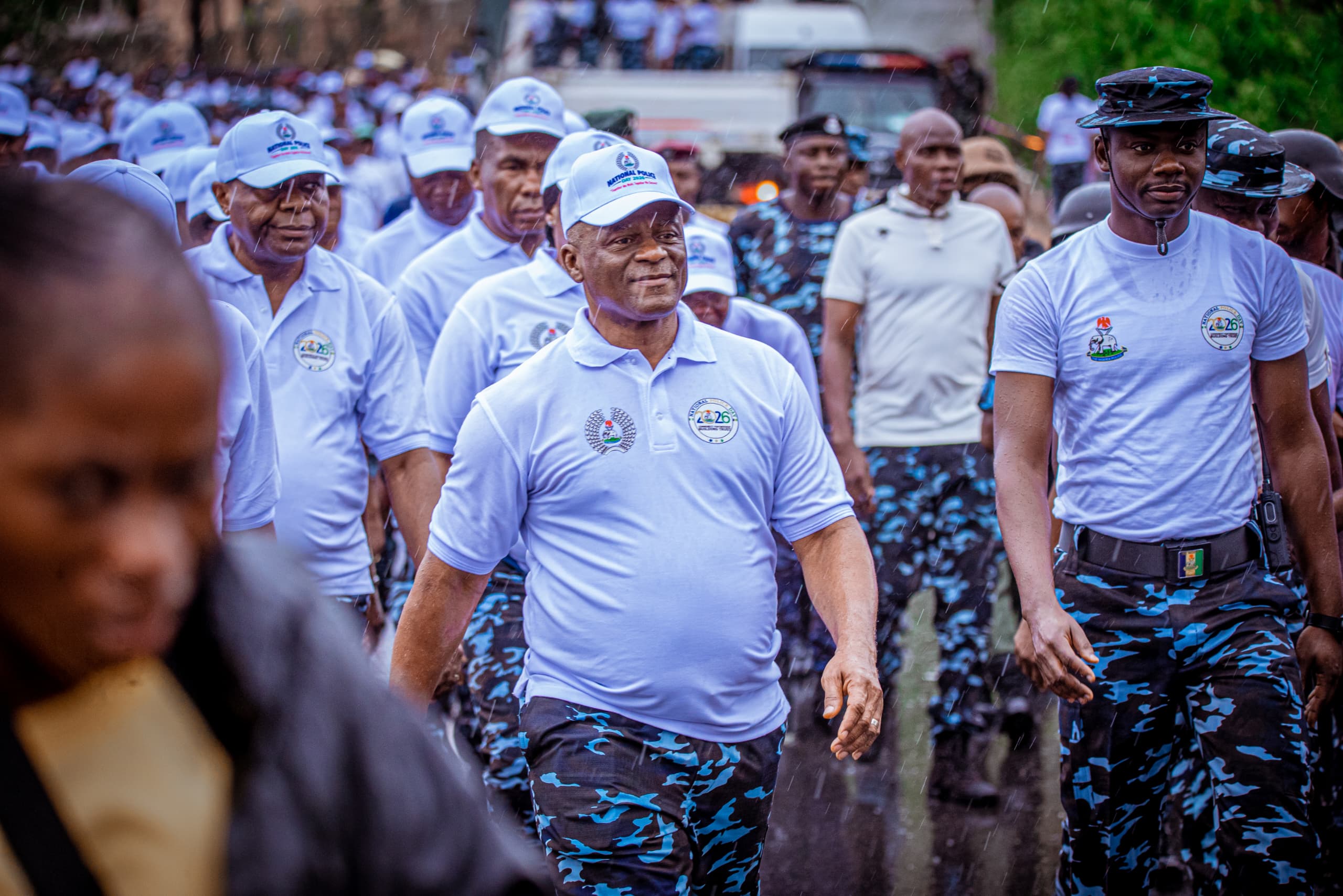
Police Day 2026: IGP Disu Leads Nationwide Walkathon To Strengthen Community Trust
The Inspector-General of Police, Olatunji Disu, on Tuesday led the management team, alongside officers and personnel of the Nigeria Police Force, in a nationwide walkathon to commemorate the 2026 National Police Day.
The event, held across state capitals and the Federal Capital Territory, formed part of activities marking Day Two of the annual celebration, themed “Community Partnership: Building Trust.”
The symbolic exercise, which drew participation from both police personnel and members of the public, was aimed at showcasing unity, discipline, and a renewed commitment to community policing and public safety.
According to the Force leadership, the walkathon underscores the Nigeria Police Force’s resolve to strengthen public trust, deepen engagement with citizens, and enhance collaboration in tackling security challenges across the country.
Participants described the initiative as a practical step toward bridging the gap between law enforcement and the communities they serve, while also promoting physical fitness and mental well-being among officers and civilians alike.
With the theme reflecting a shared responsibility for safety, the Police reiterated that sustainable security can only be achieved through active partnership with the public.
The event concluded with a renewed call for collective action under the banner: “Together We Walk, Together We Secure,” emphasizing unity of purpose in building a safer and more secure society for all Nigerians.


society
Dr. Chris Okafor invokes divine retribution upon individuals blackmailing the Grace Nation church
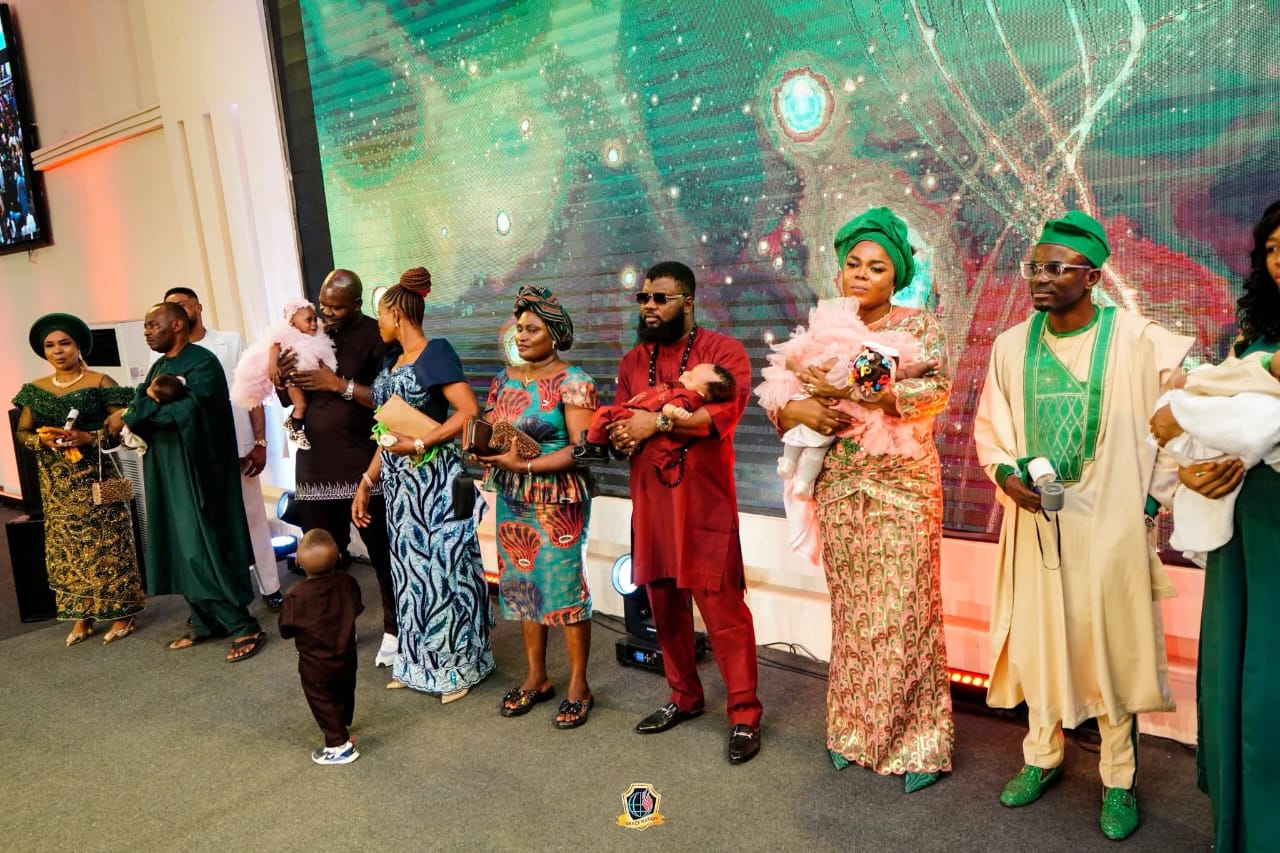
Dr. Chris Okafor invokes divine retribution upon individuals blackmailing the Grace Nation church
… Affirming God’s omnipotence to unveil malicious schemes.
To be frank, the ability of Doris Ogala and her associates to withstand the arduous challenges set by Senior Pastor Dr. Chris Okafor of Grace Nation Global at the culmination of the Harvest of Babies 2026 conference, the church’s flagship event, continues to elude me.
It’s advisable not to offend a powerful spiritual leader like Prophet Chris Okafor to avoid potential consequences, as seen in the situation with Doris Ogala, who was rebuked by the prophet; can she rectify the situation through confession?
Insiders close to the man of God claim that despite relentless online bullying and blackmailing, the Generational Prophet remains resolute, stating that God’s power has been evident throughout the commission’s existence. The reason for this wonderful statement is found in the scriptures, “Upon this rock I shall build my Church, and the gates of hell shall not prevail.” The more falsehoods are spread about the church and its leader, the more God elevates the church and propels him to greater heights, he asserted. He emphasized that blessings and fruitfulness are antidotes to curses, noting that God continues to bestow blessings upon the church, including miracles and the gift of children, which is one reason for the grand finale of the annual family liberation program, The Harvest of Babies.
However, the man of God issued a curse on each person speaking ill of the church, blackmailing, and uttering all sorts of falsehoods against the church, declaring that if they refused to repent within a few days, the earth would swallow them and their family members, stating that they would be of no use to themselves, their families, or society at large.
The spiritual leader cautions his followers to beware of such individuals including Doris Ogala who may taint their faith, and urges them to treat these persons as emissaries of the devil, avoiding them altogether.
Recall that the 2026 harvest of babies concluded with a remarkable birth of a miracle baby boy to a woman on the third day of the conference, accompanied by the dedication of several other miracle babies, all to the glory of God.
Christopher Sunday David writes from
Austria
“Together We Walk, Together We Secure”: Police Launch 2026 Walkathon In Abuja
The Nigeria Police Force has announced plans to host a walkathon in commemoration of the 2026 National Police Day, aimed at promoting unity, peace, and stronger community partnership.
The event is scheduled to take place on Tuesday, March 31, 2026, with participants expected to converge at the Force Headquarters Abuja by 6:00 a.m., where the walk will commence.
According to the organisers, the walkathon is designed to bring together members of the public, stakeholders, and security personnel in a show of solidarity and shared commitment to national security.
With the theme, “Together we walk, together we secure,” the initiative underscores the importance of collaboration between the police and citizens in maintaining peace and safety across the country.
Members of the public have been encouraged to participate in the exercise, which forms part of activities lined up to mark this year’s National Police Day celebration.
It is believed that the walkathon would not only foster closer ties between the police and the communities but also serve as a platform to promote awareness on collective responsibility in ensuring a safer society.


-

 society6 months ago
Religion: Africa’s Oldest Weapon of Enslavement and the Forgotten Truth
-

 news4 months ago
WHO REALLY OWNS MONIEPOINT? The $290 Million Deal That Sold Nigeria’s Top Fintech to Foreign Interests
-

 society6 months ago
“You Are Never Without Help” – Pastor Gebhardt Berndt Inspires Hope Through Empower Church (Video)
-

 celebrity radar - gossips2 months ago
Dr. Chris Okafor Returns with Power and Fire of the Spirit -Mounts Grace Nation Altar with Fresh Anointing and Restoration Grace on February 1, 2026