
celebrity radar - gossips
Delivering Results, Making a Difference: Obasa’s Transformational Leadership in Lagos Assembly *By Dave Agboola

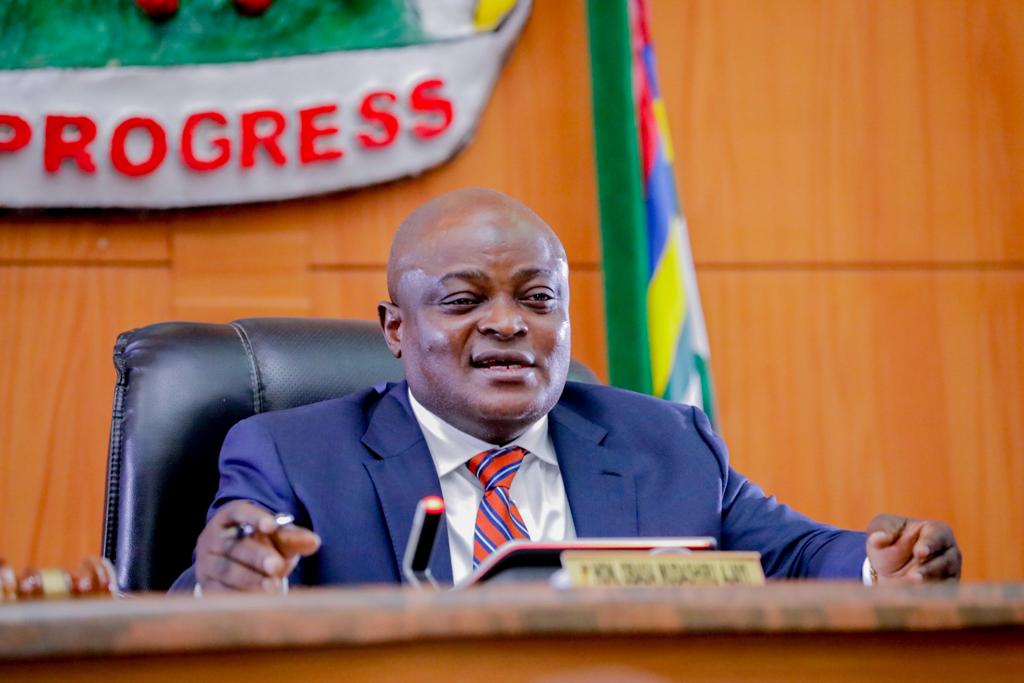
Delivering Results, Making a Difference: Obasa’s Transformational Leadership in Lagos Assembly
*By Dave Agboola
Leadership comes in various forms, but only a few possess the ability to truly transform their organisations and leave a lasting impact on their constituents. One such remarkable leader is Rt. Hon. (Dr) Mudashiru Obasa, the Speaker of the Lagos State House of Assembly.
Obasa’s leadership is distinguished by his unique style of administration. He employs a proactive methodology, consistently searching for inventive solutions to tackle the challenges encountered by Lagos State. His leadership style is characterised by his ability to be easily reached, his friendly demeanour, and his great connection with the people. Rather than being limited to the confines of his position, he often interacts with the Assembly staff, attentively listening to their issues and devising policies that specifically address their needs. His distinctive administrative approach has garnered him the esteem and appreciation of both peers and staff, further cementing his role as a visionary leader.

Dr. Obasa has prioritised infrastructure development since being at the helms of affairs in the Lagos Assembly. He acknowledges the pivotal significance of great infrastructure in the advancement and progress of a state. One of his notable achievements is the completion of the staff wing of the Assembly. The staff wing provides much-needed workspace and facilitates a conducive environment for the Assembly’s administrative tasks. With an eye for aesthetics, the facelifting of the complex has given it a modern and impressive look, befitting its role as the legislative nerve-centre of Lagos.
Understanding the importance of a well-maintained work environment, Rt. Hon. Obasa spearheaded the renovation of all offices within the Assembly complex. By improving the facilities available to members and staff, he demonstrated a commitment to their welfare and productivity. He ensured the provision of adequate facilities and equipment for the staff and management of the Assembly, such as computers, internet access, vehicles, and office furniture. Moreover, his oversight in constructing two religious edifices within the complex showcases his respect for diversity and inclusivity.
Rt. Hon. Obasa’s leadership extends beyond physical infrastructure. Recognising the significance of health and well-being for the Assembly community, he invested in state-of-the-art facilities. The construction of a modern gym equipped with the latest gadgets promotes a healthy lifestyle and enhances the overall happiness of members and staff. Additionally, the establishment of a standard-class clinic under his administration ensures that medical needs can be promptly attended to, fostering a sense of care and support.
The Lagos State House of Assembly complex under Rt. Hon. Obasa’s guidance now boasts an enviable garden, adding a touch of nature’s serenity to the bustling legislative hub. This green oasis serves as a haven for relaxation and reflection, providing a conducive atmosphere for productive decision-making. Furthermore, the addition of a befitting pavilion for events has enhanced the Assembly’s capacity to host important gatherings, promoting collaboration and networking among stakeholders, another initiative of his.
To strengthen the Assembly’s relationship with the public, Dr. Obasa introduced digital billboards within the complex. These interactive displays showcase the Assembly’s activities, ensuring that the public remains informed about legislative proceedings, initiatives, and achievements. This commitment to transparency fosters civic engagement and empowers citizens to be active participants in the governance process.
All these initiatives have greatly improved the infrastructure of Lagos Assembly, stimulating their growth and establishing a strong basis for a prosperous future for its workforce.
It is worthy of note too that Obasa’s administration upholds unwavering principles of accountability and transparency. He recognises that a capable and streamlined administration can only be established on a solid bedrock of confidence. In order to promote accountability and openness, he implemented various initiatives, including conducting regular meetings with the staff and management of the Assembly. Obasa also fosters an environment characterised by transparency and confidence, enabling the public to engage actively in the process of governance and ensure that their representatives are held responsible through public hearings.
Obasa has also demonstrated his vision and commitment to building a virile knowledge-based society that can drive the development of Lagos State and Nigeria at large by making the human capital development of the Assembly’s staff and management a priority. He has initiated and supported various programmes and policies that aim to enhance the skills, knowledge, and productivity of the legislative workers. Sponsoring and facilitating the training of the staff and management of the Lagos Assembly, encouraging them to participate in local and international conferences, seminars, and workshops that expose them to best practices and emerging trends in legislative affairs, Obasa has not only aligned with the goal Number 4 of the Sustainable Development Goals (SDG) but also established his strong support for continuous learning.
The Speaker’s provision of incentives and motivation such as regular promotion, recognitions, awards and other welfare packages for the staff and management of the Assembly, is another uncommon effort at displaying his visionary leadership imbued with love.
Perhaps one other remarkable achievement of Obasa’s leadership at the Lagos Assembly is his ability to inspire unity and collaboration among political parties. His inclusive approach has transcended party lines, encouraging all members of the House, regardless of their political affiliations, to work together for the betterment of Lagos State. Opposition party members have been drawn to Obasa’s leadership style and vision, causing a remarkable shift in the political landscape. As a result, many opposition party members have willingly converted to his party, the All Progressives Congress (APC), recognising the positive impact that his transformative leadership has had on the state.
The tenure of Rt. Hon. (Dr) Mudashiru Obasa, so far, as Speaker of the Lagos State House of Assembly has been characterised by a unique and effective style of governance, a strong emphasis on the improvement of infrastructure, a steadfast dedication to accountability and transparency, and the skill to promote harmony and cooperation among political factions. With his peculiar style of administration, Dr Obasa has reshaped the dynamics of governance in Lagos State. His influential leadership has achieved extraordinary outcomes, significantly impacting the lives of the Lagos Assembly workers.
Rt. Hon. Obasa’s achievements shall be indubitably regarded as a pivotal moment in the Assembly’s administration as it continues to live up to its mantra of being ‘above the common standard of excellence’.
*Agboola is Special Adviser (Research) to the Speaker of Lagos State House of Assembly.*




celebrity radar - gossips
Buratai, Fagbemi , Shagaya, Olofa, Others Eulogise Olowu Kuta’s Olori On 60th Birthday, Foundation Launch
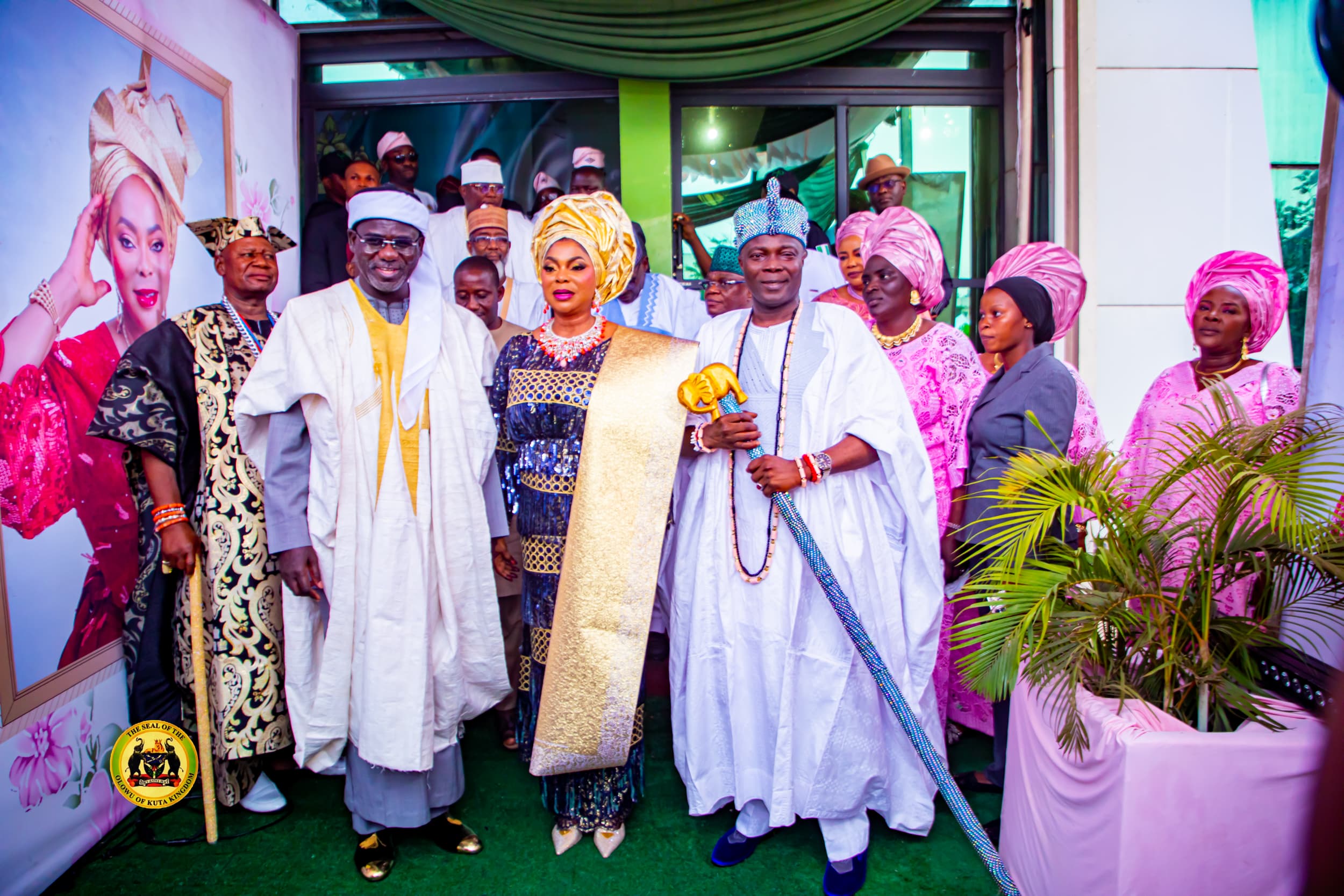
Buratai, Fagbemi , Shagaya, Olofa, Others Eulogise Olowu Kuta’s Olori On 60th Birthday, Foundation Launch
Eminent personalities across the Nigeria stormed the TFK Event Centre, Bala Mohammed Way, Guzape, Abuja, to celebrate the 60th birthday of Olowu Kuta’s Olori, Queen Jumai Amoke and her Foundation Launch on Saturday 28, March 2026.

From former Chief of Army Staff, Lt Gen TY Buratai rtd, to the Minister of Justice and Attorney-General of the Federation, Prince Lateef Fagbemi; Olofa of Offa, HRM Oba Mufutau Gbadamosi. Even top businesswoman and socialite, Chief (Mrs) Bola Shagaya, was in attendance.


Other dignitaries were newly promoted Deputy Inspector-General of Police and former AIG Zone 2 , Lagos , Adegoke Fayoade, Major General Abdumalik, Major General Samuel Adebayo rtd (Fmr CDI);
Major General Anthony Omozoje rtd (Fmr Copp);
Alhaji Tajudeen Owoyemi (Asiwaju of Offa and CEO Radisson Hotel Nigeria;
Dr Waheed Olagunju, former managing director of Bank of Industry, Oniba of Iba, Lagos State, HRM Oba Dr Suleiman Raji ;
Justice Falola, Olu of Ile-Ogbo , Oba Adetoyese amongst many traditional rulers and captains of industry too numerous to mention.
Speaking at the occasion, the Chief Host, Olowu of Kuta, HRM Oba Dr Adekunle Oyelude Makama, CON , Tegbosun iii, who is also the husband of the celebrant commended Queen Jumai for ‘ her slender arms full of kindness’ to establish such humanitarian Foundation, ‘Amoke Children and mother in Need Foundation’ at a time Nigerians are going through economic crisis occassioned by the global meltdown.
Olowu also commended her steadfastness and love for the less privileged and downtrodden.
The monarch refrenced the task before his wife’s humanitarian gesture said her best is yet to come.
” Olori Amoke Jumai, I celebrate you. You will celebrate 70, 80, 90 and continue to shine as you continue to put a smile on people’s faces. I love you, “Olowu Kuta added.
To Lt Gen Buratai, a former army chief and former Nigerian Ambassador to Benin Republic, the reward of hard work is more work.
Buratai, who also doubles as Balogun Agba of Owu Kuta, a chieftaincy title reserved for a generalismo congratulated Queen Jumai for attaining the age of 60 in good health.
The retired army General said he’s not surprised by the turn out of eminent personalities across the country to celebrate the Olowu Kuta’s Olori because she merited it through her hospitality to all, adding that Allah the most merciful, most beneficial would accept all her act of ibadah.
The minister of Justice, Prince Fagbemi, was full of praises for Queen Jumai for deeming it fit to have a place in her heart to accommodate the needy and less privileged in ‘our society.’
Prince Fagbemi urged the guests to contribute generously to support the Foundation in order to continue to alleviate poverty and put a smile on the faces of the people.
” I congratulate you on your 60th birthday and Foundation Launch. I wish you many happy returns of the day and many more fruitful services to the country and motherland”, Prince Fagbemi added.
The celebrant, Queen Jumai who was grining from ear to ear thankfully said she was excited by the turn out and the response of the people to her foundation.
Queen Jumai, however, promised to continue to use her resources and donations received for the good of the needy and less privileged in the society.
” I want to appreciate my own Kabiesi Olofa of Offa , for his presence and im I’m using him as a point of contact to all other Kabiesis present here, the minister of justice and Attorney-General, you’re welcome, sir; Mrs Bola Shagaya, I salute your enterprise, Lt Gen Buratai, I’m grateful, sir; DIG Fayoade, Justice Falola and other dignitaries too numerous to mention, I thank you, all. To my darling husband, Kabiesi Olowu , I thank you immensely for your support. And to my family and friends, I thank you , all. E se pupo!”, she said.
celebrity radar - gossips
Adron Homes Elevates Cultural Pride as Dignitaries Grace 39th Lisabi Festival in Abeokuta
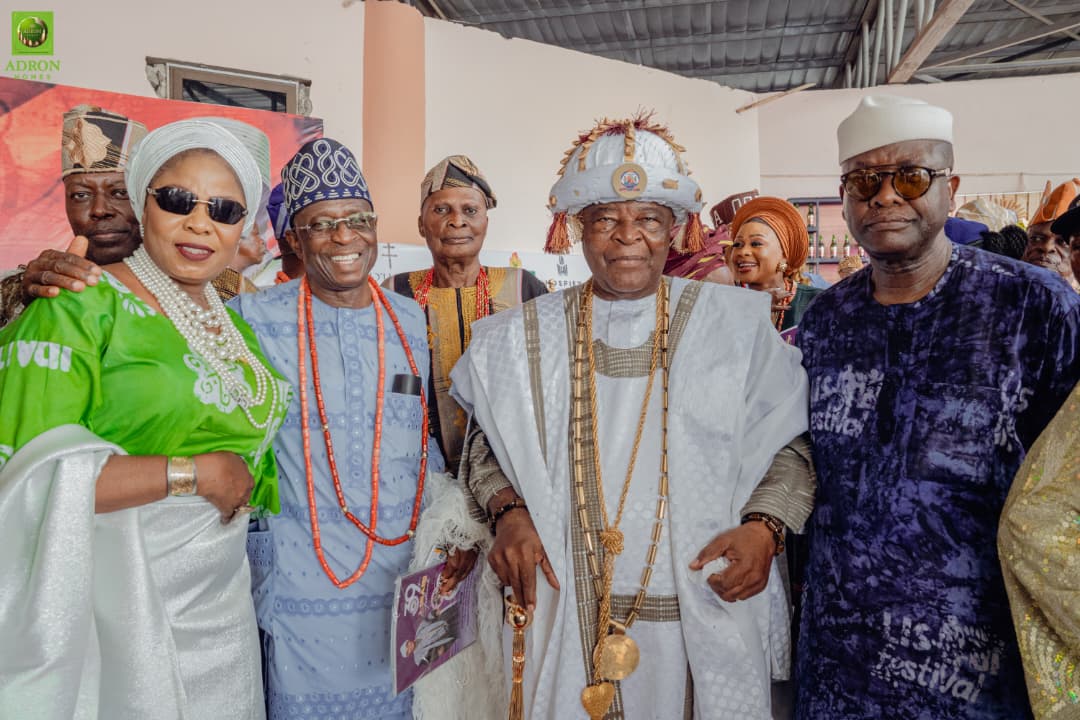
Adron Homes Elevates Cultural Pride as Dignitaries Grace 39th Lisabi Festival in Abeokuta
The ancient city of Abeokuta came alive in a grand display of culture, history, and unity as dignitaries from across Nigeria converged at the iconic Ake Palace Ground for the 39th edition of the Lisabi Festival, an annual celebration deeply rooted in the Egba people’s heritage.
The event, proudly supported by Adron Homes and Properties Limited, witnessed an impressive parade of distinguished personalities, traditional rulers, government officials, business leaders, and cultural enthusiasts, all captured in vibrant pictures that tell the story of a people united by history and pride.
From richly adorned monarchs in regal attire to elegantly dressed guests reflecting the depth of Yoruba tradition, the images from the festival encapsulate moments of honour, reverence, and celebration. Each photograph portrays not just faces, but influence, leaders, and stakeholders who continue to shape cultural preservation and community development.
At the heart of the celebration was the revered Oba Adedotun Aremu Gbadebo, whose presence underscored the festival’s significance as a symbol of Egba resilience and identity. Surrounding him were eminent dignitaries whose attendance further amplified the prestige of the event.
Adron Homes and Properties Limited stood out prominently, not only as a sponsor but as a key driver of cultural sustainability. Through its strategic support, the company reinforced its commitment to preserving indigenous heritage while fostering community engagement. The brand’s visibility across the venue and within the pictorial highlights reflects a deliberate alignment with culture, tradition, and people-centered development.
Beyond real estate, Adron Homes has continued to position itself as a cultural partner, investing in platforms that celebrate history and strengthen communal bonds. Its involvement in the Lisabi Festival is a testament to its broader vision of building not just homes, but legacies rooted in identity and pride.
The 39th Lisabi Festival, as captured through the lens of dignitaries in attendance, is more than an event, it is a narrative of continuity. And through its unwavering support, Adron Homes has once again set the pace, demonstrating that corporate institutions can play a vital role in sustaining the cultural heartbeat of a people.
As the echoes of drums fade and the colours of the festival linger in memory, one thing remains clear: the story told through these images is one of unity, heritage, and the enduring partnership between tradition and progress.


celebrity radar - gossips
Obasa Felicitates President Tinubu @ 74, says Renewed Hope Agenda is steering Nigeria toward stability and prosperity
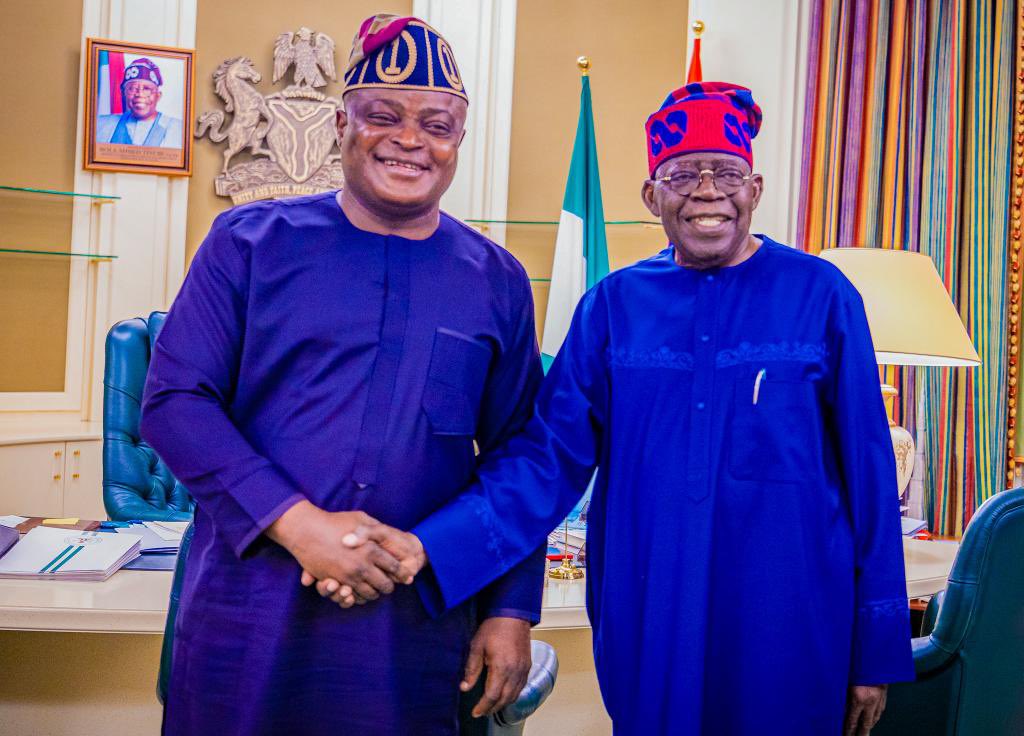
Obasa Felicitates President Tinubu @ 74, says Renewed Hope Agenda is steering Nigeria toward stability and prosperity
The Speaker of the Lagos State House of Assembly, Rt. Hon. (Dr.) Mudashiru Obasa has congratulated President Bola Ahmed Tinubu on his 74th birthday, commending him for fulfilling his Renewed Hope Agenda promises to Nigerians.
Speaker Obasa’s birthday message is contained in a statement signed by Adeshina Oyetayo, his Special Adviser on Research, Media, and Documentation.
Speaker Obasa described the President as a purposeful and pragmatic leader whose commitment to enthroning a peaceful and prosperous Nigeria should be appreciated by all
“Mr. President, today should be a national day of celebration honouring your selfless and visionary leadership.
“I commend your courage and conviction to initiate and implement necessary economic reforms that have pulled Nigeria out of the doldrums, stabilized the nation, and set it on the path of prosperity.”
Speaker Obasa said that those otherwise painful reforms are now being hailed as ingenious and effective worldwide, citing a January 2026 article in the influential The Economist magazine titled “Nigeria’s economy may be back from the brink.”
The article acknowledged that President Tinubu’s reforms are beginning to yield bountiful returns as evidenced in the easing of headline inflation for the 11th consecutive month, unification of the foreign exchange market, and foreign reserves rising to $46billion.
Notably, the article also referenced the International Monetary Fund (IMF)’s upgraded 4.4% GDP growth forecast for 2026 despite global headwinds, while stating unequivocally that Nigeria’s golden years will return under President Tinubu.
Speaker Obasa said that this submission by an international journal signifies that Nigeria is in safe hands under President Tinubu. He, therefore, urged Nigerians to rally round him and support his re-election bid, promising that the gains of the Renewed Hope agenda will reach every household.
“Our prayer is that the Almighty will grant our dear President long life in robust health and the strength and wisdom to help him achieve the Nigeria of our collective dreams,” Speaker Obasa concluded.


-

 society6 months ago
Religion: Africa’s Oldest Weapon of Enslavement and the Forgotten Truth
-

 news4 months ago
WHO REALLY OWNS MONIEPOINT? The $290 Million Deal That Sold Nigeria’s Top Fintech to Foreign Interests
-

 society6 months ago
“You Are Never Without Help” – Pastor Gebhardt Berndt Inspires Hope Through Empower Church (Video)
-

 celebrity radar - gossips2 months ago
Dr. Chris Okafor Returns with Power and Fire of the Spirit -Mounts Grace Nation Altar with Fresh Anointing and Restoration Grace on February 1, 2026