
Politics
Diaspora Power Meets Grassroots Mobilisation: APC’s E-Registration Flag-Off in Awgu Ward II Signals a New Political Momentum in Enugu


Diaspora Power Meets Grassroots Mobilisation: APC’s E-Registration Flag-Off in Awgu Ward II Signals a New Political Momentum in Enugu.
By George Omagbemi Sylvester | Published by SaharaWeeklyNG.com
“From South Africa to Awgu: How Diaspora Stakeholders and Local Leadership Are Re-engineering Party Organisation, Loyalty and Political Participation in Enugu State.”

Politics, at its most effective, is not merely about slogans or election cycles; it is about organisation, legitimacy and the deliberate mobilisation of people across borders and social strata. On Sunday, 18 January 2026, that principle was put into practice in Awgu Ward II, Awgu Local Government Area of Enugu State, with the official flag-off of the APC E-Registration Exercise, an event that symbolised the convergence of diaspora engagement, grassroots mobilisation and party consolidation.
The exercise was officially flagged off under the leadership of High Chief Francis Osy Nwobi, Chief Executive Officer and Managing Director of Fontana Group of Companies, who led party executives, stakeholders and faithful to formally commence the digital registration process in the ward. The event marked not just an administrative milestone, but a strategic political statement: that PARTY GROWTH IN ENUGU STATE MUST BE INCLUSIVE, STRUCTURED and PEOPLE-DRIVEN.
At the heart of this convergence was a strong message of solidarity from the diaspora. Prince (Barr) Smart I. Nwobi, Chief Executive Officer of Smart(N) Attorneys Inc., South Africa, and President of the Nigerian Union South Africa (NUSA), speaking on behalf of Enugu State stakeholders in the diaspora, formally assured His Excellency, Dr. Barr. Peter Ndubuisi Mbah, Executive Governor of Enugu State, of the support, solidarity and political alignment of Enugu indigenes resident in South Africa. He further encouraged eligible party members in Awgu Ward II to fully participate in the ongoing APC E-Registration Exercise, describing it as a foundational step in strengthening internal democracy and political ownership.
Political scholars have long argued that party registration is not a clerical exercise but a democratic act. Professor Larry Diamond, a globally respected political scientist, notes that “Strong parties are built not by rhetoric but by systems that allow citizens to identify, participate and belong.”

The Awgu Ward II exercise fits squarely within this understanding, as it sought to replace informal structures with a verifiable, technology-driven membership system.
In his address to the people of Awgu Ward II, High Chief Francis Osy Nwobi explained that his decision to actively participate in politics was inspired by what he described as the leadership style and developmental drive of Governor Peter Ndubuisi Mbah. According to him, governance must be evaluated not by propaganda but by visible commitment to institutional reform, infrastructure and human capital development. He pledged to work directly with ward registration agents, promising a “FAMILY-to-FAMILY” mobilisation strategy to ensure that NO WILLING MEMBER was excluded from the registration process.

This approach reflects a broader trend in modern political organisation. As political analyst Francis Fukuyama has argued, “Institutions do not strengthen themselves; they are strengthened by people who believe in rules, continuity and collective responsibility.” The decision to take registration beyond party offices and into homes underscores an understanding that political legitimacy begins at the household level.
Equally significant was the symbolic alignment between local ward leadership and diaspora institutions.
The joint messaging from the CEO of Fontana Oil Ltd, the CEO of Nwobi Attorneys Chamber South Africa, and the President of the Nigerian Union South Africa (NUSA) reinforced a unified narrative: that political participation is no longer confined by geography. In an era of global migration, the diaspora has become an essential stakeholder in governance discourse, policy advocacy and political mobilisation.
International development experts increasingly recognise the political value of diaspora communities.
According to the International Organization for Migration (IOM), diaspora groups play a critical role in “knowledge transfer, political engagement and institutional accountability in countries of origin.” The involvement of NUSA leadership in the Awgu Ward II exercise exemplifies this reality, demonstrating how diaspora structures can complement grassroots political efforts rather than compete with them.
The APC E-Registration Exercise itself represents a shift toward digital governance within party systems, a move aimed at reducing manipulation, improving transparency and strengthening internal credibility. Political economist Daron Acemoglu has consistently maintained that “Inclusive institutions (POLITICAL or ECONOMIC) are the foundation of sustainable development.” A credible, technology-based membership register is one such institution, ensuring that party decisions are anchored in verified participation rather than elite consensus alone.
Beyond the mechanics of registration, the Awgu Ward II flag-off carried a broader political message: unity of purpose from ward level to the diaspora. High Chief Nwobi used the occasion to reaffirm his loyalty and solidarity to party leadership “from top to bottom,” stressing that political progress requires discipline, coordination and respect for structure. His remarks resonated with party faithfuls who see internal cohesion as a prerequisite for electoral success.
For Governor Peter Ndubuisi Mbah, the public show of support from both local stakeholders and diaspora leaders is politically significant. While governance is ultimately judged by outcomes, political capital is sustained through continuous engagement with party structures and supporters.
The assurance from Enugu indigenes in South Africa signals that the governor’s leadership enjoys not only local recognition but also transnational backing.

The theme repeatedly echoed throughout the event (“OUR TOMORROW IS HERE”) was more than a slogan. It reflected an assertion that political renewal begins with active participation today. As civic theorist Hannah Arendt famously observed, “Power arises only where people act together.”
The E-Registration Exercise in Awgu Ward II embodied this principle by transforming political support from passive sentiment into documented action.
As Nigeria continues to grapple with questions of political trust, party credibility and citizen engagement, events like the Awgu Ward II flag-off offer a practical template.
They show that political parties can rebuild confidence by opening their structures, embracing technology and integrating diaspora voices into domestic political processes.
Closing Perspectives, the official flag-off of the APC E-Registration Exercise on 18 January 2026 in Awgu Ward II was not an isolated party activity; it was a statement of political intent. It demonstrated how local leadership, corporate-diaspora actors and organised community structures can align behind a shared vision of participatory politics.
By bridging Awgu and South Africa, ward and world, the exercise reinforced a simple but powerful truth: WHEN GRASSROOTS MOBILISATION MEETS DIASPORA COMMITMENT, POLITICAL ORGANISATION BECOMES BOTH RESILIENT and FUTURE-ORIENTED.





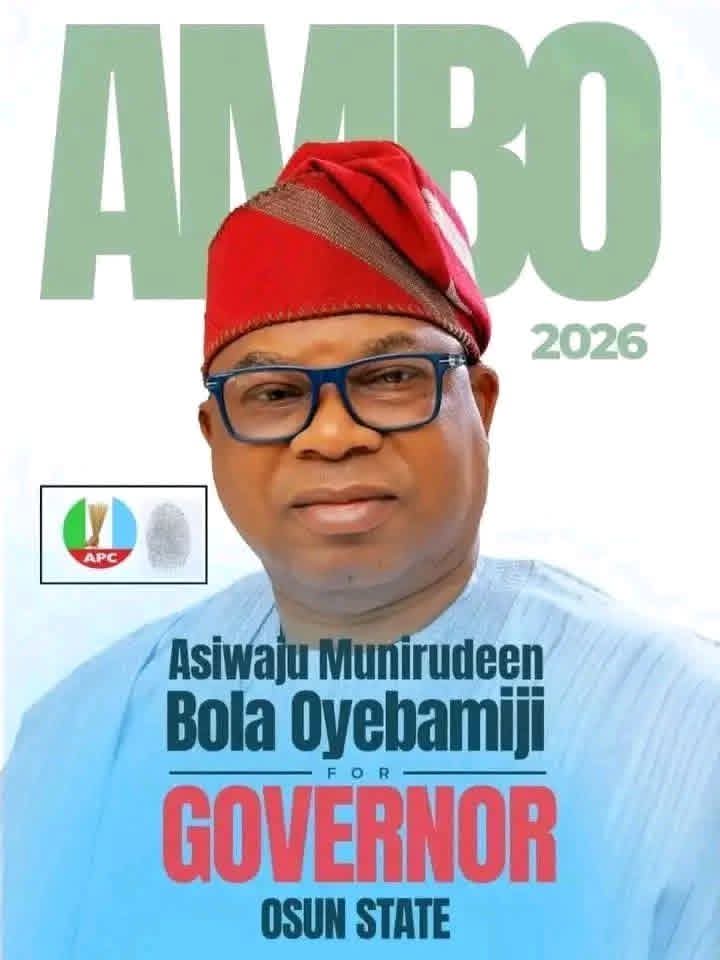
AMBO and the Osun Governorship Race: Assessing the Man, the Politics and the Vision
As political activities gather momentum ahead of the 2026 Osun State governorship election, a public affairs commentator, Oluseyi Olonade, has described the emergence of Asiwaju Munirudeen Bola Oyebamiji, popularly known as AMBO, as a significant development in the state’s political landscape.
In an article titled “Oyebamiji: The Man, The Politics and The Aspiration,” Olonade argued that the All Progressives Congress governorship hopeful possesses the character, experience and vision needed to reposition Osun State for sustainable growth.
According to the writer, Oyebamiji’s appeal stems from his extensive background in the banking sector, where he spent nearly three decades working with institutions including Wema Bank, Trans International Bank, Spring Bank and Enterprise Bank.
A native of Ikire in Irewole Local Government Area, Oyebamiji was described as a technocrat whose experience in corporate governance, finance and risk management has shaped his approach to public administration.
The article noted that his public service journey gained prominence in 2012 when he was appointed to oversee the then Osun State Investment Company Limited. Under his leadership, the organisation was reportedly restructured and transformed into Omoluabi Holdings Limited.
The writer further highlighted Oyebamiji’s tenure as Commissioner for Finance under successive APC administrations, where he was credited with managing the state’s finances during challenging economic periods.
Olonade also referenced Oyebamiji’s appointment as Managing Director of the National Inland Waterways Authority, describing it as further evidence of his administrative and leadership capabilities.
The article contrasted Oyebamiji’s governance philosophy with that of the current administration in Osun State, arguing that the APC aspirant favours institutional reforms, economic diversification and fiscal discipline.

According to the writer, Oyebamiji’s proposed agenda includes strengthening transparency in government spending, expanding internally generated revenue, attracting private-sector investments and promoting industrial and agricultural development.
The article also highlighted youth empowerment, entrepreneurship development and digital skills acquisition as key components of his vision for the state.
Olonade concluded that the forthcoming governorship election would present voters with a choice between different approaches to governance, expressing confidence that Oyebamiji’s experience and developmental agenda make him a strong contender in the race.
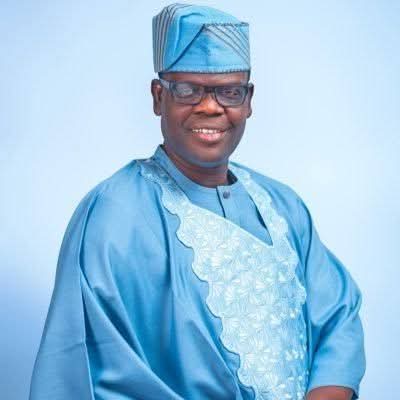
*Oselu Tiwa nTiwa Endorses Oriyomi Hamzat for Oyo Governorship*
A sociopolitical support group in Oyo State, Oselu Tiwa nTiwa, has declared its support for Alhaji Oriyomi Hamzat as the authentic governorship candidate of the Accord Party ahead of the forthcoming governorship election in the state.
The group made its position known in a statement jointly signed by its President, Mr. Adewale Oluwaseyi and Secretary, Alh. Adebayo Oyewole, on Thursday, describing Hamzat as a grassroots figure with strong connection to the people and a track record of humanitarian interventions across Oyo State.

According to the group, the endorsement followed what it described as careful observation of Hamzat’s leadership qualities, compassion and dedication to the welfare of ordinary citizens.
“Oriyomi Hamzat has consistently demonstrated empathy, courage and selfless commitment to humanity. Through his numerous interventions in the lives of ordinary citizens, he has become a symbol of hope to many families and communities,” the statement read.
Oselu Tiwa nTiwa also appealed to the national leadership of the Accord Party to prioritise the long-term future and electoral growth of the party in its decision-making process.
The group noted that Hamzat’s candidacy presents an opportunity for the party to strengthen its grassroots support base and expand its political relevance across Oyo State.
“We respectfully appeal to the National Leadership of the Accord Party to look beyond immediate political calculations and consider the bigger picture, the future growth, stability and electoral success of the party in Oyo State and beyond,” the statement added.
The group further expressed confidence in the leadership of the party, saying it believes the party’s national officers and stakeholders would take decisions that reflect fairness, inclusiveness and the collective interest of members.
While calling on party loyalists to remain calm and united, Oselu Tiwa nTiwa said continued consultations among stakeholders would help strengthen the Accord Party ahead of the election.
Signed:
Alh. Adebayo Oyewole,
Secretary.
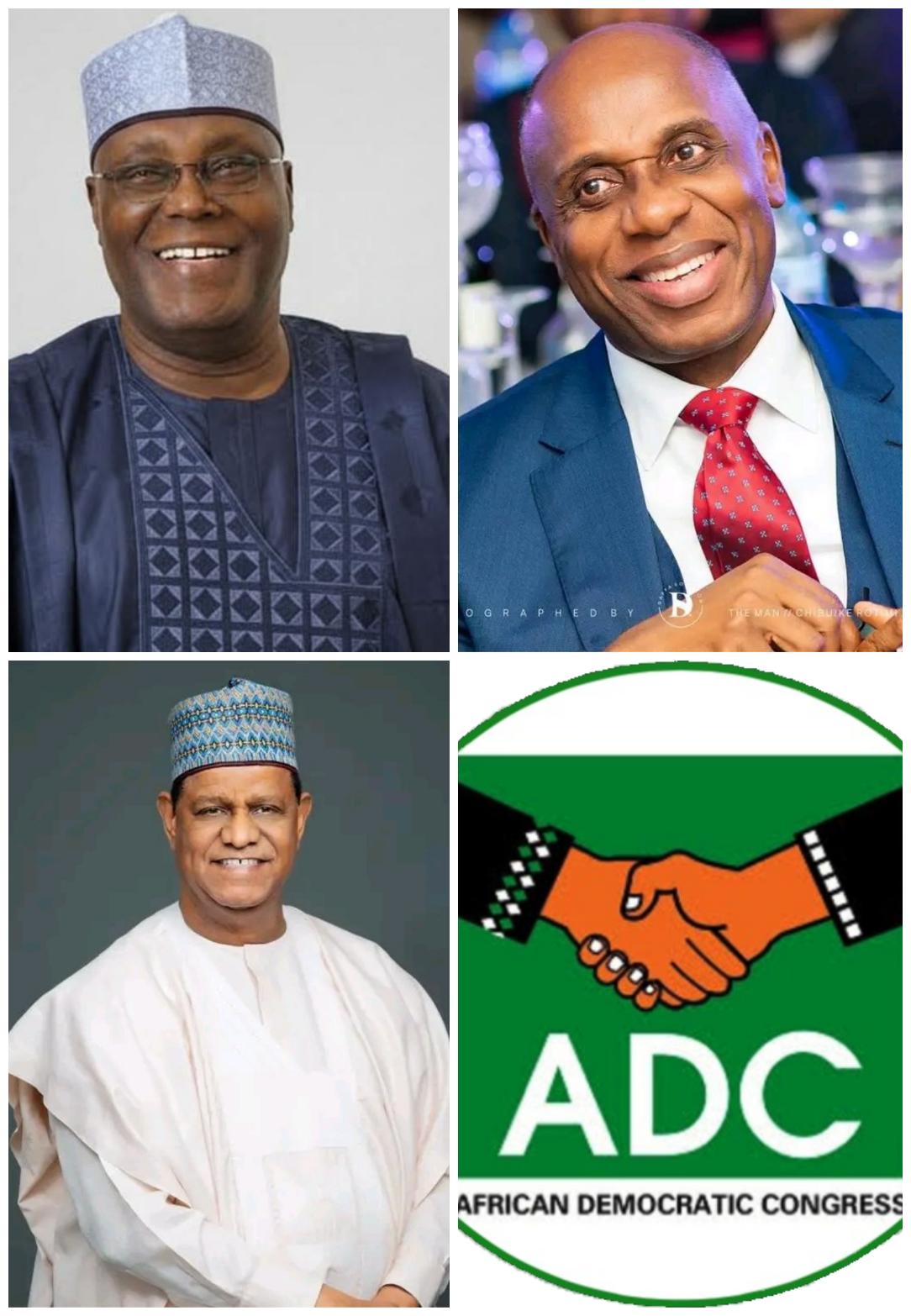
Atiku Set To Clinch ADC Presidential Ticket, Leads Amaechi, Hayatu-Deen In 34 States
Former Vice President of Nigeria and frontline presidential aspirant of the African Democratic Congress (ADC), Atiku Abubakar, is projected to emerge winner of the party’s presidential primaries, according to impeccable sources in Abuja.
The primaries, conducted across over 8,000 wards in the 36 states of the federation and the Federal Capital Territory, reportedly placed Atiku far ahead of his closest rivals — former Rivers State Governor, Rotimi Amaechi, and former Chairman of the Nigerian Economic Summit Group, Mohammed Hayatu-Deen.

Highly placed party insiders disclosed that Atiku is currently leading in 34 states, including the FCT, after securing dominance across the 19 Northern states, the five South-East states, and the six South-West states, while also maintaining a strong showing in at least three states in the South-South geopolitical zone.
The sources added that the outcome reflects what they described as “an overwhelming nationwide acceptance” of the former vice president within the opposition party ahead of the 2027 general election.
Meanwhile, the ADC leadership has invited members of the press to the official announcement of the final collated results scheduled for 11:00 a.m. on Tuesday, May 26, 2026, in Abuja.
The declaration of results is expected to be broadcast live on ARISE Television and two other major television stations, while also being livestreamed on the party’s official social media platforms on X and Facebook.
Speaking ahead of the announcement, the founding National Chairman of the ADC, Chief Ralph Nwosu, said the decision to televise the exercise live was aimed at promoting transparency and democratic accountability.
“We want millions of Nigerians at home and in the Diaspora to witness democracy in action,” Nwosu said.
He further revealed that the party leadership would encourage all three presidential aspirants to publicly embrace a peace accord and commit themselves to working together in unity for the party’s success.
According to him, the move is necessary to strengthen internal cohesion and position the ADC for victory in the presidential election scheduled for January 16, 2027.
Details later.


- Afreximbank Deepens Commitment to Economic Progress in The Bahamas June 1, 2026
- African Electric Vehicle (EV) platform Spiro raises $215M in equity to scale electric mobility and energy infrastructure across Africa June 1, 2026
- Africa Centres for Disease Control and Prevention (Africa CDC) Statement on Attacks Against Health Facilities During the Bundibugyo Virus Disease Response in the Democratic Republic of the Congo June 1, 2026
- Putting consumers at the centre of Africa’s dairy transformation June 1, 2026
- International Rescue Committee (IRC) warns Democratic Republic of the Congo (DRC) Ebola outbreak likely far larger than official figures suggest June 1, 2026
- South Africa: Portfolio Committee on Health Marks National Cancer Survivor Day and Reaffirms Importance of Early Detection and Public Awareness June 1, 2026
- Rwanda’s RSSB Tigers Crowned 2026 Basketball Africa League Champions June 1, 2026
- Uganda: Appointments Committee Begins Vetting of Ministerial Nominees June 1, 2026
- Sudan braces for worsening child malnutrition as pre-harvest season starts June 1, 2026
- Etu Energias Strengthens Angolan Footprint, Returns to Angola Oil & Gas (AOG) 2026 as Champion Sponsor June 1, 2026
- Afreximbank Deepens Commitment to Economic Progress in The Bahamas June 1, 2026
- African Electric Vehicle (EV) platform Spiro raises $215M in equity to scale electric mobility and energy infrastructure across Africa June 1, 2026
- Africa Centres for Disease Control and Prevention (Africa CDC) Statement on Attacks Against Health Facilities During the Bundibugyo Virus Disease Response in the Democratic Republic of the Congo June 1, 2026
- Putting consumers at the centre of Africa’s dairy transformation June 1, 2026
- International Rescue Committee (IRC) warns Democratic Republic of the Congo (DRC) Ebola outbreak likely far larger than official figures suggest June 1, 2026
- South Africa: Portfolio Committee on Health Marks National Cancer Survivor Day and Reaffirms Importance of Early Detection and Public Awareness June 1, 2026
- Rwanda’s RSSB Tigers Crowned 2026 Basketball Africa League Champions June 1, 2026
-

 news6 months ago
WHO REALLY OWNS MONIEPOINT? The $290 Million Deal That Sold Nigeria’s Top Fintech to Foreign Interests
-

 society4 weeks ago
SOCIAL MEDIA IS NOT A BATTLEFIELD COMMAND – WHY THE NIGERIAN ARMY’S ACTION AGAINST JUSTICE CRACK IS A NATIONAL SECURITY IMPERATIVE
-

 celebrity radar - gossips4 months ago
Dr. Chris Okafor Returns with Power and Fire of the Spirit -Mounts Grace Nation Altar with Fresh Anointing and Restoration Grace on February 1, 2026
-

 celebrity radar - gossips6 months ago
Prophet Kingsley Aitafo Releases 2026 Prophecy: ‘Nigeria Will Rise, but the World Must Prepare for Turbulence’