
Politics
Taxing a Broken Society: Why Nigeria’s Proposed Bank Transaction Levy Threatens Social Stability

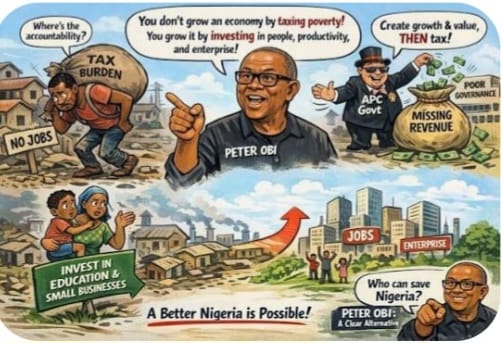
Taxing a Broken Society: Why Nigeria’s Proposed Bank Transaction Levy Threatens Social Stability.
By George Omagbemi Sylvester
“A Constitutional, Economic, and Moral Indictment of Governance Failure.”
Nigeria stands at a perilous crossroads. At a time when inflation is crushing household incomes, insecurity has become normalized and public trust in government is dangerously eroded, the proposal to impose an additional 7.5 percent charge on bank transactions is not merely an economic policy error and it is a profound governance failure with grave social implications.

This is not a debate about whether taxation is necessary. Every modern state requires revenue. The real question is legitimacy: when, how and under what moral and constitutional conditions can a government tax its citizens? In Nigeria’s current condition, this proposed levy fails every serious test of democratic governance, economic rationality and constitutional responsibility.
The Constitutional Breach: Taxation Without Welfare. Nigeria’s 1999 Constitution is unequivocal. Section 14(2)(b) states that “the security and welfare of the people shall be the primary purpose of government.” This clause is not aspirational rhetoric; it is the philosophical foundation of the Nigerian state.
Yet, after years of deteriorating public services, escalating poverty, collapsing security architecture and declining human development indicators, the Nigerian state can no longer credibly argue that it has fulfilled this foundational obligation.
According to the World Bank, over 63 percent of Nigerians (more than 133 million people) are multidimensionally poor, lacking access to basic healthcare, education, nutrition and clean water. Inflation, driven by subsidy removal and currency depreciation, exceeded 28 percent in 2024, eroding real incomes at a pace unmatched in decades. Insecurity continues to disrupt agriculture, commerce and daily life, while unemployment and underemployment remain stubbornly high.

In this context, imposing an additional financial burden on citizens for merely accessing their own money constitutes what legal scholars describe as regressive extraction with a form of fiscal policy that disproportionately punishes the poor while offering no commensurate public benefit.
As constitutional lawyer Professor Itse Sagay, SAN, once observed, “Taxation is justified only where citizens can see and feel the presence of the state in their daily lives.” In Nigeria today, that presence is largely absent.
Economic Reality: A Tax on Survival, Not Wealth. From an economic standpoint, a bank transaction levy is among the most regressive forms of taxation. Unlike progressive income or wealth taxes, transaction charges do not distinguish between surplus and subsistence. They penalize traders, small businesses, salary earners and informal workers who rely on frequent banking transactions to survive.
Nobel laureate Joseph Stiglitz has consistently warned that “unfair tax systems undermine social cohesion and weaken the legitimacy of the state.” When citizens perceive taxation as punishment rather than contribution, compliance gives way to resistance, avoidance and economic disengagement.
Nigeria’s economy is already suffering from declining productivity, shrinking consumer demand and capital flight. Adding a transaction levy risks pushing more economic activity into cash-based informality, weakening financial inclusion and undermining the very tax base the government seeks to expand.

Political Philosophy and the Collapse of Consent. Political legitimacy is not sustained by coercion but by consent. John Locke was clear: governments exist to protect life, liberty and property. Where property is arbitrarily taken without reciprocal protection, the social contract fractures.
Similarly, Jean-Jacques Rousseau argued that laws lose authority when they no longer reflect the general will or promote the common good. In Nigeria’s case, policies that deepen hardship while public officials enjoy unchecked privileges create what scholars term a legitimacy deficit.
Even Thomas Hobbes, often cited in defense of strong authority, warned that when the state becomes more frightening than the chaos it claims to prevent, social order collapses. History (from pre-revolutionary France to more recent cases of fiscal unrest across the Global South) demonstrates that economic injustice is often the spark of political instability.
Utilitarian Failure: Pain Without Public Gain. From a utilitarian perspective, the policy is equally indefensible. Jeremy Bentham’s principle of “the greatest good for the greatest number” is entirely absent. The pain imposed by the levy is collective and immediate; the benefits, if any, are speculative and opaque.
There is no transparent framework showing how revenues from this levy would translate into improved healthcare, education, security or infrastructure. Without such clarity, the policy appears not as reform but as fiscal desperation, shifting the cost of state failure onto citizens already at breaking point.
Economist Dambisa Moyo has cautioned that “states that rely excessively on extraction rather than productivity eventually face social backlash.” Nigeria risks becoming a textbook case.
Comparative Governance: Why Citizens Resist Unjust Extraction. Across the world, citizens tolerate taxation when it is visibly linked to social benefits. In countries with strong welfare systems, taxes fund healthcare, education, housing and social protection. Even in resource-rich states with controversial governance records, citizens often receive direct material benefits that sustain a fragile social bargain.
Nigeria’s tragedy lies in its constitutional promise without constitutional delivery. Chapter Two of the Constitution outlines socio-economic rights, yet Section 6(6)(c) renders them largely non-justiciable, creating what many scholars describe as a structural contradiction: rights promised but not enforceable.
Legal philosopher Ronald Dworkin argued that “a political community must treat all its members with equal concern and respect.” Policies that extract from the poor while protecting elite consumption violate this foundational principle.
The Moral Argument: When Law Loses Authority. The ancient maxim lex iniusta non est lex (an unjust law is no law at all) remains central to jurisprudence. Laws that deepen suffering without serving justice lose moral authority, even if they retain formal legality.
Nigeria’s governance crisis is not merely economic; it is ethical. Excessive public spending on political offices, opaque budgeting, and persistent corruption scandals undermine any moral justification for further taxation.
As former UN Secretary-General Kofi Annan warned, “A government that ignores the suffering of its people forfeits the moral right to demand sacrifice.”
A Warning, Not a Threat. This analysis is not a call to disorder. It is a warning grounded in history and reason. Societies pushed beyond endurance do not require incitement to react; pressure alone is enough. Governments that mistake silence for consent often discover too late that endurance has limits.
Nigeria still has a choice. Genuine fiscal reform must begin with cutting the cost of governance, enforcing accountability, expanding productivity and restoring public trust. Taxation must be the final step not the first reflex of a failing system.
Closing Reflection: The Test of Statesmanship. Great leadership is measured not by how much it can extract from its people, but by how effectively it can serve, protect, and uplift them. Nigeria’s current trajectory risks converting fiscal policy into a catalyst for deeper alienation.
History is unforgiving to governments that treat citizens as expendable revenue sources. Stability is not enforced; it is earned. And legitimacy, once lost, is far harder to recover than revenue.
George Omagbemi Sylvester
Political Analyst & Columnist
Published by SaharaWeeklyNG





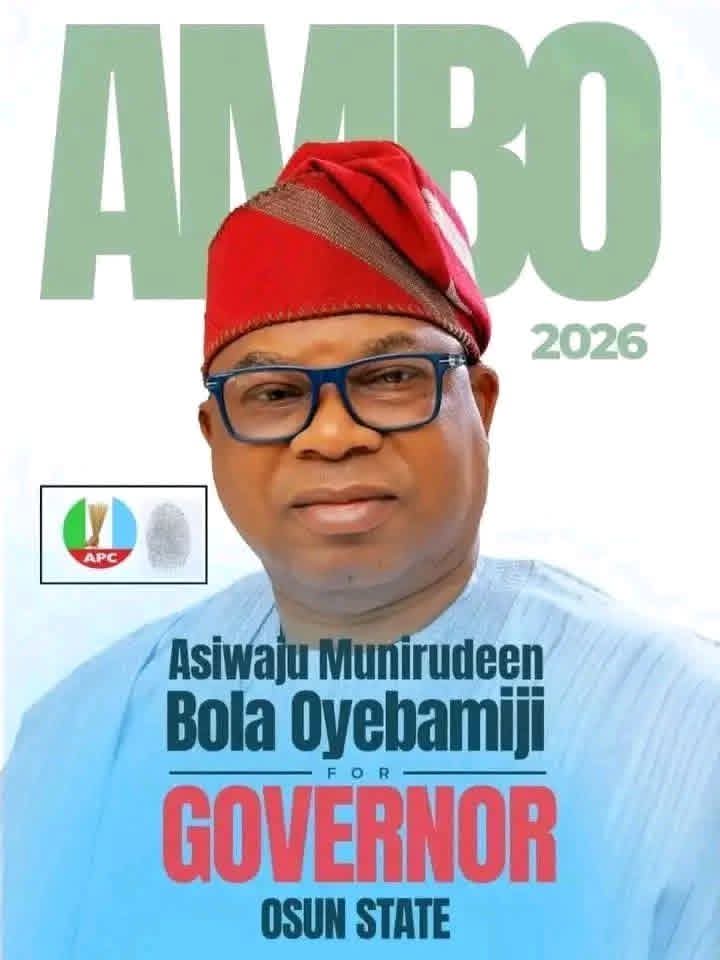
AMBO and the Osun Governorship Race: Assessing the Man, the Politics and the Vision
As political activities gather momentum ahead of the 2026 Osun State governorship election, a public affairs commentator, Oluseyi Olonade, has described the emergence of Asiwaju Munirudeen Bola Oyebamiji, popularly known as AMBO, as a significant development in the state’s political landscape.
In an article titled “Oyebamiji: The Man, The Politics and The Aspiration,” Olonade argued that the All Progressives Congress governorship hopeful possesses the character, experience and vision needed to reposition Osun State for sustainable growth.
According to the writer, Oyebamiji’s appeal stems from his extensive background in the banking sector, where he spent nearly three decades working with institutions including Wema Bank, Trans International Bank, Spring Bank and Enterprise Bank.
A native of Ikire in Irewole Local Government Area, Oyebamiji was described as a technocrat whose experience in corporate governance, finance and risk management has shaped his approach to public administration.
The article noted that his public service journey gained prominence in 2012 when he was appointed to oversee the then Osun State Investment Company Limited. Under his leadership, the organisation was reportedly restructured and transformed into Omoluabi Holdings Limited.
The writer further highlighted Oyebamiji’s tenure as Commissioner for Finance under successive APC administrations, where he was credited with managing the state’s finances during challenging economic periods.
Olonade also referenced Oyebamiji’s appointment as Managing Director of the National Inland Waterways Authority, describing it as further evidence of his administrative and leadership capabilities.
The article contrasted Oyebamiji’s governance philosophy with that of the current administration in Osun State, arguing that the APC aspirant favours institutional reforms, economic diversification and fiscal discipline.

According to the writer, Oyebamiji’s proposed agenda includes strengthening transparency in government spending, expanding internally generated revenue, attracting private-sector investments and promoting industrial and agricultural development.
The article also highlighted youth empowerment, entrepreneurship development and digital skills acquisition as key components of his vision for the state.
Olonade concluded that the forthcoming governorship election would present voters with a choice between different approaches to governance, expressing confidence that Oyebamiji’s experience and developmental agenda make him a strong contender in the race.
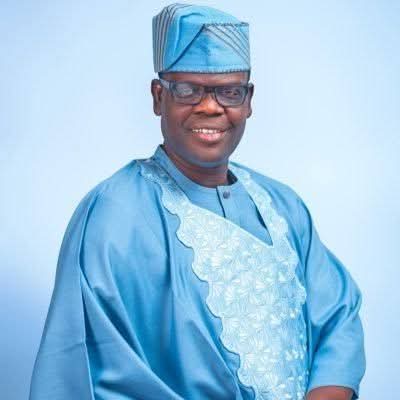
*Oselu Tiwa nTiwa Endorses Oriyomi Hamzat for Oyo Governorship*
A sociopolitical support group in Oyo State, Oselu Tiwa nTiwa, has declared its support for Alhaji Oriyomi Hamzat as the authentic governorship candidate of the Accord Party ahead of the forthcoming governorship election in the state.
The group made its position known in a statement jointly signed by its President, Mr. Adewale Oluwaseyi and Secretary, Alh. Adebayo Oyewole, on Thursday, describing Hamzat as a grassroots figure with strong connection to the people and a track record of humanitarian interventions across Oyo State.

According to the group, the endorsement followed what it described as careful observation of Hamzat’s leadership qualities, compassion and dedication to the welfare of ordinary citizens.
“Oriyomi Hamzat has consistently demonstrated empathy, courage and selfless commitment to humanity. Through his numerous interventions in the lives of ordinary citizens, he has become a symbol of hope to many families and communities,” the statement read.
Oselu Tiwa nTiwa also appealed to the national leadership of the Accord Party to prioritise the long-term future and electoral growth of the party in its decision-making process.
The group noted that Hamzat’s candidacy presents an opportunity for the party to strengthen its grassroots support base and expand its political relevance across Oyo State.
“We respectfully appeal to the National Leadership of the Accord Party to look beyond immediate political calculations and consider the bigger picture, the future growth, stability and electoral success of the party in Oyo State and beyond,” the statement added.
The group further expressed confidence in the leadership of the party, saying it believes the party’s national officers and stakeholders would take decisions that reflect fairness, inclusiveness and the collective interest of members.
While calling on party loyalists to remain calm and united, Oselu Tiwa nTiwa said continued consultations among stakeholders would help strengthen the Accord Party ahead of the election.
Signed:
Alh. Adebayo Oyewole,
Secretary.
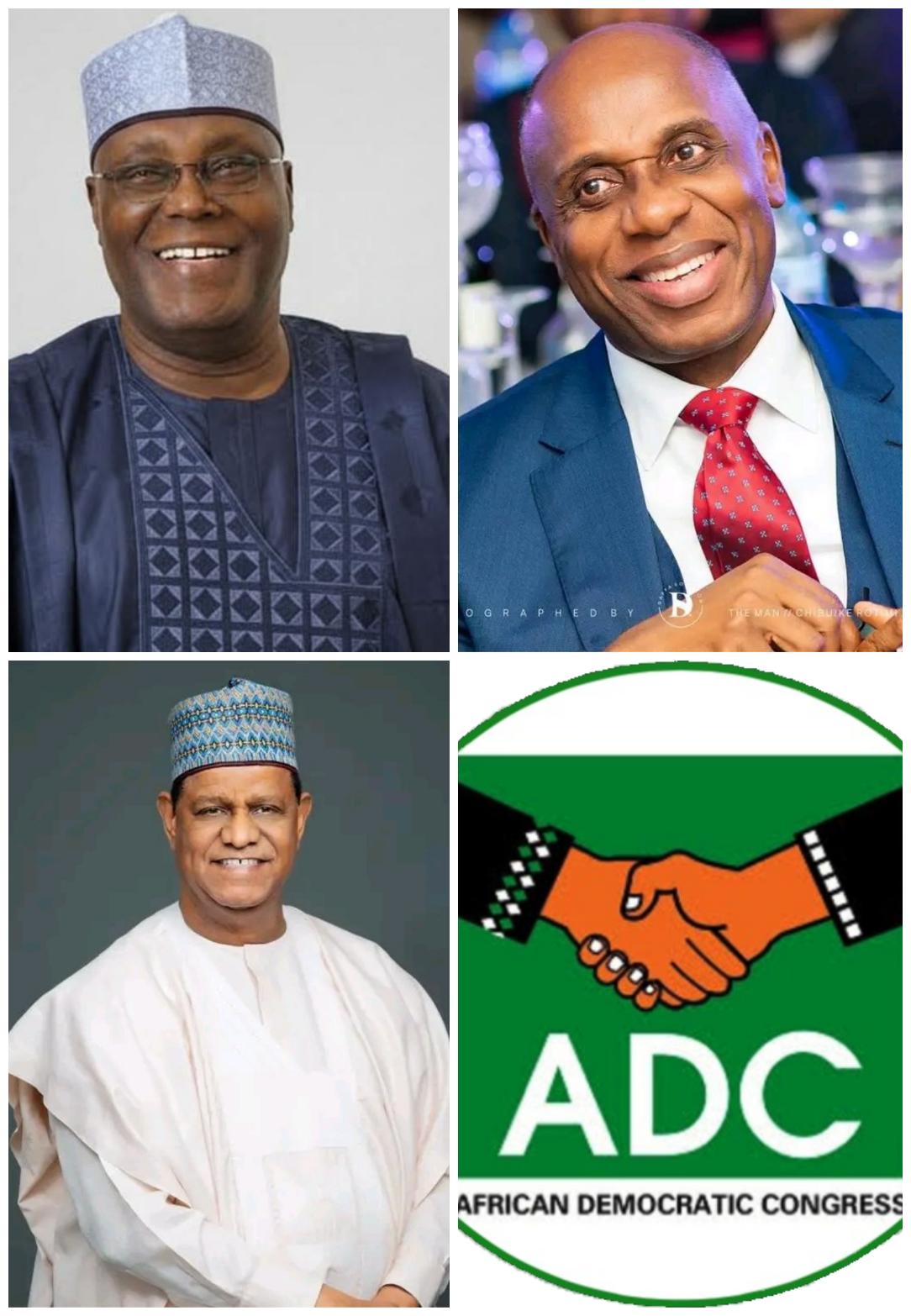
Atiku Set To Clinch ADC Presidential Ticket, Leads Amaechi, Hayatu-Deen In 34 States
Former Vice President of Nigeria and frontline presidential aspirant of the African Democratic Congress (ADC), Atiku Abubakar, is projected to emerge winner of the party’s presidential primaries, according to impeccable sources in Abuja.
The primaries, conducted across over 8,000 wards in the 36 states of the federation and the Federal Capital Territory, reportedly placed Atiku far ahead of his closest rivals — former Rivers State Governor, Rotimi Amaechi, and former Chairman of the Nigerian Economic Summit Group, Mohammed Hayatu-Deen.

Highly placed party insiders disclosed that Atiku is currently leading in 34 states, including the FCT, after securing dominance across the 19 Northern states, the five South-East states, and the six South-West states, while also maintaining a strong showing in at least three states in the South-South geopolitical zone.
The sources added that the outcome reflects what they described as “an overwhelming nationwide acceptance” of the former vice president within the opposition party ahead of the 2027 general election.
Meanwhile, the ADC leadership has invited members of the press to the official announcement of the final collated results scheduled for 11:00 a.m. on Tuesday, May 26, 2026, in Abuja.
The declaration of results is expected to be broadcast live on ARISE Television and two other major television stations, while also being livestreamed on the party’s official social media platforms on X and Facebook.
Speaking ahead of the announcement, the founding National Chairman of the ADC, Chief Ralph Nwosu, said the decision to televise the exercise live was aimed at promoting transparency and democratic accountability.
“We want millions of Nigerians at home and in the Diaspora to witness democracy in action,” Nwosu said.
He further revealed that the party leadership would encourage all three presidential aspirants to publicly embrace a peace accord and commit themselves to working together in unity for the party’s success.
According to him, the move is necessary to strengthen internal cohesion and position the ADC for victory in the presidential election scheduled for January 16, 2027.
Details later.


- Afreximbank Deepens Commitment to Economic Progress in The Bahamas June 1, 2026
- African Electric Vehicle (EV) platform Spiro raises $215M in equity to scale electric mobility and energy infrastructure across Africa June 1, 2026
- Africa Centres for Disease Control and Prevention (Africa CDC) Statement on Attacks Against Health Facilities During the Bundibugyo Virus Disease Response in the Democratic Republic of the Congo June 1, 2026
- Putting consumers at the centre of Africa’s dairy transformation June 1, 2026
- International Rescue Committee (IRC) warns Democratic Republic of the Congo (DRC) Ebola outbreak likely far larger than official figures suggest June 1, 2026
- South Africa: Portfolio Committee on Health Marks National Cancer Survivor Day and Reaffirms Importance of Early Detection and Public Awareness June 1, 2026
- Rwanda’s RSSB Tigers Crowned 2026 Basketball Africa League Champions June 1, 2026
- Uganda: Appointments Committee Begins Vetting of Ministerial Nominees June 1, 2026
- Sudan braces for worsening child malnutrition as pre-harvest season starts June 1, 2026
- Etu Energias Strengthens Angolan Footprint, Returns to Angola Oil & Gas (AOG) 2026 as Champion Sponsor June 1, 2026
- Afreximbank Deepens Commitment to Economic Progress in The Bahamas June 1, 2026
- African Electric Vehicle (EV) platform Spiro raises $215M in equity to scale electric mobility and energy infrastructure across Africa June 1, 2026
- Africa Centres for Disease Control and Prevention (Africa CDC) Statement on Attacks Against Health Facilities During the Bundibugyo Virus Disease Response in the Democratic Republic of the Congo June 1, 2026
- Putting consumers at the centre of Africa’s dairy transformation June 1, 2026
- International Rescue Committee (IRC) warns Democratic Republic of the Congo (DRC) Ebola outbreak likely far larger than official figures suggest June 1, 2026
- South Africa: Portfolio Committee on Health Marks National Cancer Survivor Day and Reaffirms Importance of Early Detection and Public Awareness June 1, 2026
- Rwanda’s RSSB Tigers Crowned 2026 Basketball Africa League Champions June 1, 2026
-

 news6 months ago
WHO REALLY OWNS MONIEPOINT? The $290 Million Deal That Sold Nigeria’s Top Fintech to Foreign Interests
-

 society4 weeks ago
SOCIAL MEDIA IS NOT A BATTLEFIELD COMMAND – WHY THE NIGERIAN ARMY’S ACTION AGAINST JUSTICE CRACK IS A NATIONAL SECURITY IMPERATIVE
-

 celebrity radar - gossips4 months ago
Dr. Chris Okafor Returns with Power and Fire of the Spirit -Mounts Grace Nation Altar with Fresh Anointing and Restoration Grace on February 1, 2026
-

 celebrity radar - gossips6 months ago
Prophet Kingsley Aitafo Releases 2026 Prophecy: ‘Nigeria Will Rise, but the World Must Prepare for Turbulence’