
celebrity radar - gossips
Did Buhari watch Chelsea’s incredible victory?


Did Buhari watch Chelsea’s incredible victory?
Tunde Odesola

’Twas a spectacle with all the trappings of a full-fledged drama: conflict, timing, tension, rhythm, mood, language, sound, space, focus, contrast and a crushing climax. ’Twas the UEFA Champions League final played before 50,035 spectators on a 115x68m stage called Dragon Stadium in Porto, Portugal’s second largest city after Lisbon. Believe you me, the dragons that emerged within the stadium and afflicted the Manchester team won’t be exorcised too soon.
It’s not only art that imitates life, sports do, too. And many a time, life, in its fitful drama, offers grapes instead of oranges and waxes bile instead of honey.
For me, the outcome of the impending UEFA finale was as sure as death. Lightning doesn’t strike at the same spot twice. Eewo orisa! Impossible abomination! But I was soon to discover the futility of this age-long belief even as science has proved that lightning strikes the 102-storey Empire State Building in Manhattan, New York, about 25 times every year.
I had it all figured out, or so I thought. I had cast some catchy headlines and thought up some super storyline with twists and turns leading to the ultimate triumph of Manchester City FC in the UEFA final.
But life is quicksand; after Chelsea’s lightning had struck Manchester City twice in England, it travelled an air distance of 1,812 kilometers to Portugal and struck City for the third time in six weeks! Chelsea FC put a grenade to my personal pot of fantasy and shattered the initial layout of this article. Ha! How do I beat my deadline?
Usually, I write my column on Saturday morning but I delayed it till Saturday night – after the epic final – just to accommodate Manchester City’s anticipatory victory, hoping to use the triumph to rile my known and unknown football frenemies, who cut across countries and continents, online and offline.
In England, for instance, I dislike Chelsea FC with passion and long draped it in the garb of an archenemy while in Spain, where I support the club that plays football like angels, FC Barcelona, my archfoe is (un)Real Madrid FC, which I do not dislike but hate for their dominance.
When Chelsea came up against Madrid in the semifinals of the competition, I supported the London club but I silently prayed it never get past Manchester City in the finals.
Worldwide, tit-for-tat aka ‘gbas gbos’ is the language spoken in football fandom, where revenge is never cold, but served hot like the pounded yam of 20 years.
In Porto, on Saturday, Chelsea’s cunning coach, Thomas Tuchel, exacted another pound of flesh from the greatest coach in club football today, Pep Guardiola, who had peppered Tuchel four times while they both coached Bayern Munich and Borussia Dortmund respectively.
Before the UCL final, Guardiola had only lost in one of the 15 finals in his career while Tuchel had lost in his two finals only to come back a year later and win both titles.
The mantra among Nigerian football supporters is ‘the enemy of my friend is my enemy’, and inter-club banters could spring from trivias such as jersey colour or coach’s height, reinforcing the proverb which says an enemy never kills a big grasscutter, ota eni kii pa odu oya.
To understand football fans’ psychology, a peep into Nigerian politics or polygamy will suffice. Except suspicion, envy and rivalry, nothing is cast in concrete in Nigerian politics or a typical polygamous home. What is sauce for the goose is never sauce for the gander: rules change like quicksilver, depending on the idiosyncrasies of who is at the driver and the convenience of the seat.
For me, May is a month I won two battles but lost the war. One, my preferred team, Leicester defeated Chelsea 0-1 in the final of the English FA Cup. Two, Villareal, a Spanish team, defeated Manchester United in the final of the Europa League final 10-11 on penalties, but the biggest prize of all was lost to Chelsea’s never-say-die spirit and Guardiola’s oversabi which is turning into an albatross over the years.
I’m still in shock as to why Guardiola, like it’s now becoming common to him in the knockout stages of the UCL to come up with questionable line-ups, decided to play without a natural striker and a defensive midfielder on the biggest stage of club football, and Chelsea punished his indiscretion when a Mason Mount intelligent pass split open City’s defence through the very middle for Kai Havertz to maroon goalkeeper Ederson Moraes, scoring the only goal of the match.
Today, I neither intend to bemoan the twin bombs dropped on the city of Manchester by Villareal and Chelsea within three days apart, nor do I intend to count the countless teeth of Adepele, the hyperdontia that Nigeria’s political class has become.
Now that the hurlyburly’s done and the battle is won and lost, Chelsea, worthy Champions of Europe, deserve their time in the sun for ‘Blue is the colour, football is the game’.
I doff my hat for Chelsea, whose fans, britannica.com describes as one of ‘England’s most notorious gangs of football hooligans known as Headhunters’, and ‘have been responsible for organised violence in the stands since the 1970s’.
But as the euphoria of victory and the bitterness of defeat ebb, I guess it’s also time the Nigerian leadership looks in the mirror and takes lessons from the Chelsea triumph.
I wish Nigerian President, Major General Muhammadu Buhari (retd.) and his deputy, Yemi Osinbajo, watched the match. I don’t give a hoot if they oohed or aahed during the match. All I care about is that they both did not lose the lessons inherent in the Chelsea victory.
I also wish the President of the Senate, Ahmed Lawan, his deputy, Ovie Omo-Agege, and the leadership of the House of Representatives – all watched the match, and not lose sight of the lessons in the exemplary leadership of Tuchel, who took Chelsea from the ninth position in January this year to the pinnacle of club football four months later.
Tuchel, unlike the Buhari-Osinbajol-led government, didn’t whine about the players he inherited from Chelsea’s former coach, Frank Lampard, but settled down to work and turned an average team to Europe’s best.
I wish Nigerian political leaders at all levels saw the economic stupidity in our love for foreign football and truly develop our local leagues to partake in the multi billion dollars venture football has become globally.
As I said early on, this article is a salute to Chelsea’s indomitable spirit, and not a criticism of the inept Buhari-Osinbajo government. Tuchel picked the best available legs for every game. He wasn’t nepotistic like the Buhari-Osinbajo rudderless government, which has never criticised killings by suspected Fulani herdsmen across the country.
Tuchel understands the burden of leadership. He knows the goals of the board and the expectation of the club’s teeming supporters worldwide, and he rose to the occasion by constantly communicating with his players, never absented himself at critical moments, demonstrating compassion, exuding confidence and building trust – virtues lacking in the Buhari-Osinbajo government.
It’s Chelsea’s moment of joy, I won’t spoil their fun by allowing what a popular ex-Edo lawmaker calls ‘odoriferous saga cum gargantuan saga’ to take the shine of their victory. I won’t allow the Buhari-Osinbajo government to take the centre stage of this piece.
May was a month of Chelsea triumph. It was also a month when Nigeria’s Defence Minister, Bashir Magashi, delivered a ‘heartless’ speech at the funeral of former COAS, Lt.-Gen Ibrahim Attahiru. May was the month when the new ‘Aide-de-Camp’ to the Aide-De-Camp of Governor Nasir El-Rufai was unveiled and the incoming First Lady got into a fresh ‘thug’ of war.
May was the month when the parents of kidnapped Greenfield University students paid N180m and bought many motorcycles to secure the release of their children from kidnappers.
May Buhari and Osinbajo take the lessons of Chelsea victory beyond May.
Up Blues!
Email: [email protected]
Facebook: @tunde odesola
Twitter: @tunde_odesola




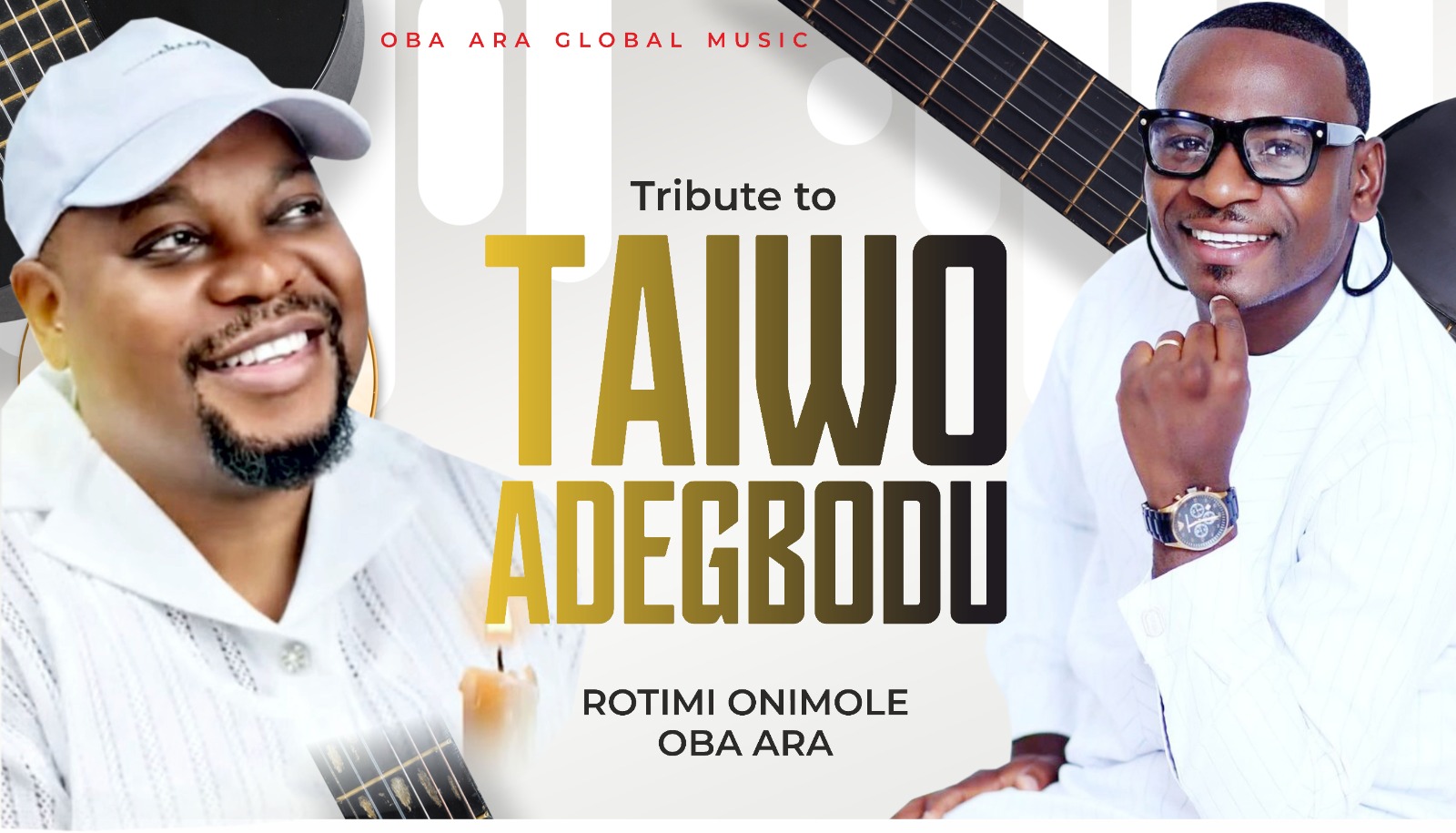
Oba Ara Releases Emotional Tribute to Late Taiwo Adegbodu
Taofik Afolabi
The gospel music community continues to grieve the painful loss of Taiwo Adegbodu, a beloved figure whose sudden departure left a deep void among fans, colleagues, and loved ones. In response to this loss, renowned gospel minister Rotimi Onimole, popularly known as Oba Ara, has released a moving tribute song that captures both the sorrow of the moment and the enduring legacy of the late singer.
Oba Ara, a proud son of Isale Eko, channels raw emotion throughout the song, using heartfelt lyrics and soul-stirring melodies to reflect on his personal connection with Taiwo Adegbodu. In the tribute, he openly expresses how deeply the news of Adegbodu’s passing shook him, describing it as a painful and unexpected loss that is difficult to come to terms with.
The song goes beyond mourning, it celebrates the life, ministry, and impact of Taiwo Adegbodu. Oba Ara highlights the late artist’s dedication to spreading the gospel through music, his inspiring voice, and the spiritual influence he had on many within and beyond Nigeria. Through powerful verses, he paints a picture of a man who lived for God and touched countless lives through his ministry.
Listeners have described the tribute as both comforting and deeply emotional, as it resonates with the collective grief of the gospel music community. It serves as a reminder that although Taiwo Adegbodu is no longer physically present, his music, message, and legacy will continue to live on.
In honoring his late colleague, Oba Ara not only pays his respects but also offers a source of healing for fans and fellow ministers, using music as a tool to process grief and celebrate a life well lived.
celebrity radar - gossips
Buratai, Fagbemi , Shagaya, Olofa, Others Eulogise Olowu Kuta’s Olori On 60th Birthday, Foundation Launch
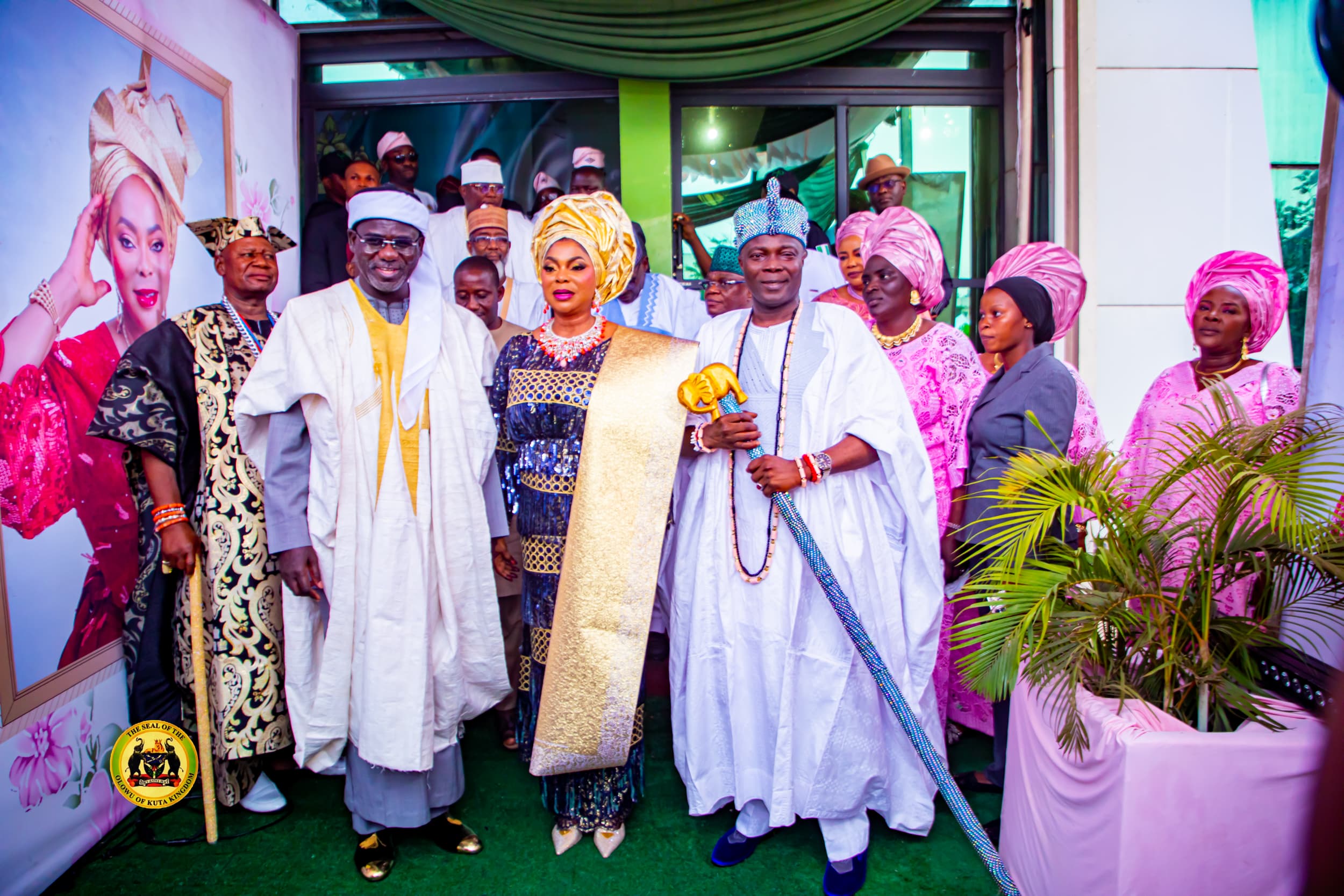
Buratai, Fagbemi , Shagaya, Olofa, Others Eulogise Olowu Kuta’s Olori On 60th Birthday, Foundation Launch
Eminent personalities across the Nigeria stormed the TFK Event Centre, Bala Mohammed Way, Guzape, Abuja, to celebrate the 60th birthday of Olowu Kuta’s Olori, Queen Jumai Amoke and her Foundation Launch on Saturday 28, March 2026.

From former Chief of Army Staff, Lt Gen TY Buratai rtd, to the Minister of Justice and Attorney-General of the Federation, Prince Lateef Fagbemi; Olofa of Offa, HRM Oba Mufutau Gbadamosi. Even top businesswoman and socialite, Chief (Mrs) Bola Shagaya, was in attendance.


Other dignitaries were newly promoted Deputy Inspector-General of Police and former AIG Zone 2 , Lagos , Adegoke Fayoade, Major General Abdumalik, Major General Samuel Adebayo rtd (Fmr CDI);
Major General Anthony Omozoje rtd (Fmr Copp);
Alhaji Tajudeen Owoyemi (Asiwaju of Offa and CEO Radisson Hotel Nigeria;
Dr Waheed Olagunju, former managing director of Bank of Industry, Oniba of Iba, Lagos State, HRM Oba Dr Suleiman Raji ;
Justice Falola, Olu of Ile-Ogbo , Oba Adetoyese amongst many traditional rulers and captains of industry too numerous to mention.
Speaking at the occasion, the Chief Host, Olowu of Kuta, HRM Oba Dr Adekunle Oyelude Makama, CON , Tegbosun iii, who is also the husband of the celebrant commended Queen Jumai for ‘ her slender arms full of kindness’ to establish such humanitarian Foundation, ‘Amoke Children and mother in Need Foundation’ at a time Nigerians are going through economic crisis occassioned by the global meltdown.
Olowu also commended her steadfastness and love for the less privileged and downtrodden.
The monarch refrenced the task before his wife’s humanitarian gesture said her best is yet to come.
” Olori Amoke Jumai, I celebrate you. You will celebrate 70, 80, 90 and continue to shine as you continue to put a smile on people’s faces. I love you, “Olowu Kuta added.
To Lt Gen Buratai, a former army chief and former Nigerian Ambassador to Benin Republic, the reward of hard work is more work.
Buratai, who also doubles as Balogun Agba of Owu Kuta, a chieftaincy title reserved for a generalismo congratulated Queen Jumai for attaining the age of 60 in good health.
The retired army General said he’s not surprised by the turn out of eminent personalities across the country to celebrate the Olowu Kuta’s Olori because she merited it through her hospitality to all, adding that Allah the most merciful, most beneficial would accept all her act of ibadah.
The minister of Justice, Prince Fagbemi, was full of praises for Queen Jumai for deeming it fit to have a place in her heart to accommodate the needy and less privileged in ‘our society.’
Prince Fagbemi urged the guests to contribute generously to support the Foundation in order to continue to alleviate poverty and put a smile on the faces of the people.
” I congratulate you on your 60th birthday and Foundation Launch. I wish you many happy returns of the day and many more fruitful services to the country and motherland”, Prince Fagbemi added.
The celebrant, Queen Jumai who was grining from ear to ear thankfully said she was excited by the turn out and the response of the people to her foundation.
Queen Jumai, however, promised to continue to use her resources and donations received for the good of the needy and less privileged in the society.
” I want to appreciate my own Kabiesi Olofa of Offa , for his presence and im I’m using him as a point of contact to all other Kabiesis present here, the minister of justice and Attorney-General, you’re welcome, sir; Mrs Bola Shagaya, I salute your enterprise, Lt Gen Buratai, I’m grateful, sir; DIG Fayoade, Justice Falola and other dignitaries too numerous to mention, I thank you, all. To my darling husband, Kabiesi Olowu , I thank you immensely for your support. And to my family and friends, I thank you , all. E se pupo!”, she said.
celebrity radar - gossips
Adron Homes Elevates Cultural Pride as Dignitaries Grace 39th Lisabi Festival in Abeokuta
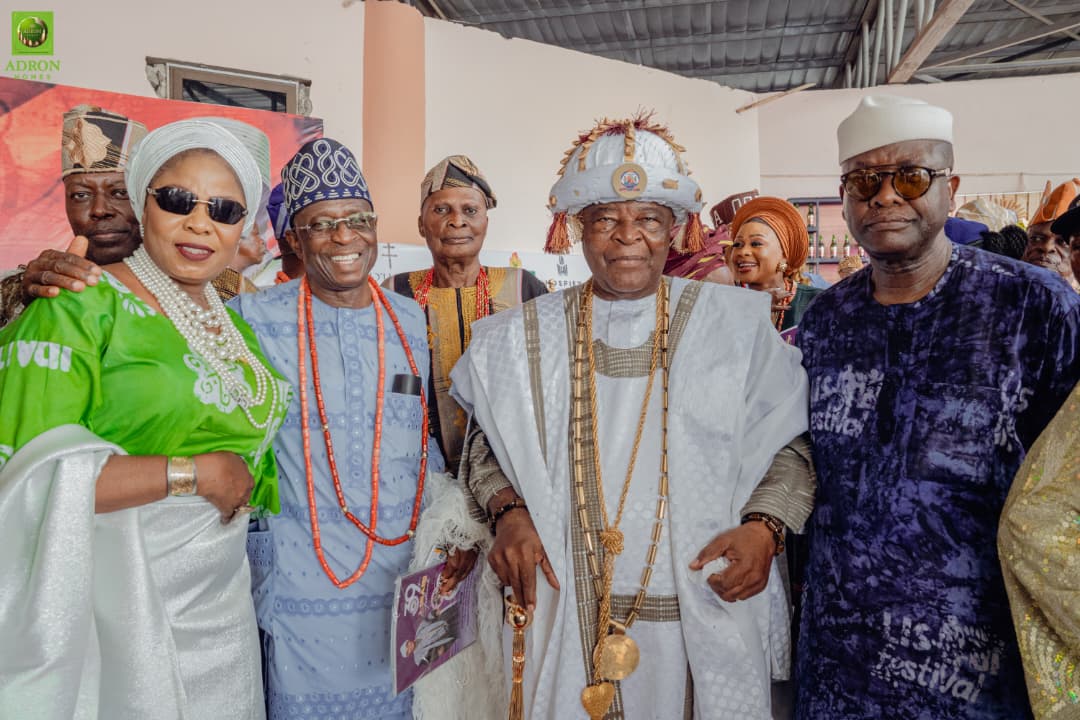
Adron Homes Elevates Cultural Pride as Dignitaries Grace 39th Lisabi Festival in Abeokuta
The ancient city of Abeokuta came alive in a grand display of culture, history, and unity as dignitaries from across Nigeria converged at the iconic Ake Palace Ground for the 39th edition of the Lisabi Festival, an annual celebration deeply rooted in the Egba people’s heritage.
The event, proudly supported by Adron Homes and Properties Limited, witnessed an impressive parade of distinguished personalities, traditional rulers, government officials, business leaders, and cultural enthusiasts, all captured in vibrant pictures that tell the story of a people united by history and pride.
From richly adorned monarchs in regal attire to elegantly dressed guests reflecting the depth of Yoruba tradition, the images from the festival encapsulate moments of honour, reverence, and celebration. Each photograph portrays not just faces, but influence, leaders, and stakeholders who continue to shape cultural preservation and community development.
At the heart of the celebration was the revered Oba Adedotun Aremu Gbadebo, whose presence underscored the festival’s significance as a symbol of Egba resilience and identity. Surrounding him were eminent dignitaries whose attendance further amplified the prestige of the event.
Adron Homes and Properties Limited stood out prominently, not only as a sponsor but as a key driver of cultural sustainability. Through its strategic support, the company reinforced its commitment to preserving indigenous heritage while fostering community engagement. The brand’s visibility across the venue and within the pictorial highlights reflects a deliberate alignment with culture, tradition, and people-centered development.
Beyond real estate, Adron Homes has continued to position itself as a cultural partner, investing in platforms that celebrate history and strengthen communal bonds. Its involvement in the Lisabi Festival is a testament to its broader vision of building not just homes, but legacies rooted in identity and pride.
The 39th Lisabi Festival, as captured through the lens of dignitaries in attendance, is more than an event, it is a narrative of continuity. And through its unwavering support, Adron Homes has once again set the pace, demonstrating that corporate institutions can play a vital role in sustaining the cultural heartbeat of a people.
As the echoes of drums fade and the colours of the festival linger in memory, one thing remains clear: the story told through these images is one of unity, heritage, and the enduring partnership between tradition and progress.


-

 society6 months ago
Religion: Africa’s Oldest Weapon of Enslavement and the Forgotten Truth
-

 news4 months ago
WHO REALLY OWNS MONIEPOINT? The $290 Million Deal That Sold Nigeria’s Top Fintech to Foreign Interests
-

 society6 months ago
“You Are Never Without Help” – Pastor Gebhardt Berndt Inspires Hope Through Empower Church (Video)
-

 celebrity radar - gossips2 months ago
Dr. Chris Okafor Returns with Power and Fire of the Spirit -Mounts Grace Nation Altar with Fresh Anointing and Restoration Grace on February 1, 2026