
society
NArSAC and the gains of streamlining road safety administration in tandem with global expectations: The Shehu Mohammed perspective

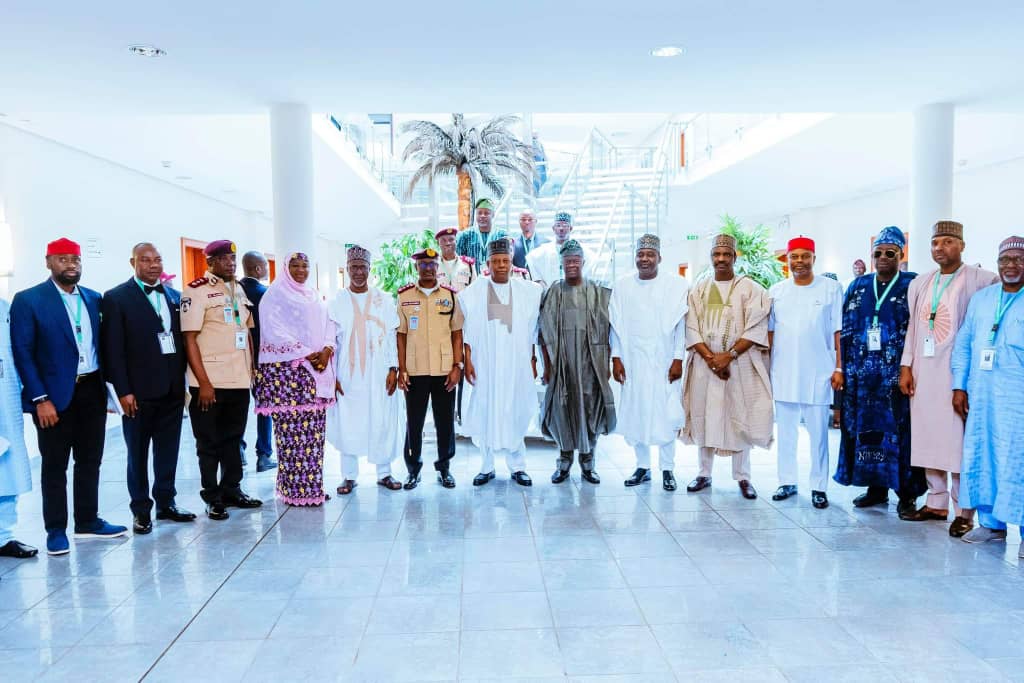
NArSAC and the gains of streamlining road safety administration in tandem with global expectations: The Shehu Mohammed perspective
Time and time about, the Federal Road Safety Corps has proven to be capable of delivering on its corporate mandate. From the leadership of the ISO certified public service agency, to its operatives, the Corps has continued to show that it has all it takes to make the nation’s highways safe for all to use.


Today, I join the entire community of road users in celebration of another giant leap achieved towards attaining the goals of the United Nations Sustainable Development Goals (SDGs) on reducing road traffic fatalities by 50% by year 2030. A feat that has in all areas portrayed a demonstration of President Bola Ahmed Tinubu, GCFR, Administration’s Renewed Hope Agenda.
This giant strides speak volume of the administrative prowess of the present Corps Marshal, Shehu Mohammed, who against all odds has continued to make indelible marks in the sand of time. The Corps Marshal has shown that it is indeed possible to achieve anything you set before you to achieve. He has unraveled the mystery behind the wheel of progress and made bold statements in the realisation of the corporate mandate of the Corps.
Recall that in an epoch making event of streamlining road safety management in Nigeria with global expectations, the entire nation witnessed with great deal of excitement, the official inauguration of Members of the National Road Safety Advisory Council (NaRSAC) by the Vice President, Kashim Shettima at the Presidential Villa in Abuja. This inauguration formally unveils the responsibility of NaRSAC as encapsulated in the already developed plans of the Nigeria Road Safety Strategy document II (2021-2030).
To most of us that do not understand how important this feat is to the transportation sector, I owe you a duty of explanation. To begin with, the National Road Safety Advisory Council (NaRSAC), is the highest critical governance structure saddled with the task of implementing the Nigeria Road Safety Strategy (2021-2030) document. Part of its responsibility is to give strategic policy direction and coordination to the other administrative organs like the Technical Working Group (TWG) and the States’ Road Safety Advisory Councils (SaRSAC). The membership of the Technical Working Group (TWG) is drawn from the FRSC and the State Governments States Motor Vehicle Administrators constituting State Traffic Management Agencies and Vehicle Inspection Offices. Other members of the TWG are the Police; relevant MDAs, Professional Associations, Women Union and the Media.
The NaRSAC itself is headed by His Excellency, the Vice President of the Federal Republic of Nigeria. Membership is drawn from Six Governors, with one representing each of the six geo political zones;. Other members are Honourable Ministers in critical Ministries of Transport, Works, Health, Justice, Education, Finance, Environment, Police Affairs, Interior, Budget and Economic Planning, Federal Capital Territory, Information, Labour and Productivity. NaRSAC also have membership drawn from the National Security Adviser; Presidents of, Association of Local Governments of Nigeria (ALGON), Nigerian Association of Chambers of Commerce, Industry, Mines and Agriculture (NACCIMA), Nigerian Society of Engineers; The Chairman, Federal Road Safety Commission. The Corps Marshal, Federal Road Safety Corps who serves as Member/Secretary.
The Advisory Council’s major responsibilities include meeting the National Road Safety Strategy target(s), effective co-ordination of the Federal, States and Local Governments to ensure that expected targets are achieved, anchor the implementation of the NRSS, as well as ensure adequate evaluation of outcomes of national road safety initiatives. They are to further ensure the development of a funding plan for strategic initiatives, source funding for implementation of strategic initiatives, plan out the disbursement of pre-approved funds, monitoring the disbursement of funds and review monitoring and evaluation reports. The Council may also perform other strategic functions as it deems fit to enhance round the clock road safety administration in Nigeria.
Let me carefully elaborate more on the Nigeria Road Safety Strategy (NRSS) document to bring to bare, a clearer understanding of the document being the catalyst that will drive the initiative to a joyful realisation. This NRSS document is simply the nation’s response to the call for safe use of the road. The document provides a clear direction towards achieving the vision for road safety, using the globally accepted Safe System Approach for managing road safety. The document speaks volume of the growing national consciousness on issues of road safety, the spirit of collective responsibility and determination to reduce the level of Road Traffic Crashes and ensure that neither deaths nor serious injuries result from these crashes.
In addition to the afore stated facts, the document portrays the vision of a country where Road Traffic Crash results in no death. It also seems to achieve reduction in road traffic crash fatality rate by 50% by the year 2030. This document is a very important, proactive and timely intervention which supports the process of entrenching the culture of safe use of Nigerian highways, the impact of which includes better quality of life for citizens and the socio-economic growth of the nation as a whole.
The NRSS document recognises that road safety is multi – faceted and therefore outlines the responsibilities of various tiers of governments and NGOs, seeking to harmonise the different road safety efforts by emphasising the vision, goal, purpose, output, outcomes as well as the initiatives for road safety management in Nigeria. The NRSS, when fully implemented, is envisioned to transform Nigeria into a country where road traffic crashes result in zero death. It also projects a goal of 50% reduction in road traffic crash fatality rate by year 2030, in line with the SDG goals.
Part of the positives of this development is that it will enhance stakeholder engagement, spur the need for sustained funding, Promote sustainable transportation modes, provoke effective enforcement and infrastructure development, as well as speed up aggressive public awareness and education.
To add verisimilitude, since the document made provision for cascading the initiative to other tiers of government, State Governments must as a matter of urgency and necessity begin to establish and inaugurate the State Road Safety Advisory Council (SaRSAC). To that end, Deputy Governors who are the Chairmen of this initiative in their respective states should torr the line of the Vice President to enable Nigeria collectively achieve the goals of the NRSS and ultimately attain the aspirations of the SDG Goals.
-Deputy Corps Marshal Bisi Kazeem (Rtd), fsi, anipr FISPON, a veteran road safety professional and a public relations expert, writes from Lagos, Nigeria.





US-Based Society Lady, Fehintola-Brat Extends Eid-El-Kabir Greetings To Muslims
United States based fahionista of class, Chief (Mrs) Ayoola Fehintola-Brat has extended a warm greetings to Muslim faithful all over the world on the occasion of the 2026 Eid-El-Kabir celebration.
Fehintola-Brat who is the Balogun Egbe Obaneye Obinrin Akile Ijebu, and the Yeye Asofin of Idenaland in her message to Journalists urged Muslim to continually uphold the enduring values of sacrifice, obedience, faith, and compassion, which are central to the significance of Eid-El-Kabir festival.
A quiet philantropist whose humanitarian services has won her several laurels urged Muslims to use the spiritual occasion to pray for the peace co-existence of Nigerians regardless of religious, social and political leanings stressing that the oneness of the country should not be underplay.
In a related development, she expressed her felicitations to all sons and daughters of Ijebuland on the forthcoming Ojude Oba 2026 celebration, tasking age-groups otherwise known as Regbregbe to be more proactive in giving back to their immediate communities.
According to her, the beauty of the age-groups in Ijebuland is the need to contribute immensely to the development of the land in no small means. “This we will continue to achieve with God on our side”, she concluded.
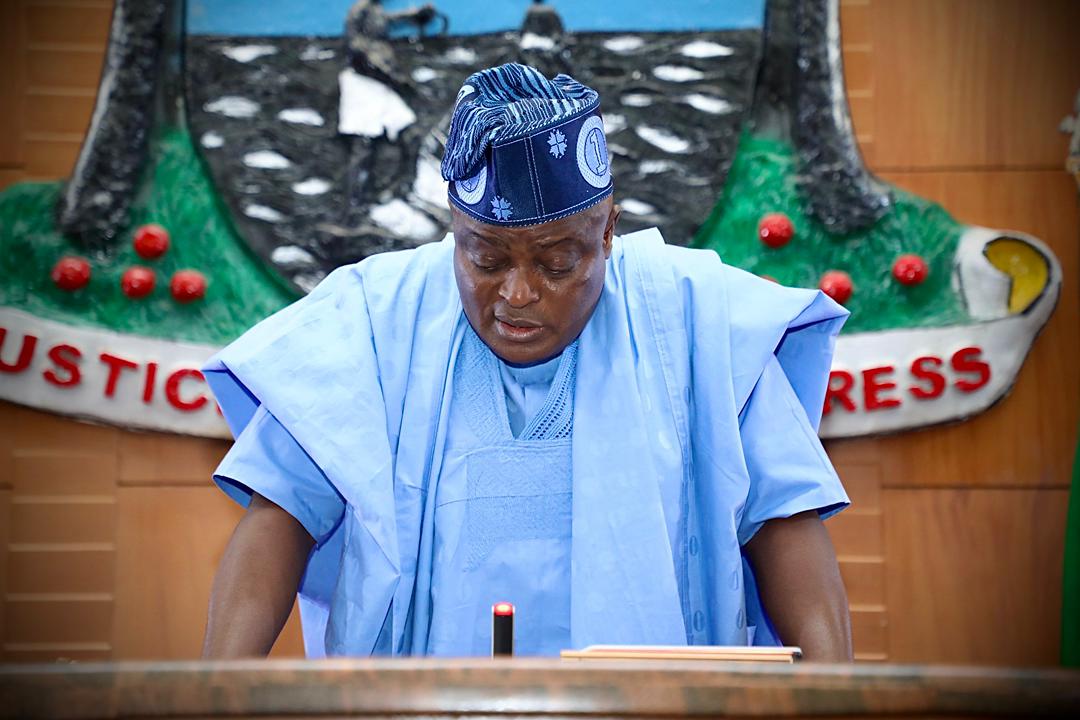
Sallah: Obasa Felicitates Muslim Ummah, Commends Nigerians for APC Primaries Turnout
The Speaker of the Lagos State House of Assembly, Rt. Hon. Mudashiru Obasa has extended warm felicitations to Muslims in Lagos State and across Nigeria on the occasion of Eid al-Adha.
In a statement released by his Chief Press Secretary, Mr. Dave Agboola, Obasa described the festival as a season of sacrifice, reflection, and gratitude, urging the faithful to continue to uphold the values of peace, unity, and love that strengthen the nation.
He noted that the celebration of Eid al-Adha is not only a spiritual milestone but also a reminder of the importance of togetherness and collective responsibility in building a stronger society.
He, likewise, emphasized that the festival provides an opportunity for Nigerians to renew their commitment to national progress and to support leadership that prioritizes development and prosperity.
Obasa, however, commended Nigerians, particularly members of the All Progressives Congress (APC), for their massive turnout during the recently concluded party primaries. He described the participation as a clear demonstration of the people’s confidence in the government of President Bola Ahmed Tinubu and their belief in the administration’s vision for a greater Nigeria.
“The APC primaries have shown the resilience of our democracy and the confidence Nigerians have in the leadership of President Bola Ahmed Tinubu and the Renewed Hope Agenda. This is a strong message that our people are ready to continue supporting policies that will drive growth and prosperity,” Obasa stated.
The Speaker further encouraged Muslims to celebrate responsibly, stressing that the joy of Eid should be accompanied by prayers for the continued peace and progress of Lagos State and Nigeria.
“As you celebrate with family and loved ones, may this season bring joy, peace, and prosperity to your homes. Let us remain united in our resolve to build a stronger nation,” he added.
On behalf of the Lagos State House of Assembly, Obasa wished all Muslims a happy and fulfilling Eid al-Adha celebration.

ABEOKUTA FILM FESTIVAL AT ILEYA
Kayshow Multimedia a filmmaking and Media organization this year 2026 holds its annual Abeokuta film festival at the Ake Palace in Abeokuta.
Alake of Egba land, Ọba Michael Adedotun Arẹmu Gbadebo has graciously endorsed the Free Training of Egba Youths on Film and Arts and the Entertainment of the the People with a FREE FILM SHOW at the AKE PAVILION. as part of the ABEOKUTA FILM FESTIVAL 2.0.
The Convener of the Film Festival Honorable Kehinde Soaga says this year’s event promises to be more exciting as distinguished personalities are sure to attend.
This includes the honorable Minister for Art Culture and Creative Economy in Nigeria, Barr. Hannatu Musa Musawa, Ààrẹ Lai Labode, Sen. Ibikunle Amosun and other special guests.
The event will feature Film, Cultural Dance Cultural foods and Award Ceremony.
The general public is hereby invited to the Free film show at the Abeokuta film festival at the Alake Palace Pavilion on Thursday 28th of May 2026 by 4:00 p.m.
Only well dressed is the Entry. The Abeokuta Film Festival is an annual event taking place in the capital city of Ogun State state.


- Qrent says delaying Information Technology (IT) refresh cycles may be increasing operational risk for businesses in Africa May 27, 2026
- Dentons’ Iyunola Adekanye Appointed to African Mining Week (AMW) Advisory Board May 27, 2026
- United Nations (UN) Women Liberia and Partners Convene for Spotlight Initiative 2.0 Women’s Economic Empowerment Inception Meeting May 27, 2026
- African Mining Week (AMW) to Host Central Bank Governors Roundtable as Monetary Authorities Deepen Role in Mining Sector Growth May 27, 2026
- Eritrea: Diaspora Nationals Celebrate Independence Day Anniversary May 27, 2026
- Africa Unveils Landmark Humanitarian Coordination Platform to Strengthen aligned Response to Humanitarian Crises May 27, 2026
- Seychelles: President Herminie Engages with Police and Fire Services on Praslin May 27, 2026
- Issue 3 of Mining Review Africa now available for free download May 27, 2026
- NOV Joins African Energy Week (AEW) 2026 as Gold Sponsor Amid Africa’s Offshore Expansion Push May 26, 2026
- African Union of Broadcasting (AUB) and United Nations University Institute for Water, Environment and Health (UNU-INWEH) Launch Landmark Webinar Series on Africa’s Water Crisis, Starting June 2, 2026 May 26, 2026
- Qrent says delaying Information Technology (IT) refresh cycles may be increasing operational risk for businesses in Africa May 27, 2026
- Dentons’ Iyunola Adekanye Appointed to African Mining Week (AMW) Advisory Board May 27, 2026
- United Nations (UN) Women Liberia and Partners Convene for Spotlight Initiative 2.0 Women’s Economic Empowerment Inception Meeting May 27, 2026
- African Mining Week (AMW) to Host Central Bank Governors Roundtable as Monetary Authorities Deepen Role in Mining Sector Growth May 27, 2026
- Eritrea: Diaspora Nationals Celebrate Independence Day Anniversary May 27, 2026
- Africa Unveils Landmark Humanitarian Coordination Platform to Strengthen aligned Response to Humanitarian Crises May 27, 2026
- Seychelles: President Herminie Engages with Police and Fire Services on Praslin May 27, 2026
-

 news5 months ago
WHO REALLY OWNS MONIEPOINT? The $290 Million Deal That Sold Nigeria’s Top Fintech to Foreign Interests
-

 society3 weeks ago
SOCIAL MEDIA IS NOT A BATTLEFIELD COMMAND – WHY THE NIGERIAN ARMY’S ACTION AGAINST JUSTICE CRACK IS A NATIONAL SECURITY IMPERATIVE
-

 celebrity radar - gossips4 months ago
Dr. Chris Okafor Returns with Power and Fire of the Spirit -Mounts Grace Nation Altar with Fresh Anointing and Restoration Grace on February 1, 2026
-

 celebrity radar - gossips6 months ago
Prophet Kingsley Aitafo Releases 2026 Prophecy: ‘Nigeria Will Rise, but the World Must Prepare for Turbulence’