
society
Fatgbems Group Commissions Ultra-Modern Mega Station in Opic, Expands Footprint in Nigeria’s Energy Retail Sector

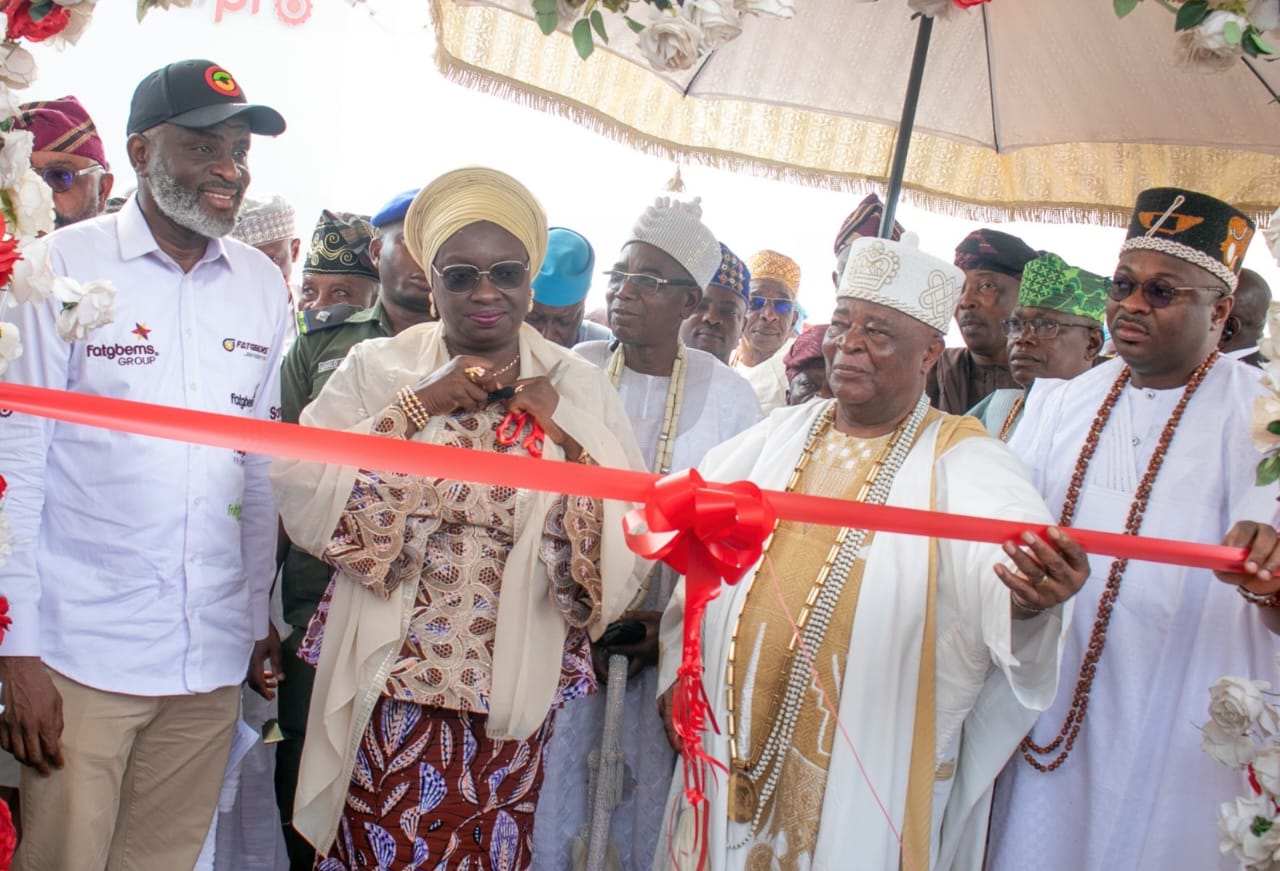
Fatgbems Group Commissions Ultra-Modern Mega Station in Opic, Expands Footprint in Nigeria’s Energy Retail Sector





society
Made-in-Nigeria Exhibition 2026: Abuja and Lagos Set the Stage for a New Era of Local Innovation and Enterprise
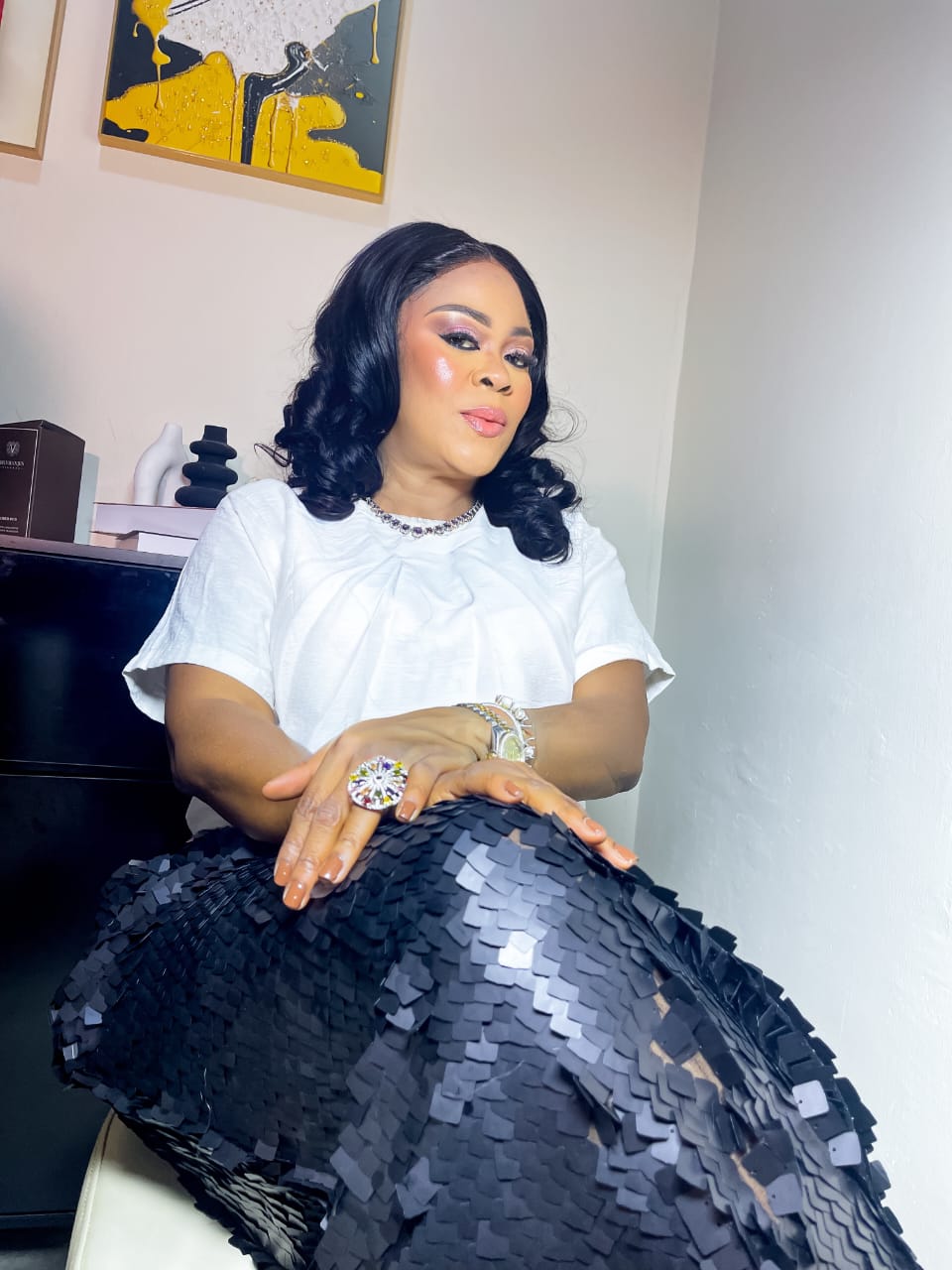
Made-in-Nigeria Exhibition 2026: Abuja and Lagos Set the Stage for a New Era of Local Innovation and Enterprise
Abuja and Lagos are poised to surge with energy, enterprise, and cultural expression as the Made-in-Nigeria Exhibition 2026 takes centre stage—an event designed not merely to display products, but to redefine perception.
More than a conventional exhibition, this gathering signals a confident assertion of Nigeria’s productive strength. Entrepreneurs, manufacturers, creatives, and industry leaders from across the nation will assemble to present a compelling spectrum of locally made goods. From premium leather craftsmanship and cutting-edge fashion to beauty innovations, agro-based solutions, and artisanal creations, each showcase reflects ingenuity shaped by resilience and ambition.
At the heart of the exhibition lies a deliberate push to elevate emerging brands. Many small businesses operate with limited visibility, often constrained by access and exposure. This platform disrupts that pattern. By offering opportunities such as complimentary booth spaces for selected participants, it opens the door for underrepresented talents to step into the spotlight—not just to sell, but to be seen, evaluated, and remembered.
According to Bola Awosika, the driving force behind the initiative, “This exhibition is about shifting mindsets. Nigerian products are not just alternatives—they are competitive, innovative, and globally relevant. We are creating a space where local brands can be experienced, trusted, and elevated.”
The exhibition will hold biannually in both Abuja and Lagos:
Abuja Edition
• First Edition: 27th–28th June 2026
• Second Edition: 12th–13th December 2026
Lagos Edition
• First Edition: 25th–26th July 2026
• Second Edition: 19th–20th December 2026
Each edition will draw a dynamic mix of participants—buyers scouting quality, investors searching for scalable ideas, media documenting emerging trends, and everyday Nigerians engaging with products that reflect their identity. Conversations sparked within the exhibition halls are expected to extend beyond introductions, evolving into partnerships and long-term collaborations.
The experience itself goes beyond static displays.
Attendees will encounter live demonstrations, immersive product storytelling, interactive sessions, and curated networking opportunities. It becomes less about walking through aisles and more about engaging directly with the pulse of Nigerian creativity and enterprise.
Yet, the exhibition carries a broader economic and cultural message. It challenges consumer habits, urging Nigerians to support domestic production while reinforcing confidence in local capabilities. Every transaction becomes a statement—one that contributes to national growth and industrial sustainability.
For many participants, this platform could mark a pivotal shift. A relatively unknown brand may secure national recognition. A hidden talent could attract strategic investment. An early-stage idea might evolve into a scalable enterprise. The ripple effects are designed to outlast the exhibition itself.
As the momentum builds business owners have started making enquiries and booking stands for each edition, what remains is not just a successful event, but a strengthened narrative—one that positions Nigerian products as credible, competitive, and ready for global markets.
Call to Participate: Affordable Access, Strategic Opportunity
As preparations intensify, the Convener, Bola Awosika, has extended a direct invitation to entrepreneurs, brands, and industry players to seize the opportunity presented by the exhibition.
“We have deliberately structured this exhibition to be inclusive and accessible. With pocket-friendly stand rates, we are removing the usual barriers that prevent many businesses from participating. Vendors can secure their booths at ₦150,000 and ₦200,000 respectively. This is not just a cost—it is an investment in visibility, credibility, and growth. We encourage businesses across Nigeria to take advantage of this platform to position their brands for new markets and opportunities,” she stated.
Beyond vendor participation, she emphasized the importance of collaboration in delivering a world-class event.
“it will be an annual event. We are also calling on corporate organisations, development institutions, and forward-thinking brands to come on board as sponsors and partners. This exhibition is a national platform with significant economic impact, and there is immense value for organisations looking to align with innovation, enterprise, and local content development.”
Interested exhibitors, sponsors, and partners can access more information and secure participation via the official website: www.nigeriaexportsexhibition.com.ng
The exhibition is currently supported by notable institutions including Bank of Industry, Lagos State Internal Revenue Service, and Sahcol, with additional sponsors and partners expected to join as momentum builds.
Powered by Bevents Logistics Synergy, the Made-in-Nigeria Exhibition 2026 stands not as a fleeting showcase, but as a sustained movement—one that redefines how Nigeria sees its own potential and how the world engages with it.


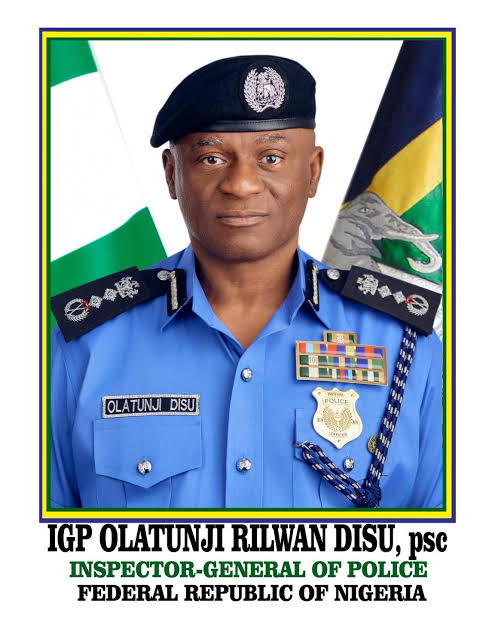
Rebalancing The Force: Why Police Visibility Must Reach The Ordinary Citizen
In every functioning society, the true test of policing is not what happens in elite corridors of influence, but what the ordinary citizen experiences on the street.
For too long, that balance has been distorted.
Recent criticism surrounding the redeployment of officers from Zone 2 Command in Lagos has been framed in sensational terms: mass transfers, alleged illegality, internal discontent. But beneath the noise lies a far more important and uncomfortable truth: Nigeria’s policing structure, particularly in high-interest zones, has been uneven, inefficient, and in urgent need of correction.
This is the context within which the actions of the Inspector-General of Police, Olatunji Disu, must be understood.
The ongoing exercise is not incidental. It is the direct outcome of a clearly defined restructuring objective under the leadership of the Inspector-General: one that prioritises the even and adequate distribution of personnel for effective policing across the country.
Zone 2 Command, which oversees Lagos and Ogun States, has evolved over time into something beyond its administrative mandate. Rather than functioning strictly as a supervisory and coordination hub, it has become heavily populated, far beyond operational necessity.
In practical terms, this has meant one thing: a concentration of personnel where they are least needed, and a shortage where they are most needed.
While Zone 2 swelled with officers, reportedly far exceeding standard staffing expectations, divisional police stations, community posts, and rural commands have continued to operate below capacity.
The result?
* Slower response times
* Reduced police visibility in neighborhoods
* Overworked officers in understaffed stations
* Communities left feeling exposed
No serious policing system can justify that imbalance.
Security is not theoretical. It is not a concept measured in internal postings or administrative convenience. It is measured in presence: visible, responsive, and accessible.
When citizens say they do not “feel” the police, what they are really saying is simple: the system is not reaching them.
Redistributing personnel is not punishment. It is not arbitrary. It is the essence of operational policing.
This is precisely the thinking driving the current reforms under IGP Olatunji Disu—the deliberate repositioning of the Force to ensure that policing is not concentrated in a few administrative centres, but extended meaningfully to the communities that need it most.
The Inspector-General’s position is therefore not only defensible, it is necessary:
policing must be felt everywhere.
There is also an open secret that cannot be ignored.
Assignments to certain commands, particularly those linked to high-value civil disputes such as land matters, have historically attracted disproportionate interest. The concentration of officers in such zones is not always driven by operational need, but by perceived opportunity.
This distortion has long undermined equitable deployment.
Correcting it requires more than caution; it requires leadership and resolve, both of which are reflected in the current restructuring agenda of the Inspector-General.
Under the Nigeria Police Act, the Inspector-General of Police retains administrative authority over postings and redeployments within the Force.
Transfers are not extraordinary measures. They are routine instruments of:
* Discipline
* Efficiency
* Institutional balance
To label such actions as “illegal” without reference to any breached statute is to substitute sentiment for law.
More importantly, it distracts from the real issue:
Are officers deployed where Nigerians actually need them?
Nigeria is approaching a critical period.
With elections on the horizon, the demand for:
* Crowd control
* Community intelligence
* Rapid response capability
will increase significantly.
A police force clustered in administrative zones cannot meet that demand.
Lagos needs officers.
Ogun needs officers.
Communities need presence, not paperwork.
There is also a deeper dimension often ignored in public discourse; the welfare of officers themselves.
Overconcentration in some commands and understaffing in others creates:
* Burnout in frontline stations
* Irregular shifts
* Mental fatigue
* Reduced effectiveness
A properly distributed force, one of the core objectives of the current restructuring led by IGP Olatunji Disu allows for:
* Structured shifts
* Better rest cycles
* Improved mental health
* Higher operational efficiency
This is not just about deployment. It is about sustainability.
It is worth noting that previous leaderships have attempted to decongest Zone 2. Those efforts faltered, not because they were wrong, but because they lacked the consistency and institutional backing required to see them through.
Reform, by its nature, is disruptive.
But disruption is not dysfunction.
It is often the first step toward order.
The debate, therefore, should not be:
“Why are officers being transferred?”
The real question is:
Why were so many officers concentrated in one administrative zone while communities remained under-policed?
Until that question is answered honestly, resistance to reform will continue to masquerade as concern.
At its core, policing exists for one purpose: to protect the public.
Not selectively.
Not strategically for advantage.
But universally.
If restructuring ensures that:
* more officers are on the streets,
* more communities are covered, and
* more citizens feel safe,
then it is not just justified, it is imperative.
The common man does not measure policing by internal postings.
He measures it by presence.
And under the current reform-driven leadership, that presence is being deliberately, and necessarily, restored.
society
Taskforce Chairman: Akerele Adetayo. An impressive achievement marked by exceptional thoroughness
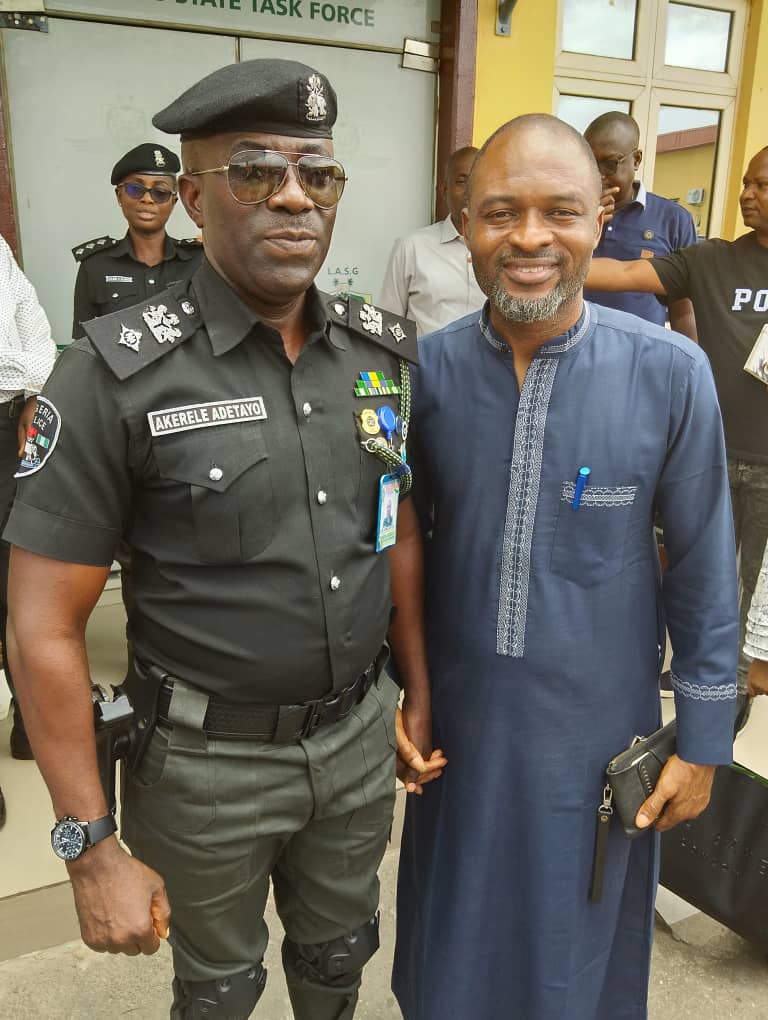
Taskforce Chairman: Akerele Adetayo. An impressive achievement marked by exceptional thoroughness
…A considerable monumental stride without blemishes
~By Oluwaseun Fabiyi
The one-on-one meeting with the Taskforce Chairman was a remarkable and unforgettable experience.
*How familiar are you with CSP Adetayo Akerele’s leadership as Chairman of the Lagos Task Force?*
_*Oluwaseun Fabiyi, publisher of Bethnews Media magazine and online, had a recent encounter with Akerele Adetayo that will shed more light on his achievements and good standing; we invite you to listen attentively*_
As Chairman of the Lagos State Environmental and Special Offences Enforcement Unit (Taskforce), Akerele Adetayo, an extraordinary CSP and trustworthy police officer, remains a beacon of excellence, mirroring greatness through his benevolent heart and unwavering commitment to superior service standards in Lagos and its environs
Without a doubt, Akerele Adetayo, the former 2iC Taskforce and pioneer LAMATA Commander turned Chairman of the Lagos State Taskforce, has solidified his standing as a highly effective and accomplished commander in the Nigerian Police Force, recognized for his impressive stride and visionary leadership.
CSP Adetayo Akerele’s career advancement has been grounded in his meticulous approach to duty and commitment to delivering results, which has distinguished him among his peers. As Chairman of the Lagos Environmental and Special Offences Enforcement Unit Taskforce, he has established a functional compliance desk that promotes seamless interaction with the public and enables effective response strategies
CSP Akerele Adetayo’s professional trajectory in journalism has garnered substantial admiration and a distinguished reputation among media practitioners across print and electronic media, complemented by his specialized knowledge in security and digital strategy, which has critically shaped the orientation of the Lagos State Taskforce
As Chairman of the Lagos State Task Force since 2024, he has consistently upheld the core mandate of delivering exceptional security services to citizens, ensuring peace, order, and internal security across the state, built on a foundation of professionalism, strong public relationships, effective teamwork, and unwavering accountability. Under the leadership of CSP Adetayo Akerele, the Lagos State Environmental and Special Offences Enforcement Unit Taskforce has achieved notable success in leveraging advanced technology while maintaining exemplary standards of individual appearance, conduct, and professionalism.
Akerele Adetayo’s exceptional dedication to service excellence has earned him numerous accolades for his outstanding contributions to the Lagos Taskforce unit and the Nigerian police force at large, in recognition of his professionalism and exemplary service
As the Chairman of the Lagos Taskforce unit, his active participation in every activity underscores a broader commitment to the agency’s structural growth. His consistent and prompt approach emphasizes execution and maximum security protection for the safety of the masses, as he fosters a teamwork network of assets that drive the agency’s growth and accessibility.
Note Bethnews Media shall provide its exceptional wisdom exhibited in the forthcoming article.
Oluwaseun Fabiyi, a seasoned journalist based in Lagos, reports.


- African Union Commends Morocco’s Strategic Contribution to Peace, Security and Governance in Africa While Jointly Advancing Electoral Integrity and Digital Democracy April 25, 2026
- Nigeria - Engagement Between Tanzania Building Agency (TBA) and Department of Facility Maintenance and Management, Federal Capital Territory Administration (FCTA) April 24, 2026
- Tanzania Building Agency (TBA) Study Tour to the Abuja Investment Company Limited April 24, 2026
- United States (U.S.) Revitalizes Key Credit Guarantee Program to Boost Agricultural Trade with Nigeria April 24, 2026
- South Sudan: Space for Peace – Resettlement of displaced families changes lives and livelihoods in Wau April 24, 2026
- Food and Agriculture Organization of the United Nations (FAO) and partners unpack bottlenecks and solutions for formal cross border agritrade in Southern Africa April 24, 2026
- Aid cuts threaten Zimbabwe’s malaria gains, with cases and deaths surging – Save the Children April 24, 2026
- Marché des Arts et Spectacles Africains (MASA) 2026: ORUN lays the foundations for a sustainable African creative ecosystem April 24, 2026
- Dr. Rasha Kelej Joins Africa’s Top Leaders on 2025 Most Influential Women List April 24, 2026
- African Petroleum Producers Organization (APPO) Pushes Regional Energy Hubs to Unlock Africa-Wide Investment Scale April 24, 2026
- African Union Commends Morocco’s Strategic Contribution to Peace, Security and Governance in Africa While Jointly Advancing Electoral Integrity and Digital Democracy April 25, 2026
- Nigeria - Engagement Between Tanzania Building Agency (TBA) and Department of Facility Maintenance and Management, Federal Capital Territory Administration (FCTA) April 24, 2026
- Tanzania Building Agency (TBA) Study Tour to the Abuja Investment Company Limited April 24, 2026
- United States (U.S.) Revitalizes Key Credit Guarantee Program to Boost Agricultural Trade with Nigeria April 24, 2026
- South Sudan: Space for Peace – Resettlement of displaced families changes lives and livelihoods in Wau April 24, 2026
- Food and Agriculture Organization of the United Nations (FAO) and partners unpack bottlenecks and solutions for formal cross border agritrade in Southern Africa April 24, 2026
- Aid cuts threaten Zimbabwe’s malaria gains, with cases and deaths surging – Save the Children April 24, 2026
-

 news4 months ago
WHO REALLY OWNS MONIEPOINT? The $290 Million Deal That Sold Nigeria’s Top Fintech to Foreign Interests
-

 celebrity radar - gossips3 months ago
Dr. Chris Okafor Returns with Power and Fire of the Spirit -Mounts Grace Nation Altar with Fresh Anointing and Restoration Grace on February 1, 2026
-

 celebrity radar - gossips6 months ago
End of an Era: Nigeria Mourns Evangelist Dr. Uma Ukpai, 80
-

 celebrity radar - gossips4 months ago
Prophet Kingsley Aitafo Releases 2026 Prophecy: ‘Nigeria Will Rise, but the World Must Prepare for Turbulence’