
Business
Edelman Trust Barometer Shows 78% of Nigerians Still Trust the Media

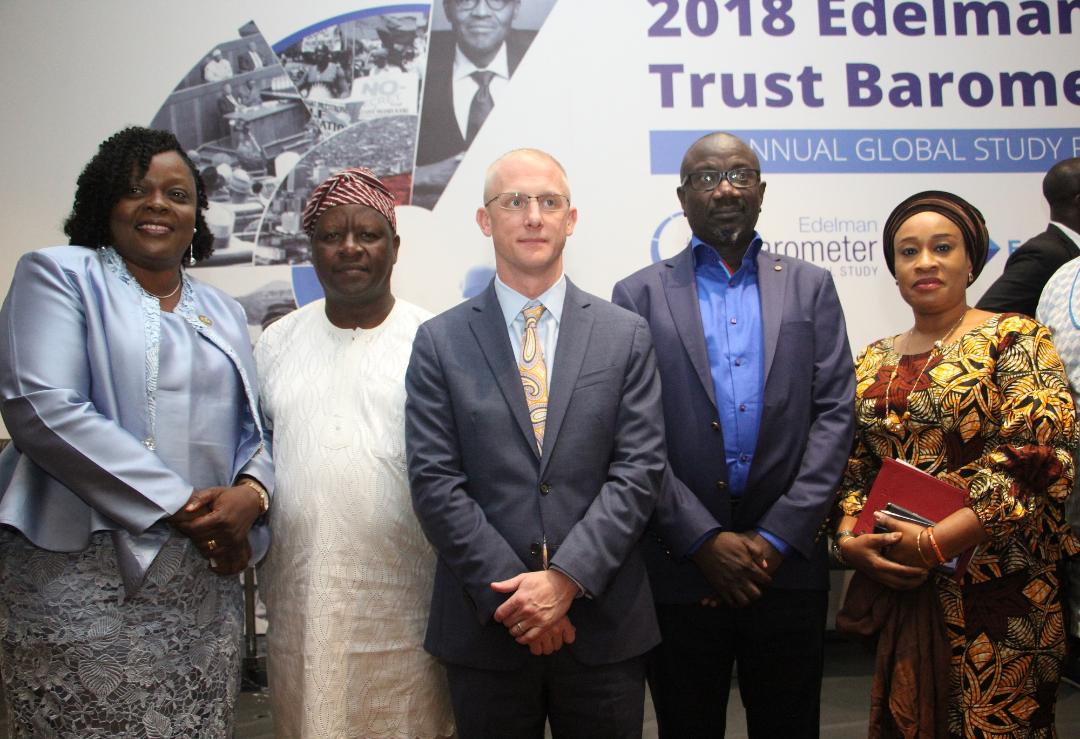

The first bespoke 2018 Edelman Trust Barometer conducted for Nigeria by Edelman Intelligence to test the level of trust among Nigerians in the four mainstream institutions of government, business, media and non-governmental organisations has shown that 78 per cent of Nigerians still trust the media.
“Trust in media remains high despite ‘fake news’”, the report showed.
This contrast, however, with the global trend whereby trust in the media is on decline especially due to the rise of fake news and post-truths occasioned by the growing social trend called citizen journalism and influence of social media as alternative but ‘unregulated’ source of information.
According to the global data from the report, “Media now least trusted institution; distrusted in 22 of 28 of countries.”
These were some of the highlights of the 2018 Edelman Trust Barometer unveiled in Lagos, on Thursday 31, May 2018 at Eko Hotel & Suites, Victoria Island, Lagos. The presentation of the report in Nigeria by Edelman was organised by Chain Reactions Nigeria, Edelman’s Exclusive Nigerian Affiliate and the Preferred West African Partner with the theme, ‘The Battle for Truth’.
Further breakdown of the report for Nigeria indicated that Nigerians also trust NGOs assigning 81 per cent score to the sector while their trust for business is 62 per cent and 60 per cent for government while 72 per cent of Nigerians generally voted that trust matters in everything.
Comparative analysis of the report when African countries such as South Africa, Egypt and Ghana amongst others were compared, also showed Nigeria finishing third highest in trust for the media and NGOs respectively; fourth highest in trust for business, and seventh highest in trust for government.
Speaking at the presentation of the global data from the report, Managing Director, Edelman South Africa, Jordan Rittenberry, expressed concern that the overall global assessment of the four mainstream institutions showed declines in trust about business and non-governmental organisations in 14 of the 28 countries sampled, and therefore called on key decision makers in the respective organisations to be deliberate in building their trust asset through increased investment.
“Over time trends have shown there is low trust in business and non-governmental organisations, so it is important that people in these institutions pay more attention to how the citizens trust them”, he stated.
Rittenberry added that “media is now least trusted institution” as a result of the menace of fake news which he noted has moved from being just a phenomenon to a key factor in shaping perception. “People define media as both content and platforms, so nearly seven in 10 worry about false information or fake news being used as a weapon”, he declared.
Managing Director/Chief Strategist, Chain Reactions Nigeria, Israel Jaiye Opayemi, in a welcome speech enthused that the inclusion of Nigeria in the annual survey for the first in the 18-year-old history of Edelman Trust Barometer was in fulfillment of the company’s promise last year to ensure Nigeria was in focus among the comity of nations of reckon annually sampled by Edelman.
“Trust sits at the heart of social capital. For those who were here last year, we made a promise that Nigeria would be included in the 2018 deck of the Edelman Trust Barometer. I am happy to announce that we are here today to fulfill that promise”, he said.
Speaking on the Nigerian data from the survey which showed that government was the least trusted of the four institutions of the Nigerian society, Opayemi counselled against a quick condemnation of government by stakeholders. He cautioned that, rather than condemnation, government requires help from communications professionals to help redesign the architecture of government communications in Nigeria.
He likened the current situation in most government communications departments to a hospital that is manned by a pharmacist where people with cardiac conditions go to for help simply because the pharmacist is a product of a medical school. “A pharmacist and a doctor who specialises in cardiology may have passed through the same medical school, but their specialties are different. In human resources practice, the rule is, the job description dictates the hire. Let us therefore help those in government articulate the job descriptions, skill sets and requirements for the office of strategic communications in all government houses at the federal and state levels. Such offices must be presided over by professionals in strategic communications who will work with Journalists, Policy Analysts, Digital Analysts, and Infographics Specialists amongst others. That office is not just about putting the penchant to put the President and the Governors in the news; it is about asymmetric communications. The structure being used to run government communications in most government houses is not only dysfunctional but also outdated”, Opayemi stated.
He therefore advocated engagement of communications professionals by key occupiers of government positions like the president and governors in order to overcome the challenges around trust and credibility assets of government.
Interestingly, the report showed the media and non-governmental organisations in Nigeria as being trustworthy with 78 per cent of Nigerians saying they still trust the media despite the rise of fake news while 81 per cent affirmed their trust in NGOs. The trust score for business is 62 per cent while government has 60 per cent.
Opayemi while expatiating on these indices said trust in NGOs was indicative of the fact that people acknowledge social interventions and humanitarian services rendered by non-governmental organisations in Nigeria especially during some of the major disasters the country has witnessed rendering thousands homeless.
He however cautioned, that businesses and governments are already sitting in what he called, “the cusp of the neutral zone” and so must urgently improve on their trust asset so they do not slide into what he called “negative zone”. “From what we have seen in the survey, Nigerians place a high premium on trust. It is therefore important for the business leaders to ensure that the company is trusted; that it communicates regularly with clients and customers, and their products and services are of high quality. They must also communicate regularly with employees and the CEOs must champion the effort”, he stressed.
Special Guest of Honour and Deputy Governor of Lagos State, Dr. (Mrs.) Idiat Adebule, in her remarks commended Chain Reactions Nigeria for doing the country proud by ensuring the inclusion of Nigeria on the list of the countries surveyed by Edelman, and expressed confidence that the insights from the report would go a long way in better understanding how trust can be leveraged as an asset to improve relations between the government and the governed as well as service delivery from the government to the people.
Represented by the Director-General, Office of Education Quality Assurance, Lagos State Ministry of Education, Mrs. Ronke Shoyobo, the deputy governor said, “No doubt, this year’s report and the debate of its implications by eminent representatives of the Nigerian government, the business community, the media and non-governmental organisations here today will strengthen the fabric of healthy relations and communications in our nation, particularly government intervention policies and programmes.”
President, Public Relations Consultants’ Association of Nigeria (PRCAN), Mr. John Ehiguese, and President, Africa Public Relations Association (APRA), Mr. Yomi Badejo-Okusanya, respectively in their goodwill messages affirmed that trust is everything in today’s world and organisations must do everything possible to build trust and credibility and maintain same in order to remain attractive to their stakeholders.
They also decried the growing menace of fake news and post-truth as a threat to building trust and positive reputation and urged organisations to seek the services of competent communications professionals to navigate the curve.
The highpoint of the event was panel discussions on the report and its implications for Nigeria by a panel comprising seasoned business executives, media practitioners, government officials and civil society activists. Moderated by Data Analyst, Channels Television, Mr. Babajide Ogunsanwo, members of the panel included Lagos State Commissioner for Information and Strategy Mr. Kehinde Bamigbetan; Mrs. Ronke Shoyobo; respected Financial and Investment Analyst and CEO of Financial Derivatives, Mr. Bismarck Rewane; Lead Consultant/CEO of Thistle Praxis, Mrs. Ini Abimbola; and Executive Head of Marketing and Communications, Stanbic IBTC Bank Plc, Mrs. Nkiru Olumide-Ojo.
Others were seasoned Journalist and Editor of BusinessDay newspaper, Mr. Anthony Osae-Brown; President, Guild of Corporate Online Publishers Association of Nigeria, Mr. Dotun Oladipo; Executive Chairman, Centre for Anti-Corruption and Open Leadership, Comrade Debo Adeniran; and Public Affairs commentator, Comrade. Nelson Ekujumi.
Dignitaries at the presentation ceremony cut across the four mainstream institutions of the Nigerian society such as government, business, media and non-governmental organisations as well as the Nigerian marketing communications sector. They included Lagos State Commissioner for Energy and Mineral Resources, Mr. Wale Oluwo represented by a Director in the Ministry, Mr. Adebayo Ajisebutu; Vice President, Centre for Value and Leadership, Mr. Adegbenro Rasheed; Chairman, Nigerian Institute of Public Relations (NIPR), Lagos State Chapter, Mr. Olusegun McMedal; Chairman/CEO, C&F Porter Novelli and past president of PRCAN, Mr. Nn’emeka Maduegbuna; CEO, Blueflower Communications, Mr. Chido Nwakanma; CEO, SY &T Communications, Mr. Simon Tumba; CEO, TruContact, Dr. Ken Egbas; Chief Operating Officer, Soulcomms Publicis, Moji Saka; Chief Operating Officer, BlackHouse Media, Mr. Moruff Adenekan; and Lead Consultant, StepCraft, Mrs. Eniola Mayowa amongst others.
Edelman Trust Barometer is the annual global trust and credibility survey conducted by Edelman Intelligence, the independent research arm of the Edelman – the world’s largest PR firm with presence in 65 countries across the globe The survey consists of 25-minute online interviews whereby respondents are asked questions on how much they trust the four mainstream institutions of society like government, business, media and non-governmental organisations to do what is right.
Since 2001, Edelman has been measuring trust in the four critical institutions in 27 countries, but this year is the first time Nigeria has been included in the survey. The inclusion of an exclusive deck on Nigeria by Edelman Intelligence is on the heels of the significant impressions recorded last year when Chain Reactions hosted the presentation of the 17th edition of the annual global survey in Lagos, the first time ever in the history of Nigeria and since the survey was established in 2001.





Fidelity Bank grows gross earnings by 38% to N434.95b in Q1
Fidelity Bank Plc recorded 37.9 per cent growth in gross earnings to N434.95 billion in first quarter 2026 as the international commercial bank continued to expand its core banking market share.
Interim report and accounts of Fidelity Bank for the three months ended March 31, 2026 released at the Nigerian Exchange (NGX) showed that gross earnings rose from N315.42 billion in first quarter 20025 to N434.95 billion in first quarter 2026, representing an increase of 37.9 per cent.
The top-line performance was driven by impressive growth in the bank’s core business operations with interest incomes rising by 22.8 per cent to N314.48 billion in first quarter 2026 as against N256.10 billion in first quarter 2025.
With net interest income at N180.97 billion, the bank closed the period with profit before tax of N92.48 billion. After taxes, net profit stood at N74.47 billion for the three-month period. Earnings per share remained high at N5.69, underlining the capacity of the bank to reward its shareholders.
The balance sheet of the bank also emerged stronger. Total assets crossed the N11 trillion mark to N11.35 trillion by March 2026 compared with N10.46 trillion recorded in December 2025. Customers’ deposits increased from N6.89 trillion to N7.38 trillion. Total equity rode on the back of earnings growth to a 27.5 per cent increase from N1.09 trillion in December 2025 to N1.39 trillion by March 2026.
The first quarter 2026 results further consolidated the strong earnings outlook of the bank, which had successfully completed its recapitalisation amidst impressive earnings performance in 2025.
Fidelity Bank had recorded double-digit growths in interest and non-interest incomes as well as key balance sheet items during the year ended December 31, 2025.
The audited report showed that gross earnings rose from N1.04 trillion in 2024 to N1.52 trillion in 2025, an increase of 45.6 per cent. Interest and similar incomes had grown by 38.7 per cent from N803.1 billion in 2024 to N1.11 trillion in 2025. Fees and commission incomes also rose by 44.7 per cent from N78.4 billion to N113.4 billion. The bank recorded net profit after tax of N242.4 billion in 2025.
The bank’s balance sheet emerged stronger with total assets rising by 18.6 per cent to N10.46 trillion in 2025 as against N8.82 trillion in 2024. Customer deposits increased by 16.1 per cent from N5.94 trillion to N6.89 trillion, reflecting continued franchise strength and an improved funding profile. Net loans and advances meanwhile declined by 2.4 per cent to N4.28 trillion in 2025 as against N4.39 trillion in 2024, attributable to customers paying down on their mature obligations.
The bank had in 2025 strengthened its capital position, with eligible capital rising to N561 billion, above the regulatory minimum of N500 billion for banks with international authorisation. In addition, capital adequacy had remained robust, with Capital Adequacy Ratio of 30.94 per cent by December 2025 as against 23.47 per cent by December 2024.
Managing Director, Fidelity Bank Plc, Dr. Nneka Onyeali-Ikpe, said the first quarter 2026 results reinforced the bank’s strong and resilient business model.
She noted that with the remarkable success of its recapitalisation programme and continuing expansion, Fidelity Bank has entered a new era of growth and impressive returns.
“We are on a stronger footing and confident that we will set new growth records that are reflective of our legacy and the future we are working on,” Onyeali-Ikpe said.
Business
Dangote Refinery Ends Nigeria’s Era of Fuel Import Dependence, Boosts GDP, FX Earnings — EIU
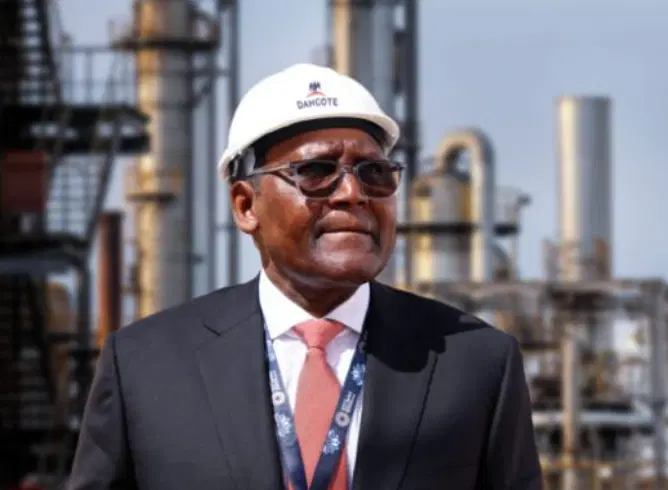
Dangote Refinery Ends Nigeria’s Era of Fuel Import Dependence, Boosts GDP, FX Earnings — EIU
The operational ramp up of the 650,000 barrels per day Dangote Petroleum Refinery & Petrochemicals is fundamentally reshaping Nigeria’s downstream oil sector, significantly reducing the country’s dependence on imported refined petroleum products and strengthening its external position, according to the Economist Intelligence Unit (EIU).
In its latest assessment on Nigeria’s fuel market and regulatory environment, the EIU said the refinery has already transformed a sector that was previously characterised by heavy reliance on imported fuel despite Nigeria being Africa’s largest crude oil producer. The report noted that the refinery met nearly 80 per cent of domestic petrol demand in April and produced enough volumes to satisfy local consumption requirements as operations approached full capacity.
The EIU described Nigeria’s downstream petroleum sector before the refinery as “long dysfunctional”, noting that the country had remained almost entirely dependent on costly imported fuel while producing nearly 1.5 million barrels of crude oil daily.
According to the report, the emergence of the refinery has reduced import dependence, improved domestic fuel availability and strengthened Nigeria’s balance of payments position through lower import demand and rising exports of refined petroleum products.
“The gradual ramp up of the 650,000 barrel/day Dangote refinery since May 2023 has transformed Nigeria’s long dysfunctional downstream sector,” the report stated. “The country’s main refineries, all state owned, had been inoperative for years and Nigeria was almost entirely reliant on costly imported fuel.”
The research and analysis division of The Economist Group, London added that the refinery’s attainment of full operational capacity and its planned expansion would further support Nigeria’s economic growth and foreign exchange earnings over the medium term.
“Meanwhile, the attainment of full capacity at, and an increase in exports from, the Dangote refinery will support real GDP growth and foreign exchange earnings in 2026 and 2027 and beyond, as a planned doubling of the plant’s output comes on stream around the end of the decade,” it added.
Industry analysts said the refinery is increasingly positioning Nigeria as an emerging refining and export hub, altering energy trade flows across Africa and reducing the vulnerability associated with fuel import dependence.
The EIU noted that the refinery’s expansion has coincided with major reforms in Nigeria’s downstream sector, including the removal of fuel subsidies and the introduction of market driven pricing mechanisms.
The report, however, said the transition from a state dominated fuel import structure to large scale domestic refining has triggered resistance from interests linked to the old import regime.
The latest tensions emerged following the decision by the Nigerian Midstream and Downstream Petroleum Regulatory Authority to relax restrictions on petrol imports despite the refinery’s growing capacity to meet domestic demand.
Dangote Industries subsequently initiated legal action, arguing that continued import approvals undermine domestic refining investments and conflict with the objectives of the Petroleum Industry Act, which seeks to encourage local refining capacity and reduce import dependence.
Analysts noted that the availability of large-scale domestic refining capacity has improved Nigeria’s energy security and reduced exposure to external supply shocks and foreign exchange volatility.
The Centre for the Promotion of Private Enterprise also cautioned against unrestrained importation of petroleum products, warning that such a policy could weaken Nigeria’s industrialisation drive and discourage investments in domestic refining.
Chief Executive Officer of CPPE, Muda Yusuf, said continued dependence on imported fuel had historically contributed to pressure on foreign reserves, exchange rate instability and fiscal leakages.
The refinery’s growing impact is also being reflected in Nigeria’s broader macroeconomic indicators. Earlier this month, S&P Global Ratings cited increased domestic refining capacity and rising hydrocarbon exports among the major factors supporting Nigeria’s sovereign credit rating upgrade – the first in 14 years.
Beyond Nigeria, analysts said the refinery is increasingly being viewed as a strategic industrial asset for Africa, where many countries remain heavily dependent on imported fuel despite rising demand for transportation, manufacturing, and power generation.
Business
BREAKING: Court Dismisses $19.6 Million Claim Against NNPCL — Rules Contract Scope Cannot Be Changed Orally
BREAKING: Court Dismisses $19.6 Million Claim Against NNPCL — Rules Contract Scope Cannot Be Changed Orally
In a landmark ruling on Friday, May 22, 2026, the Federal Capital Territory High Court in Abuja threw out a $19.6 million lawsuit filed by Alternate Dimensions Ventures Ltd against the Nigerian National Petroleum Company Limited (NNPCL), affirming a key legal principle: a written contract cannot be expanded through oral agreements or conduct.
Alternate Dimensions had sought $19,600,000 in professional fees, claiming the scope of its Direct Sale, Direct Purchase (DSDP e-pro) contract with NNPCL was orally expanded. Represented by counsel Patrick Peter, the firm argued it was entitled to the revised sum for services rendered under the alleged new terms.
But NNPCL, through its lawyer Ituah Imhanze of KENNA LP, pushed back sharply, arguing that parties are bound exclusively by the clear terms of their written agreement. Imhanze contended that without any written amendment, the claim was legally unsound, and the court agreed.
Delivering judgment, Justice Hamza Mu’azu upheld NNPCL’s defense, stating that the contract was unambiguous and that no evidence was adduced during the trial, which supported the alleged scope expansion. The court further found that NNPCL fully complied with all contractual terms and committed no breach.
Dismissing the suit as meritless, Justice Mu’azu reinforced the doctrine of sanctity of contract: any amendment to a written agreement must be express, unequivocal, and documented, not implied or verbal.
The ruling spares NNPCL from the S19.6 million claim and also a floodgate of similar potential liabilities.


- Demand for civic space holds strong across Africa as supply of freedoms wanes May 27, 2026
- Zarein Energy Joins African Energy Week (AEW) 2026 as Gold Sponsor Amid Nigeria Gas Hub Expansion May 27, 2026
- Qrent says delaying Information Technology (IT) refresh cycles may be increasing operational risk for businesses in Africa May 27, 2026
- Dentons’ Iyunola Adekanye Appointed to African Mining Week (AMW) Advisory Board May 27, 2026
- United Nations (UN) Women Liberia and Partners Convene for Spotlight Initiative 2.0 Women’s Economic Empowerment Inception Meeting May 27, 2026
- African Mining Week (AMW) to Host Central Bank Governors Roundtable as Monetary Authorities Deepen Role in Mining Sector Growth May 27, 2026
- Eritrea: Diaspora Nationals Celebrate Independence Day Anniversary May 27, 2026
- Africa Unveils Landmark Humanitarian Coordination Platform to Strengthen aligned Response to Humanitarian Crises May 27, 2026
- Seychelles: President Herminie Engages with Police and Fire Services on Praslin May 27, 2026
- Issue 3 of Mining Review Africa now available for free download May 27, 2026
- Demand for civic space holds strong across Africa as supply of freedoms wanes May 27, 2026
- Zarein Energy Joins African Energy Week (AEW) 2026 as Gold Sponsor Amid Nigeria Gas Hub Expansion May 27, 2026
- Qrent says delaying Information Technology (IT) refresh cycles may be increasing operational risk for businesses in Africa May 27, 2026
- Dentons’ Iyunola Adekanye Appointed to African Mining Week (AMW) Advisory Board May 27, 2026
- United Nations (UN) Women Liberia and Partners Convene for Spotlight Initiative 2.0 Women’s Economic Empowerment Inception Meeting May 27, 2026
- African Mining Week (AMW) to Host Central Bank Governors Roundtable as Monetary Authorities Deepen Role in Mining Sector Growth May 27, 2026
- Eritrea: Diaspora Nationals Celebrate Independence Day Anniversary May 27, 2026
-

 news5 months ago
WHO REALLY OWNS MONIEPOINT? The $290 Million Deal That Sold Nigeria’s Top Fintech to Foreign Interests
-

 society3 weeks ago
SOCIAL MEDIA IS NOT A BATTLEFIELD COMMAND – WHY THE NIGERIAN ARMY’S ACTION AGAINST JUSTICE CRACK IS A NATIONAL SECURITY IMPERATIVE
-

 celebrity radar - gossips4 months ago
Dr. Chris Okafor Returns with Power and Fire of the Spirit -Mounts Grace Nation Altar with Fresh Anointing and Restoration Grace on February 1, 2026
-

 celebrity radar - gossips6 months ago
Prophet Kingsley Aitafo Releases 2026 Prophecy: ‘Nigeria Will Rise, but the World Must Prepare for Turbulence’
You must be logged in to post a comment Login
You must log in to post a comment.