
Business
EFECTIVE NIGERIAN YOUTHS; A BANE TO NATIONAL DEVELOPMENT by Ifemosu Michael Adewale



The importance of youth in the development of any nation cannot be overemphasized. The youth constitutes the backbone and future of any nation, unfortunately, in most countries of the world, the youth are marginalized and excluded from governance and the development process.
This is why it is necessary to focus on the Effectiveness of Nigerian Youths as a bane for National development so that they become productive and contribute to the development of society.
The Youth have great roles to play in the development of nations.
In Nigeria, young people have been relegated to the background.
In the first republic and during the first phase of military rule, young people played active role in the governance of Nigeria. Alhaji Shehu Shagari and Alhaji Ibrahim Waziri became Federal Ministers in their 20s. Matthew Mbu became an ambassador in his early 20s. Col Yakubu Gowon became head of state at the age of 28.
In 1976, Gen. Olusegun Obasanjo became the head of state, I was not yet born then, In 1999, he became the President of Nigeria, I was in primary school then.
Nigerian Youth must reject the cliché of being the leaders of tomorrow, because That tomorrow may never come.
In the 1960s and 1970s, the students under the platform of National Association of Nigerian Students and the Youth under the platform of the Patriotic Youth Movement of Nigeria (PYMN) were the conscience of the Nation, they fought against the Anglo-Nigeria defence pact that would have mortgaged the independence of Nigeria, they fought against unpopular anti-people and anti-youth policies such as increase of school fees (Ali must Go in 1978 led by Akoogun Segun Okeowo ); structural adjustment programme and increase in the price of petroleum products, but today, student and youth bodies have become specialists in giving awards to politicians especially those with bad public image for a fee ( a case study of the award conferred on Senator Buruji Kashamu as the Golden man of the year earlier this year) if i may ask what is golden about him?….but will save that for another day.
In the 1950s and 1960s, the Student Christian Movement (SCM) was one of the major organisations that deepened the spiritual life of Christian Students, inculcated Christian values and built Christian leadership, indeed, many of the Christian leaders today in several denominations are products of the Student Christian Movement e.g Mike Bamiloye Founder mount zion films
In the last few decades, youth in Nigeria have been neglected and relegated to the background, All facets of life including family, schools, religious organisations and government have neglected youth development.
In this paper, we examine the challenges of youth in Nigeria and how to make the Nigerian youth become productive. But first, we explicate the concepts of Youth, youth development and Productivity.
BASIC CLARIFICATIONS
The Youth constitutes the backbone and the future of any nation. The progress and future development of any nation depends to a large extent on the youth. This is why most nations have concrete development programmes for their youth.
The place and importance of the Youth in society cannot be overemphasized. This was adequately captured in Nigeria Youth Policy which stated that:
Youth are one of the greatest assets that any nation can have, Not only are they legitimately regarded as the future leaders, they are potentially and actually the greatest investment for a country’s development, They serve as a good measure of the extent to which a country can reproduce as well as sustain itself, The extent of their vitality, responsible conduct, and roles in society is positively correlated with the development of their country.
There are certain unique characteristics of the Youth which include:
They are the future of any nation and serve as the bridge that link the present to future generations.They constitute the most active and productive part of any nation.
They constitute the largest part of the population of most nations especially the developing nations.They are relatively inexperienced and impatient but their spontaneity, adventure and daring disposition can be put to productive use.
They are very dynamic and can serve as agents of social change especially is societies experiencing moral degeneration.
The persons that fall within the age bracket of Youth is defined differently by different institutions and nations. The United Nations defines the Youth as those within the ages of 15-24 years. The NYSC puts its age bracket as from 18-30 years. But the youth policy defines the youth as all young persons of the ages 18-35 years. It identified the problems confronting the youth in Nigeria to include:
YOUTH DEVELOPMENT/EMANCIPATION
Youth development is the on-going growth process in which all youth are engaged in attempting to meet their basic personal and social needs to be safe, feel cared for, valued, useful and spiritually grounded to build skills and competencies that allow them to function and contribute in their daily lives.
Youth development is a process and requires the support of the family, community and the government. It requires support (motivational, emotional and strategic); creation of opportunities and provision of services (education, health, employment, information etc).
Unfortunately, in the last three decades, youth development has been neglected in Nigeria leading to increase in youth restiveness and crime. The youth has become a reserve army of the unemployed used by irresponsible politicians and religious bigots to perpetuate violence and thuggery. Many of the young people have lost confidence on the elders and institutions of government. For Nigeria to progress, there must be change among the youth to develop themselves and become agents of social action and change. It has been shown that people can develop themselves by continually learning, growing and becoming more capable and competent over the years.
THE NIGERIAN YOUTH
In most societies especially in the developing world, young people constitute the majority of the population. In Guatemala, the youth represent 70 percent of the population.
In Morocco, in 2008 with an estimated population of 31 million, about 36 percent are of the ages between 15 and 34.
In the Russian federation, the youth population is over 20 percent of the estimated 142.5 million in 2006.
In Nigeria, young people account for over 70 percent of the population, those between 10-24 years constitute 33.6 percent. 90% of Nigerians are below 65 years and the average age of Nigerian is 19.2 for male and 19.3 for female. The youth constitute 62.4% of the 73.5 million Nigerians registered to vote in the 2015 general elections. According to the former Minister of Youth Development, Alhaji Bolaji Abdullahi, 42.2 percent of Nigeria’s youth population are out of job and 80 percent of them do not have more than secondary school certificate which is very high compared to 21 percent in the middle east and 16 percent in the UK.
Despite the large percentage of young population, they are excluded from social, economic and political positions.
BUILDING THE YOUTH TO BECOME PRODUCTIVE
There is the need for urgent refocus on youth development by the family, community, religious organisations and government.
Need for Value Re-orientation
We know that values are deep seated beliefs that influence people’s actions and the rules by which they make decisions within their society. Values determine attitudes which in turn influence behaviour. Every society defines its values and engages in activities that will sustain those set of values. The 1999 Nigerian Constitution (as amended) provides for the motto, social order and national ethics which underpin the values of Nigeria. The Constitution provides that the motto of the country shall be unity and faith, peace and progress. The Constitution also provides that the state social order is founded on the ideals of freedom, equality and justice. Section 23 provides that the national ethics shall be discipline, integrity, dignity of labour, social justice, religious tolerance and patriotism. Section 24 further prescribes duties for citizens of Nigeria to abide by the constitution, respect its ideals and its institutions, the national flag, the national anthem and legitimate authorities; help to ensure the good name of Nigeria, defend the country and render national service and respect the dignity of other citizens.
However, the lived experience of Nigerians is quite different from the constitutional provisions on ethics and values for the country. There is a lot of indiscipline in every facet of life in the country. Integrity is no longer cherished by many people. The get rich quick syndrome and pursuit of easy money has reduced the dignity of labour. There is high level of religious intolerance and the love for the country is waning. Many Nigerians have no respect for our institutions and national symbols. There is therefore the need for a comprehensive re-orientation through well thought out research; the creation of new compelling stories of Nigeria, the Nigerian dream and with publications, documentaries and slogans that resonate with the Nigerian people while building institutions based on values.
Building the Leadership for the Next Century
It cannot be overemphasized that leadership is one of the most important variables that determine the progress and development of any country. Nigeria came into being by the amalgamation of Southern and Northern protectorates in 1914. By 2014, Nigeria was one hundred years old. There is consensus that Nigeria has not utilized its potentials to the fullest. Indeed, the pervading poverty, insecurity, underdevelopment and poor development indices has been blamed squarely on leadership. For the past one hundred years, Nigeria has not witnessed the kind of dynamic, strategic and visionary leadership that can turn the potentials of the country into real opportunities for the people. This is why it is necessary to build the kind of leadership to accelerate the development of the country in the next one hundred years.
It is very clear that the context of the past one hundred years will be quite different from the context of the next one hundred years.
For instance, the amount of information available to leaders is going to continually increase in the next one hundred years. Future leaders will therefore have to develop the ability to access the most relevant information and differentiate them from irrelevant information. Similarly, the market has affected every facet of life in very fundamental ways in the last one hundred years. Future leaders will need to understand clearly the market and how the ideology of free market and deregulation has affected politics, the economy and every facet of life. The world is undergoing rapid changes in every facet. At the beginning of the 21st century, more than half of the workforce in industrial world are self employed or in temporary or part time jobs requiring management in different ways. In Nigeria today, there is a lot of emphasis on entrepreneurial training and the workforce will change in the next one hundred years. It is therefore necessary that future leaders need to find new ways to align people around national agenda and interests especially as it has been shown that laws, rulebooks, training programmes and compliance systems have not worked in all cases.
Youth Inclusion in Governance and Development
Participation is a crucial element of democracy. Deepening of democracy requires participation of all social groups and categories. The Youth constitute a majority of the population of most countries and it is a necessity that they participate in the democratic process. It has been argued that youth inclusion should be geared to achieve youth representation; improve policy outcomes for young people; enhance the capacity of political institutions to substantively engage with young people; provide opportunities for young people not merely to be included within consultative and participative structures but for them to be able to change the ‘rules of the game’; and develop young people’s sense of competency to engage as public actors.
Unfortunately, all over the world, the participation of citizens in the political process is decreasing. For instance, whereas in the 1960s roughly 13 percent of the electorate paid their dues as members of political parties, in the 1980s, this proportion shrank to 9 percent and in the 1990s only 6 percent called themselves party members. It has been argued that the decline is more among the younger age cohorts.
The tenets of democracy will be completely destroyed if majority of citizens are left out. This is why efforts must be made to include youth in the political process. Since political parties are the major organs through which political activities for the capture of political power is organized, it is imperative that young people are included in party structures.
It is important that young people are trained so that inclusion in later life is easy. Student politics should be encouraged. Prefects should be elected in primary, secondary and tertiary institutions. Student Unions should be given an enabling environment to practice democratic politics. In addition, youth organizations should be more interested in politics. Above all, effective steps should be taken by government to ensure youth development.
The development of nations require the crystallization of new ideas. Old people are known to be resistant to new ideas. The young people are the hope of the society because of their capacity to imbibe new ideas and run with them.
Unfortunately, the old people in Nigeria have refused to give young people a chance. In 2012, the youth leader in one of the major parties was reported to be sixty years old. It is clear that the old people in Nigeria will not create avenues for the young people. The young people must therefore improve their knowledge, organize and mobilize for social action and change. Young people should advocate for quota in political party structures and elective and appointive positions for the youth and women. The definition of youth in Nigeria must be in line with the national youth policy of 18-35 years.
In recognition of the importance of youth inclusion, many countries are implementing programmes to include the youth in the economy and political process. In Guatemala in 2008, youth from different political parties presented plans to strengthen and safeguard the inclusion of young people within the structures of party politics. In Morocco, researchers, surveyors, experts and ministerial departments are working on how to include youth in economy and politics. In the Russian federation, efforts are being made by the Youth department to include youth in the economy and in decision making.
Spiritual Revival led by the Youth
There is the need for spiritual revival across the world. The world is increasingly becoming skeptical about anything related to God. People are grappling with new issues such as evolution. Many are doubting the efficacy of prayers. The old are refusing to give space to the Young. Meanwhile, young people face enormous peer pressure. Pre-teen, teenage and early adulthood years is a period of strong crave for affirmation from peers. The standards of the world is confronting young people every minute through the promotion of sinful practices, negative impact of the media, fashion, tastes and depraved songs. There is the need to build the character of young persons in the formative years so that they can overcome the challenges confronting young people.
Historically, young persons have led revival in the scriptures. Jeremiah was about 17 years old when God called him to minister to the people of Judah (Jer 1:4-8). Samuel would have been around 12 or 13 years when God called him into ministry (Samuel 3:3, 10). David was anointed by Samuel when he was in his teenage years though estimates range from 10 years old to as old as 25. David was probably about 17 years old when he confronted Goliath (1 sam 17).
The world is degenerating. Values are down. Leadership with character and vision is lacking and God is looking for young people who will be faithful to be called to lead the revival in this end time. The Student Christian Movement will have a lot of role to play to actualize this.
CONCLUSION AND THE WAY FORWARD
From the above, it is clear that young people are the greatest asset of any nation. They are the future of any nation and serve as the bridge that link the present to future generations. They are active, dynamic, and adventurous and can serve as agents of social action and social change.
Any serious country should devote a lot of energy and resources to building the youth to be productive. Any country that refuses to develop its youth will endanger its future. When the leadership potentials of young people are not developed, the seeds of failure are being sown. We cannot really talk about democracy and development without the participation of citizens including young people.
The development of the youth requires the active participation of the family, community, schools, religious organisations and government. The training of children starts from the family. The Bible makes it clear that when you train a child in the way he should go, when he is old, he will not depart from it (Prov 22:6). There is the need to return to the basics and prioritise family values. God requires parents to rear their children in a God centred way. The primary objective must be that your children know, believe in, love, reverence and serve the Lord. Deut 6: 6-7; John 17:3; Eph 6:4. It is interesting that the father is primarily responsible for child training (Eph 6:4B And Ye Fathers….bring them up in the nurture and admonition of the Lord (Eph 6:4). But we have many absentee fathers in the family. In addition, parents must set godly examples for their children to learn and follow (Deut 6:4-6).
The community has roles to play in youth development. One of the things that make the African society unique is the community spirit which is being eroded by rapacious capitalism, invading western culture and market fundamentalism. There is the need to return to the positive aspects of African society especially those that do not conflict with the scriptures.
The schools have great roles to play in moulding the character of the youth. I personally owe my world outlook today to my university days when I was trained by the progressive movement on commitment, discipline, selflessness, sacrifice and struggle for the common good. There is a great need of reform of the school system.
Government has a great role to play in youth development. It is not enough to formulate a youth policy and do virtually nothing about its systematic implementation at all levels of government.
The religious organisations have great roles to play. Historically Christianity has contributed to moulding youth of character and discipline for leadership. There are several examples in the scripture where young people made monumental contribution to the development of society.
However, there is no doubt that the elders have failed to put in place effective development programmes for the youth. It remains to be seen whether the youth will fail themselves and refuse to develop themselves and become agents of change. It was Frantz Fanon who said “every generation must out of relative obscurity must discover its mission, fulfill it or betray it.”
Finally, i will urge the Youths also to start listening to themselves, Stop listening to Politicians who are only bent on using the better parts of Youths for their own selfish and canal gain.
The involvement we are all clamouring for will only come when we putin our very best by wearing the very first and best shoes of ours on the battlefield.
When chasing politicians, you are only facing battles played by mediocres, but whenyou start listening to yourselves and work out what it takes to be a Youth, then you start facing War which will eventually turn you out to be a HERO.
Ifemosu Michael Adewale Is the founder of Youth In Good Governance Initiative ( YIGGI )
Follow him on twitter: @elderdacomplex
Instagram : ifemosumichael
Facebook : honourable Michael Adewale.
You can also follow Youth In Good Governance Initiative (YIGGI ) via
Facebook page: Youth In Good Governance Initiative YIGGI.
Facebook group : Youth In Good Governance Initiative YIGGI.
Twitter : @YIGGI2016.





Fidelity Bank grows gross earnings by 38% to N434.95b in Q1
Fidelity Bank Plc recorded 37.9 per cent growth in gross earnings to N434.95 billion in first quarter 2026 as the international commercial bank continued to expand its core banking market share.
Interim report and accounts of Fidelity Bank for the three months ended March 31, 2026 released at the Nigerian Exchange (NGX) showed that gross earnings rose from N315.42 billion in first quarter 20025 to N434.95 billion in first quarter 2026, representing an increase of 37.9 per cent.
The top-line performance was driven by impressive growth in the bank’s core business operations with interest incomes rising by 22.8 per cent to N314.48 billion in first quarter 2026 as against N256.10 billion in first quarter 2025.
With net interest income at N180.97 billion, the bank closed the period with profit before tax of N92.48 billion. After taxes, net profit stood at N74.47 billion for the three-month period. Earnings per share remained high at N5.69, underlining the capacity of the bank to reward its shareholders.
The balance sheet of the bank also emerged stronger. Total assets crossed the N11 trillion mark to N11.35 trillion by March 2026 compared with N10.46 trillion recorded in December 2025. Customers’ deposits increased from N6.89 trillion to N7.38 trillion. Total equity rode on the back of earnings growth to a 27.5 per cent increase from N1.09 trillion in December 2025 to N1.39 trillion by March 2026.
The first quarter 2026 results further consolidated the strong earnings outlook of the bank, which had successfully completed its recapitalisation amidst impressive earnings performance in 2025.
Fidelity Bank had recorded double-digit growths in interest and non-interest incomes as well as key balance sheet items during the year ended December 31, 2025.
The audited report showed that gross earnings rose from N1.04 trillion in 2024 to N1.52 trillion in 2025, an increase of 45.6 per cent. Interest and similar incomes had grown by 38.7 per cent from N803.1 billion in 2024 to N1.11 trillion in 2025. Fees and commission incomes also rose by 44.7 per cent from N78.4 billion to N113.4 billion. The bank recorded net profit after tax of N242.4 billion in 2025.
The bank’s balance sheet emerged stronger with total assets rising by 18.6 per cent to N10.46 trillion in 2025 as against N8.82 trillion in 2024. Customer deposits increased by 16.1 per cent from N5.94 trillion to N6.89 trillion, reflecting continued franchise strength and an improved funding profile. Net loans and advances meanwhile declined by 2.4 per cent to N4.28 trillion in 2025 as against N4.39 trillion in 2024, attributable to customers paying down on their mature obligations.
The bank had in 2025 strengthened its capital position, with eligible capital rising to N561 billion, above the regulatory minimum of N500 billion for banks with international authorisation. In addition, capital adequacy had remained robust, with Capital Adequacy Ratio of 30.94 per cent by December 2025 as against 23.47 per cent by December 2024.
Managing Director, Fidelity Bank Plc, Dr. Nneka Onyeali-Ikpe, said the first quarter 2026 results reinforced the bank’s strong and resilient business model.
She noted that with the remarkable success of its recapitalisation programme and continuing expansion, Fidelity Bank has entered a new era of growth and impressive returns.
“We are on a stronger footing and confident that we will set new growth records that are reflective of our legacy and the future we are working on,” Onyeali-Ikpe said.
Business
Dangote Refinery Ends Nigeria’s Era of Fuel Import Dependence, Boosts GDP, FX Earnings — EIU
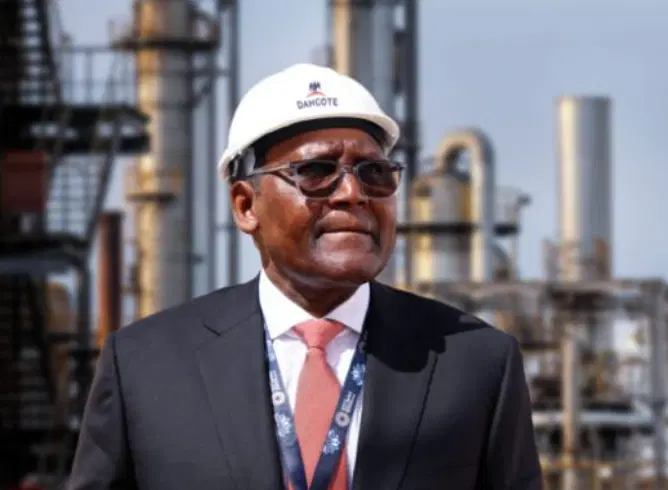
Dangote Refinery Ends Nigeria’s Era of Fuel Import Dependence, Boosts GDP, FX Earnings — EIU
The operational ramp up of the 650,000 barrels per day Dangote Petroleum Refinery & Petrochemicals is fundamentally reshaping Nigeria’s downstream oil sector, significantly reducing the country’s dependence on imported refined petroleum products and strengthening its external position, according to the Economist Intelligence Unit (EIU).
In its latest assessment on Nigeria’s fuel market and regulatory environment, the EIU said the refinery has already transformed a sector that was previously characterised by heavy reliance on imported fuel despite Nigeria being Africa’s largest crude oil producer. The report noted that the refinery met nearly 80 per cent of domestic petrol demand in April and produced enough volumes to satisfy local consumption requirements as operations approached full capacity.
The EIU described Nigeria’s downstream petroleum sector before the refinery as “long dysfunctional”, noting that the country had remained almost entirely dependent on costly imported fuel while producing nearly 1.5 million barrels of crude oil daily.
According to the report, the emergence of the refinery has reduced import dependence, improved domestic fuel availability and strengthened Nigeria’s balance of payments position through lower import demand and rising exports of refined petroleum products.
“The gradual ramp up of the 650,000 barrel/day Dangote refinery since May 2023 has transformed Nigeria’s long dysfunctional downstream sector,” the report stated. “The country’s main refineries, all state owned, had been inoperative for years and Nigeria was almost entirely reliant on costly imported fuel.”
The research and analysis division of The Economist Group, London added that the refinery’s attainment of full operational capacity and its planned expansion would further support Nigeria’s economic growth and foreign exchange earnings over the medium term.
“Meanwhile, the attainment of full capacity at, and an increase in exports from, the Dangote refinery will support real GDP growth and foreign exchange earnings in 2026 and 2027 and beyond, as a planned doubling of the plant’s output comes on stream around the end of the decade,” it added.
Industry analysts said the refinery is increasingly positioning Nigeria as an emerging refining and export hub, altering energy trade flows across Africa and reducing the vulnerability associated with fuel import dependence.
The EIU noted that the refinery’s expansion has coincided with major reforms in Nigeria’s downstream sector, including the removal of fuel subsidies and the introduction of market driven pricing mechanisms.
The report, however, said the transition from a state dominated fuel import structure to large scale domestic refining has triggered resistance from interests linked to the old import regime.
The latest tensions emerged following the decision by the Nigerian Midstream and Downstream Petroleum Regulatory Authority to relax restrictions on petrol imports despite the refinery’s growing capacity to meet domestic demand.
Dangote Industries subsequently initiated legal action, arguing that continued import approvals undermine domestic refining investments and conflict with the objectives of the Petroleum Industry Act, which seeks to encourage local refining capacity and reduce import dependence.
Analysts noted that the availability of large-scale domestic refining capacity has improved Nigeria’s energy security and reduced exposure to external supply shocks and foreign exchange volatility.
The Centre for the Promotion of Private Enterprise also cautioned against unrestrained importation of petroleum products, warning that such a policy could weaken Nigeria’s industrialisation drive and discourage investments in domestic refining.
Chief Executive Officer of CPPE, Muda Yusuf, said continued dependence on imported fuel had historically contributed to pressure on foreign reserves, exchange rate instability and fiscal leakages.
The refinery’s growing impact is also being reflected in Nigeria’s broader macroeconomic indicators. Earlier this month, S&P Global Ratings cited increased domestic refining capacity and rising hydrocarbon exports among the major factors supporting Nigeria’s sovereign credit rating upgrade – the first in 14 years.
Beyond Nigeria, analysts said the refinery is increasingly being viewed as a strategic industrial asset for Africa, where many countries remain heavily dependent on imported fuel despite rising demand for transportation, manufacturing, and power generation.
Business
BREAKING: Court Dismisses $19.6 Million Claim Against NNPCL — Rules Contract Scope Cannot Be Changed Orally

BREAKING: Court Dismisses $19.6 Million Claim Against NNPCL — Rules Contract Scope Cannot Be Changed Orally
In a landmark ruling on Friday, May 22, 2026, the Federal Capital Territory High Court in Abuja threw out a $19.6 million lawsuit filed by Alternate Dimensions Ventures Ltd against the Nigerian National Petroleum Company Limited (NNPCL), affirming a key legal principle: a written contract cannot be expanded through oral agreements or conduct.
Alternate Dimensions had sought $19,600,000 in professional fees, claiming the scope of its Direct Sale, Direct Purchase (DSDP e-pro) contract with NNPCL was orally expanded. Represented by counsel Patrick Peter, the firm argued it was entitled to the revised sum for services rendered under the alleged new terms.
But NNPCL, through its lawyer Ituah Imhanze of KENNA LP, pushed back sharply, arguing that parties are bound exclusively by the clear terms of their written agreement. Imhanze contended that without any written amendment, the claim was legally unsound, and the court agreed.
Delivering judgment, Justice Hamza Mu’azu upheld NNPCL’s defense, stating that the contract was unambiguous and that no evidence was adduced during the trial, which supported the alleged scope expansion. The court further found that NNPCL fully complied with all contractual terms and committed no breach.
Dismissing the suit as meritless, Justice Mu’azu reinforced the doctrine of sanctity of contract: any amendment to a written agreement must be express, unequivocal, and documented, not implied or verbal.
The ruling spares NNPCL from the S19.6 million claim and also a floodgate of similar potential liabilities.


- When women farm better, Eswatini eats better June 3, 2026
- Togo Hosts the 8th Annual Forum of National Volunteer Agencies in the Economic Community of West African States (ECOWAS) Region June 3, 2026
- Indigenous Peoples gravely vulnerable to Ebola epidemic, warn United Nations (UN) independent experts June 3, 2026
- Meeting between Parliamentary Vice-Minister ONISHI and His Excellency (H.E.) Mr. Cosgrow, Principal Minister and Minister for Agriculture, Fisheries and Blue Economy of Seychelles June 3, 2026
- Eritrea: Construction of Elementary School in Gogni Sub-Zone June 3, 2026
- African Union Commission (AUC) Chairperson His Excellency (H.E.) Mahmoud Ali Youssouf highlighted thePermanent Representatives’ Committee (PRC) critical role in advancing the Union’s agenda and laying the groundwork for the forthcoming Mid-Year Coordination Meeting (MYCM) June 3, 2026
- Eritrea: Eighth Grade National Examination Commences June 3, 2026
- Many Africans see justice system as unequal, costly, and slow, Afrobarometer survey reveals June 3, 2026
- Prof. Benedict Oramah to Chair Finance Summit as African Energy Week (AEW) 2026 Prepares for Major Deal Flow June 3, 2026
- The Islamic Development Bank (IsDB) Group Affiliates to Host the 14th Private Sector Forum in Baku, Azerbaijan (16-19 June 2026) June 3, 2026
- When women farm better, Eswatini eats better June 3, 2026
- Togo Hosts the 8th Annual Forum of National Volunteer Agencies in the Economic Community of West African States (ECOWAS) Region June 3, 2026
- Indigenous Peoples gravely vulnerable to Ebola epidemic, warn United Nations (UN) independent experts June 3, 2026
- Meeting between Parliamentary Vice-Minister ONISHI and His Excellency (H.E.) Mr. Cosgrow, Principal Minister and Minister for Agriculture, Fisheries and Blue Economy of Seychelles June 3, 2026
- Eritrea: Construction of Elementary School in Gogni Sub-Zone June 3, 2026
- African Union Commission (AUC) Chairperson His Excellency (H.E.) Mahmoud Ali Youssouf highlighted thePermanent Representatives’ Committee (PRC) critical role in advancing the Union’s agenda and laying the groundwork for the forthcoming Mid-Year Coordination Meeting (MYCM) June 3, 2026
- Eritrea: Eighth Grade National Examination Commences June 3, 2026
-

 news6 months ago
WHO REALLY OWNS MONIEPOINT? The $290 Million Deal That Sold Nigeria’s Top Fintech to Foreign Interests
-

 society1 month ago
SOCIAL MEDIA IS NOT A BATTLEFIELD COMMAND – WHY THE NIGERIAN ARMY’S ACTION AGAINST JUSTICE CRACK IS A NATIONAL SECURITY IMPERATIVE
-

 celebrity radar - gossips4 months ago
Dr. Chris Okafor Returns with Power and Fire of the Spirit -Mounts Grace Nation Altar with Fresh Anointing and Restoration Grace on February 1, 2026
-

 celebrity radar - gossips6 months ago
Prophet Kingsley Aitafo Releases 2026 Prophecy: ‘Nigeria Will Rise, but the World Must Prepare for Turbulence’
You must be logged in to post a comment Login
You must log in to post a comment.