
society
El-Rufai Turns 66 in EFCC Custody

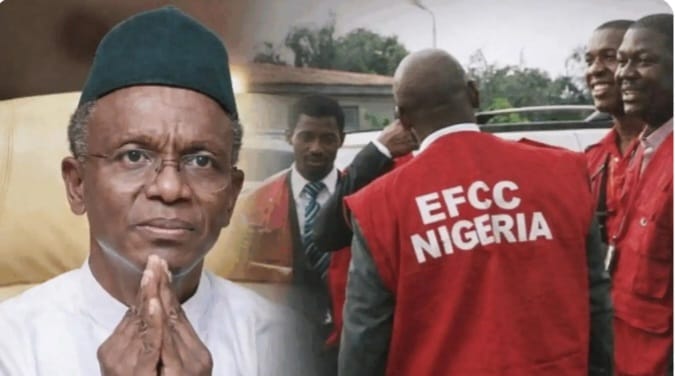
El-Rufai Turns 66 in EFCC Custody
By George Omagbemi Sylvester | Published by SaharaWeeklyNG
“Former Kaduna governor questioned over ₦432 billion corruption probe as cybercrime charges loom.”
Former Kaduna State governor Nasir El-Rufai spent his 66th birthday in the custody of Nigeria’s anti-graft agency, the Economic and Financial Crimes Commission (EFCC), after hours of interrogation over an alleged multibillion-naira corruption probe tied to his eight-year tenure in office.
The development, which unfolded in Abuja on Monday, February 17, 2026, marks one of the most dramatic political moments in recent Nigerian history, as a former federal minister and influential northern political figure now finds himself at the centre of parallel corruption and cybercrime investigations.
According to multiple reports, El-Rufai arrived at the EFCC headquarters in the Jabi district of Abuja around 10 a.m. in response to an official invitation issued by the commission. After hours of questioning, he was detained overnight as investigators sought more time to interrogate him over alleged financial misconduct amounting to about ₦432 billion.
The probe stems primarily from a 2024 report by the Kaduna State House of Assembly, which accused his administration of mismanaging public loans, violating due process in contract awards and leaving the state with a heavy debt burden.
Investigators are said to be focusing on alleged diversion of funds, money laundering, and the accumulation of debts considered unjustified by lawmakers.
An EFCC source indicated that the former governor was grilled for about eight hours before the agency obtained a court order to keep him in custody for further questioning.
His media aide, Muyiwa Adekeye, confirmed the detention, stating that El-Rufai honoured the invitation and remained with investigators after what he described as a “frank and fruitful interaction” with officials.
The central institutions in the unfolding case are the EFCC, which is investigating alleged financial crimes, and the Department of State Services (DSS), which has filed separate criminal charges.
The EFCC investigation was triggered by petitions and the Kaduna Assembly’s findings, which alleged that loans obtained during El-Rufai’s tenure between 2015 and 2023 were either misapplied or executed without due process.
The anti-graft agency subsequently invited the former governor in December 2025 as part of the ongoing probe.
Parallel to the corruption investigation, the DSS filed a three-count cybercrime charge at the Federal High Court in Abuja, alleging that El-Rufai unlawfully intercepted the private communications of National Security Adviser Nuhu Ribadu.
The charge reportedly arose from statements the former governor made during a television interview in which he claimed that the NSA’s phone had been bugged.
Authorities argue that such an act, if proven, would constitute a serious breach of Nigeria’s cybercrime and communications laws and a threat to national security.
The timing of the detention, coinciding with El-Rufai’s birthday, triggered strong political reactions across Nigeria. Former Vice President Atiku Abubakar publicly congratulated him, describing him as “a man of courage and intellect” amid what he called political persecution.
Supporters also gathered around the EFCC headquarters, with reports of protests and clashes with security personnel.
Meanwhile, his son, Bello El-Rufai, a member of the House of Representatives, praised his father’s record as a reformist administrator, framing the detention as a test of character rather than a stain on his legacy.
Available accounts suggest a sequence of events beginning with an EFCC invitation, followed by his appearance at the commission’s headquarters, prolonged interrogation and eventual detention pending further investigations or possible arraignment.
Sources indicate the probe has been ongoing for about a year before the former governor was summoned.
The case is being closely watched for its potential impact on Nigeria’s anti-corruption drive and political stability. El-Rufai is not only a former governor but also a former Minister of the Federal Capital Territory and a key figure in northern political circles.
Anti-corruption scholars have long argued that the credibility of any anti-graft campaign rests on its impartiality. As Nigerian political economist Pat Utomi once observed, “The true test of a nation’s integrity is whether the law applies equally to the powerful and the powerless.”


Similarly, former World Bank president James Wolfensohn famously warned that corruption “diverts resources from the poor to the rich, increases the cost of running businesses, and distorts public expenditures.”
Those principles now frame the public debate around the El-Rufai case: whether the investigation represents genuine accountability or a politically charged confrontation.
As of the time of reporting, El-Rufai remains in EFCC custody, with investigators expected to decide whether to file formal charges in court. The outcome could set a major precedent for how Nigeria handles corruption allegations against former state governors.
For now, the image of a once-powerful political figure marking his birthday inside an anti-graft detention facility underscores the unpredictable nature of power in Nigeria’s evolving political landscape and the enduring question of whether accountability will truly become a national norm.





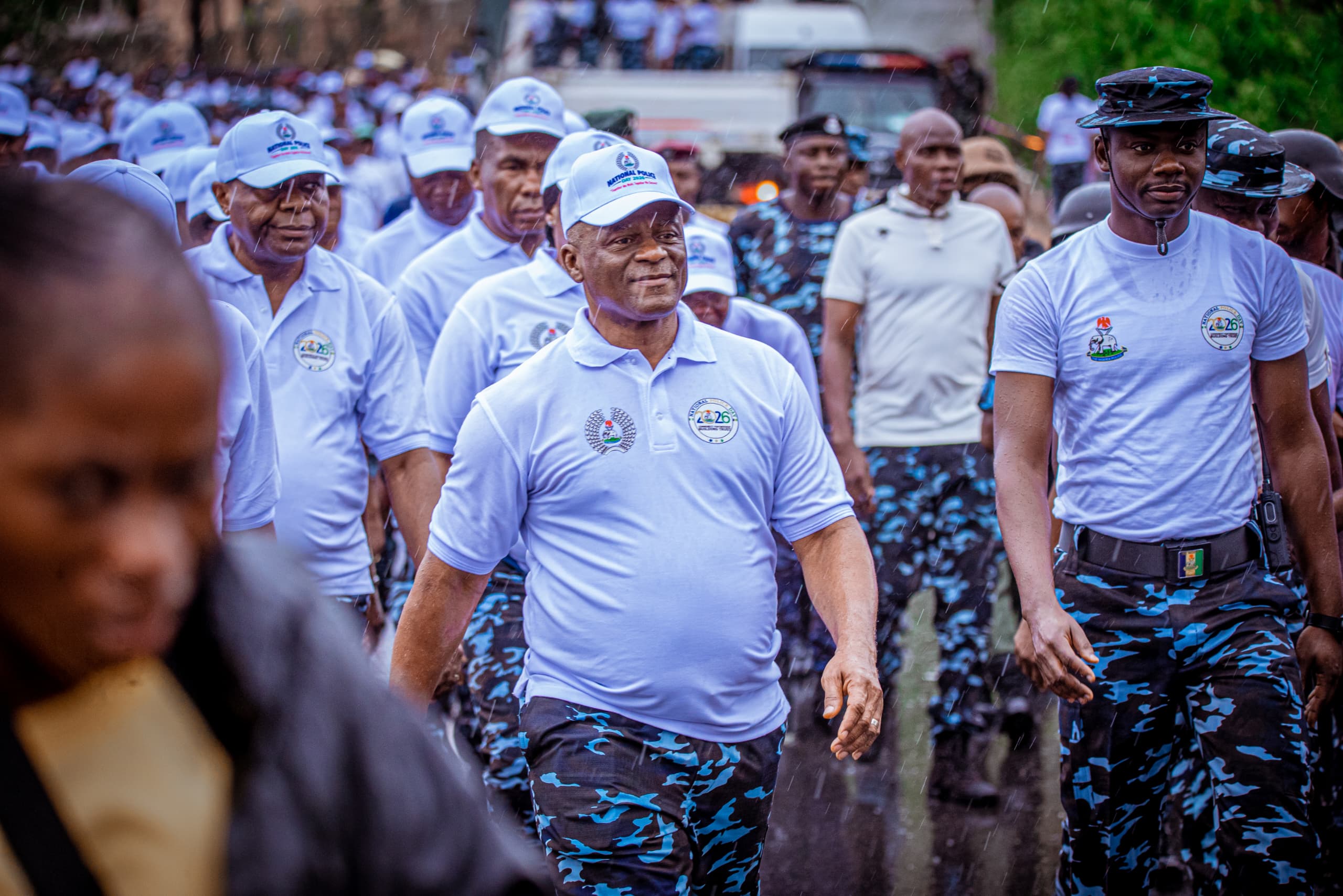
Police Day 2026: IGP Disu Leads Nationwide Walkathon To Strengthen Community Trust
The Inspector-General of Police, Olatunji Disu, on Tuesday led the management team, alongside officers and personnel of the Nigeria Police Force, in a nationwide walkathon to commemorate the 2026 National Police Day.
The event, held across state capitals and the Federal Capital Territory, formed part of activities marking Day Two of the annual celebration, themed “Community Partnership: Building Trust.”
The symbolic exercise, which drew participation from both police personnel and members of the public, was aimed at showcasing unity, discipline, and a renewed commitment to community policing and public safety.
According to the Force leadership, the walkathon underscores the Nigeria Police Force’s resolve to strengthen public trust, deepen engagement with citizens, and enhance collaboration in tackling security challenges across the country.
Participants described the initiative as a practical step toward bridging the gap between law enforcement and the communities they serve, while also promoting physical fitness and mental well-being among officers and civilians alike.
With the theme reflecting a shared responsibility for safety, the Police reiterated that sustainable security can only be achieved through active partnership with the public.
The event concluded with a renewed call for collective action under the banner: “Together We Walk, Together We Secure,” emphasizing unity of purpose in building a safer and more secure society for all Nigerians.


society
Dr. Chris Okafor invokes divine retribution upon individuals blackmailing the Grace Nation church
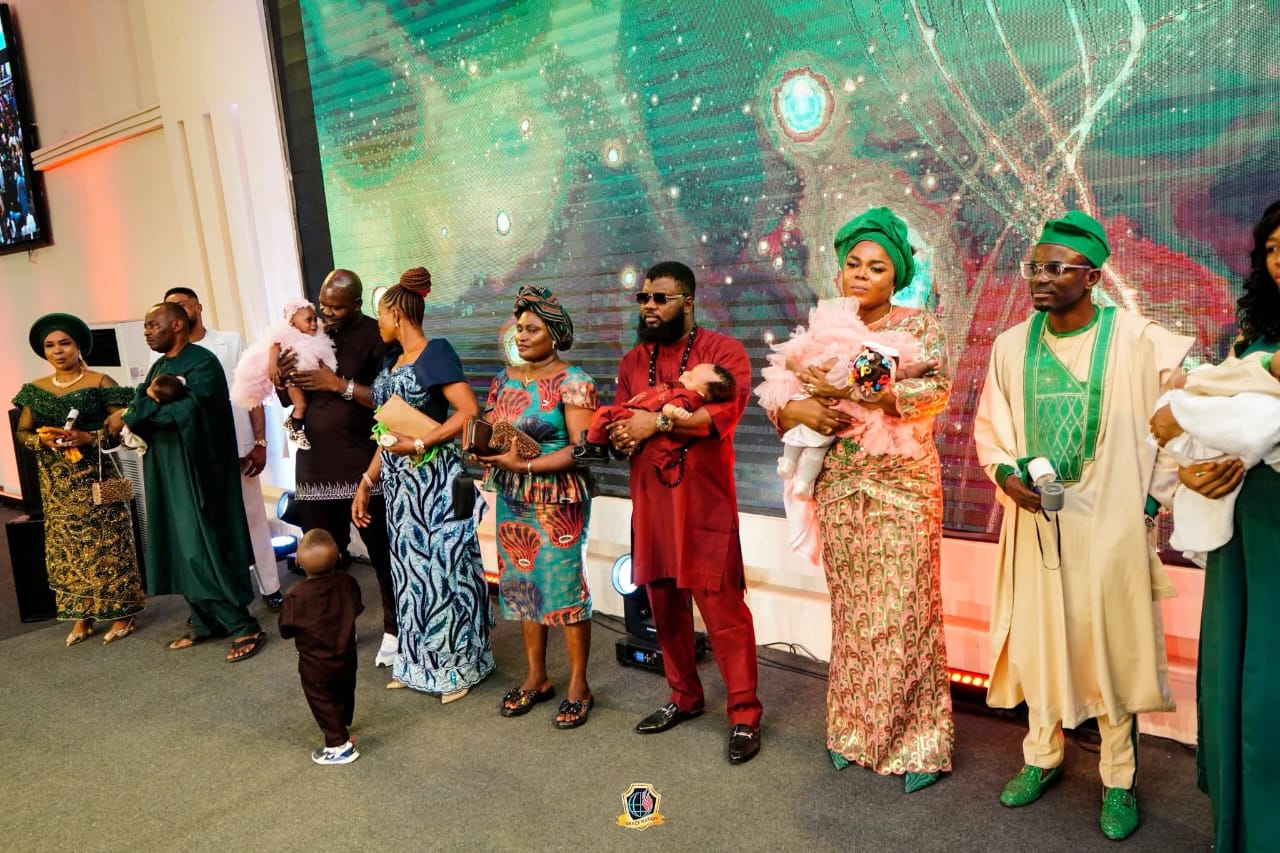
Dr. Chris Okafor invokes divine retribution upon individuals blackmailing the Grace Nation church
… Affirming God’s omnipotence to unveil malicious schemes.
To be frank, the ability of Doris Ogala and her associates to withstand the arduous challenges set by Senior Pastor Dr. Chris Okafor of Grace Nation Global at the culmination of the Harvest of Babies 2026 conference, the church’s flagship event, continues to elude me.
It’s advisable not to offend a powerful spiritual leader like Prophet Chris Okafor to avoid potential consequences, as seen in the situation with Doris Ogala, who was rebuked by the prophet; can she rectify the situation through confession?
Insiders close to the man of God claim that despite relentless online bullying and blackmailing, the Generational Prophet remains resolute, stating that God’s power has been evident throughout the commission’s existence. The reason for this wonderful statement is found in the scriptures, “Upon this rock I shall build my Church, and the gates of hell shall not prevail.” The more falsehoods are spread about the church and its leader, the more God elevates the church and propels him to greater heights, he asserted. He emphasized that blessings and fruitfulness are antidotes to curses, noting that God continues to bestow blessings upon the church, including miracles and the gift of children, which is one reason for the grand finale of the annual family liberation program, The Harvest of Babies.
However, the man of God issued a curse on each person speaking ill of the church, blackmailing, and uttering all sorts of falsehoods against the church, declaring that if they refused to repent within a few days, the earth would swallow them and their family members, stating that they would be of no use to themselves, their families, or society at large.
The spiritual leader cautions his followers to beware of such individuals including Doris Ogala who may taint their faith, and urges them to treat these persons as emissaries of the devil, avoiding them altogether.
Recall that the 2026 harvest of babies concluded with a remarkable birth of a miracle baby boy to a woman on the third day of the conference, accompanied by the dedication of several other miracle babies, all to the glory of God.
Christopher Sunday David writes from
Austria
“Together We Walk, Together We Secure”: Police Launch 2026 Walkathon In Abuja
The Nigeria Police Force has announced plans to host a walkathon in commemoration of the 2026 National Police Day, aimed at promoting unity, peace, and stronger community partnership.
The event is scheduled to take place on Tuesday, March 31, 2026, with participants expected to converge at the Force Headquarters Abuja by 6:00 a.m., where the walk will commence.
According to the organisers, the walkathon is designed to bring together members of the public, stakeholders, and security personnel in a show of solidarity and shared commitment to national security.
With the theme, “Together we walk, together we secure,” the initiative underscores the importance of collaboration between the police and citizens in maintaining peace and safety across the country.
Members of the public have been encouraged to participate in the exercise, which forms part of activities lined up to mark this year’s National Police Day celebration.
It is believed that the walkathon would not only foster closer ties between the police and the communities but also serve as a platform to promote awareness on collective responsibility in ensuring a safer society.


-

 society6 months ago
Religion: Africa’s Oldest Weapon of Enslavement and the Forgotten Truth
-

 news4 months ago
WHO REALLY OWNS MONIEPOINT? The $290 Million Deal That Sold Nigeria’s Top Fintech to Foreign Interests
-

 society6 months ago
“You Are Never Without Help” – Pastor Gebhardt Berndt Inspires Hope Through Empower Church (Video)
-

 celebrity radar - gossips2 months ago
Dr. Chris Okafor Returns with Power and Fire of the Spirit -Mounts Grace Nation Altar with Fresh Anointing and Restoration Grace on February 1, 2026