
Business
Emeka Ike Prodigies And Ex-Wife Emma Ike Rebellion In Connivance With Pastor Chris Okotie Hybrid Conspiracy



-Women Who End Their Marriages With Vulgarness Of Marital Blasphemy Are In Denial Of Truth…. By Her Knowledgeable Professor Alexia Thomas.
Her Knowledgeable Professor Alexia Thomas the Chairman of The Commonwealth Liberation Party (TCLP) in the UK, makes this Judgement as she Pronounces and Declared on the 17/03/2017 at 4.00pm in this Press Analytical Report of the Event Sagacity in a Triangular String between Emeka Ike, Emma Ike and Pastor Chris Okotie. Her words rains thunder on Chris Okotie in his Evil Genius Hybrid Conspiracy that robbed Emeka Ike of His marriage and failed attempted assassination on Emeka Ike’s Life.
Mr. Emeka Ike is the President of Actors Guild of Nigeria (AGN). A Man who believes in the Dignity of Labour.
The Thought Of A Man Lies In His Coherent Ability To Deduce Substance From Facts And Ethics Of Truth …. By Her Knowledgeable Professor Alexia Thomas.
No one climbs the ladder of success without failure but the persistence to build a pathway sliding the rough and ruin of a society covered by darkness to pull the Mantle of Authority tells you the man Emeka Ike is highly celebrated by his Peers who value his style of vision fusion and an Ambassadorial Brand, a name every Government wants to reckon with and as such it is dishonouring to speak vain words of a true Man, A Father, Motivational Speaker, Role Model And The Master Of Men In The Nollywood Industry.
Those who dare him are against the ordinance of fairness of Justice veritas as his acumen is known to all and sundry.Emeka Ike is an Iconic image, principled and firm Man whose ways of life has equally raised the bars for the Nigerian Youth internationally. A leader of opinion and the people’s idol. Very enviable, amiable, dogged, mugged and rugged personality. No wonder peers endorse and revere him.
In October of 2015, the matter of Emeka Ike came to my attention while in my office in the United Kingdom. The story read,‘Pastor Chris Okotie gave Emma Ike (Emeka Ike’s wife) Five Hundred Thousand Naira (N500,000.00)’, enforcing the woman estranged from her husband and in conversion to Pounds Sterling, the equivalent as at then was Two Thousand Pounds (£2,000.00), having realised my Monthly House Rent is Seven Thousand Five Hundred Pounds (£7,500.00), so it became obvious Pastor Chris Okotie’sirreprehensive behaviour is totally unacceptable. Who is Pastor Chris Okotie? And for purpose of this statement, I will address him as Mr. Chris Okotie.
Mr. Chris Okotie is an acclaimed Pastor whose Musical Career failed. Mr. Okotie is a False Preacher because his English is rather spoken to manipulate his Congregation to admire him in hypocritical foul play that makes him appear as Demi god to his followers. Mr. Okotie is aHome Breaker and for the first time, I say in Pronouncement and Declaration, his Church is worthy of a Collapse.
Emma Ike, Emeka’s estranged wife met him at 19years of age, in that Emeka Ike nurtured her to stardom, but facts emanating from the Couples’ individual accounts is evidential this Case is a matter of a Hybrid Conspiracy of Evil Genius in action and as a Behavioural Analyst, I present my Submission; Mr. Chris Okotie had broken Mr. Emeka Ike’s marriage because he is envious of the Man’s Popularity and being an Attention Seeker, he wanted the lady to himself and therefore played a conspiracy role to firstly lure her to breakout from her marriage in his lust delusional grandiosity, so he manipulated to destroy a Union of 16 years.
Mr. Chris Okotie audaciously sponsored Emma Ike to bring dis-reputation to Emeka Ike’s Integrity. ‘How dare Mr. Chris Okotie dares Emeka Ike’. Who is he? He is just an Insane Pastor without Virtues or Values. No genuine Pastor will encourage any woman to break their Home or even sponsor the Court Case. Emma Ike was trained in school, and nurtured by Emeka Ike. She found stardom because Emeka Ike had empathy to develop her but Chris Okotie whose marriage equally failed and had flirted with all ladies in his congregation played a destructive role, a derailed insanity that will see him locked up behind bars.
Emeka Ike made efforts to speak with him but Chris Okotie assumed he is a God, but he is a Derailed Psychopathic Pastor, robbing in the name of Religionism, a Propagandist decoy meant to brainwash idiots and fools like Emma Ike, who undermined the Virtues of her Marriage and allowed failure like Chris Okotie to destroy her marriage. Mr. Chris Okotie, I say shame on you as you are a badly behaved Pastor and Emeka Ike has now carried on with his life. You succeeded in breaking his marriage but one thing you could not stop is his zeal and determinism for Greatness. He will rule Nigeria and the vengeance will come knocking on your door sooner than later.
Injustice against one is Injustice against all. Emeka Ike never wanted Emma Ike to go because she was just like a daughter to him as he groomed her and brought the Elegant Woman of Fame in her, but Mr. Chris Okotiecame in to destroy the Fountain of Admiration because Emeka Ike was younger and vulnerable and Nigerian Citizens all suffer from disability of the mind, the reason no one saw that Emeka Ike was a Victim of a Conspiracy to rob him of his Reputation and Integrity. If not, Mr. Chris Okotie should have hide his shame and realise his profession is a Corporate Beggar who has continually enriched himself with Offerings and Tithes received from his Church congregation and has the audaciousness to compete with Emeka Ike who worked his Fame by Integrity and Perseverance in a profession that he gave all his life to attain success and stardom.
Mr. Chris Okotie in a Hell-Raiser Maldemerof Essentricism, his face does not foretell the purity of his heart, he is a Religion Con Preacher. Everybody can go their own way since,Emma Ike got her divorce not until after she unleashed hatred on her first son by throwing a bicycle Pedal to his chest and the little boy had 6broken Ribs removed from his chest in Asokoro Hospital in Abuja. Emma Ike has not acted with clear purpose as is obvious she is puppeteer by Mr. Chris Okotie. What is Chris Okotie’s involvement in Emeka Ike’s Marriage Affairs. Every pressure was exhumed to assassinate Emeka Ike, the Inspector General of Police office will receive a Full Case Dossier as Mr. Chris Okotie must face the gallows of Justice in an act to rob Emeka Ike of his life after breaking his marriage and making his 4 children Motherless.What has gone wrong with Humans? Mr. Chris Okotie is Mentally Unwell and Nigeria will not harbour diseased Pastors who preach false gospel that makes brainless women undermine their Homes for cheap gain of Vanities and Lust.
Emeka Ike is a man of Honour, Greatness, Substance and Impeccable Height. I,Her Knowledgeable Professor Alexia Thomas endorsed him, and say to the people of Nigeria, everything about his Marriage Saga and allegation of Wife Beateris all Framed up and are Lies because it was culminated in a Hybrid Conspiracy by Evil Genius in Action to rob the great personality of Emeka Ike’s integrity.
Mr. Emeka Ike is innocent and has done nothing wrong. The people of Nigeria are advised to leave him in Peace and the Media should stop every False Accusations. I am a Messenger of Truth and I see no fault in this man, an Illustrious Citizen of Nigeria.
‘Her Knowledgeable and Royal Mother’ Professor Alexia Thomas in International Circles is an Erudite Scholar, Genius, Acclaimed Freedom Fighter for the Commonwealth Nations, An Accomplished Author, Upholder of Rule of Law, An Encyclopaedia and Electrifying Law Reformist. In the History of Advocacy, She stands out as the most Passionate, Highly Celebrated-Cerebral and Foremost Single Individual whose Consistency, Beliefs, Doggedness and Intellectual Sagacity overturn the Suffering, Torture, Dehumanization and Deportation of Coloured and Black People from Great Britain.
As a leading Philosopher, whose stance on Equal Rights, Freedom of Expression, Association, in her endowed ‘Solomonic-Wisdom’ and inclination with Divinity she has unlocked the Code of knowledge. Many of her Apt, timely and profound Philosophies litters most Foreign Journals and referral to Colleges and Undergraduates in Europe, Asia, America and Across Africa.



Fidelity Bank grows gross earnings by 38% to N434.95b in Q1
Fidelity Bank Plc recorded 37.9 per cent growth in gross earnings to N434.95 billion in first quarter 2026 as the international commercial bank continued to expand its core banking market share.
Interim report and accounts of Fidelity Bank for the three months ended March 31, 2026 released at the Nigerian Exchange (NGX) showed that gross earnings rose from N315.42 billion in first quarter 20025 to N434.95 billion in first quarter 2026, representing an increase of 37.9 per cent.
The top-line performance was driven by impressive growth in the bank’s core business operations with interest incomes rising by 22.8 per cent to N314.48 billion in first quarter 2026 as against N256.10 billion in first quarter 2025.
With net interest income at N180.97 billion, the bank closed the period with profit before tax of N92.48 billion. After taxes, net profit stood at N74.47 billion for the three-month period. Earnings per share remained high at N5.69, underlining the capacity of the bank to reward its shareholders.
The balance sheet of the bank also emerged stronger. Total assets crossed the N11 trillion mark to N11.35 trillion by March 2026 compared with N10.46 trillion recorded in December 2025. Customers’ deposits increased from N6.89 trillion to N7.38 trillion. Total equity rode on the back of earnings growth to a 27.5 per cent increase from N1.09 trillion in December 2025 to N1.39 trillion by March 2026.
The first quarter 2026 results further consolidated the strong earnings outlook of the bank, which had successfully completed its recapitalisation amidst impressive earnings performance in 2025.
Fidelity Bank had recorded double-digit growths in interest and non-interest incomes as well as key balance sheet items during the year ended December 31, 2025.
The audited report showed that gross earnings rose from N1.04 trillion in 2024 to N1.52 trillion in 2025, an increase of 45.6 per cent. Interest and similar incomes had grown by 38.7 per cent from N803.1 billion in 2024 to N1.11 trillion in 2025. Fees and commission incomes also rose by 44.7 per cent from N78.4 billion to N113.4 billion. The bank recorded net profit after tax of N242.4 billion in 2025.
The bank’s balance sheet emerged stronger with total assets rising by 18.6 per cent to N10.46 trillion in 2025 as against N8.82 trillion in 2024. Customer deposits increased by 16.1 per cent from N5.94 trillion to N6.89 trillion, reflecting continued franchise strength and an improved funding profile. Net loans and advances meanwhile declined by 2.4 per cent to N4.28 trillion in 2025 as against N4.39 trillion in 2024, attributable to customers paying down on their mature obligations.
The bank had in 2025 strengthened its capital position, with eligible capital rising to N561 billion, above the regulatory minimum of N500 billion for banks with international authorisation. In addition, capital adequacy had remained robust, with Capital Adequacy Ratio of 30.94 per cent by December 2025 as against 23.47 per cent by December 2024.
Managing Director, Fidelity Bank Plc, Dr. Nneka Onyeali-Ikpe, said the first quarter 2026 results reinforced the bank’s strong and resilient business model.
She noted that with the remarkable success of its recapitalisation programme and continuing expansion, Fidelity Bank has entered a new era of growth and impressive returns.
“We are on a stronger footing and confident that we will set new growth records that are reflective of our legacy and the future we are working on,” Onyeali-Ikpe said.
Business
Dangote Refinery Ends Nigeria’s Era of Fuel Import Dependence, Boosts GDP, FX Earnings — EIU
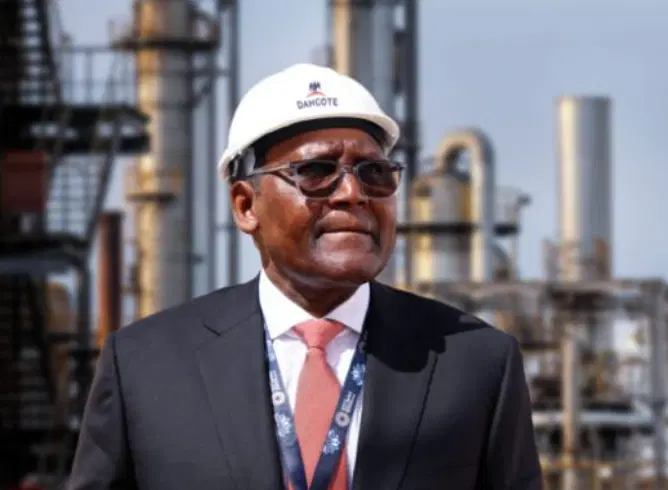
Dangote Refinery Ends Nigeria’s Era of Fuel Import Dependence, Boosts GDP, FX Earnings — EIU
The operational ramp up of the 650,000 barrels per day Dangote Petroleum Refinery & Petrochemicals is fundamentally reshaping Nigeria’s downstream oil sector, significantly reducing the country’s dependence on imported refined petroleum products and strengthening its external position, according to the Economist Intelligence Unit (EIU).
In its latest assessment on Nigeria’s fuel market and regulatory environment, the EIU said the refinery has already transformed a sector that was previously characterised by heavy reliance on imported fuel despite Nigeria being Africa’s largest crude oil producer. The report noted that the refinery met nearly 80 per cent of domestic petrol demand in April and produced enough volumes to satisfy local consumption requirements as operations approached full capacity.
The EIU described Nigeria’s downstream petroleum sector before the refinery as “long dysfunctional”, noting that the country had remained almost entirely dependent on costly imported fuel while producing nearly 1.5 million barrels of crude oil daily.
According to the report, the emergence of the refinery has reduced import dependence, improved domestic fuel availability and strengthened Nigeria’s balance of payments position through lower import demand and rising exports of refined petroleum products.
“The gradual ramp up of the 650,000 barrel/day Dangote refinery since May 2023 has transformed Nigeria’s long dysfunctional downstream sector,” the report stated. “The country’s main refineries, all state owned, had been inoperative for years and Nigeria was almost entirely reliant on costly imported fuel.”
The research and analysis division of The Economist Group, London added that the refinery’s attainment of full operational capacity and its planned expansion would further support Nigeria’s economic growth and foreign exchange earnings over the medium term.
“Meanwhile, the attainment of full capacity at, and an increase in exports from, the Dangote refinery will support real GDP growth and foreign exchange earnings in 2026 and 2027 and beyond, as a planned doubling of the plant’s output comes on stream around the end of the decade,” it added.
Industry analysts said the refinery is increasingly positioning Nigeria as an emerging refining and export hub, altering energy trade flows across Africa and reducing the vulnerability associated with fuel import dependence.
The EIU noted that the refinery’s expansion has coincided with major reforms in Nigeria’s downstream sector, including the removal of fuel subsidies and the introduction of market driven pricing mechanisms.
The report, however, said the transition from a state dominated fuel import structure to large scale domestic refining has triggered resistance from interests linked to the old import regime.
The latest tensions emerged following the decision by the Nigerian Midstream and Downstream Petroleum Regulatory Authority to relax restrictions on petrol imports despite the refinery’s growing capacity to meet domestic demand.
Dangote Industries subsequently initiated legal action, arguing that continued import approvals undermine domestic refining investments and conflict with the objectives of the Petroleum Industry Act, which seeks to encourage local refining capacity and reduce import dependence.
Analysts noted that the availability of large-scale domestic refining capacity has improved Nigeria’s energy security and reduced exposure to external supply shocks and foreign exchange volatility.
The Centre for the Promotion of Private Enterprise also cautioned against unrestrained importation of petroleum products, warning that such a policy could weaken Nigeria’s industrialisation drive and discourage investments in domestic refining.
Chief Executive Officer of CPPE, Muda Yusuf, said continued dependence on imported fuel had historically contributed to pressure on foreign reserves, exchange rate instability and fiscal leakages.
The refinery’s growing impact is also being reflected in Nigeria’s broader macroeconomic indicators. Earlier this month, S&P Global Ratings cited increased domestic refining capacity and rising hydrocarbon exports among the major factors supporting Nigeria’s sovereign credit rating upgrade – the first in 14 years.
Beyond Nigeria, analysts said the refinery is increasingly being viewed as a strategic industrial asset for Africa, where many countries remain heavily dependent on imported fuel despite rising demand for transportation, manufacturing, and power generation.
Business
BREAKING: Court Dismisses $19.6 Million Claim Against NNPCL — Rules Contract Scope Cannot Be Changed Orally
BREAKING: Court Dismisses $19.6 Million Claim Against NNPCL — Rules Contract Scope Cannot Be Changed Orally
In a landmark ruling on Friday, May 22, 2026, the Federal Capital Territory High Court in Abuja threw out a $19.6 million lawsuit filed by Alternate Dimensions Ventures Ltd against the Nigerian National Petroleum Company Limited (NNPCL), affirming a key legal principle: a written contract cannot be expanded through oral agreements or conduct.
Alternate Dimensions had sought $19,600,000 in professional fees, claiming the scope of its Direct Sale, Direct Purchase (DSDP e-pro) contract with NNPCL was orally expanded. Represented by counsel Patrick Peter, the firm argued it was entitled to the revised sum for services rendered under the alleged new terms.
But NNPCL, through its lawyer Ituah Imhanze of KENNA LP, pushed back sharply, arguing that parties are bound exclusively by the clear terms of their written agreement. Imhanze contended that without any written amendment, the claim was legally unsound, and the court agreed.
Delivering judgment, Justice Hamza Mu’azu upheld NNPCL’s defense, stating that the contract was unambiguous and that no evidence was adduced during the trial, which supported the alleged scope expansion. The court further found that NNPCL fully complied with all contractual terms and committed no breach.
Dismissing the suit as meritless, Justice Mu’azu reinforced the doctrine of sanctity of contract: any amendment to a written agreement must be express, unequivocal, and documented, not implied or verbal.
The ruling spares NNPCL from the S19.6 million claim and also a floodgate of similar potential liabilities.


- Uganda: Parliament concludes vetting of ministers June 2, 2026
- Fund for Export Development in Africa (FEDA) Board Appoints Mr. Emmanuel Assiak as Chief Executive Officer June 2, 2026
- Ecobank Group Launches World First Nature Bond Mobilising Global Capital to Protect Africa’s Natural Ecosystems June 2, 2026
- Merck Foundation Chief Executive Officer (CEO) Dr. Rasha Kelej together with Kenya First Lady support the education of 47 Kenyan Schoolgirls by providing Annual Scholarships till they Graduate June 2, 2026
- Annual Meetings 2026: Governors Back the Bank’s Platform Solutions to Transform Aviation and Health Systems in Africa June 2, 2026
- ThinkMarkets launches ChelseaAI, bringing live CFD trading into Artificial Intelligence (AI) assistants June 2, 2026
- Afreximbank Invites Rugby Africa President Herbert Mensah to Address the 33rd Annual Meetings on a Panel Exploring Sport as a Driver of African Industrialisation June 2, 2026
- Afreximbank Deepens Commitment to Economic Progress in The Bahamas June 1, 2026
- African Electric Vehicle (EV) platform Spiro raises $215M in equity to scale electric mobility and energy infrastructure across Africa June 1, 2026
- Africa Centres for Disease Control and Prevention (Africa CDC) Statement on Attacks Against Health Facilities During the Bundibugyo Virus Disease Response in the Democratic Republic of the Congo June 1, 2026
- Uganda: Parliament concludes vetting of ministers June 2, 2026
- Fund for Export Development in Africa (FEDA) Board Appoints Mr. Emmanuel Assiak as Chief Executive Officer June 2, 2026
- Ecobank Group Launches World First Nature Bond Mobilising Global Capital to Protect Africa’s Natural Ecosystems June 2, 2026
- Merck Foundation Chief Executive Officer (CEO) Dr. Rasha Kelej together with Kenya First Lady support the education of 47 Kenyan Schoolgirls by providing Annual Scholarships till they Graduate June 2, 2026
- Annual Meetings 2026: Governors Back the Bank’s Platform Solutions to Transform Aviation and Health Systems in Africa June 2, 2026
- ThinkMarkets launches ChelseaAI, bringing live CFD trading into Artificial Intelligence (AI) assistants June 2, 2026
- Afreximbank Invites Rugby Africa President Herbert Mensah to Address the 33rd Annual Meetings on a Panel Exploring Sport as a Driver of African Industrialisation June 2, 2026
-

 news6 months ago
WHO REALLY OWNS MONIEPOINT? The $290 Million Deal That Sold Nigeria’s Top Fintech to Foreign Interests
-

 society1 month ago
SOCIAL MEDIA IS NOT A BATTLEFIELD COMMAND – WHY THE NIGERIAN ARMY’S ACTION AGAINST JUSTICE CRACK IS A NATIONAL SECURITY IMPERATIVE
-

 celebrity radar - gossips4 months ago
Dr. Chris Okafor Returns with Power and Fire of the Spirit -Mounts Grace Nation Altar with Fresh Anointing and Restoration Grace on February 1, 2026
-

 celebrity radar - gossips6 months ago
Prophet Kingsley Aitafo Releases 2026 Prophecy: ‘Nigeria Will Rise, but the World Must Prepare for Turbulence’
You must be logged in to post a comment Login
You must log in to post a comment.