
Uncategorized
End of an Era: The Assassination of Saif al-Islam Gaddafi and What It Means for Libya’s Fragile Future

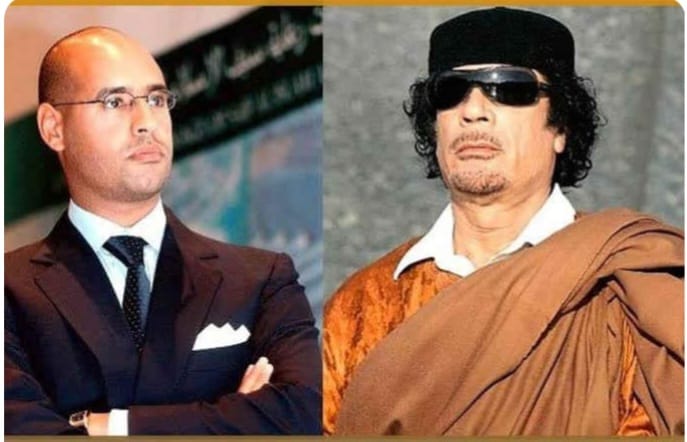
End of an Era: The Assassination of Saif al-Islam Gaddafi and What It Means for Libya’s Fragile Future
By George Omagbemi Sylvester | Published by SaharaWeeklyNG
“A Detailed, Context-Rich Analysis of the Death of Libya’s Most Controversial Scion and Its Reverberations Across a Nation Still Wrestling with Turmoil.”

In a dramatic and violent turn that once again underscores the instability that has plagued Libya since the fall of Muammar Gaddafi, Saif al-Islam Gaddafi, son of the late Libyan leader and a figure synonymous with both reformist aspirations and brutal repression, was assassinated in Zintan, western Libya. His death, confirmed by multiple Libyan sources including his lawyer, Khaled el-Zaydi, marks a profound moment in the North African country’s turbulent post-uprising history.

According to local media reports and police investigations under way, four unidentified gunmen breached Gaddafi’s residence, disabling surveillance cameras before executing the 53-year-old political figure. The attackers fled the scene, leaving behind questions about motive, perpetrator identity, and the broader implications for Libya’s fragile political landscape.
To fully understand the gravity of this event, one must trace Saif al-Islam Gaddafi’s life, not merely as the son of a dictator, but as a complex figure whose trajectory mirrored Libya’s own fractious journey from autocracy to perpetual conflict.
From Heir Apparent to Controversial Power Broker.
Born into the sprawling and secretive family of Muammar Gaddafi, Saif al-Islam was long viewed as the regime’s intellectual face. Educated at the London School of Economics, he spoke fluent English and presented himself abroad as a reformer committed to modernizing Libya’s image and engaging more constructively with the international community. In the early 2000s, he played significant roles in negotiations that led Libya to relinquish its weapons of mass destruction program and in talks intended to compensate victims’ families from the Lockerbie bombing; moves that briefly recast Libya as a state emerging from isolation.
However, the veneer of reformism masked a deeper allegiance to his father’s regime and its system of repression. When the Arab Spring reached Libya in 2011, Saif al-Islam chose family loyalty over reform, becoming one of the architects of the regime’s harsh crackdown on dissent. His rhetoric toward protesters was ruthless and on several occasions he warned of “rivers of blood” if the uprising continued, words that sank his earlier moderate image and aligned him with the paternalistic and brutal tactics of Muammar Gaddafi’s regime.
Fall, Capture and Political Resurrection.
When the uprising culminated in the capture and killing of Muammar Gaddafi in 2011, Saif al-Islam attempted to flee but was apprehended by militia fighters near the desert, then held in custody for years by anti-Gaddafi forces in Zintan. Liberia’s courts later sentenced him to death in absentia for crimes linked to the violent suppression of protests, and the International Criminal Court issued a warrant for his arrest on charges including crimes against humanity. Yet he remained in Zintan under militia protection until a controversial amnesty saw his release in 2017.
In a move that shocked many observers, Saif al-Islam emerged from relative obscurity to announce his candidacy for the Libyan presidency in 2021. His bid came amid collective frustrations over Libya’s protracted transitional politics and years of failed elections. For some Libyans entrenched in conflict fatigue, his name carried residual clout and memories of the old regime’s stability compared with the current chaos. For others, his candidacy symbolized the persistence of the very forces many had fought to overthrow. Ultimately, disagreements over electoral law and his criminal convictions saw Libya’s planned polls collapse, leaving him unaffiliated with any real political power.

The Killing and Its Immediate Aftermath.
The assassination itself was not merely another act of violence in Libya’s mosaic of militia rule and political fragmentation; it was a calculated hit that obliterated the last major figure with direct ties to Libya’s erstwhile authoritarian era. Initial reports suggest that his residence was carefully targeted, security systems neutralized and the attackers escaped undetected—signs that the killing may have been orchestrated by well-organized actors with clear intent.
His political team’s statement condemned the attack as a “brutal act” and demanded justice, a call echoed by figures across Libya’s fractious political spectrum. Khaled al-Mishri, former head of Libya’s Tripoli-based High State Council, called for an “urgent and transparent investigation” into the assassination, spotlighting the state’s enduring inability to enforce the rule of law.
A Country Still at War With Itself.
Libya today is a nation still fractured by the enduring legacies of colonial influence, civil war and competing centers of power. Human Rights Watch and other observers have documented persistent abuses by armed groups and a pervasive climate of impunity that has allowed political violence to flourish. The assassination of Saif al-Islam, in this context, reflects the deeper crisis of governance that has crippled Libya since 2011.
The broader implications extend beyond the death of one man. His assassination risks deepening rivalries among militia factions, reigniting old grievances, and destabilizing tentative diplomatic efforts aimed at national reconciliation. For many Libyans, the event is a grim reminder that political solutions remain elusive in a country where power is more often seized by force than negotiated through consensus.
Voices From the Region: Scholars and Experts Weigh In.
Professor Ali Abdallah, a renowned North African political analyst, emphasizes the symbolic weight of Gaddafi’s death: “This assassination underscores the tragic circularity of Libya’s conflict. The debate over Libya’s future must transcend personalities and confront the structural fissures that have made peace and stability so elusive.”
Meanwhile, Dr. Fatima El-Sindy, an expert on post-conflict transitions, argues that “The elimination of a figure like Saif al-Islam (controversial though he was) reinforces the dangerous reality that political power in Libya continues to be contested through violence. Without a functioning central authority and inclusive political framework, Libya remains trapped in an endless cycle of retaliation.”

Looking Ahead: What Comes Next?
The assassination of Saif al-Islam Gaddafi closes a chapter in Libya’s modern history but does little to open a new, peaceful one. Instead, it challenges Libyans and international stakeholders to confront the systemic failures that have perpetuated violence and political stagnation. Whether his death becomes a catalyst for renewed peace efforts or a spark for further conflict will depend on the actions of Libyan actors and regional partners in the days and months ahead.
In a nation where the past continually bleeds into the present, the killing of Saif al-Islam is not an endpoint, but a stark reminder of how far Libya still must go to achieve the stability that so many have long fought for.





FOPCHEN Calls for Dialogue as Court Fixes May 28 for Continuation
OTA, OGUN STATE — Proceedings in a widely followed legal case resumed on March 24, 2026, at the High Court of Ogun State, Ota Division, ending with a fresh adjournment as the court fixed May 28, 2026, for continuation.
During the session, legal representatives for all parties restated their positions and addressed preliminary matters, laying the groundwork for more substantive arguments at the next hearing. Observers noted that the case continues to attract significant public attention due to its perceived implications for law, culture, and societal values.
The Foundation for the Protection of Cultural Heritage in Nigeria (FOPCHEN) used the occasion to reiterate its call for constructive national dialogue. The group emphasized that while the judicial process must be respected, broader societal engagement remains essential.
According to the organization, issues relating to values, responsibility, and cultural identity should not be confined solely to courtroom deliberations but should involve active participation from various sectors of society.
Legal analysts present at the proceedings described the matter as one with far-reaching implications, noting that arguments advanced in court could shape future interpretations surrounding sensitive cultural and moral questions.
The presiding judge subsequently adjourned the case to May 28, granting all parties time to refine their submissions and respond to issues raised during the hearing.
As anticipation builds ahead of the next court date, Nigerians across different sectors continue to monitor developments closely, keen to see how the judiciary navigates the delicate balance between constitutional rights and cultural expectations.
Uncategorized
CRG: Politicians Must Stop Witch-Hunting, Focus on Nation Building — Says NYSC Cleared Deputy Speaker Since 2023
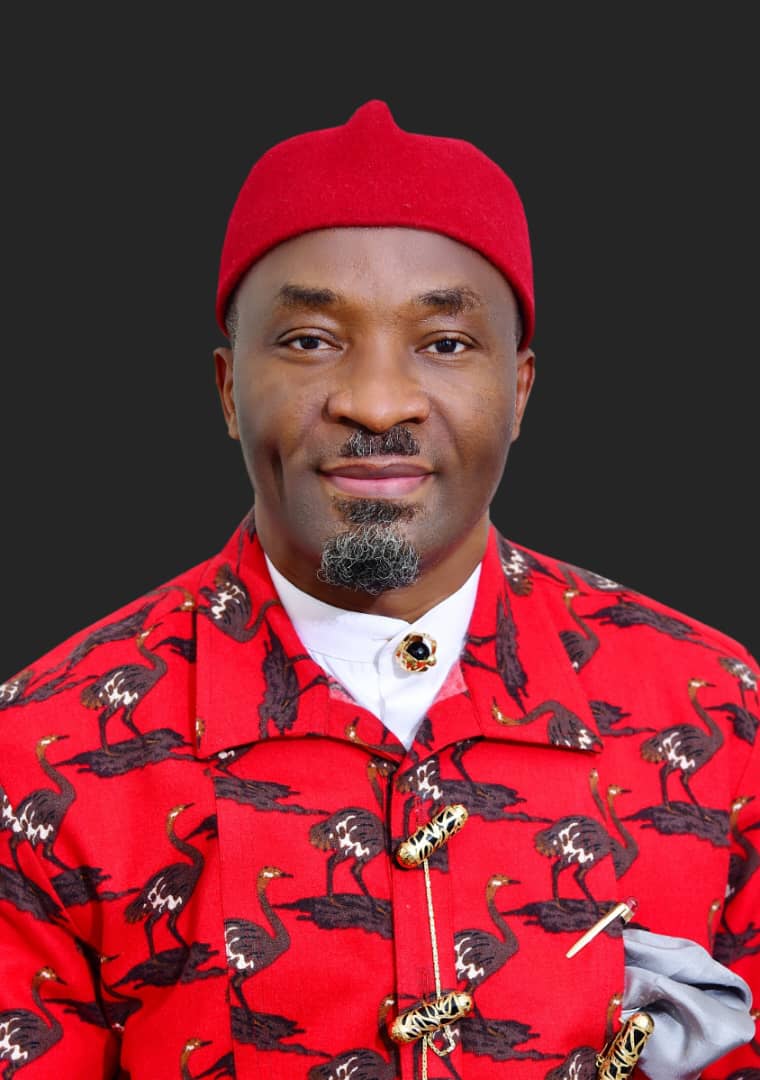
CRG: Politicians Must Stop Witch-Hunting, Focus on Nation Building — Says NYSC Cleared Deputy Speaker Since 2023
By: Boye Ola
The Centre for Responsible Governance (CRG) has called on political actors and interest groups to desist from what it described as needless witch-hunting of the Deputy Speaker of the House of Representatives, Benjamin Okezie Kalu, following renewed controversies surrounding his National Youth Service Corps records.
The organisation noted that the clarification by the National Youth Service Corps (NYSC) regarding the matter is not a recent development, as a formal verification letter had already been issued as far back as May 23, 2023.
The letter, referenced NYSC/CCD/VER/10/5.1/VOL1/02, had already addressed and cleared the questions surrounding the Deputy Speaker’s NYSC records.
Reacting to the renewed debate, the spokesman of the Centre,
Obande George, said it was troubling that issues which had already been clarified by a competent national institution were being resurrected for political purposes.
According to him, the time has come for political actors to move away from destructive engagements and concentrate on building the nation.
“It is important to note that the NYSC had already issued a verification letter dated May 23, 2023 addressing the matter.
Reopening issues that have already been clarified by a competent authority suggests that some individuals are more interested in political witch-hunting than in national progress,” George said.
The CRG stressed that democracy thrives when institutions are respected and their determinations are accepted in good faith rather than constantly questioned for political advantage.

George also commended the Deputy Speaker for demonstrating maturity and composure throughout the controversy, despite what he described as sustained provocations.
“Honourable Benjamin Kalu has shown remarkable calm and maturity in the face of intense public scrutiny and political provocation.
Instead of engaging in unnecessary public confrontation, he allowed institutions to speak through their records.”
The Centre warned that Nigeria’s political culture must evolve beyond constant character attacks and sensational allegations, which often distract public officials from their responsibilities.
According to the organisation, the country’s development requires constructive engagement among political actors rather than continuous attempts to discredit opponents.
“Nigeria cannot move forward if political energy is constantly spent on digging up allegations and amplifying rumours. Our leaders and political actors must redirect their focus to governance, policy and nation building.”
CRG therefore urged Nigerians to rely on verified information from credible institutions and avoid spreading speculative claims that could damage reputations or destabilise public discourse.
The organisation reiterated that respect for due process and institutional integrity remains essential for strengthening Nigeria’s democracy.

@The Centre for Responsible Governance, Email: [email protected], Instagram: crgngo6, Twitter: crgng06, Threads: crgngo6
Uncategorized
IWD 2026: Ajadi Celebrates Women, Urges Them To Seek More Elective Positions In Future Elections

IWD 2026: Ajadi Celebrates Women, Urges Them To Seek More Elective Positions In Future Elections
A Leading People’s Democratic Party, (PDP) Governorship Aspirant in Oyo State, Ambassador Olufemi Ajadi Oguntoyinbo has felicitates with women in the country on the occasion of this year’s International Women’s Day.
The international Women’s Day is celebrated on 8 March, commemorating women’s fight for equality and liberation along with the women right’s movement. It gives focus to issues such as gender equality and reproductive rights. International Women’s Day originated from labour movements in Europe and North America during the early 20th century.
In a statement issued on Sunday to commemorate this year’s edition of the International Women’s Day, Ajadi said the role of the women in nation building cannot be over emphasised.
He recalled the role played by prominent Nigerian women like Mrs Funmilayo Ransome- Kuti, Margaret Ekpo and Wuraola Esan towards the liberalization and the growth of the country and urges women to follow their footsteps by not only participate in the political process but seek more elective positions.
He urges the political leaders to encourage and give more chances to women for them to contest and occupy elective positions in the country.
Ajadi also called for more respect for women, saying they are definitely behind whatever success recorded by the menfolk.
He said domestic violence against women should be stopped, saying they deserves respect for their role in moulding the future leaders.
According to the statement, “I celebrate and congratulate our women on this year’s occasion of International Women’s Day. We cannot underestimate the role played by our women both at home, in the social circle and in politics. They deserve more respect.
“I equally called on them not only to be a passive participants in politics but to determine to seek more elected positions in future elections. They should aspire more from the position of dancing and singing at campaigns to seek more elective positions. The ratio of men to women in elective positions in the country is embarrassing. Women should stand up and fight for more elective positions.
“I also use the occasion of this year’s Women’s Day to appeal to Nigerians to stop domestic violence against the women. If we treat our women well, our country will witness unprecedented developments”.


- United States (U.S.) and Mozambique Advance Cooperation on Emergency Response and Safety April 6, 2026
- The Impacts of the Middle East Conflict on Africa April 6, 2026
- Ghana: President Mahama announces a high-level panel of the Accra Reset April 6, 2026
- Ghana: President Mahama reiterates his determination to build more businesses April 6, 2026
- Mauritius accelerates energy transition with renewable projects of 405 MW April 6, 2026
- Africa Centres for Disease Control and Prevention (Africa CDC) Appoints His Excellency Prof. Yemi Osinbajo as Senior Strategic Advisor to the Director General April 6, 2026
- 2026 Easter Message by the President of the Catholic Bishops’ Conference of Nigeria (CBCN): The Dawn is Coming, Don’t Let Go Now, Hold on to Hope! April 5, 2026
- "A Time to Pause and Begin Again”: President Dr Patrick Herminie reflects in Easter message April 5, 2026
- President Dr. Patrick Herminie Pays Tribute to the Late Seychellois Artist David Philoe April 5, 2026
- Ghana identifies priority areas to strengthen cholera prevention and control April 5, 2026
- United States (U.S.) and Mozambique Advance Cooperation on Emergency Response and Safety April 6, 2026
- The Impacts of the Middle East Conflict on Africa April 6, 2026
- Ghana: President Mahama announces a high-level panel of the Accra Reset April 6, 2026
- Ghana: President Mahama reiterates his determination to build more businesses April 6, 2026
- Mauritius accelerates energy transition with renewable projects of 405 MW April 6, 2026
- Africa Centres for Disease Control and Prevention (Africa CDC) Appoints His Excellency Prof. Yemi Osinbajo as Senior Strategic Advisor to the Director General April 6, 2026
- 2026 Easter Message by the President of the Catholic Bishops’ Conference of Nigeria (CBCN): The Dawn is Coming, Don’t Let Go Now, Hold on to Hope! April 5, 2026
-

 society7 months ago
Religion: Africa’s Oldest Weapon of Enslavement and the Forgotten Truth
-

 news4 months ago
WHO REALLY OWNS MONIEPOINT? The $290 Million Deal That Sold Nigeria’s Top Fintech to Foreign Interests
-

 society6 months ago
“You Are Never Without Help” – Pastor Gebhardt Berndt Inspires Hope Through Empower Church (Video)
-

 celebrity radar - gossips2 months ago
Dr. Chris Okafor Returns with Power and Fire of the Spirit -Mounts Grace Nation Altar with Fresh Anointing and Restoration Grace on February 1, 2026