
society
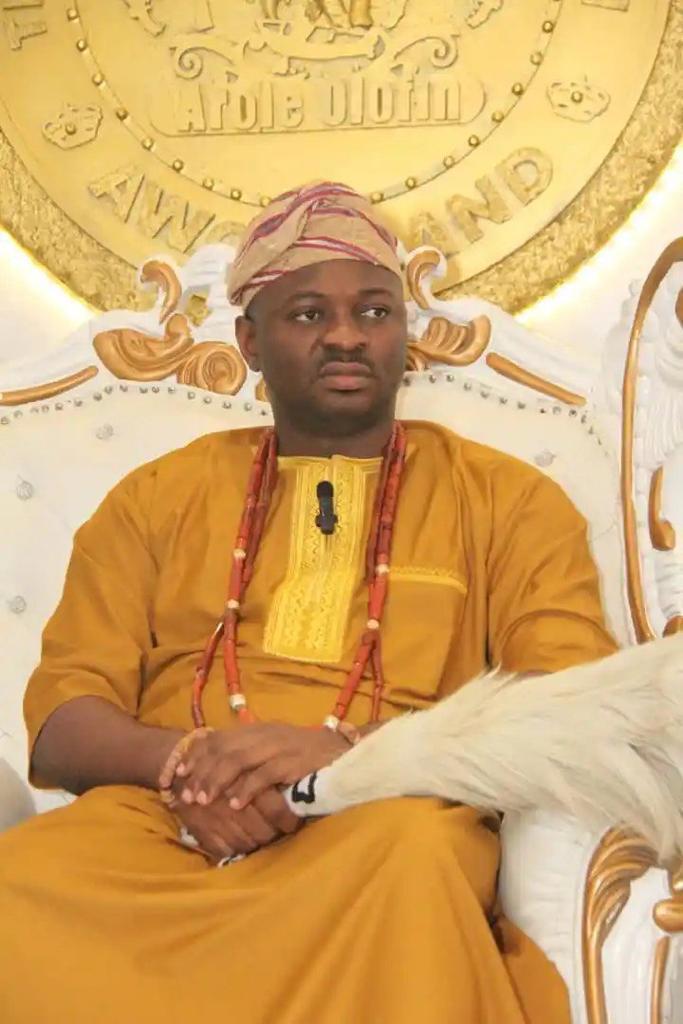
Every Inch of Eko (Lagos) Was Founded by The Awori: Olofin of Isheri Declares.

Every Inch of Eko (Lagos) Was Founded by The Awori: Olofin of Isheri Declares.
Sequel and in response to a recent statement made by the Benin oba regarding the historical founding of Eko (Lagos), His Royal Majesty, Oba Sulaiman Adekunle Bamgbade, the Olofin of Isheri and revered successor of the ancient throne of the Aworis’ progenitor, has affirmed to the Awori Heritage Alliance of North America that Eko (Lagos) was undoubtedly founded by the Awori people.

In light of this confirmation, we, the Awori Heritage Alliance of North America therefore issue the following statement to emphatically and resolutely repudiate the remarks made by the Benin oba concerning the founding of Eko (Lagos) during his courtesy visit to the Lagos House, Marina on Sunday, 26 November 2023.
This statement by the Benin oba is not only erroneous, it in fact constitutes an utter disregard for the centuries old strongly held historical traditions of Eko (Lagos); as well as the documented historical facts on the founding or source of Eko, Lagos.
In his statement, the Benin oba alleged that a “certain area in Lagos, maybe the nucleus of Lagos was founded by my ancestors”. This profound misrepresentation of historical fact actually undermines the rich and verifiable history of the Awori subgroup of the Yoruba ethnic group who are the autochthonous people and founders of Eko, Lagos.
It is imperative to at this point adduce certain highlights from the published as well as archived official historical records of Lagos, as collected from the native historical traditions of the indigenous inhabitants of Eko (Lagos) by the British colonial administrators of Lagos & Nigeria.
The Deputy Chief Secretary to the British Government of Nigeria, Sir Alan C. Burns, GCMG published the “History of Nigeria” in 1929 for the British colonial authorities based on the historical traditions collected in Nigeria from the native sources. The founding of Eko (Lagos) was detailed, and the nature of Lagos’ relationship with Benin was clearly spelt out as quoted below:
“A band of Yorubas, led by a cadet of the royal family, appears to have settled at Isheri, on the Ogun river … the settlers then spread southwards to Ebute Metta, on the mainland opposite Iddo island, where a town was built and farming was begun. Some time after this the inhabitants moved across to Iddo island, … Iddo, however, was scarcely large enough to support the number of settlers, … it was [then] decided to begin cultivation on the neighbouring island of [Eko] Lagos … [When] the first invasion from Benin took place; the inhabitants were fortunate that at this crisis their Olofin, or ruler, was a man of great courage and strong character, and under his leadership the King of Benin’s soldiers were repulsed.
Subsequent attacks met with no better success, and the Olofin gained in fame and influence. He is reputed to have had thirty-two sons, … one succeeded his father as Oloto of Iddo, the title of Olofin falling into abeyance … The custom of the [Eko] Lagos chiefs to wear “white caps” came originally from Iddo, and was introduced by the ten sons of the Olofin, whose successors still wear similar caps.
Some little time after the Olofin’s death there began the peaceful penetration into [Eko] Lagos of settlers from Benin. The Binis probably realised that they would not be able to occupy [Eko] Lagos by force, as they had already been so decisively beaten in their attacks on Iddo, and it is thought that they were also prevented from further aggression by superstitious fear, the dying wife of the Olofin having pronounced a terrible curse on any further invaders from Benin. Whatever may have been the reason, the Binis arrived with no great show of force, and permission was asked of the [Eko] Lagos people for them to land.”
Furthermore, a “confidential” colonial report of the British Intelligence Division entitled “Précis of Information Concerning the Colony of Lagos, Together with Notes on the Neighbouring Native Territories”, compiled in February 1888, unequivocally admits the Awori’s founding role of Eko, Lagos.
This British document which was printed for the archives of Her Majesty’s Stationery Office, outlines the arrival of the Bini immigrant group (among other non-native immigrant groups) into Lagos. These non-native groups, such as the Bini group, were able to settle-in on the island only after their sought permission to land was granted by the Awori natives. European coastal trading activities had by circa 1570s transformed the Eko area into a focal point of considerable importance. This development drew in non-native immigrant trading groups such as the Bini group.
All of the above historical information which were collected from the historical traditions of the natives, by the British authorities evidently establish the following facts:
(1) That the Awori (a subgroup of the Yoruba ethnic group) are the autochthonous people of Eko (Lagos), as well as the founders of Eko, Lagos.
(2) That the Bini trading group who visited the area centuries later, and got allotted a piece of the island to encamp (as was done for others) have nothing to do with the founding of Eko, Lagos.
In addition to the foregoing historical facts regarding the founding of Eko, we wish to shed light on another often-misrepresented aspect of our history. This pertains to the identity of the historical Ashipa — the progenitor of the royal dynasty of the Eko kingdom.
This Ashipa is identified without any trace of uncertainty in the classical Awori historical traditions as a Yoruba noble (Awori) from Isheri-Olofin. This historical fact is also documented in the same early records of Lagos history already cited above. The same information is also contained in other early records of Lagos history such as the “Notes of Evidence tendered by Mr. Herbert Macaulay, C.E., At the Commission of Inquiry. Re: The Succession to the House of Docemo” in the year 1920.
The marital-alliance of this Isheri chief (Ashipa) with the family of the then Benin oba produced the first crowned-king of Eko, King Ado. However, we must stress that while King Ado’s ancestry traces also to the then Benin oba through King Ado’s mother; this issue from the marital-cum-political alliance does not confer the founding right of Eko (Lagos) upon Benin kingdom or the Bini people; neither does Ashipa’s tribute of gratitude to his royal-political patron & in-law confer such right.
As has been demonstrated from the original received traditions of Lagos which are also referenced to the earliest official records of Lagos history, it becomes clear that it is blatantly erroneous and categorically misleading to even suggest that Benin kingdom founded any part of Lagos. No! Not an “inch” of Lagos was founded by the Benin kingdom or the Bini people.
Furthermore, the present Benin oba’s snide remark at His Imperial Majesty, the Ooni of Ife, Oba Adeyeye Enitan Ogunwusi (Ojaja II) will not be overlooked. Not only was the remark disrespectful to the person of a permanent Co-chairman of the National Council of Traditional Rulers of Nigeria (NCTRN), a council of which the Benin oba is merely a member; it is also couched with grave historical fallacy. We demand an unreserved apology for this sacrilegious incivility and blatant insult to the cradle of the Yoruba civilization.
We strongly urge the Benin oba to, going forward, desist from making statements such as this which are not only false (as have been demonstrated), but also have the potential to stir up irreparable inter-ethnic strife capable of setting Nigeria on the path of irreversible disharmony & potential balkanization; especially as we are all only slowly recovering as a Nation from the ugly discords of the 2023 elections.
We stand firm in our commitment to preserving and promoting the historical truth and call for a respectful acknowledgment of the same by all parties. We also demand a retraction of this fallacious statement from the Benin oba, and we insist on an unreserved apology to all Awori sons, daughters, kith & kin; His Imperial Majesty, the Ooni of Ife; and the Yoruba race as a whole.




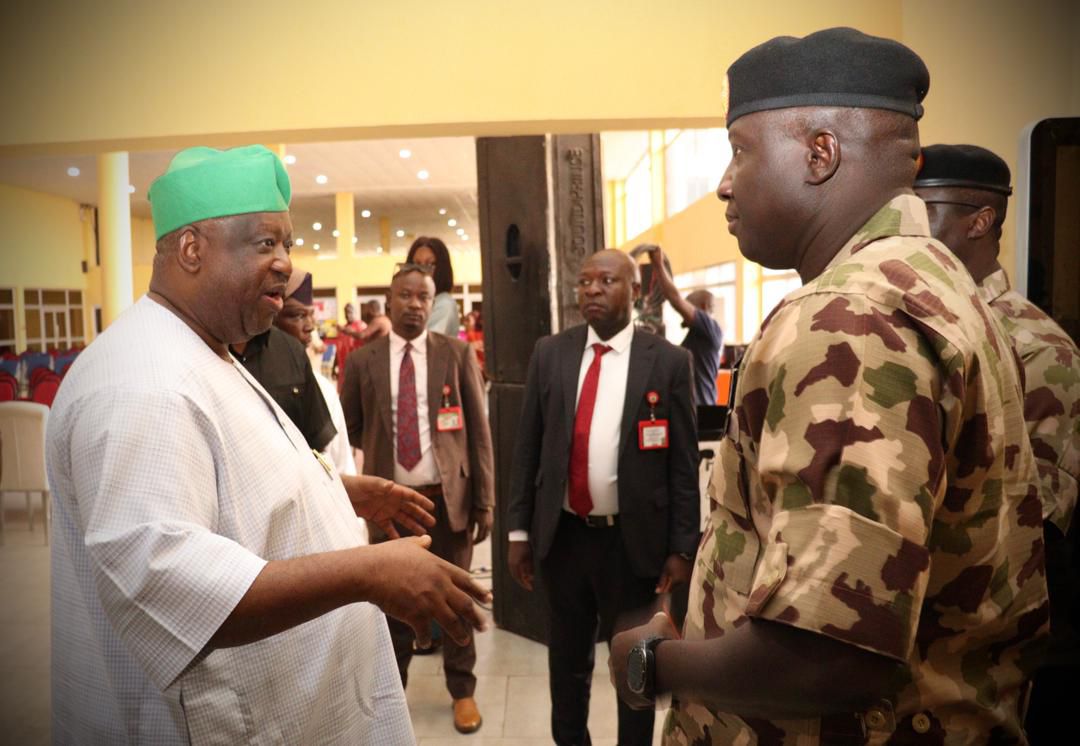
COAS Launches Nationwide Security Renewal Mission in Plateau
The Chief of Army Staff, Lieutenant General Waidi Shaibu, on Thursday led a high-level delegation of security chiefs to Plateau State, flagging off a nationwide security renewal mission aimed at strengthening civil-military cooperation and restoring lasting peace across the country.
The visit to Jos, the Plateau State capital, marks the first phase of a coordinated national effort to address persistent security challenges through joint operations, community engagement, and proactive intelligence gathering.

Governor Caleb Muftwang received the delegation, describing the initiative as a critical step toward stabilizing affected communities and reinforcing public confidence in security institutions.
Civil-Military Synergy Takes Centre Stage
At the heart of the mission is a renewed emphasis on collaboration between the military, civil authorities, and local communities. Speaking during the visit, Lt. Gen. Shaibu stressed that national security must be treated as a collective responsibility.
He urged citizens to support security agencies by remaining vigilant, sharing credible information, and complying with lawful directives, noting that effective security cannot be achieved in isolation.
Community Engagement as Confidence-Building Tool
In a departure from purely operational engagements, the Army Chief held direct consultations with community leaders and residents in Jos, reinforcing the importance of trust and dialogue in conflict resolution.
Lawmakers, including Dachung Bagos and Ladi Dangyok, commended the initiative, stating that visible engagement by top military leadership helps rebuild confidence among citizens and fosters cooperation.

Proactive Security Operations Underway
Operational updates were provided by Major General Folusho Oyinlola, who disclosed that troops under Operation Enduring Peace have intensified surveillance, intelligence-led patrols, and coordinated actions with other security agencies.
According to the Army, the approach is designed to prevent escalation of threats, safeguard lives and property, and stabilize vulnerable communities before crises emerge.
A Shift Toward Sustainable Peace
Military authorities emphasized that the Plateau visit is part of a broader, long-term strategy to transition from reactive responses to sustainable peacebuilding nationwide. The framework includes strengthening local resilience, ensuring justice, and maintaining continuous engagement with stakeholders.
Analysts view the initiative as a significant policy shift, reflecting a more inclusive security architecture that integrates community participation with military operations.
Call for National Unity
The Army leadership concluded with an appeal to Nigerians to reject divisive narratives and support ongoing efforts to promote unity and peace.
“The success of this mission depends not only on the armed forces but on the cooperation of every citizen,” the COAS stated.
The nationwide security renewal campaign is expected to extend to other regions in the coming weeks as authorities seek to consolidate gains and build a safer, more unified Nigeria.


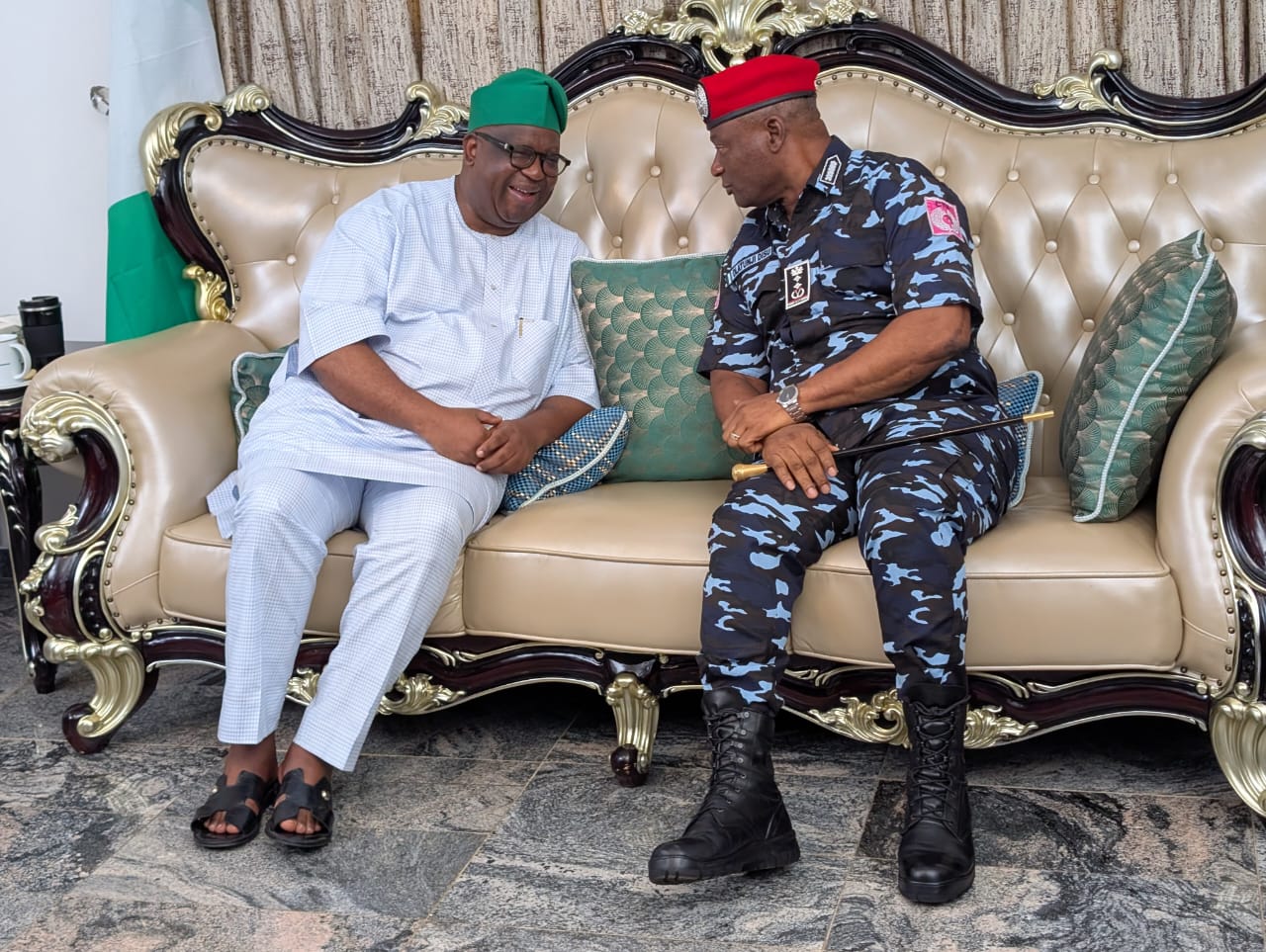
IGP Disu Visits Plateau, Orders Tactical Deployment To Reinforce Security
The Inspector General of Police, Olatunji Disu, on Thursday paid a working visit to Plateau State following recent unrest, holding strategic talks with Governor Caleb Muftwang on measures to strengthen security and prevent further disturbances.
As part of immediate steps to stabilise the situation, the police chief authorised the deployment of specialised tactical units to support officers already on ground across affected areas.
Governor Muftwang commended the swift intervention of the police leadership, praising the dedication and professionalism of security personnel working to restore calm. He also acknowledged the efforts of mobile police officers and lauded the leadership of the state’s Commissioner of Police, Bassey Ewah.
Both the Nigeria Police Force and the Plateau State Government reaffirmed their commitment to safeguarding lives and property, stressing that enhanced collaboration remains key to restoring lasting peace in Plateau State, popularly known as the Home of Peace and Tourism.


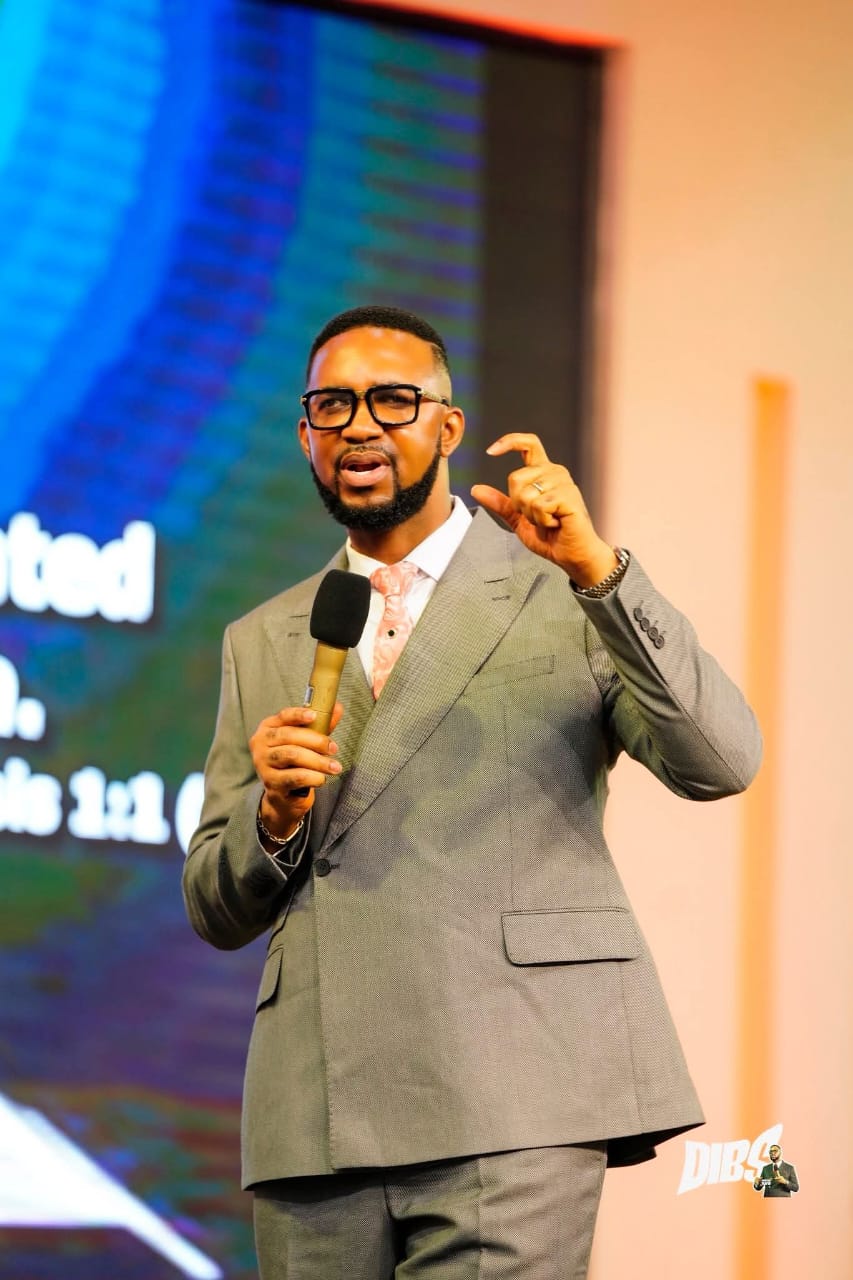
Grace Nation Worldwide: A Living Reality – Dr. Chris Okafor
……“Miracles, Healing, and Deliverance Overflow at Grace Nation Services”
The Grace Nation midweek Prophetic Healing, Deliverance, and Solutions (PHDS) Service on 2nd April 2026 at the international headquarters in Ojodu Berger, Lagos, was a spectacular display of God’s power, marked by miracles, healing, and deliverance.
The God of Grace Nation continues to demonstrate His authority, breaking strongholds, healing the sick, restoring lost glory, and providing solutions to every problem presented at His altar.
Testimonies of God’s Power
One woman, previously diagnosed with a terminal condition and slated for a ₦4.5 million surgery due to inability to excrete, was prayed for by the Generational Prophet, Christopher Okafor, just a week after visiting the church. Declaring healing within 24 hours, she returned to testify to God’s miraculous intervention.
Another pregnant woman, whose baby was bridged and at risk, was located and prayed for. She returned to service with confirmation that her child is now well-positioned for delivery. Similarly, a woman booked for a C-section due to an overdue and poorly positioned pregnancy testified during the service that her baby is now properly positioned, ready for birth.
These testimonies underscore the truth: what God cannot do does not exist. Grace Nation has entered a new level of spiritual authority, and with faith, believers are witnessing the impossible become reality.
God Works by Principle, Not Gossip
In his sermon, Dr. Okafor emphasized that God does not operate on superstition, gossip, or social media pressures. His work is grounded in His Word, and it is through adherence to His principles that Grace Nation continues to flourish.
The Generational Prophet stressed that to enjoy divine blessings and fruitfulness, believers must remain connected to God’s Word, faithfully serve Him, and ignore distractions or side-talks. Focused commitment to God’s service guarantees alignment with His miraculous power.
Join the Movement
Grace Nation Worldwide is open for all who desire a life transformed by divine intervention. Weekly services include:
Sunday Service: 7:00 AM
Grace Nation Island Service (Ogombo): Wednesday, 5:00 PM
Midweek PHDS Service: Thursday, 7:00 AM
Attending these services under the ministry of the Generational Prophet ensures encounters with God’s supernatural power, life-changing miracles, and lasting breakthroughs.
Grace Nation Worldwide is not just a church—it is a reality where faith meets the supernatural.
By Sunday Adeyemi


-

 society7 months ago
Religion: Africa’s Oldest Weapon of Enslavement and the Forgotten Truth
-

 news4 months ago
WHO REALLY OWNS MONIEPOINT? The $290 Million Deal That Sold Nigeria’s Top Fintech to Foreign Interests
-

 society6 months ago
“You Are Never Without Help” – Pastor Gebhardt Berndt Inspires Hope Through Empower Church (Video)
-

 celebrity radar - gossips2 months ago
Dr. Chris Okafor Returns with Power and Fire of the Spirit -Mounts Grace Nation Altar with Fresh Anointing and Restoration Grace on February 1, 2026