
Politics
Examining Governor Sanwo-Olu’s 600 Days of Making Lagos Greater

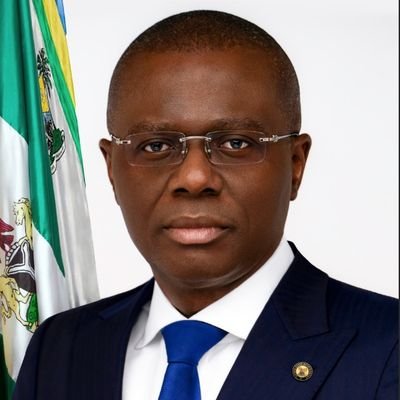
It is about 600 days that Governor Babajide Olusola Sanwo-Olu took over the reins of affairs as Governor of Lagos State. Between then and now, the governor has been confronted by several debilitating storms like the corona virus pandemic and the ENDSARS protests yet, he has not derailed from his developmental agenda christened T.H.E.M.E.S (Traffic Management and Transportation; Health and Environment; Education and Technology; Making Lagos a 21st Century State; Security and Governance). In this article, we examine how he has fared in each area of T.H.E.M.E.S.


By Femi Titus
TRAFFIC MANAGEMENT AND TRANSPORTATION
To aggressively address the challenge of bad roads and ease traffic congestions across the state, the first thing Governor Sanwo-Olu did on assumption of office was to introduce the ‘Zero Tolerance for Potholes Initiative’ by directing the Public Works Corporation to commence the patching and rehabilitation of the roads and the clearing and cleaning of all secondary and tertiary drainage systems to ensure the free flow of rainwater during the rainy season across the state. He also directed the Lagos State Traffic Management Authority (LASTMA) to operate a minimum of two shifts by managing traffic until 11:00 pm daily.
The ubiquitous okada motorcycles and tricycles were also banned across 15 local councils as a stop-gap solution to the endless traffic jams. To ameliorate the attendant inconvenience of the ban, the state government rolled out 65 high-capacity buses in addition to the existing buses in the fleet of the Lagos Bus Services Limited. 550 medium-capacity vehicles are expected anytime soon.
To further strengthen the drive for a multi-modal transport system, Governor Sanwo-Olu launched the Uber Boat water transportation service, a partnership between the global ride-hailing company and the Lagos State Waterways Authority, LASWA, which is exploring the state’s abundant waterways and, thereby, reducing the pressure on roads.
Similarly, the Lagos Ferry Services (LAGFERRY) launched its commercial operations in February. In its fleet are 14 boats with a capacity of between 30 and 60 passengers. Apart from the Badore Ferry Terminal in Ajah, other modern jetties are being built in Ijegun, Badagry, Lekki, and Ajegunle.
Significantly, to improve traffic management and transportation, the Blue Line Mass Transit Rail project, which started in 2009, has been revived with the completion of the sea-crossing track. The five-kilometre elevated sea-crossing track of the project in Marina was completed last December. Other rail lines on the drawing board are the 68km – Green Line from Marina through Victoria Island, Lekki Phases 1 and 2, Ajah, Ogombo, Lekki Airport to Lekki Free Trade Zone; the 60km – Purple Line from the Redemption Camp through Ogba, Iyana Ipaja and Igando ending at Ojo; and the 34km Yellow Line from Otta through Isheri Osun, Ejigbo Mafoluku, Isolo to National Theatre. There is also the 48km Orange Line from Ikeja crossing through Mile 12, Ikorodu, Alapadi, Eligana, Isiwu, Imota and ending at Agbowa.
Also, the Oshodi – Abule-Egba section of the Lagos–Abeokuta expressway has been reconstructed and commissioned last September. The 13.68 kilometre-long BRT corridor has reduced commute time on the route by as much as 75 per cent.
HEALTH AND ENVIRONMENT
In a bid to create more awareness and sensitisation on the Lagos State Health Scheme (LSHS), the Lagos State Health Management Agency (LASHMA) has launched ‘Ilera Eko’ campaign to achieve universal health coverage for all Lagosians. This is intended to achieve universal health coverage for Lagos residents.
There is a renaissance in the state’s public health sector. A 149-bed Maternal and Childcare Centre, MCC, in Alimosho General Hospital was commissioned recently. The specialist centre is equipped with ultra-modern equipment that aids prompt delivery of maternal and child care services.
A four-floor 110-bed Maternal and Child Centre (MCC) was also recently commissioned in Eti-Osa. Specially designed to provide integrated healthcare for mothers and children, the facility has four operational surgical theatres, defibrillators, ventilators, and oxygen therapy and phototherapy units. The Eti-Osa MCC is the eighth facility completed by the state government to provide specialized mother and childcare services while two other similar facilities located in Epe and Badagry are nearing completion.
The Healthy Bee Initiative of the Lagos government, a free healthcare programme aimed at combating organ impairment and life-threatening ailments in children saw over 25,000 residents benefitting from free treatment and surgery recently.
Lagos has also been at the forefront of the fight against the coronavirus pandemic in Nigeria with a functional incident command centre and, apart from the existing isolation centre, recently opened another in Victoria Island. The new centre is a purpose-built medical facility equipped with ICU capacities in response to the resurgence of the coronavirus in Nigeria with Lagos still the hub of the infection.


The Lagos State Waste Management Authority, LAWMA, acquired 10 boats to boost its marine waste operations. The agency also launched the Lagos Blue Box initiative, a single stream recyclable collection program that encourages the separation of recyclable materials from the general waste at the point of generation and which aims to, among other objectives, encourage zero waste generation in the state and promote a healthier and cleaner environment; reduce carbon footprints and increase economic security by tapping the domestic source of the material.
EDUCATION & TECHNOLOGY
To promote a smart city with technology, the Sanwo-Olu administration organised the Art of Technology Lagos where the governor announced a N250m grant for tech start-ups to encourage young people with fantastic ideas.
The administration gave N350million bailout for personnel cost and increased the subvention of the Adeniran Ogunsanya College of Education from N200million to N250mllion.
As part of the reforms for the education sector, the Eko Excel, an acronym for ‘Excellence in Child Education and Learning’, was launched in January 2020. It is already empowering teachers to deliver at the same level as their counterparts around the world; and providing strong continuous support that will encourage improvement in teachers and pupils. An estimated 14,000 primary school teachers are expected to benefit from the initiative while over 500,000 pupils would be positively impacted. Microsoft recently partnered with the state government to train 18, 000 teachers on its Microsoft Office suite.
In continuation of the use of skill acquisition as a tool of empowerment, 4, 885 youths graduated from 17 skill acquisition centres located in the five divisions of the state.
More than three decades after it was established, the Lagos State University, LASU, is set to become a residential tertiary institution as the state government, under the Public-Private Partnership, PPP, has signed a Build, Operate and Transfer, BOT, agreement with six property developers to construct 8,272 units of hostel in the school’s premises to be ready in the Year 2021.
EMPOWERMENT/SOCIAL WELFARE
To help legal residents whose businesses were affected by the carnage trailing the END SARS protest to resuscitate their businesses, the governor launched the N5bn MSME Recovery Fund under the Lagos State Entrepreneurship Trust Fund (LSETF).
In fulfilment of his pledge to end poverty through the implementation of socio-economic empowerment programs, Governor Sanwo-Olu recently empowered a total of 1,050 vulnerable and indigent residents in the state. Beneficiaries received, in addition to financial support, business support tools and equipment such as grinding machines, hairdressing tools, sewing machines and tyre repair kits among other materials. The governor promised that this initiative would be done quarterly.
Last November, the state government paid about N1.3 billion into the Retirement Savings Account (RSA) of 246 retirees in the state’s public service for October. The beneficiaries included employees from the mainstream service, Local Government Service, State Universal Basic Education Board (SUBEB), the Teaching Service Commission (TESCOM), and other parastatals of the state government.
INFRASTRUCTURE
The state government has resuscitated the Adiyan Waterworks, Phase Two with contractors mobilised to site. The water treatment plant, with a production capacity of 70 million gallons per day, was started in 2013. About N600million compensation was paid to owners whose property had to give way for the reconstruction works. After resuscitation, it will provide drinking water for more than five million Lagos residents and will help to address sanitation challenges and fight water-borne diseases.
In Ojokoro Local Council Development Area, 31 roads, which adds up to a total of 20.216 kilometres, have been completed and commissioned by Governor Sanwo-Olu.
The hitherto abandoned Pen Cinema flyover project is expected to be completed and commissioned in the first quarter of 2021.
A newly constructed section of the Lagos – Badagry expressway has been declared open. The 4-kilometre section stretches from Agboju and cuts across strategic locations like Maza-Maza and Alakija to Trade Fair.
The state government entered into a Public Infrastructure Improvement Partnership (PIIP) agreement that involves banks handling the rehabilitation of roads as a Corporate Social Responsibility (CSR). For instance, Access Bank is partnering with the state government in the infrastructural upgrading of the Oniru network of roads under the PIIP arrangement.
Under Governor Sanwo-Olu, the China Development Bank has injected a $629million financing facility to accelerate the completion of the Lekki Deep Seaport project, which started in 2011. When completed in 2022, the deep seaport would have two container berths of 680-metre long and 16.5-metre water depth. It will also have the capacity to be berthed by fifth-generation container ships, with a capacity of 18,000 TEU ship. Governor Sanwo-Olu affirmed that the project will transform the Lekki corridor into a new economic hub and offer a new impetus for socio-economic growth in the state.
HOUSING
In January 2021, Governor Sanwo-Olu commissioned 264-units of flats ranging from one to four bedrooms for upper and middle-income earners in two different estates in the Ikate Elegushi and Lekki area of the state.
The 492-flat housing project in Igando area of Lagos was completed, commissioned and handed over to its new occupants in 2019. The project, which originally started in 2012 under the Home Ownership Scheme of the administration of ex-Governor Babatunde Fashola, but was abandoned by the immediate past administration, is a testimony of Sanwo-Olu’s campaign pledge to complete and deliver all critical projects inherited from the last administration. The estate is fittingly named after the first civilian governor of Lagos State, Alhaji Lateef Jakande, who died February 11th, 2021. Similarly, the recently commissioned 132-unit Lagos HOMS project at Iponri in Surulere area was named after former Governor Babatunde Raji Fashola, SAN.
There are also an additional 360 units in Igbogbo, 744 in Sangotedo, 660 in Agbowa and 680 in Egan Igando are slated for commissioning soon.
AGRICULTURE
Under the Agro-Processing Productivity Enhancement and Livelihood Support (APPEALS) Women and Youth Empowerment Scheme (WYEP), 350 have graduated being the batch 1. Out of these beneficiaries, 165 majored in the poultry value chain, 35 in the rice value chain and 150 in the aquaculture value chain. The thrust of the project is to increase farmers’ productivity, production, and improve the processing and marketing of the target value chains, which would foster job creation along identified value chains.
The Imota Rice Mill in Lagos is nearing completion. The 38 metric tonnes per hour mill will be one of the biggest on the continent when completed. It is expected to throw up between 1000 and 1,500 jobs and positively impact the rice value chain that will produce 2.4 million bags of 50kg rice yearly.
The governor also unveiled a five-year master plan that would guide the state’s intervention and investment in agriculture for a long-term return with the objective to reduce food importation and over dependence on finished products from outside the country.
The state government is also in the process of establishing the Lagos Aquaculture Centre of Excellence (LACE) to drive fish production in the state. The centre will have a hatchery with a capacity to produce 50 million fish – enough to supply 5,000 smallholder farms. It will also include a 24,000 tonnes feed mill and a 20,000 tonne capacity fish processing centre. He said that the annual demand for fish in the state was 374,000 tonnes, considerably below the state’s current 155,000 tonnes of production.
SECURITY
Effective security is an essential component of the Sanwo-Olu developmental agenda for Lagos State. As such, he has been proactive and pragmatic in the handling of the state’s security providing the required support for the police for effective discharge of their duties. He recently commissioned the new Area L Police Command in Ilashe, Ojo; the Area ‘J’ Police Command administrative building at Elemoro town in Ibeju-Lekki and donated 125 patrol vehicles and 35 patrol motorcycles for the use of security operatives in the state.


Politics
Political Earthquake in Kano: How, Senator Rabiu Musa Kwankwaso, Nasiru Gawuna’s Move to ADC Reshapes North-West Politics
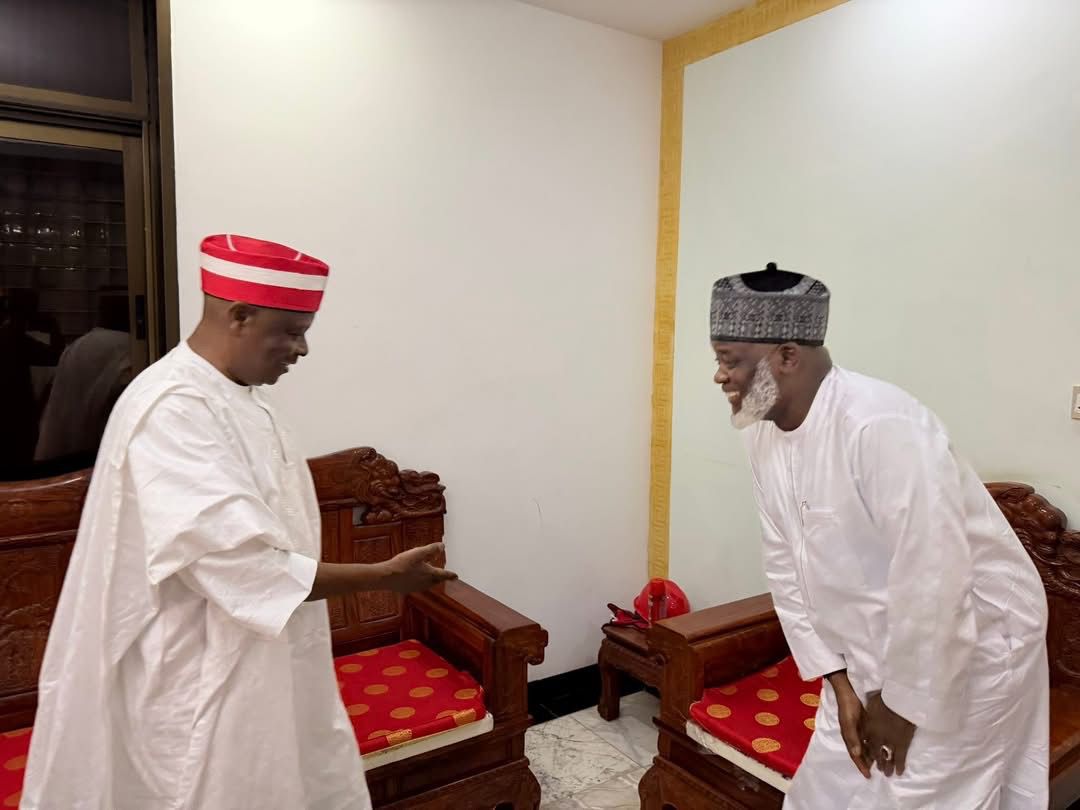
Political Earthquake in Kano: How, Senator Rabiu Musa Kwankwaso, Nasiru Gawuna’s Move to ADC Reshapes North-West Politics
The political atmosphere of Nigeria’s North-West was fundamentally altered on a sweltering afternoon in 2026 after Senator Rabiu Musa Kwankwaso former Governor of Kano State and Former Minister for Defence who is also the “Grand Commander” of the Red-Cap revolution, finalized a move that many viewed as the ultimate masterstroke of his political career. By transitioning from the NNPP to the African Democratic Congress (ADC), Kwankwaso did more than change platforms; he effectively reset the coordinates of the nation’s largest voting bloc.
Senator Kwankwaso’s pedigree is defined by a singular devotion to human capital development and an almost mythical grassroots loyalty preceded him. He turned a local movement, the Kwankwasiyya, into a disciplined, ideological army that transcends traditional party structures. His entry into the ADC instantly transformed a secondary party into a formidable fortress, signaling to the ruling elite that the North-West is no longer a monolith under their control.
The gravity of this shift is most profound in Kano, the heartbeat of Northern commerce. For years, the state was a polarized battlefield between the Kwankwasiyya and established conservative wings. However, the entry of Nasiru Yusuf Gawuna into the same ADC orbit has created a “Kano Super-Alliance” that was previously unthinkable. Kwankwaso, the visionary architect who sent thousands of Kano’s children to global universities, now finds his populist ideology merging with Gawuna’s administrative steadiness and deep-rooted institutional connections.
This synergy is a seismic departure from the politics of “zero-sum” rivalry; it is a calculated fusion of mass appeal and the strategic machinery required to protect and deliver votes.
This move reshuffles the entire North-West deck. As Kwankwaso plants the ADC flag across the region, he is attracting a wave of heavyweights from Kaduna to Sokoto who feel marginalized by the status quo. His political pedigree allows him to speak with a regional authority that others lack, positioning himself as a protector during a time of economic uncertainty. By bringing Gawuna into this fold, the dynamics of Kano politics have shifted from a war of attrition to a coalition of necessity. This alliance creates a “Third Way” that bypasses the failures of the old guard, promising a return to the rapid growth that defined the Kwankwaso years, but with a broader, more inclusive base that could dictate the occupant of Aso Rock in 2027.
Kwankwaso’s career has always been defined by a uniquely personal brand of power. From 1999 to 2015, he served two terms as Governor of Kano State, in addition to roles as Minister of Defence and Senator. While many were surprised by his recent maneuvers; especially following closed-door meetings with President Bola Tinubu, he chose the emerging ADC over the ruling APC.
In the high-stakes theater of Nigerian politics, few events have jolted the region quite like the defection of Nasiru Yusuf Gawuna from the APC to the ADC on March 31, 2026. Coming just twenty-four hours after Kwankwaso’s move, Gawuna’s transition fundamentally has also altered the political calculus in Kano. What makes this moment remarkable is the sheer drama of the reversal. Gawuna’s political journey has been a steady, calculated ascent through Kano’s establishment. He first shot to prominence as Commissioner of Agriculture under Governor Abdullahi Umar Ganduje, earning a reputation for hands-on management in a state where farming is the economic backbone. He eventually rose to Deputy Governor, serving for nearly six years and gaining invaluable executive experience. Beyond partisan politics, Gawuna distinguished himself as Chairman of the Governing Council of Bayero University and, most recently, as Chairman of the Federal Mortgage Bank of Nigeria (FMBN). He resigned from the FMBN on March 27, 2026, citing compliance with presidential directives regarding political appointees.
A look back at the 2023 gubernatorial election reveals just how significant Gawuna is. Running under the APC, he polled over 890,000 votes against the formidable Kwankwasiyya machine. This proved that he is one of the few politicians in Kano who can genuinely compete with Kwankwaso’s electoral machinery. His strength is threefold: he appeals to the youth, the religious establishment (Ulama), and the business community; he has the capacity to split the APC vote; and he has demonstrated he can deliver votes independently of a larger party wave. To understand the magnitude of this defection, one must appreciate the complete inversion of alliances since 2023. Back then, Governor Abba Kabir Yusuf ran on the NNPP ticket with Kwankwaso’s backing, while Gawuna carried the APC banner with Ganduje’s support. By 2027, the roles will likely reverse: Governor Yusuf is positioned to run under the APC with Ganduje’s blessing, while Gawuna is poised to run under the ADC with Kwankwaso’s endorsement.
From the perspective of the Kwankwasiyya movement, Gawuna’s arrival is a “return” rather than a “recruitment,” as he was part of the movement’s pioneer cohort. This narrative neutralizes accusations of opportunism. For his part, Gawuna framed his move in terms of service and divine guidance, with sources indicating he felt marginalized within the APC after his 2023 defeat.
The reaction from within the APC has been one of worry and regret. President Tinubu, recognizing the stakes, reportedly directed party leaders to prevent Gawuna’s move, even offering him an automatic Senatorial ticket for 2027. The failure of this pressure campaign, Gawuna reportedly placed his phone on “Do Not Disturb” and traveled abroad to avoid lobbyists represents a significant defeat for the presidency’s political management. This crisis prompted emergency meetings between President Tinubu, Dr. Ganduje, and Badaru Abubakar at the Presidential Villa to reorganize their strategy.
The long-term implication is the potential break of the APC-PDP duopoly. The ADC is now positioning itself as a genuine “third force” in the North-West. The defection of high-profile figures like Senator Ahmed Babba-Kaita, Senator Aishatu “Binani” Ahmed, and former Justice Minister Abubakar Malami suggests a coordinated realignment. This competition could force more substantive policy debates and reduce the “zero-sum” intensity of regional elections.
The projected 2027 gubernatorial rematch between Gawuna (ADC) and Governor Yusuf (APC) will be a battle between two men with established records. Voters will have a genuine choice between performance and platform rather than just shifting loyalties. As Gawuna put it: “Allah gives power to whom He wants and when He wants.” While the 2027 elections will reveal where that power flows, it is already clear that the political landscape of the North-West will never look the same again.
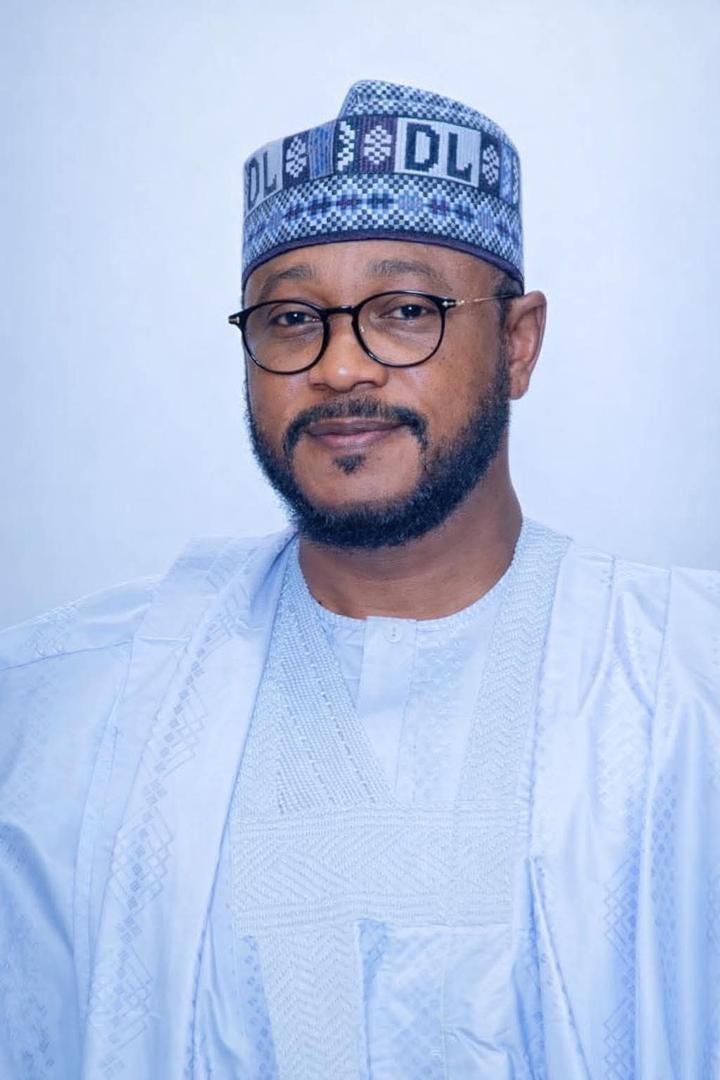
Governor Dauda Lawal Approves Gratuity Payment
The Zamfara State Government, under the visionary leadership of Governor Dauda Lawal, has approved the release of funds for the payment of Gratuity Batch 3 for the 2024/25 period. This decisive action underscores the administration’s unwavering commitment to the welfare of retired civil servants who dedicated years of service to the state’s development.
The Accountant General of the State is already working diligently to ensure that all eligible retirees receive their payments promptly and efficiently, reflecting the government’s resolve to uphold transparency and accountability in the disbursement process.
This timely gratuity payment is a testament to Governor Dauda Lawal’s people-centered leadership, which recognizes the sacrifices and contributions of retirees to the progress and stability of Zamfara State. It also reaffirms the government’s pledge to honor its financial obligations without unnecessary delays.
The Zamfara State Government calls on all retirees in the affected batch to exercise patience as the necessary administrative and financial processes are finalized. Every effort is being made to ensure smooth and uninterrupted payments.
This initiative is part of Governor Dauda Lawal’s broader vision to empower citizens and retirees, strengthen confidence in public service, and sustain the morale of those who have committed their lives to the growth of Zamfara State.
Politics
APC Group Endorses Fubara for 2027, Calls on Tinubu and APC to Prioritise Performance Over Politics in Backing Governor’s Second Term Ambition
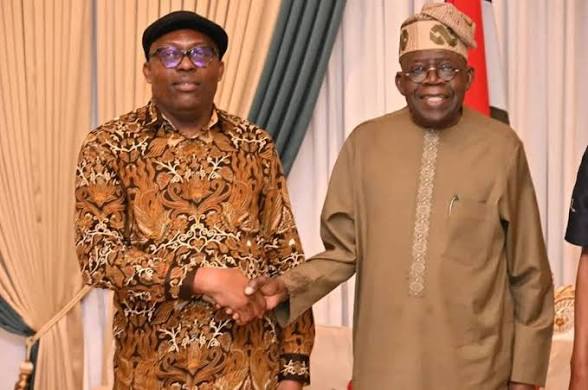
*APC Group Endorses Fubara for 2027, Calls on Tinubu and APC to Prioritise Performance Over Politics in Backing Governor’s Second Term Ambition*
The APC National Vanguard has appealed to President Bola Ahmed Tinubu and the leadership of the All Progressives Congress (APC) to support a second term in office for Siminalayi Fubara, citing what it described as “impressive and verifiable developmental strides” across Rivers State.
In a statement issued on Thursday by its National President, Dr Gbenga Salam (JP), the group said its position followed an extensive assessment tour of key infrastructure and public service projects executed under the Fubara administration.
The APC National Vanguard said the appeal was based strictly on performance, arguing that governance outcomes should outweigh partisan considerations, particularly in a state as economically significant as Rivers.
“We respectfully urge President Bola Ahmed Tinubu and the leadership of the All Progressives Congress to support the continuity of Governor Siminalayi Fubara beyond his current tenure, in recognition of his commitment to development, prudent resource management, and people-focused governance,” the statement read.
According to the group, its delegation visited multiple project sites across the state, observing ongoing and completed works spanning road construction, urban renewal, and public infrastructure upgrades.
It noted that the scale and distribution of these projects reflect a deliberate effort by the state government to extend development beyond traditional urban centres and into underserved communities.
“Our findings from the tour reveal a government that is not only active but intentional in its development agenda. The execution of capital projects across various parts of Rivers State demonstrates a clear understanding of the needs of the people and a commitment to addressing them,” Dr Salam said.
The group particularly commended what it described as prudent financial management by the administration, noting that the projects reviewed showed evidence of careful planning and efficient allocation of resources.
“At a time when economic pressures are evident across the country, it is commendable that the Rivers State government has managed its resources in a way that delivers visible and impactful development without signs of fiscal recklessness,” the statement added.
The APC National Vanguard further observed that despite political tensions in the state, the Fubara administration has maintained focus on governance, ensuring continuity in project execution and service delivery.
The group argued that such stability is critical for sustained development and should be encouraged rather than disrupted.
“Leadership must ultimately be judged by results. In Rivers State, there is clear evidence of progress—projects that are not only announced but executed, and policies that translate into real benefits for citizens,” Dr Salam noted.
The group warned that discontinuity in leadership could stall ongoing projects and reverse gains already recorded, stressing the importance of allowing a performing administration to consolidate its achievements.
“Rivers State is at a pivotal stage where continuity will allow for the completion of ongoing initiatives and the deepening of development gains. Supporting Governor Fubara for a second term is, therefore, a decision in the best interest of the people,” the statement said.
In addition to its call on the APC leadership, the group reaffirmed its support for President Tinubu, expressing confidence in his administration’s broader economic and governance reforms.
The APC group urged Nigerians to remain supportive of efforts aimed at stabilising the economy and strengthening public institutions.
“We reiterate our endorsement of President Bola Ahmed Tinubu for a second term in office, in recognition of his leadership and commitment to national development. With sustained support, the administration can consolidate its reform agenda for the benefit of all Nigerians,” Dr Salam added.
The APC National Vanguard concluded by calling on political actors to prioritise development and public interest over partisan divides, insisting that governance should always be guided by performance and accountability.
“Where leadership demonstrates prudence, delivers development, and remains focused on the welfare of the people, it deserves continuity. This is the position we have reached after a careful and independent assessment of Rivers State,” the statement added.


- United States (U.S.) and Mozambique Advance Cooperation on Emergency Response and Safety April 6, 2026
- The Impacts of the Middle East Conflict on Africa April 6, 2026
- Ghana: President Mahama announces a high-level panel of the Accra Reset April 6, 2026
- Ghana: President Mahama reiterates his determination to build more businesses April 6, 2026
- Mauritius accelerates energy transition with renewable projects of 405 MW April 6, 2026
- Africa Centres for Disease Control and Prevention (Africa CDC) Appoints His Excellency Prof. Yemi Osinbajo as Senior Strategic Advisor to the Director General April 6, 2026
- 2026 Easter Message by the President of the Catholic Bishops’ Conference of Nigeria (CBCN): The Dawn is Coming, Don’t Let Go Now, Hold on to Hope! April 5, 2026
- "A Time to Pause and Begin Again”: President Dr Patrick Herminie reflects in Easter message April 5, 2026
- President Dr. Patrick Herminie Pays Tribute to the Late Seychellois Artist David Philoe April 5, 2026
- Ghana identifies priority areas to strengthen cholera prevention and control April 5, 2026
- United States (U.S.) and Mozambique Advance Cooperation on Emergency Response and Safety April 6, 2026
- The Impacts of the Middle East Conflict on Africa April 6, 2026
- Ghana: President Mahama announces a high-level panel of the Accra Reset April 6, 2026
- Ghana: President Mahama reiterates his determination to build more businesses April 6, 2026
- Mauritius accelerates energy transition with renewable projects of 405 MW April 6, 2026
- Africa Centres for Disease Control and Prevention (Africa CDC) Appoints His Excellency Prof. Yemi Osinbajo as Senior Strategic Advisor to the Director General April 6, 2026
- 2026 Easter Message by the President of the Catholic Bishops’ Conference of Nigeria (CBCN): The Dawn is Coming, Don’t Let Go Now, Hold on to Hope! April 5, 2026
-

 society7 months ago
Religion: Africa’s Oldest Weapon of Enslavement and the Forgotten Truth
-

 news4 months ago
WHO REALLY OWNS MONIEPOINT? The $290 Million Deal That Sold Nigeria’s Top Fintech to Foreign Interests
-

 society7 months ago
“You Are Never Without Help” – Pastor Gebhardt Berndt Inspires Hope Through Empower Church (Video)
-

 celebrity radar - gossips2 months ago
Dr. Chris Okafor Returns with Power and Fire of the Spirit -Mounts Grace Nation Altar with Fresh Anointing and Restoration Grace on February 1, 2026