
Uncategorized
Expert Calls For More Investments In Technology In Solving Problems

Expert Calls For More Investments In Technology In Solving Problems

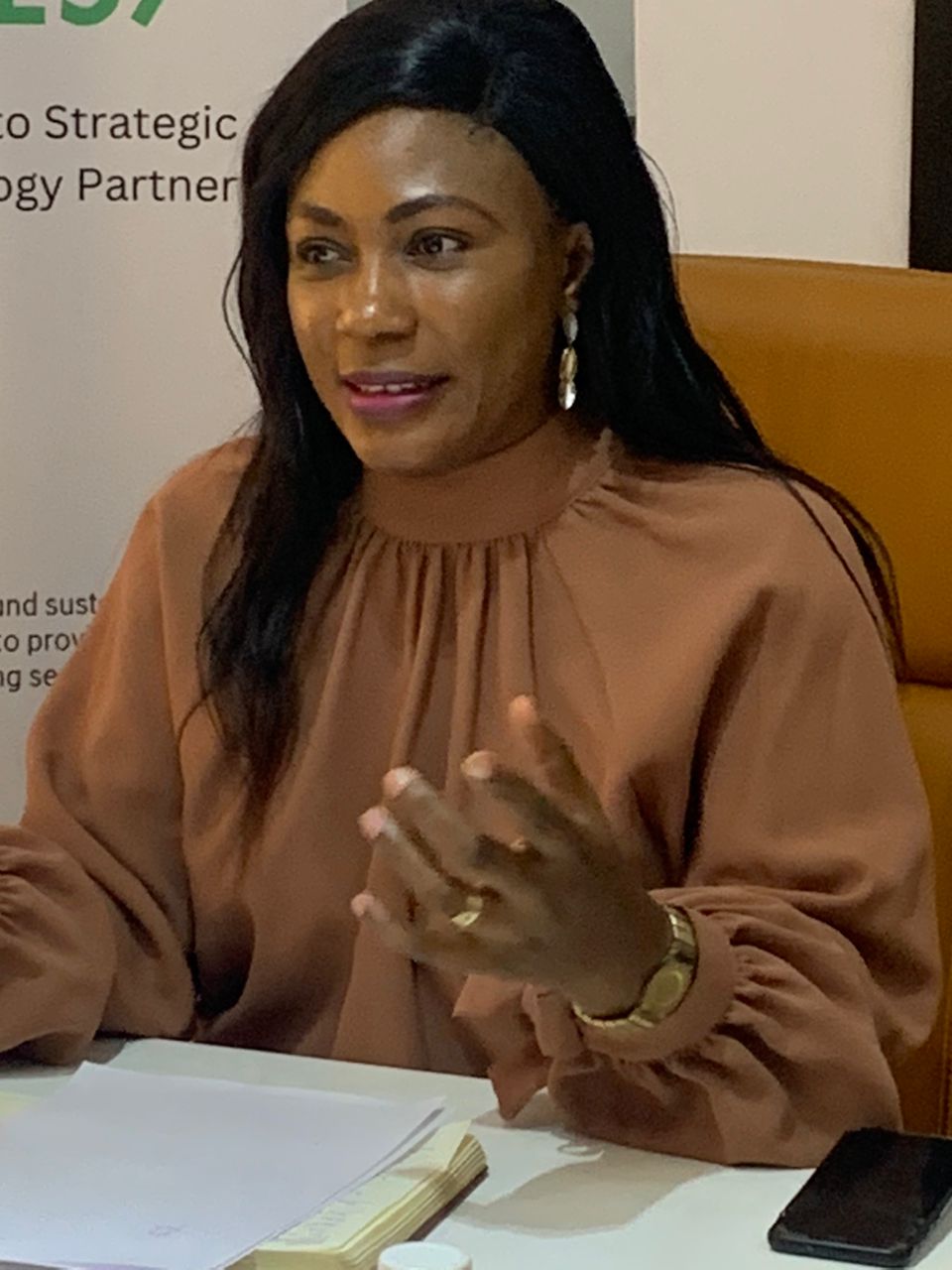
A technology enthusiast, Mrs Roseline Ilori, has reiterated the need for government at all levels as well as stakeholders in investing massively in technology; not just software development, but in robotics, artificial intelligence, bio-medicine, voice biometrics and a host of other technology spectra.
Ilori, the founder and Chief Executive Officer (CEO) of Bridge57 Solutions Limited, made the call in a statement in Lagos.
According to her, such investments will shore up manufacturing competitiveness via authentication and traceability of goods and services, improve physical security and cyber security, among others.
Ilori said that government needs to be more proactive in making the Nigerian technology environment more friendly, seeing that the growth and young people’s interest in technology were massive.
She noted that Nigerian technology experts were the most sought-after in developed economies as the relocation syndrome had taken up to half of the technology brains the country possessed.
“The fact is that the environment we are in is not conducive enough for technology to thrive, so the government has to do more in that regard to bring out more technology to the fore.
“The ‘Japa Syndrome’ has been a major challenge affecting our human capital potential, hence, the need to grow more of these professionals internally so that when some leave, many more would be around to keep the country going.
According to the Bridge57 boss, Nigeria still lags behind earnestly in terms of innovation as she submitted that, unlike the notion many are having, technology is quite different from innovation.
She noted; “In terms of innovation, we are still very far in Nigeria. For instance, while I had the opportunity to go through some training on innovation in some international organizations, I realized that many people talk about innovation but very few people do innovation as a lot of people don’t really understand what innovation means.
“For technology, yes we are doing well, but for innovation as a practice itself, we still lag behind. Innovation is not just about technology, it is deeper than that. Innovation can be applied to processes, products, marketing and to different areas of business models. But technology can use innovation, when people often mention innovation, people assume that it is technology, but they are two different things. They both need each other in a way to flourish.”
However, the technology expert also advised government to remodel the Nigerian educational curriculum across levels to accommodate the practical aspects of technology to engender early exposure to the nitty-gritty of technology and innovation.
she said that the need to expose, encourage and sensitise the Nigerian child through the educational system from a tender age, was due to the massive economic potential of technology and its ability to solve almost every problem across sectors.
“Technology as of today is beyond computers and smartphones as it encompasses a whole lot which if youths are properly exposed to practice can yield massive economic potential and gains for the country.
“We must, therefore, rework the curriculum to accommodate technology, innovation and robotics beyond the surface use of computers.
“In our universities, a lot is going on technologically that the government can take advantage of, but they must first invest enormous resources right from the universities to open the minds of students to the practical aspects of technology.
“More practical approach that is relatable to real life more than the abstract classes the Nigerian child is used to is what is needed to open up their minds to the endless possibilities of technology,” she said.
Ilori said that government funding upon disbursement must be put to good use to secure the future of technology and educate more persons that were willing to use their intelligence for the development of the nation.
She charged young girls with interest in the technology industry, perceived to be a male dominant industry, to take the bulls by the horn, even if they might be few in number and assert their competencies and capabilities.
“Funding is key and the cash flow is the blood of any business and this is necessary to build start-ups that are innovation-driven.
Speaking on Bridge57 Solutions, where she had implemented diverse business initiatives and products for several organizations, NGOs, and government parastatals using strategic foresight, drive and determination, Ilori said the organisation was established with the aim of organising workshops, using innovative practices, methodology and tools to improve the Nigerian technology environment.
“I have been in the technology space for 18 years now in Nigeria and several other countries in Africa where we have deployed a lot of solutions in the past. I decided to start Bridge57 Solutions because I saw that there are more problems to be solved in Nigeria and in Africa at large. Our problems are in abundance if I can put it that way. But where there are problems, there are opportunities as well. So I was looking for the opportunity to solve more problems on a more largest scale. That was one of the things that prompted me. I see there are lots of opportunities that would enable more entrepreneurs to be born.
“At Bridge57, there are two pillars; innovation and technology and in between them is digital transformation. Those are the two pillars our business is being built on.
“We have a lot of international partners that we work with that are technology providers. We partner with them in order to bring such technology that does not exist here. For instance, looking at voice biometric for example, we have a solution in voice biometrics. It would surprise you to know that our voices are as unique as our fingerprints. We can use that to help people using services but they are not very literate. Some people have problems with remembering their PINs, because they are not literate, and you see people that are not so literate telling people their passwords and therefore exposing themselves. How can we that voice for example in terms of security, as we have a lot of security issues in our society?
“These are some of the problems that this technology as simple as might seem can solve. Aside the voice technology, there is a technology that uses artificial intelligence, AI. There is a partner we are working with, we use what we call AI that can identify moving objects. It can actually tell if the person is a male or female. These are some of the innovations we do at Bridge57,” Ilori submitted.



FOPCHEN Calls for Dialogue as Court Fixes May 28 for Continuation
OTA, OGUN STATE — Proceedings in a widely followed legal case resumed on March 24, 2026, at the High Court of Ogun State, Ota Division, ending with a fresh adjournment as the court fixed May 28, 2026, for continuation.
During the session, legal representatives for all parties restated their positions and addressed preliminary matters, laying the groundwork for more substantive arguments at the next hearing. Observers noted that the case continues to attract significant public attention due to its perceived implications for law, culture, and societal values.
The Foundation for the Protection of Cultural Heritage in Nigeria (FOPCHEN) used the occasion to reiterate its call for constructive national dialogue. The group emphasized that while the judicial process must be respected, broader societal engagement remains essential.
According to the organization, issues relating to values, responsibility, and cultural identity should not be confined solely to courtroom deliberations but should involve active participation from various sectors of society.
Legal analysts present at the proceedings described the matter as one with far-reaching implications, noting that arguments advanced in court could shape future interpretations surrounding sensitive cultural and moral questions.
The presiding judge subsequently adjourned the case to May 28, granting all parties time to refine their submissions and respond to issues raised during the hearing.
As anticipation builds ahead of the next court date, Nigerians across different sectors continue to monitor developments closely, keen to see how the judiciary navigates the delicate balance between constitutional rights and cultural expectations.
Uncategorized
CRG: Politicians Must Stop Witch-Hunting, Focus on Nation Building — Says NYSC Cleared Deputy Speaker Since 2023

CRG: Politicians Must Stop Witch-Hunting, Focus on Nation Building — Says NYSC Cleared Deputy Speaker Since 2023
By: Boye Ola
The Centre for Responsible Governance (CRG) has called on political actors and interest groups to desist from what it described as needless witch-hunting of the Deputy Speaker of the House of Representatives, Benjamin Okezie Kalu, following renewed controversies surrounding his National Youth Service Corps records.
The organisation noted that the clarification by the National Youth Service Corps (NYSC) regarding the matter is not a recent development, as a formal verification letter had already been issued as far back as May 23, 2023.
The letter, referenced NYSC/CCD/VER/10/5.1/VOL1/02, had already addressed and cleared the questions surrounding the Deputy Speaker’s NYSC records.
Reacting to the renewed debate, the spokesman of the Centre,
Obande George, said it was troubling that issues which had already been clarified by a competent national institution were being resurrected for political purposes.
According to him, the time has come for political actors to move away from destructive engagements and concentrate on building the nation.
“It is important to note that the NYSC had already issued a verification letter dated May 23, 2023 addressing the matter.
Reopening issues that have already been clarified by a competent authority suggests that some individuals are more interested in political witch-hunting than in national progress,” George said.
The CRG stressed that democracy thrives when institutions are respected and their determinations are accepted in good faith rather than constantly questioned for political advantage.

George also commended the Deputy Speaker for demonstrating maturity and composure throughout the controversy, despite what he described as sustained provocations.
“Honourable Benjamin Kalu has shown remarkable calm and maturity in the face of intense public scrutiny and political provocation.
Instead of engaging in unnecessary public confrontation, he allowed institutions to speak through their records.”
The Centre warned that Nigeria’s political culture must evolve beyond constant character attacks and sensational allegations, which often distract public officials from their responsibilities.
According to the organisation, the country’s development requires constructive engagement among political actors rather than continuous attempts to discredit opponents.
“Nigeria cannot move forward if political energy is constantly spent on digging up allegations and amplifying rumours. Our leaders and political actors must redirect their focus to governance, policy and nation building.”
CRG therefore urged Nigerians to rely on verified information from credible institutions and avoid spreading speculative claims that could damage reputations or destabilise public discourse.
The organisation reiterated that respect for due process and institutional integrity remains essential for strengthening Nigeria’s democracy.

@The Centre for Responsible Governance, Email: [email protected], Instagram: crgngo6, Twitter: crgng06, Threads: crgngo6
Uncategorized
IWD 2026: Ajadi Celebrates Women, Urges Them To Seek More Elective Positions In Future Elections

IWD 2026: Ajadi Celebrates Women, Urges Them To Seek More Elective Positions In Future Elections
A Leading People’s Democratic Party, (PDP) Governorship Aspirant in Oyo State, Ambassador Olufemi Ajadi Oguntoyinbo has felicitates with women in the country on the occasion of this year’s International Women’s Day.
The international Women’s Day is celebrated on 8 March, commemorating women’s fight for equality and liberation along with the women right’s movement. It gives focus to issues such as gender equality and reproductive rights. International Women’s Day originated from labour movements in Europe and North America during the early 20th century.
In a statement issued on Sunday to commemorate this year’s edition of the International Women’s Day, Ajadi said the role of the women in nation building cannot be over emphasised.
He recalled the role played by prominent Nigerian women like Mrs Funmilayo Ransome- Kuti, Margaret Ekpo and Wuraola Esan towards the liberalization and the growth of the country and urges women to follow their footsteps by not only participate in the political process but seek more elective positions.
He urges the political leaders to encourage and give more chances to women for them to contest and occupy elective positions in the country.
Ajadi also called for more respect for women, saying they are definitely behind whatever success recorded by the menfolk.
He said domestic violence against women should be stopped, saying they deserves respect for their role in moulding the future leaders.
According to the statement, “I celebrate and congratulate our women on this year’s occasion of International Women’s Day. We cannot underestimate the role played by our women both at home, in the social circle and in politics. They deserve more respect.
“I equally called on them not only to be a passive participants in politics but to determine to seek more elected positions in future elections. They should aspire more from the position of dancing and singing at campaigns to seek more elective positions. The ratio of men to women in elective positions in the country is embarrassing. Women should stand up and fight for more elective positions.
“I also use the occasion of this year’s Women’s Day to appeal to Nigerians to stop domestic violence against the women. If we treat our women well, our country will witness unprecedented developments”.


-

 society7 months ago
Religion: Africa’s Oldest Weapon of Enslavement and the Forgotten Truth
-

 news4 months ago
WHO REALLY OWNS MONIEPOINT? The $290 Million Deal That Sold Nigeria’s Top Fintech to Foreign Interests
-

 society6 months ago
“You Are Never Without Help” – Pastor Gebhardt Berndt Inspires Hope Through Empower Church (Video)
-

 celebrity radar - gossips2 months ago
Dr. Chris Okafor Returns with Power and Fire of the Spirit -Mounts Grace Nation Altar with Fresh Anointing and Restoration Grace on February 1, 2026