
Politics
Exposé: Presidency And Many Lies Of COVID-19 Figures In Nigeria

By Jumu’ah Abiodun
I can’t write anything about the most popular phrase on earth, “novel Coronavirus pandemic” without sending my special greetings to those medical teams and caregivers home and abroad as well as journalists who have also been on the frontline of reporting day and night activities of how the deadly virus has affected many homes, sports, religious and the global economy among others. “Ooin, you are all doing well”
Many Nigerians since the first confirmed case of an Italian man who came into the country from Italy via Istanbul, Turkey, on Thursday, 27 February 2020, believe COVID-19 in Nigeria is fake due to the saying that the virus can’t survive in warmer weather and immune system of black people to malaria and typhoid. But the deadly COVID-19 is obviously not ‘fake news’
Due to corrupt nature of many Nigerian politicians and the poverty rate in the country, the citizens believe the virus has become a money-making venture for Nigerian government because of the relief fund from governments of the United States, European Union and the United Kingdom as well as support from International Monetary Fund and World Health Organization (W.H.O).
Before the European Union donated 50 million (N21 billion) to Nigerian government as part of its contribution to boosting the country’s COVID-19 response the highest daily figure the country recorded was twenty (20) cases that was confirmed by the Nigeria Centre for Disease Control (NCDC) as at 09:50 pm on Monday, 13th April 2020.
‘The Day’ Nigerian government cash out contribution fund from EU, Nineteen (19) new cases were reported as at 09:20 pm Tuesday,14th April 2020 with 14 in Lagos, 2 in Federal Capital Territory (FCT), 1 Kano, Akwa Ibom and Edo states respectively, raised the total number of confirmed cases to 362 while 99 were discharged and 11 deaths. Same day at around 11:00 pm NCDC reported an additional eleven (11) new cases in Lagos state totalling 373 confirmed cases, 99 discharged and 11 deaths. Who is deceiving who?
A day after Nigeria received the donation, the country’s reported cases shot up to thirty-four (34), Lagos recorded 18, Kano with 12, 2 in President Muhammadu Buhari’s state, Katsina and 1 in Delta and Niger states respectively, that was confirmed at exactly 11:20 pm on Wednesday, 15th April.
As at 11:20 pm on Thursday, 16th April, NCDC confirmed another thirty-five (35) new cases with 19 in Lagos, 9 in FCT, 5 in Kano and 2 in Oyo state which brought the total confirmed cases to 442, 152 persons discharged and 13 deaths recorded.
Aside from EU contribution, notable Nigerians and many corporate organizations donated billions of naira to support the Federal Government of Nigeria (FGN) and state governments in the fight to combat the deadly virus. The funds include $13 million (N5 billion) donation by the United Bank for Africa (UBA). Herbert Wigwe, Segun Agbaje, Abdulsamad Rabiu, Keystone Bank, Femi Otedola, Jim Ovia and Africa’s richest man, Aliko Dangote all donated N1 billion each to support the government in curtailing the pandemic in the country https://www.google.com/amp/s/amp.cnn.com/cnn/2020/03/27/africa/coronavirus-nigeria-fund/index.html
Away from the above figures or statistics, many Nigerians accused FG of siphoning the donations and not focusing it to the right channels.
Meanwhile, during the five weeks of lockdown in FCT, Lagos and Ogun states, millions of Nigerians most especially those in Southwest region of the country faulted President Buhari’s type of palliatives as being biased and not sincere with the distribution of the fund.
A lot of Nigerians took to social media platforms to express their bitterness and asked Mr President to approach the Central Bank of Nigeria (CBN) to distribute palliative for them through their respective Bank Verification Number (BVN). Instead of doing this, Nigeria’s Minister of Humanitarian Affairs, Disaster Management and Social Development, Sadiya Umar Farouq, contracted it to two payment service providers and distributed the Conditional Cash Transfer (CCT) to poor Nigerians in some part of the country.
Sadiya Farouq, in a statement on Tuesday, 14th April 2020 named Zamfara, Akwa Ibom, Abia and Bayelsa among states where the delay in payment due to the inefficient of the contractors.
She said, “The Federal Government cannot accept delays in the current payment round of N20,000 stipends to beneficiaries in poor and vulnerable households under any excuse in the four states or any other state of the federation.
“The failure of any payment service providers to meet their contractual agreement is unacceptable.
“The Federal Government through the ministry cannot allow contractors to derail the immediate CCT to the poor and the vulnerable.”
Nigerians lambasted the Presidency for televised recorded ‘Presidential broadcast’, saying the only way President Buhari can know their agony is through media chat where journalists can ask questions.
These clearly show how few opportunists who found themselves in power ripped off the masses. These few people not limited to the arrogant President’s spokesman, Femi Adesina who on a live radio chat said somebody is talking like a “Broken Record”. This is the height of irresponsible government who don’t want to be held accountable for their incompetence.
My questions to the Presidency on contracting CCT to payment providers are:
- Can’t CBN generate number of BVN and disburse the same amount approved at all level, either billionaire, millionaire, “thousandnaire or hundrednaire”?
- What’s President Buhari-led administration definition of poor or vulnerable Nigerians in a country where over 82.9 million citizens live in poverty, NBS report shows http://worldtopnewsng.com/nbs-report-shows-82-9-million-nigerians-live-in-poverty/
Mid-April, NCDC and Kano State Government disagreed on the number of confirmed cases and announced conflicting figures to the world. Kano published 21 cases on its twitter handle while NCDC recorded 16 for the state in its chart https://twitter.com/NCDCgov/status/1250550394847203328?s=19
http://worldtopnewsng.com/ncdc-state-govt-post-conflicting-covid-19-cases-reports/
The NCDC on Sunday, 10th May 2020 afterwards published that Nigeria recorded 15 deaths, 238 new cases of COVID-19 and 33 persons were discharged apologized to Nigerians that it posted an additional 32 discharged cases and 2 deaths to the figures of the FCT https://twitter.com/NCDCgov/status/1259618115543072778?s=19
According to the agency, Nigeria now has 4, 641 confirmed cases with 150 deaths and 902 discharged.
Recently, one of Nigeria’s top television station, TV continental in a special report exposed how Nigeria government handle the most popular virus in the world, COVID-19.
A TVC correspondent was in Prof. Idris Mohammed Infectious Hospital, Kwadon, Gombe state where he spoke with some of the patients, exposed the living condition in the hospital where patients protested about their welfare and feeding.
The patients also alleged that since some of them have been confined for up to two weeks they have not been given any medication by the team, neither taken care of by the government. They also complained of not seeing any doctor for days.
A male patient who spoke with TV Continental said since he has been at the isolation centre he was not given anything.
Another patient, a female who explained her grievances said nothing like drug was given to any of them expressing that even if any of them feels headache they give the hospital their money to buy drugs. She expressed further that they don’t have any drug neither no doctor, just them and the gateman. They also complain about eating unhealthy food.
The COVID-19 patients went out that fateful day to block the highway that links Gombe to Borno and Adamawa states where they mingled with members of the communities protesting alongside with them.
Some of them said COVID-19 pandemic figures in Nigeria is fake and is just being used to make money.
The Gombe state COVID-19 Pandemic Response team spokesperson, Dr. Mohammed Kwami in a message conveyed to me via the Senior Special Assistant to the Governor on Media & Publicity, Mr Ismaila Uba Misili, confirmed the protest by the patients and said the government noted with dismay and disappointment then apologized for such an incident.
The COVID-19 Taskforce explained that the truth is; one of the female patients was admitted to the centre with a wound she got long before she came into the state. The Taskforce took it upon itself to treat the wound, similar to what was applied for all the isolated patients; all those with underlying diseases are being managed irrespective of its relation to the COVID-19 infection.
Kwami explained further that the social implication is clearly visible. That majority of the cases in the state are menial workers who returned from Lagos, Abuja or Kano, after realizing they could not bear the consequences of the on-going lockdowns in those cities, as their earnings depend on a daily outing.
If truly all these protesters as reported by the NCDC or the state government are confirmed patients of COVID-19 imagine the number of people they would have mingled with during the protest, hundreds of people might have been infected by now and not showing symptoms yet. ‘There’s fire on the mountain’
President Buhari should declare total lockdown in Gombe, Borno and Adamawa states and provide a genuine and serious palliative for Nigerians. And also continue an in-depth investigation into the causes of the death toll in Kano state.
Jumu’ah Abiodun is a social commentator, political analyst and journalist based in Lagos.
[email protected]




Politics
Political Earthquake in Kano: How, Senator Rabiu Musa Kwankwaso, Nasiru Gawuna’s Move to ADC Reshapes North-West Politics
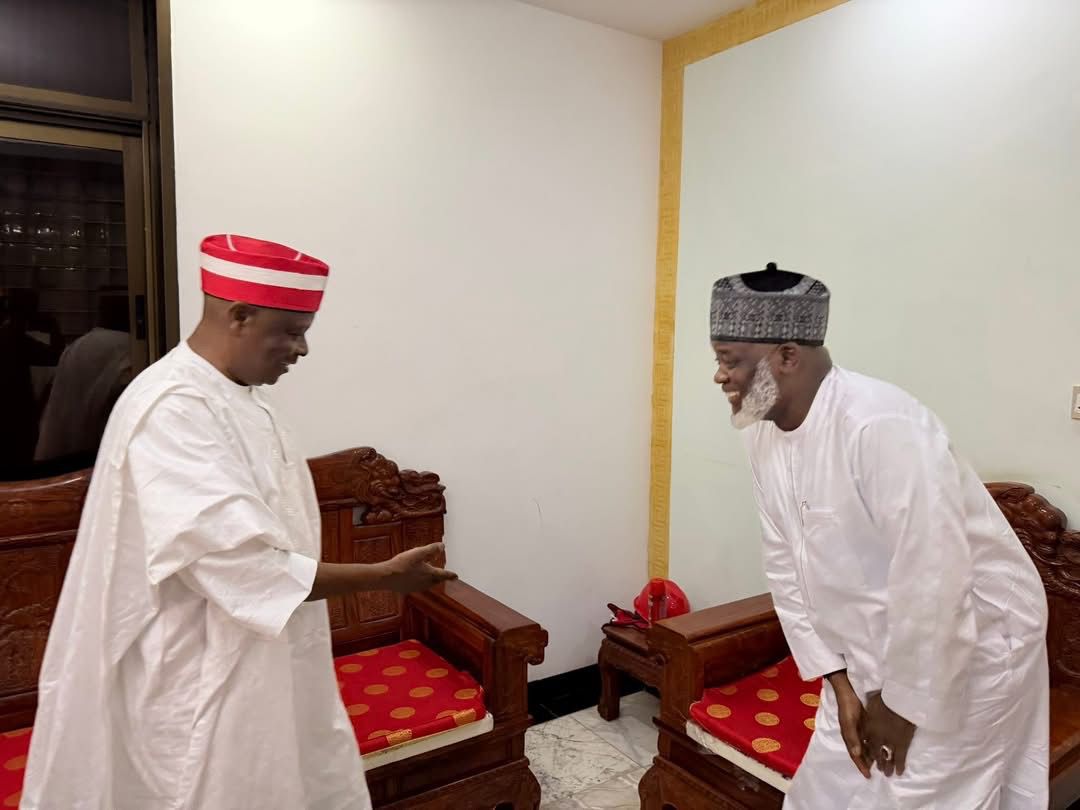
Political Earthquake in Kano: How, Senator Rabiu Musa Kwankwaso, Nasiru Gawuna’s Move to ADC Reshapes North-West Politics
The political atmosphere of Nigeria’s North-West was fundamentally altered on a sweltering afternoon in 2026 after Senator Rabiu Musa Kwankwaso former Governor of Kano State and Former Minister for Defence who is also the “Grand Commander” of the Red-Cap revolution, finalized a move that many viewed as the ultimate masterstroke of his political career. By transitioning from the NNPP to the African Democratic Congress (ADC), Kwankwaso did more than change platforms; he effectively reset the coordinates of the nation’s largest voting bloc.
Senator Kwankwaso’s pedigree is defined by a singular devotion to human capital development and an almost mythical grassroots loyalty preceded him. He turned a local movement, the Kwankwasiyya, into a disciplined, ideological army that transcends traditional party structures. His entry into the ADC instantly transformed a secondary party into a formidable fortress, signaling to the ruling elite that the North-West is no longer a monolith under their control.
The gravity of this shift is most profound in Kano, the heartbeat of Northern commerce. For years, the state was a polarized battlefield between the Kwankwasiyya and established conservative wings. However, the entry of Nasiru Yusuf Gawuna into the same ADC orbit has created a “Kano Super-Alliance” that was previously unthinkable. Kwankwaso, the visionary architect who sent thousands of Kano’s children to global universities, now finds his populist ideology merging with Gawuna’s administrative steadiness and deep-rooted institutional connections.
This synergy is a seismic departure from the politics of “zero-sum” rivalry; it is a calculated fusion of mass appeal and the strategic machinery required to protect and deliver votes.
This move reshuffles the entire North-West deck. As Kwankwaso plants the ADC flag across the region, he is attracting a wave of heavyweights from Kaduna to Sokoto who feel marginalized by the status quo. His political pedigree allows him to speak with a regional authority that others lack, positioning himself as a protector during a time of economic uncertainty. By bringing Gawuna into this fold, the dynamics of Kano politics have shifted from a war of attrition to a coalition of necessity. This alliance creates a “Third Way” that bypasses the failures of the old guard, promising a return to the rapid growth that defined the Kwankwaso years, but with a broader, more inclusive base that could dictate the occupant of Aso Rock in 2027.
Kwankwaso’s career has always been defined by a uniquely personal brand of power. From 1999 to 2015, he served two terms as Governor of Kano State, in addition to roles as Minister of Defence and Senator. While many were surprised by his recent maneuvers; especially following closed-door meetings with President Bola Tinubu, he chose the emerging ADC over the ruling APC.
In the high-stakes theater of Nigerian politics, few events have jolted the region quite like the defection of Nasiru Yusuf Gawuna from the APC to the ADC on March 31, 2026. Coming just twenty-four hours after Kwankwaso’s move, Gawuna’s transition fundamentally has also altered the political calculus in Kano. What makes this moment remarkable is the sheer drama of the reversal. Gawuna’s political journey has been a steady, calculated ascent through Kano’s establishment. He first shot to prominence as Commissioner of Agriculture under Governor Abdullahi Umar Ganduje, earning a reputation for hands-on management in a state where farming is the economic backbone. He eventually rose to Deputy Governor, serving for nearly six years and gaining invaluable executive experience. Beyond partisan politics, Gawuna distinguished himself as Chairman of the Governing Council of Bayero University and, most recently, as Chairman of the Federal Mortgage Bank of Nigeria (FMBN). He resigned from the FMBN on March 27, 2026, citing compliance with presidential directives regarding political appointees.
A look back at the 2023 gubernatorial election reveals just how significant Gawuna is. Running under the APC, he polled over 890,000 votes against the formidable Kwankwasiyya machine. This proved that he is one of the few politicians in Kano who can genuinely compete with Kwankwaso’s electoral machinery. His strength is threefold: he appeals to the youth, the religious establishment (Ulama), and the business community; he has the capacity to split the APC vote; and he has demonstrated he can deliver votes independently of a larger party wave. To understand the magnitude of this defection, one must appreciate the complete inversion of alliances since 2023. Back then, Governor Abba Kabir Yusuf ran on the NNPP ticket with Kwankwaso’s backing, while Gawuna carried the APC banner with Ganduje’s support. By 2027, the roles will likely reverse: Governor Yusuf is positioned to run under the APC with Ganduje’s blessing, while Gawuna is poised to run under the ADC with Kwankwaso’s endorsement.
From the perspective of the Kwankwasiyya movement, Gawuna’s arrival is a “return” rather than a “recruitment,” as he was part of the movement’s pioneer cohort. This narrative neutralizes accusations of opportunism. For his part, Gawuna framed his move in terms of service and divine guidance, with sources indicating he felt marginalized within the APC after his 2023 defeat.
The reaction from within the APC has been one of worry and regret. President Tinubu, recognizing the stakes, reportedly directed party leaders to prevent Gawuna’s move, even offering him an automatic Senatorial ticket for 2027. The failure of this pressure campaign, Gawuna reportedly placed his phone on “Do Not Disturb” and traveled abroad to avoid lobbyists represents a significant defeat for the presidency’s political management. This crisis prompted emergency meetings between President Tinubu, Dr. Ganduje, and Badaru Abubakar at the Presidential Villa to reorganize their strategy.
The long-term implication is the potential break of the APC-PDP duopoly. The ADC is now positioning itself as a genuine “third force” in the North-West. The defection of high-profile figures like Senator Ahmed Babba-Kaita, Senator Aishatu “Binani” Ahmed, and former Justice Minister Abubakar Malami suggests a coordinated realignment. This competition could force more substantive policy debates and reduce the “zero-sum” intensity of regional elections.
The projected 2027 gubernatorial rematch between Gawuna (ADC) and Governor Yusuf (APC) will be a battle between two men with established records. Voters will have a genuine choice between performance and platform rather than just shifting loyalties. As Gawuna put it: “Allah gives power to whom He wants and when He wants.” While the 2027 elections will reveal where that power flows, it is already clear that the political landscape of the North-West will never look the same again.
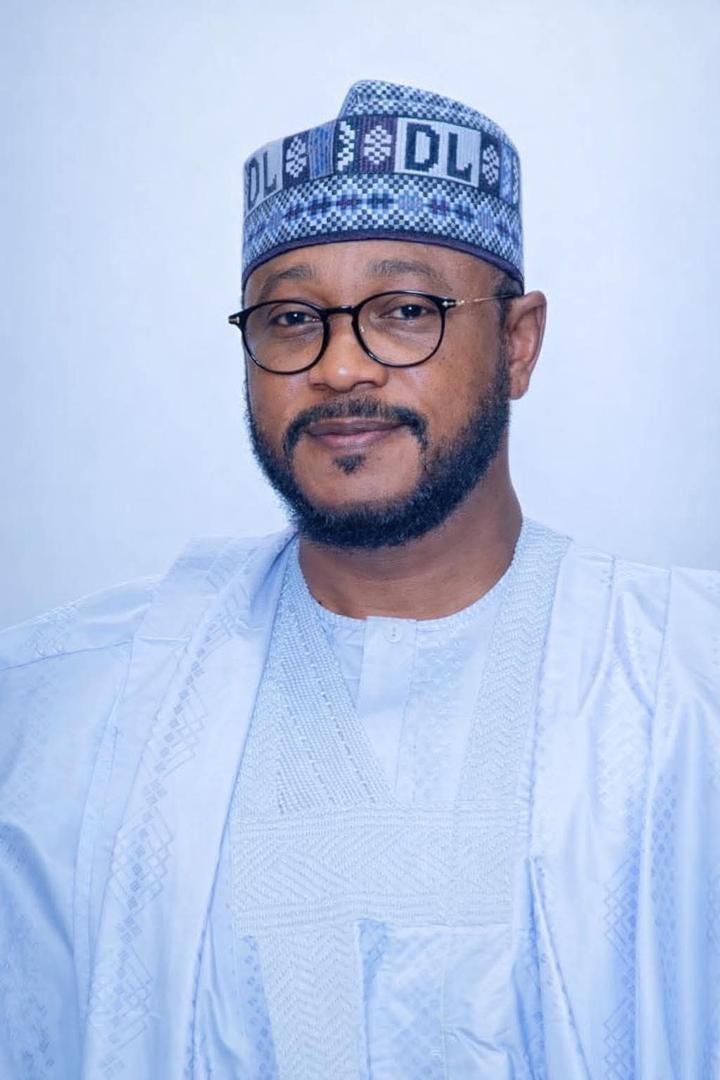
Governor Dauda Lawal Approves Gratuity Payment
The Zamfara State Government, under the visionary leadership of Governor Dauda Lawal, has approved the release of funds for the payment of Gratuity Batch 3 for the 2024/25 period. This decisive action underscores the administration’s unwavering commitment to the welfare of retired civil servants who dedicated years of service to the state’s development.
The Accountant General of the State is already working diligently to ensure that all eligible retirees receive their payments promptly and efficiently, reflecting the government’s resolve to uphold transparency and accountability in the disbursement process.
This timely gratuity payment is a testament to Governor Dauda Lawal’s people-centered leadership, which recognizes the sacrifices and contributions of retirees to the progress and stability of Zamfara State. It also reaffirms the government’s pledge to honor its financial obligations without unnecessary delays.
The Zamfara State Government calls on all retirees in the affected batch to exercise patience as the necessary administrative and financial processes are finalized. Every effort is being made to ensure smooth and uninterrupted payments.
This initiative is part of Governor Dauda Lawal’s broader vision to empower citizens and retirees, strengthen confidence in public service, and sustain the morale of those who have committed their lives to the growth of Zamfara State.
Politics
APC Group Endorses Fubara for 2027, Calls on Tinubu and APC to Prioritise Performance Over Politics in Backing Governor’s Second Term Ambition
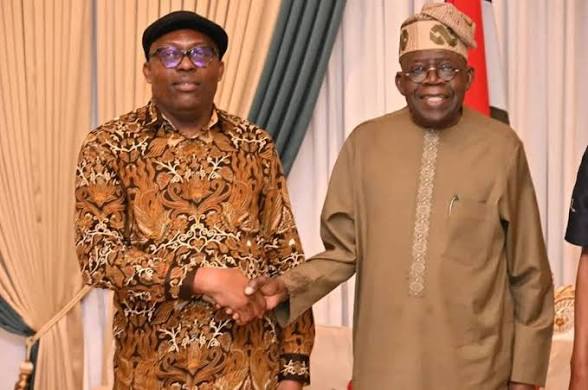
*APC Group Endorses Fubara for 2027, Calls on Tinubu and APC to Prioritise Performance Over Politics in Backing Governor’s Second Term Ambition*
The APC National Vanguard has appealed to President Bola Ahmed Tinubu and the leadership of the All Progressives Congress (APC) to support a second term in office for Siminalayi Fubara, citing what it described as “impressive and verifiable developmental strides” across Rivers State.
In a statement issued on Thursday by its National President, Dr Gbenga Salam (JP), the group said its position followed an extensive assessment tour of key infrastructure and public service projects executed under the Fubara administration.
The APC National Vanguard said the appeal was based strictly on performance, arguing that governance outcomes should outweigh partisan considerations, particularly in a state as economically significant as Rivers.
“We respectfully urge President Bola Ahmed Tinubu and the leadership of the All Progressives Congress to support the continuity of Governor Siminalayi Fubara beyond his current tenure, in recognition of his commitment to development, prudent resource management, and people-focused governance,” the statement read.
According to the group, its delegation visited multiple project sites across the state, observing ongoing and completed works spanning road construction, urban renewal, and public infrastructure upgrades.
It noted that the scale and distribution of these projects reflect a deliberate effort by the state government to extend development beyond traditional urban centres and into underserved communities.
“Our findings from the tour reveal a government that is not only active but intentional in its development agenda. The execution of capital projects across various parts of Rivers State demonstrates a clear understanding of the needs of the people and a commitment to addressing them,” Dr Salam said.
The group particularly commended what it described as prudent financial management by the administration, noting that the projects reviewed showed evidence of careful planning and efficient allocation of resources.
“At a time when economic pressures are evident across the country, it is commendable that the Rivers State government has managed its resources in a way that delivers visible and impactful development without signs of fiscal recklessness,” the statement added.
The APC National Vanguard further observed that despite political tensions in the state, the Fubara administration has maintained focus on governance, ensuring continuity in project execution and service delivery.
The group argued that such stability is critical for sustained development and should be encouraged rather than disrupted.
“Leadership must ultimately be judged by results. In Rivers State, there is clear evidence of progress—projects that are not only announced but executed, and policies that translate into real benefits for citizens,” Dr Salam noted.
The group warned that discontinuity in leadership could stall ongoing projects and reverse gains already recorded, stressing the importance of allowing a performing administration to consolidate its achievements.
“Rivers State is at a pivotal stage where continuity will allow for the completion of ongoing initiatives and the deepening of development gains. Supporting Governor Fubara for a second term is, therefore, a decision in the best interest of the people,” the statement said.
In addition to its call on the APC leadership, the group reaffirmed its support for President Tinubu, expressing confidence in his administration’s broader economic and governance reforms.
The APC group urged Nigerians to remain supportive of efforts aimed at stabilising the economy and strengthening public institutions.
“We reiterate our endorsement of President Bola Ahmed Tinubu for a second term in office, in recognition of his leadership and commitment to national development. With sustained support, the administration can consolidate its reform agenda for the benefit of all Nigerians,” Dr Salam added.
The APC National Vanguard concluded by calling on political actors to prioritise development and public interest over partisan divides, insisting that governance should always be guided by performance and accountability.
“Where leadership demonstrates prudence, delivers development, and remains focused on the welfare of the people, it deserves continuity. This is the position we have reached after a careful and independent assessment of Rivers State,” the statement added.


-

 society7 months ago
Religion: Africa’s Oldest Weapon of Enslavement and the Forgotten Truth
-

 news4 months ago
WHO REALLY OWNS MONIEPOINT? The $290 Million Deal That Sold Nigeria’s Top Fintech to Foreign Interests
-

 society6 months ago
“You Are Never Without Help” – Pastor Gebhardt Berndt Inspires Hope Through Empower Church (Video)
-

 celebrity radar - gossips2 months ago
Dr. Chris Okafor Returns with Power and Fire of the Spirit -Mounts Grace Nation Altar with Fresh Anointing and Restoration Grace on February 1, 2026