
news
Exposed: Ex-Gov Orji, wife, son allegedly squandered N474bn in Abia


Written by Wale Ewedemi
Interestingly, facts have emerged on the extent of the financial atrocities committed by the former first family of Abia State, Governor Theodore Orji . A group has petitioned the Economic and Financial Crimes commission ( EFCC) on their financial crimes.
The petition by the Save Abia Initiative for Change, a voluntary association of concerned citizens, to the Economic and Financial Crimes Commission (EFCC) against former Governor Theodore Ahamefula Orji, his wife and son is hereby reproduced here:
OPENING LETTER
THE SAVE ABIA INITIATIVE FOR CHANGE has put up this petition against the former Governor of Abia State – Dr. T.A Orji – during the period of second tenure (2011-2015) and how he squandered the funds released to him. We also petition the Economic and Financial Crimes Commission (EFCC) to recover all such government funds released to the said ex-governor – Dr. T.A. Orji – within the period, which were either misappropriated, embezzled or looted. We also demand that any property purchased with such funds should be recovered and sold to the public so that such funds are paid back into government coffers.
It will be our desire and we insist that every person, no matter how highly placed found culpable in misappropriating, embezzling and looting of government property or funds, be properly punished by the law.
Sir, we know the level of risk involved in exposing such people, who fraudulently or criminally misappropriated and embezzled government funds and humbly request you to extend your protective hands of the law on all members of SAIC, their families and supporters, who might be hunted or intimidated for exposing the truth for Abia to be safe from further financial recklessness.
Finally, as you commence this investigation, we promise to make ourselves available on demand and at all times throughout the investigation to help you achieve the desired result in any way deemed necessary by you.
Please Sir, remember you are the last hope of Abians to help the zero corruption tolerance of the President Buhari-led Federal Government to the change agenda in Abia State.
Abstract
In this petition, SAVE ABIA INITIATIVE FOR CHANGE found out that the total federal monthly revenue allocation to Abia State Government under Governor T. A. Orji, from January 2011 to March 2015, is N383 billion. The total Excess Crude Oil fund is about N55 billion. The total loans and refunds to government within the period is N33.6 billion. Sure-P funds released to them from 2012-2014 is N2.3 billion. The government has an external debt of $35.9 million or about N8 billion as at 2013.
It was also discovered that there is N1.8 billion ecological project funds approved in nine different sites in Abia State, with about N860 million released so far.
The SAVE ABIA INITIATIVE discovered that with all these monies, the Abia State government could not show anything substantial, which they did with the money. It was discovered that the ex-governor, Dr. T.A. Orji, his wife, Dr. (Mrs.) Odochi Orji, the son, Engr. Chinedu Orji, used the proceeds of their own loot to purchase and acquire estate and landed properties across the country. Some of his commissioners’ aides and Transition Chairmen, who are involved in this ugly transaction of misappropriating and embezzling funds are also identified. Six out of the ecological projects (erosion control) are non-existent and the money about N830 million are in their pockets.
At least, 60 per cent of the excess crude oil fund was fraudulently ascribed to payout for the protection of oil pipelines in Abia State, using ASOPADEC as a siphoning conduit. It was discovered that little or nothing was done with the N2.3 billion Sure-P fund, instead the operators of the Sure-P project misappropriated the fund. The N12 billion being refund from Paris Club was diverted by Governor T.A. Orji.
The SAVE ABIA INITIATIVE FOR CHANGE in this petition lists out all the names of those involved in this fraudulent and criminal misappropriation and embezzlement of public funds.
Abia State Government corrupt and fraudulent financial transactions leading to embezzlement of funds with impunity
Introduction.
The Abia State PDP-led government under the then Governor Chief T.A. Orji (Ochendo) from 2011 to 2014 was known to be run by very corrupt and insensitive officers. That government exhibited open financial recklessness with impunity, (see Abia State audit report 2011/2012). Everybody in Abia State, including those in the Diaspora, wanted the government and all its sponsored candidate to be voted out. Unfortunately, this was not possible, primarily because almost every Abian, starting from its appointees, stakeholders, PDP party officers, most security agents and even the “Almighty” Independent National Electoral Commission (INEC) had compromised their official positions and personal integrity
The Ochendos, that is, the unholy trinity of father, son and wife, always make people know that no human being can resist the bribe they can give to achieve their aim in any circumstance they find themselves. Anyone, who follow the general elections of 2015 before, during and after will know that they are claiming exactly what they are.
What should be of public interest here is how they get such whopping sums of money to bribe their way out of every circumstance, no matter how impossible it might look. This is the crux of the matter. From 2011 till 2014, the major business of government was to accumulate money from public funds for the selfish interest of the unholy trinity that is Governor T.A. Orji, his wife (Dr.) Mrs. Mercy Odochi Orji and his son Engr. Chinedu Orji. He created different avenue to siphon public funds into their private account. With impunity, they diverted a lot of money coming to government into private account, such money include proceeds from over invoice and inflated contract, ecological, Sure-P and CBN SME funds. Government obtained loans from banks, funds from Paris Club and did a little or nothing with the money but instead they shared the money with the heads of such institutions whose names were used to obtained the money.
These institutions include:
- Ministry of Local Government and Chieftaincy Affairs
- Local Government Service Commission and
- Local Government Area Councils
- Ministry of Finance to mention but a few.
They also created conduits in the names of government parastatals or boards through which they siphon money to their private account. A few of such institutions include; Abia State Road Maintenance Agency (ABRMA), from VAT account, Internally Generated Revenue (IGR), Abia State Oil Producing Development Agency (ASOPDA) and Abia State Environmental Protection Agency (ASEPA).
Generally, it was a norm for that government to spend a maximum of 30 per cent of the actual value of any project while the other 70 per cent will be used to settle their “dependent relatives” (not salaries), while the big chunk of the money remained with the unholy trinity. With this development, the governor, with his cronies ran the government with impunity since money was available to stop anybody who cares from raising any eyebrow to whatever they did.
Now that elections have come and gone and Abia State PDP-led government has succeeded itself by using money made for Abia State obtained by fraudulent means, it is only logical that well-meaning Abians should demand to know why the state is almost bankrupt. Today, all sectors of the economy of the state has collapsed; salaries, pensions and gratuities of public officers can no longer be sustained. Our public utilities cannot be maintained, our roads are already in shamble both in the city and rural areas, our market are destroyed and relocated and empty property converted to themselves.
For these reasons SAVE ABIA INITIATIVE FOR CHANGE was founded. This is a group of Abians from all works of life who have come together to ensure that embezzled and misappropriated funds and properties of Abia State are recovered. In doing this we are aware of the level of risk involve in our self-imposed project. We are, however, encouraged that the new Buhari-led APC Federal Government is preaching zero tolerance for corruption and we do hope they will come to our aid when we are being hunted for exposing the truth without fear or favour. We are very confident that the EFCC will not betray us and Abians nor compromise with the unholy trinity and sell Abians, like INEC did during the National Elections in Abia State.
To achieve these objectives, we hereby lay our lives on the part of honour and integrity for the people of Abia State to ensure that we recover for Abia State all misappropriated and all embezzled funds and properties of Abia State. To achieve this, is a task that must be done by the grace and guidance of God
LOANS FROM BANKS/REFUNDS
N10.5 BILLION LOAN FROM FIRST BANK 2012
The State Government, with the Ministry of Local Government and Chieftaincy Affairs, in-collaboration with Local Government Council, sought for and obtained, in 2012, the sum ofN10.5 billion and used JAAC Funds as collateral for the loans. The loan is supposed to be for Developmental Projects for the Local Government Areas
Details of the Loan:
Each of the 17 Local Government of the state subscribed for N500 million from the loan totaling N8.5 billion. The Transition Chairmen, who got the loans had only N60 million released to them as follows:
- N40million for the development of Local Government Secretariat:N20 million was given to every Local Government Council to fence two schools at N10 million There was no trace of how the balance of N440 million left for each council was used. That is to say, the total sum of N7, 480, 000. 00 billion was embezzled from that loan. From the N40 million above, each Transition Chairman gave back N7 million to the source being the value of their official monetised vehicle for him and his deputy.
Note: Remember, this N7 million was supposed to be paid from their salaries. The list of the names and phone numbers of the Transition Chairmen involved in this unholy business is hereby attached. It is very important to know that from the N440 million, which should have been used for the development of Local Government Area, each of the T.C chairman was givenN20 million for signing off the balance (N440 million) of the loan.
The balance of N2 billion out of the N10.5 billion loan was appropriated into the hands of Commissioner for Local Government and Chieftaincy Affairs, Chief Emma Nwabuko.
Loan of four billion Naira from Diamond Bank: In 2012, the government of Abia State, through Ministry of Works and Housing, obtained a loan of N4 billion for the completion of the new commissioners’ quarters. It will be recalled that the former Governor, Dr. Orji Uzor Kalu, started that project and nearly completed it, the new work done by Governor T.A. Orji does not exceed N300 million, which is about the actual amount he claimed for the completion of that project in 2012 budget (see audit report). He embezzled N3.7 billion with his commissioners of Works and Housing, Hon. Chief Kingsley Mgbeahuru and Chief Longman Nwachukwu from public funds through this project.
From the forgoing, it is evident that the following, conspired among themselves to defraud the government of Abia to State the turn of N13,180, 000. 00billion only. They are:
- A Orji (Governor)
- The Commissioner for Local Government and Chieftaincy Affairs, Chief Emma Nwabuko;
- The 17 Transition Council Chairmen on seat 2012;
- The Commissioners of Works – Chief Mgbeahuru and Chief Longman Nwachukwu;
Funds From Paris Club: In 2010 and 2011 Abia State government received N12 billion in more than one trench as refund from Paris Club. The utilisation of this fund was fraudulent and need to be investigated. So far, it is of common knowledge that these funds were invested by the Governor, Chief T.A Orji and his son Engr. Chinedu Orji in landed properties, including Ochendo Housing Estate by Azikwe and shopping Mall, No. 1 Aba Road Umuahia and others.
Loans To Local Government Councils: The ex-governor, Dr. T.A. Orji had obtained a loan of N800 million purported to be for local government staff salaries. By November 2013, he directed the local government councils to hold their F and G Council meetings to approve the loans. This loan was to be shared by the 17 local government councils. This was not the case. Instead the governor misappropriated and embezzled the money.
N2billion Agricultural Loans To Farmers: The Federal Ministry of Agriculture released N2 billion to Abia State Farmers through State Ministry of Agriculture. This loan was misappropriated and farmers did not get the loan. The late, Dr. Ken Nwosu, former Commissioner of Agriculture wanted this loan to be given to the farmers but he died (May His Soul Rest in Peace).
Note: This loan is different from the one disbursed by Dr. Chukwu Nwachukwu in 2013.
College of Education Technical, Arochukwu: The Abia State Government puts the monthly subvention of College of Education Technical, Arochukwu at N160 million. Pitiable enough, and in agreement with the then provost – Dr. Chris Nwamuo – they released only N21 millionmonthly to the college. The difference is shared between the governor and the provost. It is from this money that the provost built Giwa Hotel near the school. This is one of the reasons they could not pay the teachers.
The chairman of the Board of Internal Revenue Abia State, who operates with his cronies’ fraudulently, runs the following BIR Accounts. He is supposed to know how much Abia State generates as Internal Revenue but deliberately denies Abians this information because he connives with his surrogates to fraudulently run these accounts:
- i.Unity Bank Account No. 0021645626
- Fidelity Bank Account No. 00530370000155
iii. Zenith Bank Account No. 1010803601
- Zenith Bank Account No. 1013194292
- Fidelity Bank Account No. 5030013304
Before the end of this investigation, we will help the EFCC to locate the position of the five Star Hotel he is building with public fund at Abuja.
Official Vehicles to Transition Chairmen and their Deputies: In Abia State and in all the tenure of Governor T.A Orji May 29, 2011 to May 29, 2015 he used only Transition Council Chairmen to run the Local Government Areas. Each Transition Chairman has a tenure of six months, in the first instance and may be renewed for another six months at a time for such number of periods that pleases the governor. All of them with their deputies are usually provided with official cars under monetised policy for public servants. Even though due process was not followed in purchasing and giving these vehicles to them, they also did not pay for these vehicles from their salaries. The EFCC is hereby being humbly requested to recover these vehicles or their monetized values.
Abia State Oil Producing Area Development Commission (ASOPADC): In this commission 13 per cent oil derivative from Federal Allocation is given to them as subvention. They are supposed to use it for development of the oil producing areas. So far about N820 million has been released to them. Unfortunately, all the developmental projects in the oil producing areas are less than 40 per cent of the money, so far released. The former commissioner of the commission – Chief Sam Nwaogu – who, after sharing the funds with the government, is now in the NDDC Board. The truth is that he used the money lavishly to build an estate he calls his residential home. He should be investigated, as he has nothing doing before the appointment.
FUNDS SIPHONED THROUGH BANKS WITHOUT PURPOSE.
- Abia State ASOPADC Diamond Bank: AmountN244,500,000.00
In May 2013, the Abia State Government, without any defined purpose for which the money will be used, lodged in and cashed the sum of N244,500,000.00 with four different cheques in their Diamond Bank Account
CHEQUES NO AMOUNT
31845238 N20,000.000.00
31845236 N59,500,000.00
31845241 N150,000,000.00
31845239 N15,000,000.00
TOTAL N244,500,000.00
- UBA VAT ACCOUNT NUMBER FOR N1,651,363,000.00
In the same May 2013, without any defined purpose for which the money will be used, the state government withdrew the sum of N1, 651, 363, 000.00.
ILLEGAL EXPENDITURE (N12, 377, 961,014) NOT BACKED BY LAW TO BE REFUNDED BY THE HEAD OF THE FOLLOWING MINISTRIES AND INSTITUTION 2011/2012 FINANCIAL YEARS.
The following project and expenses are the excess money spent deliberately on project they are made for. They were extracted from the budget of the year 2011/2012 audit report of Abia State government. The auditor indicts the government and described their spending pattern as reckless. Unfortunately, the Abia State House of Assemble Committee on Finance and Appropriation, which should have queried the government did not do so. Instead the governor, Chief T.A. Orji, the Accountant General, Chief Onyendilefu and the heads of the affected department connived among themselves and fraudulently retired these sums of money into their private purse.
Full details can be found on pages 50 to 61 of the budget of the year 2011/2012 Abia State Audit report.
Commissioner for Ministry Of Works And Housing
- Construction of Afaraukwu Road =N 15,000,000
- Construction of Youth Centre =N 9,000,000
- Special project/Activities =N 16,300,000
- Construction of 4 additional duplex (Commissioner Quarters) =N 23,500,000
- Completion of Deputy Governor’s lodge =N 4,600,000
- Abia State low-cost Security and Emergency Call Centre =N273,430,000
TOTAL = N68,400,000
The Commissioner for Ministry Of Health
- Rehabilitation of Equipment (4 general Hospital) =N10,000,000
- Construction of Kitchen and Store (School of midwifery) Amachara =N246,580,000
TOTAL = N256.580,000
The Head Of Department
- Government Press =N40,421,600
- Purchase of Video production and Post production =N19,000,000
TOTAL = N59,421,600
Commissioner for Ministry of Agriculture
- FADAMA III/ IDA Project =N 127,579,628
Government House
- Acquisition of Capital Assets =N 19,000,000
- Over expenditure (Not backed by law =N 3,803,963, 837
- Over expenditure on debt charges =N 7,896,305,577
TOTAL = N11,719,269,414
GRAND TOTAL = N12,377,961,014
FRAUDULENT AND CORRUPT PRACTICES IN THE ABIA STATE PENSIONS BOARD
The Abia State Pensioners Should Be Pitied: They go on bended knees from month to month seeking to be paid their legitimate pensions and gratuity. While their gratuities, even after 10 years, is not the crux of the matter here. Instead, the main problem, which this petition wants to address, is the fraudulent and criminal exploitation of pensioners in Abia State, which is going unabated. It is the view of the petitioners that the syndicate treats the pensioners with impunity and made them look like beggars.
To be continued …




news
Alleged $1.5m Fraud: Court Dismisses Preliminary Objections, Bail Application of Intermediate Investment Holdings Boss, Ufoma Joseph Immanuel in Lagos

Justice Mojisola Dada of the Special Offences Court sitting in Ikeja, Lagos, on Thursday, May 7, 2026, dismissed the preliminary objections and bail application filed by the boss of Intermediate Investment Holdings Limited, Ufoma Joseph Immanuel, over an alleged $1.5 million fraud.
The Economic and Financial Crimes Commission, EFCC, on Wednesday, March 11, 2026, arraigned Immanuel, alongside his company, Intermediate Investment Holdings Ltd., on a two-count charge bordering on obtaining by false pretence and forgery to the tune of $1.5m.
Count one reads: “UFOMA JOSEPH IMMANUEL and INTERMEDIATE INVESTMENT HOLDINGS LIMITED between April 2022 and October 2023 in Lagos, within the jurisdiction of this Honourable Court, with intent to defraud, induced Adebisi Adebut of R28 Holdings Limited to deposit the total sum of S1, 500, 000.00 (One Million, five Hundred Thousand United States Dollars USD) as investment described as to wit: “Cash and or Capital Cost in Chappal Petroleum Development Company Limited; Business Development Cost in Intermediate Investment Holdings Limited: Capital and or Capital Call in Chappal Energies Mauritius Limited” on the understanding that R28 Holdings Limited will be; (a) reimbursed the investment amount (b) paid a Development Capital fee of $2 250,000.00. (Two Million, Two Hundred and Fifty Thousand Dollars) (c) 22.4% worth of shares in Intermediate Investment Holdings Limited which representation you knew to be false.”
Count two reads: “UFOMA JOSEPH IMMANUEL, sometime between April 2022 and April 2025 in Lagos, within the jurisdiction of this Honourable Court, with intent to defraud, forged a document to wit: TERM SHEET and purporting same to have been executed by Sherrif Oluwo and Olaniran Osotuyi in order to facilitate your obtaining money by inducement from Adebisi Adebutu of R28 Holdings Limited.”
The defendant pleaded “not guilty” to the charge preferred against him.
Following the defendant’s “not guilty” plea, the prosecution counsel, Babatunde Sonoiki, asked the court to fix a date for the commencement of trial and also prayed the court to remand the defendant in the custody of the International Criminal Police Organization, INTERPOL, pending the conclusion of its investigation.
Sonoiki also narrated how the defence counsel, Oluseun Awonuga, SAN, had physically assaulted his colleague, Emenike Mgbemele, at the sitting on March 2, 2026.
According to him, “My lord, the learned silk, physically assaulted my colleague on the staircase on his way to serve the defendant the charge as directed by the court.
“There is a video to that effect and we intend to tender it before the court.”
Though Awonuga did not respond to the allegation made against him by the prosecution counsel, he informed the court of a preliminary objection and a written address dated January 5, 2026, while urging the court to discountenance the counter-affidavit of the prosecution.
The prosecution, in a 21-paragraph counter-affidavit dated February 9, 2026, had urged the court to dismiss the notice of preliminary objections.
According to Awonuga, the Federal High Court, in a ruling, had ordered the EFCC not to arrest the defendant.
“EFCC has flouted the order by arresting the defendant and I hereby urge your lordship to discountenance their counter- affidavit,” he said.
Responding, the prosecution counsel, Babatunde Sonoiki, said that the ruling was part of the motion that had earlier been withdrawn by the defence and should not be before the court.
“ There is nowhere in the ruling that says the defendants cannot be arraigned in a court of competent jurisdiction.
“My lord, the ruling was delivered in a civil case; and according to the Supreme Court, a criminal case and civil case can go on at the same time.
“We urge the court to dismiss the application and order accelerated hearing in this case,” Sonoiki had said.
After listening to both parties, Justice Dada had, consequently, adjourned the case till May 7, 2026 ( today) for ruling.
Ruling on the application , Justice Dada held that: “The preliminary objection is baseless and the entire application is lacking in merit; and it is hereby dismissed.”
Also, Justice Dada, in her ruling on the bail application of the defendant, held that “On the basis of considering the antecedent of the defendant for not honouring the invitation of the applicant after he was granted administrative bail, I agree with the complainant that he is a flight risk; therefore, bail is refused.”
Justice Dada adjourned the case till June 24, 26, 29 and 30, 2026 for the commencement of trial.
By Solanke Ayomideji Taiwo
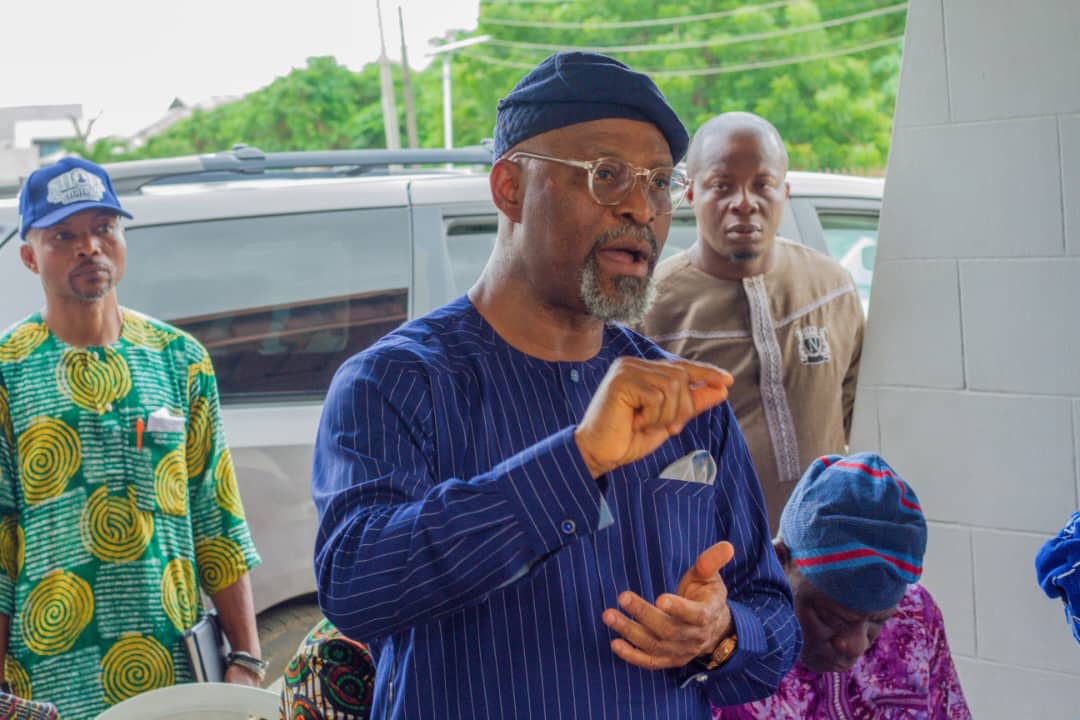
ABEOKUTA — A frontline aspirant for the Ogun Central Senatorial seat under the platform of the All Progressives Congress (APC), Emmanuel Adebola Sofela, popularly known as Shoffi, has dismissed widespread speculations that he has withdrawn from the race in favour of another aspirant .
Sofela described the reports making rounds in some political circles as “false, misleading and the handiwork of political detractors,” insisting that he remains fully committed to his ambition of representing Ogun Central Senatorial District at the National Assembly.
In a statement made available to journalists on Friday, the APC stalwart urged his supporters, political associates and loyalists across the six local government areas that make up Ogun Central to disregard the rumours and remain resolute in their support for his aspiration.
According to him, there has never been any agreement or arrangement for him to step down for any aspirant to emerge as a consensus candidate of the party.
“I want to categorically state that I have not stepped down for anyone in the Ogun Central Senatorial race. The rumours flying around are entirely false and should be ignored by all my supporters and members of the public,” he said.
Sofela expressed confidence in his chances of securing the APC ticket, stressing that his popularity, political experience and grassroots connection across the district place him in a strong position ahead of the party primaries.
The senatorial hopeful reiterated his determination to provide quality representation for the people of Abeokuta South, Abeokuta North, Odeda, Obafemi-Owode, Ifo and Ewekoro local government areas if elected into the Senate in 2027.
He noted that his aspiration is driven by a genuine desire to contribute meaningfully to the development of Ogun Central through effective legislation, empowerment programmes and people-oriented policies.
“My ambition is rooted in service to the people. I remain committed to the vision of giving Ogun Central a strong voice in the Senate and facilitating developmental initiatives that will positively impact our people,” Sofela added.
The APC chieftain further appealed to party members to remain united and avoid distractions capable of causing division within the party structure ahead of future political activities.
Political observers in the state believe the race for Ogun Central Senatorial seat is gradually gathering momentum as aspirants continue consultations and grassroots mobilization across the district ahead of the 2027 election cycle.
By Solanke Ayomideji Taiwo
As political activities gradually gather momentum ahead of the next electoral cycle in Ogun State, conversations across the six local government areas that make up the Ogun Central Senatorial District are increasingly revolving around one name — Emmanuel Adebola Sofela.
From Abeokuta South to Abeokuta North, Odeda, Obafemi-Owode, Ifo and Ewekoro, party leaders, stakeholders and grassroots mobilisers within the All Progressives Congress have continued to speak glowingly about the philanthropist and political figure whose growing popularity is being linked to years of humanitarian service, youth empowerment and unwavering accessibility to ordinary citizens.
During a recent round of consultations and visits to leaders of the APC across the district, testimonies about Sofela’s contributions to humanity dominated discussions, as party faithful described him as “a bridge builder,” “a dependable grassroots politician,” and “the transformation agent Ogun Central desperately needs.”
According to several party elders and community leaders, Sofela’s antecedents in empowering youths and supporting less privileged individuals have set him apart from others jostling for the senatorial ticket under the APC platform.
Many of the leaders recalled numerous instances where students from financially disadvantaged homes benefited from educational grants and scholarship support facilitated by Sofela, while unemployed youths across communities were assisted with vocational opportunities and startup support to improve their livelihoods.
A party leader in Abeokuta North, who spoke during the consultation meeting, noted that Sofela’s style of politics differs significantly from what many residents have become accustomed to over the years.
“Politics should be about service, accessibility and genuine concern for the people. Emmanuel Adebola Sofela has consistently demonstrated these qualities long before seeking public office. He is always reachable and willing to help,” the leader stated.
Similar sentiments echoed across Odeda and Obafemi-Owode, where stakeholders praised his commitment to grassroots development and his consistent engagement with party members at all levels.
In Ifo and Ewekoro, community representatives described him as a leader with intellectual depth, administrative capacity and a clear understanding of the developmental needs of Ogun Central.
One of the speakers at the gathering remarked that Sofela possesses “an intellectual confidence beyond comprehension,” adding that his ability to engage on issues of governance, empowerment and policy distinguishes him from many contemporary politicians.
Observers within the APC believe that Sofela’s growing acceptance among party leaders and ordinary residents is largely connected to his long-standing relationship with the grassroots and his reputation for extending financial support to widows, artisans, market women and struggling families within and outside Ogun State.
Political analysts also argue that his emergence could reshape representation within Ogun Central, especially at a time when many constituents are demanding more responsive and people-oriented leadership.
For many party loyalists, the recurring theme during the consultations was clear: the desire for a representative who understands the pains of the people and possesses both the compassion and competence to drive meaningful change.
As internal consultations continue within the APC ahead of future political contests, supporters of Emmanuel Adebola Sofela insist that his track record of empowerment, accessibility and community engagement positions him as a strong contender capable of redefining representation in Ogun Central Senatorial District.
He is working hard to ensure the growing endorsements from party leaders across the district eventually translate into political victory in emerging as the APC candidate for ogun central senatorial district .one things that is increasingly evident — Emmanuel Adebola Sofela has become a prominent voice in the evolving political conversation shaping the future of Ogun Central.


- Rhino Resources Joins African Energy Week (AEW) as Gold Sponsor as Southern African Exploration Expands May 8, 2026
- Levene Energy Joins African Energy Week (AEW) as Gold Sponsor Amid Regional Expansion and Market Diversification May 8, 2026
- Gas Supply in the Age of Artificial Intelligence (AI): Can Africa’s Natural Gas Power the Continent’s Digital Future? May 8, 2026
- Merck Foundation and African First Ladies are Making History in Africa by Training the First Oncologists and Cancer Care teams in their Countries May 8, 2026
- Seychelles participates in United Nations Educational, Scientific and Cultural Organization (UNESCO) forum marking the International Day for Small Island Developing States May 8, 2026
- African Petroleum Producers Organization (APPO) Secretary General Ghezali to Address African Energy Week (AEW) 2026 as African Energy Bank Nears Launch May 8, 2026
- Petralon Energy Scales Dawes Island Output, Joins African Energy Week (AEW) 2026 as Diamond Sponsor May 8, 2026
- Giving Thanks for a Year of Petrine Service: Message to His Holiness Pope Leo XIV May 8, 2026
- Targeting 250,000 bpd by 2030, First Exploration & Petroleum Development Company (First E&P) Joins African Energy Week (AEW) 2026 as Diamond Sponsor May 8, 2026
- From Artificial Intelligence (AI) to project profiles: ESI Africa has the stories to balance opinions May 8, 2026
- Rhino Resources Joins African Energy Week (AEW) as Gold Sponsor as Southern African Exploration Expands May 8, 2026
- Levene Energy Joins African Energy Week (AEW) as Gold Sponsor Amid Regional Expansion and Market Diversification May 8, 2026
- Gas Supply in the Age of Artificial Intelligence (AI): Can Africa’s Natural Gas Power the Continent’s Digital Future? May 8, 2026
- Merck Foundation and African First Ladies are Making History in Africa by Training the First Oncologists and Cancer Care teams in their Countries May 8, 2026
- Seychelles participates in United Nations Educational, Scientific and Cultural Organization (UNESCO) forum marking the International Day for Small Island Developing States May 8, 2026
- African Petroleum Producers Organization (APPO) Secretary General Ghezali to Address African Energy Week (AEW) 2026 as African Energy Bank Nears Launch May 8, 2026
- Petralon Energy Scales Dawes Island Output, Joins African Energy Week (AEW) 2026 as Diamond Sponsor May 8, 2026
-

 news5 months ago
WHO REALLY OWNS MONIEPOINT? The $290 Million Deal That Sold Nigeria’s Top Fintech to Foreign Interests
-

 society5 days ago
SOCIAL MEDIA IS NOT A BATTLEFIELD COMMAND – WHY THE NIGERIAN ARMY’S ACTION AGAINST JUSTICE CRACK IS A NATIONAL SECURITY IMPERATIVE
-

 celebrity radar - gossips3 months ago
Dr. Chris Okafor Returns with Power and Fire of the Spirit -Mounts Grace Nation Altar with Fresh Anointing and Restoration Grace on February 1, 2026
-

 celebrity radar - gossips5 months ago
Prophet Kingsley Aitafo Releases 2026 Prophecy: ‘Nigeria Will Rise, but the World Must Prepare for Turbulence’
You must be logged in to post a comment Login
You must log in to post a comment.