
celebrity radar - gossips
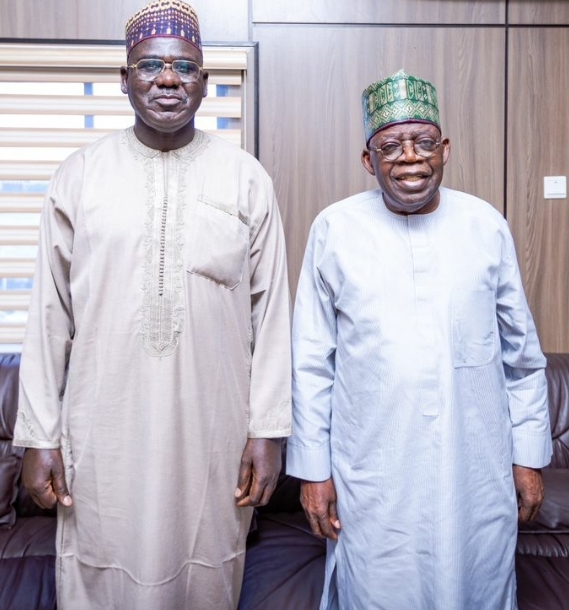
EXPOSED: Those trying to pit Buratai against Tinubu

EXPOSED: Those trying to pit Buratai against Tinubu
When I received not just the news but the evidence as well that some retired generals, all of whom have held very senior command positions in the Nigerian military, are now up in arms against one of their own, former Army Chief, General Tukur Yusufu Buratai, for cheap political reasons, I wondered whether those characters have forgotten that the esprit de corps they were taught as cadets in the Nigerian Defence Academy does not stop even in retirement. It remains an integral part of military training and is aimed at encouraging and getting the best from one another.
Shocked by the childish activities of this shadowy group, the Kano Renaissance Group, a group I am privileged to lead, issued a strong statement yesterday warning these divisive characters to stop all the desperate shenanigans or get exposed and humiliated in the public space. The press statement reads as follows:
“The attention of Kano Renaissance Group has been drawn to series of nocturnal meetings being held by some retired military personnel, with the sole purpose of working out mechanisms to malign the person of former ambassador and Chief of Army Staff, Lieutenant General Tukur Yusufu Buratai (Retd), and ensure he is reduced in esteem in the eyes of President Bola Tinubu and other well-meaning Nigerians.
“The attention of Kano Renaissance Group has been drawn to series of nocturnal meetings being held by some retired military personnel, with the sole purpose of working out mechanisms to malign the person of former ambassador and Chief of Army Staff, Lieutenant General Tukur Yusufu Buratai (Retd), and ensure he is reduced in esteem in the eyes of President Bola Tinubu and other well-meaning Nigerians.
“The attention of Kano Renaissance Group has been drawn to series of nocturnal meetings being held by some retired military personnel, with the sole purpose of working out mechanisms to malign the person of former ambassador and Chief of Army Staff, Lieutenant General Tukur Yusufu Buratai (Retd), and ensure he is reduced in esteem in the eyes of President Bola Tinubu and other well-meaning Nigerians.
“We are closely watching all the night meetings and other dastardly moves by various groups that are opposed to Buratai, whose real intention is to entangle President Tinubu. For them, since they are not qualified for any appointment, those who are eminently qualified should only get it if they can agree to grease their dirty palms at all times.
But what comes as even more shocking is the fact that none of the generals engaged in these dangerous efforts is an outstanding achiever, in the real sense of the word. They may have held very big offices in the past, with one of them serving as a one-term minister in the immediate past administration of President Buhari. But even he achieved practically nothing spectacular. Are they desperately doing all these so that General Buratai will not join the Tinubu administration and inadvertently shame them with another round of patriotic, spectacular achievements?
For those who may not know, or have forgotten, below is a reminder of the unprecedented strides recorded by General Buratai when he served as Chief of Army Staff, assuming office at a difficult time in the history of Nigeria when Boko Haram was almost overrunning the entire northeastern part of the country.
By 2015 when Muhammadu Buhari became President of the Nigerian federation and appointed General Tukur Yusufu Buratai as Army Chief, Boko Haram was governing a sizeable chunk of Nigerian territorial space, exactly the size of Belgium. But by December 2015, the new army chief had led from the front and ensured the initiative was seized from the Boko Haram insurgents. Barely five months into that appointment, attacks on soft and hard targets had reduced by 75 per cent, By June 2016, there was no attacks outside the North-East, unlike before when attacks were regular occurrences in Jos, Kano, Kaduna, Sokoto, Suleja, Abuja, among others.
By July 2017, the incessant suicide bomb attacks had reduced by 90 per cent. The years 2017 and 2018 saw the virtual defeat of the terrorists. What brought about the intermittent setbacks were mainly inter-service competition (not conflict), lack of establishment of civil authorities in the recovered local government areas, low deployment of the Nigerian police in the North-East, uncoordinated government efforts and of course the resilience of the terrorists in regrouping, recruitment and re-arming. The evolution of new tactics, techniques and procedures in the counterinsurgency operations are major achievements. The Super Camp Maneuver Concept of operation, the Mobule Strike Teams, the production of the Ezugwu MRAP, the Motorcycle Battalion, the revival and operationalisation of the Special Forces Command, etc, are all initiatives borne out of the challenges of the counterinsurgency operations of that era.
In spite of these landmark achievements, if you ask General Buratai what were his major achievements as army chief, chances are he will mention extensive training of army personnel and human capacity building, which are the defining factors in true military professionalism. Courses were regularly conducted. Officers and soldiers were exposed in large numbers to foreign courses. The Nigerian Army will never be the same in terms of the quality of its officers and soldiers. They can compete and excel in all international military engagements. The Nigerian Army Resource Centre is one institution that transformed the army landscape in terms of human capacity building. It has since become a major source of pride for the army and the country as a whole.
Then came the Nigerian Army University located in Biu, as one of the foremost legacies of Buratai and indeed the Buhari Administration.
The five years stewardship of General Buratai as Army Chief saw to many exercises being established. Exercise is the best form of military professional training. The introduction of realistic training exercises were among the visionary legacies of General Buratai The exercises conducted during that time included HARBIN KUNAMA, CRICODILE SMILE, AYAM AKPATUMA, PYTHON DANCE-and SAHEL SANITY, all of which were both visionary and strategic. With the conduct of the exercises two major objectives were achieved. One was training of the Nigerian Army officers and soldiers in Tactics, Techniques and Procedures in internal security operations. Secondly, it also contributed to national security improvement where security challenges across the geopolitical zones of the country were addressed decisively. During the tenure of General Tukur Buratai, the IPOB and MEND amongst others were checkmated. This is in addition to several counter-insurgency operations. Bandits, kidnappers and violent separatists were also decisively dealt with and operating at best in the fringes.
Other achievements recorded during that period included medical evacuation abroad, upgrade of all Army Level 4 hospitals, general improvement of educational standard, increase in troops morale (though a few cases were politicized by unscrupulous politicians), massive barracks renovations, massive infrastructural development, massive lift capabilities, improved procurement for the Army, as well as standardisation of Army uniforms.
New institutions were also established, including the Nigerian Army Cyber Warfare Command, Women Corps, Land Forces Simulation Centre, ST Foods, Nigerian Army Farms and Ranches and others that are too numerous to mention here.
Though toughness has become his defining feature right from childhood, General Buratai managed to balance it with diplomacy even when he was in active service. Under his stewardship, the Human Rights Desk was established, and incidences of military brutality were reduced to barest minimum. Many civilians attested to the fact that they always forgot the man was the Army Chief when in his presence. He exuded simplicity and humility at their very best.
These are just a mere tip of the iceberg. A space like this could take a fraction of the unprecedented achievements recorded in that golden era in the history of the Nigerian Army. Was Buratai a saint who did no wrong? Far from it, just as none of the persons point dirty fingers at him is a saint, or even half as one. Indeed, all of them have bequeathed a record of failure in all its ramifications while in service. Clearly they do not mean well towards President Tinubu, and the government will do well to beam its searchlight on their nefarious activities and be sure they also do not engage in subversive actions of any sort.
This columns hopes they see the futility of what they are doing, so as not to deprive this nation of the services of one of its very best.




celebrity radar - gossips
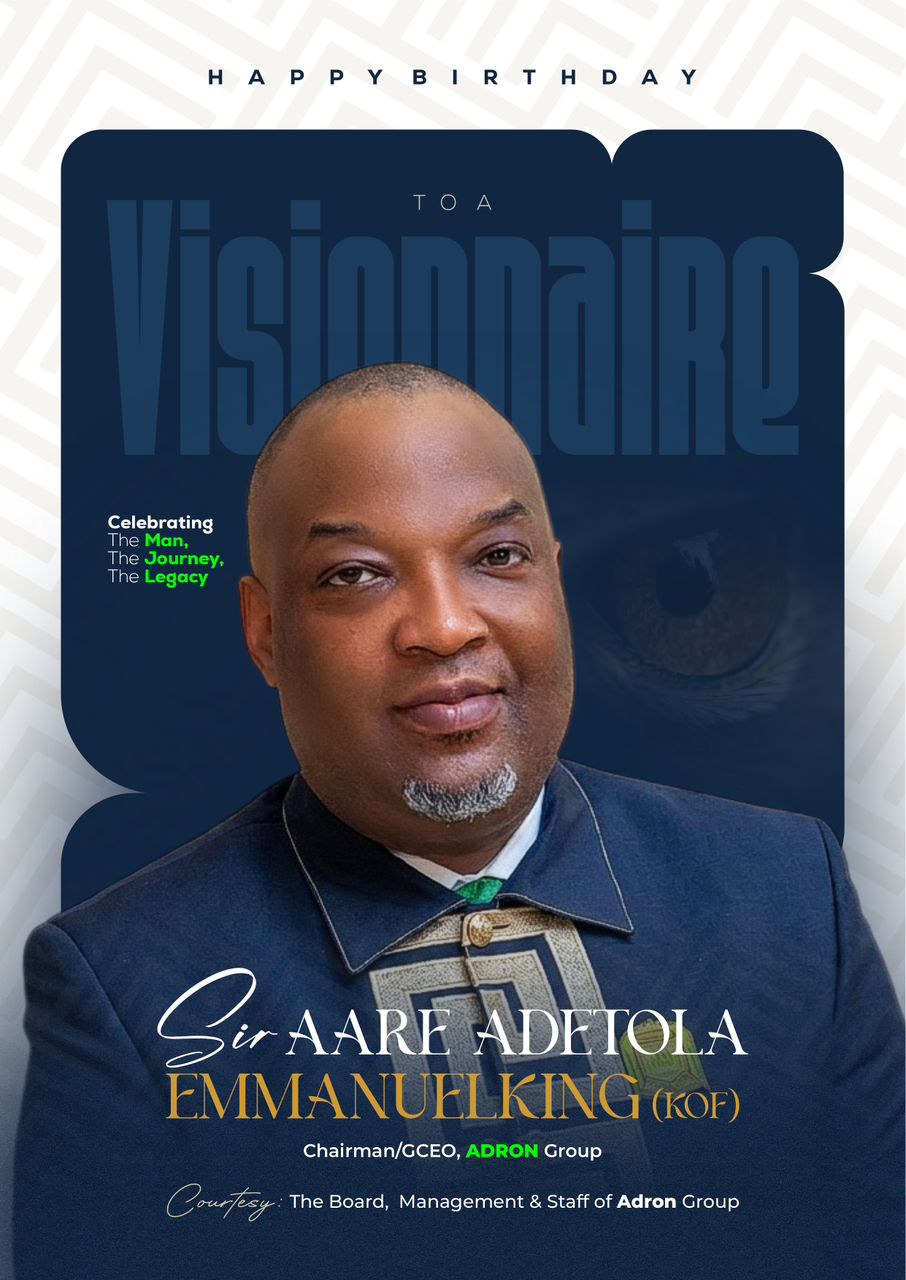
Adron Homes Celebrates Visionary Chairman, Aare Adetola Emmanuel King, at 51
Adron Homes Celebrates Visionary Chairman, Aare Adetola Emmanuel King, at 51
The management and staff of Adron Homes and Properties Limited have joined family, friends, associates, and well-wishers across the globe to celebrate their Chairman and Chief Executive Officer, Aare Adetola EmmanuelKing, as he marks his 51st birthday.

In a statement released by the company, the milestone was described as a celebration of an exceptional leader whose vision, resilience, and entrepreneurial brilliance have not only transformed Adron Homes into a household name in Nigeria’s real estate sector but have also redefined affordable housing across the country.
Under his dynamic leadership, Adron Homes has continued to expand its footprint, delivering value-driven residential solutions while empowering thousands of Nigerians with opportunities for home ownership. His commitment to excellence, innovation, and customer satisfaction has remained the driving force behind the company’s sustained growth and industry leadership.
The statement further highlighted Aare EmmanuelKing’s passion for nation-building and community development, noting his significant contributions to job creation, youth empowerment, and the promotion of socio-economic development through real estate investments.
“As a leader, mentor, and visionary, Aare Adetola EmmanuelKing has consistently inspired a culture of excellence, integrity, and dedication within the organization. His ability to turn bold ideas into reality continues to position Adron Homes as a trailblazer in the industry,” the statement read.
The company expressed profound gratitude for his steadfast leadership and prayed for continued wisdom, strength, and sound health as he embarks on another year of impactful achievements.
As he celebrates his 51st birthday, the entire Adron Homes family proudly honours a man whose legacy continues to shape the future of real estate in Nigeria.
Happy 51st Birthday, Aare Adetola EmmanuelKing!
Oba Ara Releases Emotional Tribute to Late Taiwo Adegbodu
Taofik Afolabi
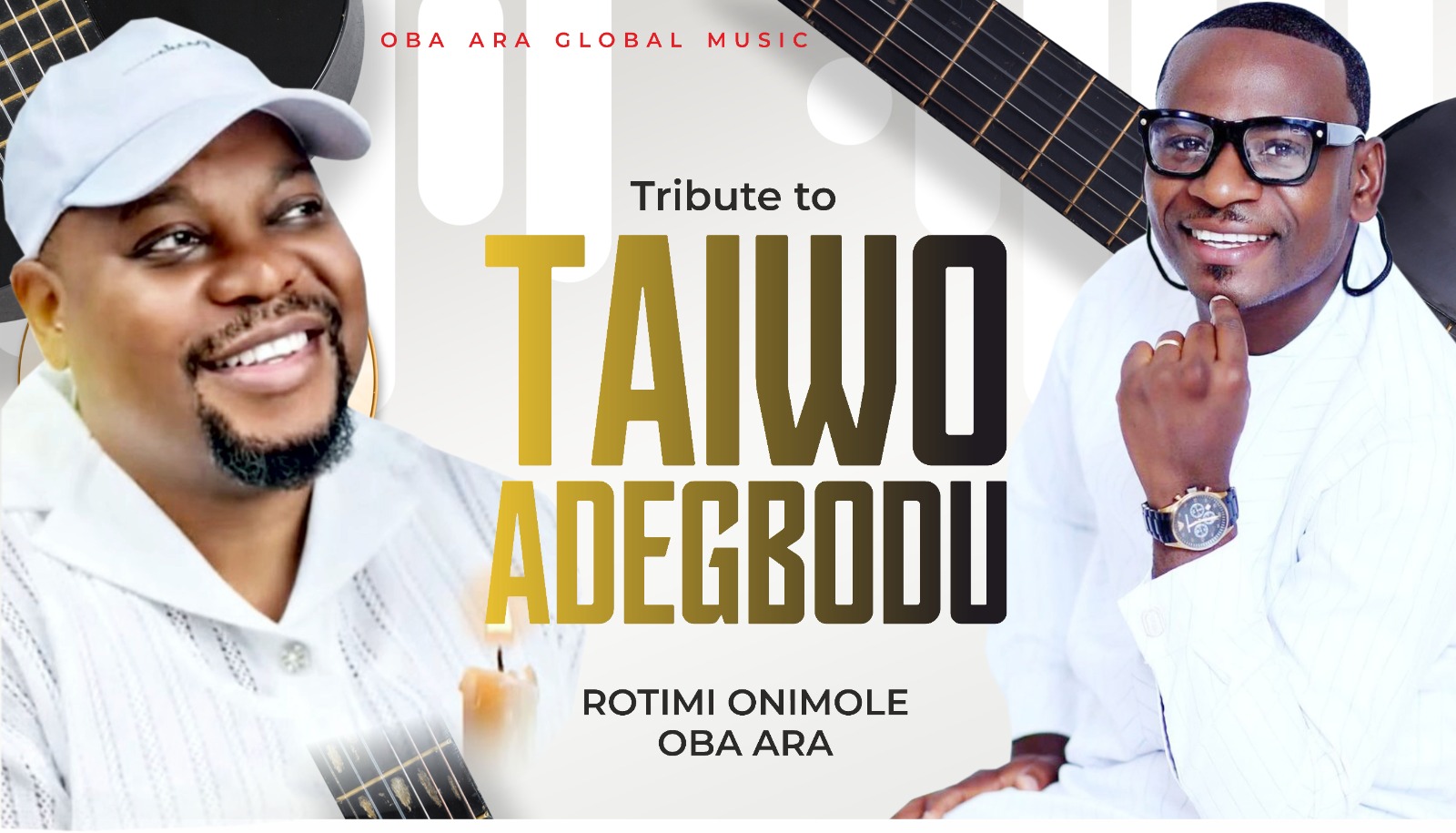
The gospel music community continues to grieve the painful loss of Taiwo Adegbodu, a beloved figure whose sudden departure left a deep void among fans, colleagues, and loved ones. In response to this loss, renowned gospel minister Rotimi Onimole, popularly known as Oba Ara, has released a moving tribute song that captures both the sorrow of the moment and the enduring legacy of the late singer.
Oba Ara, a proud son of Isale Eko, channels raw emotion throughout the song, using heartfelt lyrics and soul-stirring melodies to reflect on his personal connection with Taiwo Adegbodu. In the tribute, he openly expresses how deeply the news of Adegbodu’s passing shook him, describing it as a painful and unexpected loss that is difficult to come to terms with.
The song goes beyond mourning, it celebrates the life, ministry, and impact of Taiwo Adegbodu. Oba Ara highlights the late artist’s dedication to spreading the gospel through music, his inspiring voice, and the spiritual influence he had on many within and beyond Nigeria. Through powerful verses, he paints a picture of a man who lived for God and touched countless lives through his ministry.
Listeners have described the tribute as both comforting and deeply emotional, as it resonates with the collective grief of the gospel music community. It serves as a reminder that although Taiwo Adegbodu is no longer physically present, his music, message, and legacy will continue to live on.
In honoring his late colleague, Oba Ara not only pays his respects but also offers a source of healing for fans and fellow ministers, using music as a tool to process grief and celebrate a life well lived.
celebrity radar - gossips
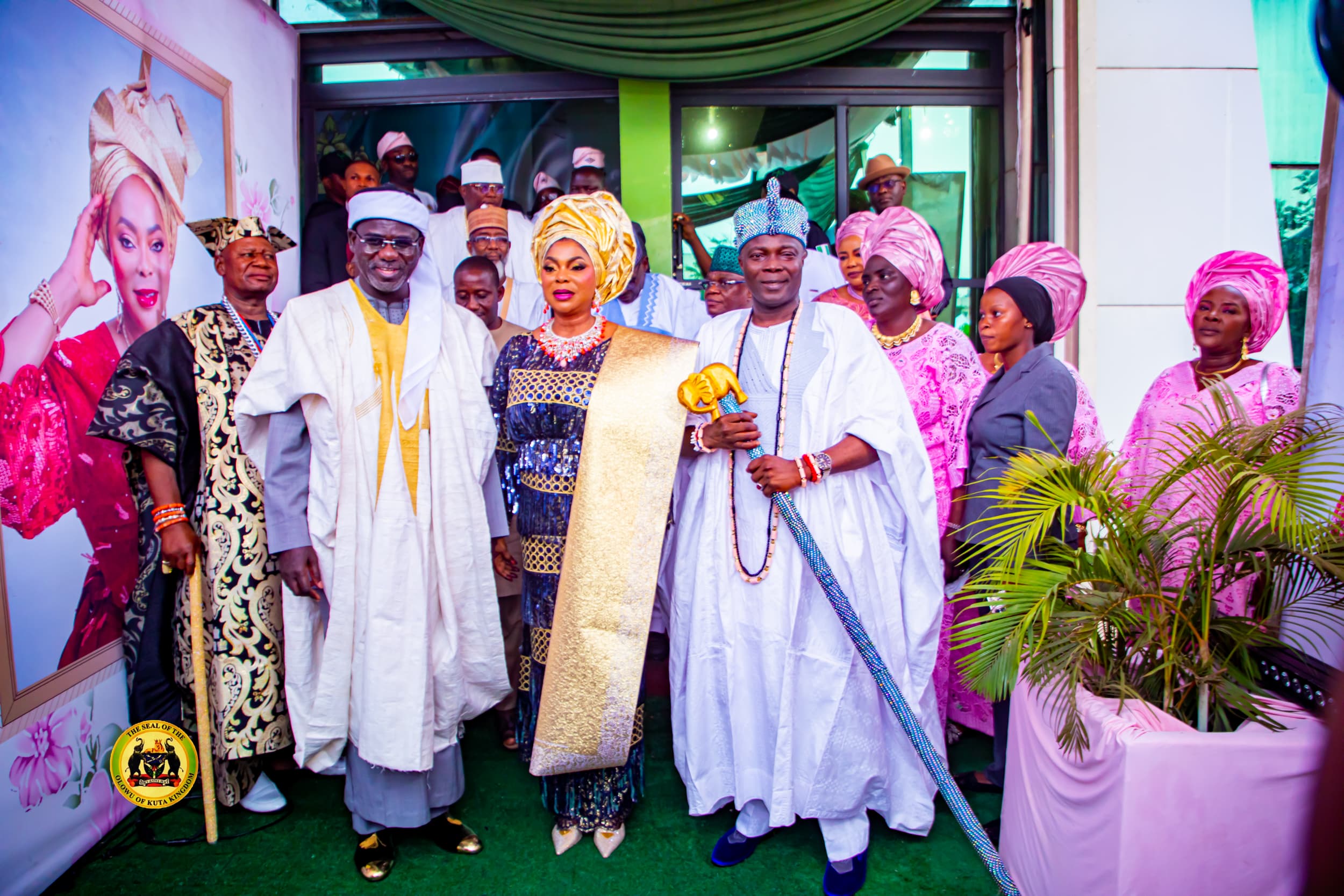
Buratai, Fagbemi , Shagaya, Olofa, Others Eulogise Olowu Kuta’s Olori On 60th Birthday, Foundation Launch
Buratai, Fagbemi , Shagaya, Olofa, Others Eulogise Olowu Kuta’s Olori On 60th Birthday, Foundation Launch
Eminent personalities across the Nigeria stormed the TFK Event Centre, Bala Mohammed Way, Guzape, Abuja, to celebrate the 60th birthday of Olowu Kuta’s Olori, Queen Jumai Amoke and her Foundation Launch on Saturday 28, March 2026.

From former Chief of Army Staff, Lt Gen TY Buratai rtd, to the Minister of Justice and Attorney-General of the Federation, Prince Lateef Fagbemi; Olofa of Offa, HRM Oba Mufutau Gbadamosi. Even top businesswoman and socialite, Chief (Mrs) Bola Shagaya, was in attendance.


Other dignitaries were newly promoted Deputy Inspector-General of Police and former AIG Zone 2 , Lagos , Adegoke Fayoade, Major General Abdumalik, Major General Samuel Adebayo rtd (Fmr CDI);
Major General Anthony Omozoje rtd (Fmr Copp);
Alhaji Tajudeen Owoyemi (Asiwaju of Offa and CEO Radisson Hotel Nigeria;
Dr Waheed Olagunju, former managing director of Bank of Industry, Oniba of Iba, Lagos State, HRM Oba Dr Suleiman Raji ;
Justice Falola, Olu of Ile-Ogbo , Oba Adetoyese amongst many traditional rulers and captains of industry too numerous to mention.
Speaking at the occasion, the Chief Host, Olowu of Kuta, HRM Oba Dr Adekunle Oyelude Makama, CON , Tegbosun iii, who is also the husband of the celebrant commended Queen Jumai for ‘ her slender arms full of kindness’ to establish such humanitarian Foundation, ‘Amoke Children and mother in Need Foundation’ at a time Nigerians are going through economic crisis occassioned by the global meltdown.
Olowu also commended her steadfastness and love for the less privileged and downtrodden.
The monarch refrenced the task before his wife’s humanitarian gesture said her best is yet to come.
” Olori Amoke Jumai, I celebrate you. You will celebrate 70, 80, 90 and continue to shine as you continue to put a smile on people’s faces. I love you, “Olowu Kuta added.
To Lt Gen Buratai, a former army chief and former Nigerian Ambassador to Benin Republic, the reward of hard work is more work.
Buratai, who also doubles as Balogun Agba of Owu Kuta, a chieftaincy title reserved for a generalismo congratulated Queen Jumai for attaining the age of 60 in good health.
The retired army General said he’s not surprised by the turn out of eminent personalities across the country to celebrate the Olowu Kuta’s Olori because she merited it through her hospitality to all, adding that Allah the most merciful, most beneficial would accept all her act of ibadah.
The minister of Justice, Prince Fagbemi, was full of praises for Queen Jumai for deeming it fit to have a place in her heart to accommodate the needy and less privileged in ‘our society.’
Prince Fagbemi urged the guests to contribute generously to support the Foundation in order to continue to alleviate poverty and put a smile on the faces of the people.
” I congratulate you on your 60th birthday and Foundation Launch. I wish you many happy returns of the day and many more fruitful services to the country and motherland”, Prince Fagbemi added.
The celebrant, Queen Jumai who was grining from ear to ear thankfully said she was excited by the turn out and the response of the people to her foundation.
Queen Jumai, however, promised to continue to use her resources and donations received for the good of the needy and less privileged in the society.
” I want to appreciate my own Kabiesi Olofa of Offa , for his presence and im I’m using him as a point of contact to all other Kabiesis present here, the minister of justice and Attorney-General, you’re welcome, sir; Mrs Bola Shagaya, I salute your enterprise, Lt Gen Buratai, I’m grateful, sir; DIG Fayoade, Justice Falola and other dignitaries too numerous to mention, I thank you, all. To my darling husband, Kabiesi Olowu , I thank you immensely for your support. And to my family and friends, I thank you , all. E se pupo!”, she said.


-

 society7 months ago
Religion: Africa’s Oldest Weapon of Enslavement and the Forgotten Truth
-

 news4 months ago
WHO REALLY OWNS MONIEPOINT? The $290 Million Deal That Sold Nigeria’s Top Fintech to Foreign Interests
-

 society6 months ago
“You Are Never Without Help” – Pastor Gebhardt Berndt Inspires Hope Through Empower Church (Video)
-

 celebrity radar - gossips2 months ago
Dr. Chris Okafor Returns with Power and Fire of the Spirit -Mounts Grace Nation Altar with Fresh Anointing and Restoration Grace on February 1, 2026