
society
FALANA vs ZINOX, 12 OTHERS: Again, Attorney General withdraws Fiat from Falana

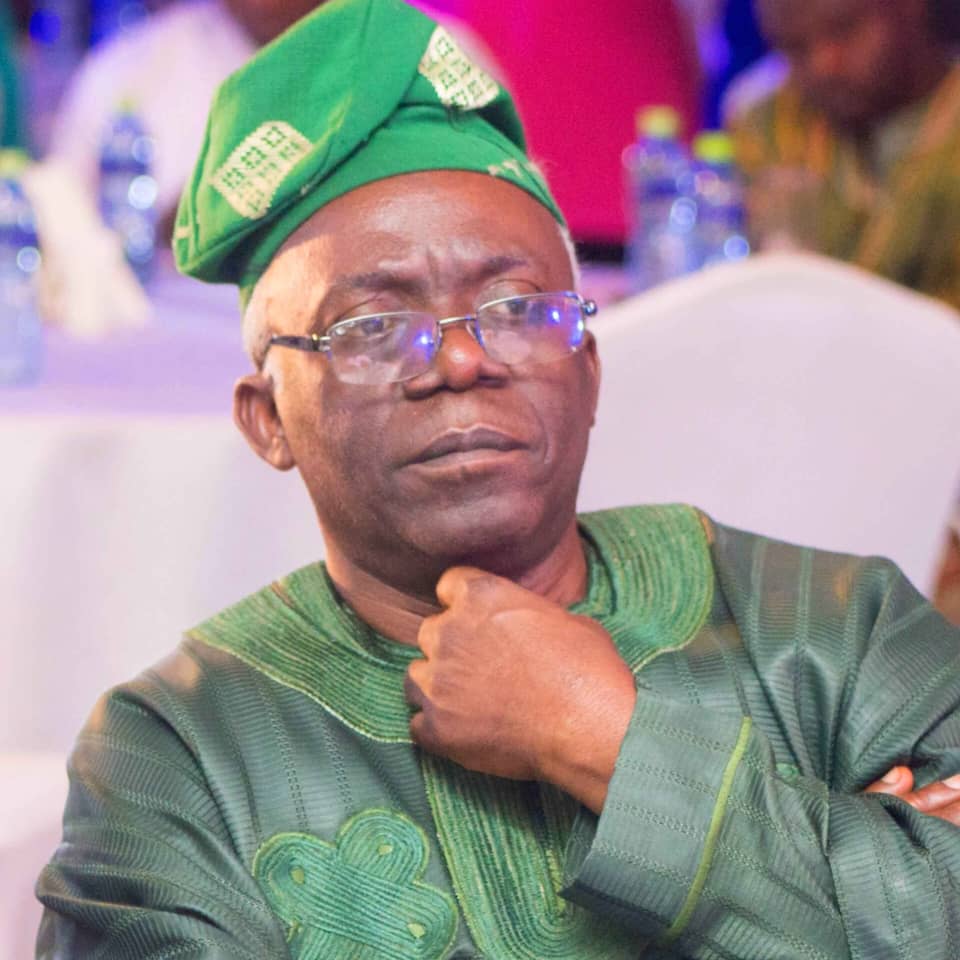
FALANA vs ZINOX, 12 OTHERS: Again, Attorney General withdraws Fiat from Falana
For the second time, the Office of the Attorney General of the Federation (AGF) and Minister of Justice has withdrawn the fiat donated to Femi Falana SAN, purporting to prosecute a case against Mr. Leo Stan Ekeh, Chairman of Zinox Technologies, and 12 others.
The case which has dragged for many years arose from a transaction about 13 years ago between Citadel Oracle Concept Limited, an Ibadan-based computer firm owned by an Enugu state indigene, Mr. Benjamin Joseph, and Technology Distributions Limited over the supply of computers to the Federal Inland Revenue Service (FIRS), a project in which Technology Distributions fully extended credit to Citadel and which has no bearing whatsoever with Zinox and its promoter, Mr. Leo Stan Ekeh.
In the latest development, the current AGF, Mr. Lateef Fagbemi SAN, in a letter dated 2nd May 2025, addressed to The Principal Partner, Falana and Falana Chambers, and signed by Mr. M.B Abubakar, Director, Public Prosecutions of the Federation, directed Falana to withdraw Charge No: FCT/HC/CR/985/2024 (FRN. v. Leo Stan and 12 others), in the interest of justice; signifying that the fiat ought not to have been donated to him in the first place.
The letter titled: Withdrawal of Authorization Under Section 174 of the Constitution of the Federal Republic of Nigeria, 1999 as Amended, reads: “I am directed to write in reference to the above caption and to inform you that the Honourable Attorney General of the Federation and Minister of Justice in exercise of the power conferred upon him by section 174 of the Constitution of the Federal Republic of Nigeria, 1999, as amended and section 106 of the Administration of Criminal Justice Act, 2015, has withdrawn the fiat earlier granted to you dated 20th December 2023 to prosecute the case mentioned below at the expense of the nominal complainant Mr. Joseph Benjamin: FRG V. Chris Eze Ozims and 6 others, Charge No: CR/827/2013.
“You are accordingly, requested to withdraw Charge No; FCT/HC/CR/985/2024 between FRN v. Leo Stan Ekeh and 12 others in the interest of justice.”
The Director, Public Prosecutions of the Federation, conveyed the message of the withdrawal to the chamber of Matthew Burkka & Co., chief counsel to the defendants via a letter dated 6th May, 2025. The letter read inter alia: “You may wish to refer to the above-mentioned subject matter and be informed that the office of the Honourable Attorney General of the Federation is in receipt of your letters dated 24th December, 2024; 27th March 2025 and 10th April 2025 respectively, requesting for the withdrawal of the fiat donated to Messrs. Femi Falana SAN dated 20th December 2023.
“I am to inform you that after a consideration of your request, the facts and circumstances of the case, the Honourable Attorney General of the Federation has withdrawn the fiat donated to Messrs. Femi Falana SAN, dated 20th December 2023 vide a letter dated 2nd May, 2025.”
It would be recalled that the former AGF and Minister of Justice, Mr. Abubakar Malami SAN, had in a letter dated 28 October 2022, withdrawn a similar fiat that was donated to Femi Falana, upon his own application, on the same set of facts and allegations. Based on the withdrawal, the charges filed by Falana, pursuant to the Fiat were struck out by two justices of the FCT High Court, Abuja (Honourable Justice Christopher O. Oba, and Honourable Justice Ade. S. Adepoju)
However, upon the appointment of the current AGF and Minister of Justice, Femi Falana, again applied and got a Fiat with which he filed a new case: Charge No: FCT/HC/CR/985/2024 between FRN.v. Leo Stan and 12 others, still on the same set of facts and allegations. But upon a further review of the file at the Ministry of Justice, the AGF and Minister of Justice came to the conclusion that “in the interest of justice” the Fiat and the Charges filed pursuant to it should be withdrawn.
Recall that this case and its adjunct suits had been dismissed three times by three different courts. The latest dismissal was on 20th March 2025 by Justice Akpan Okon Ebong of the FCT High Court who struck out the case filed by Mr. Femi Falana SAN, against the Chairman of Zinox Technologies, Mr. Leo Stan Ekeh, and 12 others, based on the Fiat (that has now been withdrawn from him.)
The other defendants are Mr. Chris Eze Ozims, Oyebode Folashade, Charles Adigwe, Obilo Onuoha, Agartha Ukoha, Anya O. Anya, Femi Dosumu, Nnenna Kalu, Admas Digital Technologies Limited, Technology Distributions Limited and Zinox Technologies Limited.
The suit No. FCT/HC/CR/985/24 filed in November 2024 by Falana on behalf of his client, Benjamin Joseph, before the Federal High Court in Abuja for the same alleged diversion of N162,247,513.80 being payment for laptop supply contract at FIRS Headquarters was dismissed.
In the certified true copy of the judgment dated March 20, 2025, Justice Ebong ruled as follows: “It is my conclusion based on the foregoing that this charge (No. FCT/HC/CR/985/2024, Federal Republic of Nigeria v Leo Stan Ekeh and 12 ORS) constitutes a gross abuse of court process and is liable to dismissal. I accordingly hereby dismiss it.”
Justice Ebong averred: “One intriguing aspect of this matter is that none of the law enforcement agencies involved in the investigation of the nominal complainant’s (Mr. Joseph) numerous petitions has found merit in any of his allegations against the defendants. When called upon before Senchi J. (Justice Danlami Z. Senchi) to prove his said allegations to the court, he failed to turn up in court. One then wonders on what premise he wants to maintain this campaign of persecution against the defendants.”
Previous judgments on the matter had established that rather than being the culprit, Ekeh and the 12 others were actually the victims of a failed money diversion scheme plotted by Mr. Joseph and Citadel.
The most recent charges filed by Falana on the basis of a fiat from the Attorney General was the third in a row as Mr. Joseph had earlier filed charge no.CR/469/2022, which was struck out by Honorable Justice Christopher O. Oba of the FCT High Court, by an order dated 8th November 2022.
Justice Oba ruled: “Upon hearing the counsel for both the Prosecution and the Defendants in court, the basis for which the law firm of Femi Falana filed the present charge is the authority gotten from the Attorney General of the Federation. The said authority has been withdrawn, there is legally no basis for the present charge before this court. Therefore, this charge is hereby struck out.”
Determined to push through his case, Mr Joseph filed the same charges before Honorable Justice Ade S. Adepoju of the FCT High Court, and the charges were, once again, struck out by the Honorable Court on 19th March 2024, with Honorable Justice Adepoju holding that: “This matter was brought in dead, extinct and should be confined into the dustbin of history…I hold that the instant suit is an abuse of the process of court and it is hereby struck out accordingly.”
It will be recalled that in his petition to the police in 2013, it was discovered by police authorities that Mr. Joseph provided false information to the police, prompting the Inspector General of Police to charge him for false information in charge no.CR/216/16.
In another case filed by the EFCC at his instance against his partner, Princess Kama, in charge no. FCT/HC/CR/244/2018, Honorable Justice Danlami Z. Senchi of the FCT High Court (as he then was), dismissed as false all the allegations made by Benjamin Joseph, and imposed the sum of N20 million as damages against him for false petitioning in relation to these same allegations.





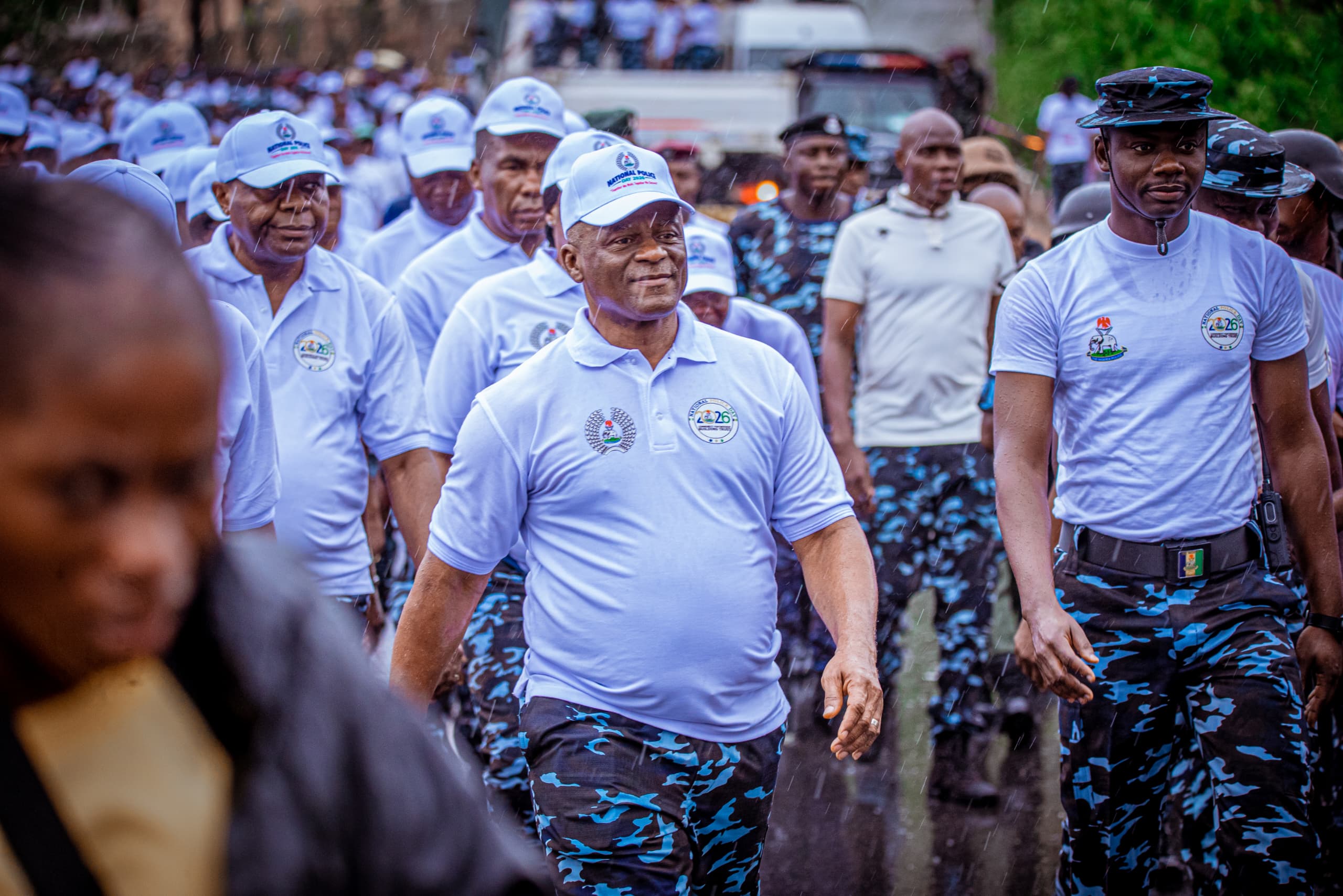
Police Day 2026: IGP Disu Leads Nationwide Walkathon To Strengthen Community Trust
The Inspector-General of Police, Olatunji Disu, on Tuesday led the management team, alongside officers and personnel of the Nigeria Police Force, in a nationwide walkathon to commemorate the 2026 National Police Day.
The event, held across state capitals and the Federal Capital Territory, formed part of activities marking Day Two of the annual celebration, themed “Community Partnership: Building Trust.”
The symbolic exercise, which drew participation from both police personnel and members of the public, was aimed at showcasing unity, discipline, and a renewed commitment to community policing and public safety.
According to the Force leadership, the walkathon underscores the Nigeria Police Force’s resolve to strengthen public trust, deepen engagement with citizens, and enhance collaboration in tackling security challenges across the country.
Participants described the initiative as a practical step toward bridging the gap between law enforcement and the communities they serve, while also promoting physical fitness and mental well-being among officers and civilians alike.
With the theme reflecting a shared responsibility for safety, the Police reiterated that sustainable security can only be achieved through active partnership with the public.
The event concluded with a renewed call for collective action under the banner: “Together We Walk, Together We Secure,” emphasizing unity of purpose in building a safer and more secure society for all Nigerians.


society
Dr. Chris Okafor invokes divine retribution upon individuals blackmailing the Grace Nation church
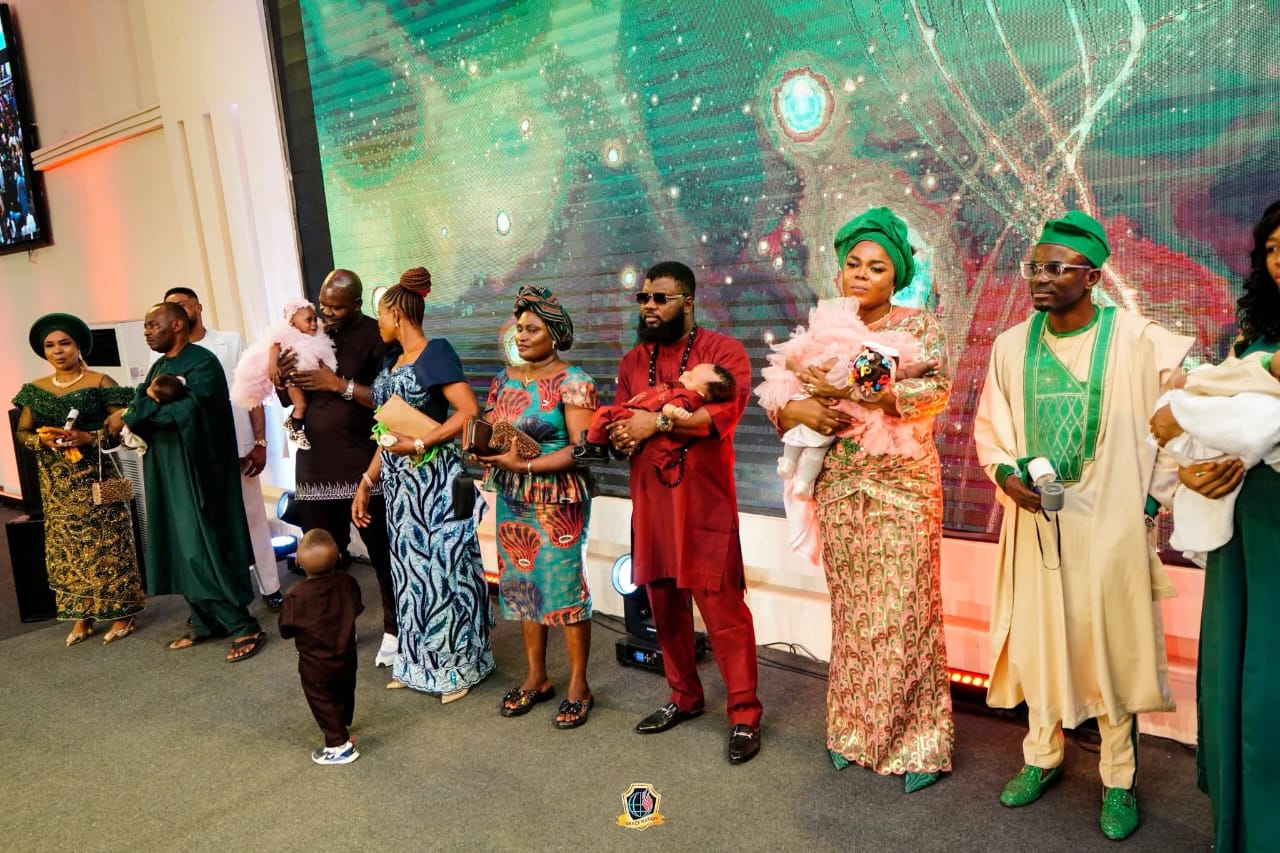
Dr. Chris Okafor invokes divine retribution upon individuals blackmailing the Grace Nation church
… Affirming God’s omnipotence to unveil malicious schemes.
To be frank, the ability of Doris Ogala and her associates to withstand the arduous challenges set by Senior Pastor Dr. Chris Okafor of Grace Nation Global at the culmination of the Harvest of Babies 2026 conference, the church’s flagship event, continues to elude me.
It’s advisable not to offend a powerful spiritual leader like Prophet Chris Okafor to avoid potential consequences, as seen in the situation with Doris Ogala, who was rebuked by the prophet; can she rectify the situation through confession?
Insiders close to the man of God claim that despite relentless online bullying and blackmailing, the Generational Prophet remains resolute, stating that God’s power has been evident throughout the commission’s existence. The reason for this wonderful statement is found in the scriptures, “Upon this rock I shall build my Church, and the gates of hell shall not prevail.” The more falsehoods are spread about the church and its leader, the more God elevates the church and propels him to greater heights, he asserted. He emphasized that blessings and fruitfulness are antidotes to curses, noting that God continues to bestow blessings upon the church, including miracles and the gift of children, which is one reason for the grand finale of the annual family liberation program, The Harvest of Babies.
However, the man of God issued a curse on each person speaking ill of the church, blackmailing, and uttering all sorts of falsehoods against the church, declaring that if they refused to repent within a few days, the earth would swallow them and their family members, stating that they would be of no use to themselves, their families, or society at large.
The spiritual leader cautions his followers to beware of such individuals including Doris Ogala who may taint their faith, and urges them to treat these persons as emissaries of the devil, avoiding them altogether.
Recall that the 2026 harvest of babies concluded with a remarkable birth of a miracle baby boy to a woman on the third day of the conference, accompanied by the dedication of several other miracle babies, all to the glory of God.
Christopher Sunday David writes from
Austria
“Together We Walk, Together We Secure”: Police Launch 2026 Walkathon In Abuja
The Nigeria Police Force has announced plans to host a walkathon in commemoration of the 2026 National Police Day, aimed at promoting unity, peace, and stronger community partnership.
The event is scheduled to take place on Tuesday, March 31, 2026, with participants expected to converge at the Force Headquarters Abuja by 6:00 a.m., where the walk will commence.
According to the organisers, the walkathon is designed to bring together members of the public, stakeholders, and security personnel in a show of solidarity and shared commitment to national security.
With the theme, “Together we walk, together we secure,” the initiative underscores the importance of collaboration between the police and citizens in maintaining peace and safety across the country.
Members of the public have been encouraged to participate in the exercise, which forms part of activities lined up to mark this year’s National Police Day celebration.
It is believed that the walkathon would not only foster closer ties between the police and the communities but also serve as a platform to promote awareness on collective responsibility in ensuring a safer society.


-

 society6 months ago
Religion: Africa’s Oldest Weapon of Enslavement and the Forgotten Truth
-

 news4 months ago
WHO REALLY OWNS MONIEPOINT? The $290 Million Deal That Sold Nigeria’s Top Fintech to Foreign Interests
-

 society6 months ago
“You Are Never Without Help” – Pastor Gebhardt Berndt Inspires Hope Through Empower Church (Video)
-

 celebrity radar - gossips2 months ago
Dr. Chris Okafor Returns with Power and Fire of the Spirit -Mounts Grace Nation Altar with Fresh Anointing and Restoration Grace on February 1, 2026