Connect with us

society

Fashola’s eureka moment at Lekki tollgate By Tunde Odesola

Published

on

STEALING PUBLIC TRUST . Premium Times’ Low Premium Reporting
Fashola’s eureka moment at Lekki tollgate By Tunde Odesola
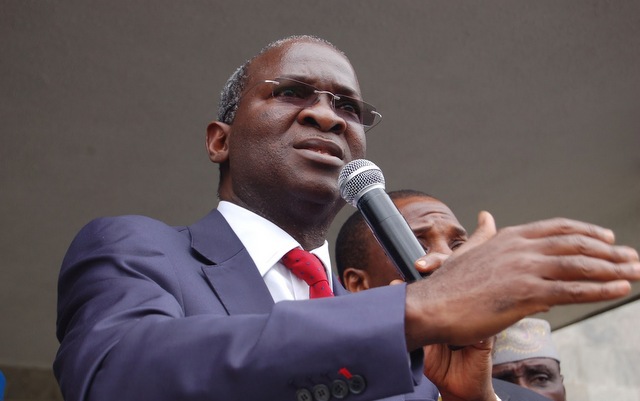
Donkey’s years ago, before greed overtook leadership and snatched the reins of governance, Lagos was a free society without a tollgate.
Fashola’s eureka moment at Lekki tollgate By Tunde Odesola
Doubtlessly, the tollgate was a taboo in Lagos ages ago. This was in the days when history took culture under its wings together with language and tradition, forming a formidable foursome.
Fashola’s eureka moment at Lekki tollgate By Tunde Odesola
This was before government calamitously embarked on the journey to remove history from school curricula, deify foreign cultures, denigrate Nigerian languages and scorn tradition.
Fashola’s eureka moment at Lekki tollgate By Tunde Odesola
Nowadays, the four-pronged society preservers – history, culture, language and tradition – have been rendered as gaping as the four missing incisors in a mouth sentenced to pronouncing, “Surely, every thief stealing seashells by the Lagos seashore shall die by the sword at Tinubu Square.”
Fashola’s eureka moment at Lekki tollgate By Tunde Odesola
This pronunciation task is an impossibility for anyone without the incisors because the  incisors, what the Yoruba call ‘eyin faari’, are needed to pronounce dental sounds.
If you know Lagos very well, you will know its history, culture,  language and tradition. You will know the Eyo. If you know the Eyo, you should know the opambata, the aro and the agbada.
The opambata is the long, fearsome stalk of the palm tree wielded by the Eyo masquerader. The agbada is the white, overflowing regalia and the aro are the panegyrics of the Eyo.
Born at the Lagos Island Maternity Hospital and raised in Mushin, I memorised the ‘omo alagbada tolonga, tolonga’ Eyo panegyrics, a must-know chant among fellow youngsters back in the day.
That was a season when Lagos was sane, bold and unconquered. It was a time when Lagosians boastfully chanted the Eyo praisesong, recalling how their forebears’, in these tuneful lines, vowed never to pay toll at the boundary: “Eyo baba n’tawa, to nfi goolu se’re, awa o ni sanwo onibode, o di’le.”
But Lagosians now pay toll, to and fro, at the Lekki profit gate everyday. Even the Lagos State Governor, Babajide Sanwo-Olu, a true Lagosian, can’t mobilise fellow Lagosians not to pay at the Lekki bondage, sorry, boundary gate. Iyen ma lewu. Odikwa risky. Baba-Baba mustn’t hear that.
I understand the encumbrances of serving and past Lagos governors. I know how gingerly former Lagos governor and incumbent Minister of Works and Housing, Babatunde Fashola, carries the burden of loyalty. But millions of Nigerians don’t. I’ll jog their memory.
When asked at a senate ministerial screening in 2015 about his view on loyalty, Fashola responded, “The concept of loyalty is a strange one. The real answer is that may our loyalties never be tested. I always pray that may my loyalty never be tested.”
He went ahead to narrate the story of two daughters who were unwilling to donate a kidney to their sick mom after the Lagos State government promised to send their mom abroad for transplant, stressing that he never wished his loyalty to be tested because no one knows the cost.
Fashola, at the intense screening, insisted that he had never been disloyal to any cause he has ever ‘signed on to’, stressing that, ‘no one can accuse me fairly of giving my word and going back on it’.
Fashola is fervently loyal, I know. He’s an unfrivolous Lagos poster boy who minds his business, plays his table tennis and smokes his cigarettes.
Fashola was loyal to his godfather, Asiwaju Bola Tinubu, first – as chief of staff and later as first term governor. During his second term as governor, his loyalty was seriously tested, and Fashola doesn’t like his loyalty to be tested.
Several days after Nigerian soldiers murdered many youth protesters at the Lekki tollgate plaza last month, Fashola visited the scene after it had been washed clean of innocent blood.
As he stepped out of his vehicle and made a solitary and determinable peregrination at the scene of the public execution, Fashola’s loyalty was on trial. But remember, he had warned that he doesn’t like his loyalty to be tested.
Fashola wore brown plain clothes underscoring the prevailing sombre mood. The plain clothes were also a foretaste of the breakthrough about to happen. He folded his hands behind his back like a wise man while his roving eyes scanned the drainage, road and tollgate pillars.
Like a prophet who takes the cue when his hour has come, Fashola looked up at the tollgate beacon and continued on his solitary mission…then his eureka moment unraveled in broad daylight when he suddenly discovered the crime-scene camcorder!
As he fetched a handy piece of cloth from inside his plain clothes, headlines for the next day’s newspapers probably flirted around his mind, “#ENDSARS: Fashola unearths secret camera,” “Fashola discovers breakthrough lead at Lekki,” “Detective Fashola!”
Brilliant people are gifted with anticipatory thinking. It’s possible that Fashola envisioned himself being swarmed by reporters after his earthquaking finding, falling over themselves in the bid to ask questions while he basked in smiles of triumphal accomplishment.
But killjoy Nigerians felt Fashola was acting a comedy. They weren’t grateful that Fashola didn’t act like the Greek polymath and inventor, Archimedes, who reportedly ran home naked from a public bath, shouting eureka! upon discovering an insight into volumetric displacement.
Shame on fault-finding Nigerians! They descended on Fashola and smeared his reputation on social media. If Nigerians accuse Fashola of owing his allegiance to the President, Major General Muhammadu Buhari (retd.), rather than to the Federal Republic of Nigeria, I’m sure they won’t be mistaken as to where the allegiance of the members of the Lagos State House of Assembly lies.
Perpetually in the news for wrong reasons such as staggering corruption allegations, the Lagos legislature is tethered to Tinubu, to whom members of the House publicly pledge their allegiance, always.
By now, former Nollywood actor-turned-lawmaker in Lagos, Desmond Elliot, must’ve seen how his foreign surname has been turned into a rhyme scheme of unprintable adjectives signifying stupidity.
Employing dishonest reasoning, Elliot drew the ire of Nigerians when he called the Lekki protesters ‘children’, warning the Speaker, Mudashiru Obasa, about the need for an urgent clampdown on Nigerians using social media users to demand better governance.
Elliot wasn’t outraged about the merciless killings of innocent youths by Nigerian soldiers at the Lekki tollgate, but was scandalised that protesters, in reaction to the killings, could storm the palace of the Oba of Lagos, Rilwan Akiolu, and seize the fleeing king’s staff of office.
Because Elliot must please the gods, he boomed, “When I went through the comments I could not believe it (sic); the curses, the abuses from children, and I asked myself, ‘Is this Nigeria? What is going on?’ Culture is gone!.., Mr Speaker, in the next five years, there will be no Nigeria if we don’t start now!
Start what kwanu? Start a fresh orgy of killings? Elliot’s statement was one of the most horrendous vituperations against the memory of those who lost their lives in the Lekki peaceful protest. The way he feigned annoyance and laboured to string passable sentences in the weirdest accent was dishonorable.
Without living in the Tabon-Tabon area of Agege, the phonetics-speaking Elliot even fired a couple of Chief Zebrudaya bullets, among others. Hear him, “The youth is (sic) not only those who do the peaceful protest!”
Reacting to the fallout of the state-induced riots that greeted the Lekki killings, a colleague of Elliot in the legislature, Mojisola Alli-Macaulay, said most Nigerian youths are on drugs, most of the time. What!?
Alli-Macaulay is a member of the current ninth Assembly that pardoned former Lagos Deputy governor, Femi Pedro, and restored all his outrageous privileges to him while Pedro’s predecessor, Kofoworola Akerele-Bucknor, who committed no offence as Pedro never got her privileges restored.
Shamefully, Alli-Macaulay is a member of a House whose Speaker has a yoke of corruption allegation hanging at his neck.
Which one is it better to be, a drug addict or a chained Assembly?
Facebook: @tunde odesola
Twitter: @tunde_odesola

society

NOVO Announces Spring 2026 Launch: The World’s First Diamond-Backed Digital Currency and Wealth Platform Devoted to Feeding Africa

Published

on


NOVO Announces Spring 2026 Launch: The World’s First Diamond-Backed Digital Currency and Wealth Platform Devoted to Feeding Africa


February 2026 — NOVO, an emerging global leader in diamond manufacturing, crypto‑banking, and ethical wealth management, today announced the upcoming Spring 2026 launch of NOVO Coin, the world’s first digital currency fully backed by certified, lab‑grown, cut, and polished diamonds stored in secure vaults in Singapore and Switzerland.

Designed for stability, transparency, and humanitarian impact, NOVO represents a new class of asset‑backed digital currency engineered to serve both global markets and vulnerable economies facing inflation, currency instability, and limited access to banking.

A Currency With a Mission: Feeding a Continent.

In a groundbreaking commitment, NOVO has pledged 50% of all corporate profits to support nonprofit micro‑finance organizations across Africa that specialize in food production, farming, fishing, and sustainable agriculture.

This initiative aims to:

Expand access to affordable capital for small and mid‑scale food producers

Strengthen local food systems and reduce dependency on imports

Dramatically lower grocery prices across African markets

Build long‑term economic resilience for millions of families

NOVO’s leadership believes that empowering Africa’s farmers and food‑producing cooperatives is the fastest path to stabilizing regional economies — and ultimately driving down global food prices.

Diamond‑Backed Stability for a Volatile World
Unlike speculative tokens or inflation‑prone fiat currencies, every NOVO Coin is backed by real, verifiable diamond reserves, manufactured through advanced laboratory processes and held in audited international vaults.

This structure provides:

Intrinsic value tied to a globally recognized commodity

Transparency through third‑party reserve verification

Security via geographically diversified vaults

Long‑term price stability for users and institutional partners

NOVO’s diamond‑reserve system is designed to offer a safe, durable alternative for nations and communities seeking protection from currency devaluation.

A Full‑Spectrum Financial Ecosystem
Beyond the currency itself, NOVO is launching a vertically integrated platform that includes:

Diamond manufacturing and certification

Crypto‑banking and digital asset management

Wealth management and life‑insurance services

Humanitarian micro‑finance distribution channels

This unified ecosystem positions NOVO as one of the first fintech institutions to combine commodity‑backed digital currency with large‑scale social impact.

A New Era of Ethical Finance
“NOVO was built on a simple belief: a currency should serve the people who use it,” said the organization’s founder. “By backing NOVO with diamonds and dedicating half of our profits to African food producers, we are proving that financial innovation and humanitarian responsibility can — and must — coexist.”

Spring 2026: A Global Debut
NOVO Coin will be available to the public in Spring 2026, with early institutional partnerships already underway across Africa, Asia, and the Caribbean.

For more information. Here is the organizations website TOPOFTHEPYRAMID.org

Continue Reading

society

Tinubu Mourns Rear Admiral Musa Katagum: A National Loss for Nigeria’s Military Leadership

Published

on

Tinubu Mourns Rear Admiral Musa Katagum: A National Loss for Nigeria’s Military Leadership

By George Omagbemi Sylvester | Published by SaharaWeeklyNG 


“President Tinubu Pays Tribute as Nigeria’s Naval Command Mourns the Sudden Loss of a Strategic Maritime Leader at a Critical Security Juncture.”


Abuja, Nigeria – President Bola Ahmed Tinubu has officially mourned the death of Rear Admiral Musa Bello Katagum, the Chief of Naval Operations of the Nigerian Navy, who died on February 19, 2026, after a protracted illness while receiving treatment abroad. His passing has sent ripples through Nigeria’s defence establishment and national security architecture, marking the loss of one of the most experienced and respected maritime commanders in recent memory.


In a statement released on February 20, 2026 by his Special Adviser on Information and Strategy, Bayo Onanuga, President Tinubu described Rear Admiral Katagum’s death as a “significant blow to the military and the nation,” noting the late officer’s vast experience and “invaluable contributions” to both the Nigerian Navy and the broader “Armed Forces of Nigeria”. The President extended heartfelt condolences to the bereaved family, naval personnel and the nation at large, while praying for solace and strength for colleagues and loved ones.


Rear Admiral Katagum’s career was marked by distinguished service in several strategic capacities. Before his appointment as Chief of Naval Operations in November 2025, he served as Director of the Presidential Communication, Command and Control Centre (PC4) and Chief of Intelligence of the Nigerian Navy-roles that placed him at the nexus of naval operational planning and intelligence gathering. His leadership was widely credited with enhancing the Navy’s capacity to respond to growing maritime threats in the Gulf of Guinea, including piracy, illegal bunkering, and transnational crime.


Security policy experts emphasise that Katagum’s loss comes at a critical juncture for Nigeria. Dr. Adebola Akinpelu, a defence analyst at the Institute for Security Studies, observes that “Nigeria’s maritime domain remains a frontline in the broader security challenges facing the nation; the loss of an adept operational leader like Rear Admiral Katagum is not just a personnel change but a strategic setback.” His insight reflects broader concerns about continuity in military leadership amid intensifying threats.


The Nigerian Navy’s own statement, confirmed by the Directorate of Naval Information, affirmed that Katagum’s “exemplary leadership, strategic insight, and unwavering loyalty” were central to boosting operational readiness and national defence. According to Captain Abiodun Folorunsho, the Director of Naval Information, “His legacy remains a source of inspiration across the services.”


As Nigeria grapples with complex security landscapes at its land and maritime frontiers, the death of Rear Admiral Katagum underscores a broader national imperative: strengthening institutional capacities while honouring the service and sacrifice of those who defend the nation’s sovereignty. In the words of military scholar Professor James Okoye, “Leadership in security institutions is not easily replaceable; it is built through experience, trust and strategic clarity; qualities that Katagum embodied.”


Rear Admiral Musa Katagum has since been laid to rest in accordance with Islamic rites, leaving behind a legacy that will inform Nigerian naval operations for years to come.

Continue Reading

society

Viral “Chat With God” Claim Targeting Kenyan Prophet David Owuor Proven False

Published

on

Viral “Chat With God” Claim Targeting Kenyan Prophet David Owuor Proven False By George Omagbemi Sylvester

Viral “Chat With God” Claim Targeting Kenyan Prophet David Owuor Proven False

By George Omagbemi Sylvester, SaharaWeeklyNG


“Viral screenshot sparks national controversy as the Ministry of Repentance and Holiness dismisses fabricated “divine” WhatsApp exchange, raising urgent questions about faith, digital misinformation, and religious accountability in Kenya.”

A sensational social media claim that Kenyan evangelist Prophet Dr. David Owuor displayed a WhatsApp conversation between himself and God has been definitively debunked as misinformation, sparking national debate over digital misinformation, religious authority and faith-based claims in Kenya.

On February 18–19, 2026, an image purporting to show a WhatsApp exchange between a deity and Prophet Owuor circulated widely on Twitter, Facebook, WhatsApp groups and TikTok. The screenshot, allegedly shared during one of his sermons, was interpreted by many as illustrating unprecedented direct communication with the divine delivered through a mainstream messaging platform; a claim that, if true, would have broken new ground in how religious revelation is understood in contemporary society.

However, this narrative quickly unraveled. Owuor’s Ministry of Repentance and Holiness issued an unequivocal public statement calling the image “fabricated, baseless and malicious,” emphasizing that he has never communicated with God through WhatsApp and has not displayed any such digital conversation to congregants. The ministry urged the public and believers to disregard and stop sharing the image.

Independent analysis of the screenshot further undermined its credibility: timestamps in the image were internally inconsistent and the so-called exchange contained chronological impossibilities; clear indicators of digital fabrication rather than an authentic conversation.

This hoax coincides with rising scrutiny of Owuor’s ministry. Earlier in February 2026, national broadcaster TV47 aired an investigative report titled “Divine or Deceptive”, which examined alleged “miracle healing” claims associated with Owuor’s crusades, including assertions of curing HIV and other chronic illnesses. Portions of that investigation suggested some medical documentation linked to followers’ health outcomes were fraudulent or misleading, intensifying debate over the intersection of faith and public health.

Credible faith leaders have weighed in on the broader context. Elias Otieno, chairperson of the National Council of Churches of Kenya (NCCK), recently urged that “no religious leader should replace God or undermine medicine,” affirming a widely accepted Christian understanding that divine healing does not supplant established medical practice. He warned against unverified miracle claims that may endanger lives if believers forego medical treatment.

Renowned communications scholar Professor Pippa Norris has noted that in digital societies, “religious authority is increasingly contested in the public sphere,” and misinformation (intentional or accidental) can quickly erode trust in both religious and secular institutions. Such dynamics underscore the importance of rigorous fact-checking and responsible communication, especially when claims intersect profoundly with personal belief and public well-being.

In sum, the viral WhatsApp chat narrative was not a revelation from the divine but a striking example of how misinformation can exploit reverence for religious figures. Owuor’s swift repudiation of the false claim and broader commentary from established church bodies, underline the ongoing challenge of balancing deeply personal faith experiences with the evidence-based scrutiny necessary in a digitally connected world.


Viral “Chat With God” Claim Targeting Kenyan Prophet David Owuor Proven False
By George Omagbemi Sylvester

Continue Reading

Cover Of The Week

Trending