
society
Fault Lines in the Temple of Justice: What the Nestoil–Neconde Order Reveals About the Limits of Judicial Discretion


–Controversial Ex Parte Order Rekindles Questions Around Courtroom Impunity
…And How a Fake $5m Bribery Allegation Tried — But Failed — to Tarnish a Chief Judge
The gavel can be an instrument of justice or a hammer of ruin. In Nigeria’s turbulent judicial arena, few recent episodes have ignited as much scrutiny as the ex parte order issued by Justice Isaac Deinde Dipeolu of the Federal High Court, Lagos, in the complex dispute involving Nestoil, Neconde, and a tangled matrix of loan collateral.
What began as a routine commercial disagreement has now evolved into a national conversation on judicial discretion, institutional integrity, and the simmering anxiety around the impartiality of Nigeria’s courts.
Through layers of filings, rebuttals, and political noise, one fact stands out: the court order was so sweeping in scope and so startling in reach that it reopened long-quiet questions about the judge who issued it—questions far larger than the courtroom where they resurfaced.
A Judge Under a Long Shadow
Justice Dipeolu is neither obscure nor new to controversy. Over the years, his name has appeared repeatedly in conversations about unorthodox rulings and contested interpretations of the law. Civil society groups and legal commentators frequently describe his decisions as those that attract unusual appellate scrutiny.
Those concerns resurfaced two years ago when he was compelled to withdraw from the high-profile forfeiture case involving former Central Bank Governor Godwin Emefiele. Rumours—never proven—of financial inducement swirled, and his abrupt exit left a residue of public doubt. Since then, subsequent rulings have been viewed through a harsher lens.
Another storm erupted after his October 25, 2025 order directing Lotus Bank to seize the assets of Unpacked Limited, a firm linked to Feyikemi Abiodun and guaranteed by Oluwafemi Badewole. Analysts criticised the order for technical inaccuracies and procedural lapses. To critics, these episodes formed a pattern: a judge whose discretionary decisions often appeared fluid, unpredictable, and legally fragile.
The Nestoil Order — A Legal Earthquake
The latest controversy centres on Nestoil, a major Nigerian energy conglomerate; Neconde Energy, operator of key OML 42 assets; and a consortium of lenders seeking to enforce loan security rights.
Nestoil had borrowed from several banks, pledging a range of assets as collateral. First Trustees, the security trustee, appointed Senior Advocate of Nigeria Abubakar Sulu-Gambari as receiver/manager after an alleged default—a standard commercial process.
Trouble began when the lenders attempted to expand the collateral pool to include Neconde’s OML 42 interest. But Neconde’s stake in OML 42 was already pledged to a different set of lenders whose consent was required for any second-ranking charge. They refused, making the creation of such a charge legally impossible.
Yet when the matter reached Justice Dipeolu on an ex parte basis, he granted an order allowing Nestoil’s receiver/manager to take over not only Nestoil’s assets, but also Neconde’s office, assets, and OML 42 interest—property over which the Nestoil lenders held no security rights.
Order 5 was the flashpoint:
It authorised the takeover of Neconde’s Victoria Island office, its assets within the court’s jurisdiction, and its OML 42 joint-venture interest—all pending the hearing of a motion on notice.
To commercial lawyers, it was an earthquake masked as routine procedure. The order effectively displaced Neconde’s own lenders, granting control to creditors who held no charge over its assets. It violated the first rule of secured credit:
Collateral follows the creditor who holds the charge—not the one who desires it.
Within days, four of Neconde’s actual lenders applied to be joined in the suit, seeking to dismantle what they described as a legally unsustainable order. Their intervention signalled just how destabilising the ruling was for Nigeria’s commercial environment.
The Question of Judicial Discretion
Ex parte orders are extraordinary tools, granted only in emergencies to prevent irreparable harm. But analysts argue that the Nestoil scenario did not remotely meet this threshold. No evidence suggested that Neconde’s OML 42 interest was in danger of being dissipated. The dispute centred on the validity of collateral—not on an imminent threat.
To critics, Justice Dipeolu’s decision was not merely an overreach; it was an affront to judicial restraint.
When a False Bribery Rumour Enters the Arena
As the controversy intensified, an online rumour emerged claiming that the Chief Judge of the Federal High Court, Justice John Tsoho, had received a $5 million bribe to direct Justice Dipeolu to step aside from the Nestoil case.
The allegation quickly collapsed under scrutiny. Legal experts clarified that the Chief Judge’s directive was a routine administrative step triggered by a petition filed by the Nestoil Group to the National Judicial Council. Standard judicial procedure requires a judge to recuse himself when such petitions are lodged.
Thus, what was portrayed as corruption was simply the judiciary following its internal rules. Observers believe the false bribery narrative was an attempt to distract from the substance of the controversy or shield Justice Dipeolu from scrutiny.
A Judiciary at a Critical Crossroads
Nigeria’s judiciary is already burdened with public distrust—accusations of corruption, inconsistent rulings, and political interference. Cases like Nestoil–Neconde become more than legal disputes; they become symbols of a system wrestling with its own credibility.
When ex parte orders are issued without urgency, when collateral hierarchies are ignored, when judges hesitate to step aside after petitions are filed, the judiciary’s legitimacy shakes.
Yet the system also shows signs of resilience:
Neconde’s lenders challenged the order.
The NJC became involved.
The Chief Judge exercised administrative oversight.
Safeguards exist—the question is whether they are applied consistently.
What Comes Next
Applications to set aside the ex parte order await determination. The NJC petition is still under review. Nestoil lenders, Neconde lenders, and multiple stakeholders continue to press their cases in what has become one of the year’s most closely watched commercial disputes.
But the larger conversation remains:
What are the limits of judicial discretion, and how do we safeguard the integrity of the courts?
Justice Dipeolu’s critics argue that his rulings reflect a troubling disregard for judicial responsibility. His defenders say he merely exercised discretion within the law. But in the Nestoil matter, the facts and the law appear aligned in ways that make the controversy difficult to dismiss as mere difference of legal opinion.
For now, the case stands as a mirror—revealing both the strengths and the fault lines in Nigeria’s temple of justice.





COAS Launches Nationwide Security Renewal Mission in Plateau
The Chief of Army Staff, Lieutenant General Waidi Shaibu, on Thursday led a high-level delegation of security chiefs to Plateau State, flagging off a nationwide security renewal mission aimed at strengthening civil-military cooperation and restoring lasting peace across the country.
The visit to Jos, the Plateau State capital, marks the first phase of a coordinated national effort to address persistent security challenges through joint operations, community engagement, and proactive intelligence gathering.

Governor Caleb Muftwang received the delegation, describing the initiative as a critical step toward stabilizing affected communities and reinforcing public confidence in security institutions.
Civil-Military Synergy Takes Centre Stage
At the heart of the mission is a renewed emphasis on collaboration between the military, civil authorities, and local communities. Speaking during the visit, Lt. Gen. Shaibu stressed that national security must be treated as a collective responsibility.
He urged citizens to support security agencies by remaining vigilant, sharing credible information, and complying with lawful directives, noting that effective security cannot be achieved in isolation.
Community Engagement as Confidence-Building Tool
In a departure from purely operational engagements, the Army Chief held direct consultations with community leaders and residents in Jos, reinforcing the importance of trust and dialogue in conflict resolution.
Lawmakers, including Dachung Bagos and Ladi Dangyok, commended the initiative, stating that visible engagement by top military leadership helps rebuild confidence among citizens and fosters cooperation.

Proactive Security Operations Underway
Operational updates were provided by Major General Folusho Oyinlola, who disclosed that troops under Operation Enduring Peace have intensified surveillance, intelligence-led patrols, and coordinated actions with other security agencies.
According to the Army, the approach is designed to prevent escalation of threats, safeguard lives and property, and stabilize vulnerable communities before crises emerge.
A Shift Toward Sustainable Peace
Military authorities emphasized that the Plateau visit is part of a broader, long-term strategy to transition from reactive responses to sustainable peacebuilding nationwide. The framework includes strengthening local resilience, ensuring justice, and maintaining continuous engagement with stakeholders.
Analysts view the initiative as a significant policy shift, reflecting a more inclusive security architecture that integrates community participation with military operations.
Call for National Unity
The Army leadership concluded with an appeal to Nigerians to reject divisive narratives and support ongoing efforts to promote unity and peace.
“The success of this mission depends not only on the armed forces but on the cooperation of every citizen,” the COAS stated.
The nationwide security renewal campaign is expected to extend to other regions in the coming weeks as authorities seek to consolidate gains and build a safer, more unified Nigeria.


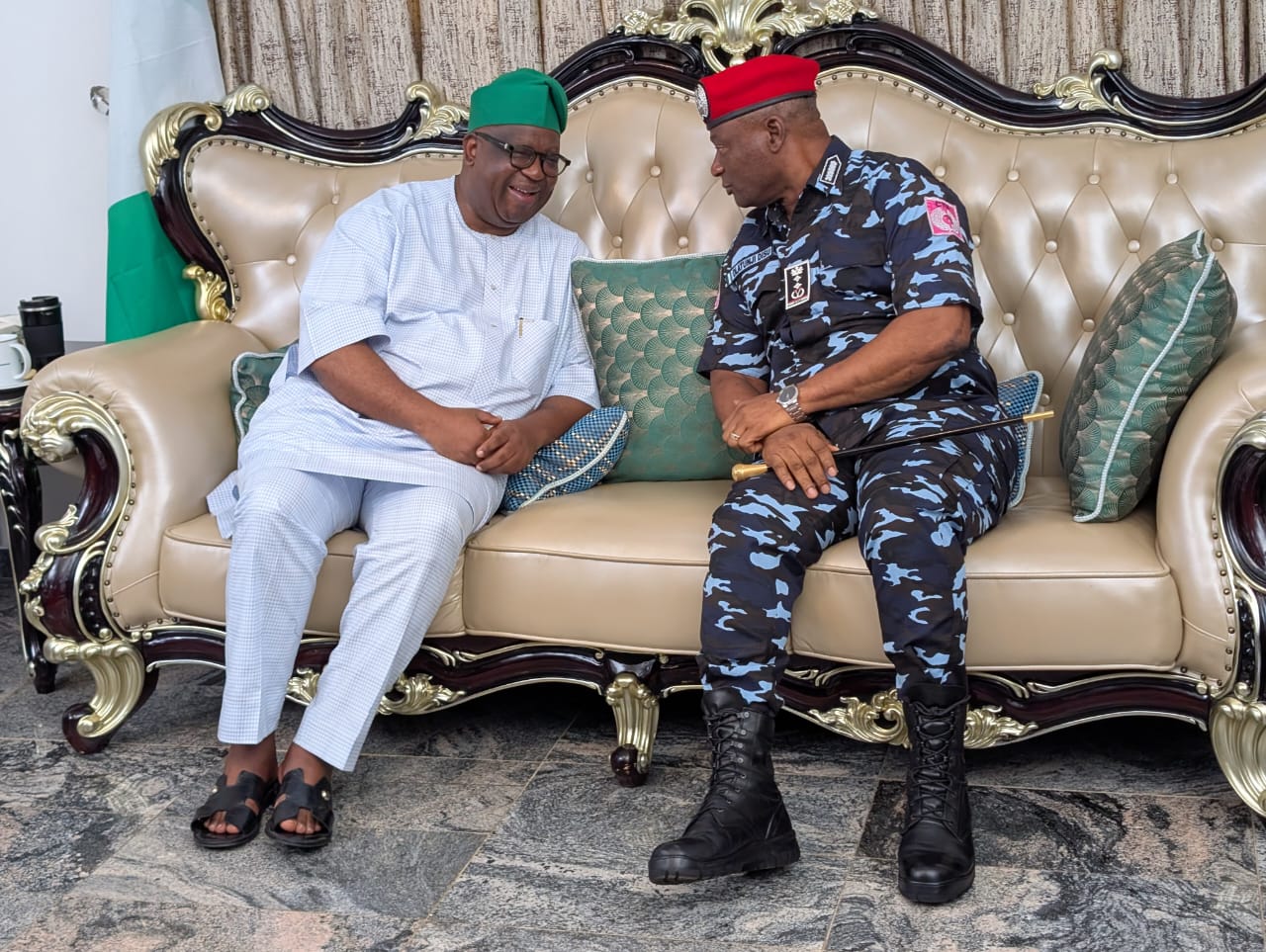
IGP Disu Visits Plateau, Orders Tactical Deployment To Reinforce Security
The Inspector General of Police, Olatunji Disu, on Thursday paid a working visit to Plateau State following recent unrest, holding strategic talks with Governor Caleb Muftwang on measures to strengthen security and prevent further disturbances.
As part of immediate steps to stabilise the situation, the police chief authorised the deployment of specialised tactical units to support officers already on ground across affected areas.
Governor Muftwang commended the swift intervention of the police leadership, praising the dedication and professionalism of security personnel working to restore calm. He also acknowledged the efforts of mobile police officers and lauded the leadership of the state’s Commissioner of Police, Bassey Ewah.
Both the Nigeria Police Force and the Plateau State Government reaffirmed their commitment to safeguarding lives and property, stressing that enhanced collaboration remains key to restoring lasting peace in Plateau State, popularly known as the Home of Peace and Tourism.


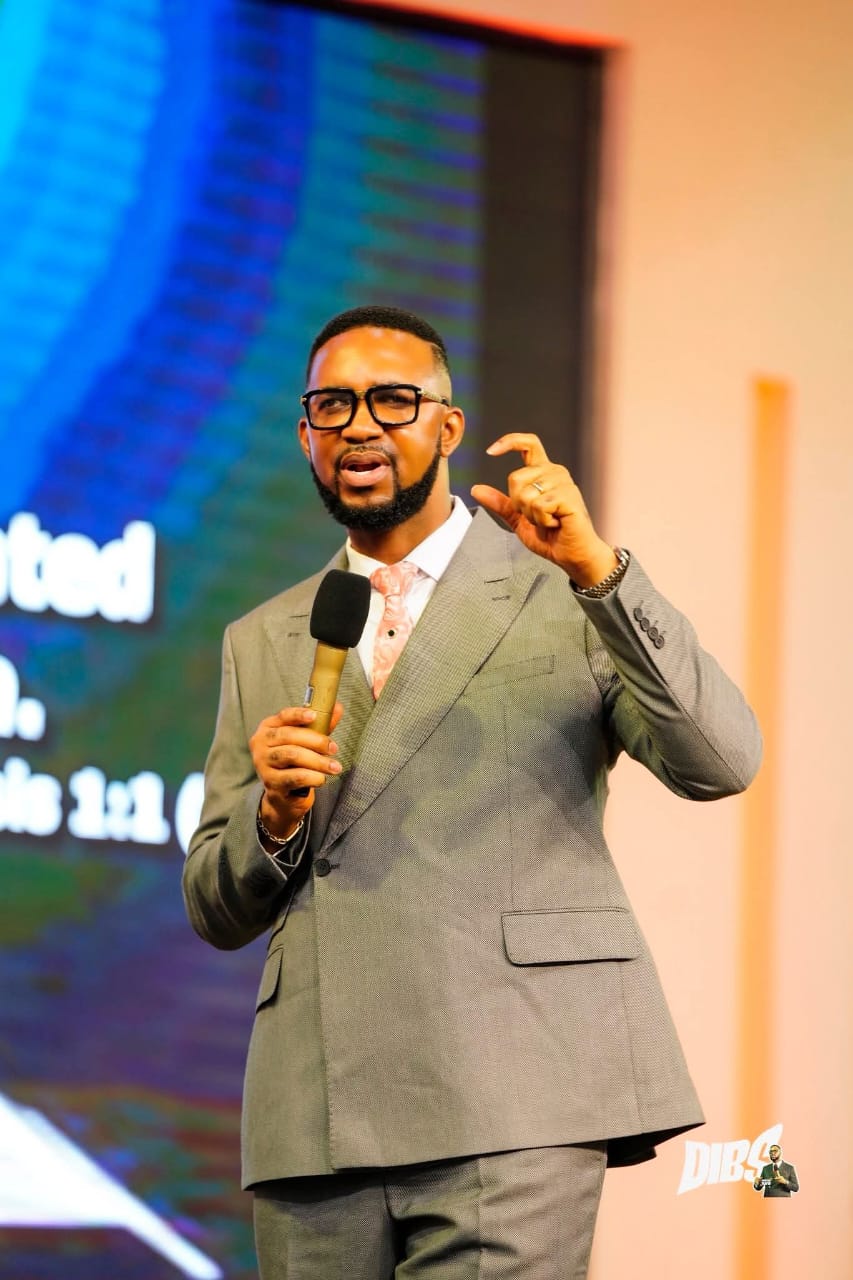
Grace Nation Worldwide: A Living Reality – Dr. Chris Okafor
……“Miracles, Healing, and Deliverance Overflow at Grace Nation Services”
The Grace Nation midweek Prophetic Healing, Deliverance, and Solutions (PHDS) Service on 2nd April 2026 at the international headquarters in Ojodu Berger, Lagos, was a spectacular display of God’s power, marked by miracles, healing, and deliverance.
The God of Grace Nation continues to demonstrate His authority, breaking strongholds, healing the sick, restoring lost glory, and providing solutions to every problem presented at His altar.
Testimonies of God’s Power
One woman, previously diagnosed with a terminal condition and slated for a ₦4.5 million surgery due to inability to excrete, was prayed for by the Generational Prophet, Christopher Okafor, just a week after visiting the church. Declaring healing within 24 hours, she returned to testify to God’s miraculous intervention.
Another pregnant woman, whose baby was bridged and at risk, was located and prayed for. She returned to service with confirmation that her child is now well-positioned for delivery. Similarly, a woman booked for a C-section due to an overdue and poorly positioned pregnancy testified during the service that her baby is now properly positioned, ready for birth.
These testimonies underscore the truth: what God cannot do does not exist. Grace Nation has entered a new level of spiritual authority, and with faith, believers are witnessing the impossible become reality.
God Works by Principle, Not Gossip
In his sermon, Dr. Okafor emphasized that God does not operate on superstition, gossip, or social media pressures. His work is grounded in His Word, and it is through adherence to His principles that Grace Nation continues to flourish.
The Generational Prophet stressed that to enjoy divine blessings and fruitfulness, believers must remain connected to God’s Word, faithfully serve Him, and ignore distractions or side-talks. Focused commitment to God’s service guarantees alignment with His miraculous power.
Join the Movement
Grace Nation Worldwide is open for all who desire a life transformed by divine intervention. Weekly services include:
Sunday Service: 7:00 AM
Grace Nation Island Service (Ogombo): Wednesday, 5:00 PM
Midweek PHDS Service: Thursday, 7:00 AM
Attending these services under the ministry of the Generational Prophet ensures encounters with God’s supernatural power, life-changing miracles, and lasting breakthroughs.
Grace Nation Worldwide is not just a church—it is a reality where faith meets the supernatural.
By Sunday Adeyemi


-

 society7 months ago
Religion: Africa’s Oldest Weapon of Enslavement and the Forgotten Truth
-

 news4 months ago
WHO REALLY OWNS MONIEPOINT? The $290 Million Deal That Sold Nigeria’s Top Fintech to Foreign Interests
-

 society6 months ago
“You Are Never Without Help” – Pastor Gebhardt Berndt Inspires Hope Through Empower Church (Video)
-

 celebrity radar - gossips2 months ago
Dr. Chris Okafor Returns with Power and Fire of the Spirit -Mounts Grace Nation Altar with Fresh Anointing and Restoration Grace on February 1, 2026