
society
FEATURE: How Long Will Yahaya Bello Continue With This Lawless Act? By Richards Ibe

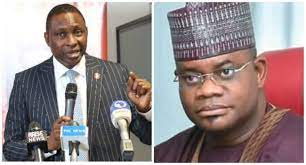
FEATURE: How Long Will Yahaya Bello Continue With This Lawless Act?
By Richards Ibe
The ex-Governor of Kogi State, Yahaya Bello, who handed over to the current governor of the state, Usman Ododo in January this year after his two terms of four-years-tenure, has consistently been in the news in the past eight months.
It has been from one drama to the other bordering on his stewardship and how he handled the affairs of the state under his tenure.
Bello, who was alleged to have defrauded the state to the tune of N84 billion during his tenure, have done everything in and out of the books to avoid his trial spearheaded by the Economic and Financial Crimes Commission (EFCC).
On Thursday, March 14, 2024, the EFCC had dragged the former governor before Justice James Omotosho of the Federal High Court, Maitama, Abuja for alleged N84 billion money laundering offences, alongside his nephew Ali Bello, Dauda Sulaiman and Abdulsalam Hudu.
The Anti-graft agency was prosecuting the quartet on an amended 17-count charge of money laundering, breach of trust and misappropriation of fund to tune of N84, 062,406,089.88 (Eighty-four Billion, Sixty-two Million, Four Hundred and Six Thousand, Eighty-nine Naira, Eighty-eight Kobo).
To make way for Yahaya Bello’s inclusion in the trial, prosecution counsel Rotimi Oyedepo, SAN, informed the court of an application before it for the amendment of the charges against the defendants, dated February 5, 2024, and filed the same day.
After prayers that the amended charges be read to the defendants for them to take their pleas, the judge had granted the prayer, overruling objections from A.M Aliyu SAN, and Olusegun Joolawo SAN, counsels to Ali Bello and Suleiman, first and second defendants.
Count one of the charges had read: “That you, Ali Bello, Dauda Suleiman, Yahaya Adoza Bello (still at large) and Abdulsalam Hudu (still at large), sometime in September, 2015 in Abuja, within the jurisdiction of this Honourable Court, conspired amongst yourselves to convert the total sum of N80,246,470,089.88 (Eighty Billion, Two Hundred and Forty-six Million, Four Hundred and Seventy Thousand, Eighty-nine Naira, Eighty-eight Kobo), which sum you reasonably ought to have known forms part of the proceeds of your unlawful activity to wit: criminal breach of trust and you thereby committed an offence contrary to Section 18(b) and punishable under Section 15(3) of the Money Laundering (Prohibition) Act, 2011 as amended.”
Also distancing itself from the proceeds of fraud, the American International School, Abuja had in April 2024 refunded to the EFCC the sum of $760,000 paid by Yahaya Bello as advanced school fees for his children at the tail end of his administration as governor of Kogi State.
Bello was alleged to have paid $720,000 in advance as fees for five of his children in Grade Levels 2 to 8 in the school from the coffers of the Kogi State Government.
Confirming the development in April, the EFCC Spokesman, Dele Oyewale, had declared “The school has refunded the entire $760, 000 to the EFCC’s recovery account,”
Going into hiding, Yahaya Bello had severally refused to appear in court in person to clear the allegations raised against him.
Some eminent Nigerians had pleaded with Yahaya Bello to come out and answer the charges against him and that he should not be giving former governors bad name.
One of those who gave the advice was the immediate-past governor of Benue State, Samuel Ortom, on Sunday, 28th of April 2024.
Speaking at a Redeemed Christian Church of God in Makurdi, Benue State during the thanksgiving service organised by his aides for his 63rd birthday celebration, Ortom advised Bello to come out of hiding and answer his case with the EFCC.
Ortom had said that Yahaya Bello’s continued hiding would bring disgrace to former governors across the country.
“I want to use this opportunity to advise my younger brother and friend, Governor Yahaya Bello, not to disgrace former governors.
“You don’t need to hide. You don’t need to resist arrest or anything. Go there and respond. The EFCC (officials) are human beings. If they are making inquiries, the laws are there.
“I have tried to get him on the phone, but I could not. I have tried those around him but I could not, so I want this to be noted. Wherever he is, if he can hear me, thank God the press is here, he should come out.” Ortom had stated.
Even though immunity no longer covers the ex-Governor, he has reportedly been assisted to evade arrest by his successor, Kogi State Governor Ododo, presently enjoying immunity as the sitting governor of the North Central state.
To ensure that justice is served, some eminent Nigerians have also called on Governor Ododo to hand over Yahaya Bello to the law for prosecution.
A political activist, Usman Okai Austin had cautioned Governor Ododo against being hypocritical and obstructing anti-graft war.
He had charged Ododo to demonstrate his dedication to fighting corruption by taking concrete steps to hand over Yahaya Bello to the EFCC for investigation.
In a statement, Okai had also questioned Ododo’s commitment to fighting corruption, particularly in light of allegations that he is protecting Bello.
He criticized the enacted Kogi State anti-corruption Bill under Ododo, as he accused Ododo of hypocrisy and labeled the legislation as a mockery of the entire anti-corruption system.
Okai cited and faulted an occasion when Ododo was reportedly seen “accompanying Bello to a Sallah celebration in Okene, despite Bello’s alleged involvement in corrupt activities.
“This perceived complicity has raised concerns about the governor’s true intentions in the fight against corruption and has prompted calls for him to take decisive action to uphold the rule of law.
“As a prominent figure in Kogi State politics, it is imperative that governor Ododo addresses these concerns and takes concrete steps to demonstrate his commitment to combating corruption and promoting good governance in Kogi State.
“Despite his declaration to ‘attack corrupt practices and make it impossible for corruption to thrive,’ his actions suggest otherwise.
“To genuinely demonstrate his dedication to fighting corruption, Governor Ododo must take concrete steps, such as handing Yahaya Bello over to the EFCC for investigation.
“Until then, his actions will be seen as hypocritical and obstructing the anti-corruption war.
“We urge Governor Ododo to practice what he preaches and take meaningful action against corruption by handing over the wanted Bello to the EFCC.”
A popular activist lawyer, Deji Adeyanju also charged Governor Ododo to hand over his predecessor, Yahaya Bello to the EFCC for trial.
“Ododo, the impunity-loving governor of Kogi State should hand over Yahaya Bello to the EFCC to face trial for all his corrupt acts.” Adeyanju wrote on his Facebook page.
While Ododo has failed to heed the advice, the anti-graft agency has been seeking ways to bring Yahaya Bello to justice.
In an attempt to bring the ex-Governor to justice, some EFCC operatives had on Wednesday 17th of April 2024 stormed Yahaya Bello’s Abuja home at Benghazi Street, Wuse Zone 4, Abuja, Federal Capital Territory.
Ododo had reportedly assisted in whisking away Bello in his official car from the scene to evade the arrest.
Kicking against the EFCC move, the ex-governor’s media office, in a statement, had claimed that the presence of the operatives in Bello’s residence negated the order of injunction granted on February 9, 2024, by the High Court of Justice, Lokoja Division, in Suit No. HCL/68M/2024 between Yahaya Bello v. EFCC, restraining the commission either by itself or its agents from harassing, arresting, detaining, or prosecuting him, pending the hearing and determination of the substantive fundamental rights enforcement action.
Despite Yahaya Bello been declared wanted and going into hiding for several months, especially after the sting operation in his Abuja home, he is reported to be perpetually hanging around his successor Ododo to evade arrest.
On Wednesday September 18th 2024, Yahaya Bello came out of hiding for months and visited the EFCC office in the company of Ododo.
At the EFCC office, he was said to have snapped pictures with security guards, and to create the impression that he has turned himself in to the anti-graft agency.
But the EFCC was said to have been hindered from arresting Yahaya Bello as Ododo’s governorship immunity prevented the operatives from taking further action.
Doing otherwise, would have resulted in confrontation between the security personnel protecting the governor and the anti-graft agency, which may lead to gun duel and lost of lives.
Speaking on the latest development on Wednesday, EFCC officials said Ododo helped Bello to escape again just like in April.
One of the officials said, “Yahaya Bello has not been arrested. The Kogi State governor prevented operatives from doing their work yesterday just like he did the other time. He took him away and our men could not do anything because of the immunity he (Ododo) is enjoying.”
In another attempt to get Bello to answer the charges against him, EFCC operatives again on the same night of Wednesday September 18th 2024 stormed the Kogi State Government Lodge in Abuja.
Yahaya Bello, again was reported to have evaded arrest by EFCC operatives with the assistance of his successor, Governor Ododo, leveraging on the immunity being enjoyed by Ododo as a sitting governor.
Apart from Ododo’s immunity covering, which Yahaya Bello has been hiding under in the past eight months, some questions are also now on the lips of some well-meaning Nigerians.
Topmost of these questions is if Yahaya Bello is also getting support and protection from another influencial personality in the Presidency, who has security background.
With these dodging of the law going on for months, it is hightime the fight against corruption in the country is really allowed to thrive.
As a matter of urgency, Yahaya Bello should immediately turn himself in for the N84 billion money laundering trial.
He should have nothing to fear if his hands are clean and has served the people of Kogi State to the best of his ability for eight years.
Even though Bello played a great role in Ododo’s emergence as the governor of Kogi State, Ododo should now start concentrating on serving the good people of Kogi State as he has sworn to do and allow Bello to carry his cross and face the course of the law.
Any other influential person backing Yahaya Bello in the Presidency, irrespective of whatever he has gained from Bello in the past, should also stop forthwith in order not to soil the administration of President Bola Ahmed Tinubu, who didn’t shy away from suspending a Minister linked to corruption.




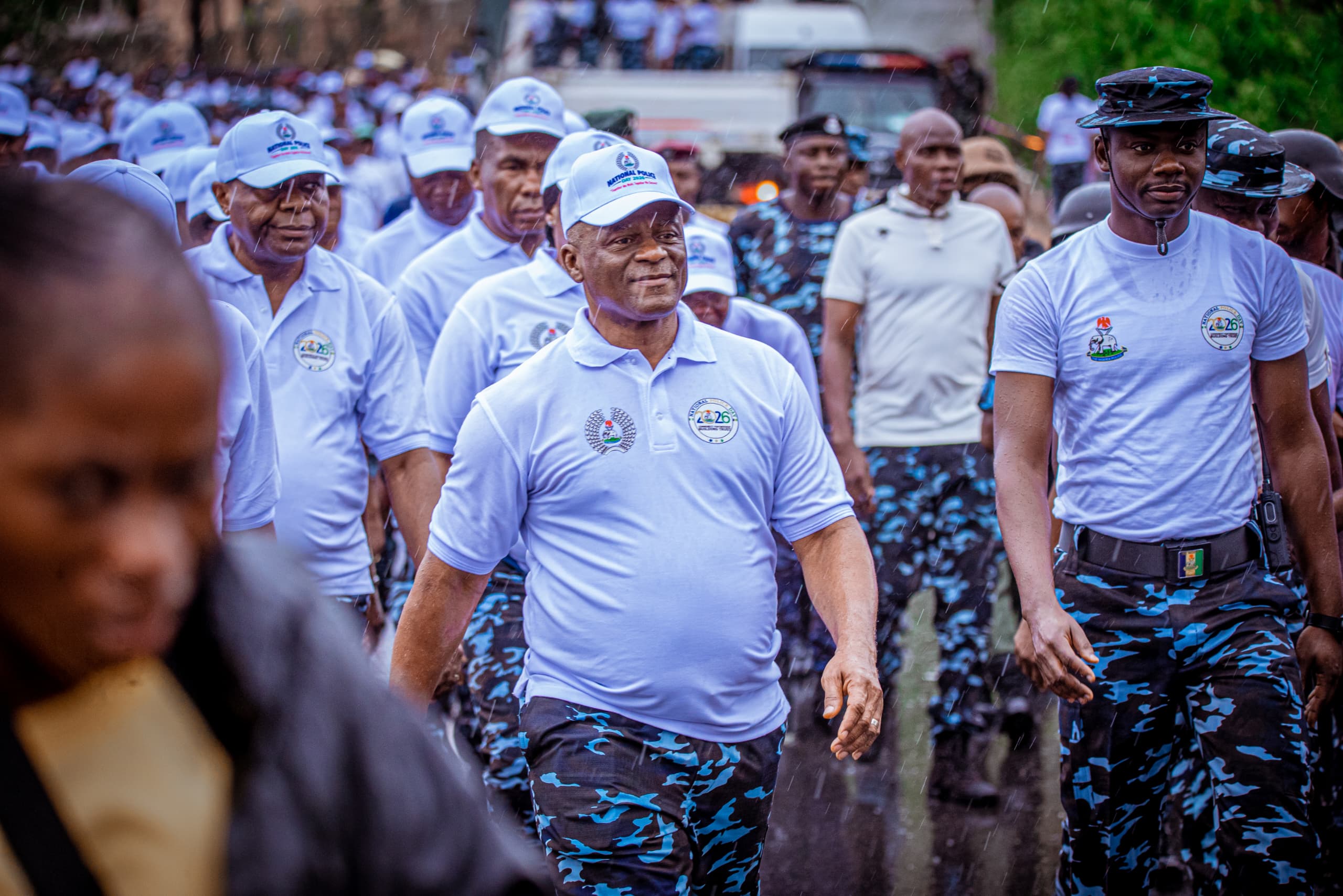
Police Day 2026: IGP Disu Leads Nationwide Walkathon To Strengthen Community Trust
The Inspector-General of Police, Olatunji Disu, on Tuesday led the management team, alongside officers and personnel of the Nigeria Police Force, in a nationwide walkathon to commemorate the 2026 National Police Day.
The event, held across state capitals and the Federal Capital Territory, formed part of activities marking Day Two of the annual celebration, themed “Community Partnership: Building Trust.”
The symbolic exercise, which drew participation from both police personnel and members of the public, was aimed at showcasing unity, discipline, and a renewed commitment to community policing and public safety.
According to the Force leadership, the walkathon underscores the Nigeria Police Force’s resolve to strengthen public trust, deepen engagement with citizens, and enhance collaboration in tackling security challenges across the country.
Participants described the initiative as a practical step toward bridging the gap between law enforcement and the communities they serve, while also promoting physical fitness and mental well-being among officers and civilians alike.
With the theme reflecting a shared responsibility for safety, the Police reiterated that sustainable security can only be achieved through active partnership with the public.
The event concluded with a renewed call for collective action under the banner: “Together We Walk, Together We Secure,” emphasizing unity of purpose in building a safer and more secure society for all Nigerians.


society
Dr. Chris Okafor invokes divine retribution upon individuals blackmailing the Grace Nation church
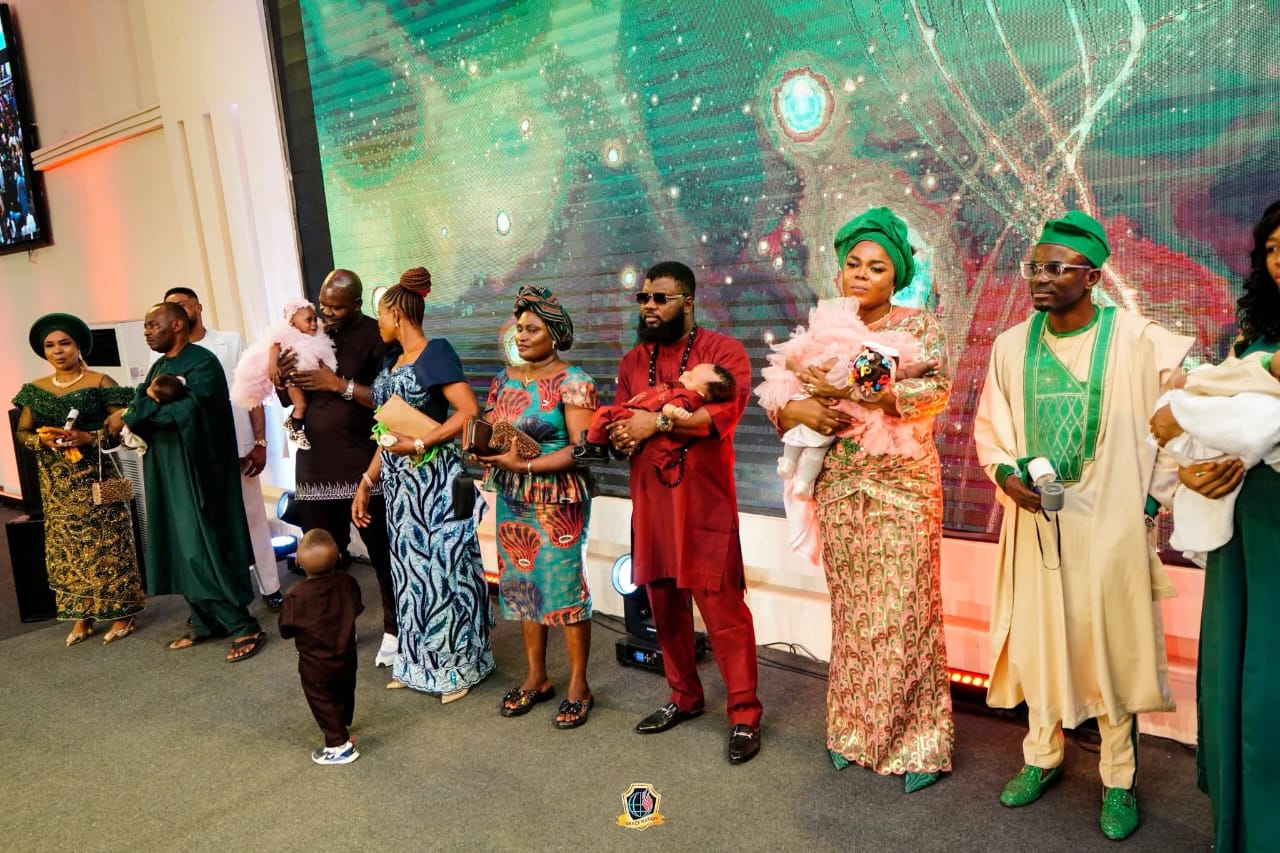
Dr. Chris Okafor invokes divine retribution upon individuals blackmailing the Grace Nation church
… Affirming God’s omnipotence to unveil malicious schemes.
To be frank, the ability of Doris Ogala and her associates to withstand the arduous challenges set by Senior Pastor Dr. Chris Okafor of Grace Nation Global at the culmination of the Harvest of Babies 2026 conference, the church’s flagship event, continues to elude me.
It’s advisable not to offend a powerful spiritual leader like Prophet Chris Okafor to avoid potential consequences, as seen in the situation with Doris Ogala, who was rebuked by the prophet; can she rectify the situation through confession?
Insiders close to the man of God claim that despite relentless online bullying and blackmailing, the Generational Prophet remains resolute, stating that God’s power has been evident throughout the commission’s existence. The reason for this wonderful statement is found in the scriptures, “Upon this rock I shall build my Church, and the gates of hell shall not prevail.” The more falsehoods are spread about the church and its leader, the more God elevates the church and propels him to greater heights, he asserted. He emphasized that blessings and fruitfulness are antidotes to curses, noting that God continues to bestow blessings upon the church, including miracles and the gift of children, which is one reason for the grand finale of the annual family liberation program, The Harvest of Babies.
However, the man of God issued a curse on each person speaking ill of the church, blackmailing, and uttering all sorts of falsehoods against the church, declaring that if they refused to repent within a few days, the earth would swallow them and their family members, stating that they would be of no use to themselves, their families, or society at large.
The spiritual leader cautions his followers to beware of such individuals including Doris Ogala who may taint their faith, and urges them to treat these persons as emissaries of the devil, avoiding them altogether.
Recall that the 2026 harvest of babies concluded with a remarkable birth of a miracle baby boy to a woman on the third day of the conference, accompanied by the dedication of several other miracle babies, all to the glory of God.
Christopher Sunday David writes from
Austria
“Together We Walk, Together We Secure”: Police Launch 2026 Walkathon In Abuja
The Nigeria Police Force has announced plans to host a walkathon in commemoration of the 2026 National Police Day, aimed at promoting unity, peace, and stronger community partnership.
The event is scheduled to take place on Tuesday, March 31, 2026, with participants expected to converge at the Force Headquarters Abuja by 6:00 a.m., where the walk will commence.
According to the organisers, the walkathon is designed to bring together members of the public, stakeholders, and security personnel in a show of solidarity and shared commitment to national security.
With the theme, “Together we walk, together we secure,” the initiative underscores the importance of collaboration between the police and citizens in maintaining peace and safety across the country.
Members of the public have been encouraged to participate in the exercise, which forms part of activities lined up to mark this year’s National Police Day celebration.
It is believed that the walkathon would not only foster closer ties between the police and the communities but also serve as a platform to promote awareness on collective responsibility in ensuring a safer society.


-

 society6 months ago
Religion: Africa’s Oldest Weapon of Enslavement and the Forgotten Truth
-

 news4 months ago
WHO REALLY OWNS MONIEPOINT? The $290 Million Deal That Sold Nigeria’s Top Fintech to Foreign Interests
-

 society6 months ago
“You Are Never Without Help” – Pastor Gebhardt Berndt Inspires Hope Through Empower Church (Video)
-

 celebrity radar - gossips2 months ago
Dr. Chris Okafor Returns with Power and Fire of the Spirit -Mounts Grace Nation Altar with Fresh Anointing and Restoration Grace on February 1, 2026