
society
Femi Fani-Kayode, Kemi Badenoch And An Old Fart From Leicester* by Mohammed Bello Doka


*Femi Fani-Kayode, Kemi Badenoch And An Old Fart From Leicester* by Mohammed Bello Doka
In a desperate attempt to remain relevant, Dr. Olusola Oni, a self-proclaimed Yoruba nationalist residing in Leicester, United Kingdom, has published a lengthy tirade ( titled Fani Kayode’s Fake Outrage About Kemi Badenoch 14/11/2024) defending Kemi Badenoch’s recent ascent in British politics while launching an unprovoked attack on Chief Femi Fani-Kayode.
If there’s one thing Oni’s diatribe accomplishes, it’s confirming that he’s little more than an “old fart” grasping for significance in the political world he abandoned decades ago. His absurd attempt to glorify Badenoch while denigrating Nigeria reeks of nostalgia, detached from the harsh realities faced by his fellow citizens back home.
*Misguided Nostalgia and Misplaced Allegiances*
Dr. Oni’s nostalgia shines through his meandering history lesson on Badenoch’s family background. He devotes an inordinate amount of space recounting irrelevant anecdotes about schools like Queen’s School in Ede and Ibadan Grammar School, desperately trying to paint Badenoch’s roots as noble and Yoruba-centered. But let’s get real: Badenoch’s success has nothing to do with these irrelevant family histories and everything to do with the British Conservative Party’s agenda—a reality Oni conveniently glosses over. He even had the audacity to dismiss the criticisms as “misguided Nigerians” who refuse to celebrate Badenoch’s “success.”
Here’s the reality Dr. Oni refuses to accept: Kemi Badenoch’s policy positions, including her dismissal of reparations for slavery and her selective immigration stances, have drawn criticism for good reason. They are not about “protecting the UK from becoming another Nigeria,” as Oni implies, but are reflective of a hardline political stance that marginalizes minorities, including Nigerians.
*Convenient Amnesia About Nigeria’s Realities*
In his barely coherent rant, Oni lambast Chief Femi Fani-Kayode for criticizing Badenoch, suggesting that he is somehow stuck in the past. According to Oni, “Fani-Kayode thinks it is ok to live in a country where Fulani barbarians and savages use cattle to destroy Yoruba farmlands,” shamelessly generalizing the entire Fulani population to fit his narrow narrative. The truth is, Fani-Kayode’s criticisms are about holding public figures accountable, regardless of their ethnic or cultural background—a principle Oni seems to have abandoned in his blind allegiance to a fellow Yoruba.
Oni’s absurd declaration that “Fani-Kayode is angry because Kemi Badenoch does not want the UK to transform into another Nigeria” is laughable. He criticizes the entire Nigerian system while comfortably residing in the UK, enjoying the privileges and comforts afforded by his long-abandoned citizenship. Yet, he condemns Nigerians like Fani-Kayode who choose to remain and challenge the status quo.
*Hypocrisy and Double Standards*
Oni’s hypocrisy knows no bounds. While he praises Badenoch for her achievements, he criticizes Abike Dabiri-Erewa for seeking to engage with the diaspora, dismissing her efforts as “an alarming emptiness” and deriding her attempts to connect with Nigerians abroad. The arrogance of such a statement is staggering, coming from someone who admits he has never spoken to Badenoch but feels qualified to speak on her behalf simply because he “knew her parents.” Oni’s notion of Yorubaness is limited to the privileges and accomplishments of those who, like him, abandoned Nigeria for greener pastures.
The attempt to undermine Dabiri-Erewa’s role by asserting that the UK High Commission alone should handle such engagements is an excuse to delegitimize any effort that doesn’t come from his narrow definition of authority. He writes: “Dabiri-Erewa has no standing and no mandate to demand audience with the UK Leader of Opposition.” Dr. Oni, the reality is that engaging Nigerians abroad goes beyond your outdated notions of bureaucracy—it’s about fostering meaningful connections with the diaspora.
*Selective History and Misinformation*
In Oni’s world, Kemi Badenoch is the embodiment of Yoruba pride, yet he offers little to substantiate his claims apart from vague recollections of Badenoch’s father’s nationalist leanings. He even dredges up old treaties from the 19th century, like the “1888 Britain-Yorubaland Treaty,” to bolster his fanciful claim that “Yorubaland is a state within the confines of the country called Nigeria.” This distorted view of history conveniently ignores the realities of Nigeria’s current federal structure, which Badenoch, if anything, is less interested in engaging with than the average British politician.
Furthermore, Oni’s defense of Badenoch’s refusal to support reparations is rooted in a flimsy argument. He justifies it by pointing out that “David Lammy, the British Foreign Secretary, a descendant of slaves, does not support ‘reparation’.” Yet he fails to grasp that reparations are not merely about “cash compensation” but about acknowledging historical injustices and taking concrete steps toward equity. His claim that “up to 90% of Black people in the UK are ambivalent about ‘reparation’” is an exaggeration unsupported by any factual evidence.
*An Old Man’s Attempt to Rewrite History*
Oni’s final assault on Fani-Kayode’s father, whom he labels a “political prostitute,” is a transparent effort to discredit the younger Fani-Kayode’s standing by invoking the sins of the father. His claim that Fani Power’s actions “arguably led to the 1966 coup d’état” is an exercise in historical revisionism, twisting facts to serve his present-day agenda. The reality is that Oni, having lived comfortably abroad for decades, is in no position to pass judgment on those who continue to fight for Nigeria’s future.
Oni’s concluding plea for a “Yoruba Homeland” in response to reparations reveals his true intentions—a separatist agenda wrapped in the guise of Yoruba nationalism, divorced from the complexities of modern Nigeria. His portrayal of Yorubaland as a distinct state within Nigeria is nothing more than the wishful thinking of an old man yearning for a past that never was.
*A Hollow Defense*
Dr. Oni’s tirade is nothing more than a hollow defense of Kemi Badenoch—a woman he admits to never meeting—while dismissing the valid concerns of Nigerians like Fani-Kayode, who remain on the ground. Oni has chosen to glorify Badenoch’s achievements as if they somehow absolve her of accountability for her controversial political stances, and he has done so by disparaging those who dare to question her. In reality, his defense is a transparent attempt to remain relevant by attaching himself to a rising political star.
On a final note it is worth noting that, “The worst part of this old farts essay was his attempt to disparage the memory and legacy of Chief Femi Fani-Kayode’s father with all manner of lies and historical revisionism in an attempt to defend Kemi Badenoch.
Thankfully he failed because we know Chief Femi Fani-Kayode’s distinguished father who, like FFK himself, was a great and proud patriot and illustrious Nigerian who believed in our country and people passionately and who has established an enviable legacy.
His name was Chief Remilekun Adetokunboh Fani-Kayode Q.C. SAN, CON who most politicians referred to as ‘Fani Power’ in his day!
He was a brilliant, courageous and distinguished elder statesman and nationalist who was amongst those that fought for Nigeria’s independence from the British, who successfully moved the motion for that independence in Parliament in 1958, who was the third Nigerian lawyer to be made Q.C., who was the third Nigerian lawyer to become a SAN, who studied law at Downing College Cambridge University in 1941, who came top in the whole of the old British Commonwealth in the British Bar Exams and was called to the British Bar in 1945, who set up the first indigenous law firm in Nigeria with Chief FRA Williams and Chief Bode Thomas, who was the Balogun of Ile Ife, who was Deputy Premier of the old Western Region in the First Republic, who was Regional Minister for Local Government and Chieftaincy Affairs in the First Republic and who played a leading role in the politics of the First and Second Republic in our country.
We also know Chief Femi Fani-Kayode’s grandfather, Justice Victor Adedapo Kayode, who studied law at Selwyn College, Cambridge University in 1917, who was called to the British Bar in 1922 and who was the third Nigerian to be appointed as a Judge.
We also know Chief Femi Fani-Kayode’s great grandfather Rev. Emmanuel Adebiyi Kayode who got a degree and a masters degree in Theology at Furrogh Bay College in Sierra Leone (which at that time was an extended campus of Durham University in the UK) in 1897, who was ordained as an Anglican priest, who established the first Anglican Church in the ancient town of Ile-Ife, who went on to build and Pastor Churches in the old Ondo and Ijebu provinces for many years, who dedicated his entire life to Christian ministry and spreading of the Gospel of Jesus Christ and who was a well-respected, deeply courageous and highly inspirational preacher.
It is pertinent to mention the fact that Chief Femi Fani-Kayode himself studied law at both London University (SOAS) and Pembroke College, Cambridge University in the early 1980’s and was called to the Nigerian Bar in 1985.
We know all this about his noble heritage and lineage but we know nothing about Kemi Badenoch’s other than the fact that her father is the progenitor of a self-hating monkey-bitch.
As of the Useful Idiot from Leicester called Olusola Oni who attacked Fani-Kayode and attempted to defend Kemi it is clear that his forefathers crawled out of the rubbish dump and got lost in the sewer.
He is indeed the bastard man child who used his left hand to point at his fathers house.
Oni may consider himself the “Leader of The Yoruba Party in the UK,” but in truth, he is a relic of a bygone era—an old fart trying desperately to rewrite history to suit his narrative. His selective outrage is as stale as his attempts at Yoruba nationalism, a nationalism that seems more interested in building castles in the air than addressing the pressing challenges Nigerians face today.
Let me leave you with the words of prominent a Nigerian and loud voice in the UK, Mrs Shola Mos-Shogbamimu:
“Kemi Badenoch is a caricature of the very system we’re saying needs to go; she is the black face of white supremacy.” She adds, “She is a racial gatekeeper; she did everything possible to suppress and oppress Black people… Kemi, at every opportunity she gets, throws Nigeria under the bus. I’ve never seen Rishi, Suella, Priti—none of them—throw their country of heritage under the bus.”
This reflects the genuine sentiments of every right-thinking Nigerian who refuses to trade their conscience for crumbs at the altar of political relevance.
*(Mohammed* *Bello Doka is a journalist and a blogger,*
*Abuja Network News.)*




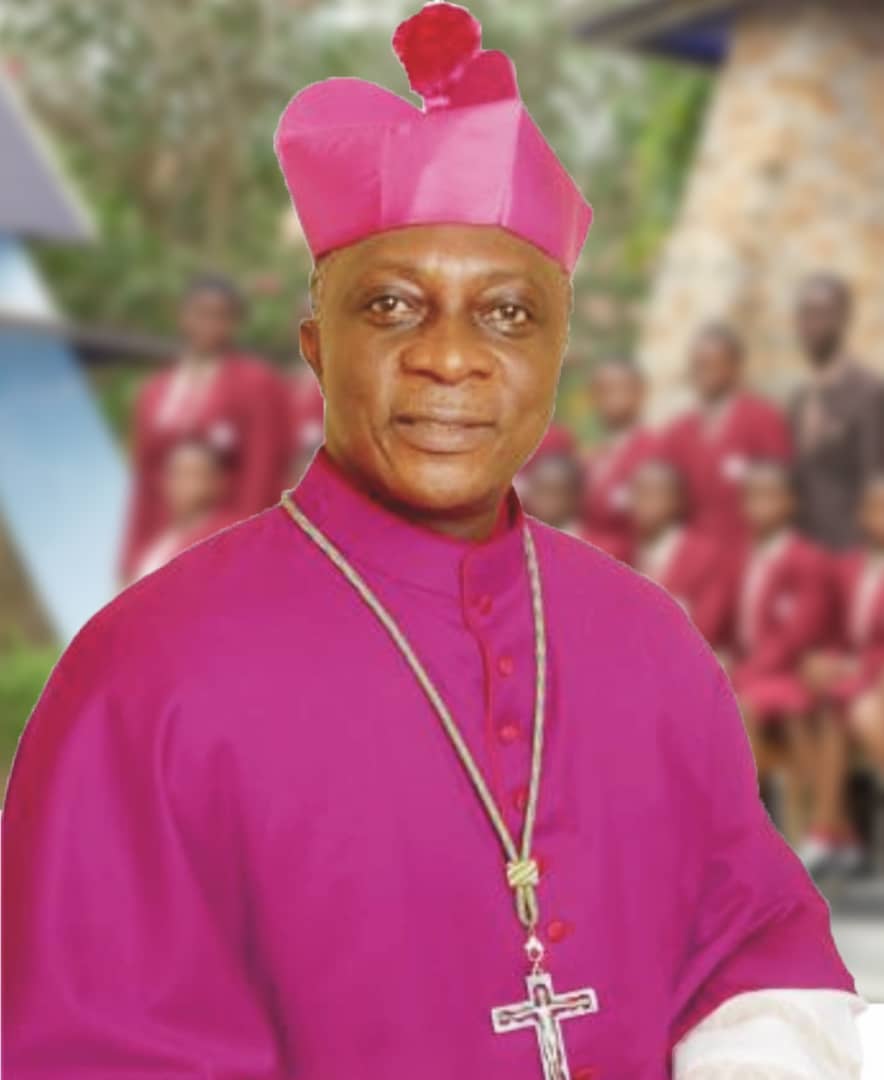
GOVERNMENT MUST TACKLE NATION’S PRESSING CHALLENGES — BISHOP MARTINS URGES AT CHRISM MASS
By Ifeoma Ikem
The Holy Cross Cathedral, Lagos, was filled with joy, reverence, and renewed commitment on Holy Thursday as Catholic faithful across the metropolis gathered for the annual Chrism Mass — a solemn celebration marking the institution of the priesthood, the Holy Eucharist, and the blessing of sacred oils used throughout the liturgical year.

During the ceremony, the Catholic Archbishop of Lagos, Most Rev. Adewale Martins, described the Chrism Mass as a profound moment in the life of the Church.
He noted that it offers priests an opportunity to renew their vows and reflect on the centrality of the Eucharist, which he emphasized remains the heartbeat of the Catholic faith.
Addressing national issues, Bishop Martins acknowledged the government’s ongoing efforts to tackle Nigeria’s current challenges.
However, he stressed the need for more decisive and accelerated interventions, particularly in securing lives and easing the economic burdens confronting citizens.
He congratulated priests on their feast day and reflected on the rising influence of digital evangelization. While recognizing that many people now “inhabit online spaces,” he warned clergymen to handle social media with caution, discipline, and fidelity to Church teachings. According to him, digital influence must never overshadow spiritual integrity.
“The oils blessed today are not simply symbols; they speak of being set apart by a mark not earned, not crafted, but given,” he said. “As we renew our promises, we do not recreate ordination; we awaken memory. We were not ordained to build profiles but to bear Christ.”
He further noted that the digital world has become a place where people “gather, argue, celebrate, confess, misunderstand, and sometimes encounter truth.” For this reason, he said the Church recognizes the need to take the Gospel into that space without compromising its authenticity.
In his homily, Rev. Fr. Paul Akin-Otiko, Chaplain of St. Thomas More Catholic Chaplaincy, University of Lagos, emphasized the enduring significance of the Chrism Mass as an ancient tradition where sacred oils are consecrated.
He urged priests to pray fervently for the sick using the blessed oils, reminding them that true healing comes from God.
Fr. Akin-Otiko encouraged clergy to remain selfless, warning them never to turn the Church into a source of personal gain.
He stressed that their primary duty is the salvation of souls and the welfare of the people entrusted to them.
Monsignor John Aniagwu took a moment to appreciate Anthony Cardinal Olubunmi Okogie for his fatherly guidance and exemplary leadership. He prayed for God’s continued blessings, asking that all present be granted good health to witness many more Chrism Masses.
The highlight of the ceremony was the renewal of vows by hundreds of priests, who reaffirmed their commitment to lives of dedication, chastity, and obedience to the Church and their bishop — an act that drew heartfelt applause from the congregation.
The celebration concluded with songs of thanksgiving, joy, and renewed devotion.
society
Liberian Leaders, Citizens Bear Witness as Apostle Suleman Hosts Two-Day Power-Packed Crusade
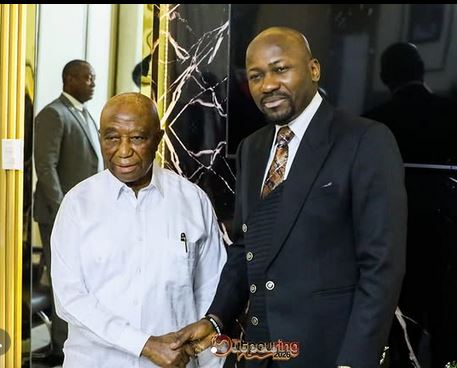
Liberian Leaders, Citizens Bear Witness as Apostle Suleman Hosts Two-Day Power-Packed Crusade
It was testimonies galore on Tuesday, March 31, the first day of the famous servant of God and founder of the Omega Fire Ministries (OFM) worldwide, Apostle Johnson Suleman’s power-packed two-day crusade. The event documented impactful moments with the Gospel and miracles, emphasizing the power of faith and the tangible confirmation of God’s Word through signs and wonders. It was equally an atmosphere of miraculous healing, restoration of lives, and the strengthening of faith.
At the crusade, which was held at the SKD Sports Stadium in Paynesville City, and themed, “Liberia Outpouring Crusade” witnessed testimonies of impact and miracles with participants experiencing instant healing of various kinds of challenges.
Apostle Suleman’s first port of call was Paynesville, the office of Liberian government’s president, Mr. Joseph Nyuma Boakai, who received him in an audience with his junior ministers. Apostle Suleman, who also met with the vice-president, Mr. Jeremiah Kpan Koung, was welcomed by the Liberian leader’s office as part of the president’s ongoing engagements with religious leaders aimed at fostering spiritual support for national development.
The president expressed profound appreciation to Apostle Suleman for the visit and continued prayers and intercessions by men and women of God on behalf of Liberia, emphasizing his firm belief that sustained spiritual guidance and prayer remain vital to the transformation and progress of the nation.
During the visit, Apostle Suleman offered prayers for President Boakai, his cabinet and the Liberian nation, invoking divine alignment, wisdom, and insight in Liberia’s path toward growth and stability. He prayed that the Almighty God would position Liberia for relevance and fulfillment of its national destiny.
Apostle Johnson Suleman, an evangelist who knows no bounds of where preaching the gospel comes to a stop, visited Liberia prepared with the message, compelling power of the Gospel and the work of the Holy Spirit, and bringing people to a point of decision where they surrendered their lives to Christ.
Aside from being prophetic and timely, OFM sources disclosed that the servant of God’s visit underscores the importance of faith-based partnerships in supporting governance and national renewal efforts.
society
Middle Belt Forum Hails Tinubu’s Jos Visit, Calls for United Civil-Military Effort to Restore Lasting Peace
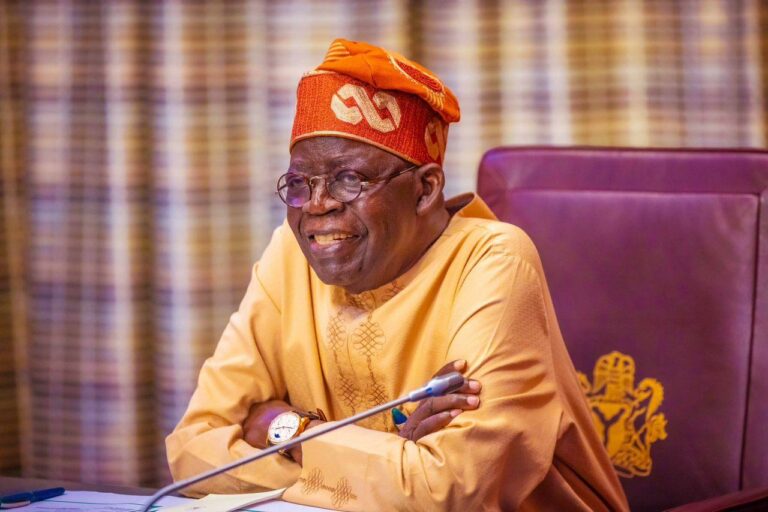
*Middle Belt Forum Hails Tinubu’s Jos Visit, Calls for United Civil-Military Effort to Restore Lasting Peace
The Middle Belt Peace Forum (MBPF) has commended President Bola Ahmed Tinubu for his profound demonstration of empathy and responsive leadership following his decision to postpone an official engagement in Iperu in order to visit victims of the recent attacks in Jos.
In a statement signed by its National Coordinator, Pastor Bulus Garba, in Jos on Friday, the Forum said the President’s decision to personally identify with grieving communities sends a powerful message of solidarity and reinforces public confidence in the commitment of the Federal Government to the protection of lives and property.
“The Middle Belt Peace Forum warmly commends President Bola Ahmed Tinubu for prioritising compassion over ceremony. At a time of deep sorrow for the people of Plateau State, his decision to visit Jos stands as a mark of true leadership—one that listens, responds, and stands with the people in their moment of pain,” the statement read.
The Forum described the perpetrators of the recent attacks as “cowards who prey on innocent and defenceless citizens,” stressing that such acts of violence are not only inhumane but also a direct assault on the unity and peace of the nation.
“We condemn in the strongest terms the actions of these cowardly attackers whose only aim is to instil fear and destabilise peaceful communities. Their actions must be met with firm and decisive resistance from all arms of the state,” Pastor Garba said.
The MBPF further used the opportunity to salute the courage, gallantry, and sacrifices of the Armed Forces of Nigeria under the leadership of the Chief of Defence Staff, General Olufemi Oluyede, noting that their continued efforts remain central to restoring stability across troubled parts of the country.
According to the Forum, the Armed Forces have demonstrated resilience and professionalism in the face of complex security challenges, often operating under difficult conditions to safeguard communities and defend Nigeria’s territorial integrity.
“We salute the Armed Forces of Nigeria for their unwavering commitment and sacrifices. Their gallantry in confronting criminal elements and reclaiming territories is a testament to their dedication to national service. We recognise that the path to peace is demanding, and we honour those who stand daily in defence of our nation,” the statement added.
The Forum pledged its full support to ongoing military operations and called for strengthened collaboration between security agencies and local communities as a critical factor in achieving lasting peace.
It also urged citizens across the Middle Belt to cooperate with security forces by providing timely information and fostering unity within their communities.
The MBPF, however, expressed concern over the need for greater synergy among security agencies, particularly the role of the Nigeria Police in consolidating gains made by the military.
“We call on the Nigeria Police Force to rise fully to its constitutional responsibility by effectively supporting the Armed Forces in stabilising and securing areas that have been cleared of criminal elements. Holding and policing such territories is essential to preventing a resurgence of violence,” Pastor Garba stated.
The Forum emphasised that sustainable peace requires a coordinated approach in which the military clears and secures areas, while the police maintain law and order to enable displaced communities to return and rebuild their lives.
The MBPF concluded by reiterating its commitment to peacebuilding efforts across the Middle Belt and expressed optimism that with sustained leadership, coordinated security efforts, and active citizen participation, lasting peace can be achieved.
“Together, through unity, vigilance, and collective resolve, we can overcome these challenges and build a safer and more peaceful Middle Belt,” the statement added.


-

 society7 months ago
Religion: Africa’s Oldest Weapon of Enslavement and the Forgotten Truth
-

 news4 months ago
WHO REALLY OWNS MONIEPOINT? The $290 Million Deal That Sold Nigeria’s Top Fintech to Foreign Interests
-

 society6 months ago
“You Are Never Without Help” – Pastor Gebhardt Berndt Inspires Hope Through Empower Church (Video)
-

 celebrity radar - gossips2 months ago
Dr. Chris Okafor Returns with Power and Fire of the Spirit -Mounts Grace Nation Altar with Fresh Anointing and Restoration Grace on February 1, 2026