
Business
FG’s Suspension of 15% Fuel Import Duty: A Holistic Step Toward Economic Relief and Market Stability

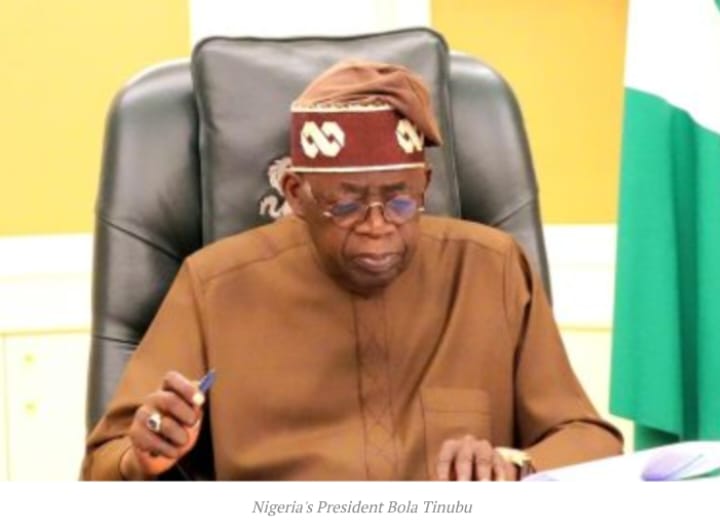
FG’s Suspension of 15% Fuel Import Duty: A Holistic Step Toward Economic Relief and Market Stability
BY BLAISE UDUNZE
In a welcome display of policy sensitivity and economic rationality, the Federal Government has suspended the planned 15 percent ad-valorem import duty on petrol and diesel. This move, announced by the Nigerian Midstream and Downstream Petroleum Regulatory Authority (NMDPRA), is more than a technical adjustment, it is a timely intervention that reflects empathy for the prevailing economic realities confronting citizens and businesses alike.
Just weeks ago, in my earlier article titled, “Tinubu’s 15% Fuel Duty: Taxing Pain in a Broken Economy,” I had argued that the proposed import duty, though designed with reformist intentions, was ill-timed and risked compounding Nigeria’s inflationary crisis. The central message was simple, which is reform must not inflict further hardship on already struggling citizens. It is therefore commendable that the Federal Government heeded that call, demonstrating a rare responsiveness to constructive public criticism. The decision to suspend the 15 percent duty shows that this administration is willing to listen, to adjust, and to prioritise the welfare of Nigerians above bureaucratic rigidity.
Nigeria’s economy is still recovering from the inflationary aftershocks of subsidy removal, exchange rate harmonization, and fiscal tightening. Against that backdrop, any additional import tariff on fuel which is the single most critical commodity in the nation’s cost structure would have triggered a cascade of price increases across transportation, food, manufacturing, and logistics. The government’s decision to halt the policy therefore represents a holistic step toward economic relief and market stability.
When the import duty was first approved in October 2025, it was presented as a forward-looking reform. The Federal Inland Revenue Service (FIRS), led by Zacch Adedeji, proposed the measure to align import costs with local refining realities and discourage importers from undercutting domestic producers. In principle, the idea had merit. It sought to strengthen local refining, promote crude oil transactions in the naira, and ensure a stable, affordable supply of petroleum products.
Yet, good intentions alone cannot override economic timing. The implementation, scheduled for late November, risked amplifying inflation at a time when Nigerians were already grappling with high transport fares, shrinking disposable incomes, and rising living costs. It would also have widened the gap between policy aspiration and market readiness, given that domestic refineries, including the Dangote Refinery and several modular plants, are still ramping up to full capacity.
By suspending the policy, the Tinubu administration has demonstrated that economic reform is not about rigid adherence to plans but about flexibility and responsiveness to market signals. This decision not only stabilizes prices but also strengthens public confidence that government is capable of balancing fiscal goals with social welfare.
The economic logic of this suspension is straightforward that in an energy-dependent economy like Nigeria’s, any increase in fuel import cost transmits directly into inflation. Transport fares go up. Food distribution costs rise. Manufacturing inputs become more expensive. Even small scale traders in the street feel the pinch as diesel prices affect electricity alternatives. Therefore, by preventing an artificial rise in fuel prices, the government has effectively averted another wave of inflationary pressure. It has also given room for other economic stabilisers such as improved power supply, localized production, and currency management to take effect.
Moreover, the NMDPRA’s assurance of a robust domestic fuel supply underscores the government’s effort to ensure market stability while preventing hoarding or profiteering. Its commitment to monitor distribution and discourage arbitrary price increases is a critical safeguard for consumers and businesses alike.
However, while the suspension offers immediate relief, it also presents an opportunity to rethink the broader framework for achieving energy security and local refining growth. If the ultimate goal is to strengthen local refining, stabilize fuel prices, and secure energy independence, there are smarter and more inclusive alternatives than import tariffs. The government should guarantee crude oil supply to modular refineries through transparent contracts and fair pricing mechanisms. Many smaller refineries struggle not because they lack capacity, but because they face erratic access to feedstock. Ensuring predictable crude allocation will allow them to operate profitably and contribute meaningfully to domestic supply.
Instead of penalizing importers through duties, the government can offer targeted tax incentives and financing support for smaller refineries to expand capacity. Access to credit at concessionary rates and tax holidays for equipment importation would accelerate output growth, create jobs, and foster competition. Regulatory fairness is equally essential. The downstream sector must remain open and competitive. The government must ensure regulatory equity so that no single player, whether public or private, dominates the market. Fair competition, not favoritism, will drive efficiency, innovation, and lower prices for consumers.
Nigeria must also address the hidden costs embedded in its energy logistics. The government should invest heavily in energy infrastructure like pipelines, depots, and transport networks to reduce non-tariff costs that inflate fuel prices. Currently, poor infrastructure adds unnecessary layers of cost to the final pump price. Reforming the power sector remains pivotal. Many industries and small businesses rely on diesel generators due to inadequate grid supply. A more reliable electricity system would ease demand for diesel, freeing up supplies for transport and export, while improving overall energy efficiency.
The government should also adopt a transparent pricing mechanism that allows market participants and consumers to understand how fuel prices are determined. Transparency discourages manipulation, hidden subsidies, and monopolistic practices. When prices reflect actual costs, trust grows, and market discipline follows. Such reforms will not only strengthen local capacity but also build a foundation for competition, accountability, and long-term sustainability, which are the true pillars of a resilient energy economy.
As the government nurtures the growth of local refining, it must also guard against a creeping danger of monopolistic capture. Protecting Dangote’s investment as the largest single-train refinery in the world is understandable. The refinery represents national pride and an enormous private commitment to Nigeria’s industrialization. However, promoting a monopoly, even unintentionally, would undermine the very goals of competition and consumer protection. No single operator, however efficient, should control access to crude supply, dictate market prices, or influence import policy. The Petroleum Industry Act (PIA) empowers the government to create fiscal measures that promote investment, but these must be implemented with fairness, transparency, and a clear focus on public interest.
A healthy downstream sector requires multiple active players involving modular refineries, state refineries under revitalization, and independent marketers, all operating on a level playing field. The government must therefore guarantee open access to crude oil, enforce transparent pricing of both feedstock and finished products, and prevent any operator from cornering market advantage through political influence. Monopoly breeds inefficiency, stifles innovation, and ultimately hurts consumers. What Nigeria needs is a competitive ecosystem that rewards efficiency, not proximity to power. A balanced and inclusive market structure is the surest path to sustainable self-sufficiency.
Beyond economics, this policy reversal underscores a deeper truth showing that reform must be humane. Citizens are not fiscal instruments but human beings whose welfare defines the legitimacy of policy. The suspension of the 15 percent import duty shows that the government can still listen, learn, and adapt, which is a welcome shift from the top-down approach that has often characterized Nigerian policymaking. But this responsiveness must become institutionalized. Policymaking should be driven by data and dialogue, not decrees. Stakeholders from refinery operators to transport unions and consumer groups must be part of the conversation before policies take effect. Reform, to succeed, must be sequenced with empathy, not arrogance.
Economic transformation is not measured merely by revenue gains or fiscal alignment, but by how it improves the quality of life of ordinary citizens. A humane reform process ensures that no policy, however noble, becomes a burden too heavy for its people to bear. The reversal of the 15 percent import duty on petrol and diesel is more than a temporary reprieve; it is a course correction toward sustainable and inclusive growth. It demonstrates that reform, when guided by compassion and common sense, can build confidence rather than resentment.
But government must go further to institutionalize competition, prevent monopolistic dominance, and pursue energy self-sufficiency without sacrificing fairness. Only by balancing protection with competition, efficiency with empathy, and ambition with accountability can Nigeria achieve the promise of the “Renewed Hope” Agenda. If this new direction is sustained, the suspension will not merely be remembered as a fiscal decision but as a moment when government rediscovered its moral compass, proving that in economic policy, the best outcomes are those that serve both the market and the people.
Blaise, a journalist and PR professional writes from Lagos, can be reached via: [email protected]





Fidelity Bank grows gross earnings by 38% to N434.95b in Q1
Fidelity Bank Plc recorded 37.9 per cent growth in gross earnings to N434.95 billion in first quarter 2026 as the international commercial bank continued to expand its core banking market share.
Interim report and accounts of Fidelity Bank for the three months ended March 31, 2026 released at the Nigerian Exchange (NGX) showed that gross earnings rose from N315.42 billion in first quarter 20025 to N434.95 billion in first quarter 2026, representing an increase of 37.9 per cent.
The top-line performance was driven by impressive growth in the bank’s core business operations with interest incomes rising by 22.8 per cent to N314.48 billion in first quarter 2026 as against N256.10 billion in first quarter 2025.
With net interest income at N180.97 billion, the bank closed the period with profit before tax of N92.48 billion. After taxes, net profit stood at N74.47 billion for the three-month period. Earnings per share remained high at N5.69, underlining the capacity of the bank to reward its shareholders.
The balance sheet of the bank also emerged stronger. Total assets crossed the N11 trillion mark to N11.35 trillion by March 2026 compared with N10.46 trillion recorded in December 2025. Customers’ deposits increased from N6.89 trillion to N7.38 trillion. Total equity rode on the back of earnings growth to a 27.5 per cent increase from N1.09 trillion in December 2025 to N1.39 trillion by March 2026.
The first quarter 2026 results further consolidated the strong earnings outlook of the bank, which had successfully completed its recapitalisation amidst impressive earnings performance in 2025.
Fidelity Bank had recorded double-digit growths in interest and non-interest incomes as well as key balance sheet items during the year ended December 31, 2025.
The audited report showed that gross earnings rose from N1.04 trillion in 2024 to N1.52 trillion in 2025, an increase of 45.6 per cent. Interest and similar incomes had grown by 38.7 per cent from N803.1 billion in 2024 to N1.11 trillion in 2025. Fees and commission incomes also rose by 44.7 per cent from N78.4 billion to N113.4 billion. The bank recorded net profit after tax of N242.4 billion in 2025.
The bank’s balance sheet emerged stronger with total assets rising by 18.6 per cent to N10.46 trillion in 2025 as against N8.82 trillion in 2024. Customer deposits increased by 16.1 per cent from N5.94 trillion to N6.89 trillion, reflecting continued franchise strength and an improved funding profile. Net loans and advances meanwhile declined by 2.4 per cent to N4.28 trillion in 2025 as against N4.39 trillion in 2024, attributable to customers paying down on their mature obligations.
The bank had in 2025 strengthened its capital position, with eligible capital rising to N561 billion, above the regulatory minimum of N500 billion for banks with international authorisation. In addition, capital adequacy had remained robust, with Capital Adequacy Ratio of 30.94 per cent by December 2025 as against 23.47 per cent by December 2024.
Managing Director, Fidelity Bank Plc, Dr. Nneka Onyeali-Ikpe, said the first quarter 2026 results reinforced the bank’s strong and resilient business model.
She noted that with the remarkable success of its recapitalisation programme and continuing expansion, Fidelity Bank has entered a new era of growth and impressive returns.
“We are on a stronger footing and confident that we will set new growth records that are reflective of our legacy and the future we are working on,” Onyeali-Ikpe said.
Business
Dangote Refinery Ends Nigeria’s Era of Fuel Import Dependence, Boosts GDP, FX Earnings — EIU
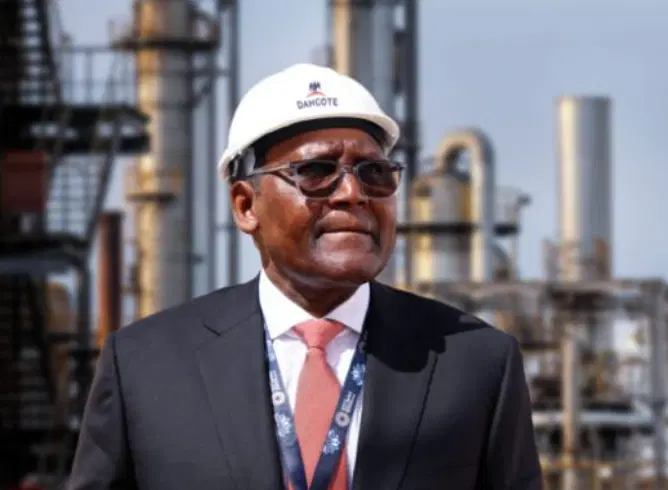
Dangote Refinery Ends Nigeria’s Era of Fuel Import Dependence, Boosts GDP, FX Earnings — EIU
The operational ramp up of the 650,000 barrels per day Dangote Petroleum Refinery & Petrochemicals is fundamentally reshaping Nigeria’s downstream oil sector, significantly reducing the country’s dependence on imported refined petroleum products and strengthening its external position, according to the Economist Intelligence Unit (EIU).
In its latest assessment on Nigeria’s fuel market and regulatory environment, the EIU said the refinery has already transformed a sector that was previously characterised by heavy reliance on imported fuel despite Nigeria being Africa’s largest crude oil producer. The report noted that the refinery met nearly 80 per cent of domestic petrol demand in April and produced enough volumes to satisfy local consumption requirements as operations approached full capacity.
The EIU described Nigeria’s downstream petroleum sector before the refinery as “long dysfunctional”, noting that the country had remained almost entirely dependent on costly imported fuel while producing nearly 1.5 million barrels of crude oil daily.
According to the report, the emergence of the refinery has reduced import dependence, improved domestic fuel availability and strengthened Nigeria’s balance of payments position through lower import demand and rising exports of refined petroleum products.
“The gradual ramp up of the 650,000 barrel/day Dangote refinery since May 2023 has transformed Nigeria’s long dysfunctional downstream sector,” the report stated. “The country’s main refineries, all state owned, had been inoperative for years and Nigeria was almost entirely reliant on costly imported fuel.”
The research and analysis division of The Economist Group, London added that the refinery’s attainment of full operational capacity and its planned expansion would further support Nigeria’s economic growth and foreign exchange earnings over the medium term.
“Meanwhile, the attainment of full capacity at, and an increase in exports from, the Dangote refinery will support real GDP growth and foreign exchange earnings in 2026 and 2027 and beyond, as a planned doubling of the plant’s output comes on stream around the end of the decade,” it added.
Industry analysts said the refinery is increasingly positioning Nigeria as an emerging refining and export hub, altering energy trade flows across Africa and reducing the vulnerability associated with fuel import dependence.
The EIU noted that the refinery’s expansion has coincided with major reforms in Nigeria’s downstream sector, including the removal of fuel subsidies and the introduction of market driven pricing mechanisms.
The report, however, said the transition from a state dominated fuel import structure to large scale domestic refining has triggered resistance from interests linked to the old import regime.
The latest tensions emerged following the decision by the Nigerian Midstream and Downstream Petroleum Regulatory Authority to relax restrictions on petrol imports despite the refinery’s growing capacity to meet domestic demand.
Dangote Industries subsequently initiated legal action, arguing that continued import approvals undermine domestic refining investments and conflict with the objectives of the Petroleum Industry Act, which seeks to encourage local refining capacity and reduce import dependence.
Analysts noted that the availability of large-scale domestic refining capacity has improved Nigeria’s energy security and reduced exposure to external supply shocks and foreign exchange volatility.
The Centre for the Promotion of Private Enterprise also cautioned against unrestrained importation of petroleum products, warning that such a policy could weaken Nigeria’s industrialisation drive and discourage investments in domestic refining.
Chief Executive Officer of CPPE, Muda Yusuf, said continued dependence on imported fuel had historically contributed to pressure on foreign reserves, exchange rate instability and fiscal leakages.
The refinery’s growing impact is also being reflected in Nigeria’s broader macroeconomic indicators. Earlier this month, S&P Global Ratings cited increased domestic refining capacity and rising hydrocarbon exports among the major factors supporting Nigeria’s sovereign credit rating upgrade – the first in 14 years.
Beyond Nigeria, analysts said the refinery is increasingly being viewed as a strategic industrial asset for Africa, where many countries remain heavily dependent on imported fuel despite rising demand for transportation, manufacturing, and power generation.
Business
BREAKING: Court Dismisses $19.6 Million Claim Against NNPCL — Rules Contract Scope Cannot Be Changed Orally
BREAKING: Court Dismisses $19.6 Million Claim Against NNPCL — Rules Contract Scope Cannot Be Changed Orally
In a landmark ruling on Friday, May 22, 2026, the Federal Capital Territory High Court in Abuja threw out a $19.6 million lawsuit filed by Alternate Dimensions Ventures Ltd against the Nigerian National Petroleum Company Limited (NNPCL), affirming a key legal principle: a written contract cannot be expanded through oral agreements or conduct.
Alternate Dimensions had sought $19,600,000 in professional fees, claiming the scope of its Direct Sale, Direct Purchase (DSDP e-pro) contract with NNPCL was orally expanded. Represented by counsel Patrick Peter, the firm argued it was entitled to the revised sum for services rendered under the alleged new terms.
But NNPCL, through its lawyer Ituah Imhanze of KENNA LP, pushed back sharply, arguing that parties are bound exclusively by the clear terms of their written agreement. Imhanze contended that without any written amendment, the claim was legally unsound, and the court agreed.
Delivering judgment, Justice Hamza Mu’azu upheld NNPCL’s defense, stating that the contract was unambiguous and that no evidence was adduced during the trial, which supported the alleged scope expansion. The court further found that NNPCL fully complied with all contractual terms and committed no breach.
Dismissing the suit as meritless, Justice Mu’azu reinforced the doctrine of sanctity of contract: any amendment to a written agreement must be express, unequivocal, and documented, not implied or verbal.
The ruling spares NNPCL from the S19.6 million claim and also a floodgate of similar potential liabilities.


- World Cup accredited journalists raise concerns over unfair United States (US) visa restrictions, International Sports Press Association (AIPS) calls on FIFA to intervene June 6, 2026
- Ghana: President Mahama arrives in Belarus, lays wreath at Victory Monument June 6, 2026
- Liberia: President Boakai Advances Clean Energy Agenda; Dedicates 20-Megawatt Solar Power Plant at Mount Coffee June 6, 2026
- African Union (AU) Commission Chairperson mourns Passing of the Former Angola Minister of Foreign Affairs June 6, 2026
- Economic Community of West African States (ECOWAS) Welcomes Students on an Educational Visit to Its Headquarters June 6, 2026
- Seychelles: President Patrick Herminie attended Official Opening of Rise and Shine Day Care Centre at Mont Fleuri June 6, 2026
- Faith, fear and trust: Inside Democratic Republic of the Congo's (DR Congo) fight against Ebola June 6, 2026
- Economic Community of West African States (ECOWAS) Commission and Women in Law and Development (WiLDAF) Train Women Cross-Border Traders in The Gambia June 5, 2026
- Eritrea: Seminar to Nationals in The Hague June 5, 2026
- Eritrea: Training on Photography and Video Production June 5, 2026
- World Cup accredited journalists raise concerns over unfair United States (US) visa restrictions, International Sports Press Association (AIPS) calls on FIFA to intervene June 6, 2026
- Ghana: President Mahama arrives in Belarus, lays wreath at Victory Monument June 6, 2026
- Liberia: President Boakai Advances Clean Energy Agenda; Dedicates 20-Megawatt Solar Power Plant at Mount Coffee June 6, 2026
- African Union (AU) Commission Chairperson mourns Passing of the Former Angola Minister of Foreign Affairs June 6, 2026
- Economic Community of West African States (ECOWAS) Welcomes Students on an Educational Visit to Its Headquarters June 6, 2026
- Seychelles: President Patrick Herminie attended Official Opening of Rise and Shine Day Care Centre at Mont Fleuri June 6, 2026
- Faith, fear and trust: Inside Democratic Republic of the Congo's (DR Congo) fight against Ebola June 6, 2026
-

 news6 months ago
WHO REALLY OWNS MONIEPOINT? The $290 Million Deal That Sold Nigeria’s Top Fintech to Foreign Interests
-

 society1 month ago
SOCIAL MEDIA IS NOT A BATTLEFIELD COMMAND – WHY THE NIGERIAN ARMY’S ACTION AGAINST JUSTICE CRACK IS A NATIONAL SECURITY IMPERATIVE
-

 celebrity radar - gossips4 months ago
Dr. Chris Okafor Returns with Power and Fire of the Spirit -Mounts Grace Nation Altar with Fresh Anointing and Restoration Grace on February 1, 2026
-

 celebrity radar - gossips6 months ago
Prophet Kingsley Aitafo Releases 2026 Prophecy: ‘Nigeria Will Rise, but the World Must Prepare for Turbulence’