
Business
FIRSTBANK DECEMBERISSAVYBE: TOP 11 EVENTS TO ROCK YOUR DECEMBER


Whenever the conversation is on financial inclusion in Nigeria, FirstBank leads the pack. With over 150,000 banking agents, a full digital banking centre and other innovative solutions, the nation’s premier bank is surely doing a great job connecting Nigerians with access to convenient banking products and services.
But that’s not all. FirstBank is also enabling Nigerians to have the best of the yuletide and holiday season year in year out. The bank is aiding its customers to create exciting memories and enjoy fun time with family and friends through their participation in glamorous musical shows, comedy, dance, drama and other entertainment from A-list superstars and performers.
This is being coordinated via the FirstBank DecemberIssavybe initiative as it bankrolls top entertainment events for maximum pleasure throughout the month of December.
To enjoy the premium concerts, stage plays, fashion and food events; lucky customers and followers of the Bank’s social media pages – Facebook: First Bank of Nigeria Limited, Instagram: @firstbanknigeria should look out for posts on how to participate in the ticket giveaways.
Here are top 11 events that FirstBank is powering to rock your December.
BURNA BOY LAGOS CONCERT
Nigerian Grammy Award winning superstar, Burna Boy will at the Eko Convention Centre on Monday December 27lead other top singers to thrill music fans with many monster hit songs like Kilometre, Questions, Ye, Want It All and others.
DAVIDO 10TH YEAR ANNIVERSARY CONCERT
Davido aka OBO will on Friday December 24, shut Lagos down at his 10th year anniversary concert at the glamorous Eko Convention Centre. David has been in the news for his extreme generosity which has got his fans loving up on him. The show will feature many other superstars.
MAMMA MIA, THE SMASH HIT MUSICAL
A 65 member (All Nigerian) cast and crew licensed adaptation of the global show live in Lagos showing between December 29, 2021 and Jan 2, 2022. It’s a show for the whole family; not just as the Only jukebox musical in Lagos this Christmas; it’s absolutely THE most “Ridiculously enjoyable” show to watch this holiday.
An adaptation of the original musical created in 1998 by British theatre producer Judith Cramer, who engaged British playwright Catherine Johnson, to write a story woven around the multiple hit songs of Swedish pop group ABBA, composed by Bjorn Ulvaeus and Benny Andersson. The original story was carefully and skillfully adapted with a Nigerian nuance by seasoned theatre director Najite Dede. The Nigerian production is woven with shades of cultural colours, which are visible not just in the language and gesture but also in the costume, choreography and characteristics, while the original soundtracks remains the same, this production infuses Abba’s music with local drums and percussions to deliver a distinctive Nigerian edition, resulting in an ecstatic euphoria from the Audience!
A TRUE CHRISTMAS STORY BY LIVE THEATRE
Live Theatre Lagos presents a musical stage play titled ‘A TrueChristmas Story’ which is an adaptation of the popular nativity story. This musical speculates how Joseph met Mary and the events leading to the birth of Jesus situating the story in our contemporary African milieu. The romantic comedy explores the themes of love, commitment, devotion and communality. Christmas is a globally enjoyed holiday that traverses religion, gender and age, and the play, A True Christmas Story captures the essence of the holiday which is love and sharing. This free-to- attend play provides fun for the audience and empowerment for the Cast and Crew.
#ATXS would feature brilliant thespians like Hafiz Oyetoro (Saka), Akah Nnani, NeduWazobiaFM. This epic theatre is interspersed with dance and spectacular music renditions ranging from Ballet to Soul, Acapella, Fuji, High Life, Funk, Galala, Shaku-Shaku and Hip-Hop. It held between 16th and 18th December, 2021.
AFRICA FASHION WEEK
Africa Fashion Week Initiative of Nigeria is a catwalk, exhibition and learning platform designed for the promotion of fresh and emerging designers. Africa Fashion Week Nigeria aims to revive the decline of local textile industries in Nigeria by the opening of the Adire Oodua Textile Hub in Ile-Ife, Osun State Nigeria.
The Adire Hub which was opened in March 2021, facilitates the production of natural dyes, locally sourced materials, old ancient methods, new technology to create Adire pieces. The Hub provides training to low-income women and youth in Ile-Ife and its environs. The Hub enables us to promote circular economies – from farm to fabric to fashion, to financing SMEs.
CULTURATI 2021 – THE AFRICA ENTERTAINMENT FESTIVAL
CULTURATI, is a high-status fusion of cultural event, exhibition and award brand – cleverly tailored toward recognizing the tireless contributions of art luminaries in different creative endeavours. The 2021 edition held on 3 December at the Balmoral Centre, Federal Palace Hotel.
FIRST VIOLA – BLACK TIE CHRISTMAS
The Black Tie Christmas Concert is a charitable event convened to raise funds for the music education of the underprivileged children in orphanages that are of primary and secondary school age. The event was held on 19th December at the Agip Recital Hall, Muson Centre, Lagos.
THE LIVESPOT X-FESTIVAL XPERIENCE
TheLivespotX Festival is a multi-day hybrid convergence of everything X-traordinary, X-citing and X-clusive, thatcelebratesurban pop-culture.We’re bringing adynamicX-periencethat is fully compliant with the current pandemic era we live in and targeted at a diverse audience with each concert day tailor-made to suit each group of attendees.
The festival includes a string of hybrid events (physical & virtual) that feature headline acts performing live, pristine sound, world-class lighting, immersive experiences, exotic cuisine and much more. It is designed to meet and exceed the entertainment cravings of Nigerians especially during DettyDecember
MAINLAND LAUGHS
In a very crowded entertainment market, Mainland laffs offers a refreshing approach to family entertainment. With this second edition, ML is establishing its number 1 position as the only comedy show in the country that is safe for parents and their wards. Tagged Family Comedy Show, it enables the entire family will enjoy an evening of fun, laughter and entertainment with a variety of children virtuoso and comedic performances, stage plays, comic interludes and much more…. Mainland laffs is a vision of the Trevent Company, and it is one of the fastest growing family entertainment events in Nigeria. The event took place on 5 December at D’Podium International Event Centre, off Adeniyi Jones, Lagos
FUJI OPERA
Fuji: A Opera explores the music genre and its sub-culture through archive footage, costume, memorabilia, and imagery. Fuji music takes centre stage at the maiden edition of Fuji: A Opera, which kicks off on Monday at the Alliance Francaise de Lagos/The Mike Adenuga Centre, Ikoyi, Lagos. Pioneering Fuji founders such as General Ayinla Kollington, K1 De Ultimate, King Wasiu Ayinde Marshall, and other icons add colour at the commencement of the week-long event.
KOFFI THE GURU, I STAND CORRECTED (ISC)
I Stand to Be Corrected is a stand-up comedy special targeted at the urban audience. Koffi Idowu-Nuel does a solo routine on subjects that relate on family, love, politics, education etc. The event held on the 11th of December at The Terra Kulture in Victoria Island.
Written by Bolaji Israel




Business
Alpha Morgan Bank Reinforces Commitment to Education at Redeemer’s University Business School Commissioning
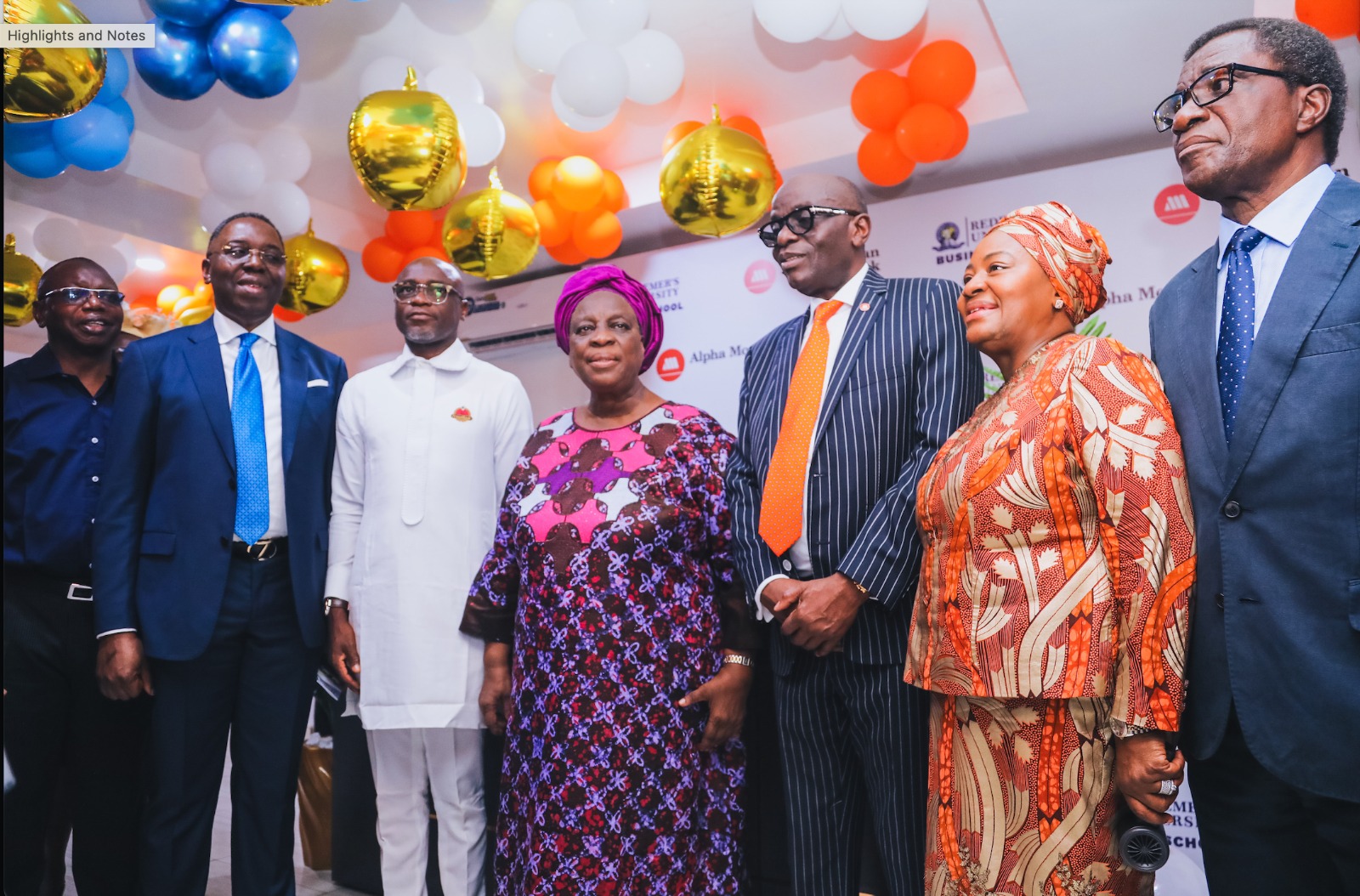
Alpha Morgan Bank Reinforces Commitment to Education at Redeemer’s University Business School Commissioning
Alpha Morgan Bank has reaffirmed its commitment to education and institutional development through its support for the commissioning of the Redeemer’s University Business School.
The Business School was officially inaugurated by Pastor (Mrs.) Folu Adeboye, at the commissioning ceremony attended by distinguished guests including Her Excellency, Mrs. Bola Obasanjo; the Pro-Chancellor and Chairman, Governing Council of Redeemers University, Professor Oluwatoyin Ogundipe; the Vice Chancellor, Professor Shadrach Olufemi Akindele; and other notable dignitaries.
Speaking at the event, the Managing Director of Alpha Morgan Bank reiterated the Bank’s commitment to supporting institutions that drive intellectual growth and national development.
As part of its broader focus on knowledge sharing and thought leadership, Alpha Morgan Bank will host its Economic Review Webinar in May 2026, bringing together experts to share insights on key economic trends and opportunities.
The Bank’s involvement reflects its continued dedication to empowering institutions and shaping the future of business and leadership in Nigeria.
Read more about Alpha Morgan Bank on www.alphamorganbank.com
PHOTO
L-R: Prof. Shadrach Olufemi Akindele, Vice Chancellor, Redeemers University, Engr. Eloka Eje, Dr Perez Araka, Pastor (Mrs) Folu Adeboye, Mother-In-Israel, The Redeemed Christian Church of God, Mr Ade Buraimo, MD/CEO Alpha Morgan Bank, Dr (Mrs) Oluwatomi Somefun, Dr. Simeon Ifere, at the inauguration of the Redeemer’s University Business School, Redemption City, Ogun State on Thursday 2nd April, 2026
Tinubu Aide Rebuts Rufai Oseni Over ₦3.3tn Power Debt Deal
Business
Aare Adetola Emmanuelking Welcomes President Tinubu to Gateway International Airport Commissioning in Iperu-Remo
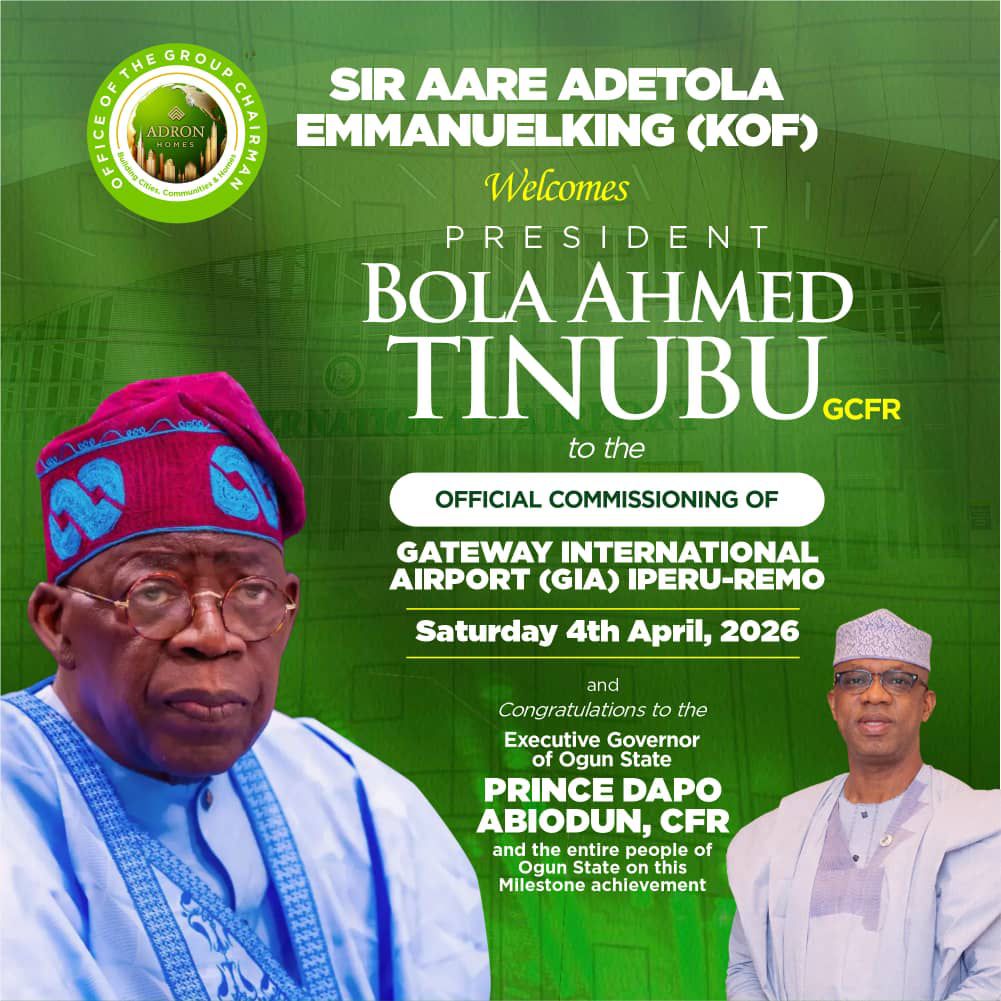
Aare Adetola Emmanuelking Welcomes President Tinubu to Gateway International Airport Commissioning in Iperu-Remo
In a momentous occasion that underscores the rapid infrastructural advancement of Ogun State, renowned real estate mogul and philanthropist, Aare Adetola Emmanuelking, warmly received the President of the Federal Republic of Nigeria, Bola Ahmed Tinubu, at the official commissioning of the Gateway International Airport, located in Iperu-Remo.
The landmark event, held under the visionary leadership of the Ogun State Governor, Dapo Abiodun, marks a significant stride in the state’s economic transformation agenda, positioning Ogun as a key hub for aviation, commerce, and investment in Nigeria.
Aare Emmanuelking, who is also the Chairman/CEO of Adron Homes and Properties, commended the Ogun State Government for its foresight and commitment to infrastructural excellence. He described the airport project as a “game-changer” that will not only boost connectivity but also stimulate real estate growth, tourism, and industrial expansion across the region.
Speaking during the commissioning, President Tinubu lauded Governor Abiodun’s administration for delivering a world-class facility that aligns with the Federal Government’s Renewed Hope Agenda, emphasizing the importance of strategic infrastructure in driving national development.
The Gateway International Airport is expected to serve as a critical gateway for investors and travelers, further enhancing Ogun State’s reputation as one of Nigeria’s most business-friendly environments.
The presence of top dignitaries, industry leaders, and stakeholders at the event underscores the project’s significance and its anticipated impact on the state’s socio-economic landscape and beyond.


- Seychelles Strengthens Human Rights Reporting through National Workshop April 8, 2026
- ABB’s Application Configurator brings speed and precision to grid-feeding protection system design April 7, 2026
- Can Equatorial Guinea Reposition as West Africa’s Gas Hub? April 7, 2026
- Afreximbank Partners with African Energy Week 2026 to Drive Africa-Led Energy Deals April 7, 2026
- Merck Foundation Marks ‘World Health Day’ 2026 – Transforming Patient Care in Africa and Beyond through 2600+ Scholarships for Healthcare Providers From 52 Countries April 7, 2026
- Morocco Gas Plan Reset Could Open Door to New Investment Models April 7, 2026
- African Petroleum Producers Organization (APPO) Secretary General Joins Angola Oil & Gas (AOG) 2026 as African Energy Bank Eyes June 2026 Debut April 7, 2026
- Ghanaian Biomedical Specialist Receives International Award April 7, 2026
- Grey Connects the Africa-Canada Money Corridor With Instant Transfers via Interac April 7, 2026
- Nigeria’s Oil Revival in Focus as Petroleum Minister Lokpobiri Joins Paris Energy Forum April 7, 2026
- Seychelles Strengthens Human Rights Reporting through National Workshop April 8, 2026
- ABB’s Application Configurator brings speed and precision to grid-feeding protection system design April 7, 2026
- Can Equatorial Guinea Reposition as West Africa’s Gas Hub? April 7, 2026
- Afreximbank Partners with African Energy Week 2026 to Drive Africa-Led Energy Deals April 7, 2026
- Merck Foundation Marks ‘World Health Day’ 2026 – Transforming Patient Care in Africa and Beyond through 2600+ Scholarships for Healthcare Providers From 52 Countries April 7, 2026
- Morocco Gas Plan Reset Could Open Door to New Investment Models April 7, 2026
- African Petroleum Producers Organization (APPO) Secretary General Joins Angola Oil & Gas (AOG) 2026 as African Energy Bank Eyes June 2026 Debut April 7, 2026
-

 news4 months ago
WHO REALLY OWNS MONIEPOINT? The $290 Million Deal That Sold Nigeria’s Top Fintech to Foreign Interests
-

 society7 months ago
“You Are Never Without Help” – Pastor Gebhardt Berndt Inspires Hope Through Empower Church (Video)
-

 celebrity radar - gossips2 months ago
Dr. Chris Okafor Returns with Power and Fire of the Spirit -Mounts Grace Nation Altar with Fresh Anointing and Restoration Grace on February 1, 2026
-

 celebrity radar - gossips4 months ago
Prophet Kingsley Aitafo Releases 2026 Prophecy: ‘Nigeria Will Rise, but the World Must Prepare for Turbulence’