
Business
FIRSTBANK EMPOWERS WOMEN THROUGH FIRSTGEM ONLINE COMMUNITY


First Bank of Nigeria Limited, Nigeria’s premier and leading financial inclusion services provider, has announced that its all-female online community www.firstgem.com.ng , offers mentoring, support and capacity building opportunities for all to create a new generation of financially literate women.
With the aim to increase its engagement and reach a wider audience, an online repository for its FirstGem product was created and designed to provide a virtual online community where like-minded women irrespective of where they are in Nigeria and abroad, gather to connect, grow and share knowledge on everything about lifestyle, parenting, career development, entrepreneurship, health, work and family. Financial empowerment and wealth creation ideas are shared to encourage women to play their part in providing financial support for their families.
The portal provides varied contents ranging from Blog stories to Vlogs, Newsletters, Chat rooms which are built on 6 pillars – Health, Wealth and Finance, Food and Recipes, Events, Entrepreneurship, Lifestyle and Beauty. The FirstGem online community presently has over 61,634 members drawn from all walks of life sharing ideas, insights and experiences.
According to Chuma Ezirim, Group Executive, e-Business & Retail Products, First Bank of Nigeria Limited, “FirstGem is suited for the Nigerian woman, and we are using this online community as the ideal opportunity to position the Bank’s gender initiatives to meet the required needs on a wide range of issues affecting women from lifestyle, skills acquisition, finances, wealth acquisition and management, business support, etc.
We encourage all women to join the community by signing up via this link https://firstgem.com.ng/community to enjoy this experience.
FirstGem is a gender specific account designed to meet the needs of women, aged 18 years and above. It is targeted at a broad spectrum of women, working professionals, entrepreneurs and MSMEs with a view to promoting growth via an array of benefits, from free business advisory services, regular information or insights on business opportunities in various sectors and industries, as well as mouth-watering discounts at partnered stores and outlets.FirstGem has successfully empowered women in states across the geo-political zones in Nigeria and the UK.
First Bank of Nigeria Limited (FirstBank) is the premier Bank in West Africa and the leading financial inclusion services provider in Nigeria for over 125 years.
With over 750 business locations and 53,000 Banking Agents spread across 99% of the 774 Local Government Areas in Nigeria, FirstBank provides a comprehensive range of retail and corporate financial services to serve its over 15 million customers. The Bank has international presence through its subsidiaries, FBN Bank (UK) Limited in London and Paris, FBNBank in the Republic of Congo, Ghana, The Gambia, Guinea, Sierra-Leone and Senegal, as well as a Representative Office in Beijing.
The Bank has been nimble at promoting digital payment in the country and has issued over 10million cards, the first bank to achieve such milestone in the country. FirstBank’s cashless transaction drive extends to having more than 9.5million people on its USSD banking service through the nationally renowned *894# banking service and over 3.5 million people on Firstmobile platform.
Since its establishment in 1894, FirstBank has consistently built relationships with customers focusing on the fundamentals of good corporate governance, strong liquidity, optimised risk management and leadership. Over the years, the Bank has led the financing of private investment in infrastructure development in the Nigerian economy by playing key roles in the Federal Government’s privatisation and commercialisation schemes. With its global reach, FirstBank provides prospective investors wishing to explore the vast business opportunities that are available in Nigeria, an internationally competitive world-class brand and a credible financial partner.
FirstBank has been named “Most Valuable Bank Brand in Nigeria” six times in a row (2011 – 2016) by the globally renowned “The Banker Magazine” of the Financial Times Group; “Best Retail Bank in Nigeria” for seven consecutive years (2011 – 2017) by the Asian Banker International Excellence in Retail Financial Services Awards and “Best Bank in Nigeria” by Global Finance for 15 years. Our brand purpose is to always put customers, partners and stakeholders at the heart of our business, even as we standardise customer experience and excellence in financial solutions across sub-Saharan Africa, in consonance with our brand vision “To be the partner of first choice in building your future”. Our brand promise is to always deliver the ultimate “gold standard” of value and excellence. This commitment is anchored on our inherent values of passion, partnership and people, to position You First in every respect.
Folake Ani-Mumuney
Group Head, Marketing & Corporate Communications


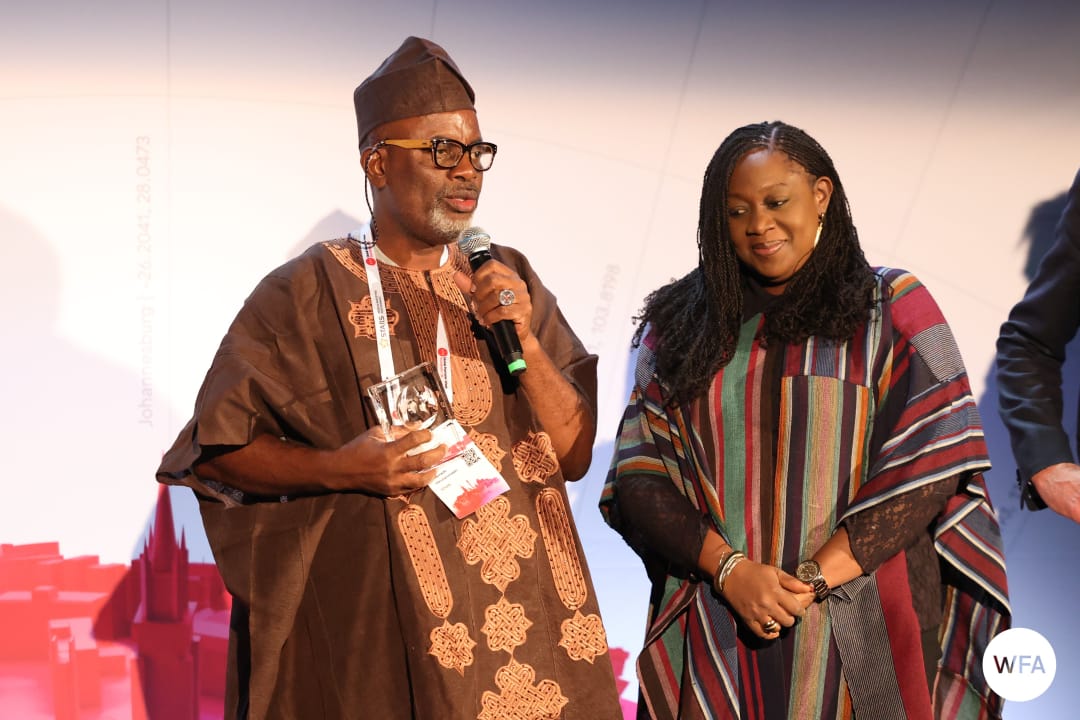
ADVAN Earns Global Recognition As WFA President’s Award Winner For “Project Freedom”
The Advertisers Association of Nigeria (ADVAN) has been recognised on the global stage as a recipient of the prestigious WFA President’s Award, presented by the World Federation of Advertisers during its Global Marketer Week in Stockholm. The recognition places ADVAN among a select group of leading industry associations worldwide acknowledged for driving meaningful impact in marketing and society.
The WFA President’s Awards, established in 2010, celebrate national industry associations whose initiatives advance the marketer’s agenda and contribute to positive change. This year’s honours were awarded following a rigorous selection process involving 38 submissions from associations across the WFA’s global network, with winners chosen for their measurable impact and potential for replication across markets.
ADVAN’s recognition comes through its advocacy initiative, Project Freedom, a bold and strategic effort focused on addressing the challenges of stifling, non–data-driven regulations affecting businesses in Nigeria and across Africa. The initiative underscores the importance of evidence-based policymaking while championing the constitutional right to freedom of commerce.
Through Project Freedom, ADVAN has taken a proactive leadership role in engaging key stakeholders and shaping conversations around fair, balanced, and transparent regulation. The initiative reflects a shift toward constructive dialogue and collaboration, ensuring that regulatory frameworks support innovation, protect consumer interests, and enable sustainable business growth.
By earning this global recognition, ADVAN reinforces the growing influence of African marketing institutions in shaping international discourse. Its work highlights how local advocacy, when rooted in data and guided by clear principles, can deliver impact not just within national borders but across the global marketing ecosystem.
The award also affirms ADVAN’s commitment to strengthening self-regulation within the industry, fostering accountability, and promoting standards that align with global best practices while remaining relevant to local realities.
As the marketing landscape continues to evolve, ADVAN’s recognition by the World Federation of Advertisers signals a strong endorsement of its leadership and vision. It positions the association as a key voice in advancing responsible marketing, advocating for enabling policies, and ensuring that businesses can operate in an environment that supports both innovation and economic freedom.


*PUBLIC NOTICE*: Revalidation of UNIPGC Organizational Status
To prevent any misunderstanding regarding our affiliation with the United Nations, we hereby provide a formal clarification on the status and identity of the United International Peace and Governance Council (UNIPGC), formerly known as IPGC.
UNIPGC is an independent Civil Society Organization and Non-Governmental Organization with continental chapters registered in the United States, Germany, Canada, and several countries across Africa. The organization is committed to promoting the values and principles of the United Nations, particularly in advancing Sustainable Development Goal 16 (Peace, Justice, and Strong Institutions), as well as advocating for good governance globally.
In furtherance of its mandate, UNIPGC has established partnerships with reputable diplomatic civil society organizations, including the United Nations Association of Nigeria and the United Nations Association of Ghana. These collaborations are aimed at strengthening its engagement with initiatives aligned with United Nations ideals.
Additionally, UNIPGC has entered into diplomatic relations with the International Organization for Economic Development (IOED), an Intergovernmental Organization (IGO), to enhance its capacity for international cooperation and diplomatic engagement.

We wish to clearly state that UNIPGC is **not** an entity, agency, or organ of the United Nations.
Members of the public and media practitioners are respectfully advised to refer to the organization by its full and correct name: **United International Peace and Governance Council (UNIPGC)**, and not as the United Nations.
Thank you.
Business
Laffmattazz Announces Strategic Partnership with First Bank of Nigeria Limited for 2026 International Tour

Laffmattazz Announces Strategic Partnership with First Bank of Nigeria Limited for 2026 International Tour
Laffmattazz, one of Nigeria’s foremost comedy and live entertainment brands, is pleased to announce its official partnership with First Bank of Nigeria Limited for the highly anticipated Laffmattazz 2026 International Tour, themed “Next Chapter: A New Season of Laughter.”
Now in its 15th year, Laffmattazz—the brainchild of renowned Nigerian comedian Gbenga Adeyinka (Gbenga Adeyinka 1st)—has evolved into a cultural phenomenon, celebrated for its seamless fusion of comedy, music, and live stage performances.
The 2026 tour, which kicked off on Easter Sunday, April 5th, 2026 at the Jogor Centre, Ibadan, marks a significant milestone in the brand’s journey. Building on over a decade of success across Nigeria, this year’s edition signals a bold expansion into the international market, with a multi-city run in Canada, alongside major stops in Akure, Abeokuta, and Lagos.
This strategic partnership with First Bank of Nigeria Limited underscores a shared commitment to excellence and innovation. It is also aligned with FirstBank’s First@Arts initiative—a significant and ongoing program dedicated to supporting the creative arts, entertainment, and cultural sectors. Through this initiative, FirstBank provides financing, advisory services, and actively fosters a sustainable value chain for artists and creative entrepreneurs, while supporting key industry platforms such as the Nigerian Entertainment Conference.
Speaking on the collaboration, the Laffmattazz team stated:
“We are delighted to welcome First Bank of Nigeria Limited as a strategic partner for the Laffmattazz 2026 International Tour. As we mark 15 remarkable years of Laffmattazz, this partnership reinforces our vision to take premium Nigerian entertainment beyond borders, while delivering even bigger, better, and more memorable experiences for our audiences.”
As a key partner, First Bank will enrich the tour through innovative customer engagement initiatives, experiential activations, and exclusive fan experiences across all tour locations.
With its distinctive blend of humor, culture, and live entertainment, the Laffmattazz 2026 Tour is poised to connect audiences across cities and continents, bringing laughter to thousands of fans worldwide.
⸻
About Laffmattazz
Laffmattazz is a premier Nigerian comedy and entertainment brand, now in its 15th year, renowned for its vibrant live shows and nationwide tours. Founded by Gbenga Adeyinka 1st, the brand continues to deliver high-quality experiences that celebrate creativity, culture, and laughter.
About First Bank of Nigeria Limited
First Bank of Nigeria Limited is Nigeria’s oldest financial institution, widely respected for its legacy of trust, innovation, and customer-centric financial solutions that support economic growth and development. Through its First@Arts initiative, the Bank continues to play a pivotal role in empowering the creative industry and driving sustainable growth across the sector.


- Ambassador Yin Chengwu Delivers a Lecture at the Gabriel L. Dennis Foreign Service Institute of Liberia April 26, 2026
- Eritrea: World Malaria Control Day Observed at National Level April 26, 2026
- Vantage Capital Invests $45 Million in International Group for Modern Coatings (MIDO), a Leading Egypt-Based Specialty Paints and Coatings Manufacturer April 26, 2026
- Eritrea: Tour of inspection to developmental sites April 26, 2026
- Ambassador Gao Wenqi Calls on Chairperson of Rwanda National Commission for Human Rights April 25, 2026
- President Barrow Receives United States (U.S.) Embassy Chargé d’Affaires and African Union (AU) Sahel Delegation, Reaffirms Commitment to Peace, and Regional Dialogue April 25, 2026
- President El-Sisi Returns to Egypt after Attending a Meeting of Regional and European Union (EU) Leaders in Cyprus April 25, 2026
- Acute food insecurity and malnutrition remain alarmingly high as crises deepen, United Nations (UN), European Union (EU) and partners warn in new report April 25, 2026
- African Union Commends Morocco’s Strategic Contribution to Peace, Security and Governance in Africa While Jointly Advancing Electoral Integrity and Digital Democracy April 25, 2026
- Nigeria - Engagement Between Tanzania Building Agency (TBA) and Department of Facility Maintenance and Management, Federal Capital Territory Administration (FCTA) April 24, 2026
- Ambassador Yin Chengwu Delivers a Lecture at the Gabriel L. Dennis Foreign Service Institute of Liberia April 26, 2026
- Eritrea: World Malaria Control Day Observed at National Level April 26, 2026
- Vantage Capital Invests $45 Million in International Group for Modern Coatings (MIDO), a Leading Egypt-Based Specialty Paints and Coatings Manufacturer April 26, 2026
- Eritrea: Tour of inspection to developmental sites April 26, 2026
- Ambassador Gao Wenqi Calls on Chairperson of Rwanda National Commission for Human Rights April 25, 2026
- President Barrow Receives United States (U.S.) Embassy Chargé d’Affaires and African Union (AU) Sahel Delegation, Reaffirms Commitment to Peace, and Regional Dialogue April 25, 2026
- President El-Sisi Returns to Egypt after Attending a Meeting of Regional and European Union (EU) Leaders in Cyprus April 25, 2026
-

 news4 months ago
WHO REALLY OWNS MONIEPOINT? The $290 Million Deal That Sold Nigeria’s Top Fintech to Foreign Interests
-

 celebrity radar - gossips3 months ago
Dr. Chris Okafor Returns with Power and Fire of the Spirit -Mounts Grace Nation Altar with Fresh Anointing and Restoration Grace on February 1, 2026
-

 celebrity radar - gossips7 months ago
End of an Era: Nigeria Mourns Evangelist Dr. Uma Ukpai, 80
-

 celebrity radar - gossips5 months ago
Prophet Kingsley Aitafo Releases 2026 Prophecy: ‘Nigeria Will Rise, but the World Must Prepare for Turbulence’