
Business
FIRSTBANK INTRODUCES THE FIRST HUMANOID ROBOT

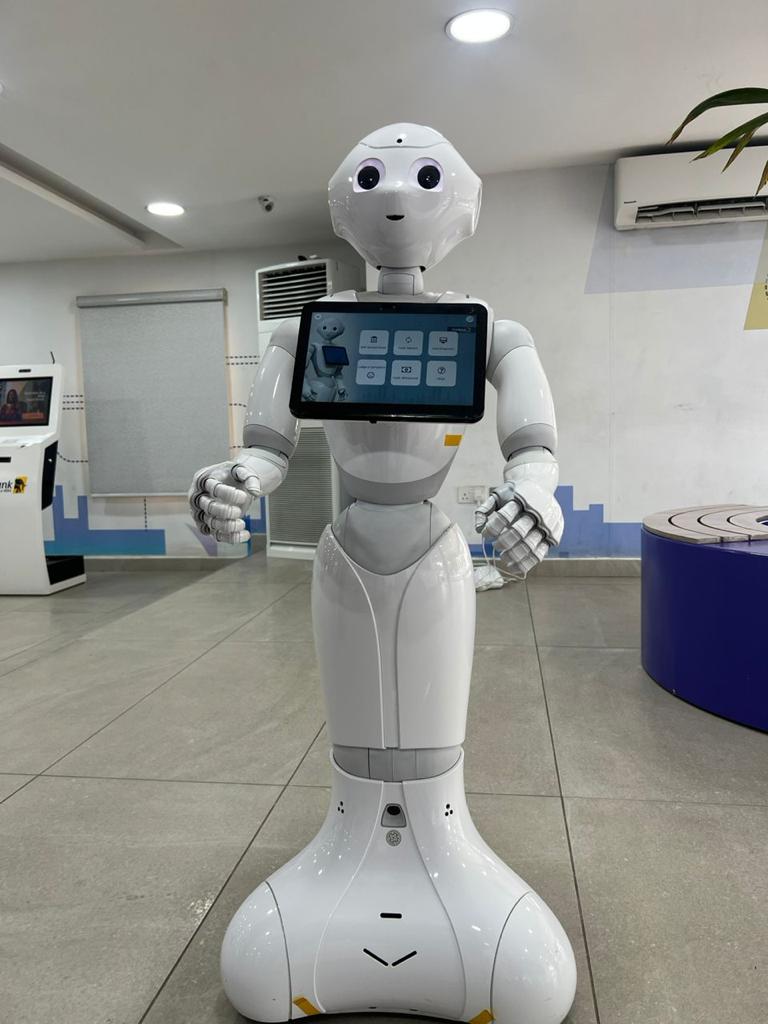
FIRSTBANK INTRODUCES THE FIRST HUMANOID ROBOT, REINFORCES ITS COMMITMENT TO PROVIDING INNOVATIVE FINANCIAL SOLUTIONS FOR CUSTOMERS
- FirstBank has launched an industry-first Humanoid Robot at its Adetokunbo Ademola VI, Lagos Digital Experience Centre (DXC) Branch
- The robot is among the phased configuration of the bank’s state-of-the-art digitally led self-service branch
- The Humanoid Robot is equipped with Video Banking and Artificial Intelligence (AI), taking on the role of friendly branch staff.
In furtherance to its leading role in providing innovative financial solutions in Nigeria, First Bank of Nigeria Limited, Nigeria’s premier financial institution and leading financial inclusion services provider, has announced the launch of a Humanoid Robot, the first of its kind in the financial services space in Nigeria. The robot is equipped with Video Banking and Artificial Intelligence (AI), taking on the role of a friendly branch staff.
The Humanoid Robot can engage customers in conversations as well as through a touch screen strapped to his chest. The services performed by the robot include responding to customer enquiries on cash deposits, withdrawals, and ATM cards. The robot also aids complaint management as customers can log a complaint via QR with feedback generated within the advised time.

The Humanoid Robot also keeps customers up to date with happenings about the Bank, including products launch and upgrades designed to strengthen the customer experience and satisfaction. The robot is a one-stop point to keep customers informed about the Bank. It also effectively manages customers’ accounts.
Expressing his delight at the initiative, Dr Adesola Adeduntan, the CEO of FirstBank Group noted that “the addition of the Humanoid Robot to our state-of-the-art Digital Experience Centre represents a purposeful stride towards transforming the banking landscape in the country and further showcases the priority we give to innovation within the Bank. With its advanced capabilities, the robot is designed to elevate the quality of our customers’ lives in today’s rapidly evolving digital world. Our unwavering dedication to delivering unparalleled banking services remains steadfast, as we leave no stone unturned in innovating to fulfil our customers’ needs.” he concluded.
The introduction of the Humanoid Robot is among the phased configuration of the Bank’s state-of-the-art digitally led self-service branch called Digital Experience Centre, launched in December 2021.
Another Humanoid Robot will also be deployed in the Bank’s next and second Digital Experience Centre, soon to be announced in the coming months.
About FirstBank
First Bank of Nigeria Limited (FirstBank) is the premier Bank in West Africa and the leading financial inclusion services provider in Nigeria for 129 years.
With over 800 business offices across our footprints and over 200,000 Banking Agents spread across 99% of the 774 Local Government Areas in Nigeria, FirstBank provides a comprehensive range of retail and corporate financial services to serve its over over 41 million customer accounts (including digital wallets) in Nigeria and over 700,000 customer accounts outside the country. The Bank has an international presence with subsidiaries operating in 9 other countries. These subsidiaries are FirstBank (UK) Limited in London and Paris, FirstBank in The Gambia, FirstBank Sierra-Leone, FirstBank in the Republic of Congo, FBNBank in Ghana, FBNBank in Guinea, FBNBank in Senegal as well as a Representative Office in Beijing, China. The Bank is at the forefront of promoting digital banking in the country and has issued over 12 million cards, the first bank to achieve such a milestone. FirstBank’s cashless transaction drive extends to having more than 12 million people on its USSD Quick Banking service through the nationally renowned *894# Banking code and over 4.5 million people on the FirstMobile platform. It is, by far, the leader in the number of digital transactions per minute across multiple channels.
FirstBank’s commitment to Diversity is shown in its policies, partnerships and initiatives, such as its employees’ ratio of female to male (about 39%:61%; and 32% women in management) as well as the FirstBank Women Network, an initiative that seeks to address the gender gap and increase the participation of women at all levels within the organization. In addition, the Bank’s membership of the UN Women is an affirmation of a deliberate policy that is consistent with UN Women’s Women Empowerment’s Principles – Equal Opportunity, Inclusion, and Nondiscrimination.
Since its establishment in 1894, FirstBank has consistently built relationships with customers focusing on the fundamentals of good corporate governance, strong liquidity, optimised risk management and leadership. Over the years, the Bank has led the financing of private investment in infrastructure development in the Nigerian economy by playing key roles in the Federal Government’s privatisation and commercialisation schemes. With its global reach, FirstBank provides prospective investors wishing to explore the vast business opportunities available in Nigeria an internationally competitive world-class brand and a credible financial partner.
For six consecutive years (2011 – 2016), FirstBank was named “Most Valuable Bank Brand in Nigeria” by the globally renowned The Banker Magazine of the Financial Times Group and “Best Retail Bank in Nigeria” eight times in a row, 2011 – 2018, by the Asian Banker International Excellence in Retail Financial Services Awards.
Notably, in 2022, the Bank took a long stride on its growth trajectory with the Bank’s Viability and Long-Term Issuer Default Ratings upgraded to ‘B’ from ‘B-‘ (with Outlooks Stable) by Fitch, a leading global rating agency. This is an indication of the Bank’s strong internal capital generation and the corresponding recession of its risks to capitalisation. Fitch also upgraded the Bank’s National Long-Term Ratings to ‘A (nga)’ from ‘BBB (nga)’, to reflect its improved creditworthiness relative to that of other issuers in Nigeria. Furthermore, the Top 100 African Bank rankings 2022 released by The Banker Magazine revealed FirstBank’s ranking as number one in Nigeria in terms of Overall Performance, Profitability, Efficiency and Return on Risk.
Other laudable feats in 2022 include FirstBank’s international recognitions on major indices by Euromoney Market Leaders, an independent global assessment of the leading financial service providers where FirstBank was crowned:
- Market Leader: (tier-1 recognition) in Corporate and Social Responsibility (CSR),
- Market Leader: (tier -1 recognition) Environmental, Social and Governance (ESG),
- Highly Regarded: in Corporate Banking and Digital Solutions,
- Notable: in SME Banking.
Also, in 2022 International Finance Magazine named the Bank “Most Innovative Banking Product in Nigeria” and “Best Retail Bank in Nigeria”. FirstBank was also awarded “Best Corporate Banking Western Africa, 2022” and “Best CSR Bank Western Africa, 2022’’ by Global Banking and Finance Magazine. Other notable awards in FirstBank coffers include: “Best Bank in Nigeria” by Global Finance magazine – fifteen times in a row; “Best Private Bank in Nigeria-2021” awarded by Global Finance magazine; “Best Internet Banking Nigeria” and ‘’Best CSR Bank Africa’’ by International Business Magazine.
In 2023, FirstBank has received notable awards including “Best Private Bank for Sustainable Investing in Africa 2023” by Global Finance Awards; “Best Sustainable Bank in Nigeria 2023” by International Investors Awards; “Best Bespoke Banking Services in Nigeria 2023” by International Investors Awards; “Best Financial Inclusion Service Provider in Nigeria 2023” by Digital Banker Africa; and “African Bank of the Year” by African Leadership Magazine.
Our vision is ‘To be Africa’s Bank of first choice’ and our mission is ‘To remain true to our name by providing the best financial services possible. This commitment is anchored on our core values of EPIC – Entrepreneurship, Professionalism, Innovation and Customer-Centricity. Our strategic ambition is ‘To deliver accelerated growth in profitability through customer-led innovation and disciplined execution and our brand promise is always to deliver the ultimate “gold standard” of value and excellence to position You First in every respect.
Folake Ani-Mumuney
Group Head, Marketing & Corporate Communications
First Bank of Nigeria Limited





*Oceangate Engineering Oil & Gas LTD to appeal Federal High ruling over forfeiture assets*
Oceangate Engineering Oil & Gas Limited has said it will appeal to the recent ruling of the Federal High Court ordering the forfeiture of certain assets.
Barr. Nnenna Onyeaso, the Company Secretary said in a statement on Thursday insisting that neither the company nor its leadership was found guilty of any wrongdoing.
Onyeaso said that the firm has described the court’s decision as a civil asset forfeiture order based on suspicion rather than proof, stressing that the judgment did not establish any criminal liability against the organisation.
According to her, the company maintain that it has already directed its legal team to file an appeal, expressing confidence in the judicial process and the outcome of a thorough review of the case.
“To be clear, this ruling is a civil asset forfeiture order with no finding of wrongdoing against Oceangate or its leadership.
“The court’s decision rested on a legal standard of suspicion, not proof, and it is one we intend to pursue fully through the appeals process,” she said in a statement.
The firm secretary also said that Oceangate has reiterated its belief in the rule of law, noting that the appellate system exists to address such outcomes.
She added that the company remained confident that the facts of the case will ultimately affirm its integrity and business practices.
Onyeaso said that the firm also emphasised that its operations remained unaffected, stating that it continues to provide employment for many Nigerians while contributing to the country’s energy sector and broader economy.
“We have always believed in the ability of the judicial process, and that belief has not wavered,” she added.
She noted that Oceangate further expressed appreciation to its employees, partners, and clients for their continued support amid the development, assuring stakeholders of its commitment to transparency and accountability.
The Secretary said that the company reaffirmed its confidence in Nigeria as a viable destination for investment, describing the country as a land of equity, growth, and opportunity.
“We remain committed to the continued growth of our business and the communities we serve as we are optimistic that justice will prevail at the end of the legal process.
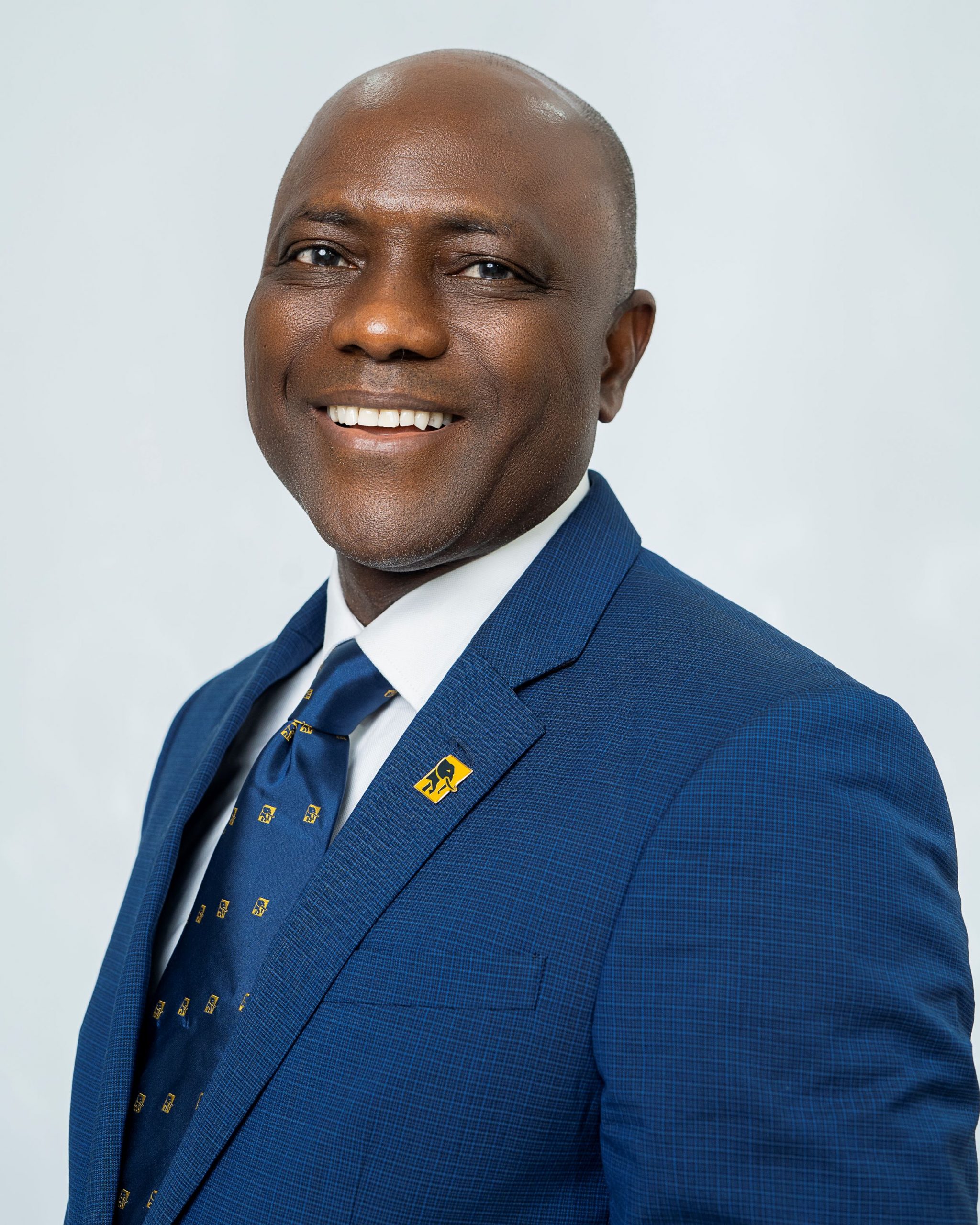
FirstBank Empowers SMEs with AI-Driven Growth Strategies, Hosts SMEConnect Webinar
Lagos, 20 March 2026 – FirstBank, West Africa’s premier financial institution and financial inclusion services provider, is pleased to announce the upcoming edition of the SMEConnect Webinar scheduled to hold on Tuesday, 31 March 2026. The event will equip small and medium-sized enterprises (SMEs) with the knowledge and tools to harness the power of Artificial Intelligence (AI) for business growth.
This edition is strategically curated to inform and educate SMEs on how AI can be applied to scale their businesses in today’s rapidly evolving digital economy. The chosen theme, “AI for Business Growth: From Adoption to Integration and Scalable Impact,” reflects the growing importance and timeliness of AI as one of the most influential trends shaping the SME business landscape. The session will provide SMEs with actionable insights on how to leverage AI to enhance productivity, streamline operations, strengthen customer engagement, and make smarter, data-driven decisions.
The SMEConnect webinar will feature experts, including Temitope Odude, Senior AI Solutions Architect at Microsoft as a guest speaker. Odude will provide credible and globally relevant perspectives on how SMEs can successfully adopt and integrate AI into their everyday business operations. Other speakers include Abednego Ugwueke, Head of Digital Channels and Ibidun Adedewe, Head of SME Acquisition & Partnerships at FirstBank.
Speaking ahead of the event, Chuma Ezirim, Group Executive, e-Business and Retail Products at FirstBank, said “SMEs are the backbone of the Nigerian economy, and at FirstBank, we recognise that the economy cannot thrive without them. As a committed growth partner to SMEs, this session reinforces our strong focus on innovation, demonstrated through initiatives such as the use of AI‑enabled credit scoring to deliver fast, instant loans to micro‑SMEs, with over ₦1 trillion disbursed to support customers’ financial needs. Building on this foundation, we are equipping business owners with the right knowledge and practical insights on Artificial Intelligence to help them scale in the short term and drive sustainable growth. I encourage every business owner to participate in this session to gain hands‑on guidance on integrating AI into everyday business operations.”
SME owners and entrepreneurs can register for the webinar at https://firstbanknigeria.zoom.us/webinar/register/WN_cUr1LhWFQXymTqWtONOOVg
SMEConnect Webinar series is one of FirstBank’s signature platforms for supporting SMEs with practical knowledge and strategic insights. The Bank has consistently won awards for impacting businesses and for providing innovative solutions for customers and other stakeholders, including SMEs.
The Bank was named Best SME Bank in Nigeria and Best SME Bank in Africa by TAB Global Excellence in Retail Finance Awards for 2 years as at 2025. The Bank also won the SME Financier of the Year- Nigeria awarded by The Digital Banker.
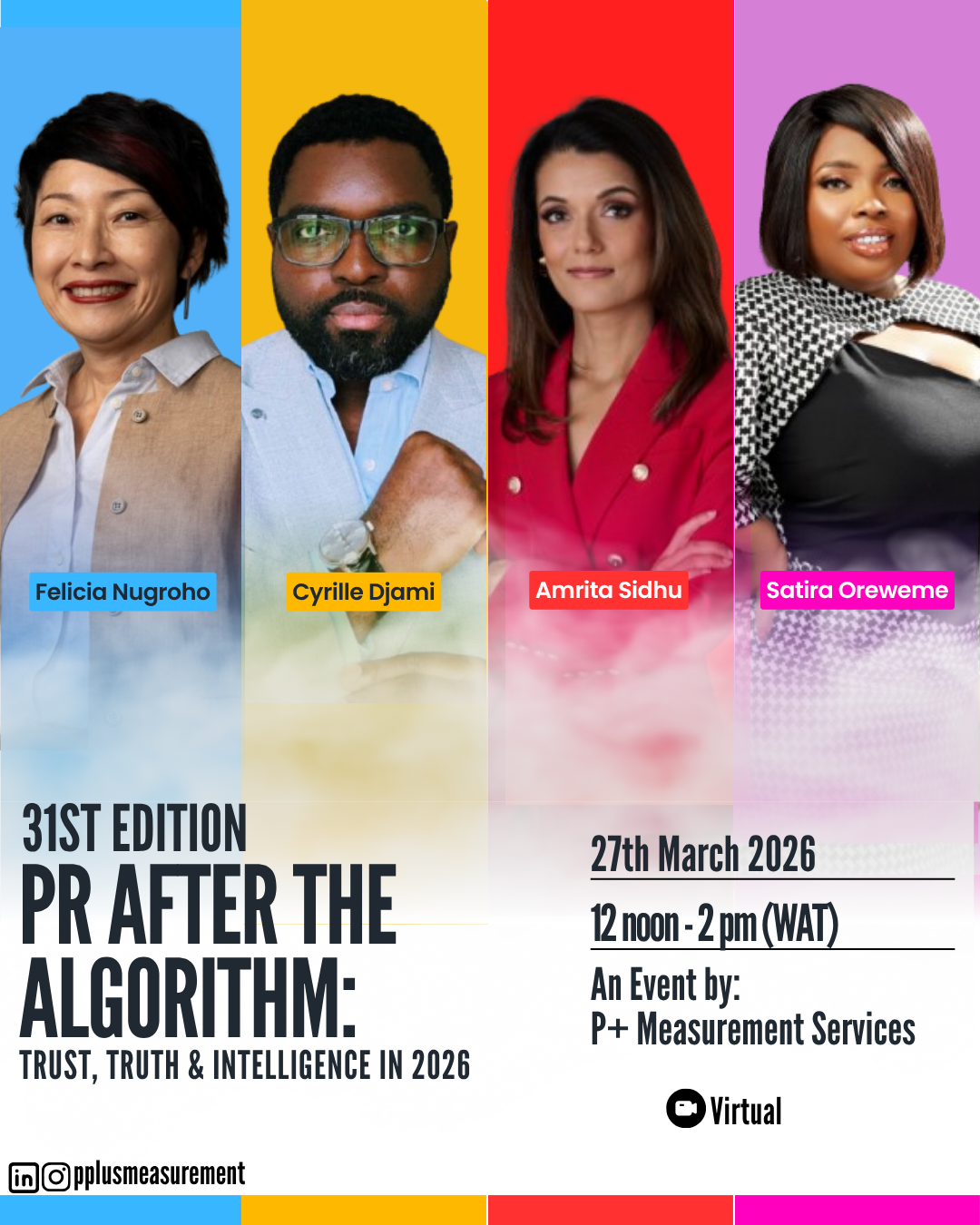
EvaluatePR to Explore “PR After the Algorithm: Trust, Truth & Intelligence in 2026
P+ Measurement Services, Nigeria’s leading independent media intelligence and PR measurement agency, will host the 31st edition of its flagship thought-leadership platform, EvaluatePR, on Friday, March 27, 2026, at 12:00 p.m. (WAT).
Themed “PR After the Algorithm: Trust, Truth & Intelligence in 2026,” this virtual session will convene professionals across public relations, communications, and media measurement to explore how algorithms, artificial intelligence, and digital ecosystems are reshaping reputation management, media influence, and audience trust.
With the increasing role of automation in communications, the event will challenge professionals to rethink how credibility is built and sustained in a fast-evolving digital landscape, while emphasizing the need for transparency, ethical measurement, and strategic intelligence.
The session will feature a distinguished lineup of speakers representing diverse expertise across global communications, media intelligence, and analytics: Felicia Nugroho – Director, Analytics & Insights, Maverick Indonesia / Chair, Asia Pacific & International Board Director, AMEC; Cyrille Djami – Founder & Publisher, CommsOfAfrica; Strategic Communications, Editorial and Influence Consultant; Amrita Sidhu – Managing Director, Medianet / Director & Board Representative, AsiaNet / Board Member, AMEC; and Satira Osemudiamen Oreweme – Principal Consultant, Satira Media & Public Relations Limited.
Together, they will lead insightful discussions on how communicators can navigate the intersection of technology and trust, maintain authenticity in automated environments, and leverage data-driven intelligence to deliver meaningful communication outcomes.
Participation in the session is free, with access available via the official registration link:
https://bit.ly/4stWjUh


-

 society6 months ago
Religion: Africa’s Oldest Weapon of Enslavement and the Forgotten Truth
-

 news4 months ago
WHO REALLY OWNS MONIEPOINT? The $290 Million Deal That Sold Nigeria’s Top Fintech to Foreign Interests
-

 society6 months ago
“You Are Never Without Help” – Pastor Gebhardt Berndt Inspires Hope Through Empower Church (Video)
-

 celebrity radar - gossips2 months ago
Dr. Chris Okafor Returns with Power and Fire of the Spirit -Mounts Grace Nation Altar with Fresh Anointing and Restoration Grace on February 1, 2026