
Business
FIRSTBANK’S SPONSORED MOVIE, ‘AYINLA’, PREMIERES THIS SUNDAY IN LAGOS


FIRSTBANK’S SPONSORED MOVIE, ‘AYINLA’, PREMIERES THIS SUNDAY IN LAGOS
SaharaWeeklyNG Reports That First Bank of Nigeria Limited announces its lead sponsorship of the movie titled ‘Ayinla’, which is billed to premiere on Sunday, 13 June 2020.

The movie is suspense-driven, narrating the life of Ayinla Yusuf, popularly known as Ayinla Omowura (an Apala musician), his rise to fame, his identity, the depth of his craft and music, and the basis for his relevance after his tragic death forty years ago as a result of a stab from his manager, Bayewu, during a bar fight on the 6th of May, 1980 in Abeokuta.
Ayinla is directed by multiple award-winning and globally acclaimed Nigerian filmmaker and director, Tunde Kelani, and produced by Jadesola Osiberu.
According to Tunde Kelani, filmmaker and founder, Mainframe Opomulero Productions,” the making of Ayinla allows us to throw a glance over our shoulders to our often-neglected intangible heritage. Nigeria is blessed with huge cultural diversity and locked away are thousands of stories we can share with a global audience.
FirstBank’s partnership with us at this stage is not a mere coincidence, owing to its over hundred years of historical contribution in unlocking the huge potentials in Nigeria which can offer continental and global audiences”.
With the sponsorship of similar socio-cultural initiatives in the creative arts industry like Moremi, Makaliki, Oba Esugbayi stage drama, October 1st (a movie), and the Calabar Festival. The Bank’s sponsorship of ‘Ayinla’ affirms the Bank’s support for the development of arts in Nigeria under its First@arts initiative.
First@arts is FirstBank’s platform for consolidating all its efforts in the arts, supporting the entire value chain of the creative arts, providing much-needed financing and advisory support, showcasing and facilitating the successes of the industry, and enabling customers to explore and access the wealth of opportunities the creative industry has to offer.
Achieving these and a host of many others have been implemented through strategic partnerships with organizations like the British Council, Duke of Shomolu Productions, Live Theatre Lagos, Freedom Park, Terra Kulture, and the Cross Rivers State Government (Calabar Festival), amongst many others.
Ayinla appeals to a multifaceted audience that cuts across fans of highlife and afrobeat music, the youth, and the elite Yoruba demography.
It features some of Nollywood’s favorite stars including Adedimeji Lateef who played the role of Ayinla Omowura, Kunle Afolayan, Bimbo Ademoye, Mr. Macaroni, Omowunmi Dada, Ade Laoye, Jumoke Otedola, and Bimbo Manuel.
Speaking on the movie, Jadesola Osiberu, Movie Producer & Founder, Greoh Studios said, “Working with the great Tunde Kelani is something I have wanted to do for a long time, and I am so glad that we were able to do it on a project like Ayinla.
This collaboration was an interesting experience, and I am glad everyone finally gets to see the film we made in the cinemas nationwide from 18 June 2021. I’d like to thank the management of First Bank of Nigeria Limited for choosing to come on this journey with us.”
Expressing her delight on the movie, Folake Ani-Mumuney, Group Head, Marketing & Corporate Communications, FirstBank said; “For over 127 years, FirstBank has been at the forefront of nation-building; enabling Nigeria and Nigerians through resourceful partnerships to build the Nigerian creative industry value chain, especially the arts and entertainment sub-sectors.
We remain proud of this sponsorship that creates an excellent platform to showcase Nigeria to the world as being part of a collective goal to continually keep dreams and hope alive; holding strong to our commitment to reignite cultural heritage.”
“Without a doubt, the movie industry remains part of the creative and entertainment industry value-chain across the globe and indeed a powerful channel to drive our heritage and culture, which resonates with our legacy of being woven into the fabric of society.”
According to research disclosed in PWC’s recent Entertainment & Media Outlook report, Nigeria’s entertainment is expected to rise from $4.46 billion in 2018 to a $10.5 billion market by the end of 2023. In addition, with this initiative and other sponsored events, FirstBank is committed to strengthening its contribution to the development of the entertainment industry in the country.





*Oceangate Engineering Oil & Gas LTD to appeal Federal High ruling over forfeiture assets*
Oceangate Engineering Oil & Gas Limited has said it will appeal to the recent ruling of the Federal High Court ordering the forfeiture of certain assets.
Barr. Nnenna Onyeaso, the Company Secretary said in a statement on Thursday insisting that neither the company nor its leadership was found guilty of any wrongdoing.
Onyeaso said that the firm has described the court’s decision as a civil asset forfeiture order based on suspicion rather than proof, stressing that the judgment did not establish any criminal liability against the organisation.
According to her, the company maintain that it has already directed its legal team to file an appeal, expressing confidence in the judicial process and the outcome of a thorough review of the case.
“To be clear, this ruling is a civil asset forfeiture order with no finding of wrongdoing against Oceangate or its leadership.
“The court’s decision rested on a legal standard of suspicion, not proof, and it is one we intend to pursue fully through the appeals process,” she said in a statement.
The firm secretary also said that Oceangate has reiterated its belief in the rule of law, noting that the appellate system exists to address such outcomes.
She added that the company remained confident that the facts of the case will ultimately affirm its integrity and business practices.
Onyeaso said that the firm also emphasised that its operations remained unaffected, stating that it continues to provide employment for many Nigerians while contributing to the country’s energy sector and broader economy.
“We have always believed in the ability of the judicial process, and that belief has not wavered,” she added.
She noted that Oceangate further expressed appreciation to its employees, partners, and clients for their continued support amid the development, assuring stakeholders of its commitment to transparency and accountability.
The Secretary said that the company reaffirmed its confidence in Nigeria as a viable destination for investment, describing the country as a land of equity, growth, and opportunity.
“We remain committed to the continued growth of our business and the communities we serve as we are optimistic that justice will prevail at the end of the legal process.
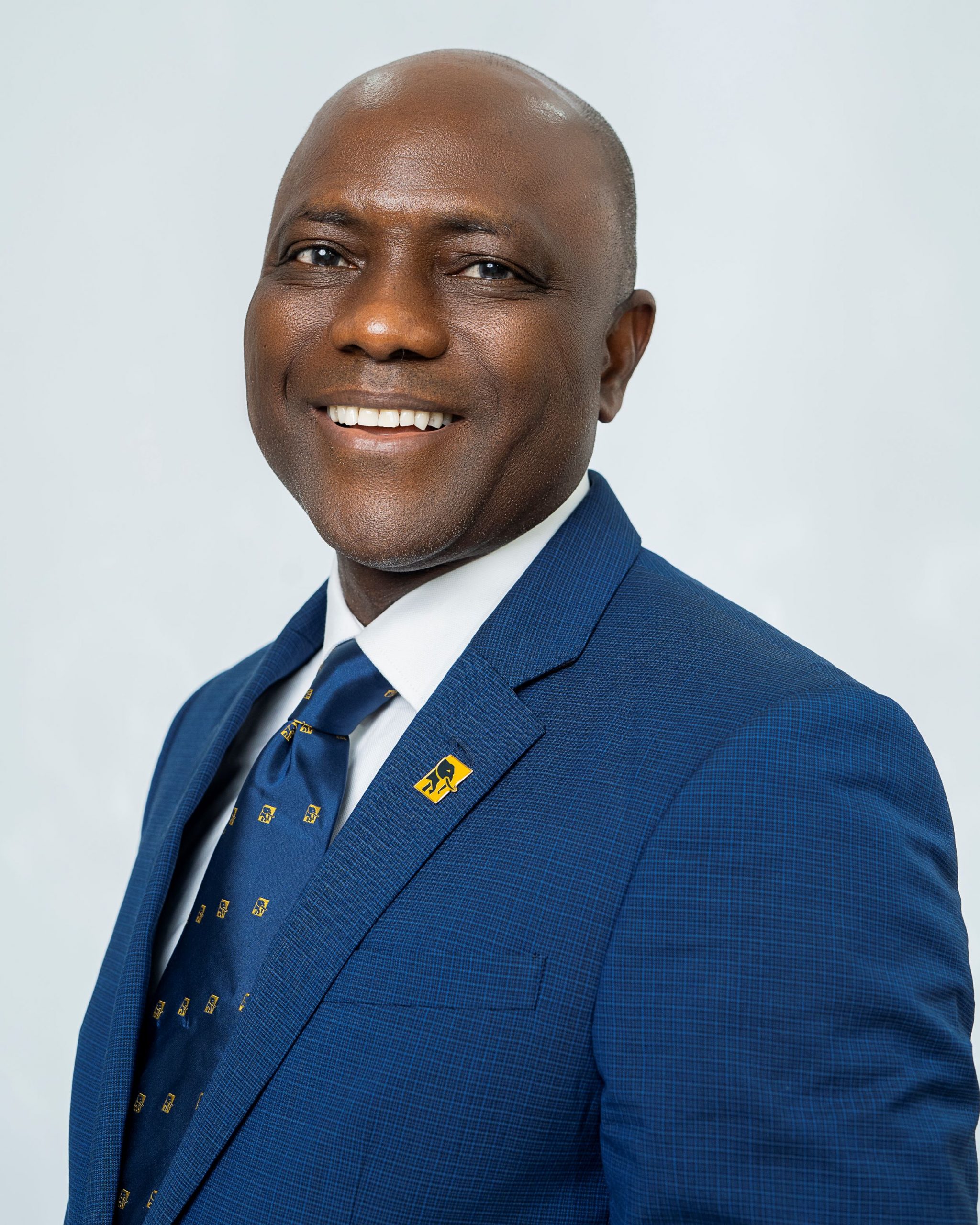
FirstBank Empowers SMEs with AI-Driven Growth Strategies, Hosts SMEConnect Webinar
Lagos, 20 March 2026 – FirstBank, West Africa’s premier financial institution and financial inclusion services provider, is pleased to announce the upcoming edition of the SMEConnect Webinar scheduled to hold on Tuesday, 31 March 2026. The event will equip small and medium-sized enterprises (SMEs) with the knowledge and tools to harness the power of Artificial Intelligence (AI) for business growth.
This edition is strategically curated to inform and educate SMEs on how AI can be applied to scale their businesses in today’s rapidly evolving digital economy. The chosen theme, “AI for Business Growth: From Adoption to Integration and Scalable Impact,” reflects the growing importance and timeliness of AI as one of the most influential trends shaping the SME business landscape. The session will provide SMEs with actionable insights on how to leverage AI to enhance productivity, streamline operations, strengthen customer engagement, and make smarter, data-driven decisions.
The SMEConnect webinar will feature experts, including Temitope Odude, Senior AI Solutions Architect at Microsoft as a guest speaker. Odude will provide credible and globally relevant perspectives on how SMEs can successfully adopt and integrate AI into their everyday business operations. Other speakers include Abednego Ugwueke, Head of Digital Channels and Ibidun Adedewe, Head of SME Acquisition & Partnerships at FirstBank.
Speaking ahead of the event, Chuma Ezirim, Group Executive, e-Business and Retail Products at FirstBank, said “SMEs are the backbone of the Nigerian economy, and at FirstBank, we recognise that the economy cannot thrive without them. As a committed growth partner to SMEs, this session reinforces our strong focus on innovation, demonstrated through initiatives such as the use of AI‑enabled credit scoring to deliver fast, instant loans to micro‑SMEs, with over ₦1 trillion disbursed to support customers’ financial needs. Building on this foundation, we are equipping business owners with the right knowledge and practical insights on Artificial Intelligence to help them scale in the short term and drive sustainable growth. I encourage every business owner to participate in this session to gain hands‑on guidance on integrating AI into everyday business operations.”
SME owners and entrepreneurs can register for the webinar at https://firstbanknigeria.zoom.us/webinar/register/WN_cUr1LhWFQXymTqWtONOOVg
SMEConnect Webinar series is one of FirstBank’s signature platforms for supporting SMEs with practical knowledge and strategic insights. The Bank has consistently won awards for impacting businesses and for providing innovative solutions for customers and other stakeholders, including SMEs.
The Bank was named Best SME Bank in Nigeria and Best SME Bank in Africa by TAB Global Excellence in Retail Finance Awards for 2 years as at 2025. The Bank also won the SME Financier of the Year- Nigeria awarded by The Digital Banker.
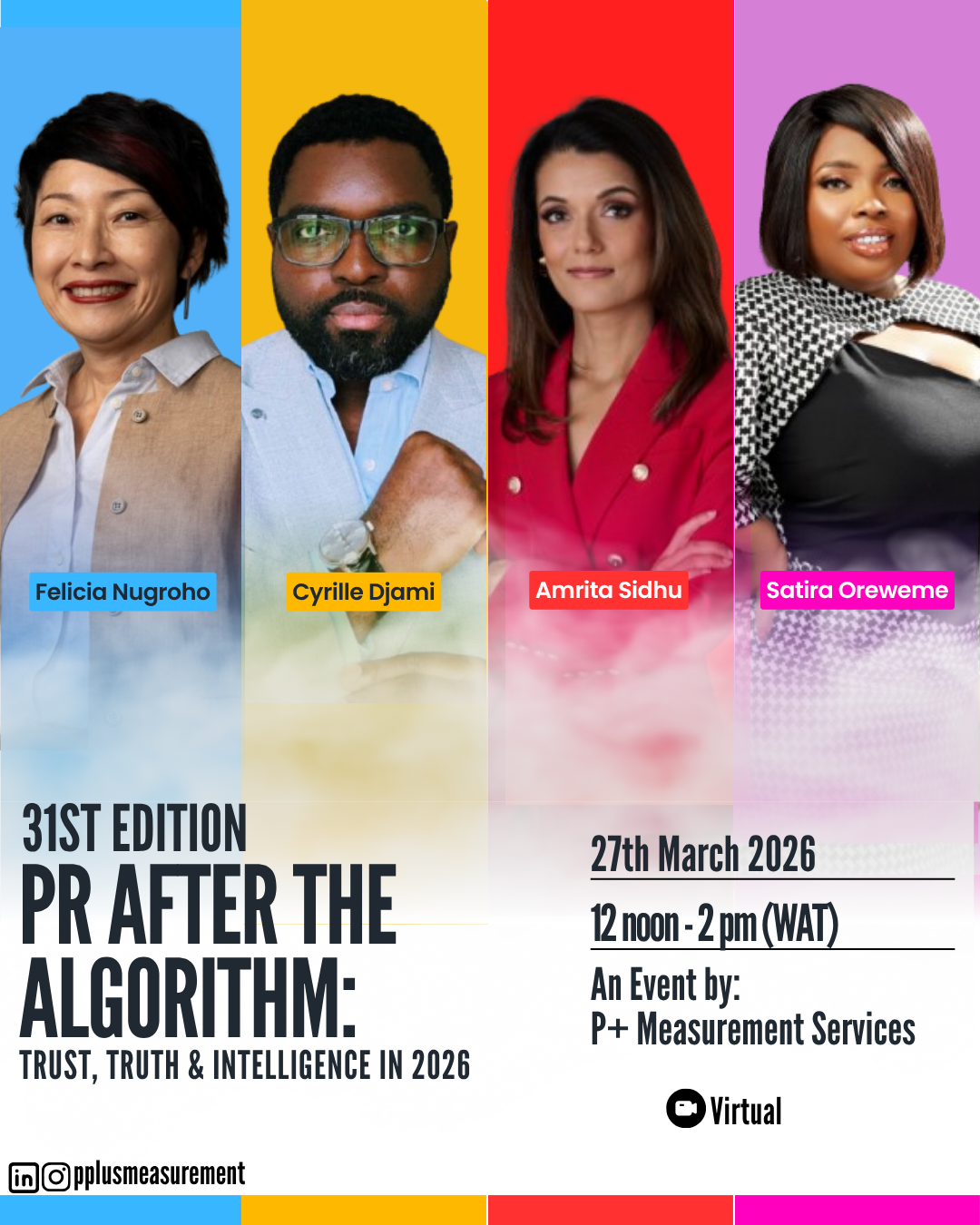
EvaluatePR to Explore “PR After the Algorithm: Trust, Truth & Intelligence in 2026
P+ Measurement Services, Nigeria’s leading independent media intelligence and PR measurement agency, will host the 31st edition of its flagship thought-leadership platform, EvaluatePR, on Friday, March 27, 2026, at 12:00 p.m. (WAT).
Themed “PR After the Algorithm: Trust, Truth & Intelligence in 2026,” this virtual session will convene professionals across public relations, communications, and media measurement to explore how algorithms, artificial intelligence, and digital ecosystems are reshaping reputation management, media influence, and audience trust.
With the increasing role of automation in communications, the event will challenge professionals to rethink how credibility is built and sustained in a fast-evolving digital landscape, while emphasizing the need for transparency, ethical measurement, and strategic intelligence.
The session will feature a distinguished lineup of speakers representing diverse expertise across global communications, media intelligence, and analytics: Felicia Nugroho – Director, Analytics & Insights, Maverick Indonesia / Chair, Asia Pacific & International Board Director, AMEC; Cyrille Djami – Founder & Publisher, CommsOfAfrica; Strategic Communications, Editorial and Influence Consultant; Amrita Sidhu – Managing Director, Medianet / Director & Board Representative, AsiaNet / Board Member, AMEC; and Satira Osemudiamen Oreweme – Principal Consultant, Satira Media & Public Relations Limited.
Together, they will lead insightful discussions on how communicators can navigate the intersection of technology and trust, maintain authenticity in automated environments, and leverage data-driven intelligence to deliver meaningful communication outcomes.
Participation in the session is free, with access available via the official registration link:
https://bit.ly/4stWjUh


-

 society6 months ago
Religion: Africa’s Oldest Weapon of Enslavement and the Forgotten Truth
-

 news3 months ago
WHO REALLY OWNS MONIEPOINT? The $290 Million Deal That Sold Nigeria’s Top Fintech to Foreign Interests
-

 society6 months ago
“You Are Never Without Help” – Pastor Gebhardt Berndt Inspires Hope Through Empower Church (Video)
-

 celebrity radar - gossips2 months ago
Dr. Chris Okafor Returns with Power and Fire of the Spirit -Mounts Grace Nation Altar with Fresh Anointing and Restoration Grace on February 1, 2026